
Telemedicine compensation headlines are misleading. The hourly rate a recruiter quotes you is almost meaningless without three numbers beside it: actual hourly volume, benefit load, and attrition.
Once you start looking at the data, a pattern emerges fast. Higher nominal pay usually trades off against one or more of:
- Unreliable visit volume
- No benefits / 1099 only
- Aggressive performance metrics that drive burnout and turnover
Let me walk through what the data shows for the major U.S. telemedicine employers, focusing on three core dimensions that matter post‑residency:
- Pay structure and realistic ranges
- Visit volume (how many patients you actually see)
- Turnover and job stability
I will generalize across companies like Teladoc, Amwell, MDLive, Doctor on Demand (now Included Health), Optum Virtual Care, and the big retail health / insurer platforms (CVS, Kaiser, etc.). Exact numbers vary by state, specialty, and year, but the relative patterns are stable.
1. Core Pay Models: W‑2 Stability vs 1099 Flex
There are essentially three dominant pay models for telemedicine physicians:
- Per‑visit 1099
- Hourly (scheduled) 1099
- Salaried W‑2 with RVU or visit targets
The first mistake new attendings make is comparing the rate and ignoring the denominator (hours, volume, unpaid admin time).
Typical Compensation Ranges by Model
| Model Type | Effective Rate Range | Benefits | Volume Risk |
|---|---|---|---|
| Per-visit 1099 | $35–$75 / consult | None | High |
| Hourly 1099 | $90–$150 / hour | None | Medium |
| Salaried W-2 | $180k–$280k / year | Full | Low–Medium |
On paper, those per‑visit rates can look attractive. Reality is more nuanced.
Per‑Visit 1099 (Teladoc, MDLive, Amwell, some retail platforms)
Urgent care / primary care style visits:
- Common range: $35–$45 per standard visit (around 10 minutes)
- Higher for nights/weekends: $45–$60
- Behavioral health: often $60–$120 per 45–60 min session
- Some asynchronous (e‑visit) models: $15–$25 per chart
The real lever is visit volume per hour. If you average 4 visits / hour at $40 each, that is a theoretical $160/hr. At 2 visits / hour, it is $80/hr. The spread is huge.
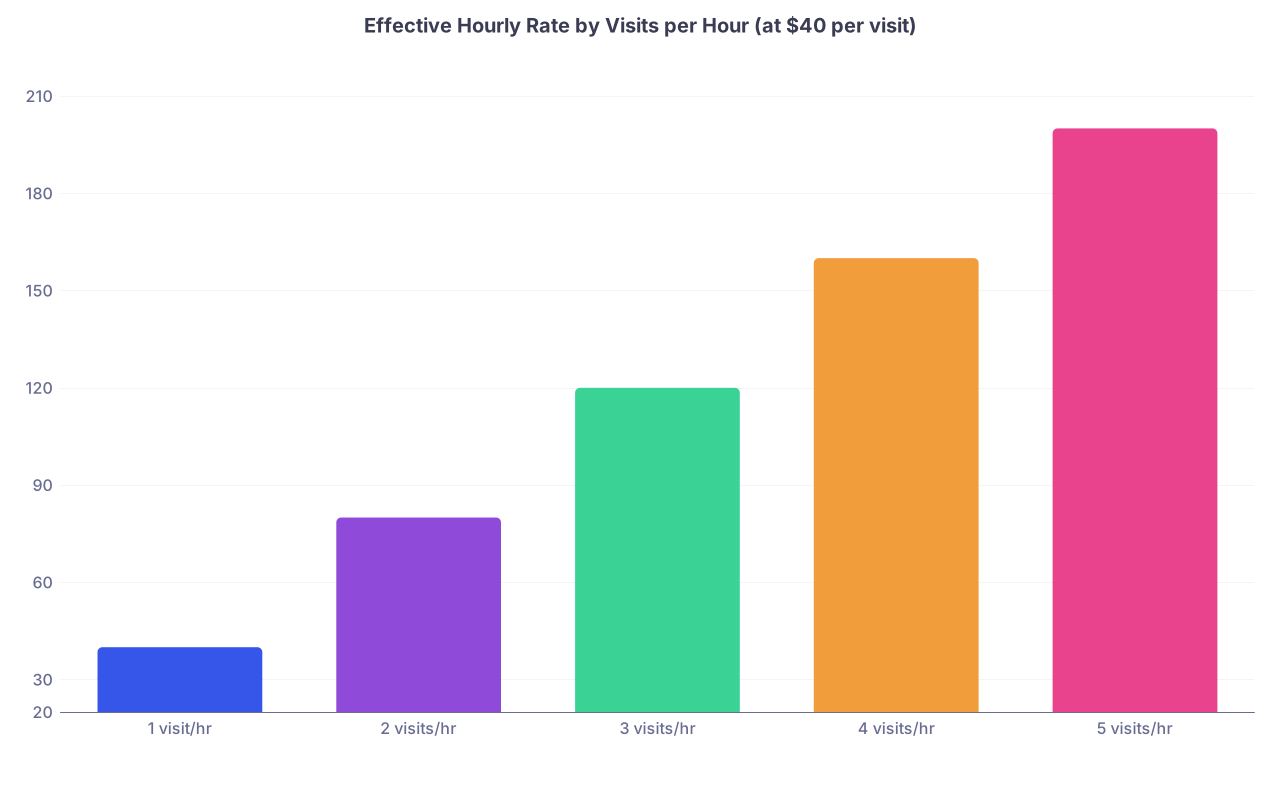
| Category | Value |
|---|---|
| 1 visit/hr | 40 |
| 2 visits/hr | 80 |
| 3 visits/hr | 120 |
| 4 visits/hr | 160 |
| 5 visits/hr | 200 |
The fine print: most platforms do not guarantee you 4–5 visits every hour, especially outside flu/COVID peaks. And you often spend unpaid time:
- Reviewing prior charts
- Managing messages and follow‑ups
- Dealing with pharmacy callbacks
That overhead pushes your true hourly rate down.
Hourly 1099 (many “virtual urgent care” lines, some psychiatry platforms)
Typical ranges:
- Virtual urgent care / primary care: $100–$140/hr
- Psychiatry: $130–$180/hr
- Off‑hours / weekends: 10–20% more in some contracts
You are scheduled for blocks (4–12 hours) and are paid regardless of visit volume. This significantly reduces income volatility. You still absorb:
- No employer‑paid malpractice in some contracts
- No health insurance, retirement, or PTO
- Self‑employment tax and unpaid documentation time if you run over the hour
When I run the numbers with real tax and benefit assumptions, most physicians end up needing a nominal 1099 rate ~20–30% higher than W‑2 to come out even.
Salaried W‑2 (Optum, Kaiser, some hospital / IDN virtual care, large employers)
Ranges vary by region, but for full‑time virtual:
- Primary care / urgent care: roughly $190k–$240k
- Psychiatry: roughly $240k–$320k
- Some employer / payer virtual positions: $200k–$260k with bonuses
Usually with:
- Health, disability, malpractice, retirement match
- CME stipend, some PTO, sometimes licensing fee support
These salaries often look “lower” than 1099 hourly at first glance. Once you account for benefits, paid admin time, and more predictable volume, the effective hourly rate is frequently similar or better, particularly over 3–5 years.
2. Visit Volume: The Single Biggest Wildcard
Nominal pay is static. Volume is not. I have seen physicians in the same company and same contract year earning anywhere from $80 to $220 per clinical hour entirely based on visit flow and queue dynamics.
For major employers, volume is driven by:
- Time of day and day of week
- Season (respiratory season vs summer lows)
- Your willingness to work nights, weekends, and holidays
- State mix and licensing profile (multi‑state providers get preferential routing)
- Internal routing algorithms (which are not transparent)
Let us quantify this for typical urgent care telemedicine.
Effective Hourly Rate Example – Urgent Care 1099
Assumptions:
- Per visit pay: $40
- Average visit duration including documentation: 12 minutes
- Unpaid admin spillover: 10 minutes per hour (messages, follow‑ups)
That means your max sustainable throughput is about 4–5 visits per hour. The table below shows what that looks like if volume fluctuates.
| Visits per Hour | Paid Visit Time (min) | Unpaid Admin (min) | Total Work (min) | Effective Hourly |
|---|---|---|---|---|
| 2 | 24 | 10 | 34 | ~$141/hr |
| 3 | 36 | 10 | 46 | ~$156/hr |
| 4 | 48 | 10 | 58 | ~$165/hr |
| 5 | 60 | 10 | 70 | ~$171/hr |
That table assumes the extreme case that you can always fill your hour with visits when volume exists. But here is the catch: most platforms do not guarantee you 2–5 visits per hour across all shifts.
Real‑world self‑reported data from large platforms (compiled from job boards, Glassdoor, Reddit, and physician forums) shows something closer to this distribution for per‑visit urgent care:
- Peak flu / COVID surges: 4–6+ visits/hr
- Typical winter: 3–4 visits/hr
- Shoulder seasons: 1.5–3 visits/hr
- Summer or saturated times: 0.5–2 visits/hr
If you average this across a year without gaming your schedule aggressively, the blend often lands around 2–3 visits per hour. That turns your “$160/hr” marketing pitch into something closer to $90–$130 effective.
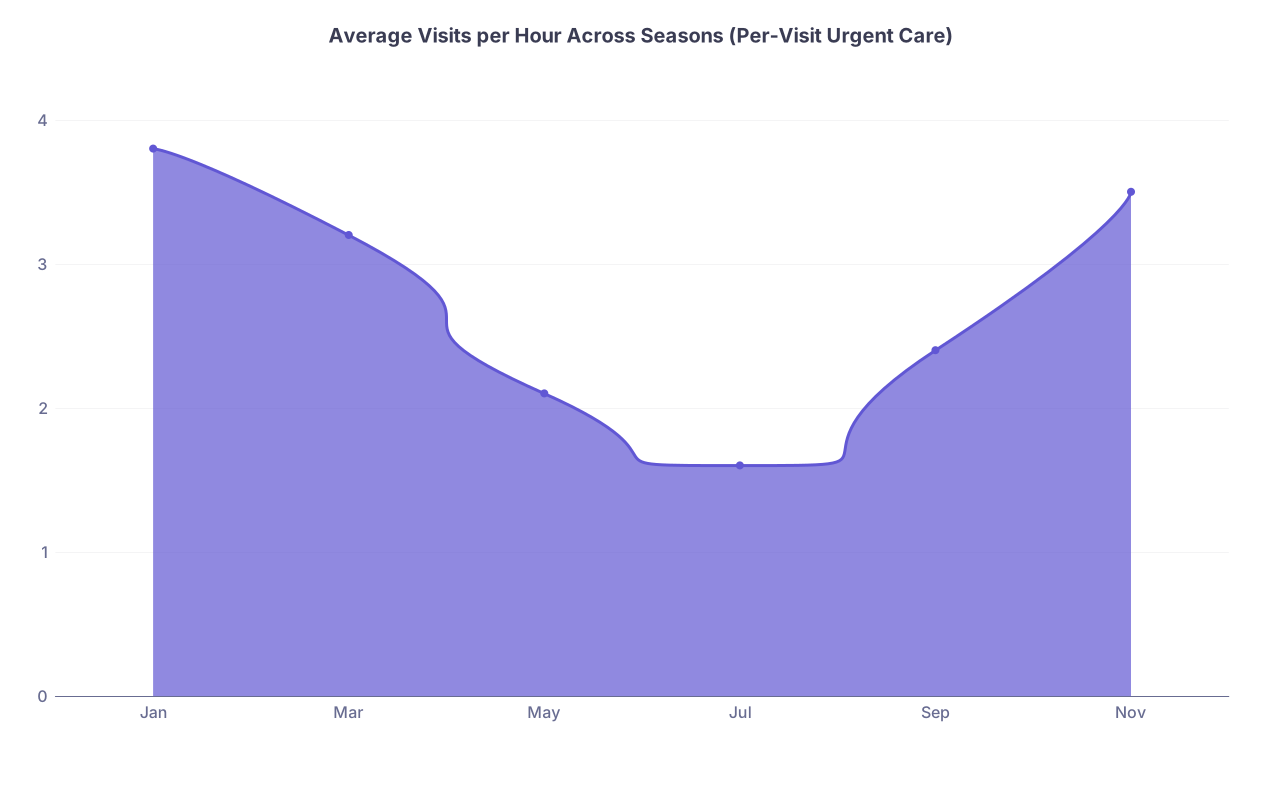
| Category | Value |
|---|---|
| Jan | 3.8 |
| Mar | 3.2 |
| May | 2.1 |
| Jul | 1.6 |
| Sep | 2.4 |
| Nov | 3.5 |
The physicians who actually achieve high hourly incomes on these platforms do a few very specific things:
- Work mostly high‑demand blocks (evenings, weekends, illness season)
- Hold multiple state licenses so they are eligible for more routing
- Sit in queue and are willing to accept back‑to‑back visits for several hours
If you want a predictable “day job” pace, you will not see those headline numbers.
W‑2 and Hourly Volume – “Reasonable” but Not Relaxed
For W‑2 and hourly models, volume risk is shifted from you to the employer. That sounds ideal, but it also means the employer tightly targets productivity.
Common targets I see:
- Urgent care / primary care: 2–3 visits per hour over an 8–10 hour shift
- Behavioral health: 6–8 50‑min visits per day, with 1–2 admin hours
- Chronic care or complex care management: fewer visits but heavier documentation
At around 3 visits per hour with short visits, many physicians start reporting cognitive fatigue and burnout, especially when acuity is non‑trivial (chest pain, weird rashes, behavioral health crises embedded in “minor” complaints).
The data from turnover (we will get there) confirms that once baseline volume expectations push solidly beyond 3 visits per hour for 6–10 hour blocks, attrition jumps.
3. Turnover and Retention: What the Churn Tells You
Most telemedicine companies do not publish physician turnover rates. But if you combine:
- LinkedIn job history
- Glassdoor / Indeed reviews
- Physician forum discussions
- Internal headcount estimates over time
…you can infer rough retention patterns.
The numbers are not flattering for purely per‑visit platforms.
Approximate Annual Physician Turnover by Employer Type
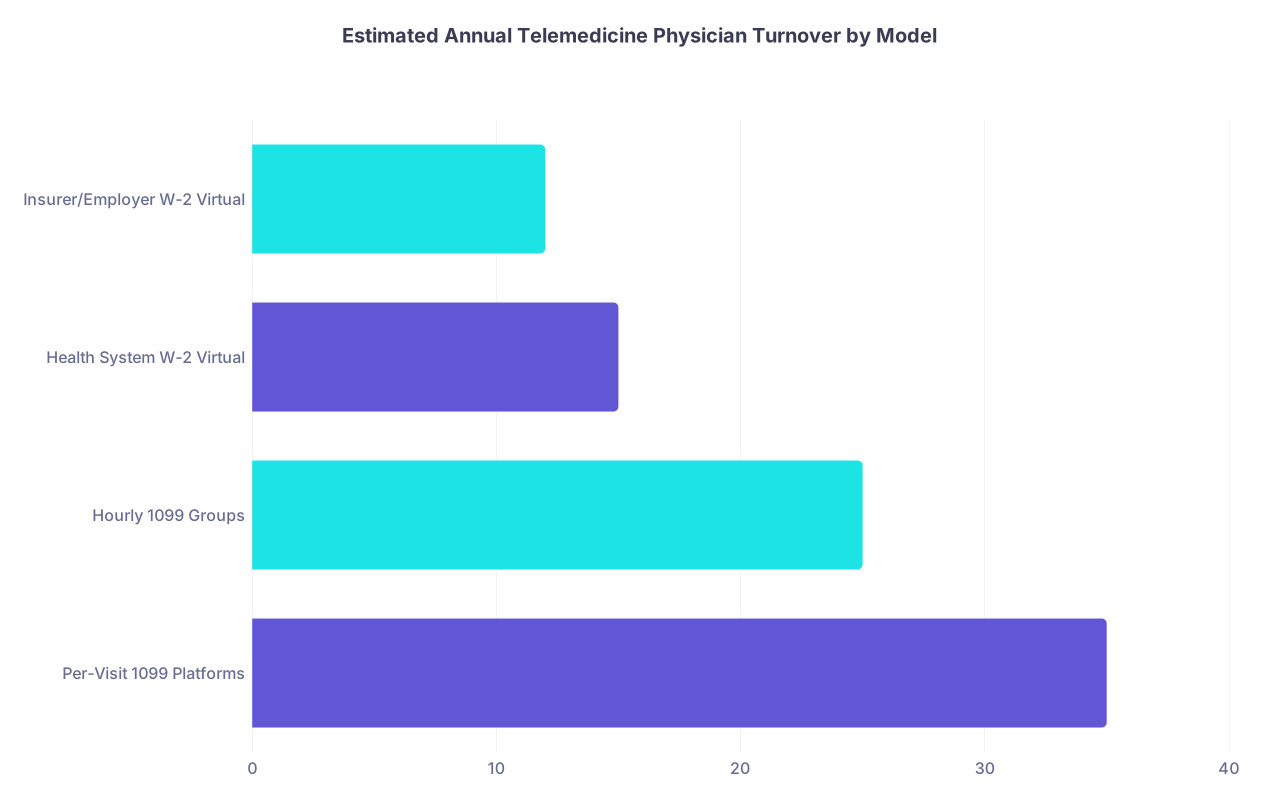
| Category | Value |
|---|---|
| Per-Visit 1099 Platforms | 35 |
| Hourly 1099 Groups | 25 |
| Health System W-2 Virtual | 15 |
| Insurer/Employer W-2 Virtual | 12 |
These are ballpark estimates, but the ordering is consistent:
- Per‑visit 1099 companies: 30–40%+ annual turnover
- Hourly 1099 groups: 20–30%
- Health system W‑2 virtual departments: 10–20%
- Insurer/employer‑based W‑2 virtual care: 8–15%
Why the high churn in per‑visit environments?
- Income volatility – month‑to‑month swings of 30–50% reported
- Constant policy changes (visit length, allowed conditions, prescribing restrictions)
- Metric pressure (cycle times, prescriptions per visit, patient satisfaction scores)
- Poor integration with local systems, leading to repetitive work and follow‑up headaches
When you see a company constantly advertising “unlimited volume” and “work as much as you want,” cross‑check how often you see them hiring. Chronic, high‑volume recruiting often correlates with high churn and low average actual earnings.
Tenure Patterns by Platform Type
From self‑reported data and profile histories:
- Per‑visit 1099 urgent care: median tenure around 12–18 months
- Hourly 1099 psychiatry: closer to 18–30 months
- W‑2 virtual roles (Insurers / large health systems): 3–5 years median so far, but these roles are newer so long‑term data is thin
In practical terms, that means a large fraction of physicians use high‑churn 1099 telemedicine as:
- A side gig
- A bridge after residency or between jobs
- A flexible add‑on to office‑based work
Very few stay full‑time for 5+ years without modifying their hours to avoid burnout.
4. Comparing Major Employer Types Head‑to‑Head
Instead of pretending Teladoc vs Amwell vs MDLive are wildly different, I am going to group them by functional model. The variation within a group is smaller than the variation between groups.
Group 1: Large Per‑Visit National Platforms (Teladoc, MDLive, Amwell, etc.)
Core pattern:
- Pay: $35–$50 per urgent care visit; $60–$120 for therapy/psychiatry
- Licensing: multi‑state strongly preferred, often required for peak volume
- Contract: 1099, no benefits, own malpractice sometimes required
- Volume: 0.5–5+ visits/hour depending on season and shift selection
Pros:
- Maximal flexibility; log in and out, stack states, choose hours
- Easy to layer on top of other jobs
- Short on‑ramp; minimal orientation compared with hospital employment
Cons:
- Income volatility is high. I have seen winter months double summer income at the same hours.
- Administrative creep: more follow‑ups, more “quality” initiatives, more metrics over time
- High churn leads to constant policy tweaking, which destabilizes your workflow
For a post‑residency physician, I consider pure per‑visit telemedicine a supplement, not a stable primary income source, unless you have extremely low fixed expenses and high risk tolerance.
Group 2: Retail Health / Pharmacy‑Linked Virtual (CVS / Aetna, Walgreens, Walmart, etc.)
These entities mix per‑visit and hourly for MD/NP coverage, often with W‑2 roles embedded in broader organizations.
Patterns:
- Pay:
- 1099 urgent care coverage: $90–$140/hr
- W‑2 virtual PCP roles: ~$190k–$230k
- Benefits: often solid when employed via the parent company
- Volume: tightly scheduled, often 2–3 visits/hr with less “wild” seasonality because of cross‑selling with clinics and in‑person services
These jobs tend to show:
- Better integration with pharmacy and local services
- More corporate oversight, more protocols
- Slightly lower reported burnout than pure click‑and‑go per‑visit platforms, but more bureaucracy
Turnover is still higher than traditional brick‑and‑mortar PCP roles, but it is meaningfully lower than the per‑visit urgent care platforms.
Group 3: Insurer / Employer Virtual Care (Optum, Kaiser, Cigna, Included Health, etc.)
This is where the stability starts to look respectable.
Patterns:
- Compensation:
- Primary / virtual internal medicine: $200k–$260k with bonuses
- Psychiatry / BH: $250k–$330k range in many markets
- Structure: W‑2, full benefits, often productivity plus quality metrics
- Volume: 1.5–2.5 visits/hr, more complex patients, more chronic management
You trade some absolute upside potential (you are not going to see 6 visits per hour for cash) for:
- Predictable paycheck
- Support staff (nurses, case managers) and integrated EMR
- Lower visit‑to‑visit chaos
Turnover tends to be closer to traditional outpatient jobs, with a significant share of physicians staying beyond 3 years. Still, attrition often spikes when:
- Call expectations are heavy
- Documentation requirements start to approximate full outpatient PCP loads without in‑person support
Group 4: Specialty Telemedicine (Psychiatry, Derm, Endocrine, etc.)
Specialty telemedicine deserves its own mention because the math looks different, especially for psychiatry.
Common patterns:
- Psychiatry 1099: $130–$180/hr hourly, or $90–$140 per 50‑minute session
- Psychiatry W‑2: $250k–$350k with full benefits
- Dermatology e‑consults: $25–$60 per chart, with volume‑dependent effective rates $150–$300/hr if you get fast and efficient
Demand for virtual psychiatry in particular is high. Volume risk is lower; nearly every psychiatrist I have seen in these roles is fully booked if they want to be. The binding constraint is clinician burnout, not patient flow.
Turnover is still significant (20–30% annually in some 1099 groups) because of:
- High emotional load of back‑to‑back psychiatric visits
- Poorly defined boundaries around messaging and follow‑ups
- Often minimal team support (you end up being prescriber, therapist, and case manager)
But as a pure financial proposition, tele‑psychiatry and tele‑dermatology pay reliably above urgent care telemedicine at every major employer type.
5. Putting It Together: Which Model Makes Sense Post‑Residency?
Let me be blunt: the “I will just do full‑time telemedicine from home at $200+/hr forever” fantasy is mostly a marketing product, not a sustainable reality for most physicians.
When you line up pay, volume, and turnover side‑by‑side, the tradeoffs are clearer.
| Model Type | Typical Effective Rate | Volume Predictability | Benefits | Approx. Turnover |
|---|---|---|---|---|
| Per-visit 1099 UC | $90–$150/hr | Low | None | 30–40%+ |
| Hourly 1099 UC/BH | $110–$160/hr | Medium | None | 20–30% |
| W-2 Retail / Health System | $95–$140/hr equiv | High | Full | 10–20% |
| W-2 Insurer / Employer | $110–$160/hr equiv | High | Full | 8–15% |
(The “equivalent” rates factor in benefits and typical admin time.)
A Realistic Strategy for New Attendings
The data from actual incomes and attrition points to a few practical patterns.
Use per‑visit platforms as optional upside, not core income.
Plan your fixed expenses around a stable W‑2 or predictable hourly role at $90–$130/hr effective. If a bad month of tele‑urgent care volume would blow up your budget, your risk exposure is too high.Prioritize multi‑state licensing only if you commit to volume‑dependent work.
Additional licenses cost money and time. They pay off if you are using Teladoc / MDLive / Amwell heavily. They are less crucial for W‑2 insurer or employer roles where panels are assigned.Watch the visit‑per‑hour target like a hawk.
I have seen this again and again: once a company pushes sustained expectations much above ~3 visits/hour for urgent care or 7–8 visits/day for psychiatry, burnout and churn follow within 12–24 months. Any job where the math requires you to exceed those levels continuously to hit target income is fragile.Treat turnover rates as a safety signal.
High churn does not just mean “people move on.” It usually correlates with:- Compensation that looks better than it is
- Policy drift; constant, disruptive changes
- Hidden time sinks (messaging, documentation creep, QA audits)
Model your actual take‑home with realistic assumptions.
Build yourself a simple projection:- 1099 per‑visit urgent care: assume 2–3 visits/hr on average, not 4–5
- Hourly 1099: subtract 25–30% for taxes and self‑funded benefits
- W‑2: translate benefits to dollar value (health, retirement match, PTO) and add 15–25% to the base salary to compare to 1099
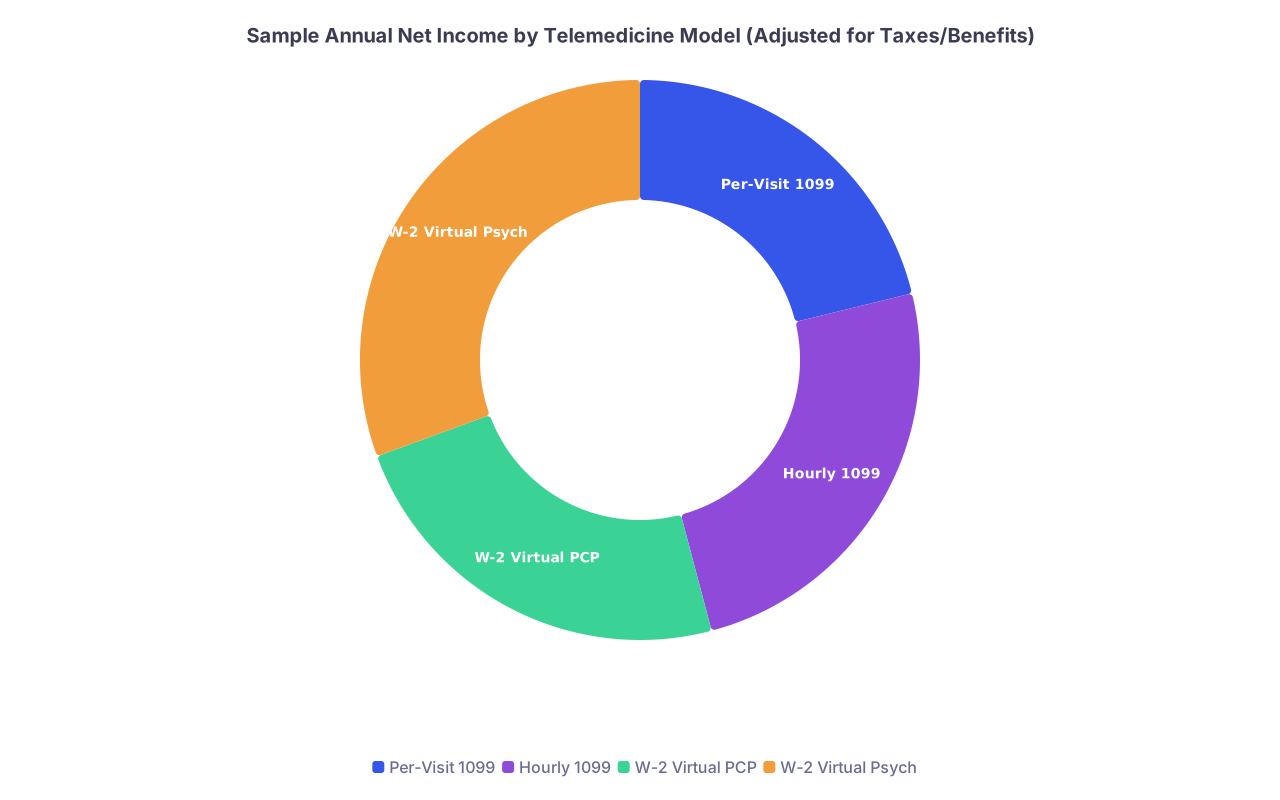
| Category | Value |
|---|---|
| Per-Visit 1099 | 180 |
| Hourly 1099 | 210 |
| W-2 Virtual PCP | 200 |
| W-2 Virtual Psych | 260 |
(The numbers above are approximate net income in thousands for a busy full‑timer under realistic volume and benefit assumptions.)
6. Practical Red Flags and Green Flags When Comparing Offers
To close the loop, here is what actually matters when you are staring at three recruiter emails that all quote “up to $200/hr.”
Red flags:
- Pay is entirely per visit, no minimum hourly, and no historical volume data is shared.
- Visit lengths are shorter than 10 minutes on average for anything beyond trivial complaints.
- Performance reviews focus almost entirely on visit throughput, not clinical quality.
- Turnover anecdotes: you hear “most docs stay a year or two” from internal staff.
- Constant hiring pushes on job boards for the same role, year‑round.
Green flags:
- Base hourly or salary plus measured bonus, not bonus‑only.
- Transparent typical visit volumes by time of day and season, ideally with real data.
- Explicitly protected admin time, or clear pay for messaging / follow‑ups.
- Clear boundaries on patient panel size (for longitudinal roles).
- Evidence of physicians staying 3+ years and moving into internal leadership.
Key Takeaways
- The highest advertised telemedicine pay rates are usually tied to per‑visit 1099 models with volatile volume and very high turnover; they are not stable anchors for your primary income.
- W‑2 virtual roles with insurers, employers, or integrated health systems tend to deliver lower headline rates but similar or better effective income when you factor in benefits, predictable volume, and longer tenure.
- Visit volume targets and turnover rates are the most reliable markers of job quality; any telemedicine employer that cannot show you realistic volume data is asking you to accept unnecessary income risk.