
The biggest career trap for telehealth physicians is staying “comfortably employed” in a job that could vanish with one policy change.
If you are doing employed telehealth now, you already have 70% of the skills you need to run your own virtual micro‑practice. The gap is not clinical. It is structure, systems, and courage. I will give you all three.
This is not about building a giant digital health startup. This is about designing a lean, low‑overhead, patient‑selective, legally clean micro‑practice that can start as a side stream and become your main income if (or when) your employer’s telehealth model falls apart.
Let us walk through it like an actual project, not a fantasy.
1. Get Clear On Your Target: What “Virtual Micro‑Practice” Actually Means
Forget the vague “someday I’ll open my own thing.” That usually translates to “never.”
A virtual micro‑practice is:
- You (maybe plus 1–2 part‑time staff or virtual assistants)
- 100% remote visits (video, phone, async messaging, or mix)
- Narrow scope and tightly defined patient population
- Low overhead, no big office lease, minimal equipment
- High control over schedule, visit length, panel size, and clinical boundaries
Think of examples:
- Tele‑psychiatry for adult ADHD and mood disorders in two states
- Tele‑endocrinology focusing on Type 2 diabetes and weight management
- Virtual primary care limited to 25–75 high‑touch patients on a subscription model
- Tele‑derm for acne, rosacea, and chronic rashes using async photo review
You are not trying to be “online urgent care 2.0” and compete with Walmart. You are building a practice that is:
- Clinically sane
- Legally defensible
- Financially worthwhile
- Personally sustainable
So first decision:
Pick one of these lanes:
- Niche specialty care (endocrinology, psych, rheum, pain, sleep, etc.)
- Niche primary care (e.g., women in tech, perimenopause, long‑COVID, LGBTQ+ adults)
- Ongoing chronic disease management (diabetes, hypertension, ADHD, obesity)
- Procedural review / consult only (second opinions, med review, pre‑op optimization)
If you cannot tell me your lane in one sentence, you are not ready to build anything yet. Write the lane down.
2. Legal and Regulatory: Clean This Up Before You Touch a Patient
You can lose your license faster than you can lose money. So the legal foundation comes first.
A. Licensure and Telehealth Rules
You already know this as an employed telehealth doc, but when it is your license and your malpractice on the line, the sloppiness margin drops to zero.
You need:
- Active and unrestricted license in every state where your patients are physically located at the time of visit.
- Awareness of each state’s:
- Controlled substance rules for telehealth (especially post‑Ryan Haight flexibilities and state‑specific wrinkles)
- Requirements for initial in‑person visit (some states still have relic rules)
- Informed consent language/requirements for telemedicine
- Tele‑prescribing restrictions and e‑Rx mandates
Step‑by‑step:
Make a list of 1–3 states where:
- You already hold a license
- Reimbursement or patient demand is reasonable
- You may want to live or have a strong demographic niche
For each state, check:
- State medical board telehealth policy page
- State pharmacy board rules for controlled substances by telemedicine
- Medicaid telehealth coverage policies (even if you do not bill Medicaid; it shows what the state tolerates)
Decide: Are you staying cash‑only out‑of‑network (simpler) or doing insurance (complex but bigger funnel)?
B. Business Entity and Compliance Basics
Do not practice as “you” directly. Form an entity. Yes, even for a micro‑practice.
Typical structure in the U.S.:
- Professional LLC (PLLC) or PC (or equivalent in your state)
- Separate business checking account
- EIN obtained from IRS (takes 10 minutes online)
- Basic operating agreement (even if you are the only owner)
Then address:
- HIPAA: BAA with all tech vendors (EHR, telehealth platform, e‑fax, messaging, hosting).
- Policies: At minimum, documented policies for:
- Privacy and security
- Telehealth consent and limitations
- No‑show and cancellation
- Prescription and refill policy
- Messaging expectations and response times
You can start with lean, but not with “nothing.”
C. Malpractice Coverage
You need a policy that explicitly covers:
- Outpatient telemedicine
- States where you practice
- Your chosen clinical scope
Call your current carrier and say clearly:
“I am starting a separate outpatient telehealth micro‑practice in [specialty] in [state list]. I need coverage that explicitly includes telemedicine in those states, for [cash pay / insurance] outpatient care.”
If they hesitate or want to charge ridiculous premiums, shop:
- MedPro
- The Doctors Company
- Specialty‑specific carriers (e.g., for psych, derm)
Do not go live until you have the updated declarations page in your hand.
3. Technology Stack: Minimum Viable, Not Fancy
You are probably used to clunky corporate EHRs. Good news: you do not need to recreate that pain.
You need five core tools:
- EHR (with scheduling, notes, e‑Rx, basic reporting)
- Telehealth platform (often built into EHR now)
- Billing/Payments (Stripe, Square, or integrated)
- Communication (phone number, secure messaging, maybe SMS reminders)
- Document handling (e‑fax, secure file sharing)
| Function | Example Tools |
|---|---|
| EHR + Telehealth | Elation, AthenaOne, DrChrono |
| Simple EHR + Payments | SimplePractice, Kareo |
| Telehealth only | Doxy.me, Zoom for Healthcare |
| E‑fax | SRFax, Fax.Plus |
| Payments only | Stripe, Square |
General rule: pick an EHR that already has video visits, e‑prescribing, basic online scheduling, and card‑on‑file payments. Do not duct‑tape five separate tools together unless you like tech support.
4. Clinical Scope, Boundaries, and Safety Nets
Your freedom in a micro‑practice comes from ruthlessly clear boundaries. This is where many physicians screw it up. They build an online version of their overstuffed employed panel and burn out again.
You will define:
- Who you see
- What you treat
- What you explicitly do not treat
- When you say no and send elsewhere
Write it out. Literally.
Example for a tele‑psych micro‑practice:
- I see:
- Adults 21–60 living in CA and WA
- ADHD, mild to moderate depression and anxiety, stable bipolar II
- I do not see:
- Active substance use disorders needing detox
- Unstable psychosis, active suicidal intent, eating disorders needing intensive care
- I do:
- Medication management
- Simple brief CBT‑oriented interventions
- Close coordination with PCP
- I do not:
- Provide disability evaluations
- Complete FMLA or workers’ comp documents
- Offer 24/7 crisis response
Now build safety nets around those boundaries:
- Identify local urgent cares and ERs in your target states
- Have crisis hotline and warm‑line numbers handy
- For chronic conditions, define when you insist on in‑person labs, vitals, imaging
You are not “just a telehealth doc.” You are a physician running a practice with telehealth as the modality. That mindset shift matters for how you make decisions.

5. Money: Pricing, Panel Size, and Revenue Math
If the financial side is fuzzy, you will default back to “I guess I’ll just stay employed.” Let us remove the fog.
A. Decide: Cash‑Only vs Insurance
Cash‑Only Pros:
- No prior auth purgatory
- No chasing denials
- Simple pricing
- Freedom to spend more time per visit
Cash‑Only Cons:
- Smaller pool willing to pay out of pocket
- Harder in lower income populations
- Some patients will want super‑bills for reimbursement (doable, but an extra step)
Insurance Pros:
- Larger patient funnel
- Familiar structure for patients
- Potential for referrals within networks
Insurance Cons:
- Credentialing delays (3–6+ months)
- Contract rates sometimes insulting
- More overhead or billing support needed
- Prior auth and chart review headaches
If your goal is a lean micro‑practice with maximal control, cash‑only or hybrid usually wins.
B. Simple Revenue Math
Let us run concrete numbers. Assume cash model, 60‑minute new visits, 30‑minute follow‑ups.
Example pricing:
- New visit: $275
- Follow‑up: $175
- Average 1 new + 2 follow‑ups per hour of scheduled time
Now your weekly clinical time options:
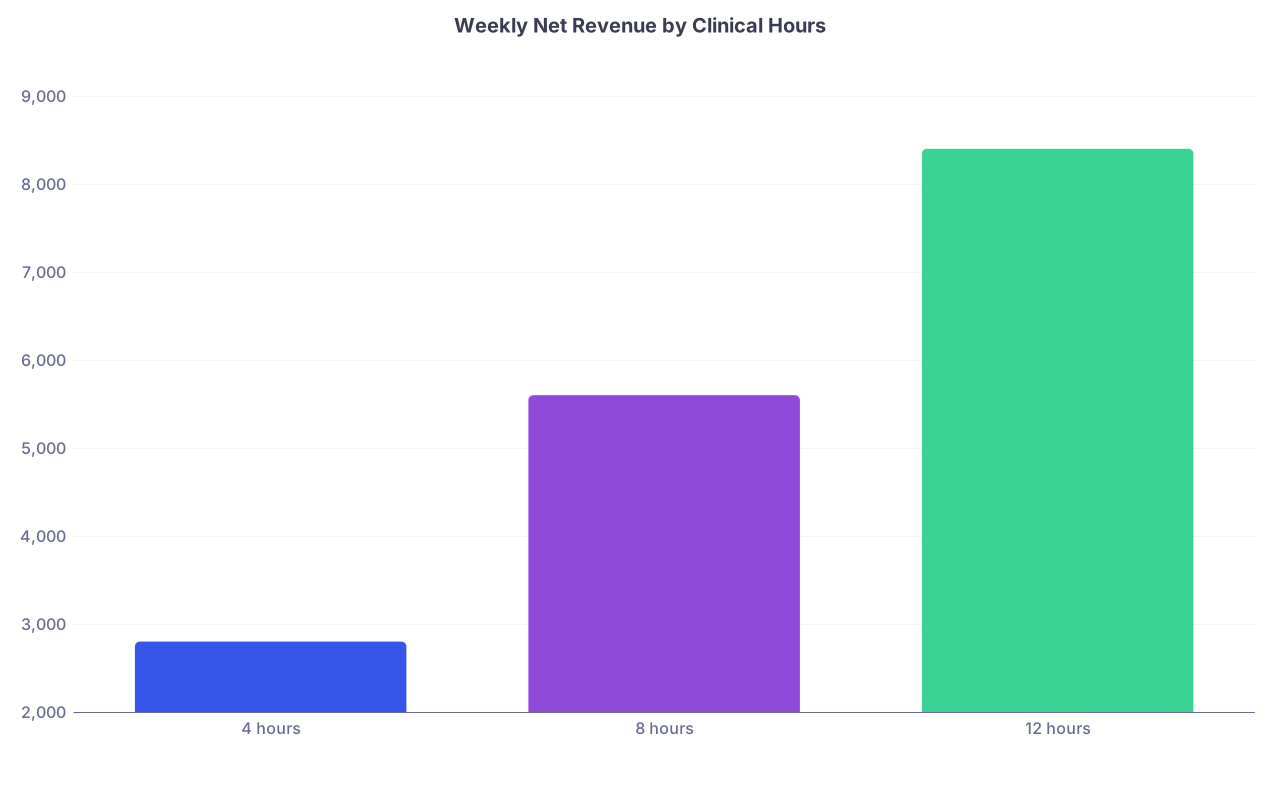
| Category | Value |
|---|---|
| 4 hours | 2800 |
| 8 hours | 5600 |
| 12 hours | 8400 |
Assuming:
- 4 clinical hours/week: ~10 visits → ~$2,800/week
- 8 clinical hours/week: ~20 visits → ~$5,600/week
- 12 clinical hours/week: ~30 visits → ~$8,400/week
Even after 25–35% for taxes, tech, malpractice, and misc, a part‑time micro‑practice can rival or exceed a full‑time employed telehealth salary, especially if your employer is paying you peanuts per visit.
Do your own math:
- Decide ideal hourly revenue target (e.g., $350–$500/hour of scheduled clinical time).
- Build visit types and pricing to hit that.
- Decide how many actual hours of patient care per week you want (start smaller than you think).
- Project revenue and compare to current W‑2 compensation.
This stops being theoretical once you see that an 8‑hour clinical week can cover your basic living costs if priced correctly.
6. Conflict‑Free Transition From Employed Telehealth
You are still employed. You do not want to get fired for “competition” or walk into a lawsuit. So we structure your transition carefully.
A. Read Your Contract Like a Lawyer, Not Like a Resident
Pull out your current employment agreement. Hunt for:
- Non‑compete clause:
- Does it mention telemedicine specifically?
- Defined by geography, service line, panel, or corporate competitors?
- Moonlighting / outside work clause:
- Do you need prior written approval?
- Are there restrictions on using your “off” hours for another medical job?
- Non‑solicitation clause:
- Prohibits you from recruiting patients or staff from the employer
If you see any of the following language, treat it as a yellow or red flag:
- “Any practice of medicine via telecommunication in [entire state or nationwide] for X months after termination”
- “Physician shall not engage in any other professional practice without prior written consent”
- “Physician shall not contact, solicit, or accept for treatment any patient of Employer for 1 year post‑employment”
You may still be able to proceed, but you need strategy.
B. Three Clean Transition Models
You have options. Here are three I have seen work repeatedly.

| Step | Description |
|---|---|
| Step 1 | Employed Telehealth |
| Step 2 | Side Micro Practice |
| Step 3 | Gap Then Launch |
| Step 4 | Negotiate Carve Out |
| Step 5 | Full or Hybrid Independent Practice |
Side Micro‑Practice While Employed (Most Common)
- Confirm contract allows moonlighting or get written approval framed as “consulting.”
- Build practice in different:
- State(s)
- Niche
- Patient population
- Do not:
- Use employer patients, messaging lists, scheduling systems, or staff
- Mention your new practice to existing employer patients
- Start with 2–4 clinical hours/week in your micro‑practice.
Gap Then Launch (Cleanest Legally, Harder Financially)
- Work employed telehealth job.
- Save a 3–6 month runway.
- Leave. Wait out non‑compete if necessary.
- Launch micro‑practice once you are contract‑clean.
Negotiate a Carve‑Out (Requires Leverage)
- Pitch employer:
- You will run a separate niche micro‑practice outside their market focus.
- You remain part‑time employed, no competition.
- Get any agreement addendum in writing defining:
- What counts as “competition”
- Approved outside clinical activities
- Pitch employer:
If your employer’s contract is draconian and non‑negotiable, target a different state with your micro‑practice where they have no presence and where you are still licensed. That often bypasses vague non‑compete language in practice, though you should still get real legal advice if you are in a restrictive state.
7. Step‑By‑Step Launch Plan (90 Days)
Let me treat this like a project. 90 days is aggressive but realistic for going from “idea” to “first paying patient” if you already have a license.
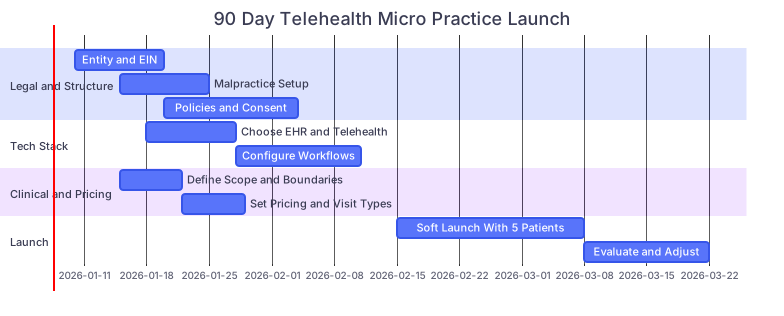
| Task | Details |
|---|---|
| Legal and Structure: Entity and EIN | a1, 2026-01-10, 10d |
| Legal and Structure: Malpractice Setup | a2, 2026-01-15, 10d |
| Legal and Structure: Policies and Consent | a3, 2026-01-20, 15d |
| Tech Stack: Choose EHR and Telehealth | b1, 2026-01-18, 10d |
| Tech Stack: Configure Workflows | b2, 2026-01-28, 14d |
| Clinical and Pricing: Define Scope and Boundaries | c1, 2026-01-15, 7d |
| Clinical and Pricing: Set Pricing and Visit Types | c2, 2026-01-22, 7d |
| Launch: Soft Launch With 5 Patients | d1, 2026-02-15, 21d |
| Launch: Evaluate and Adjust | d2, 2026-03-08, 14d |
Phase 1 (Weeks 1–2): Foundation
- Choose lane (niche and geography).
- Form PLLC/PC, get EIN, open bank account.
- Confirm malpractice coverage.
- Select EHR/telehealth platform and sign BAAs.
- Draft:
- Telehealth consent
- Practice policies (no‑show, refill, messaging)
Phase 2 (Weeks 3–4): Clinical Structure and Pricing
- Define:
- New and follow‑up visit lengths
- Pricing for each visit type
- Panel cap (maximum active patients)
- Build:
- New patient intake questionnaire (HPI, PMH, meds, allergies, goals)
- Standard assessment templates
- Care plans and patient education templates for top 5 conditions
- Set scheduling rules:
- Max visits per half‑day
- Buffer time
- Rules for same‑day slots (if any)
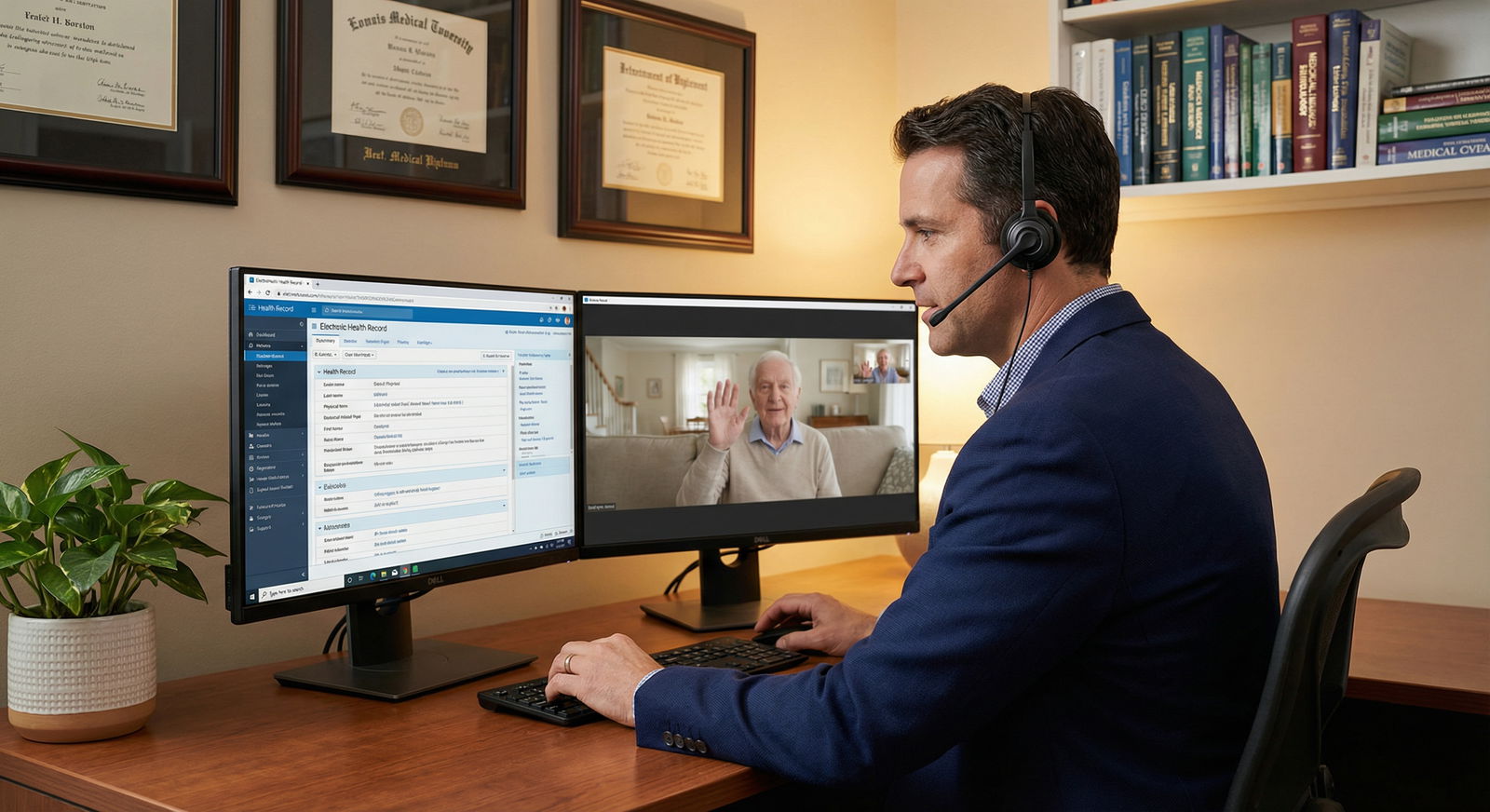
Phase 3 (Weeks 5–8): Soft Launch (Low Volume, High Learning)
Now you actually see patients. But you do it in “beta mode.”
Goal: 5–15 patients total in the first month, not 50. You want to stress‑test processes without breaking yourself.
How to source those first patients (ethically):
- Professional referrals from colleagues not affiliated with your employer:
- Former residency classmates
- Local PCPs or specialists in your state
- A simple, clear website that says:
- Who you help
- What you offer
- How much it costs
- How to book
- Physician‑to‑patient platforms that allow independent practice profiles (e.g., Zocdoc, Psychology Today for psych, telehealth directories)
During this phase you:
- Refine your intake forms to reduce clutter
- Adjust visit lengths to reality
- Fix EHR workflows that feel slow
- Clarify patient expectations on messaging and follow‑up
Think of this like piloting a new med. Start with low dose. Monitor vitals. Titrate.
Phase 4 (Weeks 9–12): Stabilize and Decide Your Endgame
After 20–30 patients, you will know:
- Average revenue per patient per month or per year
- Time per case including documentation and messaging
- Emotional load of your chosen niche
Then decide:
- Keep as 1–2 half‑days/week side practice indefinitely?
- Scale to replace your employed job over 6–12 months?
- Keep job but renegotiate terms now that you are not desperate?
This is when you can get ruthless about dropping services or refining scope. If one type of visit drains you or generates disproportionate admin hassle, cut it.
8. Operations: Tiny Systems That Prevent Big Headaches
Micro‑practice does not mean “no structure.” It means simple but strong structure.
A. Scheduling Rules That Protect Your Brain
Do not run back‑to‑back 15‑minute telehealth slots all day like your employer. You are in charge now.
- Set minimum buffer time between visits (5–10 minutes).
- Cluster similar visits together when possible (new visits in the morning, follow‑ups later).
- Build hard stop times. No “one more visit” mentality.
B. Messaging, Refill, and Results Policies
This is where many telehealth practices drown. Patients treat messaging like unlimited access unless you define boundaries.
Spell out in writing:
- Message response window (e.g., 1–2 business days)
- What is appropriate for messaging vs what needs a visit
- Refill rules:
- How many months between visits
- Whether early refills will be granted
- Handling of lost/stolen meds (especially controlled substances)
- Lab and imaging follow‑up:
- How you will communicate results (portal, visit)
- When patients should worry vs wait
Then, and this is key: stick to your own rules. If you constantly “make exceptions,” your practice will rapidly resemble your current job.

C. Consider a Virtual Assistant (Even 5 Hours/Week)
You do not need a full‑time staff member. But a part‑time virtual assistant (VA) can:
- Handle scheduling requests and basic questions
- Manage e‑fax, records requests, and insurance documents (if you do insurance)
- Call pharmacies for clarifications
- Help with invoicing and basic bookkeeping
Hire slowly. Start with a contractor 5–10 hours/week. Give them very clear, written workflows for:
- New patient onboarding
- Visit reminders
- Document handling
- Escalation rules (when they must loop you in)
9. Mindset Shifts: From Employed Provider to Practice Owner
This part is intangible but critical.
You must stop thinking like “the doctor on someone else’s platform” and start thinking like “the person responsible for everything that happens here.”
That means:
- You choose which problems your practice solves.
- You decide who is a good fit and who is not.
- You define what work is worth your time and what you will not do.
- You own both the upside (flexibility, revenue) and the downside (no IT department to blame).
Here is the payoff others do not talk about enough: your clinical satisfaction usually improves dramatically once you are seeing the right patients, at the right pace, with the right expectations. The same 20 ADHD patients that felt like relentless ticket‑queue work in a mass telehealth company can feel manageable and even enjoyable in a micro‑practice where you control the volume and depth.
FAQ (Exactly 3 Questions)
1. How many hours per week do I realistically need to commit to a virtual micro‑practice for it to be worthwhile?
For most physicians, 4–8 hours of clinical time per week is enough to make it financially meaningful, provided your pricing matches your expertise and niche. Early on, assume you will spend an extra 2–4 hours per week on admin, system building, and tweaking workflows. As you stabilize and possibly hire a part‑time virtual assistant, that admin load drops. You do not need 40 hours a week for this to matter.
2. Can I do this entirely as a side gig while staying full‑time employed in telehealth or in‑person practice?
Yes, if your contract allows outside clinical work and you separate the two worlds cleanly. That means different branding, different patient sources, and no sharing of patient lists or employer resources. Many physicians run a micro‑practice on evenings or a half‑day each week while maintaining a traditional job. Over 6–18 months, some choose to expand the micro‑practice and cut back their employed hours once the numbers and lifestyle clearly favor independence.
3. What is the single biggest mistake physicians make when launching a telehealth micro‑practice?
They try to be everything to everyone. They recreate broad, unfocused primary care or urgent care online and immediately hit the same burnout wall—too many problems, too little time, too much admin. The fix is to choose a tight clinical niche and a clearly defined patient group, then build every part of the practice—policies, pricing, visit lengths, messaging rules—around serving that group exceptionally well. Narrow focus is not a limitation; it is the engine that makes a micro‑practice both sustainable and profitable.
Open your current employment contract today and highlight three things: non‑compete, outside work rules, and non‑solicitation. That will tell you exactly how clean—or messy—your path to a virtual micro‑practice will be, and it is the first concrete step from “employed forever” to “I control my own telehealth career.”