
The most dangerous time to “figure out” telemedicine is after you’ve already quit your fellowship exit job.
You do not wing a career pivot into telehealth. You plan it—month by month—for a year. Otherwise you end up underemployed, overextended with random per-visit platforms, and regretting you ever left the hospital.
Here’s the 12‑month roadmap I’d use if you’re finishing fellowship and want to switch to mostly (or fully) telemedicine.
Big Picture: Your 12‑Month Telemedicine Pivot
At this point, you should understand the arc:
- Months 12–10: Clarify your telemedicine target and clean up your credentials.
- Months 9–7: Build your multi‑state licensure and technical base.
- Months 6–4: Lock in contracts, test workflows, and protect your income.
- Months 3–1: Scale telemedicine, taper brick‑and‑mortar, and stabilize.
- Month 0 and beyond: Full (or majority) telemedicine practice with a buffer plan.
Let’s walk it chronologically, assuming you’re roughly 12 months from finishing fellowship or from your intended pivot date.
Months 12–10 Before Switch: Decide What Kind of Telemedicine Doctor You Are
At this point you should stop saying “I want to do telemedicine” like it’s a single job. It’s not. It’s 10+ different business models hiding under one buzzword.
Month 12: Define Your Target and Baseline Reality
Choose your telemedicine “lane” (for real): Don’t skip this or you’ll waste the next year chasing random postings.
Common lanes:
- High‑volume platform work (e.g., Teladoc, MDLIVE, Amwell)
- Specialty teleconsults (e.g., tele‑cardiology, tele‑ID, tele‑rheum)
- Direct‑to‑consumer niche (e.g., ADHD, weight loss, dermatology, men’s health)
- Hospital/health system telecoverage (e.g., tele‑ICU, telestroke)
- Hybrid: clinic + tele follow‑ups for your fellowship niche
At this point you should pick:
- 1 primary lane
- 1 backup lane (for income stability)
Clarify your financial floor: You need a number, not a feeling.
- Minimum monthly take‑home you must hit by Month 0
- Desired monthly income by Month +6
- Current fixed expenses and loans
Write that down. It drives every later decision.
Reality check your specialty and market:
Telemedicine Demand by Specialty (Approximate) Specialty Telemedicine Demand Level Typical Model Psychiatry Very High Direct care / DTC / B2B Family/Internal Med High Platforms / DTC / Systems Endocrinology High Specialty teleconsults Neurology Moderate-High Telestroke / epil. / HA Surgery subspecialties Low-Moderate Pre/post-op consults If you’re, say, a breast imaging radiologist, your tele path looks very different from a psych fellow. Do not copy someone else’s roadmap blindly.
Start your “pivot log”: One place (Notion, Google Doc, whatever) where you track:
- Licenses
- Applications and recruiter contacts
- Platform logins and credentialing
- Income targets and actuals later
Month 11: Get Your House in Order (Credentials & Reputation)
At this point you should make yourself “credentialable” and low‑friction.
Update all professional profiles:
- CV (telemedicine‑friendly: list any remote/virtual work, triage, asynchronous consults)
- LinkedIn headline (e.g., “Pulm/CCM Fellow | Tele‑ICU and Remote Chronic Care Focus”)
- Doximity profile
- State medical board records (address, email, phone consistent)
Collect the letters and documents you’ll need for privileging:
- 3–5 recent reference letters from attendings who will actually respond
- Procedure logs (if relevant)
- Fellowship completion / board eligibility timelines
- Malpractice history summary
Audit your online footprint:
- Search your name + “MD” or “DO”
- Fix outdated bios
- Kill ancient conference photos that scream “PGY‑2 lost in a blazer”
This seems cosmetic. It isn’t. Telemedicine companies and hospital systems move faster on applicants who look organized and “clean” on paper.
Month 10: Learn the Telemedicine Landscape (For Real)
At this point you should stop guessing how telemedicine pays and works.
Talk to 3–5 actual telemedicine clinicians in your lane: Ask extremely specific questions:
- “What’s your real hourly rate after no‑shows and charting?”
- “How many hours/week are sustainable at your pace?”
- “If you were me, 12 months out, what would you start now?”
Make a short list of target organizations: Create 2 lists:
- List A: “Anchor” employers (health systems, large groups, stable platforms)
- List B: “Supplemental” gigs (DTC startups, niche platforms, per‑consult services)
Decide on your licensing strategy: At this point you should decide:
- Will you be multi‑state?
- Are you eligible for the Interstate Medical Licensure Compact (IMLC)?
- Which 3–5 states match patient volume + good pay (e.g., TX, FL, CA, NY, AZ, CO)?
Months 9–7 Before Switch: Build Your License and Tech Foundation
This is where most people either get serious or stall out.
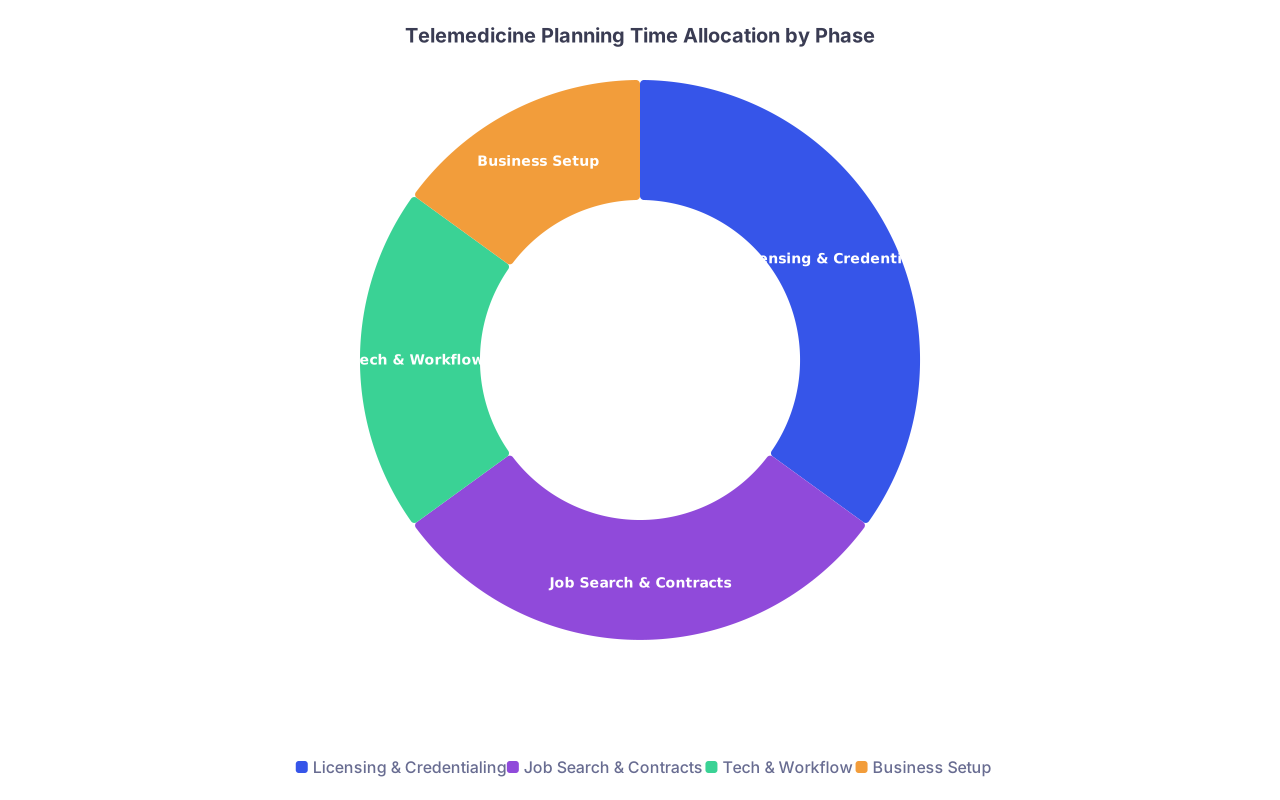
| Category | Value |
|---|---|
| Licensing & Credentialing | 35 |
| Job Search & Contracts | 30 |
| Tech & Workflow | 20 |
| Business Setup | 15 |
Month 9: Start Your Licensing Run
At this point you should assume licensing will take longer than anyone promises.
If IMLC‑eligible:
- Start Compact application now.
- Pick 3–7 high‑yield states (where your likely employers are active).
If not IMLC‑eligible:
- Identify 2–3 priority states and begin applications immediately.
Budget time and money:
- Plan for 3–6 hours per application of admin work.
- Track every fee; you can often deduct these later or negotiate reimbursement.
Ask early employers about license sponsorship: Some will pay for 1–3 extra licenses they need clinically. But only if you ask.
Month 8: Build Your Telemedicine Tech Stack
At this point you should be able to run a visit from home without cursing your router.
Core hardware:
- Reliable laptop or desktop with at least dual‑monitor potential
- High‑quality webcam and microphone (built‑ins are usually garbage)
- Wired internet backup or upgraded router; aim for stable video upload
Workspace:
- Quiet, door‑closeable room
- Neutral background, decent lighting (ring light if needed)
- HIPAA‑safe: no visible papers, no family walking behind you
Software basics:
- Password manager
- Encrypted note storage if you’re running any direct‑care work
- EHR training if your target employer uses something new to you (Epic telehealth flows, etc.)
Do a mock clinic: At this point you should:
- Run a “fake clinic” with a friend or partner as a patient.
- Screen‑share, send a prescription, document a note. You’ll find all the awkward friction now instead of live with patients.
Month 7: Decide Your Business Structure (If Going Beyond W‑2)
If you’ll only ever do W‑2 telemedicine employed by a hospital, you can skim this. If you want optionality or 1099 gigs, do not.
Choose your structure by Month 7:
- Solo contractor under your name (simplest, less protection)
- Single‑member LLC (common choice, flexible, clean for contracts)
- S‑corp (only if your accountant says it actually saves you money)
Set up the basics:
- Business bank account
- Bookkeeping system (QuickBooks, Wave, or a spreadsheet if you’re disciplined)
- Separate credit card for business expenses
Find “your” accountant and maybe an attorney: Not just any CPA—someone who actually has physician or healthcare 1099 clients. Ask colleagues who moonlight or do locums.
Months 6–4 Before Switch: Lock in Work and Test the Waters
At this point you should be building real income streams—not just filling out forms.
Month 6: Start Applying and Interviewing Aggressively
Aim for at least 5–10 serious applications:
- 2–3 anchor positions
- 3–7 supplemental tele gigs
Tailor your pitch to telemedicine: In interviews, emphasize:
- Efficiency in documentation
- Comfort with uncertainty and remote exams
- Any previous telehealth (even informal COVID video visits in residency)
Ask the questions that really matter:
- “What’s your actual average visits/hour for physicians at my stage?”
- “What’s the no‑show policy and do I get paid?”
- “Who handles tech failures during visits?”
- “How often does scheduling match the shifts I requested?”
Track every detail in your pivot log: Columns: company, recruiter, comp model, licensure requirements, training timeline, your impressions.
Month 5: Negotiate, Don’t Just Sign
At this point you should have at least some offers or strong leads.
Understand the common comp models:
- Per‑visit
- Per‑hour (shifts)
- RVU‑based where applicable
- Salary + RVU/bonus for system jobs
Push on these levers (within reason):
- Minimum guaranteed hours or panel size
- Floor pay for low‑volume shifts
- Paid training time
- Coverage for licensing, DEA in extra states, and malpractice limits
Compare offers by actual hourly yield, not headline rate:
| Offer Type | Headline Rate | Realistic Visits/Hour | Est. Real $/Hour |
|---|---|---|---|
| Platform A | $25/visit | 3 | ~$75 |
| Platform B | $100/hour guaranteed | 2–3 | $100 |
| Health System C | $220k salary | 20 hr/wk tele | ~$211 |
| DTC Startup D | $15/async consult | 6–8/hr | $90–$120 |
- Lock in at least 2 sources of income:
- One stable anchor (predictable hours)
- One flexible supplemental (you can ramp up/down)
Month 4: Pilot Telemedicine While Still in Brick‑and‑Mortar
At this point you should test your telemedicine workflow in the wild.
Start with 4–8 tele hours/week if possible: Do evenings or weekends around your fellowship or early attending job.
Track your data for a month:
- Visits/hour
- Chart completion time
- Types of issues that are hard via telehealth
- Patient complaints and compliments
Refine your templates and scripts:
- ROS and physical exam language for tele
- Safety scripts: “Red flag” language, clear ER/urgent care thresholds
- Technology troubleshooting lines: “If we get disconnected, I’ll call you at…”
Decide what you never want to see via tele: Build your personal “nope list” (e.g., chest pain, 3rd trimester issues, complex neuro deficits) and stick to it.
Months 3–1 Before Switch: Scale Up and Taper Down Safely
This is where people either land smoothly—or face‑plant into a pay cut. Be methodical.
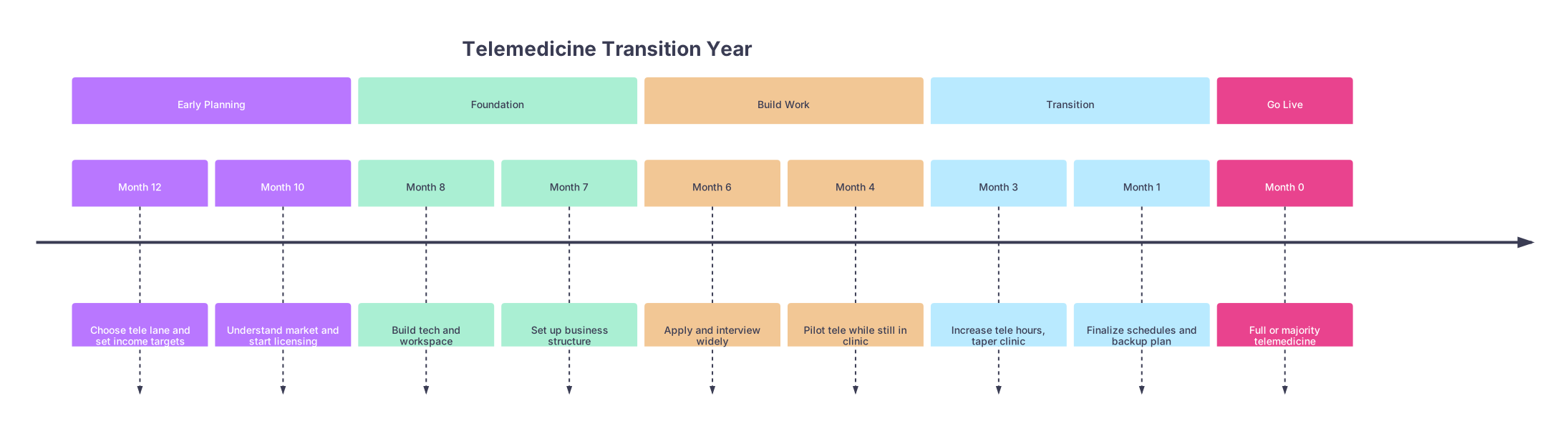
| Period | Event |
|---|---|
| Early Planning - Month 12 | Choose tele lane and set income targets |
| Early Planning - Month 10 | Understand market and start licensing |
| Foundation - Month 8 | Build tech and workspace |
| Foundation - Month 7 | Set up business structure |
| Build Work - Month 6 | Apply and interview widely |
| Build Work - Month 4 | Pilot tele while still in clinic |
| Transition - Month 3 | Increase tele hours, taper clinic |
| Transition - Month 1 | Finalize schedules and backup plan |
| Go Live - Month 0 | Full or majority telemedicine |
Month 3: Increase Telemedicine, Build a Cushion
At this point you should be seeing enough tele patients to extrapolate.
Target 25–50% of your future tele load:
- If you want 30 tele hours/week eventually, aim for 8–15 hours now.
- Confirm: Is the money and pace matching what they promised?
Fix the money gap before you resign:
- Compare your last 2–3 months of combined income to your Month 0 target.
- If you’re not within ~80% of your needed floor, do not jump yet. Adjust offers or add a supplemental gig.
Top off your emergency fund:
- Aim for 3–6 months of essential expenses if you’re going heavy 1099.
- If you’re all W‑2, still keep 2–3 months because startups fold and platforms change.
Month 2: Taper Brick‑and‑Mortar Intentionally
At this point you should be negotiating your exit, not ghosting a schedule.
Set a clear “transition date” with your in‑person employer:
- 6–12 weeks notice is standard.
- Offer to help with recruitment or handoff; you want that reference later.
Avoid overlap burnout:
- Cap your total clinical hours. I’ve watched people try to do 50 brick‑and‑mortar hours + 20 tele. They last 4–6 weeks, then crash.
- Protect at least one entirely off day per week.
Coordinate schedules:
- Lock in your tele shifts for Months 1–3.
- Confirm on‑call expectations so they don’t conflict with any remaining in‑person duties.
Month 1: Dry Run Your New Normal
At this point you should pretend you’re already full telemedicine and see what cracks.
Simulate your Month 0 schedule:
- Work the same days/hours you’ll have post‑transition, even if some of that time is used for admin and business work now.
- Watch your energy, focus, and home life impact.
Tighten your workflows:
- Pre‑charting routines
- Message inbox times (set boundaries early)
- Standard patient education handouts or digital resources you send after visits
Review legal and compliance: Especially if you’re doing any direct‑to‑consumer outside large systems:
- Confirm malpractice coverage for all states and care types
- Understand Ryan Haight / controlled substance rules if prescribing
- Make sure consents and privacy notices are in place
Establish backup plans:
- What if one platform changes comp or cuts hours?
- What if your internet dies mid‑clinic? Have clear answers, not vibes.
Month 0 and First 3 Months: You’re a Telemedicine Physician Now—Act Like One
At this point you’ve switched. Now you stabilize.
Month 0: Launch and Observe
Treat the first 4 weeks as a trial, not a victory lap.
- Track income weekly vs your minimum floor.
- Track how many hours you’re actually working, not just scheduled.
Fix the biggest bottleneck each week: One week might be slow charting. Next week might be tech issues. Next might be communication with your tele‑employer about scheduling.
Guard your professional identity: Especially after fellowship, it’s easy to feel like you “wasted” training if you’re not in a tertiary center. That’s nonsense.
- You’re still using your expertise, just through a different channel.
- Stay involved in your specialty: CME, conferences, maybe a small in‑person niche clinic half‑day if that keeps you grounded.
Months +1 to +3: Optimize and Decide Your Long‑Term Mix
At this point you should be fine‑tuning, not reinventing.
Evaluate each tele gig ruthlessly:
- Keep: predictable pay, decent support, reasonable pace.
- Drop: chaos scheduling, poor tech, constant pay surprises, no malpractice clarity.
Dial in your ideal mix: Some attendings end up with:
- 2 days/week high‑volume platform work
- 2 days/week niche teleconsults in their fellowship area
- 1 day/week admin, CME, business development, or a small in‑person clinic
-
- If your main employer wants more volume in certain states, consider adding those.
- Skip the states where you’ve seen almost no volume or poor reimbursement.
Plan your 12‑month review point: Put a date on your calendar to ask:
- Am I hitting or beating my original income target?
- Am I as clinically engaged as I want to be?
- Do I miss anything from in‑person work enough to add it back 0.5–1 day/week?
Quick Snapshot: What You Should Be Doing When
| Timeframe | Primary Focus |
|---|---|
| Months 12–10 | Choose lane, clean credentials |
| Months 9–7 | Licensing, tech, business setup |
| Months 6–4 | Apply, negotiate, pilot tele |
| Months 3–1 | Scale tele, taper in‑person safely |
| Month 0–3 | Stabilize income, refine workflow |
Three things to remember as you plan this:
- You need a specific telemedicine lane and income target by Month 10, or you’re just drifting.
- Start licensing and contracts earlier than you think—Month 9 is not “early,” it’s necessary.
- Do not resign your in‑person job until you’ve actually piloted telemedicine hours and seen money hitting your account for at least 2–3 months.
Follow that, month by month, and your switch to telemedicine after fellowship becomes a controlled transition—not a leap of faith.