
It’s July 15th. You signed your first attending contract… and your “clinic” is a webcam, a dual‑monitor setup, and a soft ring light. No workroom chatter. No nurses poking their head in. The pager is gone; the chat inbox is not.
You’re a brand‑new telehealth attending, and year one is where you either become “that reliable virtual doc everyone routes complex cases to” or the person who burns out on 30 low‑quality video visits a day.
Here’s the year, broken down. Milestones, metrics, and the skills you should be sharpening at each point.
Month 0–1: Onboarding and Baseline Setup
At this point you should be: getting licensed, credentialed, and building a stable technical and clinical workflow. No heroics yet. Foundation only.
Week 1–2: Contract Signed → Reality Check
Key goals:
- Understand your job structure:
- W2 vs 1099
- Guaranteed hours vs per‑encounter pay
- Minimum RVUs or visit count expectations
- Get a handle on:
- Platforms (Amwell, Doximity, Teladoc, your health system’s Epic telehealth, etc.)
- Scope of practice: urgent care only? chronic disease management? behavioral? multi‑state urgent care?
Milestones:
- You have:
- A clear written schedule template (e.g., 8–12 visits per half day to start).
- A list of which complaints are in‑scope vs automatic redirect to in‑person/ED.
Week 2–3: Tech and Environment Dial‑In
At this point you should be making your work environment an asset, not a liability.
Non‑negotiables:
- Reliable hardware:
- Two monitors minimum.
- Wired Ethernet or rock‑solid Wi‑Fi.
- Quality webcam and headset (audio matters more than video, but both count).
- Secure environment:
- Door that closes.
- HIPAA‑safe background (no family photos or random clutter).
- No smart speakers listening in.
Skill goals:
- Learn your system’s telehealth workflows cold:
- How to:
- Start/reschedule a visit
- Message staff
- Order labs/imaging
- Send e‑prescriptions
- Document templates and smart phrases
- How to:
Week 3–4: Clinical + Documentation Baseline
At this point you should be: safe but slow.
Early metrics to track (for yourself, even if nobody’s watching yet):
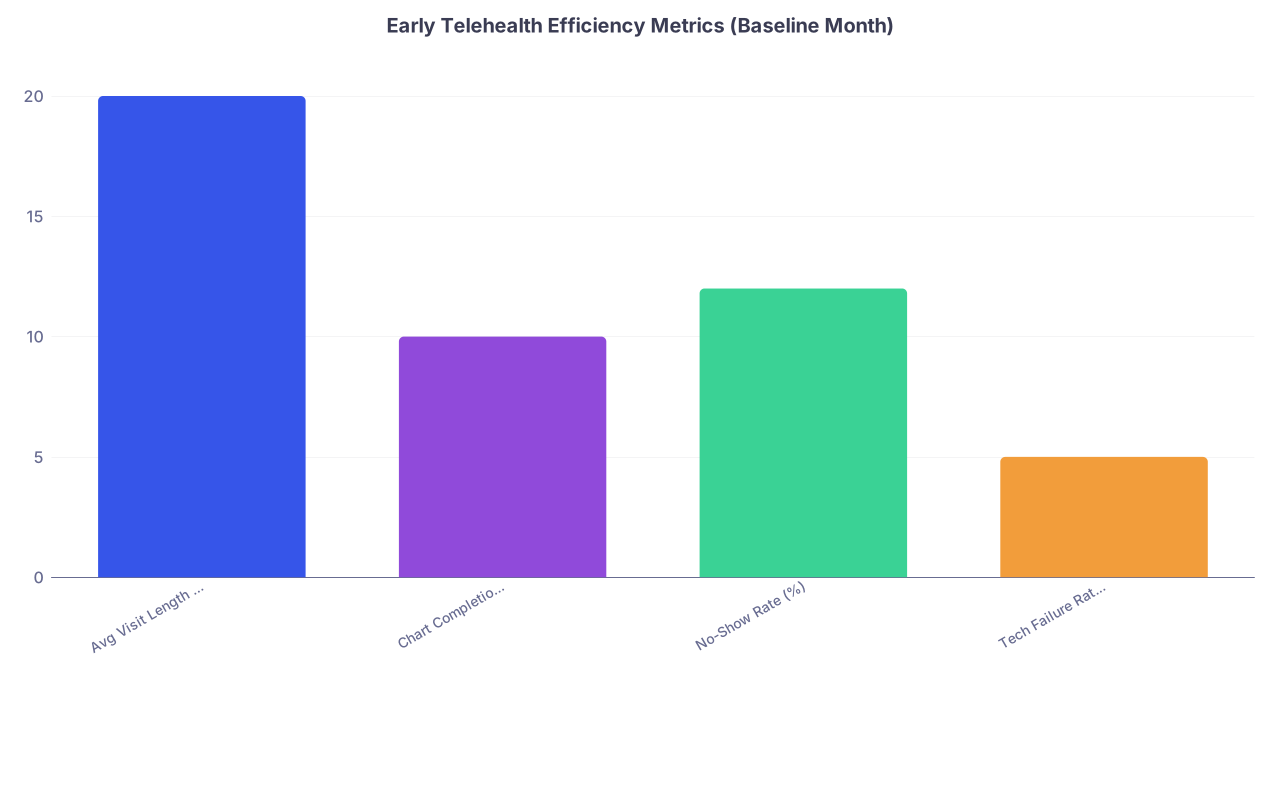
| Category | Value |
|---|---|
| Avg Visit Length (min) | 20 |
| Chart Completion Time (min) | 10 |
| No-Show Rate (%) | 12 |
| Tech Failure Rate (%) | 5 |
Targets by end of month one:
- Average visit length: 18–22 minutes (for mixed new/return).
- Chart completion:
- 90% of charts closed same day.
- No‑show/failed connection:
- You know exactly what happens next — who reschedules, who gets billed, what you document.
Skill goals:
- Build 5–10 telehealth‑specific note templates (e.g., URI, UTI, rash, back pain, mood visit, med refill).
- Get fluent with documenting virtual limitations: “Exam limited by video format. No vitals available. Based on appearance…”
Month 2–3: Core Telehealth Skills and Safe Autonomy
By now you’re out of the honeymoon phase. You’re seeing where telehealth is incredible… and where it’s a liability.
At this point you should be: sharpening judgement about what you can handle virtually vs what needs in‑person.
Month 2: Visit Flow and Communication
Skill goals this month:
Open strong in 60 seconds
- Confirm identity, location (for emergencies), callback number.
- “If we get disconnected I’ll call you at this number. If I’m worried about anything emergent, I will direct you to seek in‑person care or ED.”
Tele‑exam skills
- Coaching patients:
- “Press on your lower abdomen, right here…”
- “Walk 5 steps towards the camera.”
- “Press your finger on the spot that hurts and tell me when.”
- Know exam surrogates:
- Function, appearance, speech, respiratory effort.
- Coaching patients:
Closing loop tightly
- Specific follow‑up:
- Virtual follow‑up vs PCP vs urgent care vs ED.
- Concrete red flags:
- “If you notice X, Y, or Z, do not schedule another virtual visit. Go in person.”
- Specific follow‑up:
Metrics to track by end of month 2:
- Average visit time creeping down toward 16–18 minutes.
- 100% of visits document:
- Patient location
- Emergency plan
- Telehealth limitations
Month 3: Safety, Escalation, and Risk Tolerance
This is where new telehealth attendings either get reckless or overly defensive. You want the middle.
At this point you should be:
- Very clear on your escalation thresholds for:
- Chest pain
- Shortness of breath
- Neurologic changes
- Abdominal pain
- High‑risk pediatrics
- Comfortable saying “This is not safe to handle virtually.”
Skill goals:
- Create personal decision rules:
- Chest pain + age > 40 + risk factors = ED, not “see PCP tomorrow.”
- Vision changes + neurologic symptoms = immediate in‑person evaluation.
- Learn your malpractice policy details:
- Does it cover multi‑state?
- Any documentation requirements specific to telehealth?
Metrics:
- Zero near‑misses that make you lose sleep because you “talked yourself into” virtual management where your gut said no.
- You’ve had at least a handful of ED referrals and you’re comfortable owning that.
Month 4–6: Efficiency, Volume, and Quality
By now you aren’t thinking about where the buttons are. Cognitive load is clinical judgment and communication, not tech.
At this point you should be: building speed without sacrificing safety.
Month 4: Throughput and Documentation Optimization
Goals:
- Streamline charting:
- Maximize templates and smart phrases.
- Pre‑built patient instructions for common diagnoses.
- Improve pre‑visit review:
- Spend 30–60 seconds before each visit scanning meds/problem list to avoid wasting time on basic history.
Target metrics by end of month 4:
| Metric | Target |
|---|---|
| Avg visit length | 14–16 minutes |
| Chart closure same day | ≥ 95% |
| Patient satisfaction | ≥ 4.6/5 |
| Visits per 4‑hour session | 10–12 |
Skill goals:
- Learn to document during visits without breaking rapport:
- Narrate: “I’m going to type what you just said so I don’t miss anything.”
- Start spotting patterns:
- Common time‑sinks
- Diagnoses that always seem to run long (pain, complex psych, disability paperwork).
Month 5: Handling Complexity Virtually
You’ll notice the easy cases blur together. The real growth is what you do with the weird ones.
At this point you should be:
- Comfortable managing:
- Multi‑med chronic disease follow‑ups.
- Medication changes with lab monitoring orders.
- Basic mental health (if in scope) including dosing, follow‑up intervals, and safety plans.
Skill goals:
- Tighten your “anchoring” habit:
- In telehealth, it’s easy to accept the patient’s story as the full truth.
- Force yourself to ask at least three “what else?” questions per complex visit.
- Build a low‑friction follow‑up system:
- Virtual rechecks in 2–3 days for borderline calls.
- Clear instructions on how they reach support if things change.
Metrics to watch:
- Follow‑up visit rate:
- Some is good (safety); too high might mean under‑treating or vague plans.
- Re‑routing to in‑person after virtual visit:
- Keep this low by having clear triage expectations and pre‑visit instructions.
Month 6: Mid‑Year Review and Adjustment
At six months you should stop, zoom out, and look at real data, not just vibes.
Data you want:
- Volume:
- Total visits
- No‑show rates
- Quality:
- Patient satisfaction scores
- Complaint rates (formal or informal)
- Safety:
- Any incident reports or QA flags
- Personal:
- How many days a month you feel mentally wrecked after clinic
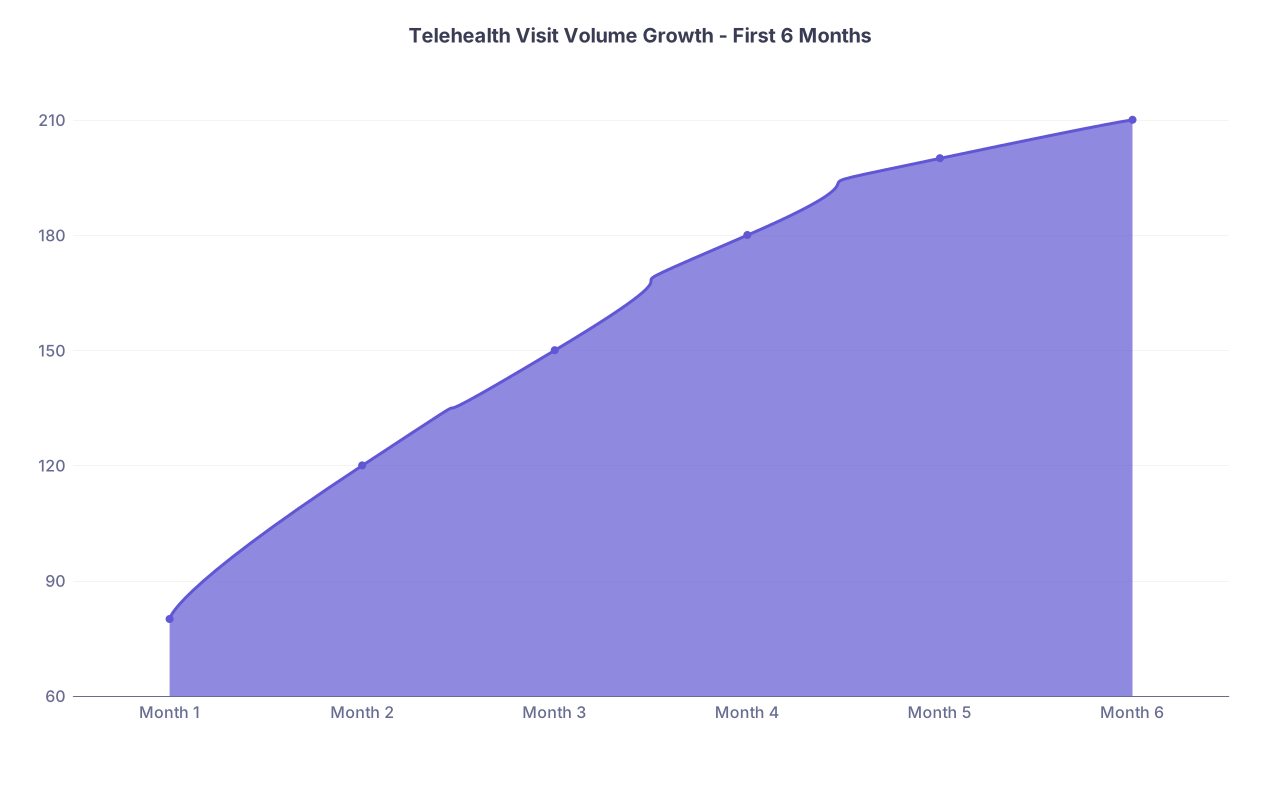
| Category | Value |
|---|---|
| Month 1 | 80 |
| Month 2 | 120 |
| Month 3 | 150 |
| Month 4 | 180 |
| Month 5 | 200 |
| Month 6 | 210 |
At this point you should:
- Adjust your template:
- Protect buffer slots if you’re drowning.
- Increase visits only if your quality metrics and sanity are stable.
- Commit 1–2 concrete improvements for the next quarter:
- Example: “Reduce average visit time from 16 to 14 minutes without touching satisfaction scores.”
Month 7–9: Advanced Telehealth Practice and Leadership Lite
You’re no longer “the new attending.” People route questions to you. Your weaknesses are clearer. Time to get intentional.
Month 7: Niche Skills and Clinical Breadth
At this point you should be: identifying where you can be “the telehealth person” for a specific area.
Common niches:
- Tele‑urgent care with strong antibiotic stewardship.
- Chronic disease tele‑management (diabetes, HTN).
- Women’s health virtual care.
- Behavioral health‑friendly primary care.
Skill goals:
- Pick a niche and:
- Read current guidelines.
- Build 2–3 evidence‑based telehealth protocols.
- Create standardized patient instructions and follow‑up intervals.
Metrics:
- Reduced practice variation:
- For your top 3 diagnoses, your workup and prescribing patterns become consistent and defensible.
Month 8: Teaching and Peer Collaboration
Even if you’re not formally supervising residents, you’re part of a clinical community (or you should be).
At this point you should be:
- Participating in:
- Case review meetings
- QA discussions
- Chat back‑and‑forths with other attendings
Skill goals:
- Learn “chat consults”:
- How to ask a focused question in 2–3 sentences.
- How to give feedback to colleagues without sounding condescending in text.
You can also start:
- Precepting:
- NP/PA colleagues
- Junior telehealth hires
- Residents rotating virtually (in some systems)
This forces you to articulate your decision pathways, not just run on instinct.
Month 9: Metrics Mastery and Quality Improvement
At this point you should be more sophisticated than “how many visits did I do?”
Metrics to own:
- Clinical:
- Appropriate antibiotic prescribing rate.
- Follow‑up ED visit rate after virtual care (if your system tracks it).
- Operational:
- Time from scheduled start to actual start (are you chronically running behind?).
- Message volume between visits and how you handle it.
Start one small QI project:
- Example:
- Problem: High no‑show rate in a certain clinic block.
- Intervention: Adjust auto‑reminders + confirm contact preferences.
- Goal: Drop no‑shows from 15% to 8% in 3 months.
Month 10–12: Consolidation, Career Plan, and Long‑Term Sustainability
You’re approaching your one‑year mark. This is where you stop just “doing visits” and start shaping your career.
Month 10: Burnout Check and Boundary Setting
If you ignore this, the job will chew you up. Telehealth can be deceptively draining.
At this point you should be:
- Honest about:
- How many back‑to‑back video visits you can do before decision fatigue shows.
- How after‑hours charting is creeping into your life.
- Setting boundaries:
- Hard stop times.
- Reasonable panel size and messaging expectations.
Skill goals:
- Learn to say “no” strategically:
- To extra blocks that wreck your week.
- To unsafe expectations (e.g., 25 complex visits in 4 hours).
Month 11: Strategic Positioning and Next‑Step Planning
Your year‑one story matters for your CV and future moves.
At this point you should:
- Assemble your year‑one portfolio:
- Approximate visit volume and scope.
- Quality metrics (patient sat, QI project outcomes).
- Any leadership/teaching roles.
- Decide your trajectory:
- Stay pure clinical?
- Shift toward:
- Operations
- Medical directorship
- Program design
- Telehealth education/training?
You want a narrative like:
- “In my first year I saw ~1500 virtual patients, helped reduce antibiotic prescribing for URIs by 18%, and developed standard templates now used across our group.”
Month 12: One‑Year Review and Reset
You’re not a rookie anymore. Time to formally reset expectations.
At this point you should be:
- Sitting down with leadership/medical director:
- Reviewing:
- Safety events
- Complaints
- Productivity
- Patient satisfaction
- Negotiating:
- Schedule changes
- Pay adjustments (if volume/quality justify it)
- Protected time for projects if you’re doing more than pure clinical
- Reviewing:
Skill and metric targets for “end of year one attending”:
- Clinical:
- Safe, consistent decision‑making in telehealth‑appropriate problems.
- Clear, defensible documentation for riskier calls.
- Operational:
- 12–14 visits per 4‑hour block without chronic overruns.
95% same‑day chart completion.
- Quality:
- Patient satisfaction consistently ≥4.7/5 without gaming the system.
- No significant safety events tied to poor telehealth judgment.
Quick Timeline Snapshot
Here’s your year in stripped‑down form.
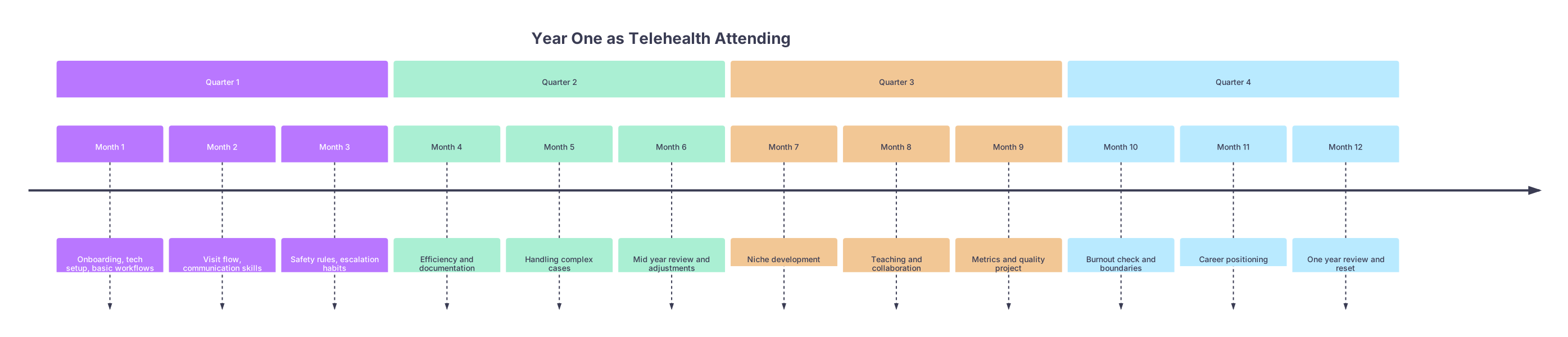
| Period | Event |
|---|---|
| Quarter 1 - Month 1 | Onboarding, tech setup, basic workflows |
| Quarter 1 - Month 2 | Visit flow, communication skills |
| Quarter 1 - Month 3 | Safety rules, escalation habits |
| Quarter 2 - Month 4 | Efficiency and documentation |
| Quarter 2 - Month 5 | Handling complex cases |
| Quarter 2 - Month 6 | Mid year review and adjustments |
| Quarter 3 - Month 7 | Niche development |
| Quarter 3 - Month 8 | Teaching and collaboration |
| Quarter 3 - Month 9 | Metrics and quality project |
| Quarter 4 - Month 10 | Burnout check and boundaries |
| Quarter 4 - Month 11 | Career positioning |
| Quarter 4 - Month 12 | One year review and reset |

FAQ (Exactly 2 Questions)
1. How many visits per day is reasonable in my first year as a telehealth attending?
For mixed‑complexity primary care or urgent care telehealth, 20–24 visits in an 8‑hour day is a reasonable upper limit once you’re established. Early on, 14–18 is more realistic while you’re learning the platform, refining templates, and building judgment. If someone expects 30+ non‑trivial visits per day from a brand‑new telehealth attending, that’s a red flag for quality and burnout.
2. Does telehealth experience “count” the same as in‑person experience for future jobs?
It does if you treat it like real medicine, not a side gig. Employers care about volume, scope of practice, quality metrics, and what you’ve built. If after one year you can point to hundreds or thousands of visits, clear safety and satisfaction data, and concrete contributions (protocols, QI, teaching), that experience is absolutely credible. If you treated it like casual moonlighting with no metrics, it will look like that on paper.
Key points to walk away with:
- Year one is about safety first, then efficiency, then leadership. In that order.
- Track your own numbers from day one: visit length, chart closure, satisfaction, and follow‑ups. Data forces growth.
- By month 12, you should have a clear story of who you are as a telehealth clinician and where you want to push your career next.