

The blunt truth: yes, you can use test anxiety to explain a Step retake—but only if you do it without whining, without self-pity, and with clear evidence that you fixed the problem. Most people get this wrong and sound like they’re asking for pity. You’re not. You’re giving context and proving growth.
Here’s how to do that like an adult, not a victim.
The Core Principle: Context, Not Excuses
Programs do not care that you were anxious. They care what your scores are and what those scores predict about your performance in residency, on boards, and under pressure.
So your goal is not to make them feel bad for you. Your goal is to:
- Acknowledge the problem (briefly)
- Own your responsibility (clearly)
- Show what you did about it (concretely)
- Prove that it worked (with data)
If any part of your explanation reads like, “This isn’t my fault,” you’ve slid into excuse-making. The tone needs to be:
- Calm
- Matter-of-fact
- Solution-focused
Think: “Here’s what happened. Here’s what I learned. Here’s why you can trust me now.”
When It’s Reasonable To Mention Test Anxiety (And When It’s Not)
You do not need to explain every minor score bump. But you do need to explain patterns that trigger questions in a program director’s mind.
Here are situations where mentioning test anxiety is reasonable:
- Large gap between first and second Step attempt (e.g., 208 → 238, or fail → solid pass)
- Clear discrepancy between in-course performance and exam day outcome
- Documented, treated test anxiety with obvious improvement after intervention
- A retake that was mandatory after failing, but your subsequent performance was clearly better across exams/rotations
And here’s when you should not lean on test anxiety:
- Both scores are mediocre and unchanged
- You’ve never actually addressed the anxiety (no therapy, no coaching, no strategy changes)
- You still perform inconsistently on other standardized exams
- You’re using “test anxiety” as a vague label instead of a specific, treated issue
If your story doesn’t end with, “And here’s the evidence that I can now handle high-stakes exams,” do not bring it up. Full stop.
The 4-Part Formula: How To Explain It Without Excuse-Making
Use this framework whenever you’re writing about a Step retake in ERAS, a personal statement, or an interview answer.
1. Start with the facts, not the feelings
Lead with numbers and outcomes, not emotions.
Bad:
“I’ve always struggled with severe test anxiety, which really affected my performance on Step 1.”
Better:
“On my first attempt at Step 1, I underperformed relative to my NBME practice scores and my clerkship evaluations.”
Then, one sentence of context:
“I realized that my performance on high-stakes standardized tests did not reflect my day-to-day clinical knowledge and judgment.”
You’re anchoring in data, not drama.
2. Take responsibility explicitly
This is the difference between “context” and “excuse.” You have to say, in your own words, that you own the outcome.
Example:
“I take full responsibility for my initial performance. I underestimated how my test anxiety and pacing issues would affect me on exam day.”
Notice: no blaming the testing center, the schedule, the weather, the dog, the pandemic, or the curriculum.
3. Describe what you actually did to fix it
This is where most people are painfully vague. “I learned better coping skills” says nothing. You need specific actions.
Examples of specific, grown-up actions:
- Working with a therapist trained in CBT for test anxiety
- Doing timed full-length practice exams to simulate test-day conditions
- Meeting with a learning specialist from your school and implementing a structured plan
- Developing and practicing a standardized test routine (sleep schedule, nutrition, breaks, warm-up questions)
- Addressing underlying issues (sleep, ADHD, depression) with a professional
- Decreasing perfectionistic over-review in favor of timed questions
You want something that sounds like this:
“Over the following months, I worked with a psychologist on CBT-based strategies for performance anxiety, completed multiple timed full-length practice exams under exam-like conditions, and met regularly with a learning specialist to adjust my pacing and question-approach strategy.”
That’s concrete. That’s someone I can trust to handle feedback and fix problems.
4. Close with proof: improvement and consistency
You must show that your explanation matches your trajectory. This is where your retake and other metrics do the talking.
Example structure:
“As a result, my performance improved significantly. My Step 1 score increased from ___ to ___ on my second attempt, aligning with my NBME practice exams. My subsequent performance on Step 2 and my clinical evaluations has been consistent with this improvement.”
You’re tying the story up: problem → intervention → measurable improvement → steady performance.
Example Phrases You Can Use (And Ones You Should Avoid)
Let me give you some ready-made language. Take the structure, adjust the details, and make it your own.
Strong, accountable wording
- “I underperformed on my first attempt at Step 1 compared with my practice exams and coursework.”
- “I realized this reflected not a lack of preparation, but ineffective management of test anxiety under high-stakes conditions.”
- “I take full responsibility for that outcome and recognized I needed to develop a more reliable system for performing under pressure.”
- “I sought formal support through our school’s learning specialist and a clinical psychologist.”
- “I treated the retake as an opportunity to demonstrate that I could adapt, implement feedback, and perform reliably.”
- “My improvement on my retake and consistent performance on subsequent exams reflect those changes.”
Weak, excuse-laden wording
Avoid lines like these:
- “I’ve always had test anxiety.” (Too vague. Lifetime victim narrative.)
- “The exam didn’t reflect my true abilities.” (Everyone says this. Programs roll their eyes.)
- “My test center conditions were terrible.” (Unless it was a literal fire alarm, let it go.)
- “I was going through a lot at the time.” (Hand-wavy. Sounds like deflection.)
- “I don’t think the score reflects who I am as a student.” (It’s not about “who you are,” it’s about what you can do.)
If your sentence sounds like you’re talking to a sympathetic friend instead of a skeptical program director, rewrite it.
Where To Put This Explanation (And How Much To Say)
You’ve got a few places to address a Step retake or lower score:
- ERAS “Additional Information” section
- Personal statement (only if it connects to your broader growth story)
- Dean’s letter/MSPE (often handled by the school)
- Interviews (if they ask, “Tell me about your score/retake”)
Guidelines:
- Keep it to 3–6 sentences in writing. This is a footnote, not your autobiography.
- In interviews, 30–60 seconds. Say your piece, then pivot to your strengths.
- Do not build your personal statement around test anxiety. It’s supporting context, not the main character.
If you’re not sure if it’s too long, it probably is.
How Your Test Anxiety Story Should Evolve Over Time
Your narrative about test anxiety should not be static.
M1/M2 internal story:
“I’m struggling with test anxiety and trying to understand it.”
Step 1 retake story:
“I identified that high-stakes exams trigger anxiety and pacing problems. I addressed this with structured support and showed improvement.”
Residency application story (what PDs want to hear):
“I had a performance dip on an early high-stakes exam related to poorly managed test anxiety. I sought structured help, implemented specific strategies, and my subsequent board exams and clinical performance show that I now handle high-pressure testing and clinical situations reliably.”
By the time you’re applying to residency, the message must be: “This used to be a problem. I fixed it. Here’s the evidence.”
Quick Reality Check: Will Programs Believe You?
They’ll believe what your data supports. Not your words.
Here’s how programs informally “score” your explanation:
| Pattern | Program Reaction |
|---|---|
| Big jump on retake, stronger Step 2, strong clerkships | “Fair. They adapted and improved. Low concern.” |
| Small jump, mediocre Step 2, no clear upward trend | “Story doesn’t match data. Still a risk.” |
| Fail → marginal pass, weak subsequent exams | “Chronic testing problem. Test anxiety story not convincing.” |
| Documented improvements + strong letters commenting on growth | “They took this seriously. Probably coachable and resilient.” |
If your scores did not meaningfully improve, you’re better off focusing less on “test anxiety” and more on what you learned about preparation and time management. Do not sell a “fixed” problem when the numbers say otherwise.
Managing Test Anxiety Now So You Don’t Have To Explain It Later
You’re in medical school. You’re going to take:
- NBME subject exams
- Step 1/Level 1
- Step 2/Level 2
- In-service exams in residency
- Board certification exams later
You cannot afford to white-knuckle your way through all of that.
If you suspect test anxiety is real for you, the best move is to address it before it ruins a score. What actually helps:
- A psychologist or counselor who specifically works with performance or test anxiety
- Structured CBT or ACT-based approaches (not just “talking about feelings”)
- Systematic exposure to exam-like conditions: timed blocks, full-lengths, breaks, same start time as real exam
- Breathing + cognitive tools you rehearse during practice blocks, not just on test day
- Fixing the basics: sleep, caffeine abuse, last-minute cramming, skipping meals, pulling overnight review sessions
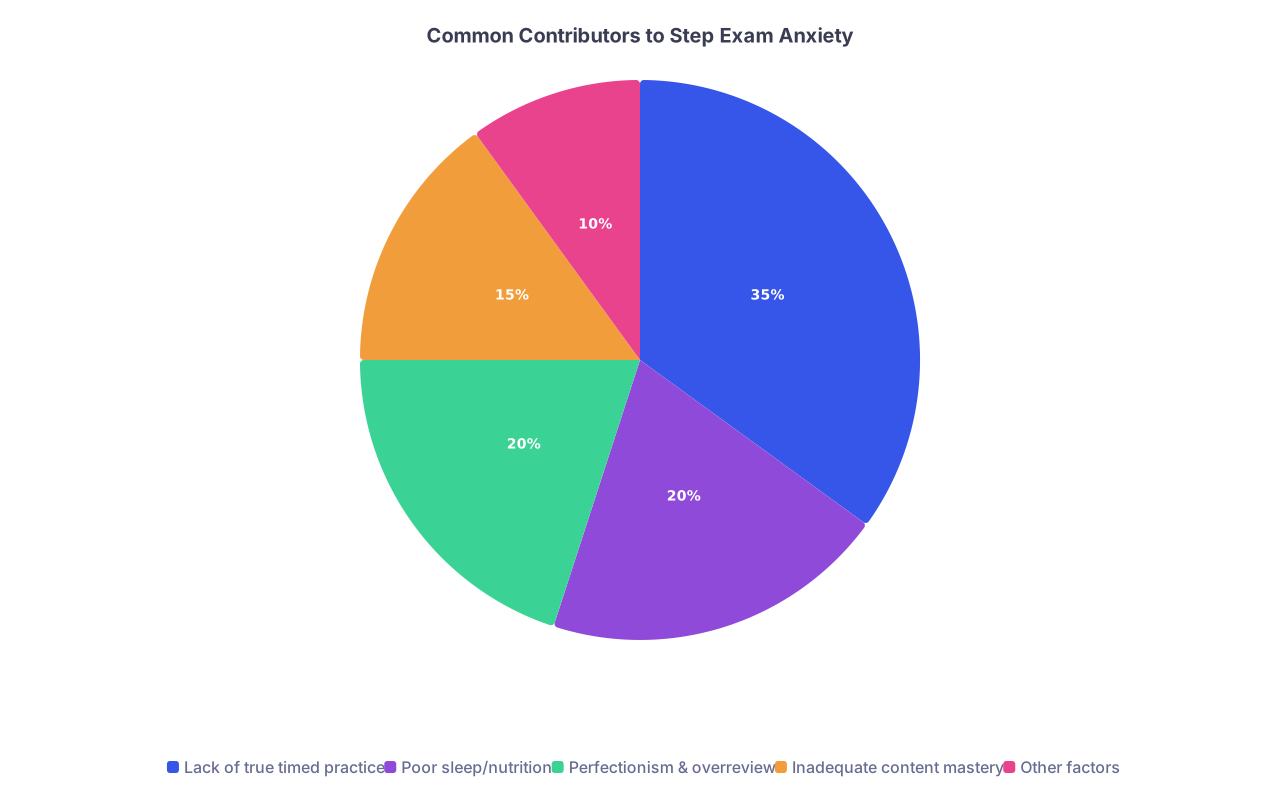
| Category | Value |
|---|---|
| Lack of true timed practice | 35 |
| Poor sleep/nutrition | 20 |
| Perfectionism & overreview | 20 |
| Inadequate content mastery | 15 |
| Other factors | 10 |
Most students blame “anxiety” when the real issue is a mix of under-practice under timed conditions, bad pacing, and unrealistic expectations about what “ready” feels like. Be honest with yourself about which pieces are actually anxiety and which are preparation.
Putting It All Together: A Sample Explanation You Can Adapt
Here’s a concrete example you can model:
“On my first attempt at Step 1, I underperformed relative to my NBME practice scores and my performance in the pre-clinical curriculum. I realized that on high-stakes standardized tests, my test anxiety and pacing were affecting my performance more than my knowledge base. I take full responsibility for that outcome and recognized that I needed to develop more reliable strategies for managing high-pressure exams.
Over the next several months, I worked with our school’s learning specialist and a psychologist to address performance anxiety, completed multiple full-length timed practice exams under test-like conditions, and refined my pacing and question-approach. On my retake, my score improved from ___ to ___, which was consistent with my practice performance. My subsequent Step 2 score and strong clinical evaluations reflect my ability to apply these strategies and perform reliably under pressure.”
Quick, specific, accountable. No self-pity. That’s the tone you’re aiming for.

| Step | Description |
|---|---|
| Step 1 | Score/Fail Below Expectations |
| Step 2 | Identify Issue: Anxiety + Pacing |
| Step 3 | Seek Formal Support & Strategies |
| Step 4 | Implement Timed Practice & Coping Tools |
| Step 5 | Improved Retake Score |
| Step 6 | Consistent Later Exams & Rotations |
| Step 7 | Brief, Factual Explanation in ERAS/Interviews |

FAQ: Test Anxiety, Step Retakes, and What To Say
1. Should I actually use the phrase “test anxiety,” or is that a red flag?
You can use the phrase, but it should not be the centerpiece. Say it once, then focus heavily on what you did about it and how your scores changed. Something like: “I realized that unmanaged test anxiety was affecting my performance on high-stakes exams, so I…” and then move directly into actions and outcomes. If you say “test anxiety” three times and list no interventions, it sounds like a crutch.
2. Do I need formal documentation (diagnosis, accommodations) to mention test anxiety?
No. You don’t need to disclose diagnoses or documentation in ERAS for your explanation to be credible. Programs aren’t asking for your psych notes. What they want is a coherent story: you noticed a pattern, you took concrete steps, and your performance improved. If you had accommodations, you don’t have to discuss them unless you think it strengthens your narrative—and usually, it doesn’t add much.
3. What if my Step 2 score is also not great—should I still bring up test anxiety?
Be cautious. If Step 2 is not clearly stronger, an anxiety story without clear improvement sounds hollow. In that case, de-emphasize “test anxiety” and focus on what you learned about studying, time management, and clinical application. You can still acknowledge anxiety briefly, but don’t frame it as “I fixed this” if the numbers disagree. Emphasize growth in clinical performance, strong letters, and reliability on the wards.
4. Can I talk about test anxiety in my personal statement as part of my “resilience” story?
Only if it’s one part of a broader, positive arc—and kept short. If your personal statement turns into a treatise on your relationship with standardized tests, you’ve lost the plot. A tight paragraph on an early setback, how you sought help, and how that changed your approach can work. But the majority of the statement should focus on why you’re a good fit for the specialty and how you function in real clinical environments, not on test trauma.
5. What’s one thing I can do this week if I know anxiety crushes me on big exams?
Pick one full-length practice block (UWorld, NBME-style, etc.) and treat it like a mini-Step: same start time as your real exam, strict timing, no phone, scheduled break, same snacks, same water. Before you start, write down a simple anxiety plan: breathing pattern you’ll use, what you’ll tell yourself when you panic, how you’ll respond if you fall behind on time. Run that plan in real conditions. You’ll immediately see what breaks down and what helps—and that’s the raw material for a serious, credible test-anxiety strategy.
Open your ERAS doc or your interview prep notes right now and draft a 3–5 sentence explanation using the four-part formula: facts → responsibility → actions → proof. If it reads like a complaint, rewrite it until it sounds like a progress report.


