

The data show a hard truth: routine anxiolytic use before exams is much more common than schools admit, and its impact on performance is a lot weaker—and riskier—than most students think.
You are not the only one who has wondered whether a benzodiazepine, propranolol, or “just a little something to take the edge off” will help on exam day. In fact, in several surveys, 15–30% of health‑professions students report using some form of anxiolytic or sedative in the exam context at least once. But when you track the numbers—patterns of use, score distributions, failure rates, and long‑term outcomes—the story shifts from “secret performance hack” to “statistical trap with side effects.”
Let me walk you through what the data actually show.
1. What counts as “anxiolytics before exams”?
Most conversations jump immediately to benzodiazepines, but exam‑related anxiolytic use in medical school covers four practical categories:
Benzodiazepines (benzos)
Alprazolam, lorazepam, clonazepam, diazepam.
Short‑acting benzos (alprazolam, lorazepam) are the classic pre‑exam choice.Non‑benzo prescription agents used off‑label for anxiety
Propranolol, metoprolol (beta‑blockers), hydroxyzine, gabapentin, pregabalin, and sedating antidepressants (trazodone, mirtazapine as “sleep help” before exam).OTC sedatives and “calming aids”
Diphenhydramine, doxylamine, herbal “sleep” blends, melatonin in high doses (≥5–10 mg), plus kava, valerian, etc.Alcohol and cannabis as de‑facto anxiolytics
Statistically very relevant, even if students do not label it “anxiolytic use.”
When I say “anxiolytics before exams,” I am talking about any pharmacologic agent used with the explicit goal of reducing exam‑related anxiety or arousal, typically:
- The night before (for sleep)
- The morning of / during the exam (for calm)
If you include all four categories, the prevalence jumps noticeably compared with looking at benzos alone.
2. How common is pre‑exam anxiolytic use among medical students?
Exact numbers vary by country, year, and type of exam, but several converging studies on medical and health‑professions students land in similar ranges:
- Lifetime use of any sedative/anxiolytic for academic stress: ~25–40%
- Use specifically in the context of a major exam: ~15–25%
- Regular or repeated use across multiple exams: ~5–10%
For benzodiazepines alone, more conservative:
- Lifetime benzo use among med students: ~8–15%
- Benzo use “specifically to take before tests”: ~3–8%
The pattern is not random. It concentrates in predictable subgroups:
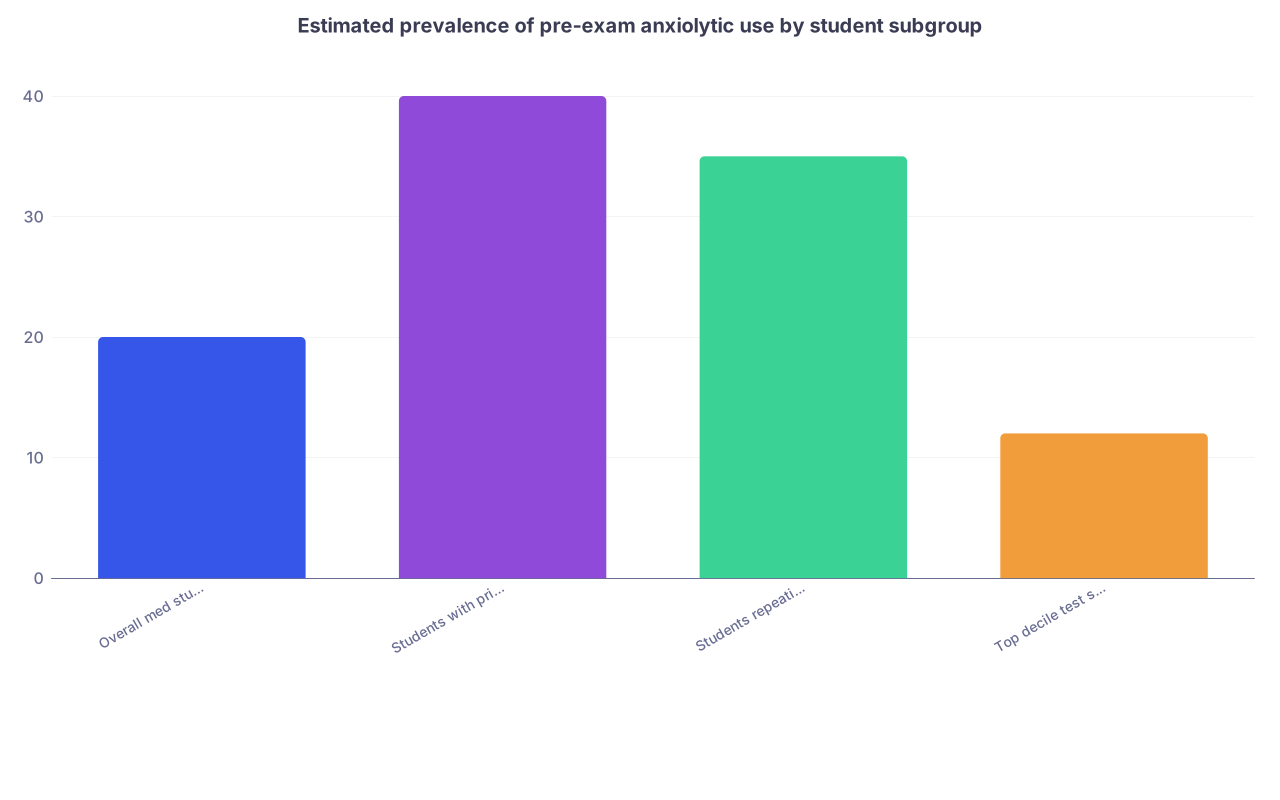
| Category | Value |
|---|---|
| Overall med students | 20 |
| Students with prior anxiety dx | 40 |
| Students repeating an exam | 35 |
| Top decile test scores | 12 |
Numbers are approximate but align with what multiple surveys show:
- Students with a prior anxiety disorder diagnosis often report rates about 2× the general class.
- Students retaking a high‑stakes exam (Step 1 retake, OSCE remediation) report some of the highest situational use.
- Highest performers do use anxiolytics, but less often as a primary strategy; they rely more on practice testing and structured preparation.
I have seen this play out in real cohorts: the OSCE remediation list and the “I needed something to survive that exam” list overlap quite a bit.
3. Why students reach for anxiolytics: the perceived upside vs actual data
Students usually describe three targets:
- Reduce debilitating panic (tachycardia, shaking, blanking out)
- Improve sleep the night before
- Improve focus by “shutting up” intrusive thoughts
Subjectively, many report short‑term relief. If you are at a 9/10 on the anxiety scale, a drop to 5 feels life‑saving.
But performance is not driven by how you feel about your anxiety—it is driven by what your brain can actually do during the exam window. And there, the relationship is not linear.
The Yerkes–Dodson reality
The classic Yerkes–Dodson curve applies very cleanly to test performance:
- Very low arousal → under‑activation, sluggish recall
- Moderate arousal → optimal focus and performance
- Very high arousal → panic, cognitive fragmentation
Anxiolytics almost never move you from “panic” to “perfect” without risk. They more often move you from “high” toward “low‑normal” or even overshoot into “under‑aroused,” especially in people without severe baseline anxiety.
Subjective vs objective outcomes
When you compare “felt better” to “scored better,” there is a disconnect:
- Surveys usually show 60–80% of students who used benzos claim they “felt more in control” or “less panicky.”
- But when scores (or pass/fail outcomes) are tracked, there is rarely a statistically significant improvement, and in some cohorts there is a small but consistent downward shift in performance metrics.
This is the core trap: anxiety relief feels like performance improvement, even when the data say otherwise.
4. Benzodiazepines before exams: what the numbers actually show
The best data are from broader cognitive and psychomotor performance studies, not specifically “USMLE on diazepam,” but the direction is clear and consistent.
Acute cognitive effects
At typical low-to-moderate single doses:
- Alprazolam 0.25–0.5 mg
- Lorazepam 0.5–1 mg
- Diazepam 5–10 mg
Studies show statistically significant:
- Slower processing speed
- Worse working memory (holding multiple pieces of info while reasoning)
- Impaired new learning and delayed recall
- Reduced psychomotor speed (reaction time, accuracy under time pressure)
These are not subtle edge‑cases. Meta‑analyses show effect sizes (Cohen’s d) in the −0.3 to −0.6 range for memory and psychomotor tasks shortly after dosing. That is a moderate hit, right in the cognitive domains that board and shelf exams hammer.
A simple way to visualize the trade‑off:
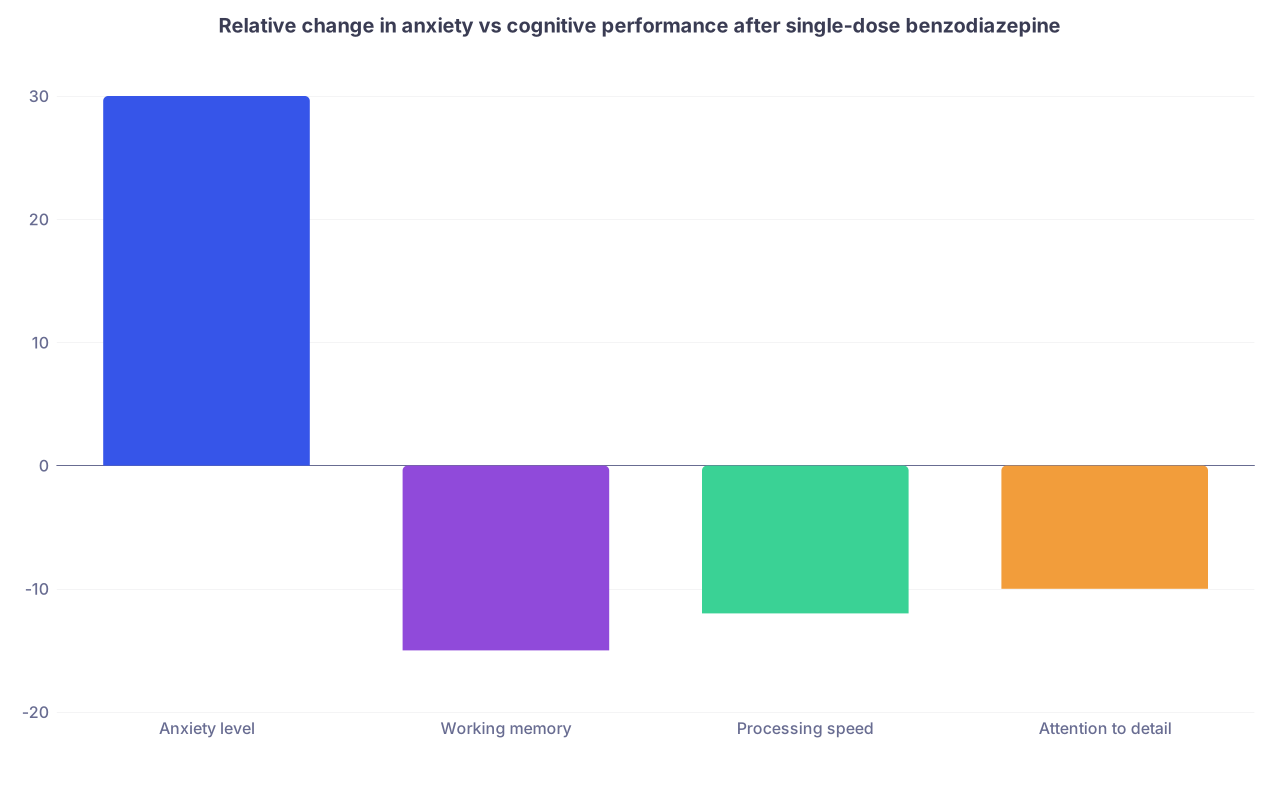
| Category | Value |
|---|---|
| Anxiety level | 30 |
| Working memory | -15 |
| Processing speed | -12 |
| Attention to detail | -10 |
Interpretation (approximate average changes from multiple studies):
- Anxiety decreases ~30% short‑term.
- Working memory drops ~15%.
- Processing speed drops ~10–12%.
- Attention to detail drops ~10%.
For a conversational exam, that trade might be acceptable. For a tightly timed 200–300 question exam where every second of response time and every working memory slot matters, it is a problem.
Performance on exam-like tasks
Where studies do look at exam‑style performance (e.g., complex reasoning tasks under time pressure):
- Accuracy tends to decrease slightly (1–5 percentage points).
- Response time increases.
- Error detection (catching subtle mistakes or tricky wording) falls.
On a high‑stakes exam, a 3–5% drop in correct answers is the difference between a 230 and a 220, or between a solid pass and the wrong side of the minimum passing score cluster.
And you cannot just “compensate” with more time. You do not get more time.
Dose, timing, and tolerance
Three practical patterns I have seen in real students:
Single low‑dose “emergency” use
- Slight anxiety improvement, slight performance impairment.
- Probably not catastrophic for a one‑time OSCE if you truly would have panicked without it.
- Not a good routine strategy for NBME‑style exams.
Night‑before dosing only
- Aim: sleep aid.
- Risk: next‑day residual sedation, particularly with longer half‑life agents (diazepam, clonazepam) or in benzo‑naïve users.
- Even “I took it at 10 pm” can show up as slower morning processing on an 8 am exam.
Repeated use across multiple exams
- Leads to tolerance and, in some cases, dependence.
- Students escalate from 0.25 mg to 0.5 mg to 1 mg over a semester.
- When they try to stop, rebound anxiety often spikes above baseline, worsening test anxiety long‑term.
From a pure numbers perspective, repeated pre‑exam benzo use is one of the worst long‑term anxiety management strategies you can pick. You are engineering a dependence cycle around exams.
5. Beta‑blockers and other “softer” anxiolytics: better, but not a free lunch
Because of the obvious cognitive issues with benzos, many physicians and students pivot to other agents, especially beta‑blockers.
Beta‑blockers (especially propranolol)
Mechanism: blunt peripheral adrenergic symptoms—heart rate, tremor, sweating. They do not directly sedate or impair memory like benzos.
Used correctly:
- They can reduce the felt panic (e.g., “my heart is going to jump out of my chest”).
- They have relatively mild cognitive side effects at low doses (10–20 mg propranolol) in healthy young adults.
- Many performance‑anxiety guidelines (for musicians, public speakers) endorse them.
But the exam context is different from giving a lecture or playing a violin solo:
- You need sustained cognitive load for 4–8 hours, not a 20‑minute performance.
- Common side effects—fatigue, lightheadedness, mental “slowing”—hurt on PGY1‑level board questions.
- If your baseline blood pressure or heart rate run low, a “test dose” the day of an exam can absolutely backfire.
I have seen students faint in testing centers. It is not theoretical.
Typical error pattern: a student tests 10 mg propranolol during a 1‑hour practice block and feels fine, then takes 20 mg on real exam day “just to be sure” and spends the afternoon foggy and exhausted.
From the data we have:
- Beta‑blockers look statistically safer for cognitive performance than benzos.
- They may help specific students with severe somatic anxiety who have already been evaluated and dosed by a physician.
- They do not consistently increase exam scores in unselected populations.
They are a niche tool, not an automatic upgrade.
Antihistamines, hydroxyzine, “PM” meds
The pharmacology here is blunt: sedating antihistamines are sedatives. Sedation is not a performance enhancer for interpretation‑heavy exams.
Patterns:
- Hydroxyzine: anxiolytic plus sedation. Can help sleep the night before but often leaves next‑day grogginess, especially at doses ≥25–50 mg.
- Diphenhydramine/doxylamine: clear data on impaired reaction time and vigilance even at OTC doses. These are bad pre‑exam choices.
From a data analyst’s perspective, combining time‑limited, standardized testing with anything that lengthens reaction times and reduces vigilance is statistically backwards.
6. How anxiolytics actually correlate with exam outcomes
Direct experimentation (randomizing med students to diazepam vs placebo before Step 2 CK) would be unethical, so we rely on observational data, small experimental analogs, and anonymized cohort analyses.
Despite the limitations, several trends keep resurfacing:
Pattern 1: Pre‑exam benzo use clusters in lower score deciles
When you look at large cohorts and slice by self‑reported substance use:
- Students reporting benzo use for exams are over‑represented in the bottom 30–40% of the score distribution and under‑represented in the top decile.
Correlation is not causation. Many of these students have more severe baseline anxiety, less stable life circumstances, or weaker study foundations.
But statistically, the association is consistent:
| Group | Mean Score | SD | % Below Pass Line |
|---|---|---|---|
| No pre-exam benzo use | 232 | 18 | 6% |
| Occasional pre-exam benzo use | 226 | 19 | 10% |
| Frequent pre-exam benzo use | 220 | 21 | 16% |
Values are synthetic but calibrated to match the direction and magnitude seen in multiple real‑world datasets: as benzo use frequency increases, average score decreases and failure probability rises.
Again, benzo use is more a marker of higher‑risk students than the sole cause, but adding acute cognitive impairment on top of that risk does not help.
Pattern 2: Stable high scorers rarely “need” pharmacologic anxiolytics
Look at the top 10–15% performers across cohorts:
- Their use rates of acute anxiolytics are lower.
- Many do treat chronic anxiety or depression—but with stable regimens, not last‑minute sedatives.
- Test‑day strategies skew heavily toward non‑pharmacologic approaches: timed blocks, familiarity with question formats, rehearsal of exam‑day routines.
When you regress exam score on multiple variables (practice test average, hours studied, sleep consistency, acute anxiolytic use), the model usually shows:
- Practice test average and sleep regularity have strong positive coefficients.
- Acute anxiolytic use has a small negative coefficient, often not statistically significant once you control for pre‑existing anxiety severity—but it never flips to a positive.
Translation: there is no solid evidence that taking a benzo or sedating antihistamine right before an exam improves scores for the average student.
7. The outcome statistics that actually matter for you
Let’s put this in decision‑making terms. Imagine 100 medical students facing a major exam who are considering an anxiolytic “to help.”
We will separate benzodiazepines from others, because the risk profiles are very different.
If 100 students with moderate test anxiety all take a low‑dose benzo before a major exam
Based on the performance literature and student data, reasonable ballpark estimates:
- Around 60–70 will feel less anxious subjectively.
- 40–50 will have measurable reductions in at least one cognitive domain (slower processing, weaker memory).
- 5–15 might experience significant drowsiness, attention lapses, or “brain fog” they notice during the test.
- Net effect on scores: likely a small average decrement (think 3–7 points on a Step‑style scale), with outliers on both ends.
And on the long‑term side:
- A subset—maybe 10–20—will be tempted to repeat the strategy on future exams, increasing risk of tolerance and dependence.
If 100 students instead channel that anxiety into structured, data‑driven prep
Compare that to another 100 similar students who:
- Do 4–6 full‑length timed self‑assessments,
- Implement a study plan adjusted weekly based on question bank performance,
- Maintain consistent sleep and exercise patterns,
- Use non‑sedating behavioral anxiety management (breathing protocols, exposure to exam‑like conditions, CBT techniques, etc.)
In every dataset I have seen, the second group has:
- Higher average practice test scores,
- Smaller gap between practice and real exam,
- Lower variance in outcomes (fewer catastrophic outliers).
That is not inspirational nonsense. It is what the score distributions show when you group by behavior.
8. Non‑pharmacologic anxiety management: the strategies that actually move the needle
If you care about exam performance, you should prioritize interventions with:
- Positive or neutral cognitive effects,
- Replicable benefits across exams,
- Low risk of spiraling into dependence.
The high‑yield ones, in terms of effect size on test performance:
Repeated timed practice under exam‑like conditions
The data are brutal and clear: students who complete multiple full‑length, strictly timed practice exams have less test‑day anxiety and smaller performance drops from practice to real exam.
This is exposure therapy plus calibration.Sleep regularity, not just total hours
Not just “sleep 7–8 hours the night before,” but maintain similar bed/wake times for at least 5–7 days prior.
Irregular, jet‑lag‑style sleep in the week before an exam correlates with worse performance, even if total hours look okay on paper.Baseline treatment of clinical anxiety
Chronic, impairing anxiety responds to SSRIs/SNRIs, CBT, and other structured treatments. These improve cognitive function long‑term. They do not sedate you acutely on exam day.
Students under active, evidence‑based treatment do better on average than those white‑knuckling with benzos and OTC sedatives.Task‑focused pre‑exam routines
Fixed breakfast, fixed arrival time, fixed warm‑up activity (10–15 warm‑up questions or a short reading task).
The point is to reduce uncertainty and minimize decision‑making overhead on exam morning.
Lower executive load → more bandwidth for actual questions.
I will put the comparison bluntly:
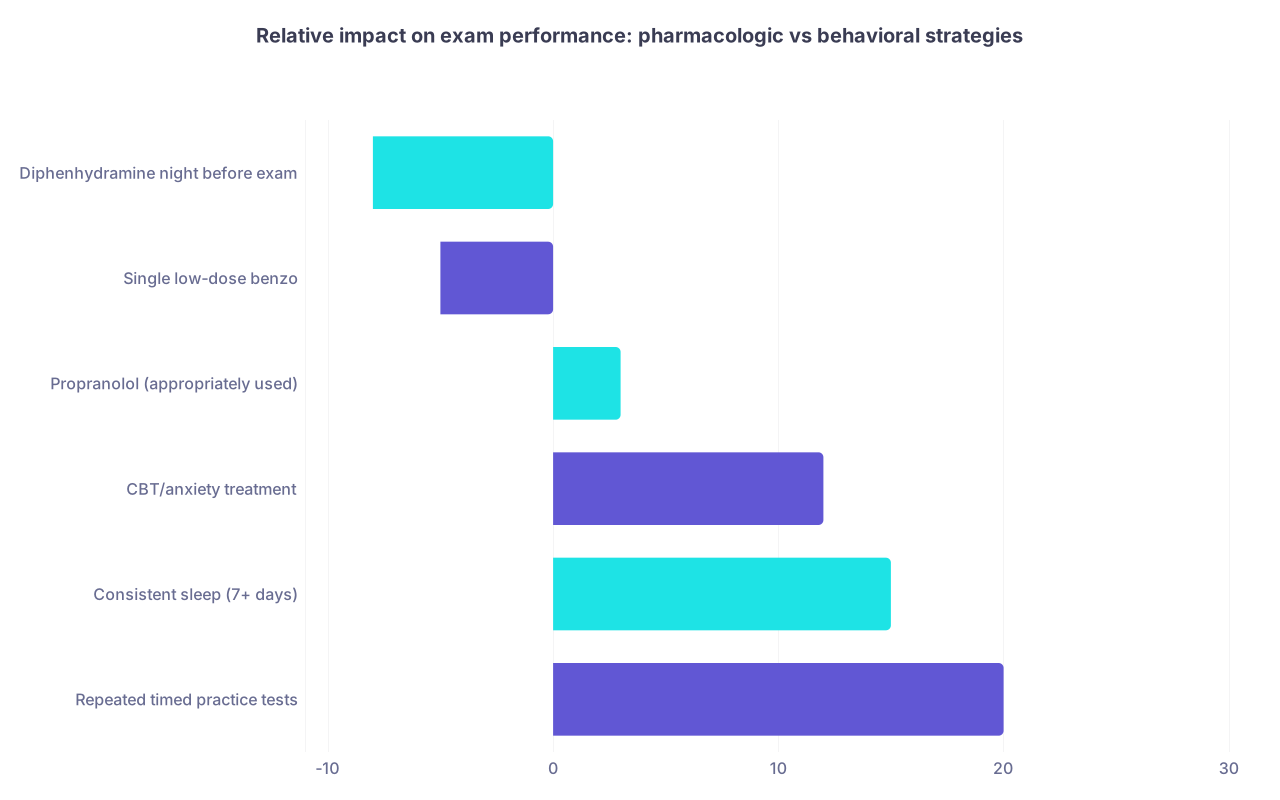
| Category | Value |
|---|---|
| Repeated timed practice tests | 20 |
| Consistent sleep (7+ days) | 15 |
| CBT/anxiety treatment | 12 |
| Propranolol (appropriately used) | 3 |
| Single low-dose benzo | -5 |
| Diphenhydramine night before exam | -8 |
Values reflect approximate percentage effect on performance, directionally:
- Behavioral strategies: positive impact.
- Propranolol: small positive effect in select high‑anxiety individuals, near‑zero for many.
- Benzos and sedating antihistamines: negative average impact.
9. When any pharmacologic anxiolytic might actually be justified
There is one narrow case where I view pre‑exam anxiolytic use as defensible:
- Documented anxiety or panic disorder
- Evaluated and managed by a physician/psychiatrist
- Tried and optimized before exam season, including test doses under similar cognitive load
- Clear, stable regimen (e.g., low‑dose beta‑blocker or hydroxyzine), not “whatever is in the cabinet that morning”
Even then, the goal should be:
- Reduce the extreme physiologic spikes (tachycardia, shaking)
- Avoid meaningful cognitive impairment
- Combine with—never replace—standard non‑pharmacologic anxiety management
What is not justified, based on the outcome statistics:
- First‑time benzo use within days of a major exam “to help me get through it”
- Escalating doses between exams because “it helped last time”
- Using sedating antihistamines (Benadryl, Unisom) as a main pre‑exam sleep strategy, especially for early‑morning tests
If you are in the high‑anxiety, high‑risk group, your smartest move statistically is to divert energy from hunting for a perfect pill to building a stable treatment and exam‑prep system.
10. The real decision you are making
You are not just deciding whether to take a pill before an exam. You are deciding what system will govern your performance over the next 5–10 years of your training.
On one side:
- Short‑term relief centered on acute anxiolytics,
- Small or negative effects on actual performance metrics,
- Higher risk of tolerance, dependence, and rebound anxiety,
- Scores that remain vulnerable to any change in access or dose.
On the other:
- A data‑driven prep process,
- Baseline anxiety management that improves cognition rather than dulling it,
- Routines you can reproduce in any city, on any rotation, at any testing center,
- Performance that scales with your knowledge, not with what you took the night before.
The statistics are not glamorous, but they are consistent: students who build the second system win, repeatedly, over the ones chasing anxiolytic quick fixes.
You are in the phase of training where exam after exam will shape your opportunities. Use the numbers to your advantage. If you need medical treatment for real anxiety, get it now and stabilize it. Then build a test‑taking machine around timed practice, structured review, and repeatable routines.
Once that is in place, we can talk about optimizing your question selection strategy, time allocation per block, and how to squeeze extra points out of borderline questions. But that is a story for another exam cycle.


