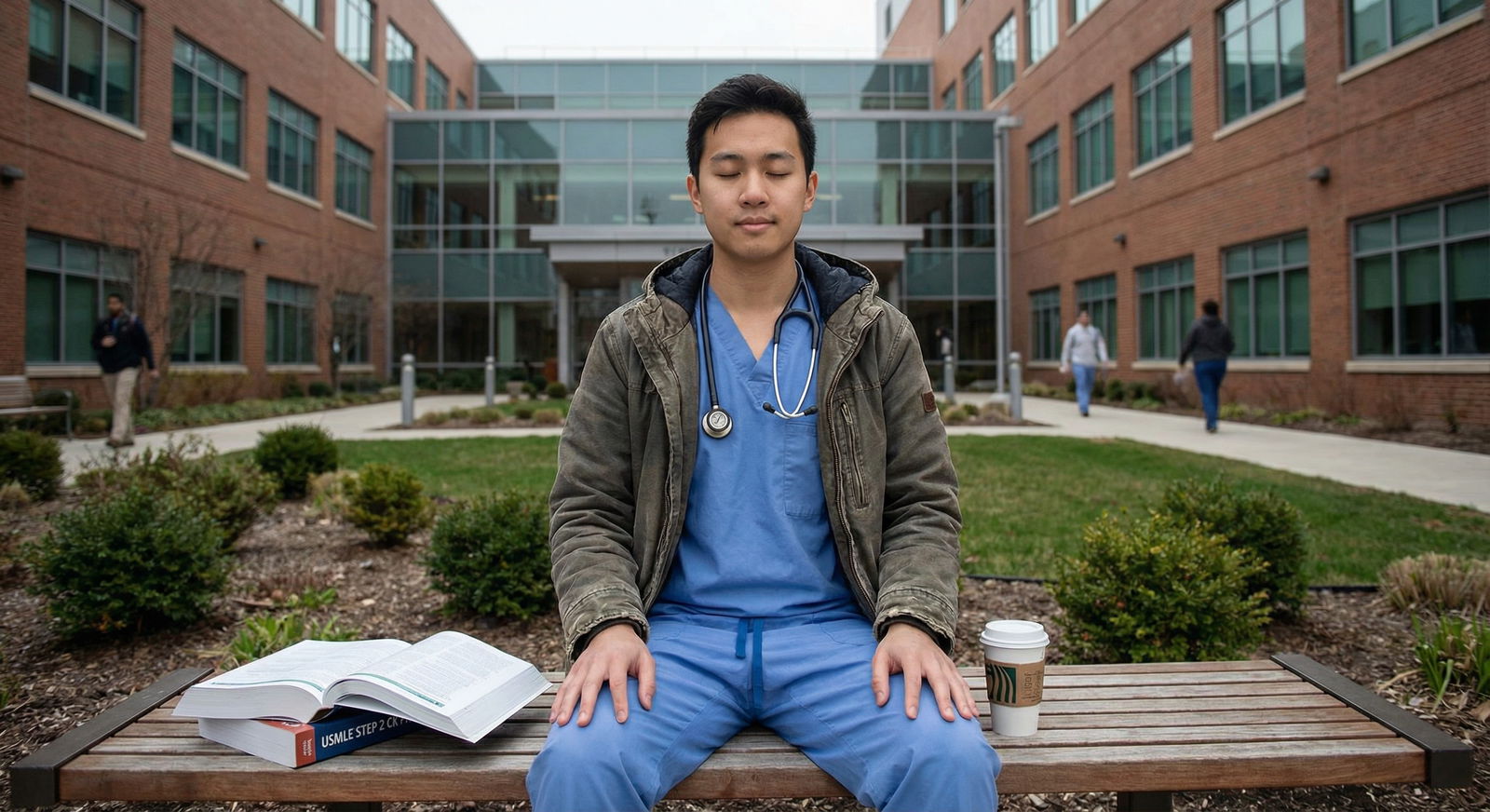
You are walking out of the testing center replaying one specific encounter in your head. The angry patient you never really de-escalated. The neuro exam you rushed. The note you finished with 10 seconds left, knowing the assessment was weak.
A few weeks later, your score report hits: Fail.
Not “near miss.” Not “borderline.” Just fail.
You are here now:
- You passed Step 1 and Step 2 CK.
- You failed Step 2 CS once.
- You are somewhere between embarrassed, angry, and scared about what this means for residency.
Let me be blunt: one CS failure does not end your career. But if you treat the retake like “I’ll just be more careful next time,” you are begging for a second failure. The exam is standardized. Your preparation has to be, too.
What follows is a step‑by‑step recovery and rebuild plan. Not vague motivational talk. A concrete protocol you can start today.
Step 1: Strip the Emotion, Dissect the Score Report
You cannot fix what you did not actually analyze.
Your CS report breaks performance into three subcomponents:
- ICE (Integrated Clinical Encounter) – data gathering + documentation
- CIS (Communication and Interpersonal Skills) – how you talk to patients
- SEP (Spoken English Proficiency) – clarity, fluency, comprehensibility
You probably glanced, saw “fail,” felt sick, and closed it. Now you are going back in.
1. Do a structured post‑mortem on the score report
Print it. Sit with a pen.
For each subcomponent:
- Mark: Pass or Fail
- Mark how far you were from the borderline.
- Circle the weakest area.
If more than one subcomponent is weak, you still pick one primary and one secondary target. You cannot fix everything at once.
Common patterns I have seen:
- International grad: ICE fail, SEP borderline, CIS pass
- Native US student: ICE borderline, CIS fail (rushed, awkward, too “clinical”)
- Strong test‑taker, weak systems: ICE pass, CIS borderline, SEP pass, but fails on cumulative margin because of inconsistency
Write one clear sentence describing why you failed, based on data, not emotion.
Examples:
- “I failed because I missed key history and physical elements and wrote weak differentials (ICE).”
- “I failed because my communication was abrupt, I did not summarize, and I did not check understanding (CIS).”
- “I failed because my accent plus speed and mumbling made my English difficult to follow (SEP).”
If you cannot honestly state why, get help from someone who has seen your clinical performance (attending, mentor, CS tutor) and show them the report.
Step 2: Rebuild Your Exam Strategy Around the Rubric
You did not fail Step 2 CS because you did not know enough medicine. You failed because your process did not match the exam rubric.
You will pass your retake by building a repeatable encounter template that hits the rubric every single time.
2.1 Lock in a 15‑Minute Encounter Blueprint
You need a fixed skeleton that you follow for every case. Here is one that works:
Minute 0–1: Entry and rapport
- Knock.
- “Hello, Mr. Smith? My name is Dr. ___, I am the physician working with you today.”
- Shake hands if culturally appropriate.
- Confirm name and age.
- One sentence of empathy or normalization:
- “I understand you are having some chest discomfort; I am going to do my best to help figure out what is going on.”
Minute 1–3: Chief complaint and HPI headline
- “What brought you in today?” Then shut up for 30–60 seconds.
- Reflect back: “So you have been having sharp pain in your chest for the last 2 days, worse with deep breaths. Did I get that right?”
- Establish onset, location, duration, character, associated symptoms, aggravating/relieving factors, prior episodes (or whatever framework you use).
Minute 3–6: Focused HPI + relevant ROS
- Dig into red flags specific to that complaint.
- Chest pain: exertion, diaphoresis, radiation, pleuritic, positional, trauma, recent travel, etc.
- Tailored ROS: just the systems that matter. Not a shotgun list.
Minute 6–8: PMH, meds, allergies, SH, FH
- Targeted, not exhaustive.
- Always ask:
- Medications (name, dose, adherence)
- Allergies and reactions
- Tobacco, alcohol, drugs in a neutral tone
- One or two relevant family history questions.
Minute 8–11: Focused physical exam
- Vitals (verbalize that you reviewed them).
- Minimum: heart, lungs for most cases.
- Add targeted maneuvers:
- Chest pain: cardiac + lung + peripheral pulses + edema
- Abdominal pain: inspect, auscultate, palpate, percuss, rebound/guarding
- Neuro: mental status, cranial nerves, motor, sensory, reflexes, coordination, gait as time allows.
Narrate briefly so the SP and examiner know what you are doing:
- “Now I am going to examine your heart and lungs. Please sit up.”
Minute 11–13: Assessment and plan explanation
- Sit down. Eye level.
- One sentence summary.
- Offer focused differential:
- “Right now my main concerns are X, Y, and Z. X is most likely because…, Y is also possible because…, and I want to rule out Z because it can be serious.”
- Tests: name 3–5 with reasons.
- Initial management or counseling.
Minute 13–15: Questions, safety net, closure
- “What questions do you have for me?”
- Address at least one question.
- Give a return precaution:
- “If your pain suddenly worsens, you feel short of breath, dizzy, or faint, you must go to the emergency room immediately.”
- Thank them, wash hands, tell them what will happen next.
You will memorize this skeleton and run it in your head like a script until it is automatic. The details change. The structure does not.
Step 3: Fix ICE – Data Gathering and the Patient Note
If you failed ICE, it is either:
- You missed key positives/negatives in history/physical,
- Your notes were weak, incomplete, or disorganized,
- Or both.
3.1 Build disease‑based checklists
You do not need 200 differential diagnoses in your head. You need 10–15 chief complaints nailed with automatic question sets.
Examples of high‑yield complaint groups:
- Chest pain
- Shortness of breath
- Abdominal pain
- Headache
- Back pain
- Dizziness
- Cough/fever
- Joint pain
- Vaginal bleeding / discharge
- Urinary symptoms
- Psychiatric (depression, anxiety, suicidal ideation)
For each, make a one‑page checklist:
- Red‑flag history questions
- Key risk factors
- Must‑do physical maneuvers
- Top 3–5 differentials
You are not bringing these into the exam. You are training your brain with repetition.
3.2 Train the note like you train UWorld questions
Your note is not an essay. It is a structured answer to: “Did this person think clinically?”
Your note needs:
- Clear HPI with relevant positives and negatives
- Problem‑focused ROS
- Concise but targeted PE
- Differential prioritized with justification
- Diagnostic workup list that is not random
Use a timer and online note simulators (there are many) and do this:
- Practice encounter (real or case from a book/video).
- Immediately write a note in 10 minutes.
- Score yourself:
- Did I include red‑flag negatives?
- Does my differential explain why diagnoses are likely vs unlikely?
- Are my tests sensible for the differentials listed?
| Section | Must-Have Items |
|---|---|
| HPI | Onset, location, duration, key modifiers |
| ROS | 3–5 systems relevant to chief complaint |
| PE | Vitals + focused relevant systems |
| Differential | 3 diagnoses with brief justification |
| Workup | 4–7 logical tests linked to differential |
You want to be bored by your own structure because it is so consistent.
Step 4: Fix CIS – Communication That Actually Scores
CIS is where a lot of smart students lose points because they treat the patient like a question stem, not a person.
4.1 Bake CIS behaviors into muscle memory
The exam is not evaluating your “vibe.” It is scoring specific behaviors. You need a CIS checklist you hit in every encounter:
- Introduce yourself with name and role.
- Confirm patient name and preferred form of address.
- Wash or sanitize hands visibly.
- Ask permission before sensitive questions or exams.
- Use at least two empathy statements:
- “That sounds really frightening.”
- “I can see this has been very stressful for you.”
- Ask open‑ended questions early on:
- “Could you tell me more about that?”
- Summarize what you heard at least once.
- Check understanding at the end:
- “Just to be sure I explained things clearly, can you tell me in your own words what the plan is?”
Practice these out loud until they feel less forced. They will feel awkward at first. That is normal. You are not auditioning for an Oscar. You are ticking boxes on a standardized form.
4.2 Handle emotion deliberately
If you had an angry, crying, or anxious patient that threw you off, you need a script. Here is a simple de‑escalation framework:
- Stop talking. Let them finish.
- Name the emotion:
- “I can see you are really upset.”
- Align with them:
- “You are right to feel frustrated about having this pain for so long.”
- Ask permission to proceed:
- “Would it be okay if I ask you some questions so I can better understand how to help?”
You will be scored higher for handling emotion than for bulldozing through your HPI.
Step 5: Fix SEP – Spoken English That Is Clear Enough
SEP is not about having a perfect American accent. I have seen people with strong accents pass easily. The common issues are:
- Speaking too fast.
- Mumbling or not projecting.
- Grammar so broken that meaning is unclear.
If SEP was your problem (or borderline), you need recording and feedback, not just “try harder.”
5.1 Record yourself and check three things
Take a sample case. Record the entire 15‑minute encounter with a friend or standardized patient.
Listen and rate yourself 1–5 on:
- Clarity – Can every sentence be understood the first time?
- Pace – Do you rush or leave weird long pauses?
- Word choice – Are you using overly complex medical jargon?
Aim for:
- Short, simple sentences.
- Avoid idioms, slang, complex phrases.
- Replace jargon:
- “Myocardial infarction” → “heart attack”
- “Dyspnea” → “shortness of breath”
If necessary, get a tutor or language coach for 4–6 targeted sessions. This is not a character flaw. It is a skills deficit that is fixable.
Step 6: Build a 4–6 Week Concrete Study Plan
You failed CS once. You do not get to “squeeze in” studying around everything else. You need a real schedule.
Here is a 4‑week minimum plan. If your prior performance was far from passing, stretch this to 6–8 weeks.
Week 1: Diagnosis and foundations
Goals:
- Understand exactly why you failed.
- Build or refine your encounter skeleton.
Actions:
- Deep review of score report, as above.
- Watch or review 2–3 full sample encounters (from reputable CS prep resources).
- Write your 15‑minute encounter template and say it out loud, several times a day.
- Create 10–15 complaint‑based history/PE checklists.
Time:
- 2–3 hours per day, 5–6 days this week.
Week 2: Controlled practice with feedback
Goals:
- Apply your structure to actual cases.
- Begin fixing obvious weaknesses.
Actions:
- 1–2 timed encounters per day (15‑minute encounter + 10‑minute note).
- After each case, immediate self‑critique:
- Did I hit my CIS checklist?
- Did I miss any red‑flag questions?
- Was my differential reasonable?
- Once this week, record a full mock case for SEP review.
- Review 3–5 patient notes against high‑quality sample notes.
Time:
- 3–4 hours per day, 5–6 days per week.
Week 3: Full‑length simulations
Goals:
- Build stamina and consistency over multiple cases.
- Reduce time pressure.
Actions:
- 2 days this week: run mini‑blocks of 4 cases back‑to‑back (with realistic timing).
- Other days: 2–3 cases with intense debriefing:
- Write alternate better notes.
- Rewrite differential and plan sections until they read cleanly.
- Get at least one external evaluator: resident, attending, CS tutor, or peer who passed recently, to watch 2–3 encounters and critique.
Time:
- 4 hours per day on simulation days, 3 hours on others.
Week 4: Polish and stabilization
Goals:
- No drastic changes. Just make your performance boringly reliable.
Actions:
- Alternate days:
- Day A: 4–5 cases back‑to‑back with minimal debrief
- Day B: 2 cases + heavy review + SEP practice (read your plan explanations out loud for clarity).
- Build a “day‑before‑exam” checklist (ID, stethoscope, timing strategies, self‑talk script).
By the end of week 4 you should:
- Finish most encounters by 14 minutes without panic.
- Consistently include 3 logical differentials and 4–7 tests.
- Hit CIS behaviors in 90%+ of cases.
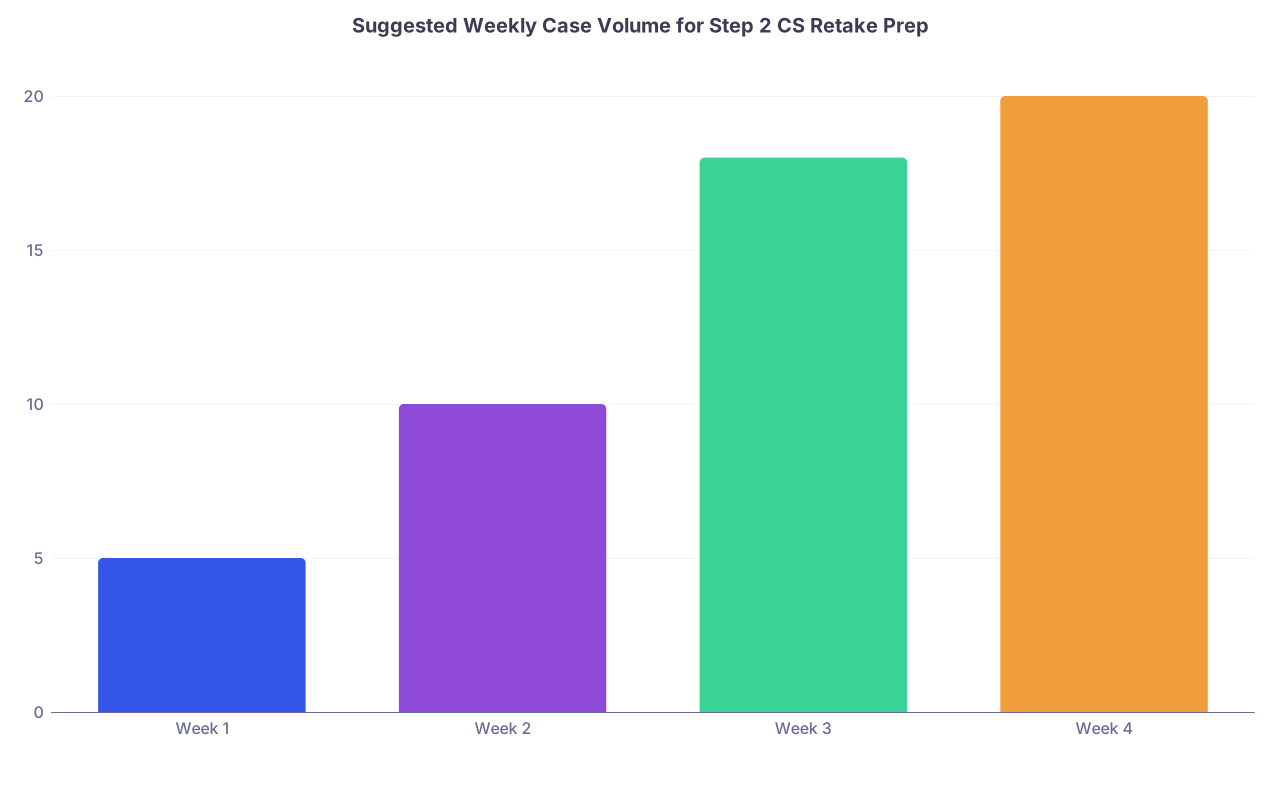
| Category | Value |
|---|---|
| Week 1 | 5 |
| Week 2 | 10 |
| Week 3 | 18 |
| Week 4 | 20 |
If at the end of week 4 you still see major gaps, you postpone. Better a later pass than an early second fail.
Step 7: Get Real Feedback, Not Just Reps
Practicing the wrong thing 100 times just entrenches bad habits.
You need at least two external feedback sources:
- Someone to critique your live encounters
- Someone to critique your notes
Sources I have seen actually help:
- A resident or senior student who recently passed CS with strong performance.
- Formal CS prep courses (variable quality but some are solid if you pick carefully).
- School OSCE faculty or clinical skills center staff.
Ask them for specific feedback:
- “Where did I lose points in CIS?”
- “In this note, which key positives/negatives are missing?”
- “Does my explanation to the patient sound clear enough for SEP?”
Do not argue. Write it down. Fix it in the next case.
Step 8: Manage the Psychological Fallout Without Numbing Out
You are not a robot. A failure like this hits hard.
What you cannot do:
- Pretend it did not matter and wing the retake.
- Spiral into shame and delay scheduling the exam for a year.
Here is a sane middle path.
8.1 Control the narrative with programs (for current/future apps)
If you are applying or will apply soon, program directors will see the fail. You beat them to the punch.
You will eventually have a two‑sentence explanation ready:
- “I failed Step 2 CS on my first attempt due to weaknesses in [ICE/CIS/SEP]. I addressed this by [concrete actions: structured practice, faculty feedback, prep course], and passed on my second attempt with strong performance in those areas.”
You are not the first person this has happened to. People match with a CS retake on their record every year.
8.2 Put guardrails on anxiety
You do not need affirmations. You need structure:
- Fixed daily study windows.
- One unplugged block per day with no exam talk or prep.
- Basic sleep and exercise.
If you find yourself checking forums and obsessing, put a hard rule: no anonymous forum browsing until after you pass. They are anxiety accelerators, not solutions.
Step 9: Day‑of‑Exam Protocol
Game day is not the time to “try something new.”
9.1 Morning checklist
- Light breakfast. No new medications.
- Arrive 30–45 minutes early.
- Before you walk in, review:
- Encounter skeleton
- CIS checklist
- Your personal “three things I always do” (e.g., empathize twice, summarize once, check understanding).
9.2 During the exam
Between cases:
- Do not post‑mortem the last patient. That is how you carry one bad encounter into the next three.
- One minute of reset:
- Deep breath.
- Mentally recite your entry script and CIS behaviors.
- Move on.
In the room:
- If you blank on a question, do not freeze. Ask something adjacent and come back later.
- If time is running out:
- Prioritize: finish key parts of the physical, then protect closure. A rushed closure with no explanation or safety net bleeds CIS points fast.
For the notes:
- Use headings consistently.
- If you are short on time:
- Write the assessment and differential before finishing ROS/PE details. ICE gives heavy weight to your reasoning.
Common Pitfalls That Cause Second Failures
I have watched people fail this exam twice. The patterns are painfully predictable:
- Treating the first failure as “bad luck” instead of a skills gap.
- Refusing to get feedback because it feels uncomfortable.
- Over‑focusing on rare diagnoses instead of nailing the big chief complaints.
- Ignoring CIS because “I am good with patients in real life.” The exam does not care. It scores checkboxes.
- Scheduling the retake too soon (under 3–4 weeks) after failing badly.
Do not repeat these.
Quick Reference: What To Do This Week
If you want a simple starting prescription, here it is.
In the next 7 days:
- Print your score report and write a one‑sentence failure reason per domain.
- Build your 15‑minute encounter skeleton on one page. Memorize it.
- Create checklists for at least 5 high‑yield complaints (chest pain, SOB, abdominal pain, headache, mood changes).
- Do 3 recorded practice encounters:
- Watch each once, focusing on CIS and SEP.
- Write 5 timed notes (10 minutes each) and compare them to high‑quality sample notes.
If you do only this your first week, you are already far ahead of where you were before the failure.

| Step | Description |
|---|---|
| Step 1 | Receive Fail Report |
| Step 2 | Analyze Subscores |
| Step 3 | Build Checklists & Note Practice |
| Step 4 | Train Communication Behaviors |
| Step 5 | Record & Get Language Feedback |
| Step 6 | 4-6 Week Study Plan |
| Step 7 | Full-Length Practice Sessions |
| Step 8 | Schedule Retake |
| Step 9 | Day-of-Exam Protocol |
| Step 10 | Main Weakness? |
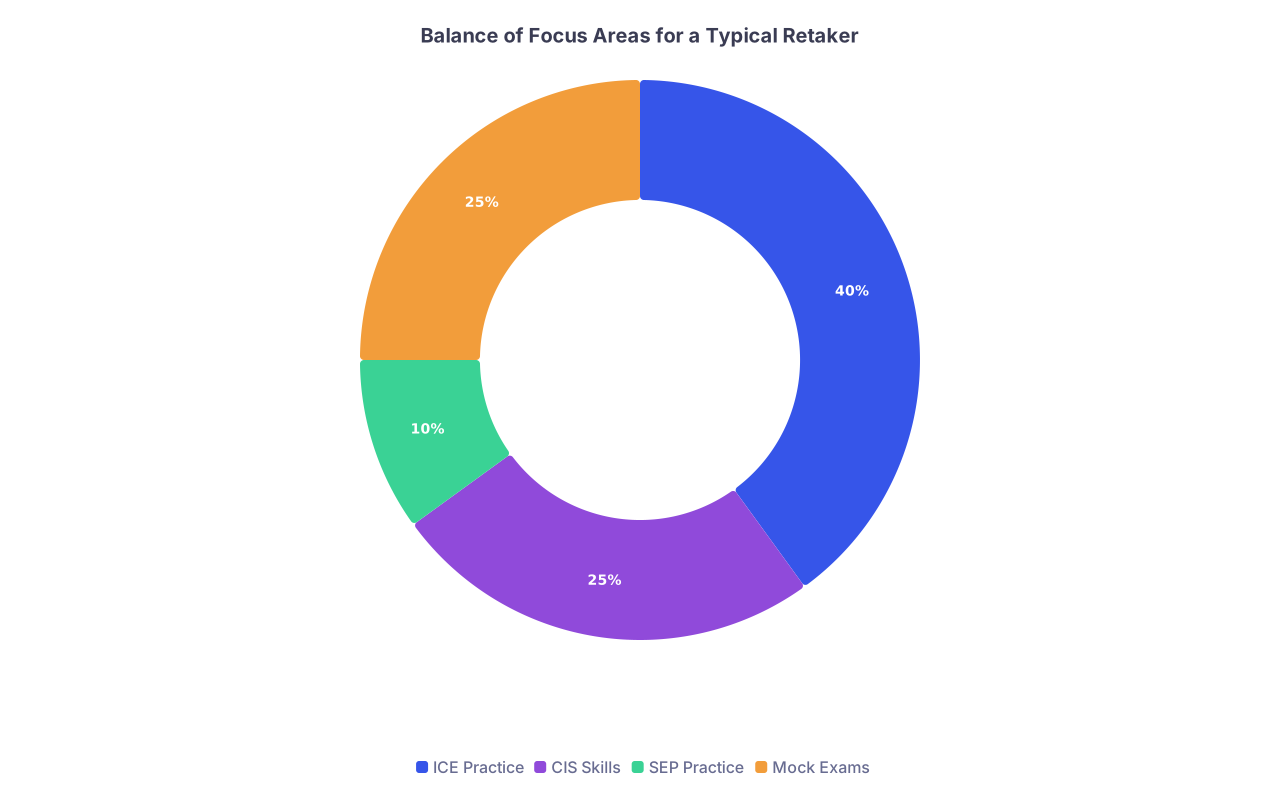
| Category | Value |
|---|---|
| ICE Practice | 40 |
| CIS Skills | 25 |
| SEP Practice | 10 |
| Mock Exams | 25 |