The worst Step 2 CK mistakes happen in the final 72 hours. Not during the exam. Before it.
Those three days can turn a solid score into a disaster—or lock in all the work you’ve done over the last year. At this point, it’s not about “learning more medicine.” It’s about execution, energy management, and not doing anything dumb.
Here’s a straight, time-stamped plan—hour by hour chunks—for the last 3 days before Step 2 CK.
72–48 Hours Before Step 2 CK (Two Days Out)
At this point you should have:
- Finished the bulk of UWorld (or your main QBank)
- Done at least 2 full-length NBMEs/CCS-style assessments
- A rough sense of your weak areas
These next 24 hours are for targeted tightening, not heroics.
72–68 Hours Before (Morning, Two Days Out)
Goal: Set the game plan and control the chaos.
At this point you should:
Wake up at your planned exam-day wake time (or earlier).
If your exam is at 8 AM and you wake up at 10 AM today, you’re already behind.Do a quick systems check:
- Confirm exam date, time, and testing center address
- Check ID validity (passport/driver’s license not expired)
- Confirm appointment on NBME/Prometric site
- Look at travel time and parking/transport options
Make a written 2-day plan (not in your head):
- Blocks of review
- Food breaks
- Exercise
- Cut-off time for “new content” (hint: soon)
Concrete tasks (about 1–2 hours):
- Skim your last NBME score report:
- Circle 2–3 lowest content categories
- Ignore perfectionism—pick a few, not ten
- Decide: which resources you’ll use and which you’re DONE with.
- Example: “Only UWorld notes + CMS summaries + my rapid review doc. No new YouTube, no new books.”
68–60 Hours Before (Late Morning, Two Days Out)
Goal: Focused review of your biggest weak spot.
This is your final meaningful content push. Not a marathon. A targeted sprint.
At this point you should:
Pick one major domain to tighten:
- Medicine vs Surgery vs Peds vs OB-GYN vs Psych/Neuro
- Or a cross-cutting topic: fluids/electrolytes, antibiotics, imaging, ethics
Spend 2–3 hours on:
- A short QBank block (20–30 questions, timed)
- Immediate, hard review of explanations from that block
- Add only high-yield pearls to a small “last 24 hours” list
You are not doing:
- 80 questions back-to-back
- Re-reading an entire textbook
- Watching new, long videos
Focus on pattern recognition and test logic, not encyclopedic coverage.
60–54 Hours Before (Early Afternoon, Two Days Out)
Goal: Second weak area + first serious break.
At this point you should:
Switch to your second weakest area:
- Same format: 20–30 questions + explanation review
- Flag 5–10 key facts or algorithms
Then actually walk away.
- 30–45 minute real break: food, short walk, off screens
Your brain is now in polish mode. You can still sharpen, but you can also burn out fast.
54–48 Hours Before (Late Afternoon / Evening, Two Days Out)
Goal: Rapid-fire, high-yield consolidation.
This is where many people panic and spiral into random YouTube videos. Don’t. You’re going to be structured.
At this point you should:
Do rapid, high-yield passes on core topics:
- Acute chest pain algorithms
- SOB/hypoxia workup
- Shock types + management
- Sepsis bundles
- Stroke/TIA workup + tPA/thrombectomy windows
- OB triage: decels, preeclampsia, labor stages
- Peds emergencies: meningitis, sepsis, congenital heart lesions
- Ethics: decision capacity, consent, confidentiality scenarios
Use short-form tools:
- Your own condensed notes
- UWorld “marked” questions list (just skimming explanations, not redoing full blocks)
- Printed algorithms or small summary PDFs
Limit this to ~3–4 hours total with at least one break.
Cut-off rule for today:
By the time you’re at 48 hours before exam, you’re done with:
- Any new videos
- Any new textbook chapters
- Any attempt to “learn a whole new specialty today”
You’re now in refinement, not expansion.
48–24 Hours Before Step 2 CK (The Day Before)
This is the day people ruin their exam with panic and exhaustion.
Your priority here is performance optimization, not squeezing in 200 more questions.
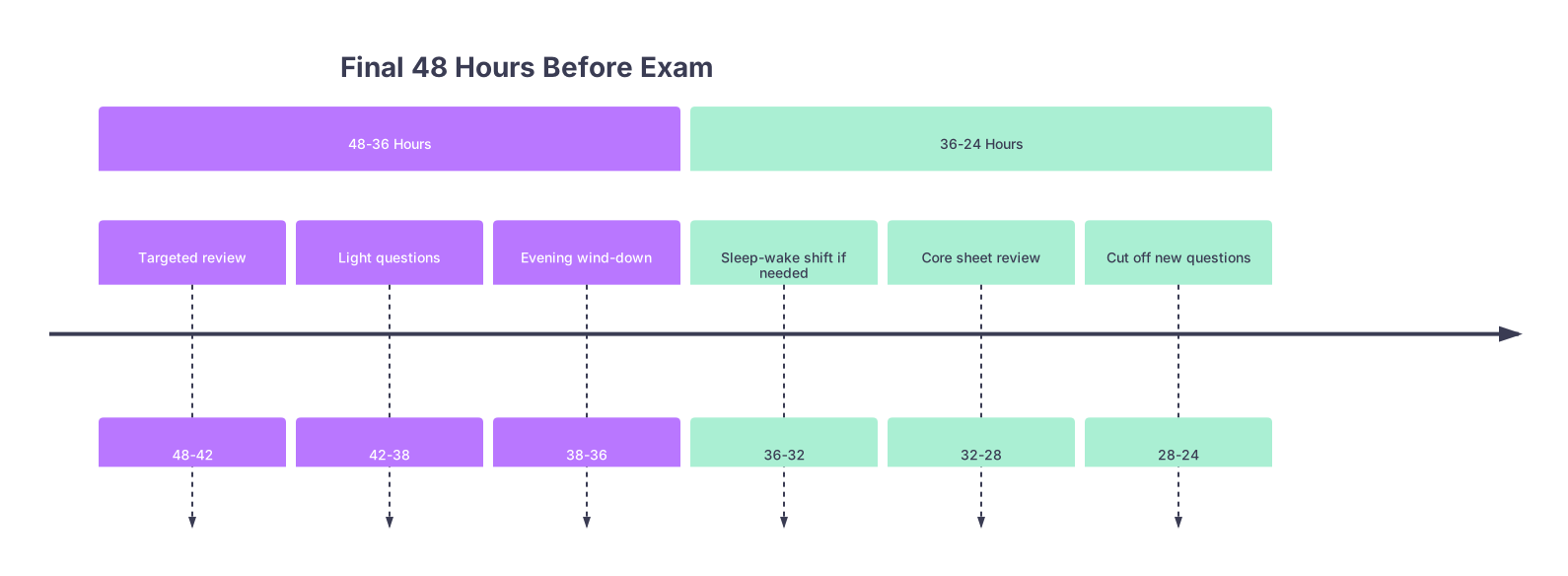
| Period | Event |
|---|---|
| 48-36 Hours - Targeted review | 48-42 |
| 48-36 Hours - Light questions | 42-38 |
| 48-36 Hours - Evening wind-down | 38-36 |
| 36-24 Hours - Sleep-wake shift if needed | 36-32 |
| 36-24 Hours - Core sheet review | 32-28 |
| 36-24 Hours - Cut off new questions | 28-24 |
48–40 Hours Before (Morning, Day Before)
Goal: Wake-time alignment + light diagnostic touch.
At this point you should:
Wake up exactly when you’ll wake on exam day.
- No excuses. You are training your circadian rhythm.
Do a single, small timed block:
- 10–20 mixed questions (NOT 40)
- Purpose: keep your brain in “exam mode,” not to move your score
Review explanations, but:
- Only write down things that are truly new and clearly testable
- No deep rabbit holes
This is a signal check, not a graded performance.
40–34 Hours Before (Late Morning / Early Afternoon, Day Before)
Goal: Systems and logistics locked in.
This is where future-you either thanks you or hates you.
At this point you should:
Physically lay out exam-day items:
- Valid ID
- Earplugs (if allowed)
- Layered clothing (it’s always too hot or too cold)
- Approved snacks and drinks
- Any required confirmation emails/printouts
Do an exam center dry run if possible:
- Drive / commute route at similar time to exam
- Check traffic/parking situation
- Know exactly where you’ll park and walk
Plan your exam-day meals:
- Breakfast: high protein, moderate carbs, low sugar, nothing risky
- Snacks: nuts, protein bar, simple sandwich, banana, water/electrolytes
- Skip: new energy drinks, heavy greasy food, massive caffeine overload

This whole block shouldn’t take more than 1–2 hours, but it buys you a calmer night.
34–28 Hours Before (Afternoon, Day Before)
Goal: One last structured content pass.
This is your last real study block.
At this point you should:
Work through a tight “core concepts” list for 2–3 hours:
- Must-know antibiotics + indications
- Must-know first-line treatments (HTN, DM, ACS, CHF, asthma/COPD, depression/anxiety, bipolar, psychosis)
- Imaging choices: when to CT vs MRI vs US vs X-ray
- Pre-op risk/anticoag management basics
- Vaccination schedules and post-exposure prophylaxis highlights
Keep it active:
- Cover answers, test yourself
- Quick oral recall out loud
- Rewrite 1-page summary if that helps you lock it in
At this point you must decide:
- A hard cut-off time when no more new questions are allowed
- For most people: ~24–26 hours before the exam (i.e., around late afternoon/early evening the day before)
You don’t want your last memory before sleeping to be missing a random obscure vasculitis question.
28–24 Hours Before (Late Afternoon / Evening, Day Before)
Goal: Transition from study mode to rest mode.
This is where disciplined people pull away.
At this point you should:
Stop doing new blocks of questions.
At most, you may:- Flip through marked questions just to review key explanations you already saw
- Skim your most condensed summary sheets
Do a brief mental walkthrough of test day:
- Wake up → breakfast → commute → check-in → blocks 1–4 → break → blocks 5–8
- Visualize calmly working through vignettes, marking and moving on
Move your body:
- 20–30 minute walk
- Light stretching
- No intense workout that leaves you sore or wired
Then start a wind-down routine:
- Screen cutoff or blue-light filter after a certain time
- Light, familiar TV or reading (non-medical)
- Prepare bedroom: cool, dark, quiet
No last-minute deep dives. That’s how you wreck sleep.
24–0 Hours Before Step 2 CK (Exam Day Window)
You’re now in pure performance territory. Think athlete before a race, not student before a quiz.
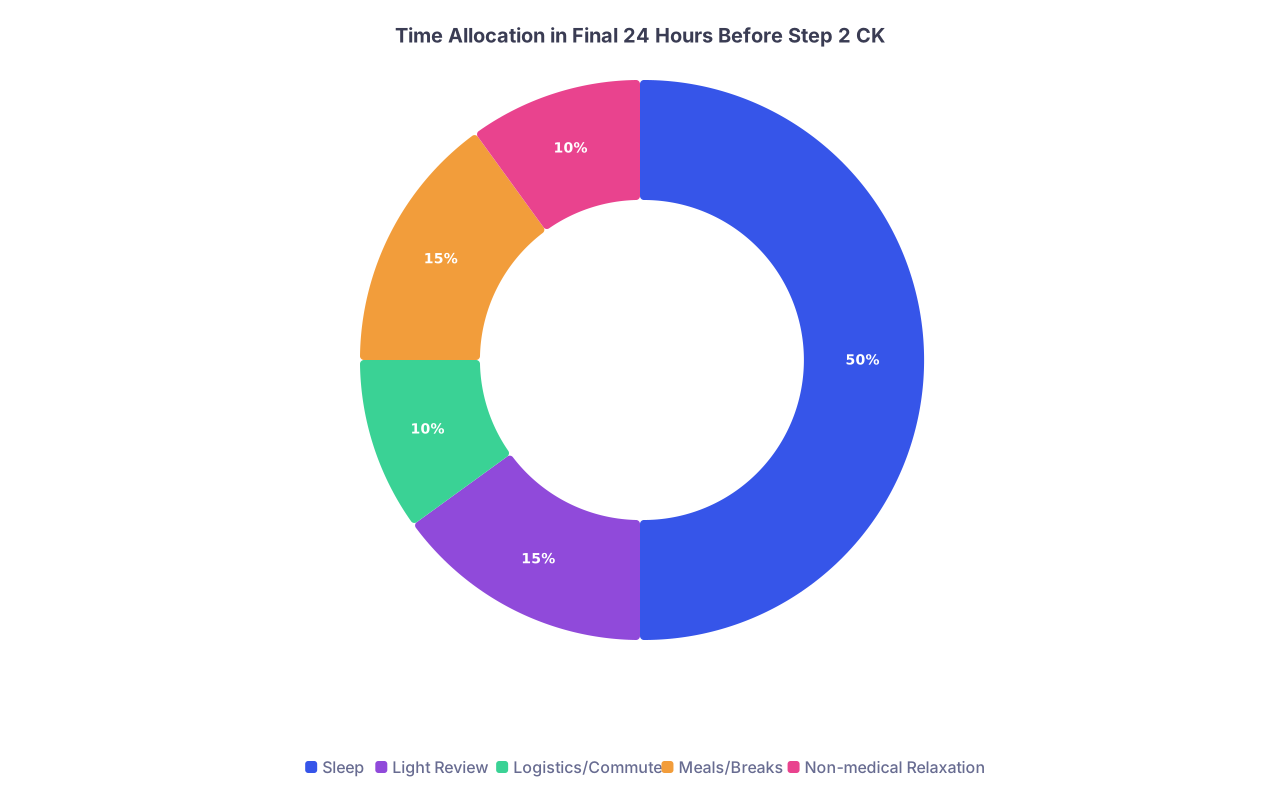
| Category | Value |
|---|---|
| Sleep | 50 |
| Light Review | 15 |
| Logistics/Commute | 10 |
| Meals/Breaks | 15 |
| Non-medical Relaxation | 10 |
24–16 Hours Before (Evening / Night Before)
Goal: Sleep setup and mental decompression.
At this point you should:
Eat a simple, familiar dinner:
- Normal portion size
- Avoid heavy spice, tons of fat, or sketchy takeout
Do a final, ultra-light review (30–60 minutes max):
- Your 1–2 page “last 24 hours” sheet
- A few key tables or algorithms you always mix up
Then deliberately switch gears:
- Put away all study materials
- Set multiple alarms for the morning
- Lay out clothes and bag for the morning
Aim to be in bed so that you can get 7–8 hours, even if you don’t sleep perfectly.
You will not sleep like a baby. That’s normal. You just need enough.
16–10 Hours Before (Overnight)
Goal: Protect sleep. Even if it’s imperfect.
If you wake up in the middle of the night:
- Don’t open QBank, don’t open your notes
- Do something low-stimulation:
- Calm breathing
- Short guided meditation
- Simple podcast with sleep timer (non-medical)
Do not:
- Check your score reports
- Recalculate NBME averages
- Watch new “Step 2 high-yield” videos
You’re now protecting brain function, not chasing content.
10–6 Hours Before (Early Morning, Exam Day)
Let’s say you have an 8 AM exam. This is roughly 4 AM–8 AM.
At this point you should:
Get up at your planned time
- Even if you slept badly—get up anyway
Do your normal, boringly consistent morning routine:
- Bathroom, shower if you usually do
- Light stretching
- Caffeine at your usual amount, not double
Eat breakfast 60–90 minutes before you need to leave:
- Example: eggs + toast + fruit, or yogurt + granola + banana
Mental warm-up (15–20 minutes max):
- Skim only:
- Very small summary page
- Maybe 3–5 flashcards of formulas/algorithms if you use them
No timed questions. You’re warming up, not testing yourself.
6–3 Hours Before (Commute / Arrival)
Goal: Calm, confident arrival.
At this point you should:
- Leave with more time than you think you need:
- Aim to arrive 30–45 minutes earlier than check-in time
On the way:
- No UWorld on your phone
- No NBME score discussions with friends
- Put on something that calms or centers you:
- Music, favorite podcast, silence—whatever works
When you arrive:
- Use the bathroom
- Sip water (don’t chug)
- Quick check: ID, locker, snacks ready
If nerves spike, short script in your head:
- “I’ve done the work. My job now is to read carefully and pick the best answer. That’s it.”
3–0 Hours Before (Check-in and First Blocks)
Now you’re technically in the exam, but these first blocks are where 72-hour decisions show up.
At this point you should:
Accept imperfection early:
- You will see things you don’t know cold
- Mark, choose best guess, move on
Stick to a block rhythm you decided beforehand:
- Example:
- 1–2 minutes per question on first pass
- Mark anything you’re not at least 80% sure about
- Leave final 5–7 minutes to review marked questions
- Example:
Between blocks:
- Micro-breaks: stand, stretch, close eyes
- Use planned longer break halfway through for bathroom + snack
You are no longer studying. You are executing.
Optional: Micro-Adjusting This Timeline Based on Your Exam Time
Not everyone has an 8 AM slot. Here’s how to adjust.
| Exam Start Time | Wake Time | Last Light Review Cutoff | Planned Bedtime |
|---|---|---|---|
| 8:00 AM | 5:30–6 AM | ~9 PM night before | 9:30–10 PM |
| 9:00 AM | 6–6:30 AM | ~9:30 PM | 10–10:30 PM |
| 12:00 PM | 8–8:30 AM | ~10:30 PM | 11–11:30 PM |
| 2:00 PM | 9–9:30 AM | ~11 PM | 11:30 PM–12 AM |
Shift the entire 24-hour structure forward or backward, but keep:
- The hard cut-off for new questions
- A real wind-down period
- A consistent wake time for 2 days before the test
Quick Mental Checklists by Time Window
To make this practical, here are stripped-down checklists you can literally copy into your notes app.
72–48 Hours Out Checklist
- Confirm exam details + ID
- Identify 2–3 weakest content areas
- Do 2–3 small targeted QBank blocks (20–30 Q each)
- Create 1–2 page “last 24 hours” sheet
- Hard stop on new resources (no new videos/books)
48–24 Hours Out Checklist
- Wake at exam-day time
- One small mixed warm-up block (10–20 Q)
- Logistics: route, parking, snacks, clothes, alarms
- Final structured content pass (2–3 hours)
- Cut off all new questions by late afternoon/evening
- Light physical activity, planned wind-down
24–0 Hours Out Checklist
- Simple, familiar dinner
- 30–60 min max light review of summary sheet
- Bag packed, clothes laid out, multiple alarms set
- 7–8 hours in bed (even if sleep is imperfect)
- Usual caffeine, simple breakfast
- Arrive early, stay off QBank, calm pre-test routine

Final 3 Takeaways
- The last 72 hours are about protecting performance, not cramming content.
- Hard cut-offs—on new questions, on late-night studying, on new resources—are what separate stable scores from test-day meltdowns.
- If you follow a structured, hour-by-hour plan, Step 2 CK turns from a chaotic threat into a long workday you’re actually ready to handle.