
Only 27% of students who fail Step 2 CS/PE‑style exams do so because of “medical knowledge.” The rest fail on structure, communication, and sloppy physical exams.
Let me be blunt: most students do not fail these stations because they cannot hear a murmur. They fail because they examine the wrong things, in the wrong order, in the wrong amount of time, while looking disorganized and unsafe.
So let’s fix that.
You asked about a systematic approach to focused physical exams for Step 2 CS/PE‑type stations. I am going to give you exactly that: station‑agnostic, reproducible exam skeletons that you can plug into almost any complaint and finish in 4–6 minutes without looking frantic.
Core Principles: What “Focused” Actually Means
Before we get into systems, you need the rules of the game.
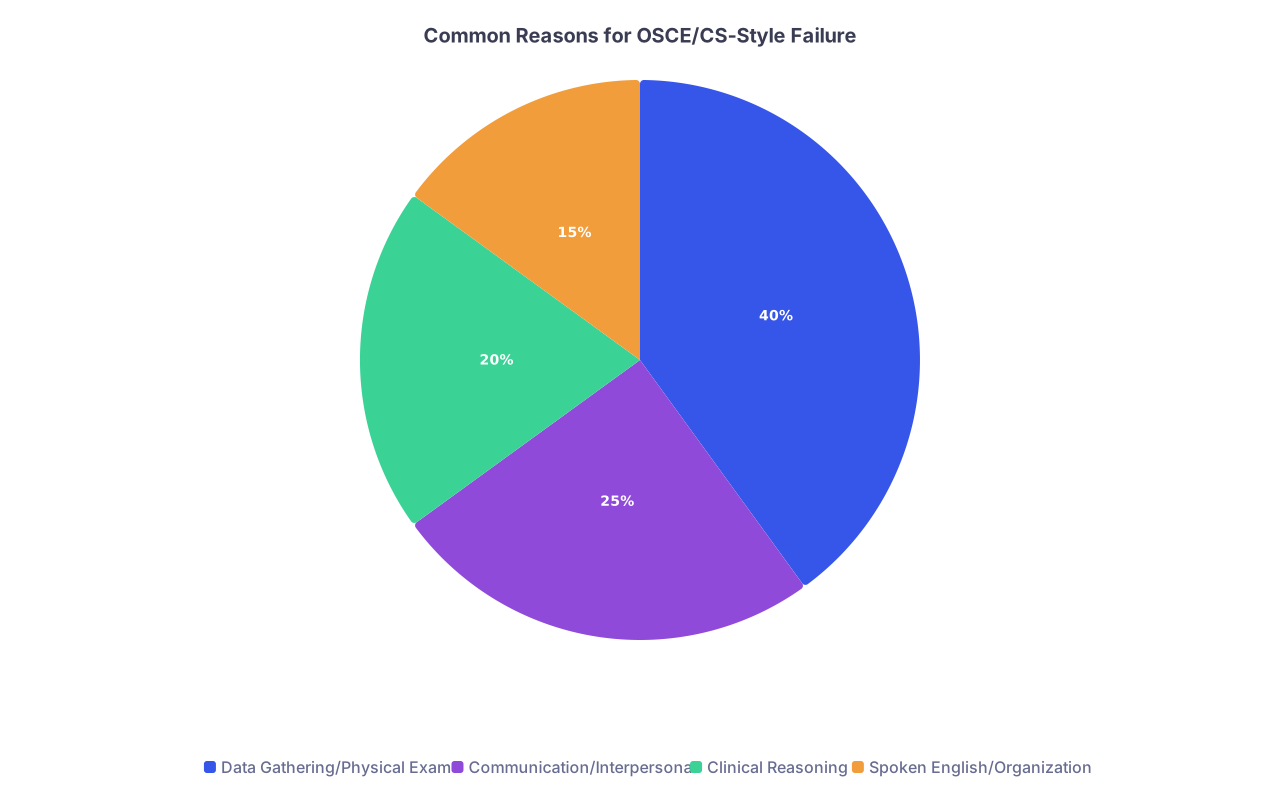
| Category | Value |
|---|---|
| Data Gathering/Physical Exam | 40 |
| Communication/Interpersonal | 25 |
| Clinical Reasoning | 20 |
| Spoken English/Organization | 15 |
“Focused” has three components:
- It is driven by the chief complaint, not by your habit
- It samples all relevant organ systems without turning into a head‑to‑toe
- It is technically competent but not exhaustive
The examiner does not care if you know 27 special tests for the shoulder. They do care if you auscultate both lungs in a chest pain case.
Here is the non‑negotiable base for every station, regardless of complaint:
- Hand hygiene (foam in at door or sink, foam out)
- Introduce yourself, confirm patient name, ask permission
- General observation from the doorway: distress, posture, mental status
- Vital signs: you will usually be “given” them, but explicitly acknowledge them
(“I see your vitals are stable, BP 128/78, HR 84, afebrile.”) - At least:
- Heart: auscultate over two locations (aortic + mitral is minimum)
- Lungs: posterior fields, at least two levels bilaterally
- Extremities: quick edema check or distal pulses depending on complaint
Then you layer the focused system‑specific exam on top.
If you skip heart and lungs completely in a chest, SOB, fatigue, syncope, or fever station, you are asking for trouble. I have watched faculty fail people for that alone.
Time and Order: The 10‑Minute Reality
Most CS/PE‑style encounters give you ~10–15 minutes total: history, physical, and counseling. That means 4–6 minutes for the exam if you do not waste time.
A safe rhythm that works:
- 0–5 minutes: History (targeted, but not a machine gun of questions)
- 5–11 minutes: Physical exam
- 11–14 minutes: Assessment, counseling, answering questions
- 14–15 minutes: Wrap‑up, questions, hand hygiene, out
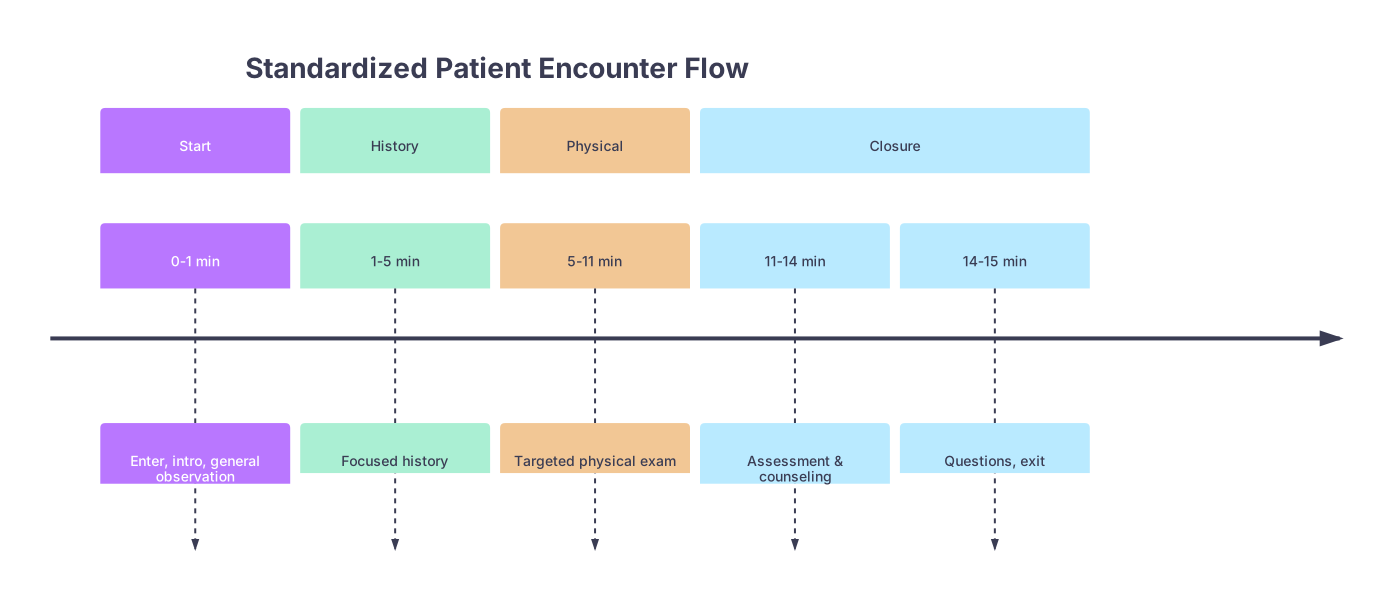
| Period | Event |
|---|---|
| Start - 0-1 min | Enter, intro, general observation |
| History - 1-5 min | Focused history |
| Physical - 5-11 min | Targeted physical exam |
| Closure - 11-14 min | Assessment & counseling |
| Closure - 14-15 min | Questions, exit |
Physical exam order should be consistent across stations to reduce cognitive load. One simple template:
- General / vitals acknowledgment
- Primary complaint‑driven system
- Closely related system(s)
- Brief heart + lungs if not already covered
- Extremities / neuro screen as indicated
- Thank the patient, reposition, wash hands again
You can mentally label it as: General → Key System → Neighbor Systems → Heart/Lungs → Extremities/Neuro.
The Universal “Entry Exam”: What You Do In Almost Every Case
I am going to spell out a “base” you can essentially autopilot, then we will customize it for each chief complaint.
Base exam steps (30–60 seconds if practiced):
- From door: observe breathing, posture, facial expression, obvious distress
- At bedside:
- “You look comfortable / a bit uncomfortable. I will be as gentle as I can.”
- Check radial pulse quickly as you shake hands (rate + rhythm)
- Look at hands: color, clubbing, tremor (takes 2 seconds, but looks very “doctor”)
- Inspect face: pallor, jaundice, cyanosis, asymmetry, conjunctiva
- Heart:
- Stethoscope on skin, not over clothes
- Two spots: right 2nd ICS (aortic), apex (mitral). You can add more if time.
- Lungs:
- Ask patient to sit up if able
- Posterior: at least two levels bilaterally; compare side‑to‑side
- Quick “take a deep breath in and out through your mouth”
You then branch into the complaint‑specific exam.
Systematic Focused Exams by Chief Complaint
Now the real meat. I will walk through the common CS/PE station themes and give you a scripted physical exam sequence for each. Use these as your default, then tweak based on specific vignettes.
1. Chest Pain / Shortness of Breath Station
Most heavily weighted. And most often bungled.
Priorities: rule out life‑threatening causes, show you understand cardiac vs pulmonary vs MSK vs GI.
Sequence:
General / vitals acknowledgment
- Inspect for distress, diaphoresis, cyanosis
- “I see your blood pressure and heart rate are …”
-
- Inspect chest for scars, deformity
- Palpate: PMI location, any tenderness over costochondral joints
- Auscultate heart at all 4 areas if time; minimum 2 is acceptable if exam is tight
- Listen with diaphragm and bell at apex at least briefly
- Peripheral pulses: radial symmetry, maybe dorsalis pedis quickly
- Check for lower extremity edema
Pulmonary focus
- Inspect work of breathing, accessory muscle use
- Posterior percussion: at least upper and lower zones bilaterally
- Auscultation: compare side‑to‑side, ask for deep breaths
- If cough: have them cough once; note character (you do not need a dissertation, just show you noticed)
Chest wall / MSK component
- Palpate chest wall where they point to pain
- Ask them to press with your hand: “Does this reproduce your chest pain?”
- Shoulder and neck quick ROM if pain suggests referred pain
Neck exam (brief)
- Carotid auscultation (one side at a time, gentle) if age / risk factors suggest
- Jugular venous distension baseline (quick look at 45 degrees; no need for exact measurement)
Extremities
- Look for unilateral swelling, redness, calf tenderness if SOB with DVT concern
If you do all this in a calm, smooth manner in ~4 minutes, you look extremely competent.
2. Abdominal Pain / GI Complaint
Most students under‑percuss and over‑palpate. That is backwards.
Your sequence:
Position and exposure
- Lay the patient supine, knees bent if possible, abdomen exposed from xiphoid to symphysis with drape on lower area
- Stand on the patient’s right
Inspection
- Contour (flat, distended), scars, visible masses, hernias, pulsations
- Watch for guarding just from your hand hovering
Auscultation
- Do bowel sounds first (before you start poking)
- At least one quadrant, ideally two; you do not need 2 minutes of listening
Vascular sounds (if relevant)
- Brief aortic bruit listen above the umbilicus if older patient or HTN
- You are not writing a vascular surgery note; 3 seconds is enough
Percussion
- All four quadrants quickly; note tympany vs dullness
- Percuss for liver span roughly (midclavicular) if jaundice, RUQ pain, or chronic liver disease suspected
- Percuss for shifting dullness only if obvious ascites suspicion and you have time
Palpation – this is where many fail the “order” test
- Ask where the pain is worst. Palpate that area last.
- Start away from pain, light palpation all quadrants
- Then deeper palpation
- Watch the face for tenderness, voluntary vs involuntary guarding
- Specific signs if indicated:
- Murphy’s sign (RUQ, deep breath)
- McBurney’s point tenderness, rebound (gentle, do not be theatrical)
- Rovsing, psoas, obturator if appendicitis high on list
- A quick epigastric palpation for pain in chest/upper abdomen to distinguish GI vs cardiac
Related systems
- Check for CVA tenderness (kidney involvement, pyelonephritis)
- Scleral icterus, palmar erythema, asterixis if liver disease suspected
- Rectal / pelvic exam is usually not performed in CS‑like exams unless explicitly required; you can SAY you would do it
You need to verbalize at key points: “I would also perform a rectal exam to check for blood, but I understand that will not be done today.”
3. Headache / Neurologic Complaint
The biggest red flag is doing a brain‑level history then a purely general physical exam. You need a minimal neuro screen.
Sequence:
General neuro observation
- Mental status in your conversation: orientation, speech, affect, coherence
- From the end of the bed: symmetry of face, gross motor use of limbs
Cranial nerves (condensed)
- II: Visual fields by confrontation (one eye at a time, wiggle fingers)
- III, IV, VI: EOMs with “H” tracing, check for nystagmus, ptosis
- V: Light touch over three trigeminal divisions bilaterally
- VII: “Raise your eyebrows, close your eyes tight, smile, puff your cheeks”
- VIII: Finger rub or whispered voice
- IX, X: “Say ah” and watch palate; note voice quality
- XI: Shoulder shrug against resistance
- XII: Tongue protrusion midline
You will not do a full brain stem exam. But this condensed CN screen makes examiners happy.
Motor and coordination
- Upper and lower extremity strength: 1 muscle group each is usually enough (e.g., grip strength, elbow flexion; hip flexion, ankle dorsiflexion)
- Pronator drift test
- Finger‑to‑nose or rapid alternating movements
Sensory
- Light touch in all four limbs (compare side‑to‑side)
- If time: pinprick or vibration in one distal site to show you know modalities
Reflexes (if time allows)
- Biceps and patellar on at least one side; bilateral if you are fast
- Babinski is rarely necessary unless very central lesion suspected
Meningeal signs (if indicated)
- Nuchal rigidity check (gentle passive neck flexion) if fever, photophobia, acute severe headache
General
- Fundoscopy is often simulated; you can say “I would like to examine the back of your eyes with an ophthalmoscope to look for signs of increased pressure.”
- Blood pressure check for hypertensive emergency (you can reference vitals)
4. Cough / Fever / URI / Pneumonia‑type Station
You must show you can separate benign URIs from pneumonia, asthma, COPD, etc.
Sequence:
General and vitals
- Look for respiratory distress, accessory muscles, ability to speak full sentences
- Comment on temp and O2 saturation if provided
HEENT
- Inspect throat: tonsils, exudate, erythema, uvula position
- Inspect nasal mucosa, discharge
- Palpate frontal and maxillary sinuses for tenderness
- Palpate anterior cervical lymph nodes
Lungs (more complete than base)
- Inspection: chest shape, symmetry
- Palpation: chest expansion, tactile fremitus at least mid‑zones
- Percussion: posterior and lateral if possible
- Auscultation: posterior and lateral lung fields, comparing side‑to‑side
- Egophony or whispered pectoriloquy in area of suspected consolidation if time
Cardiac
- Brief auscultation to assess for tachyarrhythmia, murmurs if concern for endocarditis or heart failure
Extremities
- Check for clubbing, cyanosis, peripheral edema if chronic lung disease suspected
You do not need to spend 3 minutes on lymph nodes. Two or three groups with clear technique is enough.
5. Joint Pain / MSK Complaint
MSK stations are where people look the most disorganized. You need a standard framework: Look, Feel, Move, Special Tests, Compare.
Let’s take knee pain as the prototype; you can generalize the structure.
Sequence:
Compare sides exposed
- Both knees visible, patient supine
- Inspect: swelling, redness, deformity, muscle wasting, scars
Palpation
- Temperature with back of hand
- Joint line tenderness, patellar borders, popliteal fossa
- Effusion tests (ballottement, bulge) if indicated
Range of motion
- Active first: “Bend your knee as much as you can; now straighten”
- Then passive if limited, noting pain vs mechanical block
Special tests (choose 2–3 that match your differential, not 10 random tricks)
For suspected ligament injury:- Anterior drawer or Lachman (ACL)
- Varus/valgus stress for collateral ligaments
For meniscal injury: - McMurray
For patellofemoral: - Patellar grind test
Related joints / neurovascular
- Check hip rotation if pain may be referred
- Distal pulses, cap refill, sensation in dermatomal pattern if trauma
Gait (if safe and time)
- Ask patient to walk a few steps; observe limp, antalgic gait
For shoulder, same framework: inspect, palpate, ROM (active + passive), then targeted special tests (e.g., Neer/Hawkins for impingement, empty can for supraspinatus, etc.).
6. Syncope / Dizziness / “I Passed Out”
This is where examiners look for basic safety and thinking: cardiac, neuro, volume status.
Sequence:
General / vitals
- Explicitly state you would like orthostatic vitals (lying, sitting, standing) to evaluate for volume depletion or autonomic dysfunction
- Look for pallor, diaphoresis
Cardiovascular
- Heart auscultation as above, maybe slightly more thorough
- Carotid auscultation, pulse volume comparison right vs left
- Peripheral pulses in at least one lower limb
- Check for edema
Neurologic brief screen
- Cranial nerves quick pass (VII, II/III pupils, extraocular)
- Strength in all four limbs
- Finger‑to‑nose, pronator drift
- Gait if safe: normal, heel‑toe if you suspect cerebellar
Volume status
- Mucous membranes
- Skin turgor (older adults this is less reliable, but examiners still like the gesture)
- Jugular venous pressure quick look
ENT / vestibular (if vertigo)
- Dix‑Hallpike maneuver if positional vertigo high on list
- Nystagmus observation while following your finger
Again, you will say more tests you “would like to perform” than you actually physically do, but the physical you do must be tight and relevant.
Bringing It Together: A Quick Comparison
Here is a compact comparison table so you can visualize what differs across complaints.
| Chief Complaint | Key Systems to Prioritize | Always Include Heart/Lungs? | Typical Exam Time (min) |
|---|---|---|---|
| Chest Pain / SOB | Cardiac, Pulmonary, Chest Wall | Yes | 4–5 |
| Abdominal Pain | Abdomen, GU surrogates, Back | Heart optional, Lungs brief | 4–6 |
| Headache / Neuro | Neuro (CN, motor, sensory) | Heart usually brief | 5–6 |
| Cough / Fever | Lungs, HEENT, Lymph nodes | Heart brief | 4–5 |
| Joint/MSK Pain | Affected joint + Neurovasc | Heart/Lungs if systemic | 4–5 |
| Syncope/Dizziness | Cardiac, Neuro, Volume status | Yes | 4–5 |
How To Practice So This Becomes Automatic
This is where most students fool themselves. Reading checklists is not practice.
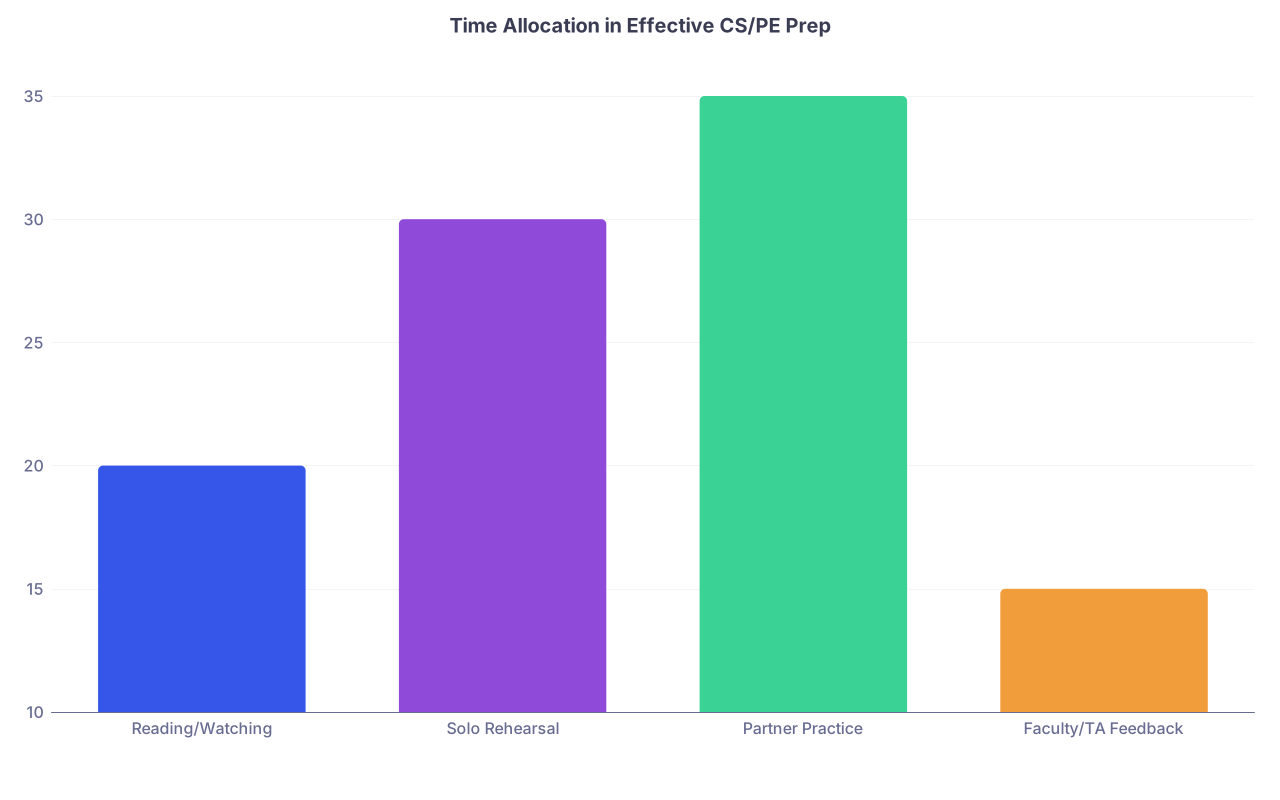
| Category | Value |
|---|---|
| Reading/Watching | 20 |
| Solo Rehearsal | 30 |
| Partner Practice | 35 |
| Faculty/TA Feedback | 15 |
Here is a blunt practice plan that actually works:
Build one exam script per common complaint group (like above). Literally write it out.
Example: “Chest pain → inspect, heart ausc 4 spots, chest wall palpation, JVD, lungs full, leg edema.”Practice the script out loud on an empty chair until you no longer have to think about order.
Then add a partner. Have them hold a random chief complaint card: chest pain, abdominal pain, headache, etc. You have 6 minutes: 1 minute think, 5 minutes exam and explanation as if they are standardized patient.
Focus on:
- Smooth transitions: “Now I am going to listen to your heart,” not “Uh, okay… now… heart?”
- Verbalization of findings as you go: “I do not feel any tenderness here,” or “That area seems tender to you.”
- Respectful draping, consent before exposing torso, constantly checking pain.
Once you can perform each focused exam in under 4 minutes with a partner, then add the history and counseling and simulate full 15‑minute encounters.
You are aiming for muscle memory, not “I kind of know the steps.”
Communication and Professionalism Embedded in the Exam
Even a technically correct exam can be graded poorly if you act like a robot or a bully.
Three high‑yield habits:
Narrate briefly what you are doing
- “I am going to press on your abdomen now, let me know if anything is painful.”
- “I am going to test the strength in your arms by asking you to push and pull against my hands.”
Ask permission before exposure or potentially uncomfortable maneuvers
- “Is it okay if I lower the gown so I can examine your chest and listen to your heart?”
Check in after painful procedures
- “Sorry, that was uncomfortable. You can relax your muscles now.”
Examiners pay attention to this. They have seen students plow through guarding as if the patient was a mannequin.
- “Sorry, that was uncomfortable. You can relax your muscles now.”
Also: draping. Getting this wrong screams “unsafe”:
- Expose only what you need, when you need it
- For abdominal exam: gown up, drape down to pelvis, then lift only to epigastrium
- For chest auscultation in women: slide stethoscope under gown from the sides whenever possible, do not fully expose without clear explanation and consent
A Few Non‑Obvious Pitfalls That Kill Scores
I have watched plenty of well‑prepared students still stumble on the same traps:
Checking vitals but never reacting to them
Saying “I see your vitals are normal” costs 2 seconds and shows integration. If the temperature is 39°C and you ignore it, you look disengaged.Doing a neuro exam lying down when the patient can obviously sit
Sit them up for coordination tests, gait, Romberg. Patients flat like corpses while you do everything from the side make the room feel like a cadaver lab.Forget to wash hands after touching feet or groin
Examiners notice. Foam after obvious “dirty zones” even if you did wash at the start.Overusing special tests
No one is impressed by 8 shoulder maneuvers fired off without explanation. Pick 2–3 high‑yield tests that make diagnostic sense. Name them in your head, not always out loud.Skipping general systems on “localized” complaints
Example: joint pain patient with fever. If you never listen to heart or lungs, and this turns out to be septic arthritis or endocarditis, that hurts.
Visual Summary: Decision Logic For What To Examine

| Step | Description |
|---|---|
| Step 1 | Chief Complaint |
| Step 2 | Heart & Lungs + Primary System |
| Step 3 | Primary System First |
| Step 4 | Add Brief General Exam (Neuro, Abd, Extremities) |
| Step 5 | Limit to 1-2 Related Systems |
| Step 6 | Summarize aloud while examining |
| Step 7 | Life-threatening causes possible? |
| Step 8 | Systemic symptoms? |
Think like this in the room, not like a checklist monkey.
How This Plays Out On Test Day: A Realistic Example
Let me walk through one concrete scenario.
Station: 56‑year‑old male, “I have chest pain.”
You enter, hand hygiene, intro, confirmation, chief complaint → 1–2 minutes history to rule out ACS red flags quickly.
Exam:
- “I would like to examine you now, focusing on your heart and lungs since you mentioned chest pain.”
- General observation: no distress, speaking comfortably.
Cardiac:
- Inspect chest for scars, deformity.
- Palpate chest wall: “Tell me if this reproduces your pain.” He says no.
- Auscultate heart at 4 areas, apex with bell and diaphragm. Regular, no obvious murmurs.
- Check radial pulses; feel equal, no delay. Quick ankle edema check: none.
Pulmonary:
- Ask him to sit up. Inspect.
- Percuss posterior lung fields: resonant.
- Auscultate posterior and lateral fields: clear bilaterally.
Neck:
- Raise bed to 45°, glance at neck veins: no obvious JVD.
- Auscultate carotids lightly for bruits.
Extremities:
- Check calves for tenderness or unilateral swelling: none.
Throughout, you are telling him briefly what you are doing, watching his face, draping appropriately. Total exam time: under 5 minutes. You look like you have done this 100 times.
That is what a passing (and frankly excellent) CS physical looks like.
FAQs
1. How many systems should I examine in a focused Step 2 CS/PE station?
Aim for 1–2 primary systems plus a brief screen of 1–2 related systems. For chest pain: heart + lungs fully, with quick extremity and neck checks. For abdominal pain: abdomen fully, with maybe brief cardiac and pulmonary if systemic cause is possible. If you are doing a full head‑to‑toe exam, you are unfocused and will run out of time.
2. Is it better to do a perfect exam on one system or a “good enough” exam on several?
For these exams, “good enough on several” nearly always beats “perfect on one.” Examiners want to see that your thinking is broad enough not to miss dangerous diagnoses. A flawless knee exam that ignores red flag neuro findings in a back pain case is a problem. Cover the key features of all relevant systems, then deepen where the case obviously points you.
3. Should I name every maneuver out loud (e.g., Murphy’s sign, McMurray test)?
No. Name them in your head for your own organization, but speak to the patient in plain language: “I am going to press under your right ribs while you take a deep breath.” If you want to demonstrate knowledge, you can slip in 1–2 names while summarizing to the examiner afterwards, but during the physical, patient‑centered language is more important than jargon.
4. How much of the physical exam can I “verbalize” instead of doing?
You must physically perform the core components relevant to safety and diagnosis. Saying “I would listen to the lungs” without actually doing it looks lazy and will be penalized. You can verbalize resource‑intensive or invasive exams (fundoscopy, rectal, pelvic, full neurologic battery) if the format does not allow them. The rule: if it is simple and non‑invasive, do it; if it is invasive or equipment‑heavy, you can state it.
5. What is the most common physical exam mistake that causes failure?
Disorganization. Specifically: jumping randomly between body parts with no clear reason, or doing technically correct maneuvers in an order that feels chaotic and incomplete. Second place is ignoring the chief complaint’s obvious system (like barely touching the abdomen in abdominal pain) while doing irrelevant things (full skin exam “just because”). A structured pattern tied to the complaint fixes most of this.
6. How should I adjust my exam when running out of time?
You need a triage mindset. First, never skip life‑threatening related systems: chest pain → heart and lungs no matter what. If you have 2 minutes left, drop lower‑yield special tests and detailed percussion, not heart/lung auscultation or a quick neuro screen. Tell the patient: “We are almost out of time, so I will focus on the most important parts of the exam now.” That signals situational awareness instead of panic.
Key points:
- Build and rehearse fixed exam skeletons by chief complaint so your hands know what to do before your brain starts overthinking.
- Always anchor your physical to safety and probability: life‑threatening causes and likely systems first, fancy maneuvers last.
- Technical skill is necessary, but organization, relevance, and communication are what actually pass or fail you on CS/PE‑style stations.