
It’s 1:47 a.m. You’re in the call room, still in half-wrinkled scrubs, staring at a Q‑bank dashboard that says 56% correct in big, unforgiving numbers. The green “average” line on the chart is just above you. Mocking you. You just missed three “easy” CCS-style management questions in a row and now your brain is whispering the same thing over and over:
“I’m barely passing. I’m going to fail Step 3. I won’t be able to move on. They’re going to find out I’m not cut out for this.”
So you Google something like “barely passing Q-banks Step 3 doomed??” and here you are.
Let me cut straight through the noise: barely passing Q-banks does not equal destined to fail Step 3. But it can equal “keep going exactly as you are” or “you need to fix the way you’re studying” depending on a few ugly details most people don’t say out loud.
Let’s talk about those.
And yes, I’m going to go straight into the worst‑case scenarios too, because I know that’s where your mind lives right now.
What “Barely Passing” Actually Means (And What Your Brain Does with It)
Step back for a second. You’re seeing numbers like 52%, 55%, 60%, maybe 62% on UWorld or AMBOSS for Step 3 and your brain is translating that into: “Everyone else gets 70+ and I’m stupid.”
Reality is more boring and less dramatic.
Most Step 3 takers are PGY‑1/PGY‑2. They’re exhausted, on call, working nights, studying in 20-minute half-broken chunks. Their Q‑bank percentages are not sparkling 80s. They’re often in the mid‑50s to mid‑60s.
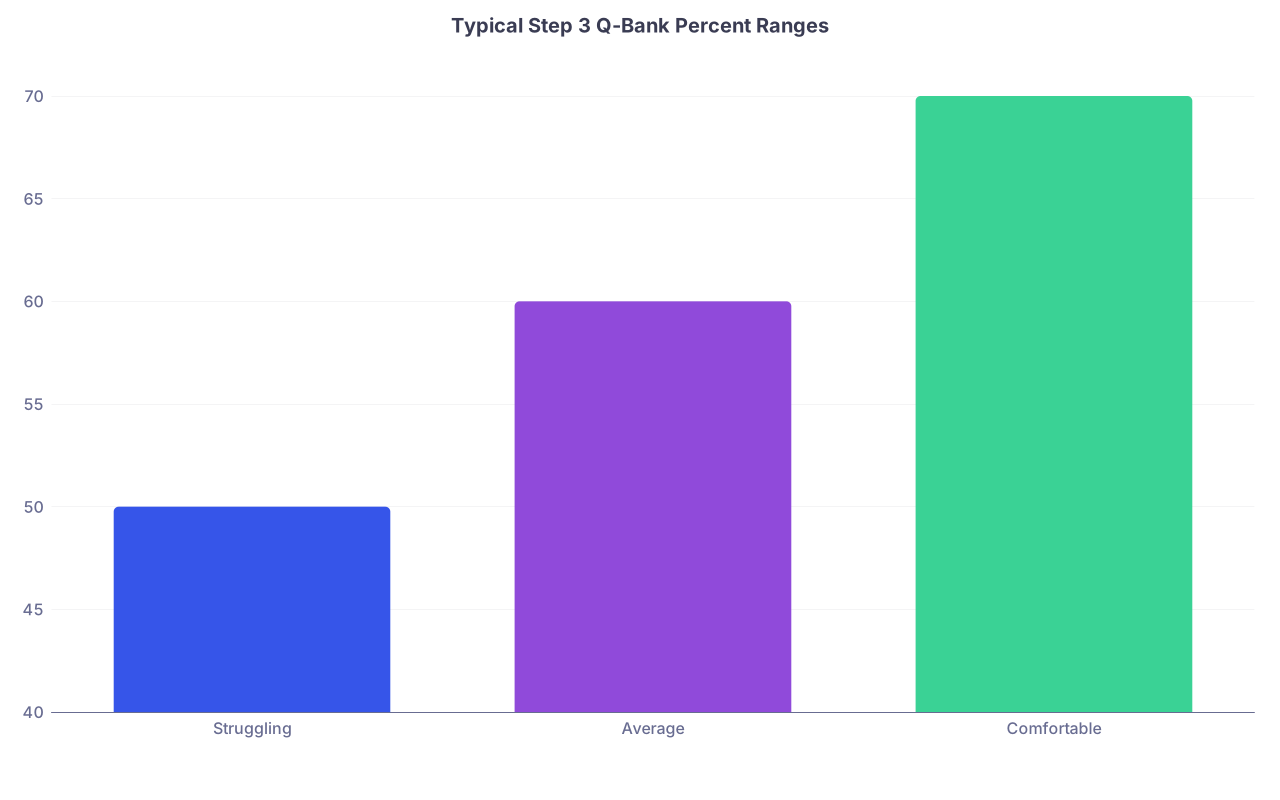
| Category | Value |
|---|---|
| Struggling | 50 |
| Average | 60 |
| Comfortable | 70 |
If you’re consistently in the low‑50s and trending up (even slowly), you are not destined to fail. You might need more time, more structure, or fewer “I’ll just read the explanation quickly” moments, but you are not doomed.
If you’re in the high‑40s and flat, that’s when I start to worry about your prep strategy, not your intelligence.
Your brain, though, doesn’t care about nuance. It just sees “barely passing” and jumps to catastrophe:
- “If I fail Step 3, my program will fire me.”
- “Everyone else is cruising; I’m the only one struggling.”
- “This proves I slid through Step 1/2 and now the truth is out.”
I’ve watched residents with 48–52% Q‑bank averages pass comfortably, and I’ve watched people with 65% freak out and still pass. I’ve also seen people with “good” percentages fail because they never fixed specific, repeated errors.
So no, your Q‑bank percentage alone doesn’t write your Step 3 obituary.
The Ugly Truth About Q‑Bank Scores vs Actual Step 3
You know what nobody tells you? Step 3 is not a clean, “if you get X% on UWorld, you pass” equation. It’s messier.
Here’s how I’d break it down.
| Q-Bank Avg (Timed, Random) | My Honest Take on Risk |
|---|---|
| 45–50% | High risk *if* flat trend and short prep time |
| 50–55% | Moderate risk, but very salvageable with targeted fixes |
| 55–65% | Generally safe if trend is stable or improving |
| 65%+ | Low risk academically; still need CCS and timing practice |
And then you add context:
- Are you doing timed, random blocks or cherry-picking easy topics?
- Are you rushing explanations or actually learning from misses?
- Are you near the exam or early in prep?
- Are you dead exhausted from nights or reasonably functional?
Here’s the part that should make you exhale a little: Step 3 is a pass/fail hurdle exam, not a cut-throat competition. You’re not aiming for a 260. You’re aiming for “competent, safe, not dangerous.”
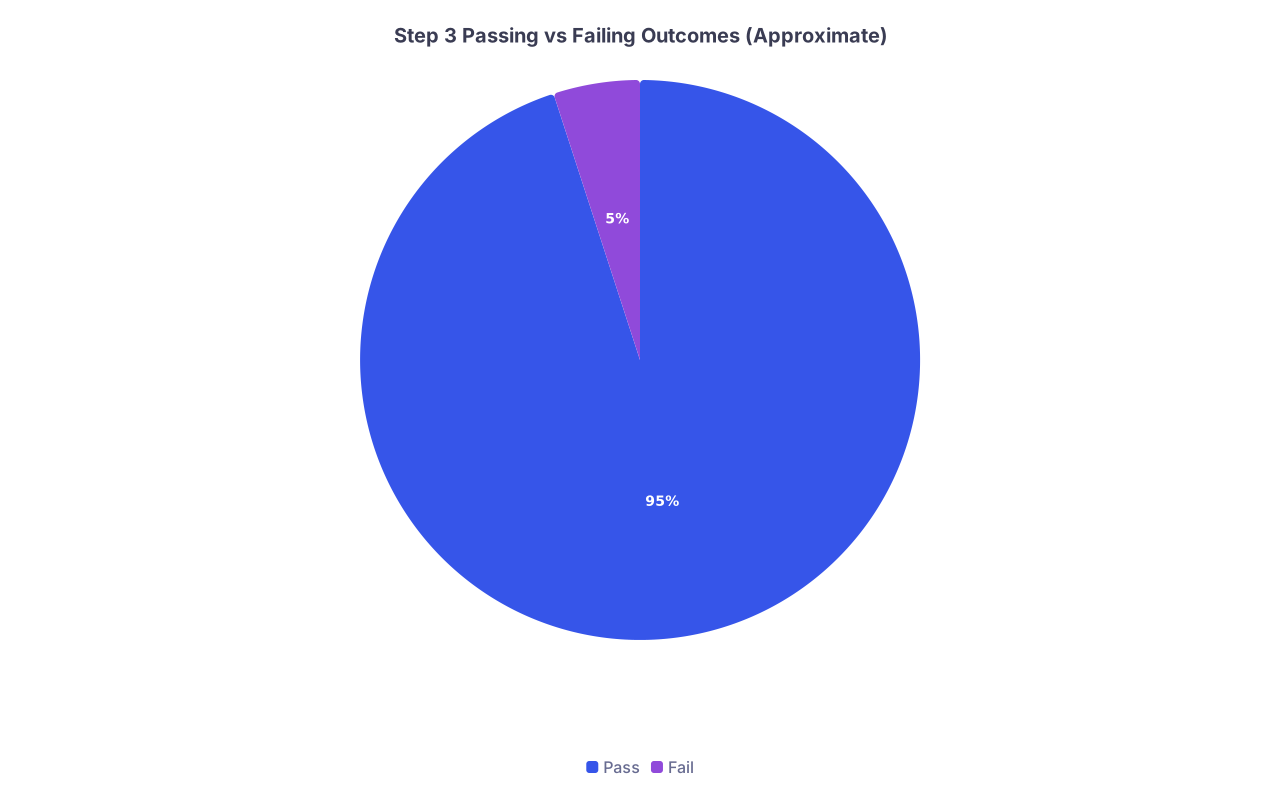
| Category | Value |
|---|---|
| Pass | 95 |
| Fail | 5 |
God, that 5% feels like a neon sign when you’re anxious, doesn’t it? But flip it around: 95 out of 100 people pass. And a lot of those 95 did not have pretty Q‑bank dashboards.
You’re not trying to be perfect. You’re trying to avoid being in that bottom slice where people either:
- Didn’t take it seriously at all
- Barely did any questions
- Or got crushed by test‑day anxiety and timing
If you’re here, reading this, stressing over your percentage… you are not in the “don’t care” category.
Red Flags vs Normal Anxiety: Which One Are You?
You’re probably wondering: “Okay, but am I one of the doomed ones?” Let’s be blunt.
Normal “I’m anxious but probably fine” signs:
- Your Q‑bank is in the low‑50s to low‑60s but trending slightly up
- You review every explanation, not just the ones you got wrong
- You can explain your misses: “I keep missing next best step when labs aren’t back yet,” or “I mix up pregnancy hypertension timelines”
- You’ve scheduled at least 4–6 weeks where Step 3 isn’t an afterthought to 80‑hour weeks
Actual red flags:
- You’re scoring mid‑40s on timed, random blocks and nothing’s budging
- You skim explanations, tell yourself “yeah I knew that,” and move on
- You have major gaps in core medicine (CHF, COPD, DKA, sepsis, chest pain, pregnancy)
- You’ve done very few CCS cases and are secretly hoping Step 3 is just multiple choice (it’s not)
- You’re taking the exam in like 2 weeks and your schedule is still chaos
If you’re in the second group, that still doesn’t mean you’re destined to fail. It means something has to change now, not “after this next block” or “when I magically get a golden week off.”
Fixing the Way You’re Studying (Not Just “Doing More Questions”)
The default anxious move is always: “I need to do more questions. More, more, more.” You crank out four blocks in a row, barely look at explanations, and then wonder why your percentage isn’t climbing.
This is going to sound harsh: doing questions without deep review is busywork. It feels productive and safe because your hands are moving. But your brain isn’t actually updating its wiring.
Here’s what actually helps when you’re barely passing:
1. Timed, Random Blocks Only
I know it’s tempting to say “I’m bad at endocrine, I’ll just do an endocrine block.” That’s comfort studying. Step 3 is mixed. The test doesn’t care what you feel like doing.
At least half of your blocks should be timed, random, all subjects. That’s where your true baseline lives.
2. Slow, Painful Review > More Questions
One 40-question block with real review is more valuable than three blocks you barely look at.
On review, for each missed question, ask yourself:
- Was this a knowledge gap or a thinking/strategy error?
- Did I misread the stem, ignore vitals, skip a key lab?
- Did I forget a guideline or mix up two similar conditions?
- What’s the one sentence takeaway that would have saved me?
And then actually write that down somewhere. Not a novel. Just one or two lines.

If you’re not externalizing your learning (notes, flashcards, mental frameworks), your brain will just keep going, “Oh yeah, I remember seeing that once” without actually fixing the pattern.
3. Patterns > Individual Questions
The goal isn’t to remember “that lupus nephritis question.” The goal is to notice that you keep:
- Under-treating sepsis (not giving enough fluids, delaying antibiotics)
- Forgetting surveillance intervals for colon polyps
- Messing up when to admit vs send home in chest pain
You’re trying to fix patterns of practice that Step 3 is designed to test. Because Step 3 is basically asking: “If I handed you a real patient, would you be safe and systematic?”
CCS: The Part Everyone Ignores Until It’s Too Late
Let’s talk about the nightmare section: CCS.
You can absolutely have “meh” Q‑bank scores and still pass if your CCS performance is decent. I’ve seen it happen. The opposite is also true: strong MCQ knowledge and clueless CCS handling can sink you more than people think.
Most people underestimate how weird CCS feels the first 5–10 cases.

| Step | Description |
|---|---|
| Step 1 | Start Step 3 Prep |
| Step 2 | Timed Random Q-Bank Blocks |
| Step 3 | Deep Review & Notes |
| Step 4 | Begin CCS Practice |
| Step 5 | Alternate Q-Bank & CCS Days |
| Step 6 | Full-Length Practice Simulation |
| Step 7 | Targeted Weak Area Review |
If you haven’t touched CCS yet and your test is in 1–2 weeks, that’s fixable but not optional. You need to:
- Do the official NBME/USMLE CCS practice cases/software
- Practice ordering: vitals, IV, labs, imaging, consults, level of care
- Get used to advancing time and re‑checking patients
You don’t have to be slick and perfect. You just have to not be so lost that you waste the entire case clicking random things.
How Long Is “Enough” Prep if You’re Barely Passing?
Here’s where people lie. They say, “Oh, I studied two weeks, it was fine.” What they leave out is they had strong Step 2, light rotation schedules, and maybe did questions during intern year.
If you’re hovering in the 50–60% range and you’re not a natural test‑taker, I’d want:
- 4 weeks minimum if you can carve out some lighter days
- 6–8 weeks if you’re full‑time inpatient and exhausted most days
Not 6–8 weeks of fake studying. I mean weeks where you actually:
- Do 1–2 solid, timed blocks most days
- Review them like it matters
- Work through CCS practice several times per week
- Revisit your notes/weak spots repeatedly, not just once
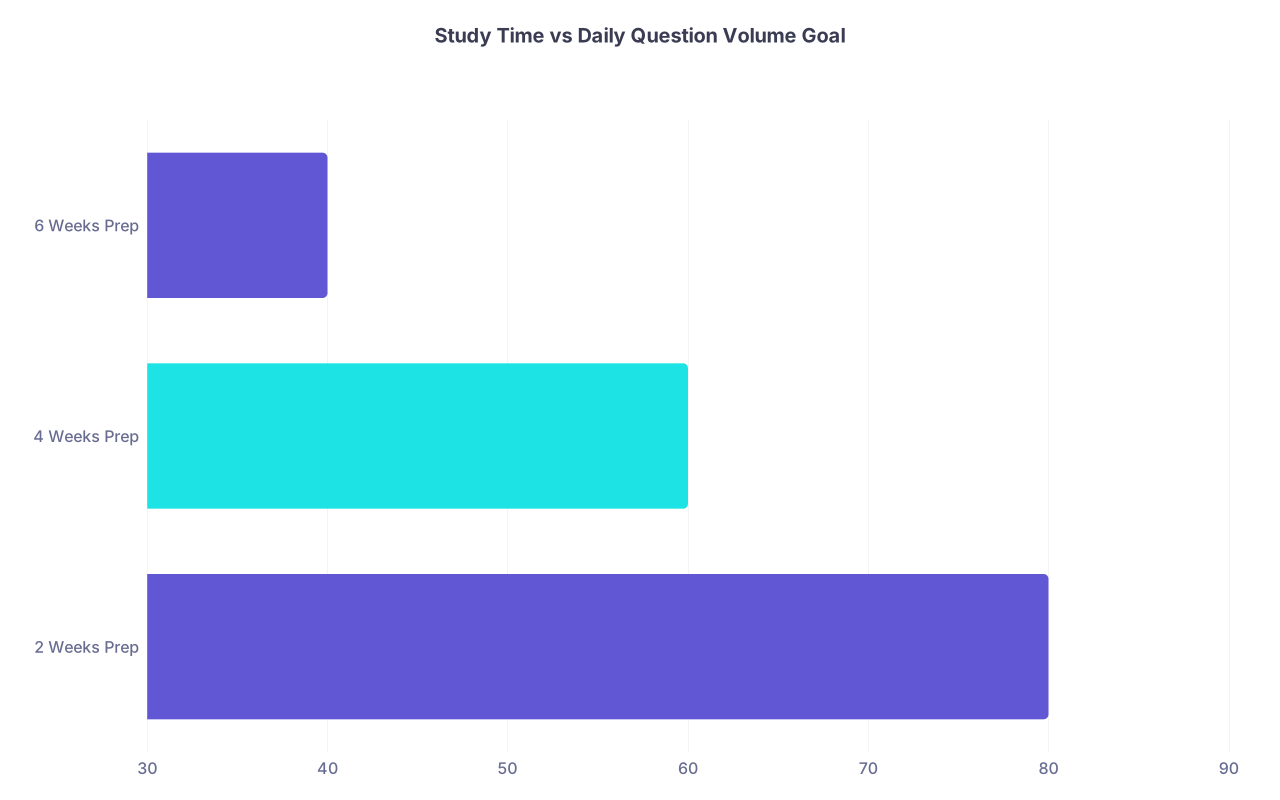
| Category | Value |
|---|---|
| 2 Weeks Prep | 80 |
| 4 Weeks Prep | 60 |
| 6 Weeks Prep | 40 |
Those “daily question” numbers are averages, not rigid. Some days you’ll do less because you’re post-call and half-dead. That’s real life.
Worst-Case Scenario: What If I Actually Fail?
Your brain’s favorite horror story. Let’s drag it into the light.
- Your world will feel like it’s collapsing for a bit
- You’ll have some awkward conversations with program leadership
- You’ll have to reschedule and restudy
That’s the real part.
Here’s the part your anxiety refuses to admit: people fail Step 3 and still go on to be attendings. I’ve seen residents repeat Step 3, pass on the second try, and finish training. Did it suck? Yes. Did it end their career? No.

Programs don’t love failures; nobody’s pretending they do. But your career is not over over. Most of the time, it becomes:
- A hit to your confidence
- A wake-up call to change how you prep
- An annoying line on your record that people eventually stop caring about
You’re trying to avoid that outcome, obviously. But knowing it isn’t a permanent death sentence can take some pressure off. Paradoxically, that can help you actually perform better.
So… Am I Destined to Fail?
If you’re:
- Barely passing Q‑banks but actually doing them
- Reviewing your explanations thoroughly
- Working on CCS intentionally
- Giving yourself a realistic amount of prep time
Then no. You are absolutely not “destined to fail.” You’re firmly in the anxious but salvageable category, which is where a lot of perfectly competent residents live.
The people I worry about most aren’t the ones sitting at 55% and panicking. It’s the ones sitting at 45%, shrugging, and saying, “It’ll probably be fine. I’ll wing CCS.”
You’re here, reading this, because you care enough to be scared. That alone puts you ahead of more people than you think.
Years from now, you won’t remember the exact percentage on your Q‑bank dashboard. You’ll remember how you responded when you were afraid: whether you shut down, or whether you got honest, adjusted, and kept going.
FAQ (Exactly 5 Questions)
1. What Q‑bank percentage is “safe” for Step 3?
If you’re consistently scoring 55–65% on timed, random blocks with real review, you’re generally in a safe zone for passing, especially if you’re also practicing CCS. Below 50% with no upward trend is concerning, but not a prophecy—it’s a sign that your strategy needs to change, not that you’re doomed.
2. Is UWorld enough for Step 3 if I’m barely passing?
For most people, UWorld + CCS practice + honest review is enough. If you’re barely passing, piling on extra Q‑banks won’t magically fix things. It’s usually better to do UWorld properly—timed, random, fully reviewed—than to scatter yourself across three different resources and rush through all of them.
3. How many CCS cases should I do before Step 3?
Aim to do all of the official practice cases at least once, and then repeat enough of them until the mechanics (ordering, advancing time, documenting) feel natural instead of alien. You don’t need to be perfect. You just need to not be lost and paralyzed in the interface.
4. My exam is in 2 weeks and I’m still in the low 50s. Should I delay?
If you can delay without burning bridges with your program, and you’re not just avoiding discomfort, a short delay of 2–4 weeks can help—if you use it to fix your process (better review, CCS practice, focused weak-area work). If delaying isn’t an option, commit to high-yield fixes now: timed, random blocks, deep review, daily CCS.
5. I’m terrified my program will think I’m incompetent if I fail Step 3. Is that true?
They won’t be thrilled, but failing Step 3 once does not equal “you’re incompetent.” It usually reads as: underprepared, overwhelmed, or using ineffective study strategies. Program directors care a lot more about how you respond—do you take responsibility, adjust, and pass on the second attempt—than the single failure itself.