
You do not need a “perfect” study plan to pass COMLEX Level 3. You need a ruthlessly realistic one that fits inside 80-hour weeks and constant pages.
I have seen residents cruise through Level 3 on 30–40 minutes a day and I have watched others fail despite “studying all the time.” The difference was not intelligence. It was structure, timing, and brutal honesty about how residency actually works.
This is the blueprint I wish every intern had on day one.
Step 1: Get Clear on the Real Goal (Pass, Not Impress)
Level 3 is not Step 1 or Level 2. No fellowship director cares about this score like they do about your earlier exams. Your main objective:
Do not fail. Do not have to retake during a brutal rotation.
That means:
- Prioritize efficient breadth over deep perfection.
- Focus on high-yield patterns and OMT basics, not obscure minutiae.
- Accept that you will not “master” everything. You just need to be consistently good enough across the board.
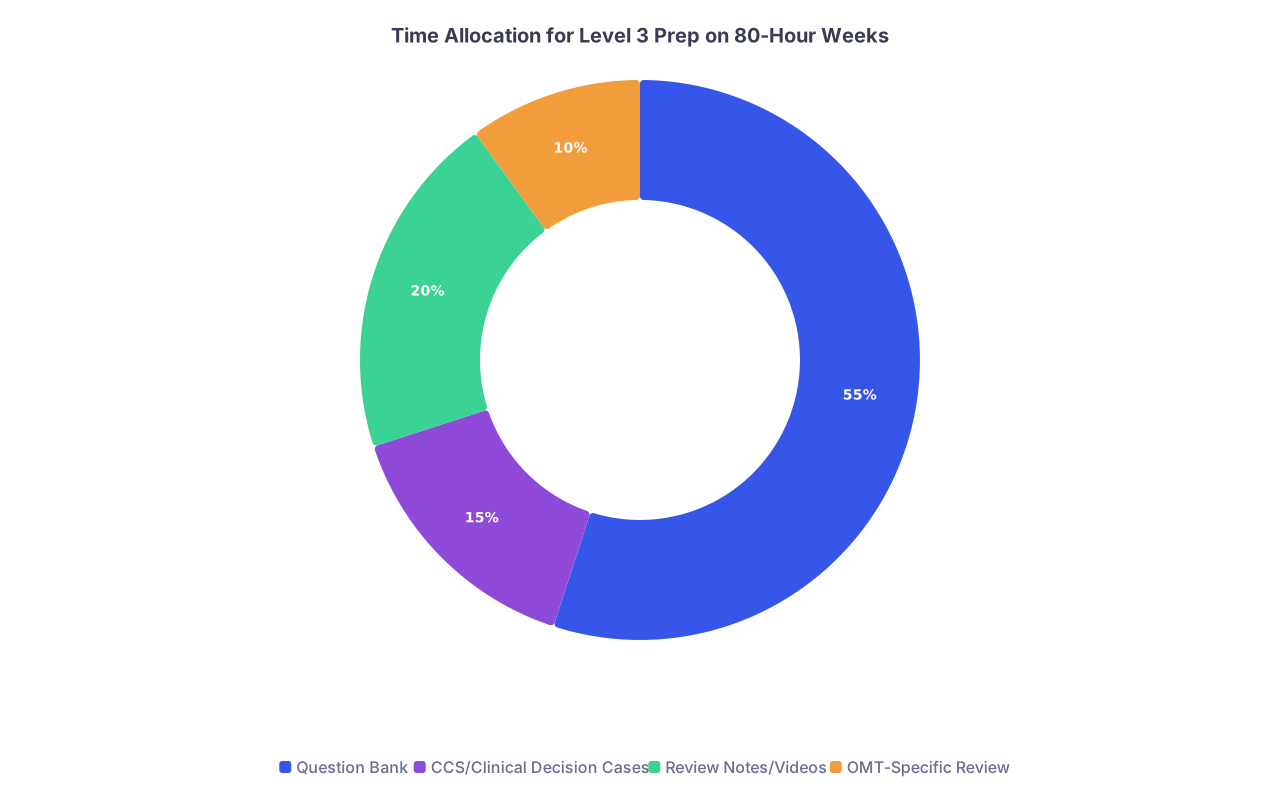
| Category | Value |
|---|---|
| Question Bank | 55 |
| CCS/Clinical Decision Cases | 15 |
| Review Notes/Videos | 20 |
| OMT-Specific Review | 10 |
Aim for a pass with margin, not a 700. Anyone telling you to do multiple full resources from cover to cover while working 80 hours is detached from reality.
Step 2: Understand the Exam and Exploit Its Structure
You cannot prepare well for an exam you barely understand.
What COMLEX Level 3 Actually Tests
- Two days of testing.
- Mix of:
- Single-best-answer multiple choice questions (MCQs)
- Clinical decision-making items
- OMT and osteopathic-specific content woven into clinical cases.
Think of it as: “You are an unsupervised junior attending. What do you do next?”
Not: “Recite every pharmacokinetic detail of this antibiotic.”
Typical content focus:
- Bread-and-butter inpatient and outpatient medicine
- ER/urgent care decisions
- OB/GYN, peds, psych, surgery, ortho
- Preventive medicine, screening guidelines
- OMT principles, contraindications, and appropriate indications
Why This Matters
If you are an IM intern on wards every month, you already see half this exam daily. Your job is to convert real-life patient encounters into exam reps and then fill gaps systematically.
Step 3: Pick a Minimalist Resource Stack and Commit
You do not have time for 6 resources. You barely have time for 2.
Here is the lean setup that actually works during 80-hour weeks:
| Category | Resource Type |
|---|---|
| Core questions | 1 dedicated Level 3 Qbank |
| CCS-style practice | Built-in cases/CCS-like tool |
| OMT review | One concise OMT review source |
| Rapid review | Brief Level 3 or Step 3 notes |
1. Primary Qbank (Non-Negotiable)
Use one main Qbank. Not three.
Look for:
- COMLEX Level 3–specific if available; if not, a high-quality Step 3 style bank with strong clinical content.
- Adjustable block length (10–15 questions) so you can fit sets into 20–25 minute windows.
Mode:
- Start with Tutor + Timed for learning.
- Shift to Timed only in the final 2–3 weeks.
2. CCS/Clinical Decision Practice
You must practice:
- Starting workups
- Choosing initial management
- Ordering appropriate tests in the right sequence
- Knowing when to consult, admit, discharge
Use:
- Any COMLEX Level 3–style case platform or Step 3–style CCS simulator.
- If your Qbank has integrated cases, that is enough. Do not buy three add-ons.
3. OMT-Specific Review
This is where purely allopathic Step 3 prep will leave you exposed.
Use one concise OMT resource that covers:
- Core models (biomechanical, respiratory-circulatory, metabolic, etc.)
- Contraindications to major techniques (HVLA, FPR, lymphatic techniques)
- High-yield techniques for common complaints: low back pain, pregnancy, pneumonia, post-op ileus, headache
- Chapman's points and viscerosomatic basics at a board level, not detail-obsessed.
If your program has an OMT faculty who loves teaching – use them. One 30-minute session with them can clean up more confusion than 3 hours of passive reading.
4. Rapid Review Notes
This is your “on-call brain” material:
- A tight set of notes / PDF / distilled bullets:
- Emergency management algorithms (STEMI, sepsis, PE, stroke)
- Screening/immunization guidelines by age
- OB triage, fetal heart patterns, hypertensive disorders of pregnancy
- Peds red flags, developmental milestones basics
This is what you flip through when you are too fried for questions.
Step 4: Build a Study Plan That Survives 80-Hour Weeks
This is where people either succeed or sink.
Your plan must assume:
- You will be post-call and useless some days.
- Rotations differ wildly (ICU vs clinic vs elective).
- You will have nights where your brain is paste.
So you create two schedules:
- A baseline minimum that you can realistically hit on your worst rotation.
- A stretch schedule for lighter weeks.
Baseline Weekly Plan (Worst Rotation, 80-Hour Wards/ICU)
Weekday minimums:
- 10 questions before work or early in the day.
- 10 questions sometime before bed.
- Quick review of marked questions from that day (5–10 minutes).
Total questions per weekday: 20
Total for Mon–Fri: 100
Weekend (post-call + one lighter day):
- One day: 20–30 questions + 1 case.
- Other day: 40–60 questions + 1–2 cases.
Target: 160–200 questions/week on your worst rotations.
That is enough to steadily move the needle.
Stretch Weekly Plan (Clinic / Elective / Lighter Rotation)
- Weekday: 30–40 questions/day + 1 brief OMT or rapid-review session.
- Weekend: 60–80 questions + 2–3 cases across both days.
Target: 220–300 questions/week.
How Far Out to Start
If you are working 80-hour weeks, do not wait until “dedicated.” You do not really get a dedicated period.
- Ideal: Start 8–10 weeks before your exam.
- Bare minimum: 6 weeks with real consistency.
Back-solve:
- Qbank has ~1,000–1,500 questions?
- At 200 questions/week:
- 5–7 weeks to get through it once.
- 1–2 weeks for review, weak areas, and case practice.
Step 5: Daily Tactics That Actually Work on Call and Post-Call
This is where you stop pretending you are a full-time student and start acting like a resident who has 20–40 usable minutes a day.
Carve Out Non-Negotiable Micro-Blocks
Anchors work better than willpower.
Pick:
- Morning: 15–20 minutes before work (or at work before sign-out).
- Evening: 15–25 minutes before bed.
Defend those two blocks like a consult pager. Everything else is a bonus.
In those blocks:
- Do 10–15 questions, timed.
- Immediately review explanations for:
- Questions you got wrong.
- Questions you got right by guessing.
- Questions you felt unsure about but guessed correctly.
Stop reading every explanation in full detail when you nailed an easy one. That is self-sabotage disguised as productivity.
Use the “3-Tag Review” System
When reviewing, quickly tag each question:
- Green – I understand this cold. No follow-up.
- Yellow – I get it mostly, but I need one key point to stick.
- Red – I had no idea what was going on or I have a conceptual hole.
Your goal by the final 1–2 weeks:
- No obvious red patterns left in major topics (codes, OB triage, sepsis, ACS, strokes, peds emergencies).
What to Do on Post-Call Days
You will not do 60 questions post-call. Stop pretending.
Post-call plan:
- Sleep.
- Do:
- 10–15 very untimed questions sometime late afternoon or evening.
- Or review 20–30 previously missed questions and read explanations.
- Spend 10–15 minutes on a short topic (e.g., hypertensive disorders of pregnancy, COPD exacerbation management, low back pain OMT).
You are prioritizing retention and consistency over volume here.
Step 6: Make Your Rotation Work for You, Not Against You
You are surrounded by free, high-yield teaching material daily. Use it.
Turn Real Patients into Exam Reps
Every shift, pick 1–2 patients and do this:
- What would COMLEX ask about this case?
- The next management step?
- The best diagnostic test?
- A contraindicated OMT technique?
- The counseling or screening follow-up?
Examples:
- 28-year-old pregnant patient with RUQ pain → HELLP vs acute cholecystitis vs cholestasis of pregnancy.
- 65-year-old with new AF and hypotension → rate vs rhythm control, when to cardiovert, anticoagulation decisions.
- 40-year-old with low back pain and no red flags → imaging indications, initial management, OMT options.
Take 1 minute after rounds. Write one board-style question in your notes app. Force your brain to think “test mode.”
Use Rounds as OMT Review
- Somatic dysfunction
- Rib mechanics
- Post-op ileus
- Pneumonia with poor clearance
Ask yourself:
- What OMT techniques would COMLEX expect here?
- Which are contraindicated in pregnancy, fractures, osteoporosis, malignancy?
Step 7: OMT – Do the Minimum That Moves the Needle
Ignoring OMT is a fantastic way to flirt with failure as a DO.
You do not need to be an OMT superstar. You do need to:
- Recognize indications for common techniques.
- Know contraindications cold.
- Understand basic models and reflexes.
A 2-Week OMT Micro-Plan (On Top of Qbank)
Week 1 (15–20 minutes/day):
- Day 1–2: Spinal mechanics & basic somatic dysfunction terms.
- Day 3–4: Common techniques (HVLA, ME, FPR, BLT, still technique) + indications/contraindications.
- Day 5–7: Lymphatic techniques, ribs, diaphragm, thoracic inlet, terminology.
Week 2 (15–20 minutes/day):
- Day 1–2: Viscerosomatic reflex patterns, Chapman's points overview.
- Day 3–4: OMT for common clinical complaints:
- Low back pain
- Pregnancy-related pain
- Post-op ileus
- Pneumonia, COPD
- Day 5–7: Mixed question review and rapid flashcards.
You can easily tuck that into your evenings for 2 weeks.
Step 8: Final 2–3 Weeks – Tighten, Do Not Start Over
The biggest mistake at this stage is panic-buying new resources or trying to re-learn everything from scratch. Bad idea.
Here is what actually moves the needle late:
1. Simulate the Testing Experience
At least once per week:
- Do a longer timed block approximating a test session:
- 44–50 questions back-to-back without checking your phone.
- Once or twice:
- Simulate a half day of testing if you are off (e.g., 2–3 long blocks back to back).
Use this to:
- Practice endurance.
- Fine-tune your break strategy.
- Get comfortable sitting that long while tired.
2. Hammer Weak Links, Not Everything
Use your Qbank analytics:
- Identify:
- Bottom 3–4 categories (e.g., OB, peds, psych, OMT, emergency).
- Target plan:
- 10–15 questions/day in each weak area.
- 10–15 minutes/day reviewing summary notes for those specific topics.
You do not need to restudy your strongest subjects. That is just ego and procrastination combined.
3. Sharpen “Don’t-Miss” Topics
These are areas where wrong answers are dangerous even in real life:
- Chest pain / ACS
- Shortness of breath / PE / pneumonia / CHF
- Stroke/TIA, especially thrombolysis and thrombectomy windows
- Sepsis, shock, and fluid/pressors basics
- OB emergencies (pre-eclampsia, eclampsia, shoulder dystocia basics, postpartum hemorrhage)
- Peds red flags (toxic appearing infant, meningitis, sepsis)
You want automatic, almost reflexive correct answers here.
Step 9: Test-Day Logistics – Protect Your Brain
If you are on 80-hour weeks, the week of your test cannot be “business as usual.”
1. Work Schedule Protection
You need to be deliberate:
- Ask in advance to:
- Avoid a 28-hour call immediately before your exam day if at all possible.
- Swap one heavy call for a lighter shift earlier that week.
- Many chiefs and schedulers will accommodate if you ask early and reasonably.
2. The Day Before the Exam
Do not grind 200 questions the day before.
Better:
- 20–30 light review questions.
- Quick review of:
- OMT contraindications.
- Few key algorithms you routinely miss.
- Pack everything:
- Snacks, water, ID, confirmation email, comfortable clothes.
Sleep is more valuable than anything else at this point.
3. During the Exam
Treat it like a long call shift:
- Use breaks systematically:
- Short 5–7 minute breaks every block or two to stretch, bathroom, snack.
- Do not obsess over uncertain questions.
- Mark.
- Move on.
- Keep a steady pace:
- Roughly 1 minute/question for most blocks.
- Do not agonize over a single item; that is how people run out of time.
Step 10: Mindset – Stop Aiming for Perfection, Aim for Reliability
Residents fail this exam for three main reasons:
- They start too late and try to cram an exam into 2 weeks of 80-hour ICU.
- They spread themselves across 4–5 resources and never finish any.
- They let guilt and perfectionism paralyze them when they miss planned study days.
Fix that:
Consistency over intensity
20 questions every day beats 0 questions for 4 days and 120 in one exhausted Sunday.Completion over complexity
One fully completed Qbank + one OMT review > three half-finished banks and a pile of PDFs.Grace over guilt
If you blow a day because you admitted 10 patients as night float, your job is not to punish yourself with 100 extra questions tomorrow. Your job is to re-engage with your next 20–30 questions as soon as you are functional.
You are doing Level 3 and taking care of real patients. That is not nothing.
A 6-Week Example Timeline (While Working 70–80 Hours)
Use this as a template, not a prison sentence.
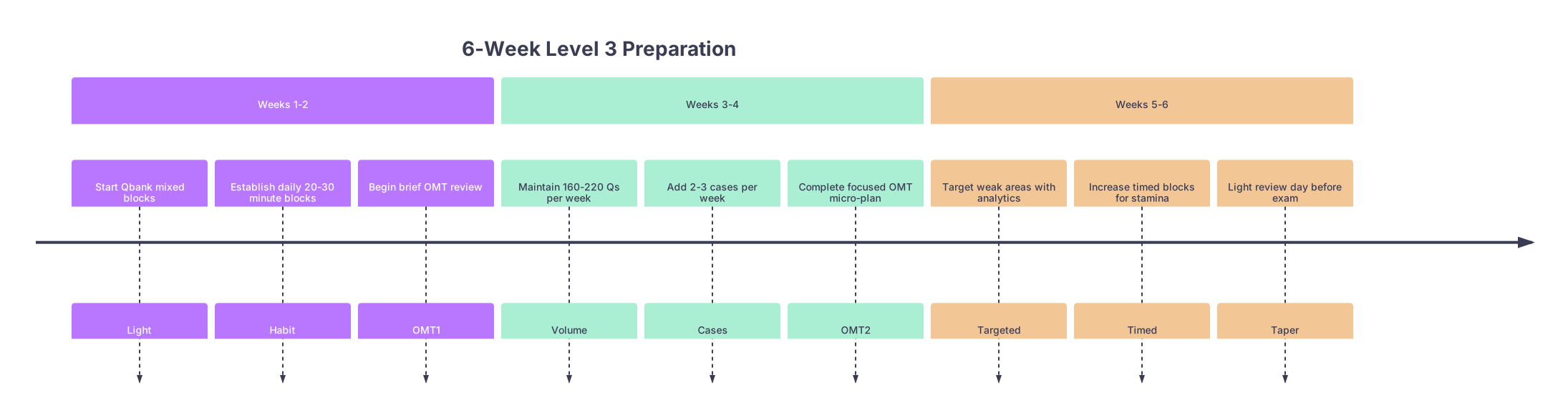
| Period | Event |
|---|---|
| Weeks 1-2 - Start Qbank mixed blocks | Light |
| Weeks 1-2 - Establish daily 20-30 minute blocks | Habit |
| Weeks 1-2 - Begin brief OMT review | OMT1 |
| Weeks 3-4 - Maintain 160-220 Qs per week | Volume |
| Weeks 3-4 - Add 2-3 cases per week | Cases |
| Weeks 3-4 - Complete focused OMT micro-plan | OMT2 |
| Weeks 5-6 - Target weak areas with analytics | Targeted |
| Weeks 5-6 - Increase timed blocks for stamina | Timed |
| Weeks 5-6 - Light review day before exam | Taper |
Weeks 1–2:
- 20–25 questions/day on heavy weeks, 40+ on lighter days.
- Start OMT review.
Weeks 3–4:
- Increase to 200–250 questions/week consistently.
- Start case practice (2–3 per week).
Weeks 5–6:
- Focus on weak areas.
- Add longer timed sessions.
- Taper one day before exam.
How to Know You Are Probably Ready
No exam guarantee here, but some solid signals:
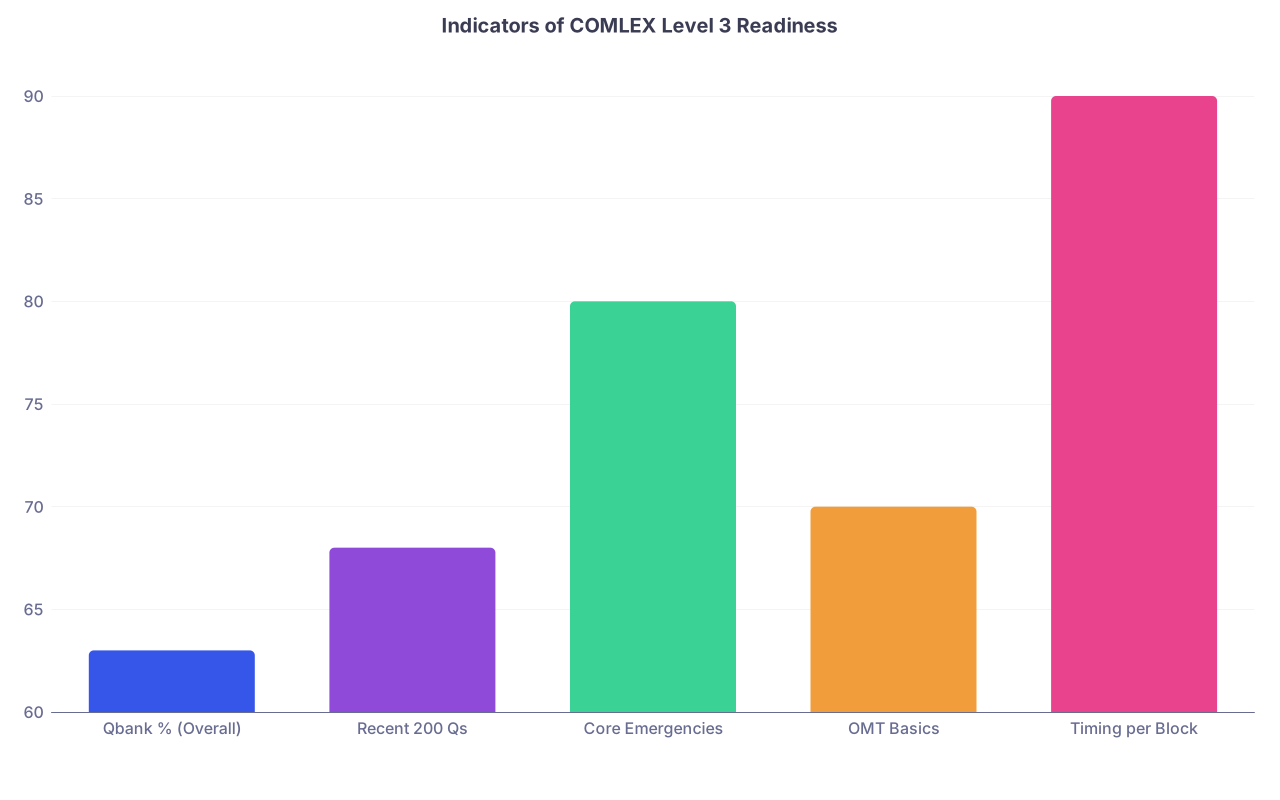
| Category | Value |
|---|---|
| Qbank % (Overall) | 63 |
| Recent 200 Qs | 68 |
| Core Emergencies | 80 |
| OMT Basics | 70 |
| Timing per Block | 90 |
If by the final week:
- You have completed >70–80% of your primary Qbank.
- Your recent (last 200–300) questions are sitting around:
- Mid-60s or higher for a COMLEX-style bank (check how they report performance).
- You are no longer bombing:
- OB/peds emergencies.
- Sepsis, shock, ACS, stroke questions.
- Basic OMT contraindications and indications.
And:
- You can complete timed blocks without running out of time.
Then you are likely in the safe zone.
What to Do If You Feel Behind at 3–4 Weeks Out
This happens. Frequently.
Do not panic. Do triage.
- Accept you will not finish everything.
- Prioritize:
- Emergency / hospitalist content
- OB/peds
- OMT core
- Do:
- 30–40 questions/day, no excuses, heavily mixed content.
- 15 minutes/day OMT and rapid-review notes.
- 1–2 longer timed blocks before the exam.
Drop:
- Long videos.
- Low-yield niche topics.
- Rewriting entire textbooks into notebooks.
You are in damage control mode. Focus on the 60–70% of the exam that shows up over and over.
One Last Point Most People Ignore
Residents burn out more from being angry at themselves than from the work.
You are:
- Working 70–80 hours per week.
- Managing real patients.
- Trying to keep your life from falling apart.
- Studying for a high-stakes board exam on top of that.
So the move is not to be “stronger” or magically more disciplined.
The move is to build a lightweight, non-negotiable system that keeps you in the game on your worst weeks.
Here it is, in one line:
20–40 mixed questions per day + 10–15 minutes OMT/rapid review, for 6–8 weeks, with honest targeting of weak areas in the final 2–3 weeks.
That will carry you further than any perfect plan you abandon after two days on call.
Your next step:
Tonight, open your Qbank and schedule a single 10-question timed block for tomorrow morning and one for tomorrow night. Put them into your calendar like real appointments. Then keep those two micro-commitments, no matter how the shift goes.