
The worst mistake dual-accredited residents make is pretending Step 3 and COMLEX Level 3 are “just another set of boards.” They’re not. They’re a logistical trap that can wreck your schedule, your sanity, and in some cases, your contract.
If you’re in an ACGME program with osteopathic recognition or a program that accepts both exams, you’re juggling two different testing philosophies, two different formats, and one brutal reality: you have less time and more responsibility than you did for any prior exam.
This is how you plan it like an adult, not a panicked PGY-1 with a Qbank subscription and no strategy.
1. First, Get Clear on What Actually Matters for You
Before you open a single question bank, you need one thing: clarity. Not vibes, not what your co-intern is doing. Your actual requirements.
Here’s the hierarchy that matters:
- What does your state licensing board require?
- What does your program require?
- What does your future job/fellowship care about?
You solve this in a single afternoon if you’re disciplined.
A. State license and exam choice
You’re dual-accredited, or at least dual-exam-eligible. That does not mean every state loves both.
You need to know:
- Does your target state (or likely states) accept:
- USMLE Step 3 only?
- COMLEX Level 3 only?
- Either for full licensure?
- COMLEX plus some USMLE components?
Go to the state board website. Do not rely on Reddit screenshots. If you can’t parse the board’s language, email or call them and ask one direct question:
“I’m a DO resident in an ACGME program. If I take only COMLEX Level 3 and have Steps 1–2 CK / or just COMLEX 1–2, will I be fully license-eligible in your state, or do I need USMLE Step 3 too?”
Write the answer down. Save the email.
Now match that with your program’s stance.
B. Program policy and deadlines
Some programs are chill. Some have hidden landmines.
Open your resident handbook and look for:
- Requirement to pass Step 3 by a certain PGY year (often end of PGY-2)
- Requirement to pass Level 3 by a certain year
- Consequences of failing (probation, blocked promotion, etc.)
- Whether they:
- Require both Step 3 and Level 3
- Accept either
- “Strongly recommend” one for fellowship competitiveness
If it is not in writing, ask your PD or APD like this:
“I plan to take both Step 3 and Level 3. For promotion and contract renewal, what are the latest dates by which you want us to have each passed?”
Not “when do most people take it.” You want deadlines tied to consequences.
Now you can map reality.
| Scenario | What Usually Happens |
|---|---|
| State + program accept either | Residents pick one primary exam |
| Program prefers Step 3, state accepts both | Residents often take Step 3 first, Level 3 later or never |
| Osteopathic-focused program | Level 3 required; Step 3 optional for fellowship/geo flexibility |
| Planning competitive fellowship | Many DOs do both to avoid doors closing |
If your future is uncertain (you’re not sure where you’ll practice or what fellowship you want), doing both is usually safer. Annoying, yes. But safer.
2. Decide Your Sequence and Timing Like a Strategist
Here’s the truth most people don’t say out loud: nearly everyone underestimates how much residency will beat them up mentally. If you plan exams like you did in med school, you’ll get crushed.
You need three constraints:
- A calendar window where you’re not drowning on service
- A study time reality check (actual daily hours, not fantasy)
- A sequence that makes cognitive sense
A. Ideal order for most dual-accredited residents
For most DOs in ACGME programs:
- Take Step 3 first
- Then COMLEX Level 3 4–12 weeks later
Why?
- Step 3 has better-quality questions and explanations; it forces more disciplined thinking.
- Many good resources are Step-focused and map reasonably well to Level 3.
- COMLEX Level 3’s weirdness (OMM, vague stems, different style) is easier to “add on” than it is to “translate” Step-style thinking into COMLEX from scratch.
If you are heavily osteopathic-leaning, in an osteopathic-recognized program, and your state + program only care about COMLEX? Then flip it: do Level 3 first and decide later whether Step 3 adds value for fellowship or geography.
B. When during residency?
You’re balancing two things:
- You want enough inpatient experience to not be lost on CCS / COMLEX management
- You don’t want to push it so late that failure delays your full license or promotion
For most:
- Step 3: Between January of PGY-1 and October of PGY-2
- Level 3: 1–3 months after Step 3, ideally still in PGY-2
The real constraint is your rotation schedule, not the calendar year.
C. Use your schedule like a weapon
Pull up your schedule for the year. Identify:
- Light rotations: outpatient, electives, research, consults with predictable hours
- Heavy rotations: ICU, night float, q4 call, trauma months, busy inpatient medicine
Do not schedule either exam:
- On the tail end of ICU or night float
- Immediately after vacation you’ll need for actual rest
- During a block when you’re on 6-day weeks and late sign-outs
What works incredibly well:
- Step 3 at the end of an easy month, followed by a light or medium month
- Level 3 in a similar window 4–8 weeks later
3. Build a Combined Study Plan Instead of Two Separate Ones
If you study for Step 3 and Level 3 as completely separate beasts, you’ll burn out and repeat work. The smart move is to build a single core plan, then layer each exam’s quirks on top.
Think of it as:
- 70–80% shared core prep
- 20–30% exam-specific add-ons
A. Core knowledge and management
You need one primary resource for:
- Adult inpatient medicine
- Outpatient management
- ED/urgent decision-making
- Ethics, biostats, counseling
For nearly everyone, this core is:
- A good Step 3 Qbank (UWorld Step 3 is the default)
- 1–2 quick review references (AMBOSS, Step-Up style summaries, internal medicine review notes)
Plan to do at least one full pass of a major Qbank before Step 3. If you’re aiming high or know you’re rusty, 1.5–2 passes.
B. Exam-specific add-ons
For Step 3:
- Focus on CCS practice (the cases are non-negotiable)
- A smaller second Qbank or CCS-only bank if you have the time and money
- Review biostatistics and ethics with Step-style questions
For COMLEX Level 3:
- Add a COMLEX-style Qbank (COMBANK, TrueLearn, etc.)
- Dedicated OMM/OMT review:
- Counterstrain positions
- HVLA contraindications
- Sacrum/inominate mechanics
- Accept that some questions will feel ambiguous and annoying. You prep to reduce damage, not to fully “predict” COMLEX logic.
4. Concrete 10–12 Week Timeline for Both Exams
Let’s say you’re early PGY-2. You target:
- Step 3 in Week 8
- Level 3 in Week 12
You’re on a relatively light rotation for most of that span.
Here’s how you actually execute.
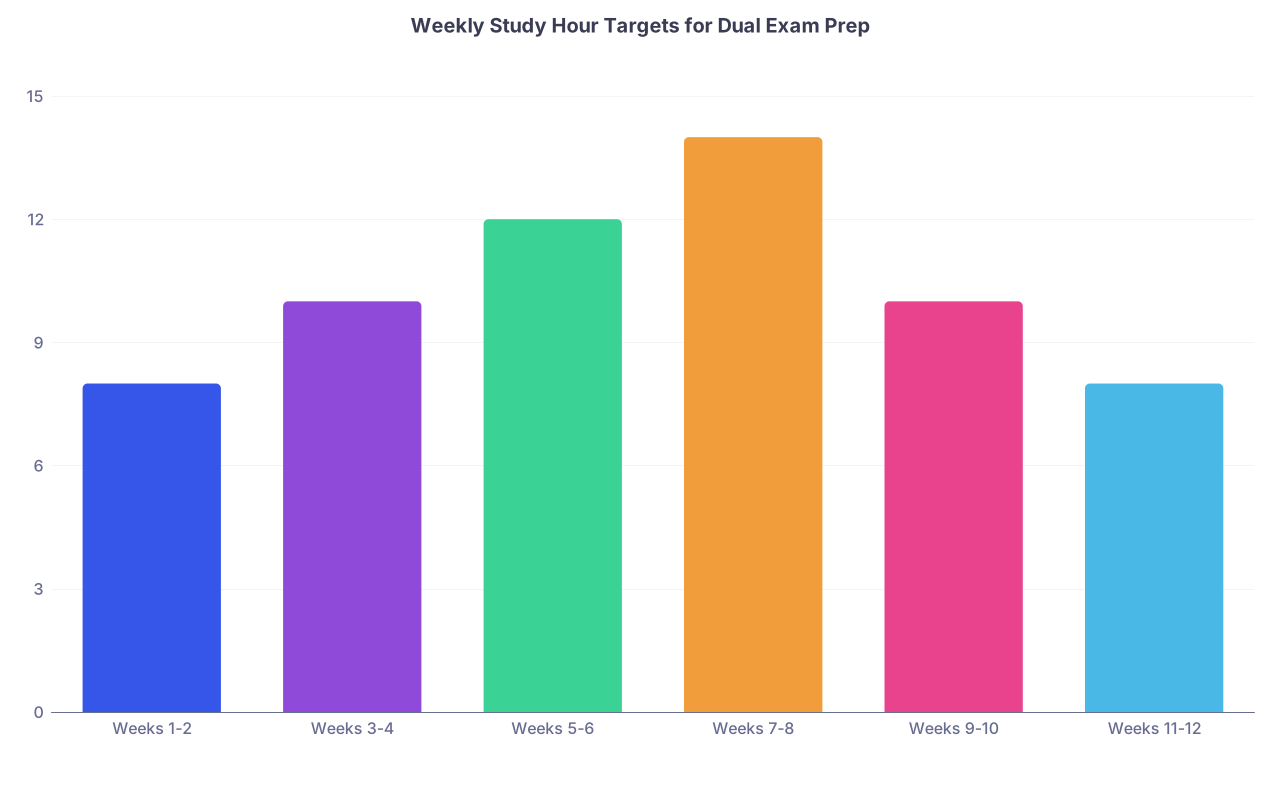
| Category | Value |
|---|---|
| Weeks 1-2 | 8 |
| Weeks 3-4 | 10 |
| Weeks 5-6 | 12 |
| Weeks 7-8 | 14 |
| Weeks 9-10 | 10 |
| Weeks 11-12 | 8 |
Weeks 1–2: Core reactivation
Goal: Warm up, establish routine, find weak points.
- 10–20 UWorld Step 3 questions per day on most days
- Timed, random, mixed blocks where possible
- One short review session for each finished block (do not skip explanations)
- One short OMM/Level 3 prep session per week (just to wake those circuits up)
You’re not sprinting. You’re building rhythm.
Weeks 3–4: Heavy Qbank push
Goal: Consume the bulk of your Step 3 Qbank.
- 20–30 UWorld questions per day on most days
- Increase review depth:
- Tag questions you got right for the wrong reason
- Keep a 1-page running list of “I always forget this” topics
- Add 2–3 short CCS cases per week just to get comfortable with the interface
If you’re on a brutal rotation, scale question volume down but preserve consistency. Daily contact with questions matters more than heroic 8-hour Sunday marathons.
Weeks 5–6: Exam-sharpening
Goal: Finish Qbank, tighten CCS, start shorter review loops.
- Finish remaining UWorld questions
- Start doing:
- 1–2 CCS cases per day, 4–5 days per week
- One full-length practice-ish day:
- 3–4 question blocks + several CCS in exam-like conditions
If your scores are consistently low (like <55–60% on first pass Qbank), you either push your test date or compress your life temporarily and get more focused hours. Pretending “it’ll be fine” is how you end up retaking Step 3 while working nights.
Week 7: Taper up, then rest
Goal: Peak for Step 3 without frying your brain.
- Review:
- Marked UWorld questions
- Weak systems (cards, pulm, ID, etc.)
- Ethics/biostats
- Light new questions, heavy review
- Two or three CCS sessions focused on tricky presentations (chest pain, sepsis, OB, peds)
The last 48 hours before Step 3: no new heavy content. Light review, early sleep, logistics squared away (route to test center, snacks, earplugs).
Week 8: Take Step 3
Two-day beast. Treat it like a long call shift. Hydrate, fuel, move between blocks, don’t autopsy every question at lunch.
Weeks 9–10: COMLEX Level 3 pivot
Now you switch gears.
- Start COMLEX-specific Qbank (COMBANK/TrueLearn):
- 20–30 questions per day, 4–5 days per week
- Dedicated OMM review:
- One system/topic per day (spine, rib, sacrum, viscerosomatic)
- Write down the exact phrases COMLEX loves: “Fryette’s laws,” “anterior innominate rotation,” “physiologic vs nonphysiologic dysfunctions”
- Focus on:
- Primary care management
- Preventive care
- OMT indications and contraindications
- Bread-and-butter inpatient medicine framed in osteopathic language
You’re not relearning medicine; you’re adapting your thinking to COMLEX’s style.
Weeks 11–12: COMLEX refinement and sanity protection
Goal: Get used to COMLEX weirdness, not fight it.
- Finish or mostly finish your COMLEX Qbank
- Review:
- Wrong questions
- High-yield OMM tables/diagrams
- Force yourself to stay calm when questions feel vague. Practice choosing the “most reasonable” answer, not the perfect one.
Take Level 3 in Week 12. Expect it to feel worse than Step 3 subjectively. That’s normal. Most DOs walk out saying some version of, “Half of that felt made up.” It isn’t a reflection of your actual performance.
5. Minimize the Ways This Will Wreck Your Life
Nobody talks enough about the non-academic part: call shifts, post-call fog, program expectations, and your own mental health.
A. Protect specific days like they’re sacred
You need:
- The day before each exam off (or as light as possible)
- The two exam days (for Step 3) obviously off
- Ideally, a light day after the exam, but I know many of you will roll straight back onto service
Talk to your chief residents months ahead. Say:
“I’m planning Step 3 these dates and Level 3 these dates. I’ll need those days fully off and would strongly prefer a lighter call pattern the week before.”
If you wait until the schedule is published, you lose leverage.
B. Be realistic about daily capacity
On a normal ward month:
- Post-call: maybe 0–10 questions. Or nothing. That’s okay.
- Regular day: 10–20 questions
- Golden weekend day: 40–60 questions or a long review session
Step 3 and Level 3 are exams you can absolutely pass on 1–2 focused hours a day.
Not 6–8. Consistent, controlled effort beats aspirational planning.
C. Manage failure risk like an adult
You need to think like this:
- What if I fail Step 3?
- What if I fail Level 3?
- What are the actual program and state repercussions?
Work this out before you book the exam, not after you get a failing score.
If your Qbank average is trash and you’re 3 weeks from test day, your options:
- Push the exam: Best move if your job/fellowship/licensing timeline can tolerate it.
- Radically adjust your life for 2–3 weeks:
- Cut social stuff
- Ask co-residents to swap a few calls
- Stop pretending you’ll “fit it in” around a crazy ICU month
What you should not do: keep the date, study half-heartedly, and hope your clinical experience carries you. That’s usually how marginal test-takers end up in retake hell.
6. Tools and Small Hacks That Actually Help
This isn’t about buying six new resources. It’s about doing a few small things right.
A. A simple weekly tracking system
Do not overcomplicate this. One small table (paper or digital) with:
- Daily Qbank questions completed
- Total correct %
- CCS/OMM sessions done
You want to see trends, not perfection.
B. Use micro-time on the wards
You’ll have:
- 5 minutes waiting for CT to call back
- 10 minutes between sign-out and conference
- 15 minutes while your attending rants about hospital administration
Use those windows for:
- 3–5 questions on your phone
- Quick flip through OMM diagrams
- Reviewing your “always forget” list
These micro-hits keep the material active without needing giant blocks every day.

| Step | Description |
|---|---|
| Step 1 | Check State & Program Rules |
| Step 2 | Decide Exam Order |
| Step 3 | Pick 8-12 Week Window |
| Step 4 | Core Step 3 Prep Plan |
| Step 5 | Take Step 3 |
| Step 6 | COMLEX-Specific Add-On Plan |
| Step 7 | Take COMLEX Level 3 |
| Step 8 | Apply for Full License |
C. Decide how high you actually need to score
For Step 1 and Level 1 you were chasing prestige. For Step 3 and Level 3, most of you are chasing sufficiency.
Unless you’re in a super-competitive fellowship game (derm, plastics, some heme/onc or GI spots), you do not need hero scores here.
You need: “pass with margin,” not “impress Instagram.”
That means:
- Do not buy 4 extra resources if your Qbank performance is already solid
- Do not kill yourself over tiny content edges while neglecting sleep and sanity
7. Put It All Together for Your Situation
Let’s run two concrete scenarios to make this real.
Scenario 1: DO in Internal Medicine, PGY-1, planning heme/onc, unsure which state you’ll practice in
- Check heme/onc fellowship patterns: many academic centers like to see USMLE when possible.
- State uncertainty → safer to have Step 3 done.
- Plan:
- Step 3: end of a lighter PGY-1 or early PGY-2 month
- Level 3: 1–3 months later, on another lighter block
- You build one big Step-oriented prep, then COMLEX overlay.
- Document everything and keep your PD in the loop—they’ll appreciate that you’re thinking ahead.
Scenario 2: DO in FM, osteopathic-heavy program, planning to stay in your current state that fully loves COMLEX
- State board: COMLEX 3 alone is enough, no USMLE required.
- Program: requires Level 3 pass by end of PGY-2.
- You may reasonably skip Step 3 unless:
- You might move to a USMLE-biased state later
- You want maximum fellowship flexibility
- If you skip Step 3:
- Do one big COMLEX-style push with a solid Qbank
- Use some Step-style resources anyway because explanation quality is simply better
Your Next Step Today
Do not open a question bank yet.
Today, do this instead:
- Pull up your residency schedule for the next 12 months.
- Mark 2–3 possible Step 3 windows and 2–3 possible Level 3 windows that fall on lighter rotations.
- Email your chief or PD with one clear sentence:
“I’m planning to take Step 3 around [month/year] and COMLEX Level 3 around [month/year]; are there any program expectations or deadlines I should align with?”
Once you have that answer, then you build your study plan. Not before.