
The fastest way to kill a residency interview is not a bad answer. It’s a bad question.
You can look polished, have great scores, and still sink yourself in 20 seconds by asking something that screams: “I didn’t prepare,” “I don’t care,” or “I’m just shopping for lifestyle.” Program directors remember those. They joke about them later. You do not want to be the story.
Let me walk you through the questions that quietly damage your chances on virtual residency interviews—and what to ask instead so you don’t accidentally signal disinterest.
The Red-Flag Question Types That Make You Look Checked Out
There are patterns. I’ve watched applicants repeat the same mistakes cycle after cycle. The content changes a little, but the signal is always the same: “I’m not actually invested in this program.”
Here are the categories that get you in trouble.
1. “I Didn’t Read Your Website” Questions
These are lethal. Nothing tells a faculty member you do not care like asking for information that’s clearly, obviously listed online.
Examples that get an internal eye-roll:
- “How many residents are in your program?”
- “Do you have a night float system?”
- “Do residents get educational stipends?”
- “What EMR do you use?”
- “Are you categorical or advanced?”
If it’s in the first two pages of their website, in their FREIDA profile, or in the ERAS description, asking it in an interview looks lazy. Faculty assume: if you couldn’t bother to read the basics, why would you bother to show up for 3 a.m. admissions?
Here’s the more subtle version that still hurts you:
- “Can you tell me about the call schedule?” (when they literally just presented it in the pre-interview slide deck)
- “Do residents do research here?” (when they spent 5 minutes bragging about their research infrastructure)
Fix it: Convert “basic info” questions into targeted, informed ones that show you did your homework.
Bad:
- “Do residents do research here?”
Better:
- “I saw on your website that residents frequently present at regional conferences, especially in cardiology and pulmonary. How do residents usually get involved in those projects—more through faculty-driven projects or their own ideas?”
See the difference? One says “I Googled you.” The other says “I thought about how I’d fit here.”
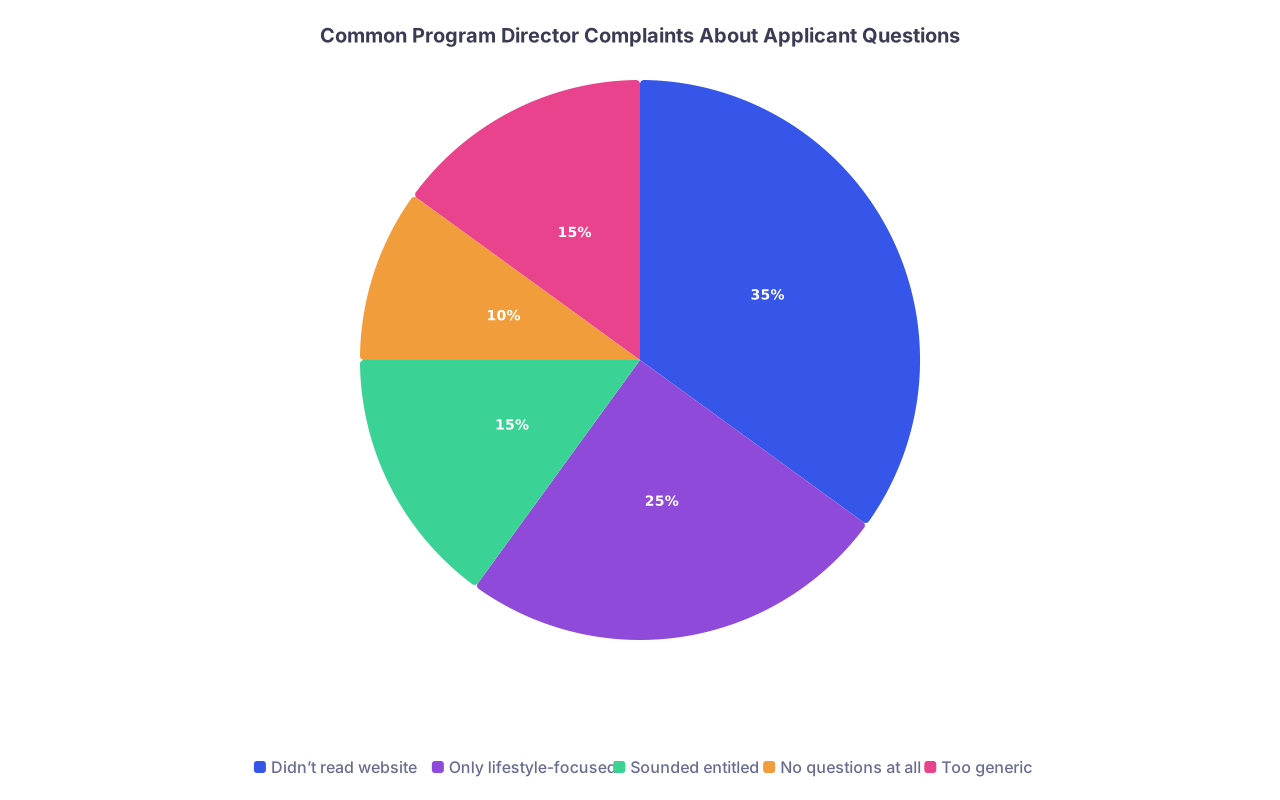
| Category | Value |
|---|---|
| Didn’t read website | 35 |
| Only lifestyle-focused | 25 |
| Sounded entitled | 15 |
| No questions at all | 10 |
| Too generic | 15 |
2. Lifestyle-First, Patient-Last Questions
Let me be clear: you’re allowed to care about work-life balance. You should. But early in the conversation, if your first or only questions are about time off, moonlighting, or “how chill” the program is, you send one message: “I’m here for the schedule, not the training.”
Examples that sound bad even if you don’t mean them that way:
- “How easy is it to moonlight as a resident here?”
- “Do residents usually get out on time?”
- “How strict are you about duty hours?”
- “What’s the vacation policy? Can I take vacation whenever I want?”
- “Do a lot of residents live near [fun city area] so they can go out?”
These make faculty silently think: “So… you want to work less, not learn more.”
What to do instead:
Anchor lifestyle questions to education and sustainability.
Not this:
- “Do residents usually get out on time?”
Try this:
- “How does the program balance high-volume clinical exposure with resident wellbeing? On heavy rotations, what protections are in place so residents can still learn and not just grind?”
Not this:
- “Can I moonlight as a PGY-2?”
Try this:
- “For residents who are interested in moonlighting later on, how do you make sure it doesn’t interfere with educational priorities or lead to burnout?”
Same topic. Different signal. One says “I want to comply.” The other says “I want to grow without falling apart.”
3. Compensation & Perks Questions That Sound Entitled
You’re not wrong to care about salary, benefits, or parking fees—this is your life. But in the virtual setting, where so much is compressed into a limited window, leading with “what’s in it for me” questions plays badly.
Questions that often land wrong:
- “How much exactly do you pay PGY-1s, and when do raises happen?”
- “Do you provide free food at night?”
- “Is parking free for residents? Where do we park?”
- “Do we get iPads or laptops?”
One PD said it bluntly to me once: “If their first question is money, they’re not thinking like a doctor yet.”
You can still get this info—just don’t burn your limited facetime with the PD or faculty to ask it. Save specifics for:
- Current residents in a casual breakout room
- Program coordinator emails
- The website / GME office
If you absolutely must ask something financially related on interview day, frame it in a way that makes sense academically or practically:
Instead of:
- “Is parking free?”
Try:
- “For away rotations like the VA or children’s hospital, are there transportation or parking logistics residents usually need to plan for in advance?”
You’re still getting practical info without sounding like you’re nickel-and-diming the program.

| Step | Description |
|---|---|
| Step 1 | Think of question |
| Step 2 | Refine or replace question |
| Step 3 | Ask residents or coordinator later |
| Step 4 | Ask faculty/PD |
| Step 5 | Reframe toward education & growth |
| Step 6 | Is answer online? |
| Step 7 | Is it mostly about perks? |
| Step 8 | Shows curiosity about training? |
4. “I’m Just Shopping Around” Questions
These are the questions that make it obvious you see this program as one of many interchangeable options. Programs want to feel chosen. Not “you’re one of 50 places where I might survive three years.”
Examples that sound like you’re comparing them like rental apartments:
- “How do you think your program compares to other programs in the area?”
- “Would you say your program is more malignant or more chill?”
- “Do you think graduates are competitive for top fellowships?” (with a certain tone)
- “What makes your program better than [explicitly named competitor]?”
That last one? I’ve heard it asked. It never ends well.
Instead, show you understand their specific identity and ask how you’d fit into it.
Not this:
- “How are you different from [other big academic center]?”
Try this:
- “With your mix of tertiary-care referrals and strong community exposure, what kind of resident do you think thrives most here?”
Or:
- “I noticed your program emphasizes both primary care and subspecialty exposure. For someone who’s still undecided, how does that structure help residents find their path?”
You’re still evaluating them. But you’re not asking them to trash their neighbors or justify their existence.
5. Hyper-Personal Questions That Cross the Line
Virtual interviews sometimes feel informal—people are at home, kids might walk by, you see someone’s bookshelf. Do not let that fool you. It’s still an interview. You’re still being evaluated.
Questions that feel too personal or off:
- “Do you have kids? How do you balance that with being a PD?”
- “Are you planning to stay here long-term?”
- “Why did you leave your last job?” (to a PD or chair)
- “You look pretty young to be a program director; how did that happen?”
Yes, I’ve seen variants of all of these.
Safe rule: if you wouldn’t ask it in a conference room with three other faculty watching, don’t ask it on Zoom just because the environment feels softer.
You can still get at the information you want.
Instead of:
- “Are you planning to stay long-term?”
Try:
- “How has the program’s leadership vision evolved over the past few years, and what changes are you most excited about going forward?”
You’re not interrogating their job security. You’re asking about stability and direction.
6. “No Questions” – The Silent Red Flag
This one is deadly and surprisingly common in virtual interviews.
Interviewer: “What questions do you have for me?”
Applicant: “No, I think you covered everything.”
Translation in the interviewer’s mind:
- “I’m not that interested.”
- “I didn’t prepare.”
- “I’ve already decided where I want to go and it’s probably not here.”
On a virtual day, where energy is already flattened by screen fatigue, “no questions” feels like a dead end. Interviewers remember how they felt talking to you more than your Step score.
If you’re at the last slot of the day and feel like everything was covered, you still need at least one thoughtful question ready that:
- Invites their perspective
- Shows you’re considering yourself here
- Doesn’t repeat the morning slideshow
Examples that rarely go wrong:
- “From your perspective, what type of resident tends to thrive in this program?”
- “What’s something you’re currently working to improve in the program that you’re excited about?”
- “When your residents graduate, what do you hope they say they appreciated most about training here?”
Those never sound generic, because they pull on the interviewer’s personal experience.
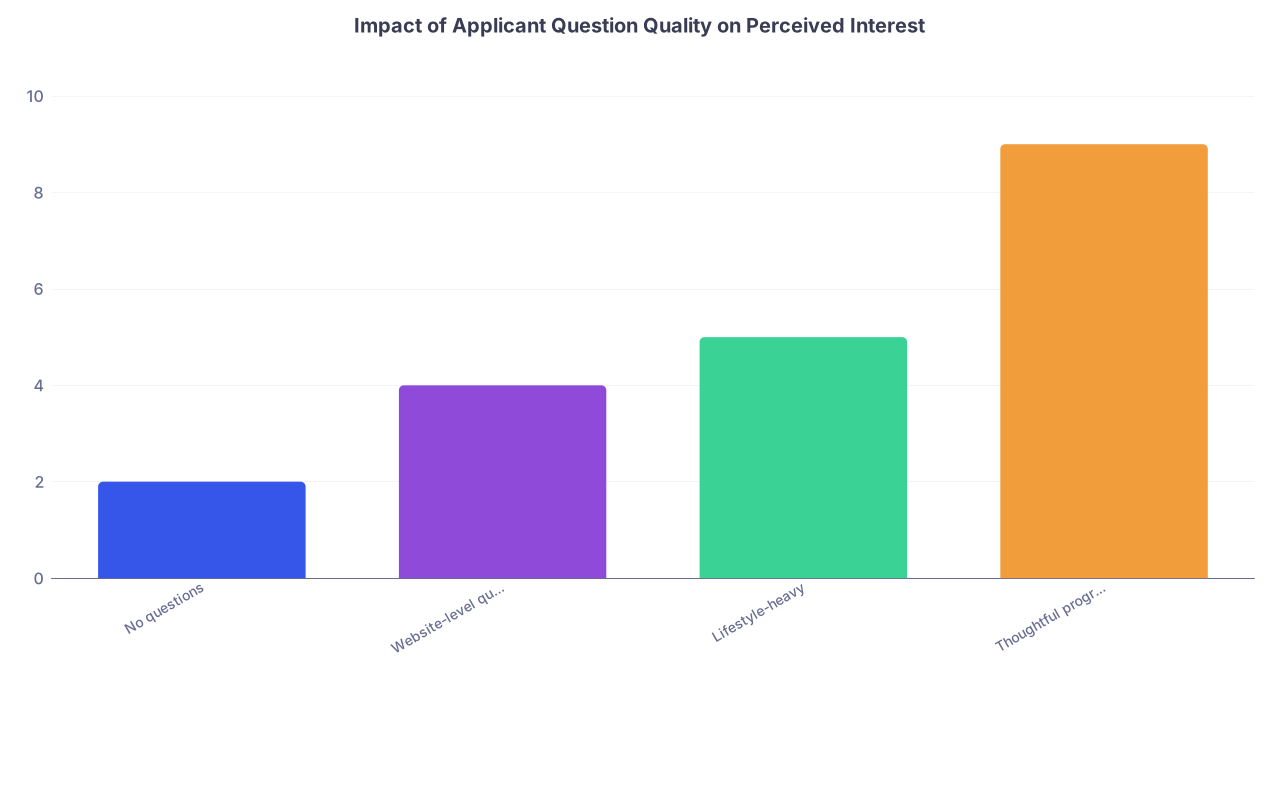
| Category | Value |
|---|---|
| No questions | 2 |
| Website-level questions | 4 |
| Lifestyle-heavy | 5 |
| Thoughtful program-specific | 9 |
(Scale 1–10: average perceived interest score reported by faculty in informal debriefs.)
7. Overly Generic “I Ask This Everywhere” Questions
You should absolutely have a question bank you reuse. But if every single question sounds like you copy-pasted it from a blog, you blend into the wall.
Examples that are fine once, but weak if they’re your entire arsenal:
- “What are the program’s strengths and weaknesses?”
- “What qualities do you look for in residents?”
- “What opportunities are there for research?”
- “What is your teaching philosophy?”
These aren’t terrible. They’re just bland. If your interviewer has done 15 interviews that week, they’ve heard these 15 times.
The fix is simple: anchor the generic question to something specific about their program.
Instead of:
- “What are the program’s strengths and weaknesses?”
Try:
- “From what I’ve seen, your program has a strong reputation for [e.g., critical care training and ultrasound]. From your perspective, what are the biggest strengths residents talk about, and what are areas you’re actively trying to improve?”
You still get the same info, but you show that you came in with data, not just templates.
8. Time-Wasting, Overly Broad Questions
Another subtle way to signal disinterest: asking questions so broad they’re basically saying, “I didn’t do the thinking; you do it for me.”
Examples:
- “So… what else should I know about your program?”
- “Is there anything you want to tell me that we haven’t covered?”
- “Can you just tell me more about the program?”
These put work on the interviewer instead of on you. They’re conversation fillers. On a virtual schedule that’s already packed and running behind, they feel like dead air.
You want questions that are:
- Focused
- Answerable in 1–3 minutes
- Clearly linked to how you’d decide to rank them
Better options:
- “You mentioned earlier that you’ve recently changed the ICU rotation. How have residents responded to that change?”
- “What have you changed in the curriculum in the last 3–5 years because of resident feedback?”
Specific. Answerable. Shows engagement.

9. Questions That Reveal You Haven’t Thought About the Specialty
Programs want residents who take the specialty—and its realities—seriously. Some questions reveal that you haven’t wrestled with what the career actually looks like.
Examples that raise eyebrows:
- To surgery: “How much time do residents actually have in the OR?” (asked in a tone that suggests surprise they’re in the OR so much)
- To EM: “Do you think emergency medicine is still a good field with the job market?” (you should have done that homework before)
- To primary care-heavy IM: “So do graduates actually get into good subspecialty fellowships?” (implies disdain for primary care)
You can absolutely ask about:
- Fellowship match outcomes
- Job prospects
- Procedural volume
But do it like someone who respects the field, not like someone side-eyeing it.
Not this:
- “Is EM still worth going into with the current job market?”
Try:
- “How are you advising residents who are concerned about the evolving EM job market, especially those who want to work in urban vs rural settings?”

10. Question Timing: Asking the Right Thing to the Wrong Person
This one trips up even strong applicants. The content of the question is fine—but you ask it to the worst possible person, and it lands wrong.
Examples:
- Asking the PD detailed questions about cafeteria food.
- Asking a basic science researcher about parking.
- Asking an intern about 5-year leadership vision.
- Asking a subspecialist about primary care clinic structure they never attend.
It’s glaring in virtual interviews because each breakout room is short. Wasting 5 of your 15 minutes asking the ICU director about vacation policy is a missed opportunity. And it signals you don’t understand hierarchy, roles, or how hospitals work.
Use some basic targeting:
| Topic | Best Person to Ask |
|---|---|
| Overall program vision | Program Director / Chair |
| Day-to-day schedule & culture | Current Residents |
| Research in a specific field | Faculty in that field |
| Detailed policies, logistics | Coordinator / Residents |
| Fellowship & job outcomes | PD / Senior Residents |
You look sharper when your questions match the person in front of you. That alone signals seriousness.

How to Build a Question Bank That Shows Real Interest
Let me be very practical. Here’s how to avoid all of these traps with a simple pre-interview system.
Step 1: Do a 10-Minute Website Sweep Per Program
Not an hour. Ten focused minutes.
Skim:
- Program overview
- Curriculum/rotations
- Research/education pages
- Resident list (where they went to med school / where grads went)
During that, write down:
- 2 things that genuinely interest you
- 1 thing that confuses you or seems unique
Now turn those into program-specific questions:
- “I saw that interns do two months of ICU, which seems more than many programs. What was the thinking behind that structure, and how do residents feel it impacts their growth early on?”
- “Graduates seem to match broadly into both community and academic positions. How does the program support residents who decide late between those paths?”
You’re no longer asking “tell me about your program.” You’re asking “help me understand this feature of your program.”
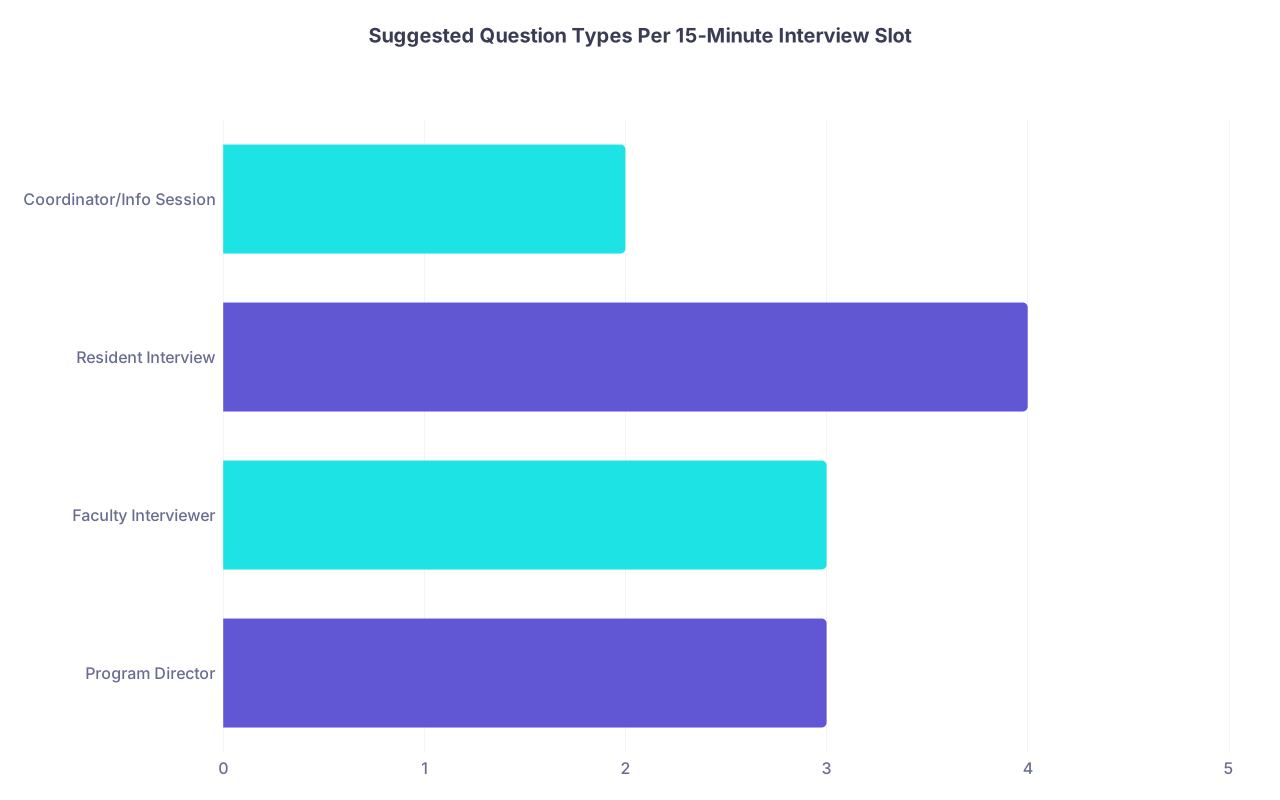
| Category | Value |
|---|---|
| Program Director | 3 |
| Faculty Interviewer | 3 |
| Resident Interview | 4 |
| Coordinator/Info Session | 2 |
Step 2: Create 3 Evergreen Questions You Actually Care About
Pick 3–4 open-ended questions you can adapt slightly for every program that actually matter to you.
Examples:
- “Can you tell me about a recent change in the program that came directly from resident feedback?”
- “Thinking about recent graduates, is there a particular success story you feel proud of that reflects what this program does well?”
- “What do you think residents here would say are the hardest parts of this program—and why do they stay?”
These never sound disinterested because they’re about experience, not perks.
Step 3: Have a Backup Question for When Your Mind Goes Blank
Zoom fatigue is real. By your fifth interview of the day, your brain might just… stop. That’s when people default to “No questions” or blurt out something about free food.
Have one safe, always-usable question written on a sticky note next to your screen:
- “What keeps you most excited about working with residents in this program?”
If everything else fails, use that. It never looks bad.

The Bottom Line: Questions Are Signal, Not Filler
Faculty and PDs are not just listening to what you ask. They’re reading what it says about you:
- Did you prepare?
- Do you care about this program, or just a contract somewhere?
- Are you thinking like a future colleague, or like a fourth-year trying to find the easiest three years of your life?
Bad question choices on virtual interviews don’t usually get you yelled at. They get you something worse: a polite smile, a generic note, and a spot in the “seems fine, low enthusiasm” pile. That pile doesn’t match well.
Today, do something small but protective:
Open your interview spreadsheet right now and add a “Questions” column for each program. For the next program on your list, spend 10 minutes on their website and write down three specific questions that you could genuinely ask without sounding generic or self-centered.