
The thing you’re most scared of in virtual socials is already happening: everyone is overanalyzing themselves just as much as you are.
The Fear: One Weird Comment = No Rank
You know that moment. Fingers on keyboard. Zoom social going fine. Then you blurt something in the chat that sounds... off.
Maybe you meant to say, “I’ve heard great things about your ICU,” and somehow it comes out, “I heard your ICU was rough.”
Or you make a joke that lands dead. No reaction. Just silence and maybe one pity-smiley.
And the spiral starts:
Did I just ruin my chances?
Are they screenshooting this?
Is the PD going to see this in a PowerPoint titled “Red Flags 2026”?
Let me be direct: residency programs are not ranking people based on one slightly awkward comment in a pre-interview social chat.
They’re just not.
Do people remember extremely inappropriate stuff? Yes.
Do they care about normal awkward human moments? No. They barely clock it.
The problem isn’t what you said.
It’s what your brain does for the next 4 hours after you log off.
What Actually Matters to Programs in Virtual Socials
Think of socials like this: they’re soft data, not hard data.
Your Step score, MSPE, letters, and interviews are hard data. They get quoted in meetings. They go in files. They’re discussed.
Socials? They’re vibes. Impressions. Loose comments like:
- “Seemed kind.”
- “Quiet but nice.”
- “A little intense but probably fine.”
- “Super interested in research – might fit the lab team well.”
They’re not pulling transcripts of the chat and cross-examining every sentence.
Programs mostly want to know:
- Are you normal-enough to work with?
- Are you rude, hostile, or wildly inappropriate?
- Do you seem genuinely interested in the program or clearly miserable?
- Do you give off huge red-flag energy? (Think: talking trash about other applicants, overtly discriminatory comments, nonstop negativity.)
Awkward is not a red flag.
Awkward is the baseline for 80% of these virtual events.
To put this in perspective:
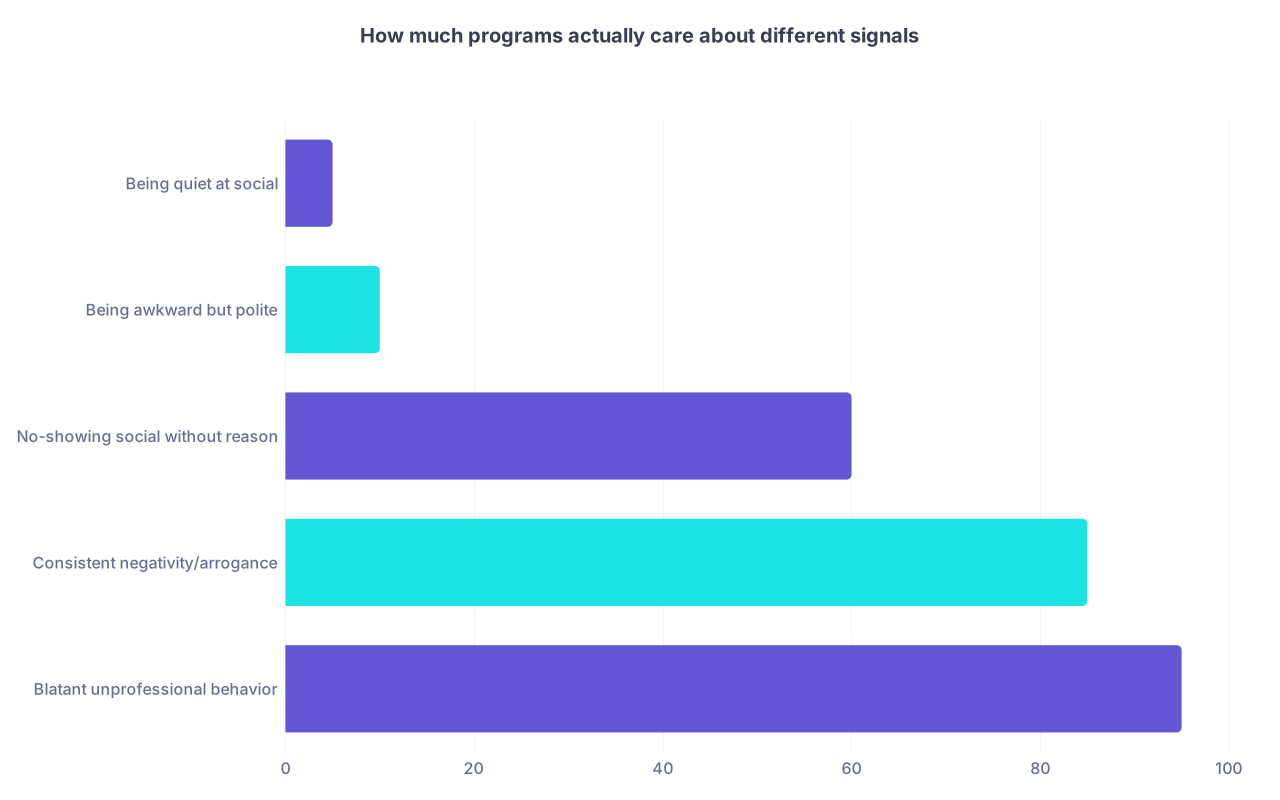
| Category | Value |
|---|---|
| Blatant unprofessional behavior | 95 |
| Consistent negativity/arrogance | 85 |
| No-showing social without reason | 60 |
| Being awkward but polite | 10 |
| Being quiet at social | 5 |
They care about clear unprofessionalism. They barely care if you were awkward.
Worst-Case Scenario Thinking: What Actually Gets You Noticed (In a Bad Way)
Let’s separate your catastrophic “I ruined everything” scenarios into two buckets.
Bucket 1: Normal-Awkward
Stuff like:
- You misread the vibe and make a slightly weird joke.
- You say something too personal and then realize you overshared.
- You type something, realize halfway through it’s dumb, and send it anyway.
- You ask a question someone just answered verbally because you zoned out for a second.
- You say “I really want to get out of the Midwest” and then remember the program is… in the Midwest.
These are not things that get you tanked. These are “we all forgot by tomorrow” moments.
Residents are not sitting there thinking, “Wow, that applicant said they like sleeping in on weekends. Unrankable.”
They’re thinking, “I’m hungry. How long until this is over? Did I already tell this story?”
Bucket 2: Actual Problems
Things that could legitimately hurt you:
- Making a discriminatory or offensive comment about patients, colleagues, or groups of people.
- Complaining harshly about your current program/school, naming people, being unprofessional.
- Trash-talking other programs or applicants.
- Arguing aggressively with residents or being condescending.
- Making creepy or overly personal comments.
If your “awkward” comment was in Bucket 2, then yeah, that can matter.
But deep down, you’d usually know if you crossed a line that bad. That doesn’t feel like “Ugh, I was cringe.” It feels like “Oh no. That was actually wrong.”
If what you said was mildly cringe, overshared, a weird joke, slightly negative, or just clumsy? That’s Bucket 1. You’re fine.
What People Actually Remember After These Socials
Here’s the secret no one tells you: residents are tired. They’re post-call. They’re trying to be welcoming. They’re also awkward on Zoom.
What they actually remember:
- The applicant who was unusually kind and asked them how they were doing.
- The one who was enthusiastic and clearly liked the program.
- The one who talked way too much and dominated every conversation.
- The one who said something obviously offensive.
The rest? Just blends into “seemed normal.”
I’ve watched residents talk about applicants after socials. It sounds like:
- “Yeah, she seemed cool.”
- “He didn’t say much, but he seemed fine.”
- “That guy talked a lot, kind of interrupted people.”
- “I liked the one who asked about X rotation – seemed genuinely interested.”
Nobody’s saying, “At 7:32 PM, during breakout room 3, they made a slightly awkward comment about nights.”
You are magnifying your worst 10 seconds into a giant neon sign. Everyone else probably forgot it before the session ended.
If You Already Said Something Awkward: Damage Assessment
Let’s walk through your mental checklist like you would for a bad shelf exam.
Ask yourself bluntly:
- Was it offensive, discriminatory, or clearly inappropriate?
- Did a resident or somebody address it in the moment like, “Uh… let’s move on,” or “We don’t really joke about that”?
- Did the mood visibly shift, or did people just keep going?
If the answer is:
- No one reacted strongly
- People kept talking
- No one called it out
Then you’re dealing with your anxiety, not their red flag.
You do not need to email to apologize for:
- “Sorry if I seemed awkward.”
- “Sorry if my joke didn’t land.”
- “Sorry if I talked too much.”
Sending that email only sends one message:
“I will catastrophize every interaction.”
You do not want that in their mental file.
When is an apology email reasonable? If you know you crossed a genuine line. Something like:
- “I made an insensitive comment about X. After reflecting, I realize that was inappropriate and not aligned with my values. I’m truly sorry.”
That’s not about saving your rank list. That’s about being a decent human.
If that’s not the situation? Leave it alone. Don’t poke it.
If You Haven’t Had Socials Yet: How to Make “Awkward” Way Less Likely
You can’t guarantee perfection, but you can lower the chances of saying something you regret.
Have 3–5 safe, boring, go-to topics in your back pocket. Stuff like:
- “What do residents usually do on a golden weekend around here?”
- “What surprised you most about this program after you started?”
- “How’s the support for board studying / fellowship apps?”
- “What’s your favorite rotation so far and why?”
Not genius. Not original. Totally fine.
Think of it like having pre-made phrases in your mental clipboard so you’re not scrambling desperate chat messages under pressure.
Also, pick one version of yourself you’re okay with:
- The “quiet but polite” version
- The “asks a few questions and listens” version
- The “mildly awkward but clearly nice” version
All of these are rankable.
The only version that’s a problem is “dominating, negative, or offensive.”
And please stop thinking you’re being judged on your ability to be charming in a virtual happy hour after 5 months of anxiety and 3 hours of screen time. They know this format is weird. Residents complain about it too.
How Programs Actually Use Social Hour Input
Most programs don’t run a formal scoring rubric for socials. It’s usually informal.
Picture this: resident-only meeting after a big interview day.
Comments sound like:
- “Anyone majorly concerning?”
- “Anyone you loved?”
- “Anyone super weird or rude?”
Then someone might say:
- “The guy in the blue shirt kept talking over people – kind of rubbed me the wrong way.”
- “The woman who asked about the community clinic – she seemed really engaged.”
Nobody is saying, “That applicant’s chat comment was slightly awkward, therefore drop them 20 spots.”
The social is a red flag detector and a vibe check. Not a formal OSCE.
To make it more concrete:
| Type of Behavior | Likely Mentioned Later? |
|---|---|
| Overtly offensive comment | Yes |
| Arguing with residents | Yes |
| Bizarrely hostile or arrogant tone | Yes |
| A little quiet or shy | Rarely |
| One awkward joke or comment | Almost never |
If you’re not in the top three “uh-oh” examples, you’re probably a non-event. Which is exactly what you want.
How to Stop Replaying It on Loop
The real damage isn’t what you typed. It’s losing an entire night of sleep spiraling about it.
Try this tiny, unromantic exercise:
Write down the exact sentence you said that’s haunting you. Word for word.
Then write two columns:
- Column A: “If someone else had said this, what would I think?”
- Column B: “What I’m currently telling myself it means about me.”
You’ll notice Column A is something like: “Kinda awkward lol. Move on.”
Column B is more like: “I am socially incompetent and unrankable.”
That gap? That’s your anxious brain, not reality.
You don’t have to magically believe you’re fine. Just be honest that your brain is not a reliable narrator right now.
If it helps, imagine this as a flowchart:

| Step | Description |
|---|---|
| Step 1 | Did I say something awkward? |
| Step 2 | Reflect and consider brief apology |
| Step 3 | Ask trusted friend/mentor for reality check |
| Step 4 | Let it go and focus on interview prep |
| Step 5 | Was it clearly offensive? |
| Step 6 | Did anyone react strongly? |
Nine times out of ten, you end up at F. You just keep trying to route yourself back to C because your anxiety wants a punishment.
One More Thing You’re Not Considering
Residents are also afraid of saying something awkward. Seriously.
They’re thinking:
- “Did I overshare about the call schedule?”
- “Did I sound too negative talking about nights?”
- “Did my joke about ICU food sound like I hate working here?”
This is not a one-sided performance where you’re the only one under a microscope. Everyone’s managing their own tiny crisis in these socials.
Sometimes the reason no one responded to your comment in the chat isn’t because it was bad. It’s because they were reading a different question at the same time and got distracted.
Zoom timing is garbage at conveying nuance. That’s not your fault.
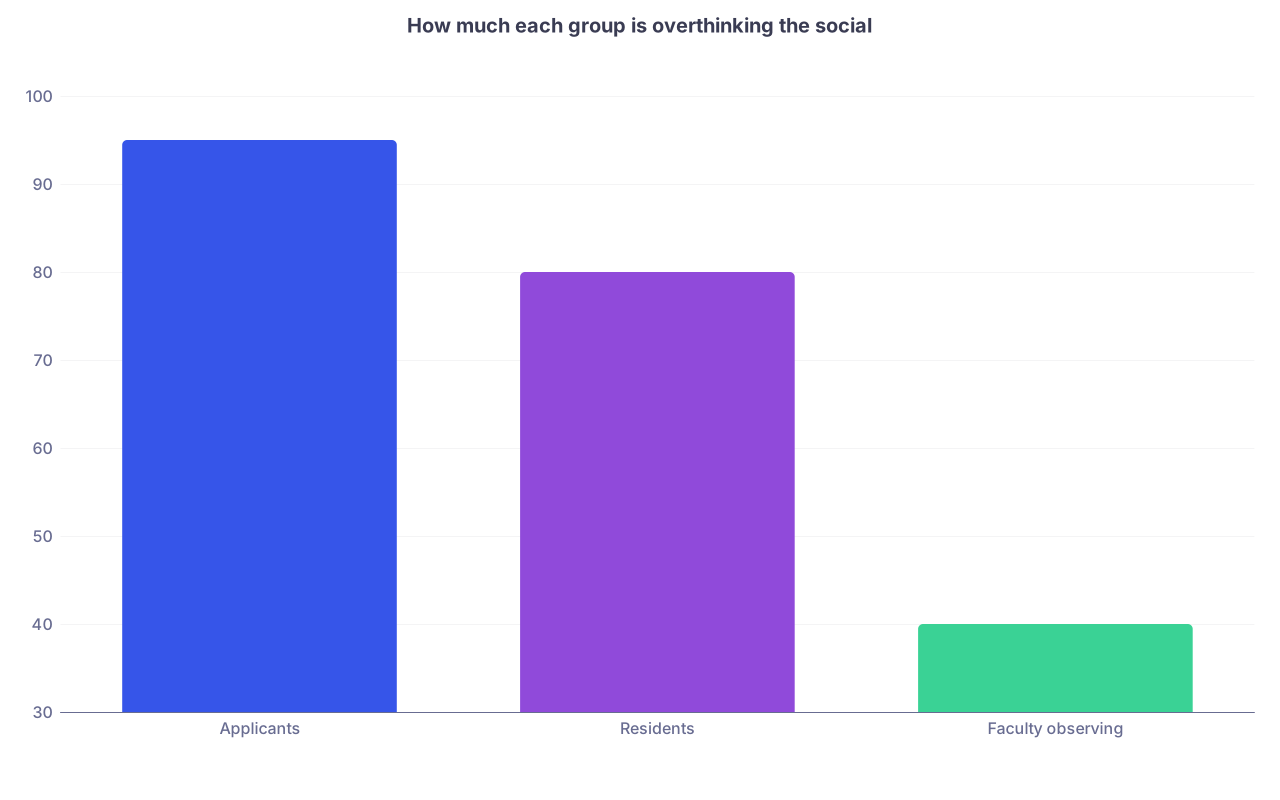
| Category | Value |
|---|---|
| Applicants | 95 |
| Residents | 80 |
| Faculty observing | 40 |
You’re not alone in this weirdness. You’re just the only one replaying your line in 4K HD in your head.
How to Frame This in the Bigger Picture
Zoom out. In the context of your entire application:
- Your scores
- Your clinical evals
- Your letters
- Your personal statement
- Your interview performance
Where does “one weird comment in chat” rank?
Honestly? Barely on the radar.
Programs have ranked applicants who:
- Froze on a question in the real interview.
- Mixed up faculty names.
- Gave clunky, meandering answers.
- Had technology fail mid-interview.
And you think you making a slightly awkward joke in the social is the line they won’t cross?
I’ve watched people match at their top choice after doing far more awkward stuff than whatever you’re torturing yourself about.
You’re holding yourself to an impossible standard: flawless social performance in an inherently unnatural setup. That’s not realistic.
What To Do Right Now
Here’s how you make this useful instead of just painful:
- Decide which bucket your comment really belongs in. If it’s not actively offensive or hostile, stop treating it like you committed a crime.
- Pick one small behavior change for your next social: maybe ask one genuine question and then just listen. Or decide you’re allowed to be “quiet but pleasant.”
- Write down one sentence you’ll tell yourself right before the next event, something like: “Awkward is okay. Offensive is not. I’m allowed to be human.”
Then go do this, literally today:
Open your email or calendar, look at your next social hour invite, and write down three safe questions you could ask that don’t require you to be clever. That’s it. Three lines on a notepad. Give your future anxious self a script so you’re not trying to improvise under pressure.


