The worst advice you can get if you’re sick or disabled is: “Just follow your passion, it’ll work out.” That’s how you end up broken, bitter, and backed into a corner at age 35.
If you have major health or disability concerns, your backup specialties cannot just be “less competitive.” They have to be sustainable. For your body. For your brain. For your meds. For your long-term survival in this job.
I’m going to walk you through how to actually do that.
Step 1: Be Brutally Honest About Your Limits (Not Your Fantasy Self)
This only works if you stop planning for the “best version of you on your best day.”
You plan for:
- Your average day.
- Your bad weeks.
- Your flare periods or decompensations.
- The reality of your treatment schedule.
Ask yourself, and write it down (literally write it):
Physical limits
- How many hours of standing/walking before pain or fatigue becomes a problem?
- Are repetitive motions (suturing, procedures) an issue?
- Any lifting/pushing/pulling restrictions?
- Any vision, fine motor, or sensory issues?
Cognitive / psychiatric limits
- What happens with night shifts to your mood, anxiety, psychosis risk, migraines, or seizures?
- How fast do you mentally tire? After 4 hours of clinic? 8?
- How are you after acute stress—do you shut down, dissociate, get severe panic?
Medical treatment realities
- Do you have infusions, dialysis, PT, psychotherapy, or regular procedures you must attend?
- Are you on medications that impair reaction time, cause sedation, or need strict timing?
- Any conditions strongly worsened by circadian disruption (bipolar, epilepsy, autoimmune flares)?
Absence and recovery
- When you flare or decompensate, are we talking a day, a week, a month?
- How often has that happened over the last 2–3 years?
Do not round down your limitations “to be competitive.” That is how people crash in PGY-2 and never practice.
Once you’ve got that, we move from “vibes” to matching your actual body and brain to actual specialties.
Step 2: Understand the Real Demands of Common Backup Specialties
Most students with health issues instinctively think: “I’ll just pick something outpatient and less intense.” Good instinct. But you need specifics.
Here’s a stripped-down comparison focused on sustainability with health or disability concerns:
| Specialty | Nights/Call Load | Physical Demands | Procedural Volume | Schedule Predictability |
|---|---|---|---|---|
| Family Medicine | Moderate | Moderate | Low-Moderate | Moderate |
| Psychiatry | Low-Moderate | Low | Low | High |
| Pathology | Very Low | Low | Low | Very High |
| PM&R | Low-Moderate | Moderate | Moderate | Moderate |
| Neurology | Moderate-High | Moderate | Low-Moderate | Low-Moderate |
| Radiology | Moderate | Low | Low | Moderate |
Now, let’s talk in real terms.
Better “backup” fits if you have major health/disability constraints
Not perfect. But often more workable.
Psychiatry
- Pros: Lots of sitting, talking, thinking. Many programs with no q4 overnight call after PGY-1. Outpatient-heavy jobs later with business hours. Night float often less physically intense than surgical or ICU nights.
- Flags: Inpatient psych can be emotionally brutal; some programs expect heavy call; safety issues with agitated patients. Night shifts can be destabilizing for mood disorders or seizure disorders.
Pathology
- Pros: Minimal nights. Mostly scheduled daytime work. You can sit, use ergonomic setups, take bathroom breaks without a pager blowing up. Predictable hours in many private practice jobs.
- Flags: Visual strain (microscope, digital). Fine motor for some procedures. Isolation can worsen depression for some people. Competitiveness is variable—not an “easy” backup at top programs.
Outpatient-focused Family Medicine (with care)
- Pros: You can build toward clinic-heavy, chronic disease management, maybe part-time. Plenty of non-hospitalist career paths. Good for people who can work days but can’t tolerate high acuity.
- Flags: Residency still includes inpatient, nights, OB (sometimes heavy call). You must screen programs aggressively for lifestyle and flexibility.
PM&R (Physical Medicine & Rehabilitation)
- Pros: A lot of talking, planning, team-based care. Many residents love the culture. Later, there are outpatient pain, MSK, or consult roles with controllable hours.
- Flags: Procedures (EMGs, injections). Inpatient rehab units can be physically demanding and emotionally draining. Not every program is chill.
Radiology (for some disability profiles)
- Pros: Seated work. High cognitive demand but less unpredictable physical chaos. Teleradiology options later with remote work.
- Flags: Long days at computer screens. Night call or overnight coverage in many jobs. Competitive in strong markets; not a “safe” backup everywhere.
Common “bad fits” if your body or brain has limits
I’m not saying never. I’m saying: be very cautious listing these as “backups” if you have serious health constraints.
- General Surgery and surgical subspecialties: Prolonged standing, long cases, high acuity nights, culture often hostile to illness.
- OB/GYN: Heavy nights, emergencies, unpredictable hours, physically and emotionally intense.
- Emergency Medicine: Circadian chaos, rotating shifts, high sensory and cognitive load; wrecks sleep and flares many disorders.
- ICU-heavy paths (Pulm/CCM, Anesthesia with big ICU exposure): Sleep deprivation, acute stress, high stakes.
If you already know your health destabilizes badly with sleep disruption or prolonged standing, these should not be your “in case my dream specialty doesn’t work out” options. That’s not a backup; that’s a trap.
Step 3: Map Your Specific Health Needs to Specialty Characteristics
Now we get more granular. Your condition matters.
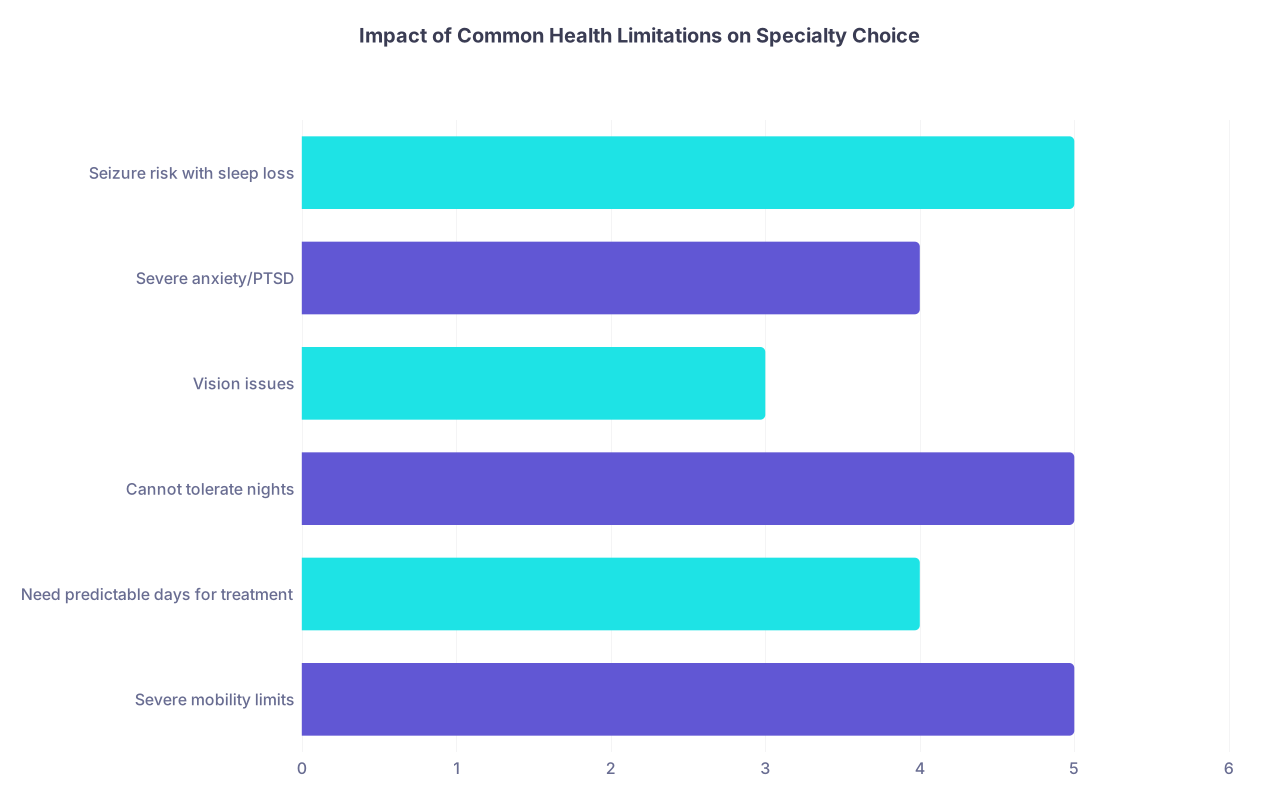
| Category | Value |
|---|---|
| Severe mobility limits | 5 |
| Need predictable days for treatment | 4 |
| Cannot tolerate nights | 5 |
| Vision issues | 3 |
| Severe anxiety/PTSD | 4 |
| Seizure risk with sleep loss | 5 |
(Scale 1–5 = how strongly this pushes you toward more controlled, non-acute fields.)
Let’s walk through a few patterns I’ve actually seen:
If you have mobility or stamina limitations
Examples: POTS, severe arthritis, chronic pain, post-stroke weakness.
Leaning specialties:
- Psychiatry
- Pathology
- Radiology
- Outpatient-heavy FM or IM (with a long-term plan to be clinic-based)
Watch out for:
- Surgical fields
- OB/GYN
- EM
- Any residency with known heavy floor work and codes (e.g., many traditional IM programs)
Tactical questions to ask programs:
- “How many hours are residents typically on their feet on a standard inpatient day?”
- “Are there any residents with mobility limitations currently, and how have you accommodated them?”
If circadian disruption wrecks you
Examples: Bipolar disorder, epilepsy, severe migraines, autoimmune flares, significant mood destabilization with nights.
Leaning specialties:
- Pathology
- Psychiatry (especially programs with limited or no 24-hour in-house call after PGY-1)
- Outpatient FM or Med/Peds with strong ambulatory track (long-term, not necessarily during residency)
Still possible but higher risk:
- Radiology (depends on call structure)
- PM&R
- Neurology (many nights on stroke/consult services)
You want programs that:
- Use night float rather than q4 28-hour calls
- Have reasonable duty hour enforcement
- Have senior support at night rather than leaving you drowning
Concrete step: In interviews, specifically ask how nights are structured and how often residents rotate nights per year. If they dodge the question, that’s your answer.
If you need frequent medical appointments or procedures
Examples: Dialysis, infusion therapy, frequent specialist visits, weekly psychotherapy.
Leaning specialties:
- Pathology
- Psychiatry
- Radiology (if program is humane with schedule swaps)
- Some FM programs with lighter inpatient time
You need:
- Predictable day schedules where you can block off recurring half-days periodically.
- A culture where schedule changes and clinic swaps are normal and supported.
Red flag:
- Programs that brag about “our residents are like family, we always cover for each other,” but when pressed, cannot give a single concrete example of ongoing long-term medical accommodation.
Step 4: Select Two Tiers of Sustainable Backups
You should not just have “a backup.” You should have:
- Primary target(s) that you love and think are realistic with your health.
- Tier 1 backups: fields you’d be content in that are clearly more sustainable for your condition.
- Tier 2 backups: lower-risk options if your health worsens significantly or something major changes.
Here’s a simplified structure:
| Plan Level | Example with Health Limits |
|---|---|
| Primary | Neurology (mild mobility limits, stable) |
| Tier 1 Backup | Psychiatry, PM&R |
| Tier 2 Backup | Pathology, outpatient-focused Family Medicine |
The logic:
- Primary: What you want, but still plausible physically and mentally.
- Tier 1: You’d be okay doing this, and it’s materially easier on your condition.
- Tier 2: Fields that preserve your ability to be a physician without burning you down if your disease gets worse.
You don’t have to apply to every tier in the same cycle. But you should know what they are. And if your health takes a bad turn during MS3/MS4, you already have a pivot plan.
Step 5: Research Programs for Actual (Not Theoretical) Accommodation
Specialty choice is half the battle. Program selection is the other half.
You know this already: policies on paper are useless if the culture is toxic.
What you’re looking for:
Evidence of existing accommodations
- Residents currently working part-time or on adjusted schedules.
- Residents with visible disabilities, pregnancy support, parental leave that isn’t performative misery.
- Faculty or PD mentioning specific past accommodations (without violating privacy).
Reasonable schedules
- Night float models rather than unlimited 28-hour marathons.
- Clear caps on patient loads and honest enforcement of duty hours.
- Genuine elective time and outpatient blocks.
The vibe when you ask about wellness
- PDs who say, “We support wellness,” but then every resident you talk to looks dead inside—no.
- Good sign: a resident says, “When I had a health issue, they shifted my schedule for two months; it wasn’t a big deal.”
Concrete script for emails/calls before you apply:
“I’m very interested in [specialty] and your program. Without going into my specific health history, I do have a chronic medical condition that is stable but requires occasional scheduled medical appointments. Do you have current residents who manage ongoing medical issues, and has the program been able to accommodate that successfully?”
Their response—speed, tone, detail—tells you a lot.
Step 6: Decide What (and When) to Disclose
You do not owe every detail of your medical history to every program. But you also can’t design accommodations out of thin air after you match.
General rule I use:
- Decide early what category you’re in:
- Category A: Can complete standard duties with no formal accommodation, just personal coping.
- Category B: Can complete duties with modest, common-sense flexibility (visit scheduling, occasional days off for medical care).
- Category C: Will need substantial accommodations that materially change hours, call, or core responsibilities.
If you’re Category C, specialty and program choice matter even more. You probably need:
- A specialty where your requested accommodation is realistic for anyone, not just “sick you.”
- To have at least a general disclosure and conversation before you rank a program highly.
Do you mention it in your personal statement? Maybe, if:
- Your health story clearly and authentically connects to why you chose the field.
- You’re not asking them to ignore obvious red flags (like 12 failed Step attempts) with a vague “I was sick.”
But many times, it’s better to:
- Focus your narrative on your interests and strengths.
- Use the interview or post-interview communication to clarify needs if they’re significant.
- Keep details limited, clear, and focused on function: “Here’s what I can do; here’s what I’d need.”
Step 7: Use Your Rotations Strategically (Not Just to Impress)
Your MS3/MS4 rotations are your stress test. Not for your ego. For your disease.
What to track (seriously, track it—notes app is fine):
- How your symptoms respond to:
- 6 days in a row of early-morning pre-rounds
- 24+ hour call
- 3 nights in a row
- High emotional intensity (codes, trauma, psych crises)
- How many days you needed to “crash” afterward
- What tasks were hardest physically or cognitively
Then adjust your backup list based on data, not fantasy.
Example scenario I’ve actually seen:
- MS3 with well-controlled bipolar thought they could handle EM because “I’ve been stable for two years.”
- EM rotation: did OK first week, then nights triggered decreased sleep, then hypomania, then crash.
- That student pivoted to Psychiatry + Pathology as backups, matched Psych, and is doing well now with a mostly outpatient adult psych practice.
You’re not weak if your body or brain tells you the truth. You’re smart if you listen early.
Step 8: Don’t Ignore Non-Clinical Alternatives as Backup-Backups
You are allowed to say: “My health may not allow me to do full-time clinical work forever. I want specialties that leave doors open.”
Some specialties leave more “exit ramps” to other fields:
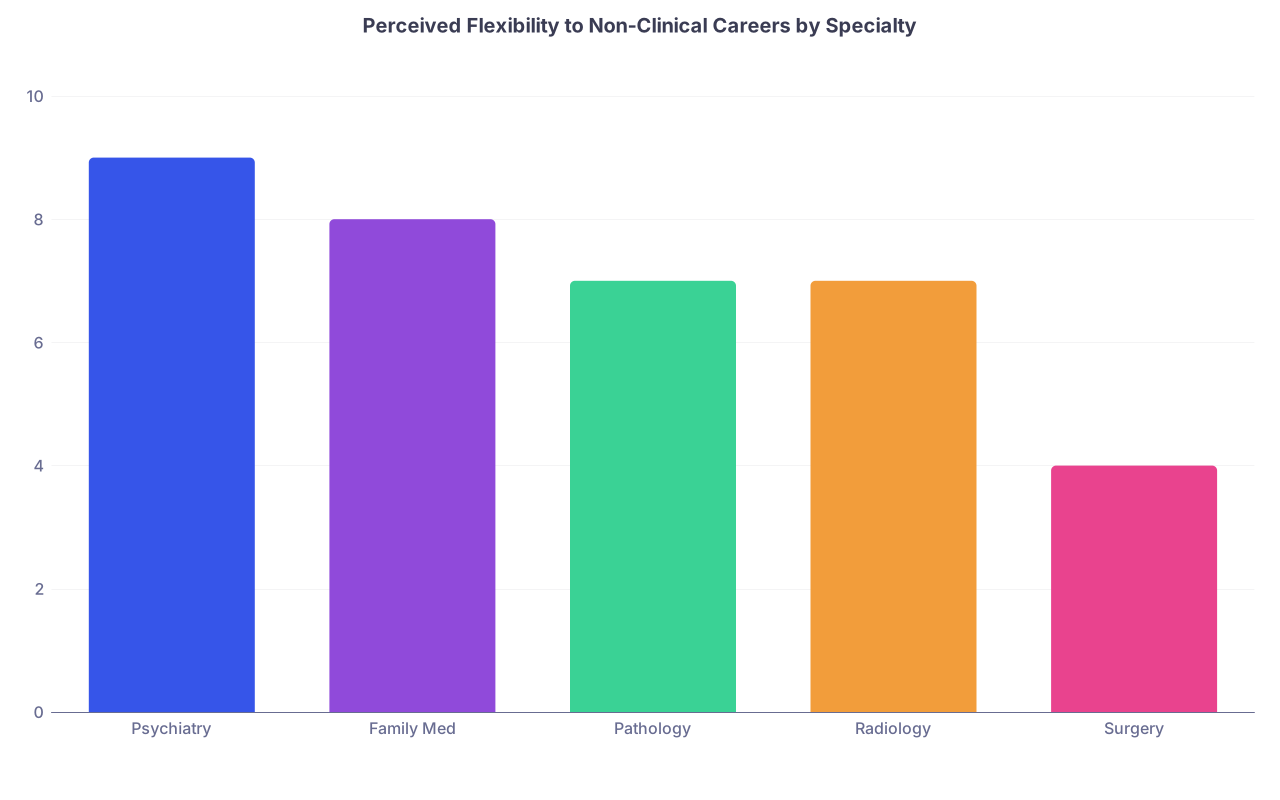
| Category | Value |
|---|---|
| Psychiatry | 9 |
| Family Med | 8 |
| Pathology | 7 |
| Radiology | 7 |
| Surgery | 4 |
(Scale 1–10, based on breadth of obvious adjacent roles—research, admin, consulting, informatics, industry, etc.)
Good “pivot-friendly” areas:
- Psychiatry: research, psychotherapy, consultation-liaison, partial clinical + admin, telehealth.
- FM/IM: population health, quality improvement, informatics, administration, occupational medicine.
- Pathology/Radiology: informatics, AI/ML in imaging, lab management, industry, pharma, diagnostics.
This matters if your disease is progressive or has a high risk of major disability later. Your “backup specialties” should not paint you into a corner where the only viable jobs require 12-hour night shifts in a level 1 trauma center.
Step 9: Concrete Example Scenarios
Sometimes you just need to see this played out.
Scenario 1: Severe Crohn’s Disease with Flares
- Physical reality: Unpredictable flares, infusions, fatigue, frequent restroom needs. Nights and stress worsen it.
- Dangerous fields as backups: EM, surgery, OB, ICU-heavy specialties.
- Better primary/backup structure:
- Primary: Psychiatry or Pathology.
- Tier 1 Backup: Outpatient FM with known supportive program.
- Tier 2 Backup: Consider non-clinical roles after prelim year if disease spirals.
Scenario 2: Bipolar I with clear destabilization from sleep loss
- Reality: Nights and shift work trigger hypomania/depression cycles. Needs stable schedule, close follow-up.
- Bad “backups”: EM, Anesthesia, OB, heavy-call IM.
- Better approach:
- Primary: Psychiatry at programs with limited nights and strong outpatient options.
- Tier 1: Pathology, PM&R at lifestyle-conscious programs.
- Non-negotiable: Avoid programs proud of “brutal but character building” call.
Scenario 3: Progressive mobility impairment
- Reality: Will likely need more assistive devices, maybe wheelchair use, over career. Standing long periods painful.
- Strong options: Pathology, Radiology, Psychiatry.
- Approach:
- Build early experience and letters in at least two of those fields.
- Prioritize programs in physically accessible hospitals.
- Ask explicitly (without oversharing diagnosis) about workplace accessibility and any past accommodations.
Step 10: The Quiet, Uncomfortable Truth
Some specialties just will not be safe places for you. Not only because of the physical demands, but because of the attitude toward “weakness.”
You cannot fix those cultures during residency. You can only choose not to walk into them.
Your “backup specialties” are not a consolation prize. They’re your future life. Your energy at 45. Your relationships. Whether you’re still physically capable of walking to the mailbox at 60.
Choose like that matters. Because it does.

| Step | Description |
|---|---|
| Step 1 | List your health limits |
| Step 2 | Screen out unsafe specialties |
| Step 3 | Identify 3-5 realistic fields |
| Step 4 | Sort into Primary, Tier 1, Tier 2 |
| Step 5 | Research programs for accommodation |
| Step 6 | Decide disclosure strategy |
| Step 7 | Apply with aligned backup list |
With this framework, you’re not just “hoping to match somewhere.” You’re building a career you can actually survive.
The next phase, once you have your specialty list, is tightening your program list and your application story so they line up with who you actually are now—not the fictional future superhuman you wish you could be. But that’s a separate tactical conversation.
For today, your job is simpler and harder: be honest, then choose like your long-term health depends on it. Because it does.