
The biggest lie in residency planning is “just pick a backup specialty and you’ll be fine.”
The data shows that is often statistically wrong.
If you do not quantify primary vs backup competitiveness ratios, you are gambling, not planning. Some “backup” choices actually make your odds worse than applying only to your primary. Others quietly double or triple your chances. The difference is not subtle.
Below I will walk through how to think like a data analyst about backup specialties: ratios, odds, thresholds, and where the numbers actually favor you.
1. The Core Concept: Competitiveness Ratios, Not Vibes
For residency planning, the useful unit is not “this specialty is competitive” but:
Competitiveness Ratio = Applicants / Positions
Nationally, NRMP publishes:
- Number of applicants (US MD, DO, IMGs)
- Number of positions
- Fill rates and who fills them
You can convert that into a simple ratio to compare specialties.
| Specialty | Applicants | Positions | Ratio (Applicants per Spot) |
|---|---|---|---|
| Dermatology | 1,200 | 550 | 2.2 |
| Orthopedic Surgery | 1,500 | 900 | 1.7 |
| Anesthesiology | 3,000 | 2,600 | 1.2 |
| Internal Medicine | 10,000 | 9,800 | 1.0 |
| Family Medicine | 6,000 | 5,900 | 1.0 |
These numbers are illustrative but structurally accurate: derm and ortho are crowded; IM and FM are close to 1:1.
Now look at what people actually do: I see MS3s and MS4s “backing up” derm with anesthesiology or EM, or backing up ortho with general surgery. Those are not true backups. The ratios are still high. You are trading one competitive bottleneck for another.
You need to compare your primary ratio vs your backup ratio. If the delta is small, you are not backing up. You are just applying to two hard things.
2. Primary vs Backup: Where the Odds Actually Shift
Here is the framing that matters:
- Your primary = specialty you want most
- Your backup = specialty that materially improves your probability of matching if primary fails
“Materially improves” means there is a meaningful drop in competitiveness ratio.
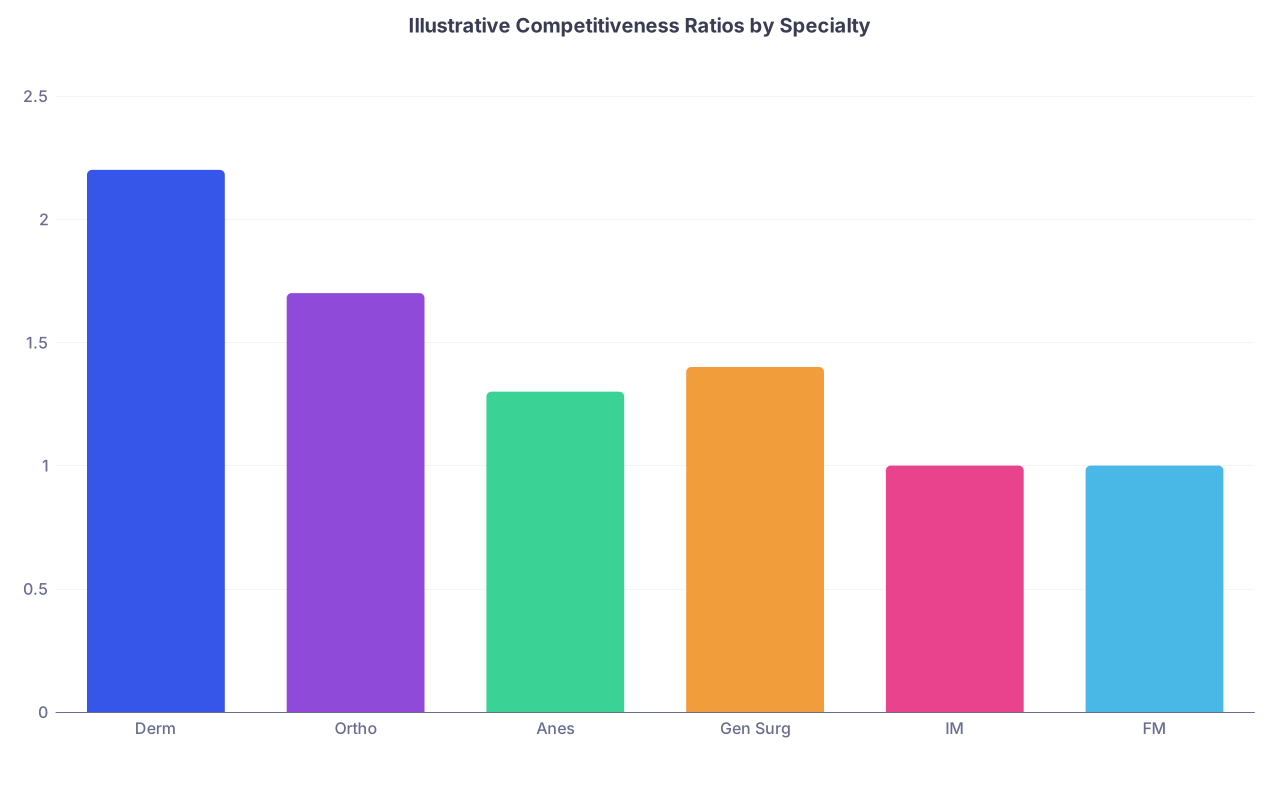
| Category | Value |
|---|---|
| Derm | 2.2 |
| Ortho | 1.7 |
| Anes | 1.3 |
| Gen Surg | 1.4 |
| IM | 1 |
| FM | 1 |
If your primary ratio is 2.0+ applicants per spot, and your backup ratio is 1.6, you have not done much. If your backup drops that to ~1.1–1.0, now the odds are clearly different.
A simple heuristic I use with students:
- Strong backup: backup ratio ≤ 1.2 and at least 20–30% lower than your primary ratio
- Weak backup: backup ratio 1.3–1.5 or ratio drop < 20%
- Fake backup: backup ratio nearly equal or higher than primary
Let’s walk through some realistic pairings.
3. Common Primary–Backup Patterns (And the Data Problems)
3.1 Competitive Surgical Primary
Think derm, ortho, ENT, neurosurgery, plastics, integrated vascular, etc.
Students often propose:
- Ortho → back up with General Surgery
- ENT → back up with General Surgery
- Plastics → back up with General Surgery
On paper, this sounds “logical” (same OR, similar lifestyle). On numbers, it is sloppy.
General Surgery ratios are usually in the 1.3–1.5 range in recent years. Not derm level, but not generous either. Your “backup” is still crowded, and many GS programs quietly expect solid Step 2, strong letters, and real interest.
If derm is ~2.2 applicants/spot and gen surg is ~1.4, your ratio improvement is about:
- 2.2 → 1.4 is a 36% reduction. That is something.
- But you still are in the competitive half of the spectrum.
If you want a true safety net from a surgical primary, the data-friendly paths are usually:
- Categorical Internal Medicine
- Categorical Family Medicine
- Possibly Transitional Year / Preliminary Medicine with a clear re-application plan
Not glamorous. But the ratios drop from ~2.0+ to ≈1.0–1.1. That is the difference between “might not match at all” and “almost certainly will match somewhere if list is long enough.”
3.2 Competitive Lifestyle Primary
Examples: Dermatology, Radiology, Ophthalmology, Anesthesia (in top markets), EM back when it was tight.
What I see students do:
- Derm → back up with Internal Medicine
- Radiology → back up with Internal Medicine
- Ophthalmology → back up with Internal Medicine
This… actually makes statistical sense, provided you truly commit to IM programs and do not treat them as throwaways.
Internal medicine ratios hover near 1.0–1.1 applicants per position, but for US graduates with decent scores, the effective ratio is often slightly in their favor. FM even more so.
If your primary has a 1.6+ ratio and you move to a ≈1.0–1.1 specialty, that is a meaningful shift.
The trap: some applicants “half-apply” in backup. Twenty derm applications plus “5 IM programs because my advisor said so.” Then they are surprised when the IM programs, smelling that they are backup-only, do not interview them.
Backing up only works when your behavior matches your stated intention in the data the programs see:
- Tailored IM letters (not just “excellent derm candidate”)
- Solid IM rotation grades
- IM-focused personal statements / supplemental responses
- A decently long rank list in backup
The probabilistic boost requires full engagement.
4. Using Ratios with Your Individual Profile
Raw national ratios are blunt instruments. Your real odds depend on how you compare to the median successful applicant in that specialty.
Two numbers dominate:
- USMLE / COMLEX scores
- Specialty-specific CV strength (research, letters, sub-I performance)
4.1 Score Percentiles vs Specialty Expectations
If Step 2 CK median for matched applicants in derm is, say, 250, and yours is 236, your personal “effective ratio” is worse than the national average. You are on the left side of their distribution.
If IM’s median is 240 and you are 236, you are near the median. That moves your effective ratio closer to 1:1.
So the key is:
- Compare your Step 2 CK (and COMLEX) to the specialty’s distribution, not just to your classmates.
- Where you are below median, your true competitiveness ratio is higher than the published number.
- Where you are above median, your effective ratio is lower.
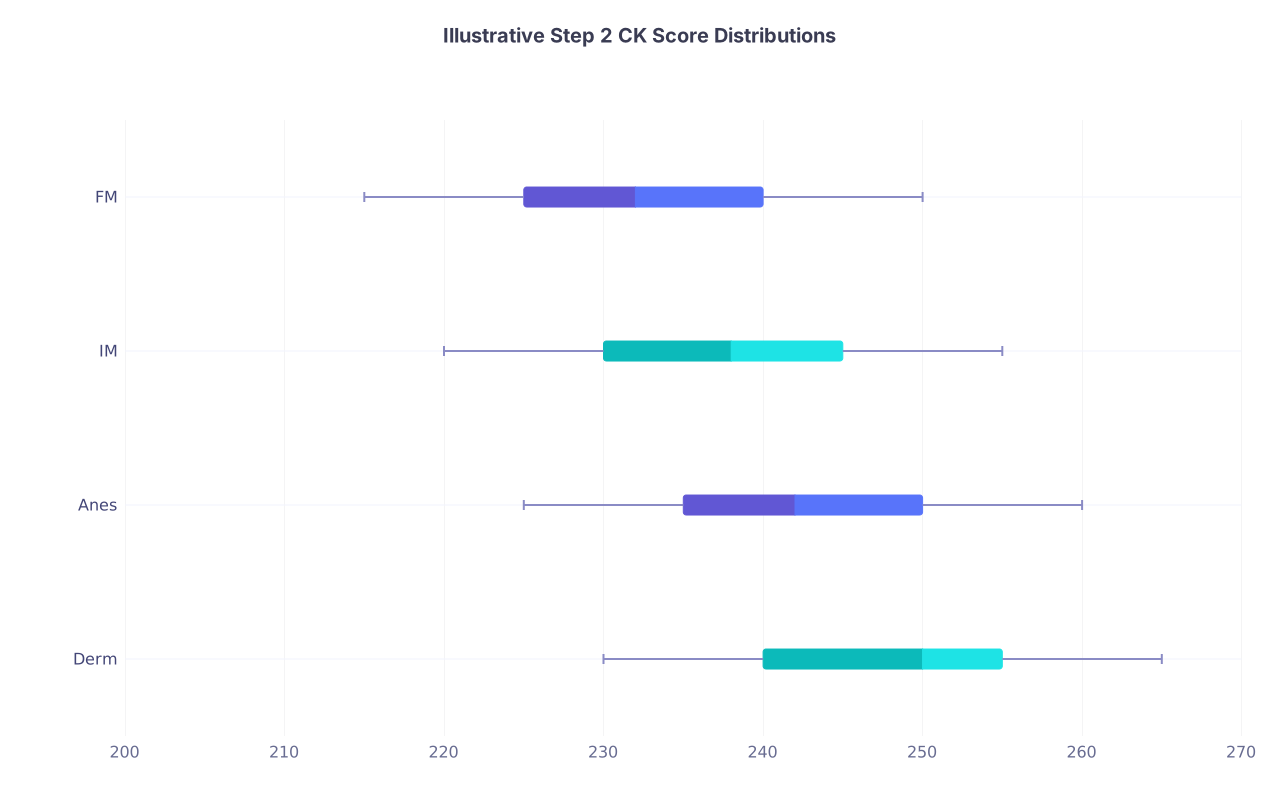
| Category | Min | Q1 | Median | Q3 | Max |
|---|---|---|---|---|---|
| Derm | 230 | 240 | 250 | 255 | 265 |
| Anes | 225 | 235 | 242 | 250 | 260 |
| IM | 220 | 230 | 238 | 245 | 255 |
| FM | 215 | 225 | 232 | 240 | 250 |
If you sit at 245:
- For derm: near or slightly below median. Risky.
- For anesthesia: near or above median. Reasonable.
- For IM: above median. You are strong.
- For FM: well above median. You are very strong.
Matching probabilities are not strictly linear, but your position inside the boxplot matters more than the national ratio alone.
4.2 CV Alignment
A classic mismatch I see:
- Primary = ENT with 3 ENT research projects, ENT away rotation, ENT letters
- Backup = Internal Medicine with zero IM research, no IM sub-I, and generic IM letter from a random rotation
On paper, national IM ratios say you are safe. In practice, top IM programs are not impressed by ENT-heavy portfolios from someone who looks like they will re-apply ENT first chance.
Programs try hard to avoid “flight risk” residents. They read your file for intent. If your data screams “I will leave if I match my dream specialty next year,” they become selective. That increases your personal effective competitiveness.
The more aligned your backup CV is with the specialty (at least one sub-I, targeted letter, some evidence of commitment), the more its actual ratio applies to you.
5. How Many Spots Do You Actually Need to Apply To?
Ratios tell you how crowded the market is. But you also need to think about interviews and rank list length.
NRMP data consistently show:
- For US MDs, ~10–12 contiguous ranks in a specialty approaches a “high probability” of matching in that specialty, depending on competitiveness.
- For US DOs and IMGs, the number needed is typically higher.
So your plan must generate enough programs on your rank list across primary and backup combined.

| Step | Description |
|---|---|
| Step 1 | Choose Primary Specialty |
| Step 2 | Estimate Competitiveness Ratio |
| Step 3 | Assess Personal Profile |
| Step 4 | Identify Lower Ratio Backups |
| Step 5 | Primary Only or Light Backup |
| Step 6 | Build Parallel Application Strategy |
| Step 7 | Ensure Sufficient Rank List Length |
| Step 8 | Ratio High or Borderline? |
Example of a rational plan:
- Primary derm: target 12–15 derm programs where you are at least near competitive
- Backup IM: apply to 30–40 IM programs, aim for ≥10 IM interview invites, rank all
If your derm odds are say 20–30% and your IM odds are 90%+, your overall probability of matching anywhere becomes high. That is how you make the math favor you.
6. Primary–Backup Pairs: Where Data Favors You vs Hurts You
Let’s classify typical combinations with a data lens. These are general patterns, not absolute rules.
6.1 Data-Smart Backup Pairings
Here “smart” means clear drop in ratios and alignment is achievable.
- Derm → Internal Medicine or Family Medicine
- Ortho → Internal Medicine or Family Medicine
- ENT → Internal Medicine
- Neurosurgery → Internal Medicine
- Integrated Plastics → Internal Medicine
- Radiology → Internal Medicine or Transitional Year tied to IM programs
- EM (still moderately competitive in some regions) → Internal Medicine or Family Medicine
Pattern: extremely or moderately competitive primary → categorical IM/FM backup with real commitment.
These pairings move you from 1.5–2.5 applicants per spot down to ~1.0–1.1, and your personal stats usually look strong in the backup pool.
6.2 Questionable / Weak Backup Pairings
Where the numbers do not drop enough:
- Derm → Anesthesia as backup only
- Ortho → General Surgery as the sole backup
- ENT → General Surgery only
- Radiology → Anesthesia only
- EM → Anesthesia only
Anesthesia, general surgery, and EM have not been “true safety” specialties historically. Ratios are lower than derm/ortho, yes, but still solidly competitive, especially in desirable locations.
These might be “alternative primaries” more than backups. You can still match them, but they do not give you the same safety margin that IM/FM do.
6.3 Fake Backup Pairings
Where the direction is wrong:
- Anesthesia → Radiology “backup” (similar or higher ratios in some years)
- EM → Derm “backup” (yes, people actually say this because they like procedures and lifestyle)
- Radiology → Ophtho backup only
Here the aggregate numbers tell you: backup ratios are not lower. They might be higher. You are not diversifying risk; you are compounding it.
7. Regional and Program-Level Nuances
National ratios hide local realities. Some regions are saturated with applicants relative to positions, particularly for lifestyle and coastal specialties.
You will see this pattern every year:
- East and West coast programs in “backup” specialties behave like competitive primaries.
- Midwest and South programs in the same specialties behave more like the national average.
Your real competitiveness ratio is roughly:
Effective Ratio for You = (Local Applicants to Those Programs) / (Positions You Are Willing to Rank)
This is why people with “good stats” still fail to match backup specialties: they restrict themselves to big coastal cities in high-demand areas and effectively push their personal ratio back up toward 2.0+.
To make the odds truly favor you, you must:
- Use backup specialties with lower national ratios
- And apply broadly enough geographically that you do not recreate high-ratio bottlenecks
8. Building a Quantitative Backup Strategy (Step-by-Step)
If you want a practical, numbers-driven method, do this:
Quantify your primary
- Find last 2–3 years NRMP data for your primary specialty.
- Note applicants, positions, and approximate ratio.
- Look at matched Step 2 median and interquartile range.
Locate yourself in that distribution
- Compare your Step 2 score to that median/boxplot.
- Adjust your mental “ratio”: if you are well below median, assume your personal competitiveness is worse than average.
Set a risk tolerance
- If your primary ratio is >1.5 and you are not clearly above-median on scores and CV, you are in a high-risk zone.
- Decide whether you are comfortable with 30–40% no-match risk. Many are not.
Identify candidate backups
- Look for specialties with ratios near 1.0–1.2 where your score is ≥ median.
- Check your CV: can you build at least minimal credibility in that field before ERAS?
Check delta and alignment
- Ensure your backup ratio is at least 20–30% lower than primary.
- Plan 1–2 rotations, a strong letter, and a tailored personal statement for the backup.
Model your interview targets
- Work backwards: to get 10–12 ranks in backup, you probably need ~12–15+ backup interviews.
- That often means 25–40+ applications in backup, depending on specialty and your profile.
Force yourself to write down the numbers
- “If I stay primary-only, I estimate X% chance to match.”
- “With backup added, I estimate Y% (usually much higher) chance to match somewhere.”
- If Y is not clearly safer than X, your backup is not good enough.
This is how you stop guessing and start managing risk.
FAQ (exactly 3 questions)
1. Is it ever reasonable to skip a backup specialty entirely?
Yes. If your primary specialty has a moderate ratio (around 1.2–1.4), your scores and CV place you clearly above the median, and you are willing to accept some risk, then focusing entirely on that field is defensible. This is especially true for students with strong home programs, solid letters, and no glaring red flags. But that is a deliberate risk choice; the data still say that adding a truly less competitive backup almost always improves your overall chance of matching somewhere.
2. Should I use a preliminary or transitional year as my “backup”?
A prelim or TY year is not a true backup specialty. It is a timed extension to re-apply to your primary or pivot later. The ratios for prelim/TY spots can be more forgiving, but you will be re-entering the Match with limited leverage, fatigue, and less timing flexibility. When people insist on “no categorical backup,” then yes, prelim/TY can be used tactically. But if your goal is to minimize the probability of being unmatched and scrambling, a categorical lower-ratio specialty (IM or FM for most) is a more robust safety net.
3. How do DO and IMG applicants need to adjust this competitiveness logic?
For DOs and IMGs, the national ratios understate how tight things can be. Many competitive specialties and programs have implicit or explicit preferences for US MDs, which effectively raises the real ratio you face. The solution is not magical; it is stricter risk management. That usually means: primary specialty choices closer to your score profile, earlier commitment to lower-ratio backups, more geographic flexibility, and larger application lists. For DOs/IMGs aiming at highly competitive fields, the data strongly favor having a serious, not cosmetic, backup specialty with clear ratio and alignment advantages.