

The worst way to choose a specialty is to panic your way into it during MS3. The second worst is to overcommit during MS1 before you actually know what you’re doing.
You’re going to avoid both.
This is a timeline for MS1: low‑stress, low‑stakes ways to explore specialties, broken down month by month and then week by week. At each point: what you should do, what you should ignore, and how to keep this from eating your study time.
Big Picture: Your MS1 Specialty Exploration Map
Before we zoom in, you need the scaffold. Here’s how the year should roughly feel:
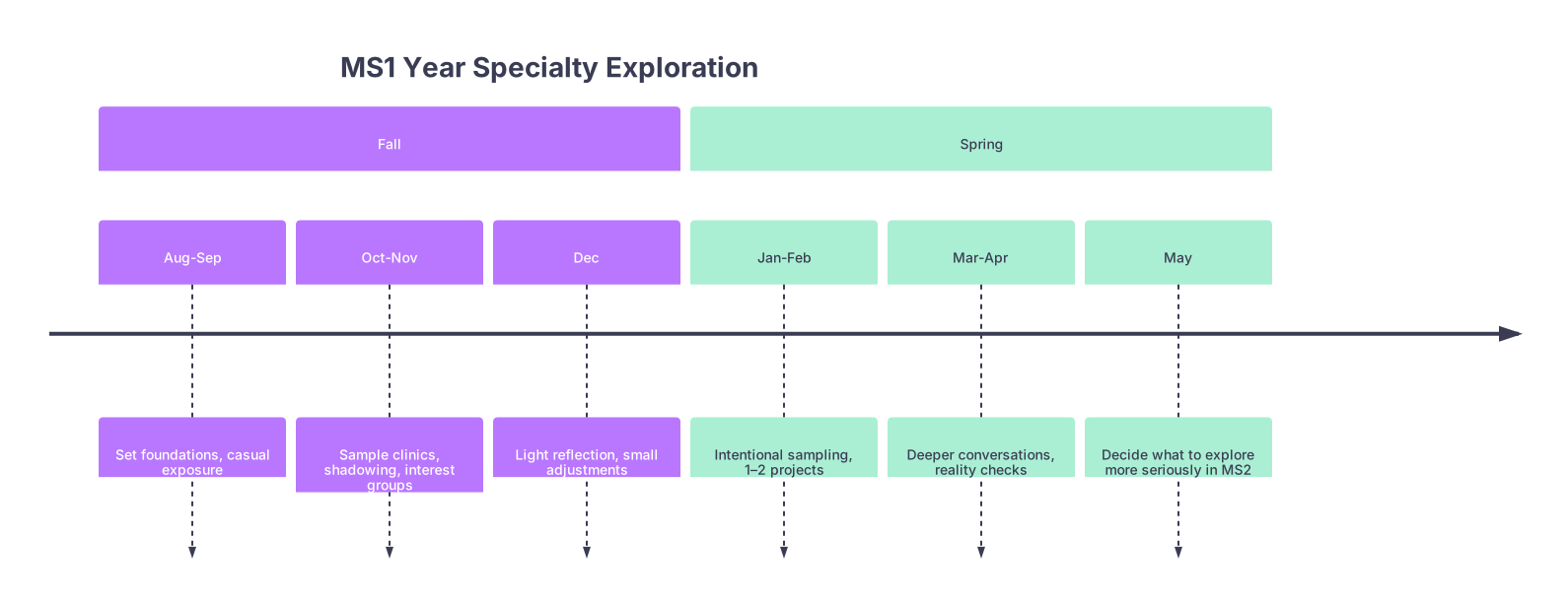
| Period | Event |
|---|---|
| Fall - Aug-Sep | Set foundations, casual exposure |
| Fall - Oct-Nov | Sample clinics, shadowing, interest groups |
| Fall - Dec | Light reflection, small adjustments |
| Spring - Jan-Feb | Intentional sampling, 1–2 projects |
| Spring - Mar-Apr | Deeper conversations, reality checks |
| Spring - May | Decide what to explore more seriously in MS2 |
At this point, your only real goals are:
- Learn what different specialties actually do day to day
- Notice what energizes you vs. what drains you
- Build a few weak‑tie connections without signing your soul away
You are not “deciding a specialty” as an MS1. You’re running small experiments.
August–September (MS1 Start): Stabilize First, Peek Second
Weeks 1–4: Do Less Than Your Classmates
This is where people screw up. They:
- Join 12 interest groups
- Sign up for 3 “longitudinal clinics”
- Volunteer weekly
- Then drown in anatomy and panic by October
Do the opposite.
Week 1–2: Lock in your academic baseline
Your only job:
- Figure out your study system
- Time yourself: how many hours do you actually need to stay comfortably ahead?
- See how drained you feel by end of day
Once that’s stable, then you can layer in low‑stress specialty exposure.
End of Week 2: Choose your “soft exposure” plan
Pick one from each category:
- Interest Groups — Max 2
- One “procedural” (surgery, EM, anesthesiology, OB/GYN)
- One “cognitive” (IM, peds, psych, neurology, family med)
You’re not marrying them. You’re just forcing yourself to see at least two very different flavors of medicine this year.
- Shadowing — 1 half‑day per month
- Ask your college advisor, learning community director, or older student:
“Who’s a kind attending who likes having first years around?” - Aim for:
- 1 clinic session (IM/FM/Peds/Psych)
- 1 hospital session (Surgery/EM/ICU/OB)
- Ask your college advisor, learning community director, or older student:
That’s it. If you’re doing more than ~4–5 hours/month of shadowing this early, you’re probably overdoing it.
October–November: Light Sampling, Not Long-Term Commitments
At this point, you should have your study rhythm reasonably under control.
Weeks 5–8: Test 2–3 “Specialty Flavors”
Every 2 weeks, do ONE tiny experiment. Think of them as taste tests, not full meals.
Possible “flavors” to compare:
- High acuity vs. low acuity
- EM shift vs. outpatient clinic afternoon
- Procedural vs. talk‑heavy
- OR morning vs. psychiatry clinic
- Continuity vs. episodic
- Family medicine clinic vs. inpatient consult service
Concrete plan:
- Week 5: Attend an interest group event that actually shows the work
- Surgical skills night, EM ultrasound demo, peds case discussion
- Week 6: Do one half‑day shadowing (different from what you did in September)
- Week 7: Go to a panel with multiple specialties represented
- Week 8: Do nothing new; just observe your reactions to what you’ve seen
What you should capture after each exposure
Right after you leave clinic/OR/ED, write for 3 minutes. Timer on your phone. No more.
Use these prompts:
- What parts made time move fast?
- What parts made me want to check my phone?
- Did I like how these doctors talked to each other?
- Could I imagine doing this at 3 a.m. and not hating my life?
That tiny reflection habit is more valuable than 10 extra shadowing shifts.

December: Mid‑Semester Reality Check (Without Existential Crisis)
By early December, you’ve probably:
- Seen 2–4 specialties up close
- Attended a handful of events
- Started forming half‑baked opinions
Time to organize the noise.
Week 12–13: 30‑Minute Personal Debrief
Take a quiet half hour and quickly rate each specialty you’ve touched.
Use something simple like this:
| Specialty | Enjoyment (1–5) | Energy After Day (1–5) | Interest in Seeing Again (Y/N) |
|---|---|---|---|
| Internal Med | 4 | 3 | Y |
| Surgery | 3 | 2 | N |
| Peds Clinic | 2 | 2 | N |
| EM | 5 | 4 | Y |
Do not overthink it. Gut reactions are data.
Then pick:
- 2 specialties you’d like to see again in the spring
- 1 specialty you’re probably done with for now (that’s allowed)
No decision is permanent. You’re just pruning.
Week 14: Protect Your Break
Over winter break:
- No more than 1 half‑day of shadowing per week (if you even want to)
- Read zero “how to match into derm” posts unless you genuinely enjoy it
- If anything, talk to 1–2 residents/attendings you know and just ask:
“What did you wish you’d known about choosing a specialty as an MS1?”
Treat break as a reset, not a productivity contest.
January–February: Intentional Sampling, Still Low-Stress
You’re not brand new anymore. You’ve seen a few things. Now you can be slightly more deliberate.
Week 1–2 of Spring: Redraw Your Plan
At this point you should:
- Drop any interest group you haven’t attended once
- Stay active in 2–3 that still interest you
- Decide on 2–3 specialties to focus your exposure on this semester
For example, you might choose:
- Internal Medicine
- Emergency Medicine
- Psychiatry
Or:
- Surgery
- OB/GYN
- Anesthesia
Weeks 3–8: “1‑1‑1” Exploration Rhythm
Run this pattern each month:
- 1 clinical exposure (half‑day or short shift)
- 1 conversation (coffee/Zoom with a resident or attending)
- 1 skills or case event (sim lab, procedure night, specialty case discussion)
This is enough to give you texture without hijacking your academic life.
How to keep it low-stress:
- Schedule clinical things in blocks where you’d be tired anyway
- Friday afternoons
- Days after an exam (light study day)
- Keep conversations strict to 20–30 minutes
- “I’d love 20 minutes to ask about your specialty and your path here.”
- Don’t do more than 4–5 hours/month of in-person specialty stuff unless your grades are rock solid
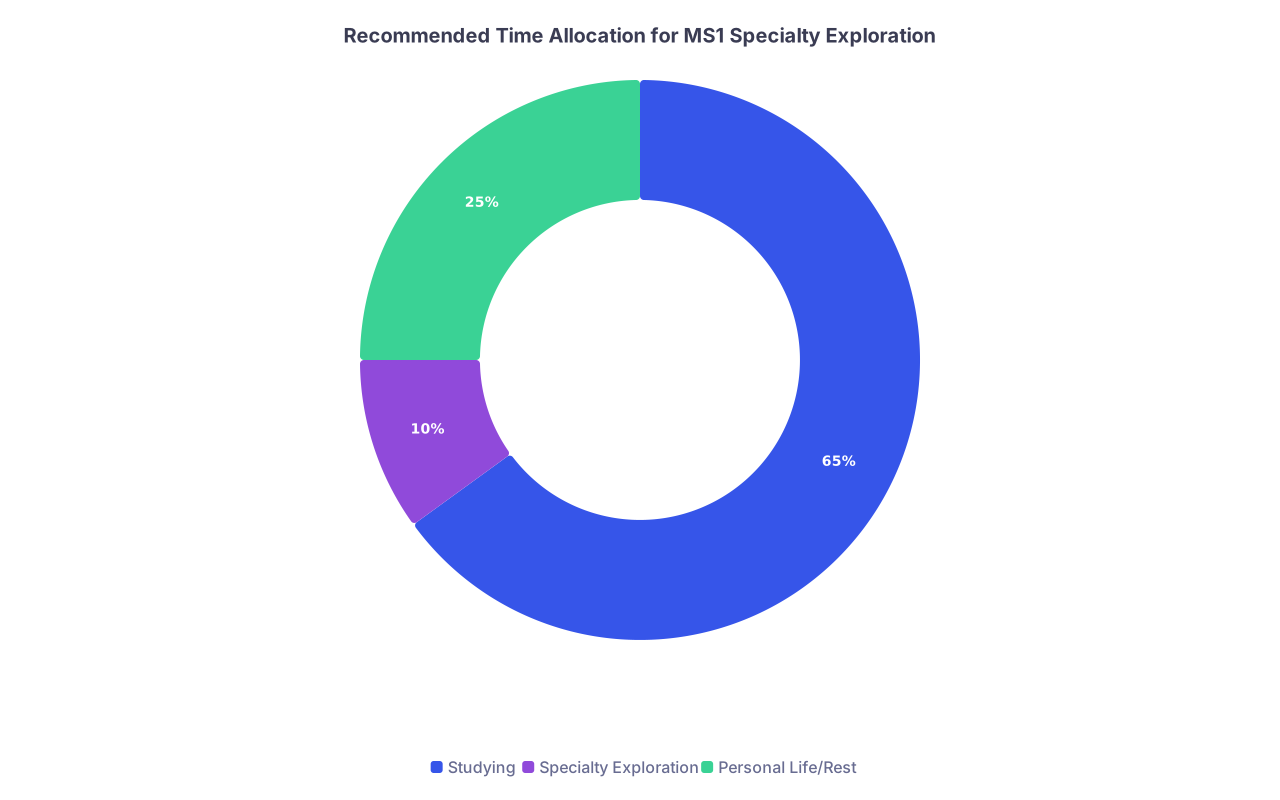
| Category | Value |
|---|---|
| Studying | 65 |
| Specialty Exploration | 10 |
| Personal Life/Rest | 25 |
If your “specialty exploration” time regularly creeps above ~10–12% of your total week, grades will start paying the price. I’ve watched it happen.
March–April: Sharpen the Picture, Don’t Lock Anything In
By now, some things should be clear:
- A few specialties you absolutely don’t like
- A couple that seem interesting
- Maybe one you keep thinking about
That’s enough to move to the next phase: reality‑testing your impressions.
Weeks 9–12: See the Less Glamorous Angles
At this point you should deliberately look for the unsexy parts of your front‑runners.
For each specialty you’re curious about, try to see:
- A clinic day and a hospital day
- A busy day and a slow day, if possible
- At least one night or evening in the environment (ED, call night, or late clinic)
Then ask yourself:
- Could I handle this pace on a regular basis?
- How do these doctors talk when they’re tired?
- Who seems bitter? Who still actually likes their job?
This is how you avoid falling in love with an “Instagram version” of a specialty.
Specialty-specific red flags to watch for
Not to scare you. Just to clue you in:
- Surgery: Attendings who openly brag about missing their kids’ events, residents who look wrecked post-call and joke about “golden handcuffs”
- EM: High burnout talk, lots of “I’m counting the days” from mid-career folks
- IM/Primary Care: Docs who feel trapped by RVUs, rushed 10–15 minute visits with obvious frustration
- Psych: Emotional detachment or cynicism about patients; constant litigation or admin complaints
If everyone in a field looks miserable, believe them. You’re not the magical exception.
May: Decide What Deserves a Serious Look in MS2
By the end of MS1, your only real deliverable is this:
A short list of 2–4 specialties you want to explore seriously during MS2 and early MS3.
Week 13–14: Quick Reflection and Shortlist
Go back to your table from December and update it:
- Add columns:
- “Seen Hospital?” (Y/N)
- “Seen Clinic?” (Y/N)
- “Talked to Resident?” (Y/N)
- “Still Curious?” (Y/N)
Your final list might look like:
| Specialty | Still Curious? | Seen Hospital? | Seen Clinic? | Talked to Resident? |
|---|---|---|---|---|
| Internal Med | Y | Y | Y | Y |
| EM | Y | Y | N | Y |
| Psych | Y | N | Y | N |
| Surgery | N | Y | N | Y |
Your MS2 goal is to:
- Deepen exposure in the “Still Curious = Y” column
- Use preclinicals, electives, and early clinical exposure to stress‑test those options
You’re not late. You’re exactly on schedule.
Weekly Micro-Habits That Keep This Low-Stress
5 Minutes on Sunday: The “One Move” Rule
Each Sunday, quickly answer:
- “What is one tiny thing I’ll do this week to explore specialties?”
Examples:
- Email one resident for a 20‑minute chat
- Sign up for one interest group event
- Shadow for one morning post‑quiz
One move. Not ten.
3 Minutes After Each Experience: Debrief
We already hit this, but it matters enough to repeat:
Immediately after each specialty exposure, jot:
- 2 things I liked
- 2 things I didn’t
- 1 question I now have about this specialty
These little snapshots are gold when you’re an MS3 wondering why you ever thought you liked ENT.

How to Talk to Residents and Attendings Without Sounding Lost
You don’t need a script, but you do need structure. Otherwise you get 20 minutes of vague life advice and nothing useful.
Before the conversation
Have 3–4 specific questions, for example:
- “What made you choose X over the other options you considered?”
- “What part of your day do you look forward to the most? The least?”
- “If you were me, MS1, what would you not bother doing right now?”
- “What kind of personality does badly in your field?”
Notice that none of these are “What Step score do I need?” You can Google that.
During
- Let them talk. Interrupt only to clarify.
- Take quick notes on your phone or small notebook.
- At the end, ask: “Is there someone one or two years ahead of you I should talk to as well?”
This is how you build a tiny, low‑pressure network without groveling or pretending you’ve already chosen their field.
Guardrails: Signs You’re Overcommitting (And How to Back Off)
You’re exploring specialties “low‑stress.” That implies there’s a high‑stress version. Here’s what it looks like.
You’re probably overdoing it if:
- You’ve joined more than 4 interest groups
- You’re shadowing more than 2 times/month during heavy exam weeks
- You’re doing research “just in case” in a field you don’t actually like
- You feel guilty skipping a specialty event to study
If 2+ of those are true, here’s your fix:
- Cut down to 2–3 groups max
- Pause all research plans until:
- You’ve passed at least one major exam block, and
- You actually like the specialty you’d be researching in
- Schedule all shadowing on:
- Post-exam days
- Fridays after lighter content
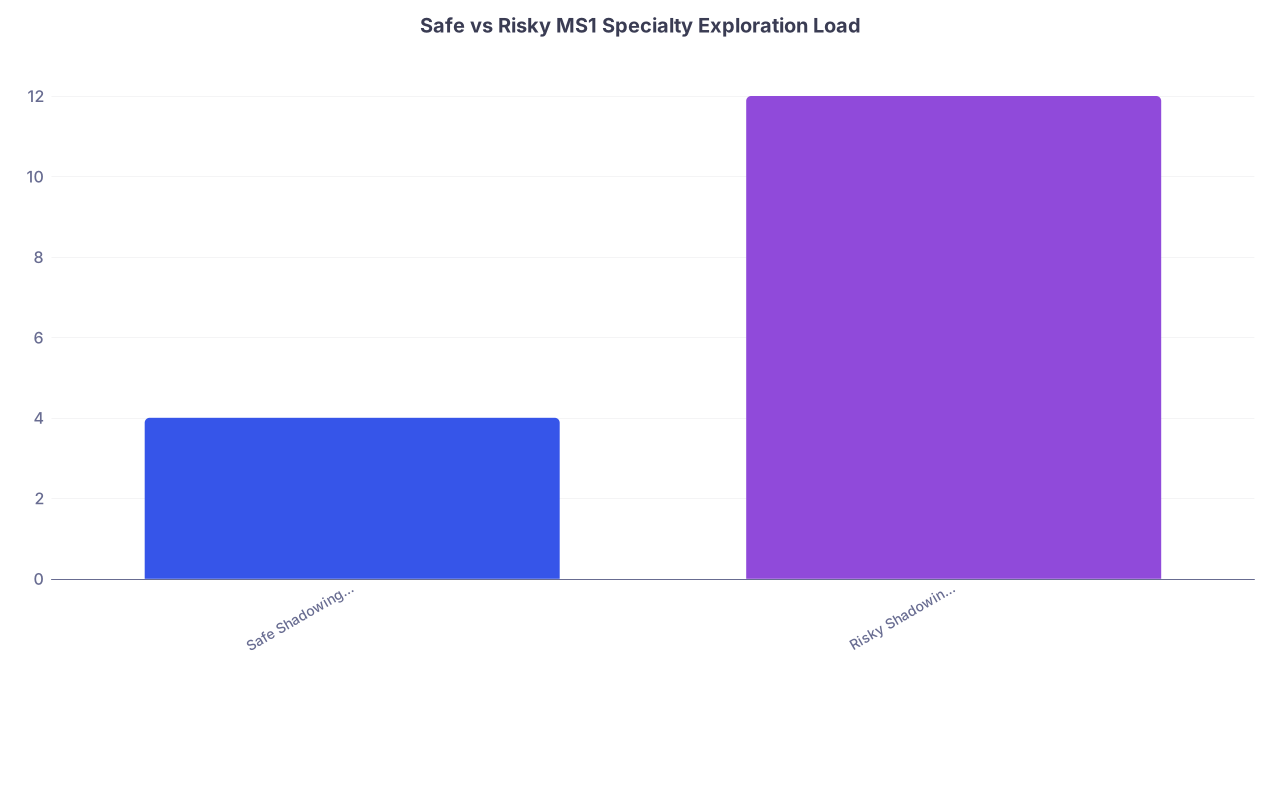
| Category | Value |
|---|---|
| Safe Shadowing Hours/Month | 4 |
| Risky Shadowing Hours/Month | 12 |
I’ve watched people sink their Step 1 prep because they “did research” for a specialty they later abandoned. Do not be that person.
What You Should Not Worry About as MS1
Let me be blunt about a few myths.
You do not need to:
- Decide your specialty in MS1
- Start a publication factory to “be competitive”
- Get a “home department mentor” in a field you might not choose
- Front‑load 10 years of career planning into your first year of med school
By the end of MS1, if you have:
- A short list of 2–4 specialties you kind of like
- Basic exposure to clinic and hospital settings
- A small handful of residents/attendings you can email a question to
You are ahead of schedule.

Three Things to Remember
- Your only MS1 “deliverable” is a refined curiosity list, not a decision.
- Small, regular actions (one clinic, one convo, one event per month) beat panicked overcommitment every time.
- Protect your studying and your sanity; specialty exploration should ride in the back seat, not drive the car.


