
The brutal truth: most competitive US programs do not seriously consider IMGs without solid, recent US clinical experience. Observerships alone rarely cut it. “USCE optional” is mostly marketing.
You’re asking the right question though: how much is actually enough?
Let’s break it down with real numbers, realistic expectations, and specialty-specific targets.
The Short Answer: Target 3–4 Months, Know the Minimums
If you just want a number, here it is:
Absolute bare minimum to not get auto-screened out:
1 month of hands-on, recent US clinical experience (for many community IM programs)Reasonable target for most IMGs (especially for Internal Medicine, FM, Peds):
3–4 months of recent USCE, with at least 2 letters of recommendation from those rotationsMore competitive or suspicious specialties (neuro, psych, EM, anything surgical):
4–6 months of strong USCE is much safer if you can afford the time and cost
If you’re thinking, “But my friend matched with only one month,” yes, that happens. Usually because something else in their application is extremely strong (Step 1/2 scores, research, or a green card/US citizenship plus strong home connections).
For everyone else, 3–4 months is the realistic benchmark.
What Actually Counts as US Clinical Experience?
Programs do not treat all experiences the same. Some “USCE” is almost useless; some can carry your entire application.
Here’s the basic hierarchy.
| Type of Experience | How Programs Value It |
|---|---|
| Inpatient sub-internship / hands-on elective | Highest |
| Outpatient hands-on rotation (clinic) | High |
| Research with clinical exposure | Moderate |
| Observership (shadowing only) | Low |
| Online tele-rotations / virtual observership | Very low |
Gold Standard: Hands-On Inpatient Rotations
This is what programs like to see when they say “USCE required”:
- Inpatient ward months where you:
- Present patients
- Write or draft notes
- Develop your own assessment and plan
- Interact with the EMR and multidisciplinary teams
- Often called:
- Sub-internship (sub-I)
- Acting internship (AI)
- Clinical elective (hands-on, not observership)
If you can get 2–3 months of this type of experience in US internal medicine, family medicine, or your target specialty, you’re in decent shape for most IMG-friendly programs.
Good: Outpatient Hands-On Rotations
Clinic-based rotations where you:
- See patients
- Present to the attending
- Help with documentation
- Follow up results
These are still real, useful clinical experiences. For family medicine, psych, or peds, these can carry a lot of weight. For inpatient-heavy specialties, you’ll want at least one inpatient month too.
Mediocre: Observerships
Pure shadowing. You watch. You don’t touch the chart. You don’t write notes.
Can you list it? Yes. Will it make you competitive by itself? Usually not.
Observerships help when:
- They’re at the same program you’ll apply to
- They lead to a personal letter from someone known to the PD
- You have no other USCE and this is all you can realistically do
But three observerships do not equal two months of good hands-on rotations.
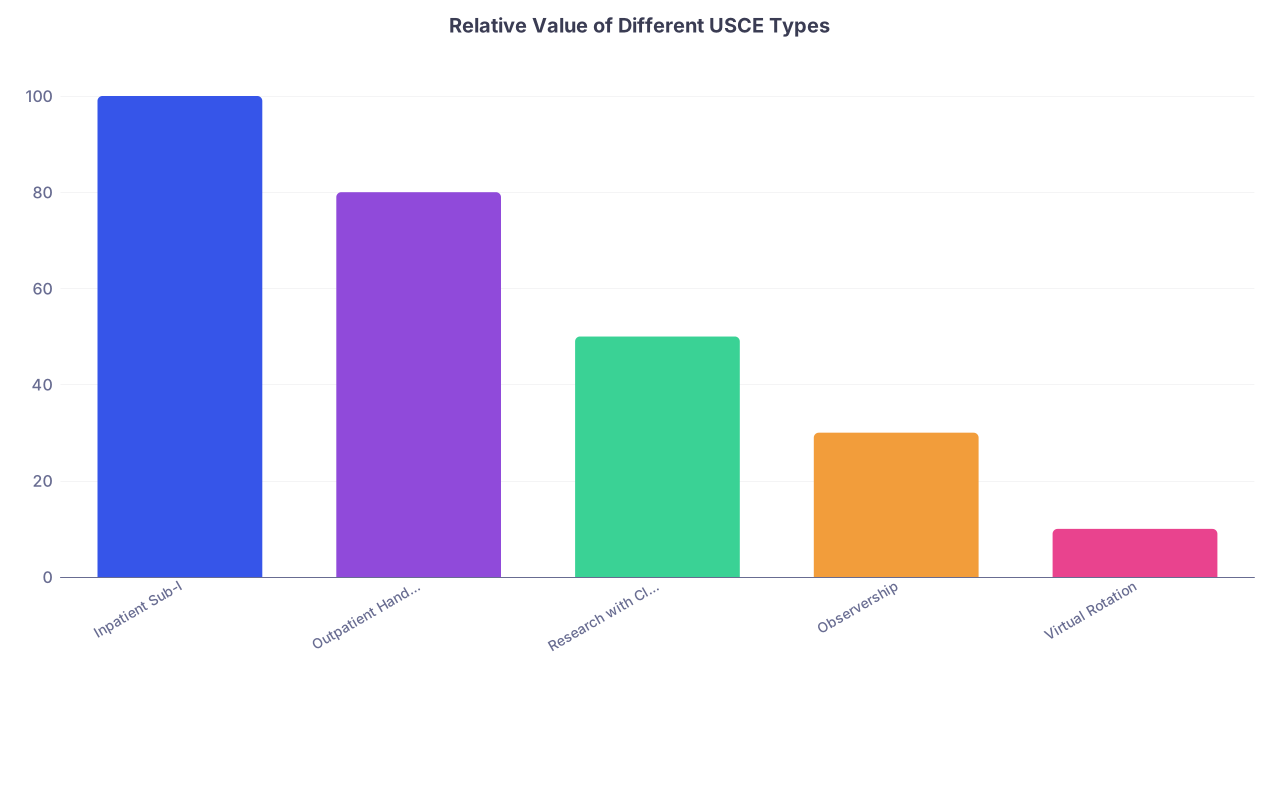
| Category | Value |
|---|---|
| Inpatient Sub-I | 100 |
| Outpatient Hands-On | 80 |
| Research with Clinical | 50 |
| Observership | 30 |
| Virtual Rotation | 10 |
How Much USCE by Specialty?
Different specialties have very different expectations. Here’s the blunt version.
| Specialty | Competitive Target | Absolute Floor (Some Match With) |
|---|---|---|
| Internal Medicine | 3–4 months | 1–2 months |
| Family Medicine | 2–3 months | 1 month |
| Pediatrics | 3–4 months | 1–2 months |
| Psychiatry | 3–4 months | 1–2 months |
| Neurology | 3–5 months | 2 months |
| General Surgery | 4–6 months | 3 months |
Internal Medicine (the big one for IMGs)
For IMGs aiming at internal medicine:
Ideal: 3–4 months of USCE, preferably:
- 2 months inpatient IM
- 1 month clinic (IM or subspecialty)
- Optional 1 more in a subspecialty you like (cards, pulm, heme/onc)
What programs implicitly want from USCE:
- Clear proof you can function in the US system
- Letters saying you can present, write decent notes, and handle volume
- Someone vouching that your English and professionalism are not a risk
If you have stellar scores (250+ Step 2, recent YOG, no gaps) you can get interviews with 2 solid inpatient months and good letters. But 3–4 months is safer.
Family Medicine
FM programs are often more flexible, but not as loose as people imagine.
- Comfortable target: 2–3 months of USCE, clinic-heavy is fine
- Programs really care about:
- Continuity of care
- Community engagement
- “Team player” reputation from your letters
If your home country practice is primary care, emphasize that heavily. But you still want at least one recent US rotation.
Psychiatry and Neurology
These are more cautious with IMGs.
For Psych:
- 3–4 months total USCE
- At least 1 month in psych if you can get it
- Strong letters commenting on communication skills, empathy, professionalism
For Neuro:
- 3–5 months is safer, including:
- 1–2 months internal medicine
- 1–2 months neurology itself
- 3–5 months is safer, including:
These fields get a lot of IMG applications. Generic observership letters do not move the needle here.
Surgery and Surgical Subspecialties
For most IMGs, this is where dreams go to die. Not because it’s impossible, but because the bar is brutally high.
If you’re serious:
- You’re looking at 4–6+ months of very strong USCE:
- Multiple surgery sub-Is
- Ideally at academic centers
- Confirmed strong letters from surgeons
- Plus:
- Research
- Very high scores
- Often US citizenship/green card
If that’s not realistic, seriously consider prelim spots, research years, or pivoting to a more IMG-friendly field.
“Recent” USCE: How Old Is Too Old?
Programs like recent experience. A fantastic letter from 2017 looks stale in 2026.
As a rule of thumb:
- Best: USCE within the last 12 months
- Acceptable: within 2–3 years if you’ve been practicing clinically elsewhere
- Programs get nervous if:
- You have a big unexplained gap
- Your last clinical experience (anywhere) was years ago
If you graduated long ago (YOG 2015+, say) and you’re coming back to medicine, you need fresh USCE even more—at least 2–3 recent months.
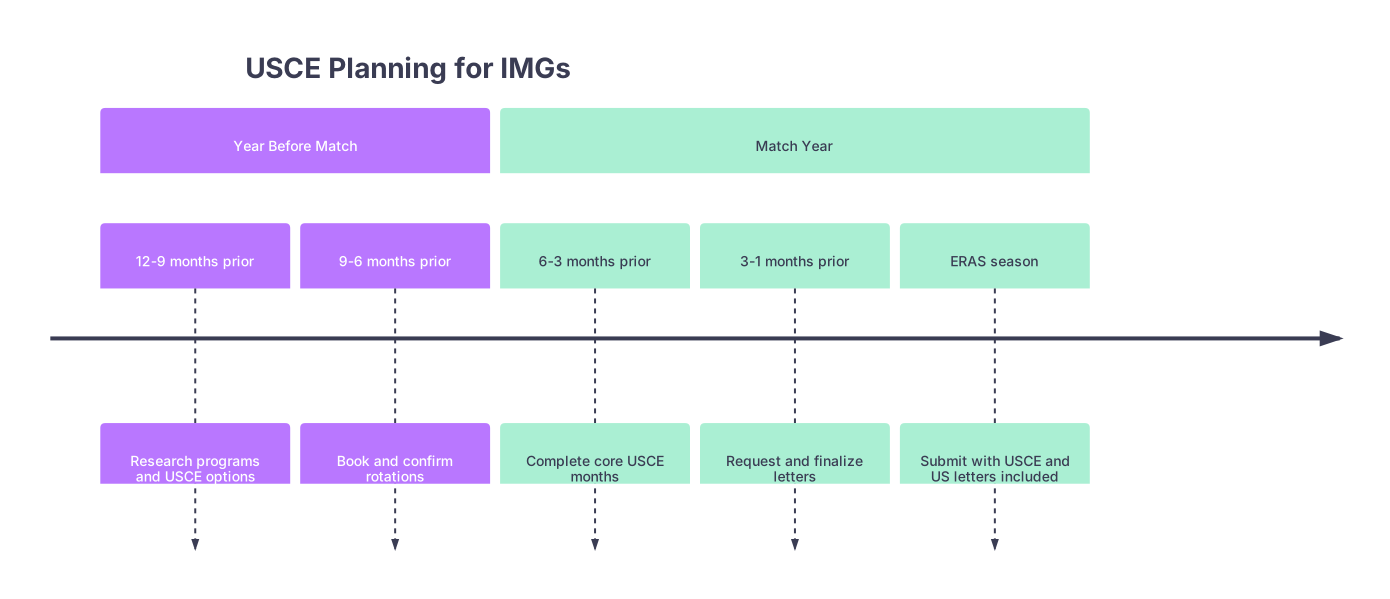
| Period | Event |
|---|---|
| Year Before Match - 12-9 months prior | Research programs and USCE options |
| Year Before Match - 9-6 months prior | Book and confirm rotations |
| Match Year - 6-3 months prior | Complete core USCE months |
| Match Year - 3-1 months prior | Request and finalize letters |
| Match Year - ERAS season | Submit with USCE and US letters included |
How Many Letters Should Come from USCE?
Here’s what actually matters to PDs: who is vouching for you.
For most IMGs:
- Aim for at least 2 US letters, ideally 3
- For internal medicine, a very strong setup is:
- 2 letters from US internal medicine attendings (from inpatient rotations)
- 1 from a subspecialty or outpatient IM/clinic
- If you have a powerful home-country letter (department chair, program director), keep one of those. But don’t fill all four LOR slots with foreign letters.
Weak US letter (“observed rounds, seemed nice”) is not useless, but it won’t override a mediocre application. Strong, detailed US letter is gold.
When Less USCE Might Be Enough
You can sometimes “get away with” fewer months of USCE if you have:
- Outstanding scores (Step 2 > 250, strong Step 3 completed)
- Very recent graduation (YOG last 1–2 years)
- US citizenship or green card
- Significant research with US faculty and strong letters from them
I’ve seen people match IM with:
- 1 month of USCE + US research year + 250+ scores
- 2 months of USCE + 3 powerful letters + strong US ties
But I’ve also seen IMGs with good Step scores and zero USCE get auto-filtered at many programs.
The ugly reality:
No USCE + IMG = auto-reject at a large chunk of programs. They have no bandwidth to “take a chance” when their inbox is full of applicants who already proved they can function here.
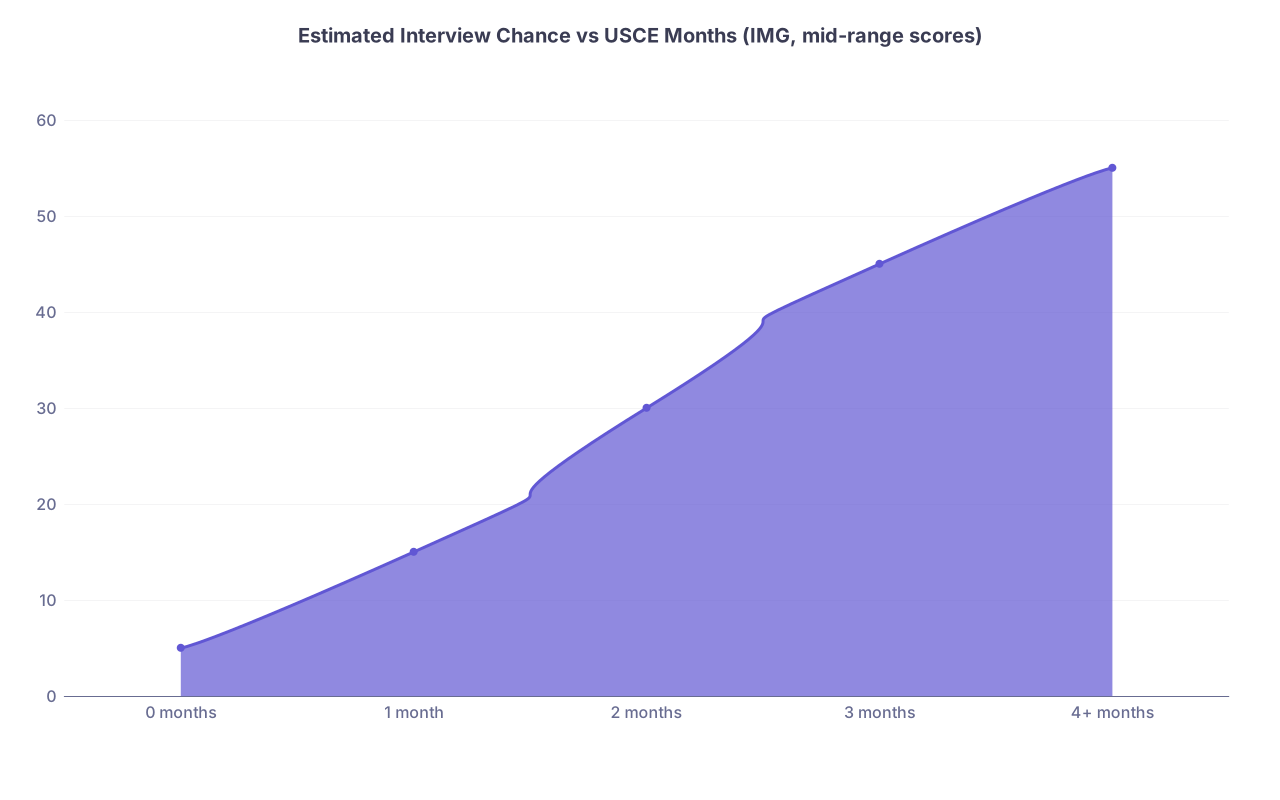
| Category | Value |
|---|---|
| 0 months | 5 |
| 1 month | 15 |
| 2 months | 30 |
| 3 months | 45 |
| 4+ months | 55 |
Strategic Advice: If You Can’t Afford Tons of Rotations
USCE is expensive. Travel, housing, rotation fees, time off work. You can’t always buy 6 months of rotations. So you have to be smart.
If you can only afford:
1 Month
- Choose inpatient internal medicine at a known community or university-affiliated hospital
- Work like your career depends on it (because it kind of does)
- Goal: one excellent letter from a US IM attending
- Then:
- Apply heavily to community IM/FM programs
- Emphasize any home-country clinical work and continuity
2 Months
- Do both inpatient months if you’re aiming for IM
- Or:
- 1 month inpatient IM
- 1 month in your target specialty (psych, neuro, etc.)
- Try to walk away with 2 strong letters
3–4 Months (Ideal Range)
- Structure for IM:
- Month 1: Inpatient IM (ward)
- Month 2: Inpatient IM or ICU/subspecialty
- Month 3: Outpatient IM or subspecialty clinic
- Optional Month 4: Target specialty or another strong IM month
- Focus on programs that:
- Are IMG-friendly
- Actually know your rotation sites
- Do not require US citizenship

Common Myths About USCE (And Why They Hurt You)
Let me stomp on a few bad ideas I hear constantly.
Myth 1: “Any USCE is enough, quantity doesn’t matter.”
Wrong. Programs actively sort applicants by:
- Type of USCE (hands-on vs observation)
- Duration
- Recency
- Relevance to their specialty
One month of shadowing cardiology in a private office will not impress an IM program the way one month of full participation on a busy ward will.
Myth 2: “Research counts as USCE.”
Research is not US clinical experience. It’s research.
It absolutely helps, particularly at academic places, but if your only US exposure is sitting in a lab and never seeing a patient, that doesn’t answer the PD’s biggest fear: can this person safely care for patients in our system?
Best case: Research plus 2–3 months USCE is a strong combination.
Myth 3: “I’ll just get strong letters from home; they know me better.”
You should have one excellent home letter. Maybe two. But programs want to see:
- US-based evaluators who understand ACGME expectations
- Direct comparison to US students/residents
- Confirmation that your communication, documentation, and teamwork are up to US standards
A letter saying “best student in my country” doesn’t reassure them about your ability to sign out patients in Epic at 5:57 pm with a grumpy night float.

How Programs Actually Use USCE in Ranking You
Think like a program director for a second. They look at USCE and ask:
- Does this person know how US hospitals work?
- Is there any red flag about communication, professionalism, or attitude?
- Do I trust the people who wrote these letters?
- Does this applicant need a ton of extra supervision or will they function like a typical intern?
Good USCE answers all four.
I’ve watched PDs flip directly to the LOR from a known attending:
“Okay, if Dr. Smith says this IMG functioned at US senior student level, I’ll interview them even with an average Step score.”
No USCE? You never get to that conversation.

The Bottom Line
You’re trying to answer one question in the minds of program directors: Can I trust this IMG to take care of my patients on Day 1? US clinical experience is your strongest evidence.
Remember these key points:
- Aim for 3–4 months of recent, hands-on USCE if at all possible; 1–2 months is a risky minimum, and observerships alone rarely make you competitive.
- Prioritize quality over quantity: inpatient, hands-on rotations with strong, detailed US letters beat a long list of weak or observational experiences.
- Match your USCE to your specialty and story: internal medicine needs ward months; psych needs direct patient contact and communication-focused letters; surgery demands heavy, high-level exposure plus research.
If you’re serious about matching as an IMG, plan your USCE like a core part of your application, not an afterthought. The programs that are willing to take a chance on you are looking for proof. Give it to them.