42% of residents in the most competitive specialties did not come from “top 25” medical schools.
That’s from NRMP and AAMC data once you actually dig past the marketing gloss. The notion that you “need” an Ivy or top‑10 med school to match dermatology, plastics, orthopedics, or neurosurgery is repeated constantly—and it’s mostly wrong. Not a little wrong. Fundamentally wrong about how the Match actually works.
Let’s pull this apart.
The Brand Name Myth vs The Match Data
There are two different games people blur together:
- Getting into a competitive specialty at all
- Getting into a top‑tier program within that specialty
Those are not the same problem. And yes, where you went to med school matters more for #2 than #1. But even for elite programs, the Ivy obsession is massively overblown.
Look at who actually fills these spots.
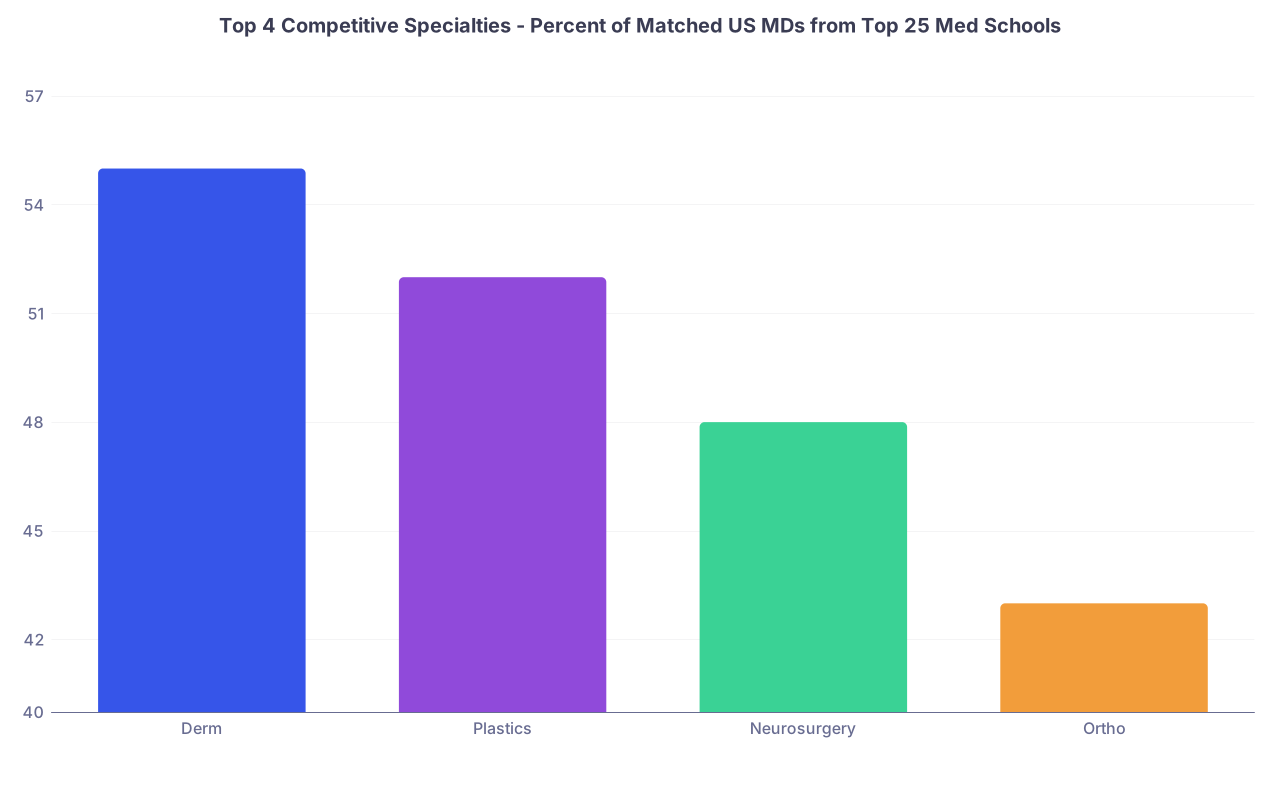
| Category | Value |
|---|---|
| Derm | 55 |
| Plastics | 52 |
| Neurosurgery | 48 |
| Ortho | 43 |
Translation: almost half of matched applicants in these ultra‑competitive fields did not come from “name‑brand” schools. And “top 25” is broader than just Ivy League. That includes places like UCSF, Michigan, Mayo, Vanderbilt, Pitt, etc.
The loudest people saying “You must go Ivy or you’re dead for derm” tend to be:
- Pre‑med forums
- Random M1s who have never seen a rank list
- Faculty at elite places who only see their own bubble and assume it’s the universe
Program directors? They talk about something different when you actually listen to them.

What Program Directors Actually Care About
Every few years, the NRMP asks program directors what they really use to filter and rank applicants. People love to quote this survey when it agrees with their bias, and ignore it the rest of the time.
For competitive specialties, the same pattern keeps showing up:
- Standardized exam performance (Step 2 CK now, Step 1 when it was scored)
- Class rank / AOA / honors in core clerkships
- Quality and specificity of letters from people they trust
- Evidence you actually care about the field (home rotation performance, sub‑Is, research, away rotations)
“Reputation of medical school” is on the list. But it’s rarely #1. Often not top 3.
Here’s a simplified view based on recurring NRMP Program Director Survey patterns for highly competitive fields:
| Factor | Typical Importance Rank |
|---|---|
| Step 2 CK / exam performance | 1–2 |
| Clinical grades / honors / AOA | 1–3 |
| Strong specialty-specific letters | 2–4 |
| Research in the field | 3–6 |
| Away rotation performance | 3–6 |
| Medical school reputation | 5–9 |
Does a big-name school help? Of course. Does it override mediocre clerkship performance, lukewarm letters, and no real ties to the specialty? No. I’ve watched that crash and burn more than once.
I once sat in on an ortho rank meeting where someone literally said: “Yeah he’s from [top 5 med school], but his letters are soft and nobody will stick their neck out. Hard pass.” The school name bought him 30 extra seconds of discussion. That’s it.
Where Prestige Actually Helps (and Where It Doesn’t)
Let’s be honest: saying school prestige “doesn’t matter” is as wrong as saying “it’s everything.”
Prestige helps in several specific ways:
Automatic credibility. A 265 Step 2 from Harvard plus AOA looks “expected”. That same 265 from a newer, less known MD or DO school often triggers more curiosity and respect (“This kid crushed it.”). But the big-name kid still gets an easier first read.
Built-in network. At many Ivy/top‑10 schools, there’s an attending in your desired specialty who trained at nearly every top program. That means easy phone calls, warm intros, and letters that carry instant weight.
Research infrastructure. More NIH grants, more labs, more ongoing trials, and more ways to slap your name on a few derm/plastics/neurosurg papers before graduation.
Home presence in niche fields. If your school does not even have a plastics or derm department, you’re starting a step behind. A lot of prestigious schools simply have every subspecialty represented and publishing.
But here’s what prestige does not reliably do:
- It doesn’t magically fix mediocre clinical performance.
- It doesn’t erase “meh” letters that damn you with faint praise.
- It doesn’t substitute for face time during aways.
Plenty of extremely strong applicants from “mid‑tier” schools match derm, ortho, ENT, neurosurgery every single year because they understood this and played the actual game being scored.
The Hidden Killer: “No Home Program” vs “Non-Ivy”
People obsess over “not Ivy” and ignore a far more lethal disadvantage: no home department in the specialty.
This one really matters.
If your med school doesn’t have, say, dermatology or neurosurgery:
- You have no built-in mentors in the field.
- You can’t do early shadowing or research easily.
- You can’t get a true “this student is the best we’ve seen in years” letter from a known name.
- You must rely heavily on aways, which compresses all your first impressions into 4 short (and stressful) weeks in a new system.
Compare that to a non‑Ivy but strong state school with a robust home program—say, Iowa for ENT, Utah for ortho, or UAB for neurosurgery. I’d rather start there than at a famous school without a department in my specialty of interest.
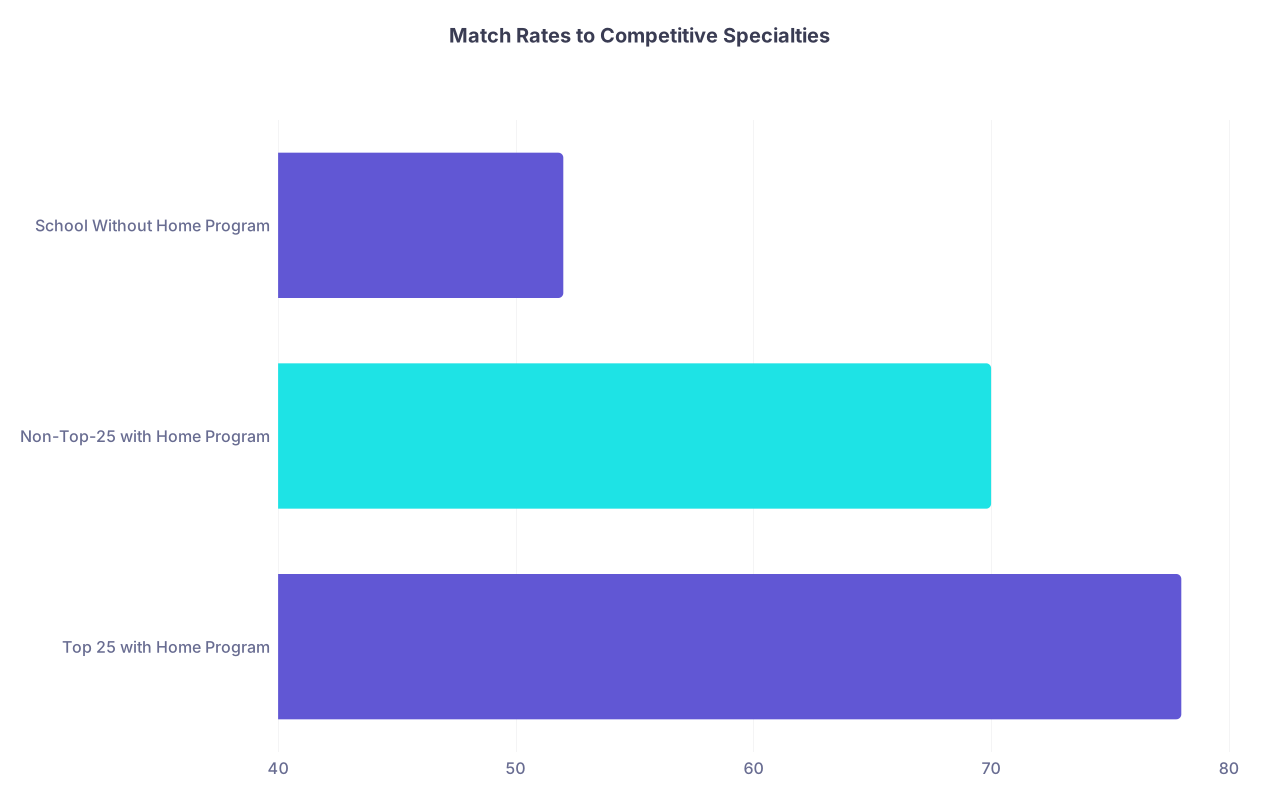
| Category | Value |
|---|---|
| Top 25 with Home Program | 78 |
| Non-Top-25 with Home Program | 70 |
| School Without Home Program | 52 |
Are these rough, aggregated estimates? Yes. But they reflect the real pattern: having a solid home program beats having a shiny crest on your white coat.
US MD vs DO vs IMG: The Real Line in the Sand
Here’s the part people do not like to hear: the real prestige cliff is not “Ivy vs non‑Ivy.” It’s more often:
- US MD vs DO
- US grad vs international (IMG)
For the most competitive specialties, that’s where the steep drop-off appears. You can find DOs and IMGs in ortho, derm, ENT, neurosurg, plastics. But the percentage is brutally small in many programs, especially at academic powerhouses.
That’s not meritocratic. It’s just what the data shows.
So if you’re a pre‑med obsessing over “Harvard vs strong state MD” because you love derm? Fine, agonize if you want. But if your real choice is “US MD mid‑tier vs offshore Caribbean,” the correct answer is not subtle. Take the US MD. Every time.
Because once you’re in the US MD bucket, what you do over four years matters more than the logo on your student ID for simply entering the specialty.

How Non-Ivy Students Actually Break Into Competitive Fields
Let me walk through what successful non‑Ivy applicants in hyper‑competitive specialties tend to have in common. Not the fantasy. The pattern that shows up over and over:
They pick a lane early enough. By the beginning of M3 at the latest, often M2. Not because you must marry a specialty at 22, but because these fields punish late interest. If you decide on derm in October of M4 and have zero research, zero tailored letters, and no aways lined up—you’ve functionally self‑selected out.
They leverage their school’s strengths instead of coveting someone else’s. At a non‑elite midwestern school with a strong ortho department, I watched students match at Mayo and HSS because they basically moved into that ortho department: pre‑rounding with senior residents as M2s, scrubbing in early, picking up simple QI projects and case reports before formal research.
They get real letters. Not generic, committee‑edited fluff. Letters that actually say things like:
“Of the over 200 students I’ve worked with in my 15 years in academic neurosurgery, she ranks comfortably in the top 5.”
Program directors read that and stop scanning. They pay attention. And that has nothing to do with Ivy vs not. It has everything to do with someone seeing you over time and being willing to stick their reputation to yours.
They treat Step 2 CK like a weapon, not a hurdle. Top‑tier scores don’t guarantee anything, but in fields with limited data points (short rotations, brief aways), a big number gets you past filters and into interview rooms where your personality and letters can actually work for you.
They use aways strategically. Non‑Ivy students who match big-name programs rarely carpet‑bomb 6 away rotations. They pick 2–3 places where they have some vector of connection: alumni there, PI collaboration, geographic ties. Then they perform like residents during those four weeks. Show up insanely prepared. Make interns’ lives easier. Volunteer for the unpleasant work. Get noticed.
None of that requires an Ivy.
The One Place Ivy Helps More: Elite Academic Programs
Here’s where I’ll push back on the contrarianism a bit: if your dream is not just derm or neurosurg, but derm at UCSF, neurosurgery at Mass General, plastics at Stanford—yes, the med school name starts to matter more.
Those programs are flooded with applicants for 2–5 PGY-1 spots. They’ve got:
- Ivy + top‑10 med students
- MD/PhDs
- People with 20+ publications, often in that department
- Applicants who spent a research year in their lab and already know half the faculty
At that level of selection, prestige becomes a crude but convenient filter:
- Faculty know the curriculum rigor at Hopkins or Penn or Columbia.
- They trained at those places and trust their grading standards.
- They’ve worked for years with a pipeline of strong students from those same schools.
So do you “need” an Ivy for those exact slots? Not technically. But it undeniably tilts the odds.
Still—this is a tiny subset of all programs. If you widen your acceptable list of residencies beyond the top 10 marquee names, suddenly the Ivy requirement evaporates. Strong applicants from solid regional schools quietly fill those spots every year.
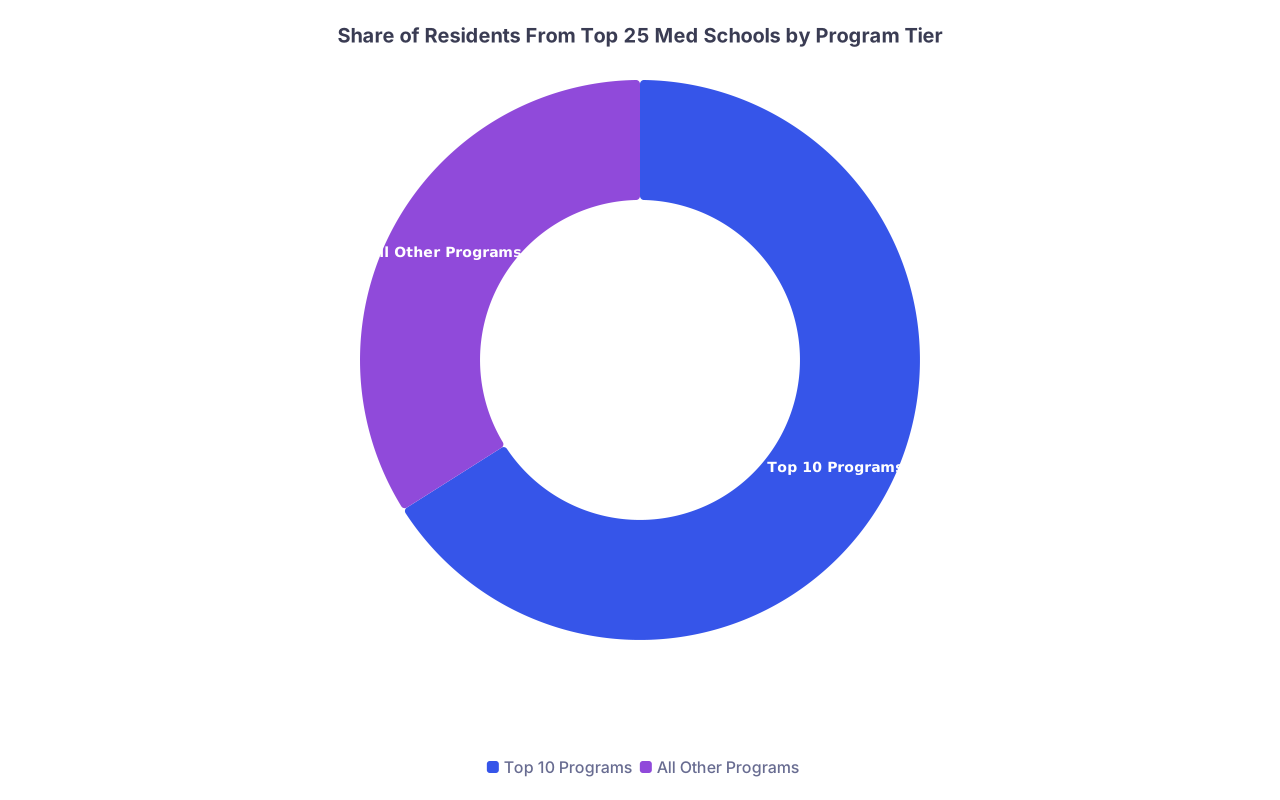
| Category | Value |
|---|---|
| Top 10 Programs | 68 |
| All Other Programs | 35 |
That’s the part nobody tells you: prestige is heavily concentrated at the very top of the pyramid. Below that, the field opens dramatically.
The Pre‑Med Panic vs Realistic Strategy
The Ivy obsession is mostly a pre‑med disease. By the time people are deep into clerkships, the conversation sounds very different.
M4s gunning for ortho talk about:
- “I need one more strong letter and a home rotation eval that doesn’t say I’m quiet.”
- “I’ve got to bump up my Step 2 practice scores 10 points.”
- “I should probably do an away at a place that actually has midwestern ties because my whole application screams Midwest.”
Nobody serious is still saying, “Man, if only I had gone to Yale, this would be easy.”
They’ve seen too many counterexamples:
- The DO who matched integrated plastics because his portfolio was absurd: stellar scores, 15+ plastics pubs, and he functioned as a sub-I on away.
- The non‑Ivy US MD who matched neurosurgery at a top academic center because he’d spent three years in their lab and was basically already on their team.
- The Ivy grad who went unmatched in derm because they were late, under‑researched, and had generic letters.

So, Do You Really Need Ivy?
No.
Here’s the blunt version:
If your main goal is:
“I want to match into a top competitive field—derm, ortho, ENT, neurosurg, plastics, IR, etc.”—
then a solid US MD school with a home program in that field + strong performance is far more important than “Ivy vs not.”
If your hyper‑specific dream is:
“I want to do dermatology at UCSF or plastic surgery at Harvard and then be a funded basic-science PI,”
then yes, an Ivy/top‑10 background, research powerhouse, and network will make that path smoother. Not mandatory, but a noticeable edge.
The lazy narrative is: “No Ivy, no chance.”
The accurate one is: “No performance, no chance. Ivy or not.”
Strip it down to this
- Exam scores, clinical performance, and letters outrun school brand for simply entering competitive specialties.
- A strong home department and real mentorship beat an Ivy label without those things.
- Ivy matters most only at the uppermost tier of academic programs; for the majority of excellent residencies, it’s a nice extra, not a gate.
That’s what the data—and the actual match lists—keep showing, year after year.