
The belief that class rank decides everything in competitive specialties is lazy, comforting — and wrong.
It does matter. In some situations, it matters a lot. But the reality is messier, more program-specific, and much less deterministic than the horror stories you hear from classmates whispering about “top 10% or you’re dead for derm.”
Let’s pull this out of the rumor mill and into the data.
What Programs Actually See: Class Rank Is a Proxy, Not a Verdict
First, understand what “class rank” really is from a program director’s point of view: a crude signal of how you performed relative to your peers, filtered through whatever grading system your school uses.
There are three big problems with treating rank as destiny:
- Many schools are pass/fail pre-clinical and even “tiered pass” in clinicals.
- Rank is often hidden or heavily normalized in the MSPE (Dean’s Letter).
- Program directors know grading systems are wildly inconsistent.
The NRMP’s “Program Director Survey” is the best reality check you’ve got. It asks program directors what they actually use when deciding whom to interview and how they rank applicants.
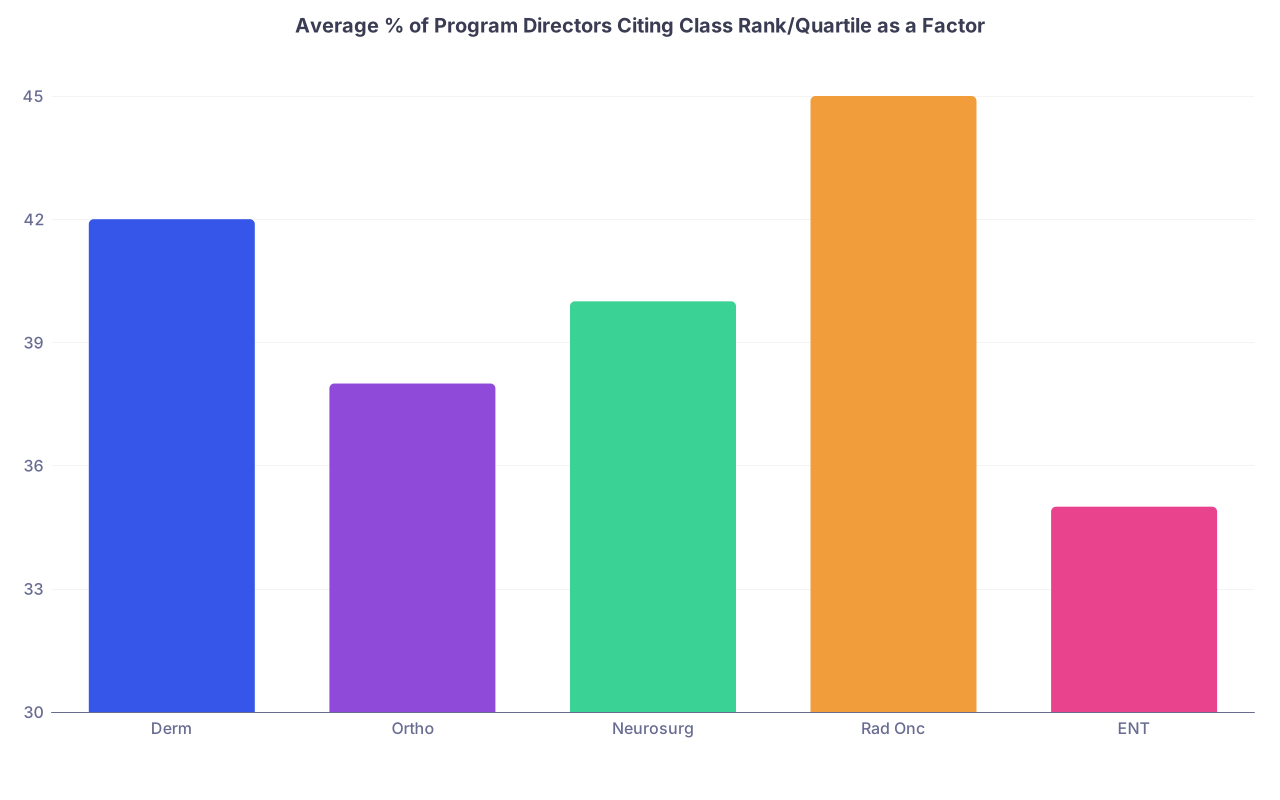
Short version: “Class rank / quartile” is not at the top of the list for most specialties.
| Category | Value |
|---|---|
| Derm | 42 |
| Ortho | 38 |
| Neurosurg | 40 |
| Rad Onc | 45 |
| ENT | 35 |
Even in these highly competitive fields, only about one‑third to one‑half of programs say they “consider” class rank. That’s a long way from “decides everything.”
And “consider” is vague. For many programs, rank is a screening tool or a soft tie‑breaker, not the primary decision driver.
I’ve seen it in real selection meetings:
– Someone reads the MSPE summary: “Top third of the class.”
– One faculty member nods. Another shrugs.
– Then the conversation moves immediately to: “How were they on our rotation?” “Strong letters?” “Any red flags?”
Rank is there. It’s not running the show.
The Myth Factory: Where “Rank = Destiny” Comes From
The rank obsession comes from three places.
1. Survivorship bias
You hear: “Everyone who matched plastics here was top 10%.”
What you don’t hear: the dozen people across the country who were middle-third but had:
- Killer home rotation performance
- A mentor making phone calls
- A first-author paper in that field
The sample your classmates see is tiny and biased toward your own school and region.
2. Misreading correlation as causation
Of course the average student who matches derm has good grades. That doesn’t mean “good grades” are the only path, or that “worse grades” automatically kill your shot.
Programs want residents who can handle complex content and high responsibility. High rank correlates with that. But so do other things: board scores, performance on sub‑Is, letters, research productivity, professionalism.
Class rank is one of several proxies, not an oracle.
3. Program reputation games
A few big‑name academic programs do lean hard on rank and academic honors. That spills out at conferences and in chatter from residents:
“We mostly interview AOA/top 10%.”
What they mean is:
“We get flooded with hundreds of very strong apps. We need ways to thin the pile. Rank is one of the axes.”
That’s not the same as: “If you’re not top 10%, you cannot match this specialty anywhere.”
What Competitive Programs Actually Care About
Let’s stop hand‑waving and look at competing signals.
Here are the things that repeatedly land near the top of NRMP Program Director Survey lists for competitive specialties:
- USMLE/COMLEX scores (especially Step 2 now)
- Letters of recommendation in the specialty
- Grades in core clinical rotations
- Audition/elective performance and comments
- Perceived “fit” and professionalism from interviews
- Research, especially in that specialty (for academic programs)
Class rank or clerkship quartile usually trails these.
To make this concrete, think of a typical derm or ortho program director reviewing three applicants:
- Applicant A: Top 10%, strong Step 2, generic letters, no home rotation at that program, minimal research.
- Applicant B: Middle third, solid Step 2, did a phenomenal away rotation at that program, letter from a known attending saying “best student I’ve worked with in 5 years.”
- Applicant C: Top third, strong Step 2, solid research, but awkward on interview day and poor team feedback from sub‑I.
I’ve watched committees put B above A and C more often than you’d expect. Because the lived experience of working with someone for 4 weeks and reading a detailed, specific letter often trumps a small difference in class percentile.
Program directors aren’t stupid. They care about what predicts how much trouble you’re going to be as an intern. Rank is a weak predictor of that.
Where Class Rank Does Hit Hard
Now for the nuance. There are situations where rank really can bite you.
Ultra‑selective academic programs
If you’re gunning for:
- MGH/Brigham derm
- HSS ortho
- UCSF neurosurgery
…then yes, your class rank and academic honors start to matter more.
Those programs get buried in applicants who all:
- Crushed Step 2
- Did research
- Have good letters
They lean on academic distinctions like AOA, Gold Humanism, and MSPE language (“outstanding,” “excellent,” “very good”) just to divide the pile into tiers.
| Signal | Relative Weight |
|---|---|
| Step 2 score | Very High |
| Specialty letters | Very High |
| Home/away rotation evals | Very High |
| Research productivity | High |
| Class rank / AOA | Moderate–High |
Notice: even here, rank/AOA isn’t top of the list. It’s a multiplier on an already strong application, not a substitute for one.
Schools with heavily tiered grading
If your school still uses:
- Honors/High Pass/Pass/Fail in almost all clerkships
- Explicit ranking or quartiles printed in the MSPE
…then yes, a low quartile or mostly “Pass” in core rotations will hurt. Not because “rank” is magic, but because it reflects exactly what programs do care about: how you performed on the wards.
But even in these systems, it’s not as simple as “bottom half = no derm.” I’ve seen:
- A student with mostly High Pass, one Pass in Medicine, match EM at a strong academic place because their SLOEs and shift comments screamed “top resident material.”
- A neurosurgery resident who was not AOA, mid‑class, but had 4+ neurosurg publications and ridiculous work ethic witnessed on away rotations.
Rank wasn’t optimal. Other parts of the file more than compensated.
Where Class Rank Matters Much Less Than People Think
Let me be blunt: for many competitive specialties, once you’re above a certain threshold, class rank fades into background noise.
1. Community and many mid‑tier academic programs
Program directors there care about:
- Can you function safely on day one?
- Are you going to show up, work hard, and not be a drama generator?
- Are you teachable?
They look at:
- Step 2/COMLEX 2 as the more standardized signal
- Narrative comments in MSPE and letters
- How you behaved on an away rotation
If your record shows steady improvement, decent scores, and strong clinical comments, a middle‑of-the-pack rank rarely kills you.
2. Schools with pass/fail or “everyone is excellent” inflation
Many newer or more student‑friendly schools have:
- Pass/fail preclinical
- Mostly Pass/High Pass in clerkships
- MSPE language that compresses everyone into “excellent” buckets
Guess what happens then? Class rank becomes muddy, inconsistent, and less trusted.
I’ve been in meetings where someone says, “They’re in the second quartile,” and another attending immediately replies, “At that school, that’s still strong; they don’t give out top quartile easily.”
Rank isn’t standardized. Everyone knows it.
The Real Gatekeepers: Step 2, Rotations, and Letters
If you want to obsess over something, obsess over the things that repeatedly show up as top selection factors.
Step 2 (or COMLEX 2)
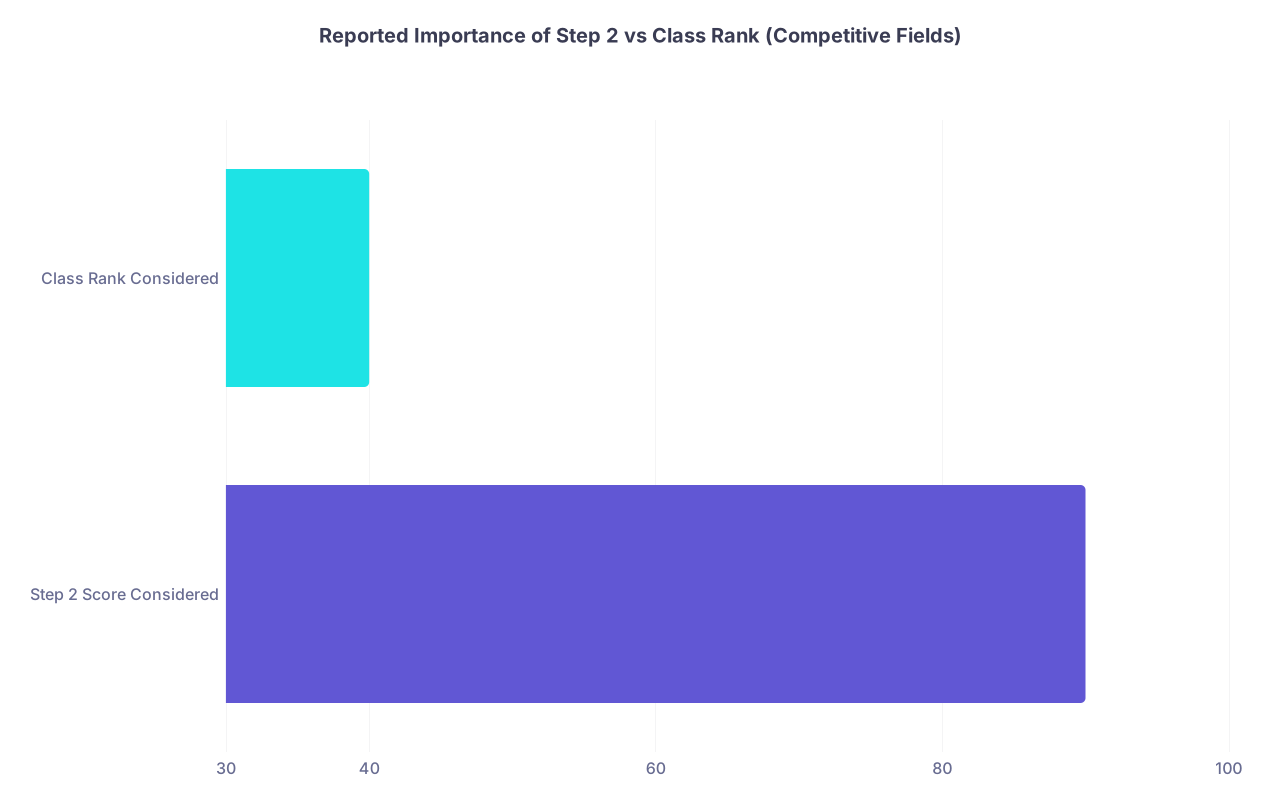
With Step 1 pass/fail, Step 2 has become the new blunt instrument.
| Category | Value |
|---|---|
| Step 2 Score Considered | 90 |
| Class Rank Considered | 40 |
Rough order of operations for many programs:
- Below a score cutoff? Auto‑screen out.
- Within their comfort range? Move on to letters and clinical performance.
Your Step 2 and clinical comments often matter more than the difference between top and middle third of your class.
Clinical rotations and sub‑internships
This is where competitive specialties are won or lost.
I’ve watched rank‑average students go from “probably not getting an interview” to “top of our list” after a phenomenal home or away rotation. Why?
Because the attending can say:
- “They pre‑rounded on 20 patients without being asked.”
- “Handled cross‑cover calls calmly.”
- “Integrated with the team like a junior resident.”
No line on your transcript beats that.
Letters of recommendation
Not all letters are equal. A bland “hard‑working, team player” from a department chair you barely know is worthless compared to a detailed letter from the PD or a respected faculty member who clearly knows you.
The content of the letter — “one of the top 5 students I have worked with in the last 10 years,” “already functioning at intern level” — can outweigh whether your Dean’s letter quietly says “top third” instead of “top 10%.”
How to Compete in a Competitive Specialty Without a Top Rank
So what do you do if your class rank is mediocre but your goal specialty is aggressive?
Here is the non‑fluffy, actually‑used playbook I’ve seen work.
1. Fix what you can: board scores and core clerkships
You probably can’t change old pre‑clinical grades. You can:
- Crush Step 2 — study like your specialty depends on it, because it might.
- Excel in Medicine, Surgery, and the core rotation most relevant to your field.
One or two weaker early clerkships won’t sink you if the trend is up and your later evals shine.
2. Dominate your specialty rotations
On your home and away rotations:
- Be presentable, early, and prepared. Every day.
- Volunteer for procedures and scut without being needy.
- Learn names, be kind to nurses and staff, and don’t complain.
You’re not just collecting an evaluation. You’re auditioning for a letter and a spot.
3. Get real mentorship, not vague “support”
You need someone in the field who will:
- Look at your whole file and say, “Realistic targets for you: these tiers of programs.”
- Make calls or send emails when it counts.
- Be honest if you’re not on track and tell you what to fix.
The difference between having a specialty‑insider mentor and not having one is massive. I’ve seen mid‑rank students get interviews at places that would never have glanced at their ERAS without that nudge.
4. Be strategic with your program list
If your rank is not stellar, you don’t get to be precious.
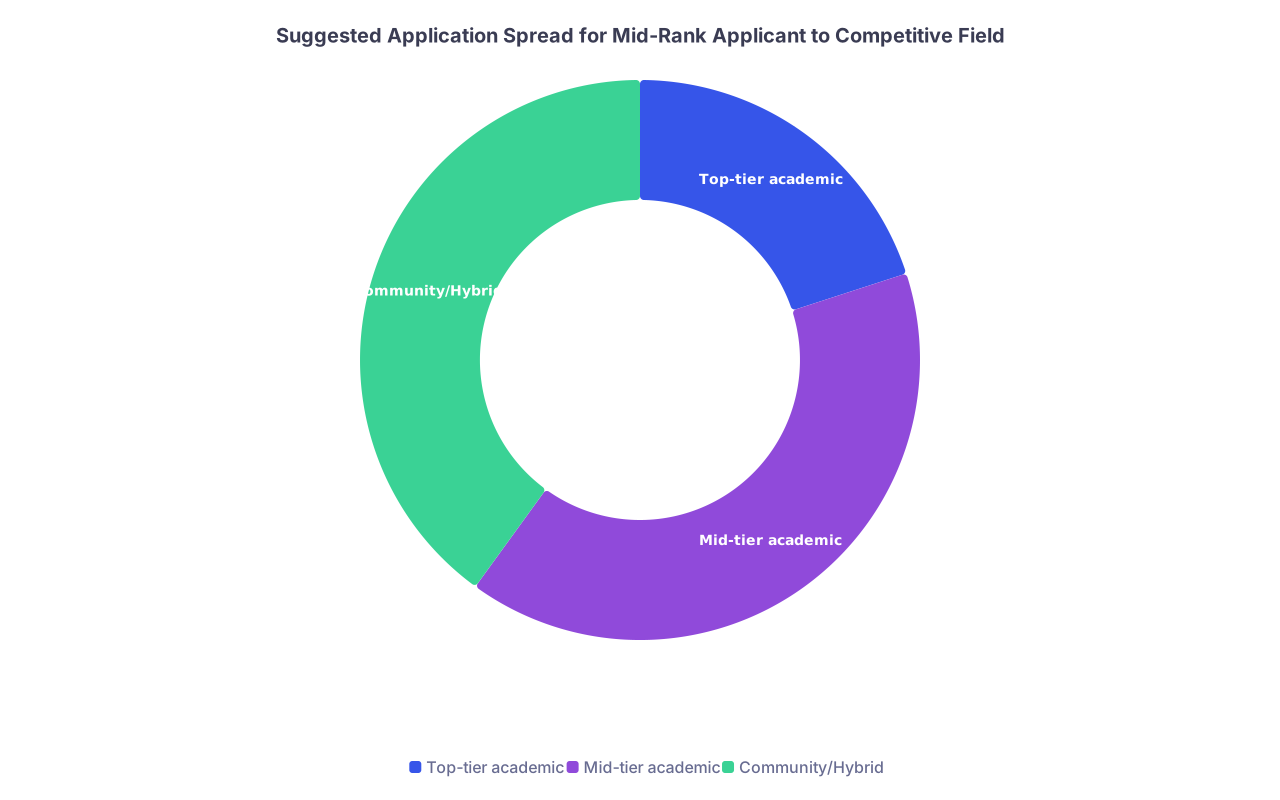
- Apply broadly: mix of academic, community, and different regions.
- Include solid “safety” options — real ones, not just “less famous big city programs.”
| Category | Value |
|---|---|
| Top-tier academic | 20 |
| Mid-tier academic | 40 |
| Community/Hybrid | 40 |
A lot of people with decent but not perfect records simply don’t match because their list was delusional, not because their rank was bad.
When Rank Isn’t Your Main Problem
One more uncomfortable truth: many students blame class rank because it’s quantifiable and feels external.
But when I look at applications that struggled for competitive specialties, the killers are more often:
- Weak or generic letters
- Mediocre or inconsistent clinical comments
- No clear commitment to the specialty (late switch, minimal exposure)
- Awkward or unprofessional interviews
- Spotty Step 2 or COMLEX scores
Rank might be below average in those applicants, but it’s usually part of a broader pattern, not the sole culprit.
Blaming rank becomes a way to avoid looking at harder, more fixable issues.
The Bottom Line
Three key truths, without the superstition:
Class rank matters, but it’s not destiny. It’s one signal among many, and for most competitive specialties, it sits behind Step 2, clinical performance, and specialty letters in actual decision‑making.
Your behavior on rotations and the strength of your letters can absolutely override a non‑elite rank. A middle‑third student with outstanding sub‑I performance and glowing letters is more attractive than a top‑10% student who is forgettable on the wards.
Strategy and mentorship beat fatalism. If you tailor your program list, get real specialty mentorship, and maximize the levers you can still move (Step 2, rotations, letters), class rank becomes a hurdle — not a wall.
Stop treating your percentile as a verdict. Programs are not looking for “top 10%.” They’re looking for people they can trust at 3 a.m. If you can prove you’re that person, your rank is just one line on a long application, not the headline.