The way program directors use “interest in our city” to filter applicants is more ruthless than anyone tells you publicly.
I’ve watched PDs in competitive specialties take a stack of 3,000+ ERAS applications and, before looking at scores, research, or letters, ask one question out loud: “Why would this person ever come here?” If they cannot answer that in 5 seconds from your file, you’re done. I have literally seen applicants with 270+ Step scores and multiple first-author pubs get soft-passed because they “made no geographic sense.”
You think it’s about how much they like you. It’s not. It’s about how likely you are to rank them and actually come if they spend an interview spot on you.
Let me walk you through how this really works behind closed doors.
Why “Interest in Our City” Became a Weaponized Filter
This started as a soft factor. It’s now a survival mechanism for PDs in competitive fields.
Competitive specialties—derm, ortho, ortho trauma, ENT, plastics, rad onc (yes, still at strong centers), IR—are drowning in applications. A solid mid-tier ortho program easily sees 700–1000 apps. Derm and plastics at name-brand institutions often pass 1,000. Interview spots? Maybe 50–80, and most programs try to interview fewer than they used to, because Zoom interviews revealed just how many people are “window shopping.”
So PDs quietly added a question to their mental triage: What is the probability this person would actually come here?
They don’t say this at info sessions. What they say is “We’re looking for fit and genuine interest in our program and community.” Translation in PD-speak: “We hate getting burned by people who were never going to rank us high.”
And interest in their city is the easiest proxy.
They can’t read your mind. They read:
- Your med school location
- Your home of record / permanent address
- Your partner’s city (if mentioned)
- Rotations / away rotations
- Where your LORs come from
- Any “ties to the area” references
- Your geographical preference flags
- Your PS and experiences for anything that screams: “I belong here” or “I will never live here.”
They make incredibly fast, sometimes unfair, calls off that.
The Unspoken Tiers of Geographic “Interest”
Let me be direct: programs don’t treat all geographic signals equally. There’s a hierarchy. They don’t admit this. I’ve heard it in selection meetings.
| Signal Type | How PDs Usually Rate It |
|---|---|
| Went to med school in same city | Very strong |
| Grew up in region + mentions it | Strong |
| Completed away rotation there | Strong |
| Partner/family clearly local | Moderate–Strong |
| Generic “I love your city” line | Weak |
| No mention, no ties | Very weak / none |
Here’s how I’ve seen the hierarchy actually play out in competitive specialties:
Same city / same institution
You’re gold. A derm applicant at UCSF doing residency at UCSF. An ortho med student at UT Southwestern applying ortho there. PDs see you as high-yield: you know the system, know the city, probably happy there. I’ve heard, “If they’re strong on paper, they get an interview, period. Why risk losing someone who already lives here?”Same region, real roots
Grew up two hours away. Undergrad nearby. Parents in-state. This matters way more than you think, especially at non-coastal or “less glamorous” cities. A plastics PD in the Midwest once said, “If I don’t see some regional tie, I assume we’re a backup.”Did an away rotation there
In competitive specialties, this is the strongest signal you control. It screams: “I chose to spend a month with you.” If the rotation eval is good and faculty know your face, it’s a giant advantage. I’ve watched entire discussion threads go: “Who are we interviewing from School X?” “He rotated here.” “Okay, he’s in.”Partner / spouse in city or region
This is underused and, when done right, very powerful. If you’re clear and specific (not vague “my significant other is in the area”), PDs absolutely use this as a reason to believe you’ll rank them high. They’re brutally pragmatic: dual-career couples are stickier.Generic “I love your city” platitudes
They do not care you “fell in love with the culture and diversity of Chicago” if you have no concrete ties and are applying to 50 other programs in 12 states. PDs have read thousands of these lines. It’s background noise. Sometimes it actually hurts you because it feels fake.Radio silence on geography
In a competitive specialty, with thousands of applications, no signal is often interpreted as “no interest beyond name on a list.” If you’re from California, trained in California, all rotations in California, and you apply to a Detroit ortho program with no explanation, they will assume you’re not coming. I’ve seen it said outright.
How PDs Actually Use This in Filtering Meetings
Here’s the part nobody tells you: geography doesn’t just “come up” later. It’s baked into the first-pass discussion.
Picture a selection meeting in a competitive field. You’ve got an application spreadsheet projected on the screen. Columns: Step scores, AOA, class rank, school, research, geographic ties flag, rotation flag, etc.
I’ve sat in these rooms. The script goes like this:
“Next applicant. 256, top third, from UCSF. Research decent. Any ties to here?”
Pause. Someone scrolls.
“Did away here?”
“No.”
“Family?”
“None listed.”
“Significant other?”
“Not mentioned.”
“Where’s he from originally?”
“Bay Area.”
“Ok, so no ties. Put him in the ‘maybe’ pile for now. We’ll see if we have room.”
Now compare:
“Next applicant. 245, mid-tier Step, top half of class. From a midwestern school. Away rotation here. Strong eval from Dr. X. Grew up 45 minutes away. Parents live here, mentioned in PS.”
Response: “Interview. 100%.”
The first applicant is “better” on paper. The second is far more likely to come. In competitive specialties, PDs worry less about squeezing out one extra point of average Step score and more about yield. They don’t want to waste slots on tourists.
This is even more true at “destination” cities—San Diego, Denver, Seattle, Boston, any big coastal city. Those PDs are burned constantly by people who interview “for fun” and then rank the branded name programs above them. So they get suspicious.
The City Stereotypes PDs Won’t Admit Publicly
Here’s the ugly, whispered part.
Every program has a city reputation in PD conversations. They’ll never put this on a website, but they talk this way in private.
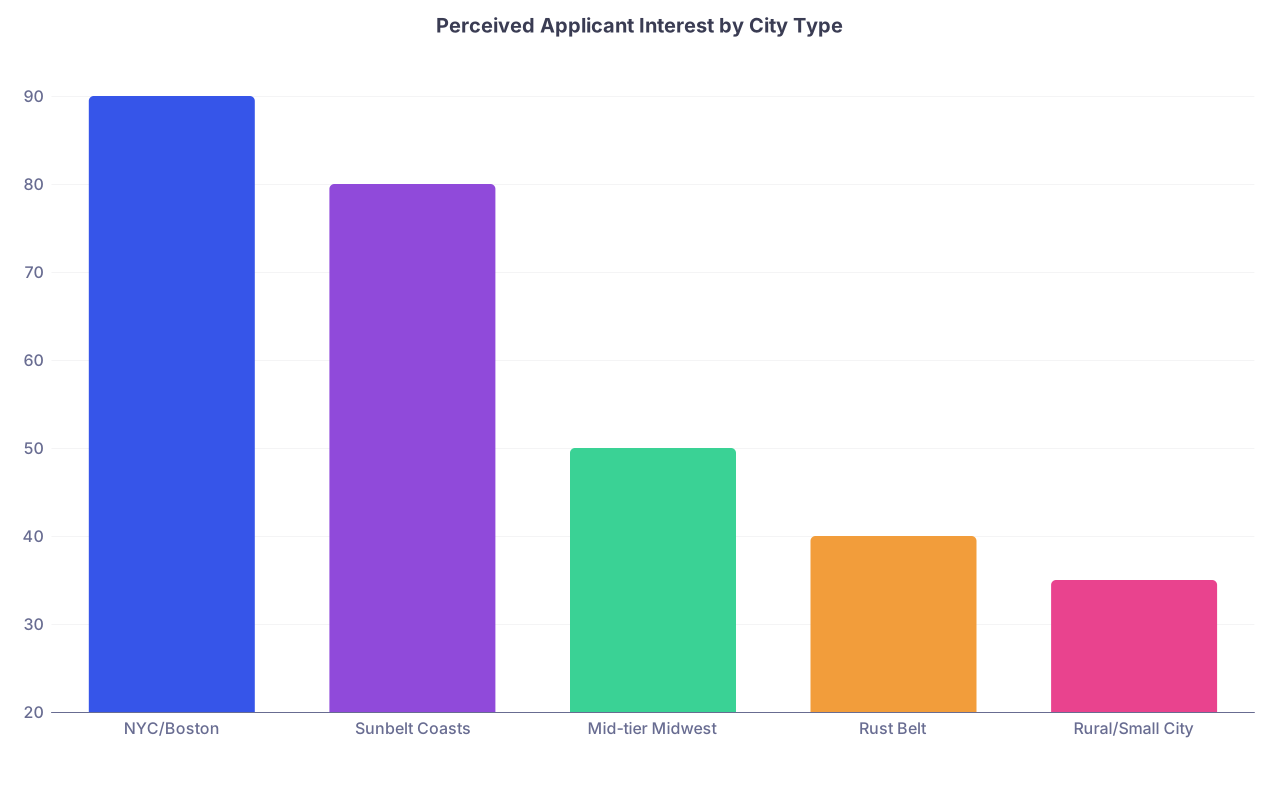
| Category | Value |
|---|---|
| NYC/Boston | 90 |
| Sunbelt Coasts | 80 |
| Mid-tier Midwest | 50 |
| Rust Belt | 40 |
| Rural/Small City | 35 |
I’ve heard exact lines like:
- “Everybody says they love New York. Half of them actually mean it.”
- “We lose West Coast kids every year; they romanticize the East, then go home.”
- “If they’re from LA and have no family ties, why would they move to Minnesota?”
- “We’re a Rust Belt city; if they don’t have ties, they’re using us as backup.”
- “Military background? They’ll tolerate moving anywhere. That helps.”
So PDs mentally code applicants:
“Destination city” risk: If you’re applying to elite programs in very popular cities, they assume lots of people like the idea more than the reality. They pay attention to whether you’ve actually lived in similar places before.
“Hard sell city” filtering: Programs in cities with bad winters, weaker reputation, or economic decline are hyper-sensitive to ties. No ties often means no interview, unless your application is ridiculous.
Coasts vs middle: West Coast natives without clear reasons to leave are suspected flight risks. Same for deep Northeast folks applying South with no ties.
None of that is written down in any rubric. But it absolutely influences “gut feel,” and in tight calls that’s enough.
Virtual Interviews Made This 10x More Important
Zoom interviews changed everything. A decade ago, you had to buy a plane ticket, fly to the city, maybe stay with a resident host. That alone screened out the “meh, I guess I’ll apply” crowd from faraway regions.
Now? You can shotgun-apply to 60 ortho programs and hop on 15 Zoom interviews from your apartment. No sunk cost. No friction.
Programs felt the pain:
- More “tourist” interviews
- More couples using them as pure backup
- More people canceling interviews late when they got a more “prestigious” invite
- Lower ranking yield in cities perceived as less desirable
So they reacted. Quietly, but decisively.
I’ve heard PDs in competitive fields say bluntly:
“If they don’t have a clear reason to be in this region, we’re probably not bringing them for a virtual. It’s too easy for them to bail.”
That’s where “interest in our city” went from a soft bonus to a hard filter.
Where This Hurts High-Stat Applicants
The tragedy is this: the applicants who get burned hardest by this filter are the ones who thought their numbers were bulletproof.
A few scenarios I’ve seen more than once:
Derm applicant with 270+, Ivy med, no geographic explanation
Applied broadly, including solid but not top-5 programs in smaller cities “just in case.” Those smaller-city derm PDs glanced at the file, saw east coast elite everything, no ties, no explanation, and decided: “We’ll never win that battle.” No interview.Ortho applicant from California applying Midwest without story
Strong Step, good research, no midwest experiences, partner in LA, ERAS says “no specific geographic preference,” PS talks only about “training at a program with broad case volume and national reputation.” Midwest PD: “He wants Midwest as Plan C. Pass unless we have room later.”ENT applicant couples matching with vague notes
One partner anchored to a specific city because of a job. The other vaguely mentions “my partner is in the area” without naming the city explicitly in any document. PDs don’t connect the dots, assume low commitment, you lose interviews you should have gotten.
Everyone told these people: “Your stats will carry you.” They were wrong. Once you’re in the competitive-specialty pool, fit + geography can trump a 10–15 point Step difference.
How to Signal Real Interest Without Sounding Fake
You can’t game this with a single sentence. PDs are too used to BS. You need consistency across your application.
Here’s how insiders know you’re serious about their city or region:
- Your story actually tracks with the geography
Don’t be from Miami, go to med school in Miami, have all family in Miami, and suddenly apply to 20 programs in Buffalo, Detroit, and Minneapolis with no explanation. People notice patterns.
If you truly want out, you need a narrative:
- You went to undergrad in the Midwest
- You did a meaningful rotation there
- You talk about being closer to extended family
- Or you explicitly say you’re looking for a change and give adult reasons (cost of living, type of patient population, etc.)
- You use the personal statement strategically
Not “I love Boston.” That’s trash.
Real signals look like:
- “I grew up in a small town outside Columbus and saw firsthand how limited access to subspecialty care was in the region.”
- “During my away rotation at [Program], I saw how [City]’s diverse population shaped clinical challenges in ways that matched my interests in X.”
- “My partner has an established career in [City], and we’re both committed to building our lives here long term.”
Notice how specific those sound. PDs read that and think: “This person has actually thought about living here.”
- You get local people to vouch for your ties
If you did an away rotation, your letter from that institution carries huge geographic signaling weight. I have seen letters that say:
“[Applicant] expressed a strong desire to train in this region to be near family. I believe they would be an excellent fit for our city and community.”
That sentence, buried in a LOR paragraph, has gotten people bumped up several slots on rank lists.
- You match your ERAS signals to your story
If ERAS offers geographic preference flags (and it increasingly does in certain specialties/years), don’t be careless. If you click “no preference” everywhere, you just told programs you’re a free agent. Sometimes that helps. In many competitive specialties, it hurts at mid-tier or less popular locations.
If you do signal a region, back it up in your narrative: experiences, family ties, rotations, mentors, etc.
How PDs Use “Interest in Our City” During Rank Meetings
This doesn’t end once you have the interview. Geography follows you all the way to the rank list.

| Step | Description |
|---|---|
| Step 1 | Interview Complete |
| Step 2 | Faculty Scores |
| Step 3 | Discuss Applicant |
| Step 4 | Consider High Rank |
| Step 5 | Rank at Score Level |
| Step 6 | Move Down List |
| Step 7 | Any City Ties? |
| Step 8 | Borderline Case? |
Behind closed doors on rank night, I’ve heard exchanges like:
“Fantastic interview. Letters outstanding. Any reason to think we could actually keep them here?”
“Family?”
“None.”
“Partner?”
“None.”
“Other interviews?”
“They mentioned a lot of top coastal programs.”
“Okay, we like them, but we’re not putting them top 5. Drop them to the teens.”
Or the reverse:
“Good but not stellar on paper. Away rotation here. Family 20 minutes away. Very clear about wanting to settle in this city.”
Response: “Bump them up a few spots. If we match them, they’re staying. That matters.”
You’re not just being judged on merit. You’re being judged on stickiness.
And yes, it’s more obvious at less “fancy” cities. But even name-brand places do this when choosing between two almost-equal candidates. The one with a believable city story wins.
A Cold Reality: Some Cities Expect You to Convince Them
There are programs where everyone assumes they’re on your “safety prestige” list.
Places like: strong university hospital in a mid-size, cold, or economically struggling city. Not top-5 name. Great training. Hard sell location.
Those PDs are defensive. They’ve watched wave after wave of applicants come through impressed by their operative volume, say all the right things on interview day… and then disappear when it’s time to rank.
So they evolved a reflex:
- If you are not from their state or neighboring states
- And you have no visible reason to be in that city
- And you don’t explain it clearly in your narrative or interview
They assume you’re just hoarding interviews. That’s why “interest in our city” can either open the door wide or slam it in your face.
Advanced Play: Using Geography as a Strategic Edge
Here’s where you can actually flip this whole thing in your favor.
Instead of treating geography like a random variable, use it like a lever in competitive specialties.
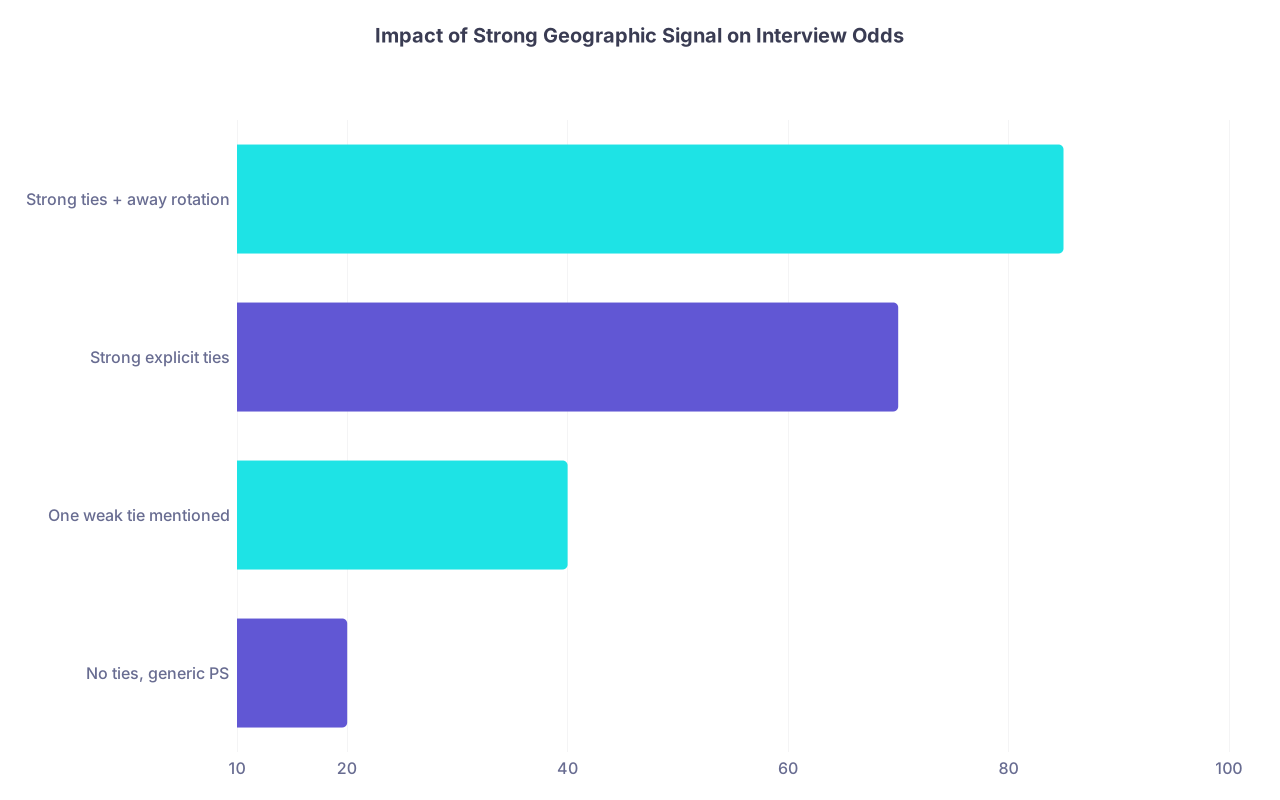
| Category | Value |
|---|---|
| No ties, generic PS | 20 |
| One weak tie mentioned | 40 |
| Strong explicit ties | 70 |
| Strong ties + away rotation | 85 |
If you’re not a 260+ superstar, this matters a lot.
You can:
- Do an away rotation in the city/region you honestly want
- Get a letter that explicitly references your commitment to that region
- Thread that same story through your PS and ERAS experiences
- Mention it genuinely and consistently on interview day
I’ve watched 240–245 Step applicants in derm and ortho snag interviews (and eventually spots) at strong programs because the PDs were convinced they’d come and stay.
While higher-stat, more “impressive” applicants without any clear reason to move there quietly got screened out as low-yield.
That’s the game.
Visualizing When Geography Matters Most
To really hammer this home, here’s how heavily geography tends to be weighted by specialty competitiveness from what I’ve seen:
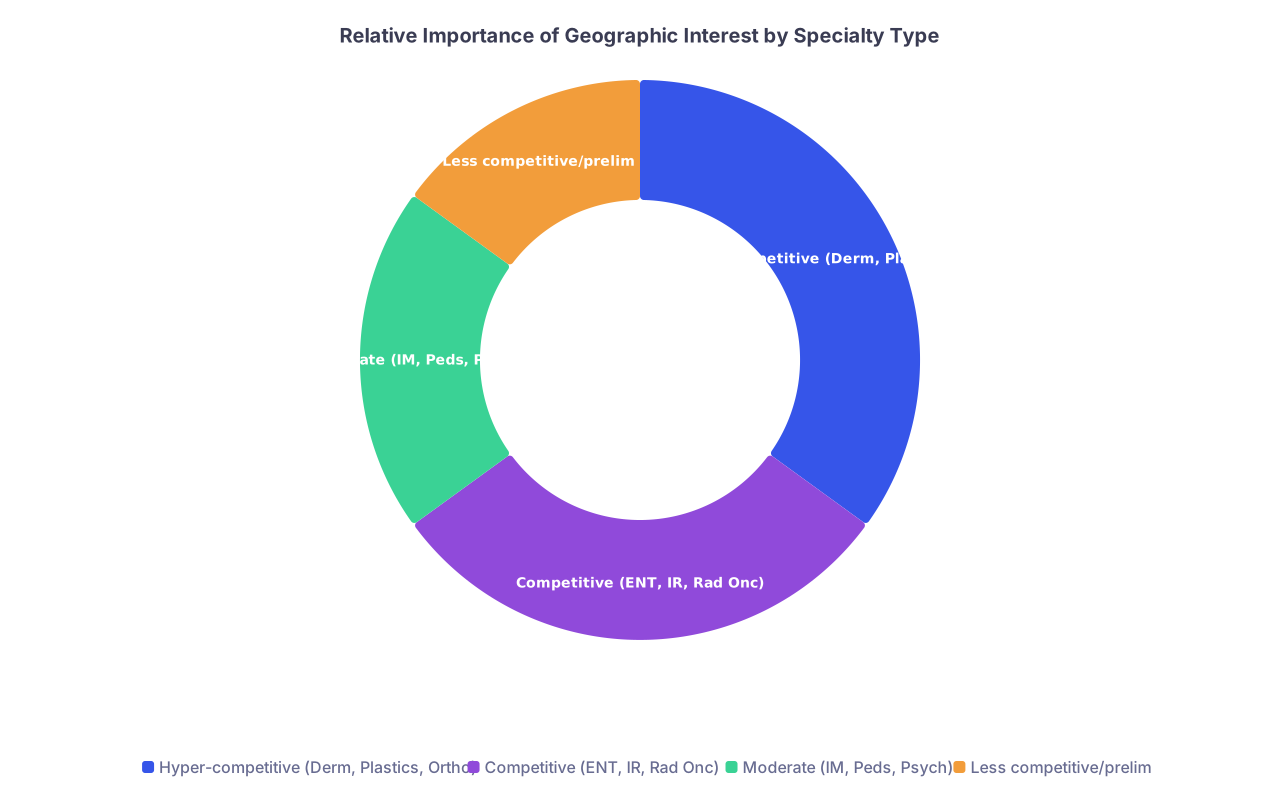
| Category | Value |
|---|---|
| Hyper-competitive (Derm, Plastics, Ortho) | 35 |
| Competitive (ENT, IR, Rad Onc) | 30 |
| Moderate (IM, Peds, Psych) | 20 |
| Less competitive/prelim | 15 |
Hyper-competitive fields use geography as a tie-breaker and filter. Competitive but smaller fields use it to avoid tourists. Even in IM and Peds, community-heavy or less glamorous cities weigh it more than you think.
What You Should Do Next
If you’re serious about a competitive specialty, stop thinking “I’ll just apply broadly and see what happens.” That’s how you get silently filtered by geography.
Do this instead, in order:
- Decide on 1–2 regions you could actually see yourself living in.
- Build at least one away rotation in that region, ideally in a city you’d truly consider.
- Make sure one letter explicitly references your geographic or personal reasons for being there.
- Thread that same city/region rationale into your PS, ERAS, and interview answers—subtly but consistently.
- Don’t scattershot your geography preference signaling; align it with your real story.
You’re not just applying to a specialty. You’re applying to a life in a specific place. PDs know that. They’re reading your file to see whether you do.
With that mindset shift, “interest in our city” stops being a secret landmine and becomes one of the few levers you can still control when everyone else is obsessed with Step scores and h-indices.
You get through this part, you’re ready for the next game: how they really rank you after the interview day charm offensive ends. But that’s a story for another day.