
It’s January of your M3 year. Your classmates are talking about psych and IM prelims, and you’re staring at your Step 2 score report thinking: “Is derm or ENT even on the table for me, or am I delusional?” You don’t want cheerleading. You want someone to tell you the floor. The minimum profile where applying is actually reasonable, not fantasy.
Here’s that answer.
Big Picture: How Hard Are Derm and ENT Right Now?
Let me be blunt: Dermatology and Otolaryngology (ENT) are top-tier competitive. They sit in the same league as plastics, ortho, neurosurgery. Not as brutal as the absolute top 5 programs in these fields, but overall? Very tough.
The key frame you need:
- “Is it possible to match?” and
- “Is it reasonable to build a list where >50% of programs might legit consider me?”
Those are different thresholds. I’m going to talk about the second one.
To keep this organized, I’ll break it down by specialty, then give you a sanity-check decision framework.
Minimum Reasonable Profile for Dermatology
Derm is still one of the most competitive specialties, even after Step 1 went pass/fail. Programs leaned harder into Step 2, research, and school reputation. The minimum bar is not low.
Let’s talk about a realistic minimum profile where applying to derm is reasonable (not guaranteed, but not a lottery ticket).
1. Board Scores: Where’s the Line?
Assuming Step 1 is pass/fail and Step 2 is numeric:
Step 1: Pass on first attempt.
One fail does not completely kill you, but it moves you from “long shot” to “lottery ticket” unless everything else is outstanding (and you have serious mentorship and connections).Step 2 CK – realistic minimum for a reasonable derm application:
- Solid floor: 245–250
- More comfortable range: 250–260+
Below ~245, you’re in heavy uphill battle territory. Does someone with a 235 and insane research still match derm? Yes. But they are the exception and usually at a top school with big-name mentors.
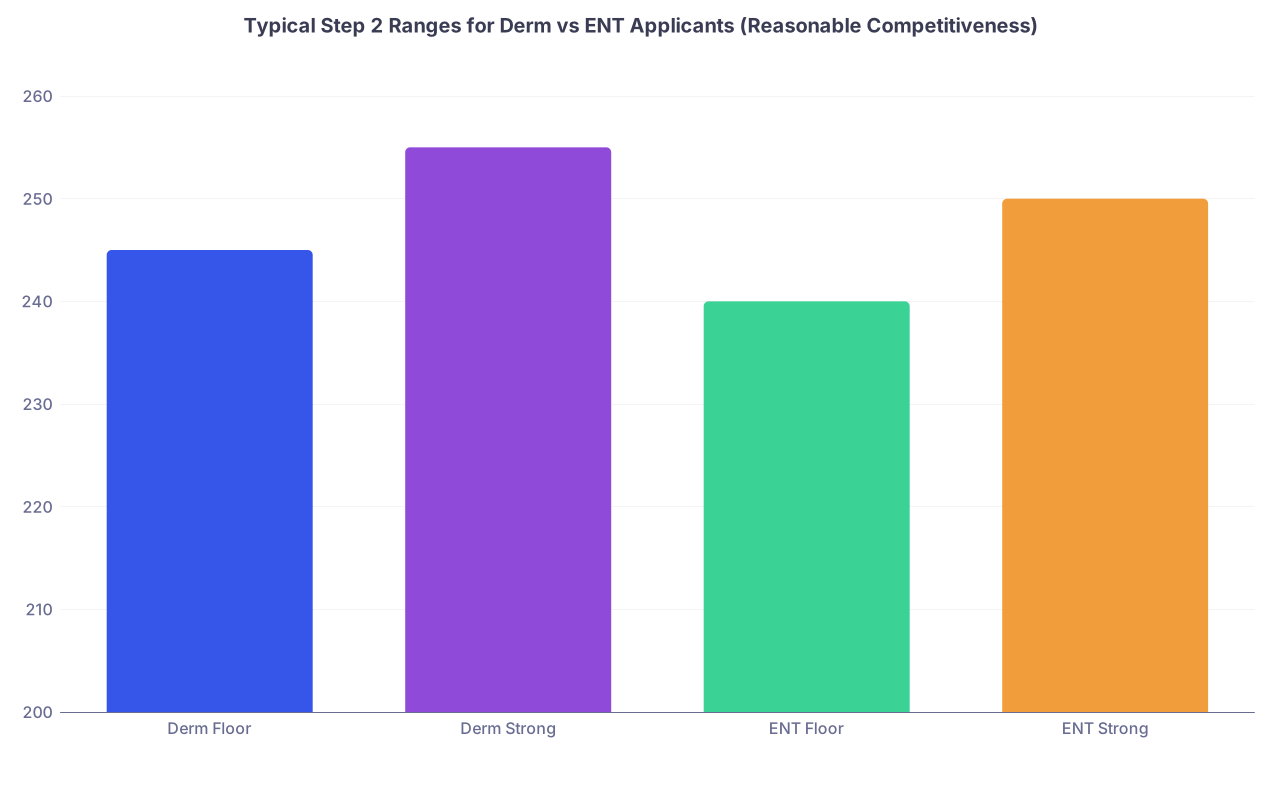
| Category | Value |
|---|---|
| Derm Floor | 245 |
| Derm Strong | 255 |
| ENT Floor | 240 |
| ENT Strong | 250 |
2. Research: This Is Not Optional
Derm is research-heavy. Programs treat research as a proxy for grit, interest in the field, and intellectual horsepower.
For a minimum reasonable derm application:
- Derm-specific or closely related projects: at least 2–3 real projects
- Meaningful outputs (not just “helped with data”):
- 1–2 posters or presentations at local/regional/national meetings
- 1+ publications or at least submitted/accepted manuscripts. Case reports and chart reviews absolutely count if done well.
If you have:
- Zero derm research → you are below minimum unless everything else is god-tier.
- “I did a poster in M1 about psoriasis and that’s it” → technically possible, practically weak.
A lot of successful derm applicants have 5–10+ items on their CV. You do not need that to be “reasonable,” but you need something clearly derm-focused.
3. Clinical Performance: How Strong Do You Need To Be?
Programs look at your transcript harder than most people admit.
Minimum reasonable clinical profile for derm:
Clerkships:
- Mostly Honors/High Pass in core rotations
- Honors in IM and surgery is extremely helpful
- A narrative that doesn’t include “poor reliability,” “needs close supervision,” or similar red flags
Derm rotation performance:
- Strong letters from at least one academic derm program
- Ideally an away rotation at a derm program that knows you and will say you’re in their top tier of students
If your clinical record is mostly Passes with spotty feedback, you need:
- A higher Step 2, and
- Considerably stronger research or institutional support,
to keep derm “reasonable.”
4. Letters and Mentorship
Derm is small. People know each other. Recommendation letters are heavily weighted.
Minimum reasonable setup:
- 1–2 strong letters from dermatologists (ideally academic, ideally known names)
- 1 strong non-derm letter from IM or surgery
- Someone in derm who will actively advocate: email PDs, make calls, help with your list strategy
If your letters are generic (“hardworking, pleasant”), you’re losing ground to applicants with tailored, comparative, advocacy letters (“top 5% of students I’ve worked with in 10 years”).
5. School Type and Context
Reality: where you come from matters.
You can “subtract” a little risk if:
- You’re at a top-20 med school, especially one with a strong derm department
- Your school has a derm residency and you’ve impressed them directly
- You have home-institution derm research and mentoring
You need a stronger academic profile if:
- You’re at a newer DO school or low-profile MD school
- No home derm program
- Limited research infrastructure
I’ve seen people from small DO schools match derm. But they typically had:
- Very high Step 2 (250+)
- Heavy derm research, usually via a research year
- Strong away rotations and networking
Minimum Reasonable Profile for ENT (Otolaryngology)
Now ENT. Still very competitive, but a bit “wider entry door” than derm because of more emphasis on surgical fit, letters, and performance than pure research volume.
1. Board Scores: ENT Floor
Again, Step 1 pass on first attempt is the expectation.
Step 2 CK – realistic minimum for ENT:
- Solid floor: 240–245
- More comfortable: 250+
Below 240 and you’re relying heavily on:
- Incredible clinical performance
- Killer letters, preferably from big ENT names
- Thoughtful, broad application strategy
One Step failure (especially Step 1) is not an absolute stop sign, but ENT PDs do pay attention. You’ll need a strong Step 2 (250+) to mitigate that.
2. Research for ENT: Important but Not Derm-Level
ENT likes research, but it’s slightly more forgiving than derm.
Minimum reasonable research profile:
- At least 1–2 ENT or surgery-related projects
- Preferably one tangible product:
- Poster or podium presentation at a meeting (e.g., COSM, AAO-HNS, local academic day)
- A publication, abstract, or accepted manuscript
You can compensate a slightly weaker research profile if:
- You crush rotations
- Your ENT letters are very strong
- Your personal story and fit make sense (procedural, team-oriented, etc.)
If you have zero research of any kind, ENT is still possible but you’re no longer “reasonable minimum.” You’re “maybe, but the rest of your file better be glowing.”
3. Clinical Performance: ENT Cares a Lot About How You Work
ENT programs care about whether they’d actually want to be in the OR with you at 2 a.m.
Minimum reasonable clinical profile for ENT:
- Mostly Honors/High Pass in:
- Surgery (big one)
- IM, sometimes neuro
- Strong evals mentioning:
- Work ethic
- Initiative
- Teammate qualities
- Technical aptitude (if mentioned, bonus)
ENT rotations:
- At least one ENT rotation at your home institution
- Ideally one away rotation at another ENT program
- Letters from these rotations that say: “We would be happy to have this student as a resident here.”
If your surgery grade is Pass with mixed feedback, it doesn’t automatically kill ENT. But you’d want:
- Strong ENT rotation comments
- Higher Step 2
- Very strong letters
4. Letters and Networking in ENT
ENT is also a small world, very phone-call driven.
Minimum reasonable:
- 2 letters from ENTs, ideally academic attendings who directly worked with you
- 1 more from surgery or IM
- At least one letter writer who will go beyond the standard form and actually pick up the phone or send an email to programs where you’re a realistic candidate
A strong ENT letter that says, “Top 10% of students I’ve worked with; we would gladly match them here,” can move the needle more than +5 points on CK.
Quick Comparison: Derm vs ENT Minimum Reasonable Profiles
| Factor | Dermatology (Min Reasonable) | ENT (Min Reasonable) |
|---|---|---|
| Step 1 | Pass, no repeat | Pass, no repeat |
| Step 2 CK | 245–250 floor | 240–245 floor |
| Research Volume | 2–3+ derm projects, 1+ output | 1–2 ENT/surg projects |
| Clinical Grades | Mostly Honors/HP, strong IM/surg | Mostly Honors/HP, strong surgery |
| Specialty Letters | 1–2 derm letters | 2 ENT letters |
| Away Rotations | 1 derm away strongly preferred | 1 ENT away strongly preferred |
Sanity-Check Framework: Should You Apply?
Here’s a simple decision framework. Not perfect, but better than hand-waving.

| Step | Description |
|---|---|
| Step 1 | Interested in Derm or ENT |
| Step 2 | Derm and/or ENT reasonable |
| Step 3 | ENT more reasonable than Derm |
| Step 4 | ENT possible, Derm high risk |
| Step 5 | Apply with targeted list and backup |
| Step 6 | Strongly consider less competitive specialties |
| Step 7 | Step 2 CK above 245? |
| Step 8 | Derm-level research? |
| Step 9 | Step 2 CK 240 to 245? |
| Step 10 | Other strengths? |
More concretely, for each specialty, I’d use this threshold logic:
You’re a Reasonable Derm Applicant if:
- Step 2 CK: ≥ 245, ideally 250+
- Strong pass on Step 1, no repeats
- Derm research: at least 2–3 projects, with 1+ clear output
- Clinical: Mostly Honors/HP with good IM/surg; no major professionalism flags
- At least 1 derm mentor who knows you well and supports the plan
Below that, you’re a derm long shot, and the only way that’s still okay is:
- You’re willing to apply extremely broadly
- You’ve accepted a high likelihood you’ll need a backup specialty or a research year
- You have realistic conversations with faculty who know your exact file
You’re a Reasonable ENT Applicant if:
- Step 2 CK: ≥ 240–245, ideally 250+
- Good clinical evaluations, especially in surgery
- 1–2 ENT or surgical research experiences, ideally with a tangible product
- Two strong ENT letters from people who worked closely with you
- At least one strong rotation performance where people would take you as a resident
If you’re sitting at CK 235 with mixed clinical grades and no research, ENT is not “reasonable.” It might still be “possible but extremely unlikely.”
How to Salvage a Borderline Profile
Let’s say you’re just under these “minimums” and still desperate to try.
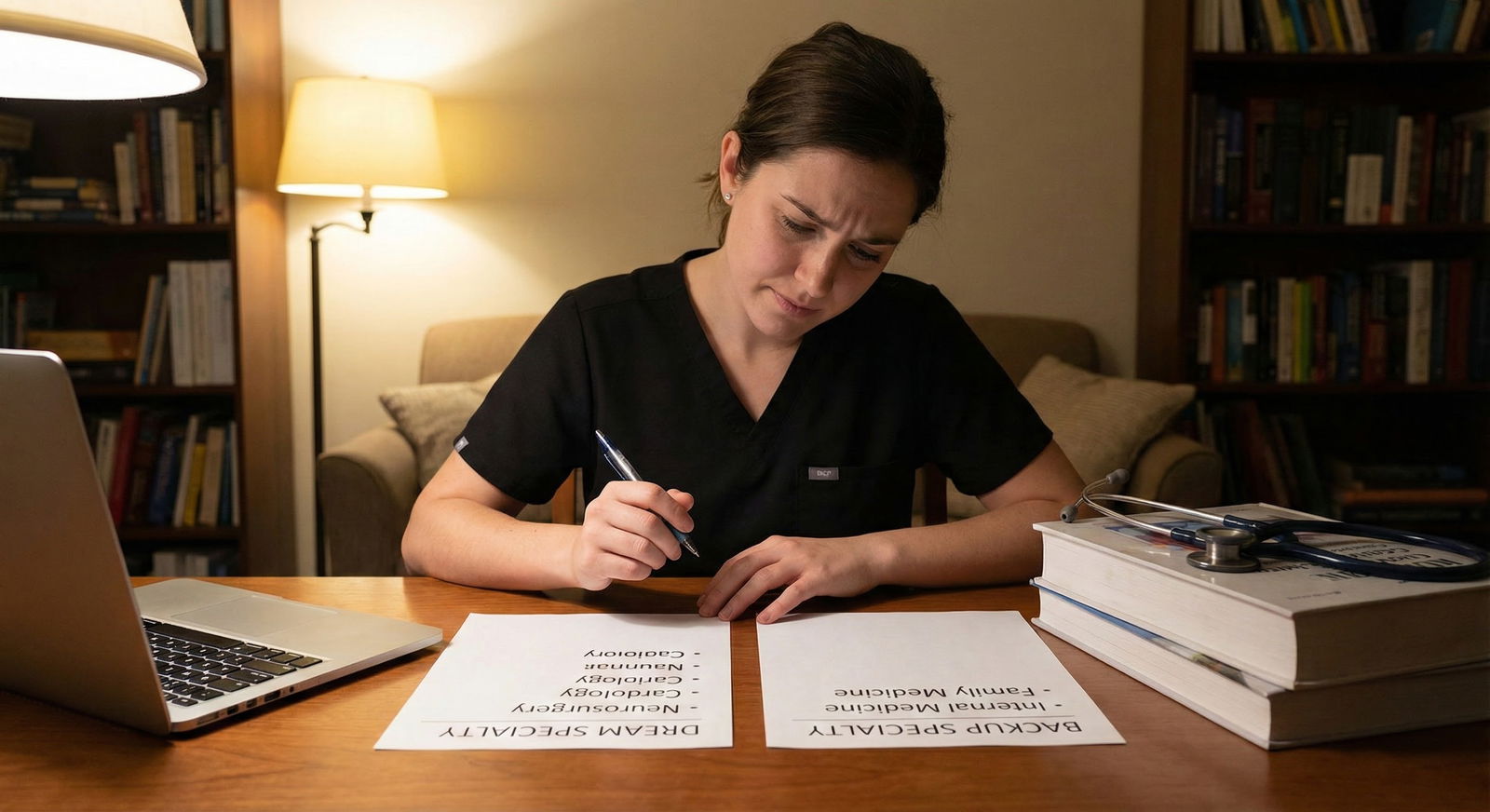
1. Take a Serious, Not Fantasy, Backup
You cannot apply derm or ENT only with a weak profile and no backup. That’s not brave. It’s reckless.
Real backups people use in this context:
- For Derm: IM categorical (with derm interest), prelim medicine + plan for future fellowships, maybe med-derm where appropriate.
- For ENT: General surgery, prelim surgery with a clear plan B, sometimes anesthesia.
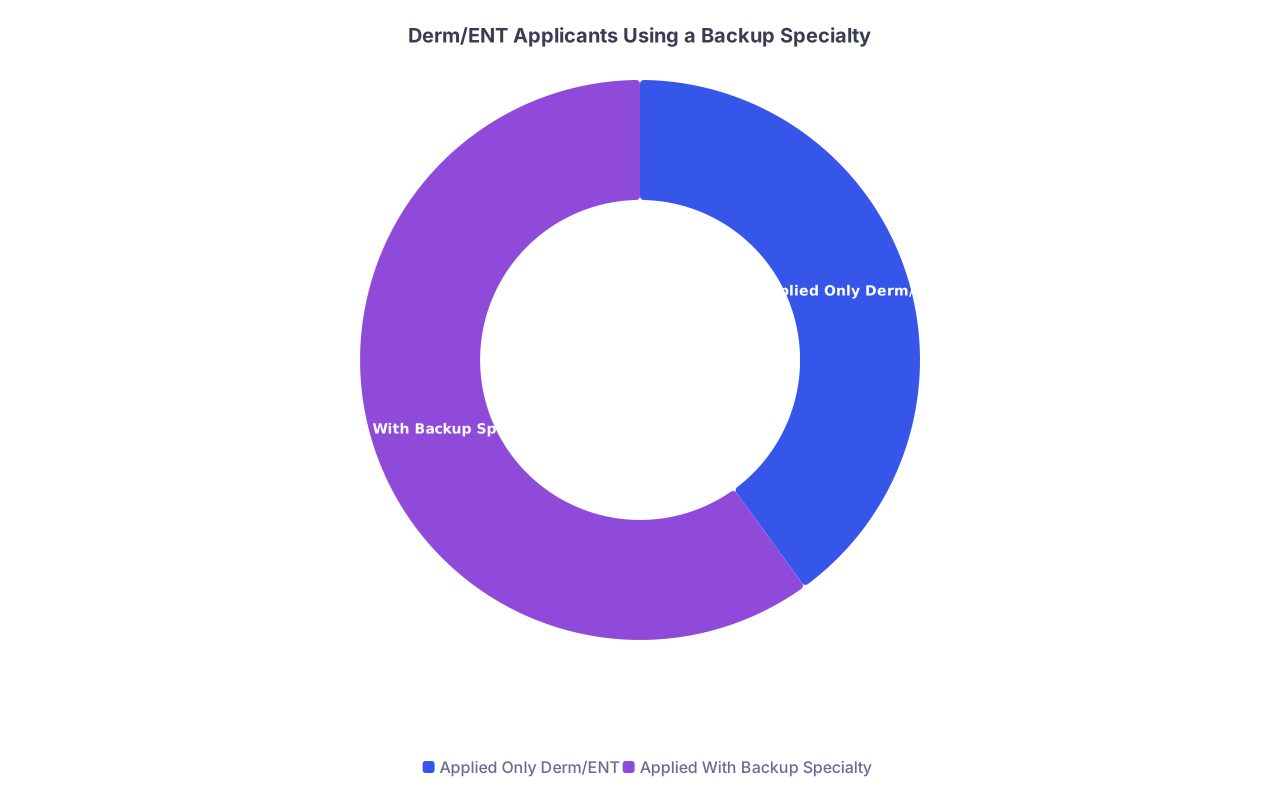
| Category | Value |
|---|---|
| Applied Only Derm/ENT | 40 |
| Applied With Backup Specialty | 60 |
2. Consider a Research Year
A dedicated research year can bump you from “borderline” to “legit contender,” especially for derm.
Who should seriously consider it:
- CK < 245 but still decent (235–245) and very committed to derm
- Limited research so far
- At a school with weak derm or ENT presence but access to a strong external research institution
Red flags:
If you’re significantly below floor in multiple domains (weak scores, weak clinical, weak research), a research year may just delay the inevitable rather than fix it.
Common Misconceptions That Get People Burned
“If I just apply broadly enough, I’ll be fine.”
No. Broad applications help at the margins; they don’t fix a deeply noncompetitive profile.“I don’t need derm/ENT research; research is research.”
For derm, this is mostly false. For ENT, you have a bit more wiggle room, but subspecialty-related work always plays better.“My personality will carry me in interviews.”
You have to clear the screen to get the interview. Personality only matters after you’re in the room.“DO students can’t match derm or ENT.”
Wrong. They can. But the bar is higher: you’ll likely need stronger scores, more research, and very strategic aways.
Quick Reality Check: Are You Above, At, or Below Minimum?
Use this crude self-score system. No nonsense.

For each specialty:
Step 2 CK:
- +2 points if ≥ 255
- +1 if 245–254
- 0 if 240–244
- -1 if < 240
Research:
- +2 if ≥ 3 specialty-related projects with at least 2 outputs
- +1 if 1–2 relevant projects with 1 output
- 0 if minimal but something
- -1 if none
Clinical grades:
- +2 if majority Honors, especially in key rotations
- +1 if mix of Honors/HP
- 0 if mostly HP/Pass
- -1 if multiple low passes or professionalism concerns
If your total for derm is:
- +4 to +6 → Reasonable to strong derm applicant
- +2 to +3 → Borderline; talk to mentors, consider research year or backup
- ≤ +1 → Derm is extremely high risk
Do the same logic for ENT but weight clinical performance and letters slightly more heavily in your own mind.
FAQ: Minimum Profile for Derm and ENT
1. Can I match derm or ENT with a Step 2 CK below 240?
Possible, yes. Reasonable, usually no. To make that work you’d need:
- Very strong research (especially for derm)
- Stellar letters from big-name faculty
- Significant institutional backing and connections
Even then, you should absolutely apply with a backup specialty.
2. Does a Step 1 fail completely kill my chances for derm or ENT?
Not completely, but it makes the road steep. You’ll need:
- A very strong Step 2 (honestly 250+ to even start that conversation seriously)
- No other major academic or professionalism issues
- Mentors in the specialty who are willing to actively advocate for you
Programs will ask about it. You need a clear, mature explanation and strong upward trajectory.
3. How many derm or ENT programs should I apply to if I’m borderline?
If you’re legitimately borderline but still above the minimum thresholds:
- Derm: often 60–90+ programs
- ENT: 50–80 programs
You also need to be ruthless about adding a backup specialty to avoid going unmatched.
4. I’m at a school without a derm or ENT program. Am I dead in the water?
No, but you start from behind. To compensate:
- Do away rotations in derm/ENT at academic centers
- Build relationships there early (M3 if possible)
- Seek out research through visiting institutions, remote projects, or a research year
Plenty of such students match, but they usually work harder on networking and research than their peers at big-name schools.
5. Is a research year mandatory for derm or ENT?
Not mandatory, but common in derm, less so in ENT. It becomes a smart move when:
- Your scores are decent but not stellar
- Your research is thin
- You can land a position with a productive mentor in the field
If your profile is very weak across the board, a research year alone probably won’t fix everything.
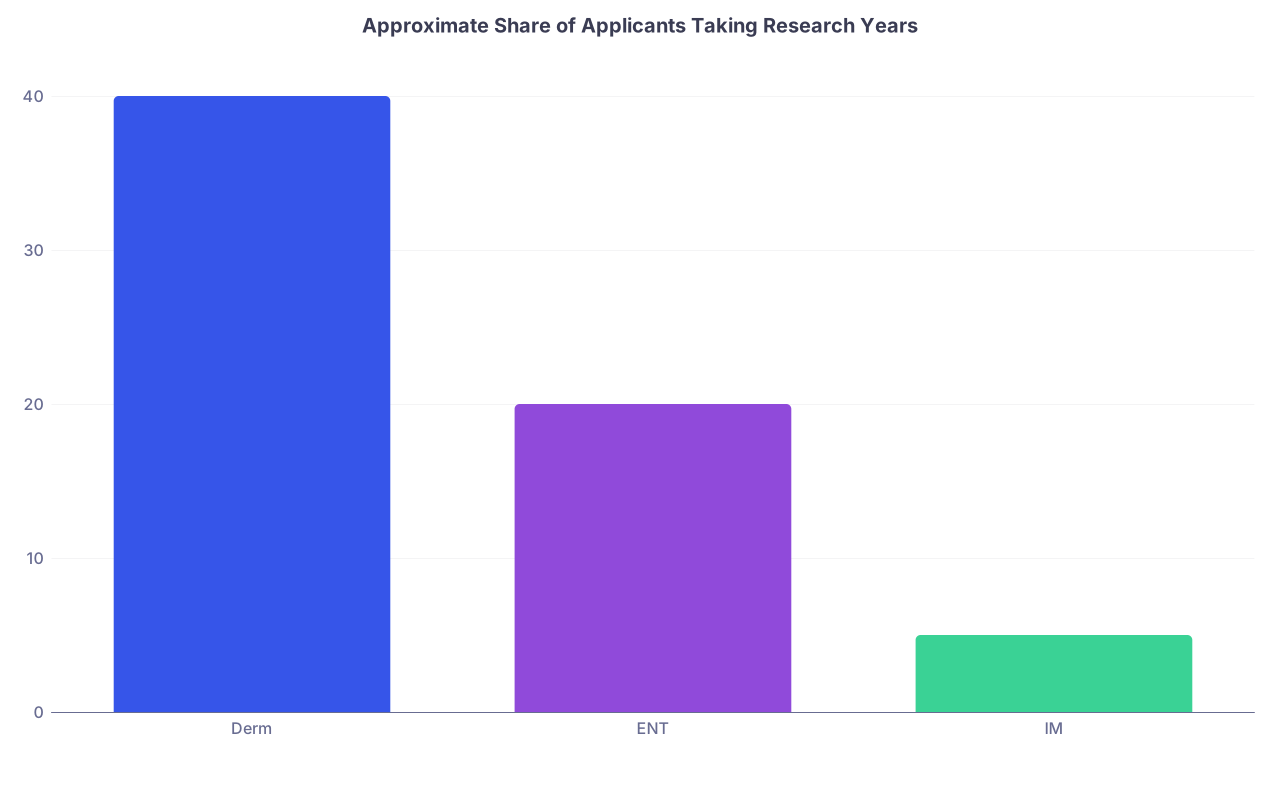
| Category | Value |
|---|---|
| Derm | 40 |
| ENT | 20 |
| IM | 5 |
6. If I don’t meet these minimums, should I give up on derm or ENT entirely?
Not automatically. You have 3 real options:
- Do a research year and rebuild your application
- Pivot to a related field (IM with allergy/immunology or rheum for derm-types; general surgery, plastics, or anesthesia for ENT-types)
- Apply once with a very clear backup plan and accept the risk
What you should not do is blindly apply only derm or ENT with a clearly noncompetitive profile and no safety net. That’s how people end up unmatched with no plan.
Key takeaways:
- “Reasonable” for derm or ENT means you’re near or above the floors: ~245+ for derm, ~240+ for ENT, with matching research and clinical strength.
- Below those lines, it’s not impossible, but you’re betting on outlier outcomes and need a backup strategy.
- Do not make this decision in a vacuum—sit down with someone in the specialty, show them your full file, and ask for a brutally honest read.