
It’s 2:15 a.m. You’re on the floor, sorting out the third cross-cover page in ten minutes. Your co-resident mutters just loud enough for you to hear: “Must be nice to never do nights.”
You freeze for a second. Because you used to do nights. Before your seizure. Or your uncontrolled migraines. Or the panic attacks that landed you in the ED. Now you have an approved accommodation: no overnights, or reduced call, or modified procedural duties. You’re following the rules. GME signed off. But your peers are simmering.
This is where you actually are:
- You have an ADA or disability-related accommodation that changes your call schedule or clinical duties.
- Some co-residents are clearly resentful. Eye rolls. Comments. Group text jokes.
- You’re torn between guilt (“I am working less nights”) and anger (“Do they want me to seize in the OR?”).
- You worry PDs or attendings will secretly agree with them. And that this will haunt you on letters, fellowships, jobs.
Let’s walk through what to do. Not in theory. In practice. Week by week, conversation by conversation.
1. Get Clear On Your Own Ground First
You cannot handle peer resentment well if you’re internally shaky about whether you “deserve” your accommodation.
Here’s the baseline reality:
- You went through a formal process.
- A licensed professional documented your limitations.
- The institution granted specific accommodations.
- You’re not “getting away with” anything. You’re complying with institutional policy and federal law.
If you’re still struggling with guilt, a simple exercise helps:
Write down your diagnosis/limitation in plain language.
Write the specific risk if you don’t have this accommodation. Example:
- “No 24-hour calls because of seizure disorder → increased risk of seizure while managing critically ill patients → unsafe for patients and me.”
- “No night float because of severe bipolar disorder → nights destabilize mood → increased risk of hospitalization and impaired performance long term.”
Write one sentence: “This accommodation primarily exists to protect patients and my ability to safely complete training.”
You’re not asking for a corner office and DoorDash credits. You’re adjusting work hours/tasks to avoid harming people. Including yourself.
Once you accept that, the resentment will sting less. You’ll respond from a place of solid ground, not apology.
2. Know What You Owe Your Peers — And What You Don’t
You owe your colleagues:
- Reliability within your limitations.
- Clear communication about schedules and coverage.
- A sense that you care about the team’s workload.
- Basic professionalism and respect.
You do not owe them:
- Your diagnosis.
- Detailed medical history.
- Proof you’re “disabled enough.”
- Constant overcompensation that wrecks your health.
- Agreements that contradict your official accommodation.
If you keep those categories clear, your decisions get much easier.
3. Script Your “Standard Explanation” So You’re Not Caught Flat-Footed
You need one or two stock phrases you can deploy when someone asks about your schedule, your call, or your modified duties. Use the same language every time so you’re not improvising when stressed.
Possible versions, depending on how open you’re willing to be:
Very private version (minimal disclosure):
- “I have an approved medical accommodation through GME, so my call schedule is a little different. I’m not able to do overnights, but I’m picking up extra daytime/clinic work to balance where I can.”
Medium disclosure (refers to condition, light on details):
- “I’ve got a medical condition that flares with overnight work, and GME approved an accommodation for no night or 24-hour calls. I’m not able to flex that, but I’m happy to help in other ways — extra day shifts, notes, follow-up calls.”
More open, if you’re comfortable:
- “Since my hospitalization last year, occupational health restricted me from overnights. It’s not negotiable, but I know that puts more nights on others, so I’m trying to be really available for extra day coverage and admin work.”
Pick one. Memorize it. When people probe more, your follow-up line is:
- “I’d rather not go into medical details, but if you have concerns about coverage or fairness, the PD or GME can talk through how they structured it.”
That shifts the burden back where it belongs: on the system, not on you individually.
4. When Call Swaps Become a Flashpoint
Here’s a very common setup:
You: “Hey, can anyone cover my Fri overnight? I can take extra daytime shifts or clinic sessions in exchange. I have a medical restriction on nights.”
Group chat: [silence]
Then later, the side comments start.
Or worse:
You ask one co-resident directly. They say yes with clear irritation. Then they tell everyone, “Guess who I’m covering again because they ‘can’t’ do nights.”
Here’s how to handle swaps when you are restricted on certain duties:
Don’t frame restricted duties as negotiable favors.
If your accommodation says “no overnights,” you are not supposed to be trying to “trade” nights. You’re not allowed to do them. So don’t offer something impossible in return (“I’ll take your next night!”). That undermines your own legitimacy.If coverage is needed (e.g., illness, appointment, sudden flare), frame it as any other illness call-out, but consistent with your restrictions.
Example text to a group:
“I’m dealing with a medical issue and need someone to cover my Thurs day call. I can’t do overnights by occupational health restriction, but I can pick up [X, Y, Z] days or cross-cover sessions to make up work. Happy to coordinate directly if you’re open to swapping.”
Keep swaps proportional and realistic. Do not promise to “make up everything” by overextending in other ways that will trigger your condition.
If resentment builds, stop trying to individually negotiate around a broken schedule. That’s a system problem. Move it up the ladder (we’ll get there).
5. Responding In The Moment To Snide Comments
You will hear things like:
- “Must be nice to never do nights.”
- “Guess some of us don’t get ‘special schedules.’”
- “We’re all tired, you know.”
- “So why can’t you do call exactly?”
If you freeze, you’ll replay the moment for weeks. So decide now how you’ll respond.
You’ve got a few styles. Pick what fits your personality.
Direct but calm
- “I get that it’s frustrating. I’m following a medical restriction and GME-approved accommodation. I’m not able to do nights, but I am taking on extra daytime coverage to try to help balance things.”
If they push:
- “I’m not going to discuss my medical history. If you’re worried about fairness, PD or GME can explain how they set it up.”
Slightly firmer (for repeat offenders)
- “We’ve talked about this. I’m under a medical restriction. I’m not going to apologize for following that. If you have a concern about scheduling, that’s for the chiefs or PD — not sideways comments to me.”
Calling out the behavior, not explaining yourself
- “Comments like that are not helpful. We’re all trying to get through this. If you need to talk about coverage, talk to me directly or to the chiefs.”
Notice the pattern:
You’re not defending your diagnosis. You’re drawing a boundary and re-routing their frustration toward leadership, where it belongs.
6. Having the Hard Conversation With One Particularly Resentful Peer
Every class has at least one person who becomes the unofficial spokesperson for others’ complaints. They’ll say things like, “Everyone’s talking about this,” or “We all feel it’s unfair.”
If that person is poisoning your work environment, it’s worth one deliberate, private conversation.
Setup:
- Neutral location (workroom after sign-out, not in front of nurses or students).
- Calm tone. No email war. No group text drama.
Script outline:
“Hey, can we talk for a minute about something that’s been bothering me?”
“I’ve heard a few comments from you about my schedule and duties. I want to address it directly instead of letting it fester.”
“I have a documented medical condition and a formal accommodation through GME. I’m following what they approved. I don’t control the structure of the schedule.”
“I do understand that this means others are taking more of certain shifts. That’s not something I feel great about. I’m trying to offset it with [extra clinics, notes, QI work, etc.]. If you have ideas about fairer ways to distribute things within my limitations, I’m open to hearing them.”
“What I can’t accept are side comments or jokes about my schedule. It undermines trust. If you’re frustrated, I’d rather you bring it to me directly or to the chiefs/PD.”
Then stay quiet. Let them talk. You’re not there to win them over emotionally. You’re there to draw a clear line and show you’re not ashamed or hiding.
7. Pulling In Your PD and GME – When and How
Sometimes the culture is too toxic or the resentment is being fed by weak leadership. Residents are told, “We have to follow the law,” but nobody explains the rationale or adjusts the staffing to make it actually workable.
Signs you need leadership involved:
- You hear multiple residents complaining directly to you about “unfairness.”
- Chiefs hint that “people are frustrated” but don’t fix the schedule.
- You’re being pressured to violate your restrictions “just this once.”
- You sense that your evaluations are getting dinged for “teamwork” or “dependability” despite you meeting expectations within your limits.
What to do:
Email your PD (and possibly associate PD or program manager) requesting a meeting. Keep it neutral:
- “I’d like to discuss how my existing medical accommodation is affecting team dynamics and scheduling, and get your guidance on next steps.”
In the meeting, be concrete:
- “I’m noticing increased resentment from co-residents about my reduced call/modified duties. Comments like X, Y, Z have been made.”
- “I’m concerned that the current schedule design is shifting too much burden to a few people, which is fueling this. I’m willing to take on additional [daytime tasks, admin, QI] within my restrictions.”
Ask for specific help:
- “Can chiefs or you explicitly communicate to the group that my schedule is a formal medical accommodation and not negotiable?”
- “Can we look at redistributing some of the burden in a way that doesn’t single me out as the problem?”
- “I want to make sure tensions are not affecting my evaluations. Can we align on expectations for what ‘pulling my weight’ looks like within my restrictions?”
If your PD is strong, this can change the tone quickly. A 2-minute explicit statement at a resident meeting — “This schedule is built to comply with ADA; these accommodations are not optional or up for debate” — takes the target off your back.
If your PD is weak or subtly resentful, document everything. After meetings, send a brief summary email:
- “Thanks for meeting today. To recap, we discussed [X]. I agreed to [Y], and you mentioned [Z] about addressing group concerns.”
That paper trail can become very important if things escalate.
8. When Resentment Bleeds Into Bullying or Discrimination
Let’s be blunt. Sometimes this moves beyond “annoyed co-resident” into actual harassment:
- People mocking your condition.
- Suggesting you’re faking.
- Saying you shouldn’t be in the specialty.
- Excluding you from group learning or social opportunities.
- Comments like “We’re doing your job for you” in front of patients/staff.
At that point, you’re not dealing with “hurt feelings.” You’re dealing with professionalism and possibly disability discrimination.
Steps:
Start a simple, dated log. Nothing fancy.
- Date, time, location, who was present, what was said/done, how it affected your work.
Bring it to your PD and GME/DEI/HR, not just one person. Use clear language:
- “I’m experiencing repeated negative comments and behaviors from peers that feel related to my documented medical accommodation. I’d like these addressed as professionalism and disability-related issues.”
Do not let anyone turn this into “you just need to be more resilient.” That’s nonsense. Hostility based on disability is not a personality clash.
If internal processes fail and the situation is severe, know you can seek external counsel. Residents have successfully used legal support when programs blatantly mishandled disability accommodations and related harassment. That’s a last resort, but it exists.
9. Protecting Your Reputation and Future Opportunities
You’re probably worried: “Are my co-residents going to tank my reputation for fellowship or jobs because they’re mad about my schedule?”
A few things that actually help:
Crush what you can do.
When you’re on service: be prepared, answer pages, show up early, own your patients. Attendings notice. They care far more about clinical performance than gossip about call schedules.
Be visibly reliable in your allowed domains.
If your limit is no nights, then your days should not be full of last-minute call-outs for “vague reasons.” That doesn’t mean never being sick; it means being as solid as your condition allows.
Build direct relationships with attendings and fellows.
You want several faculty who can honestly say, “Within her medical limitations, she is one of our most effective residents.” That sentence is gold.
Don’t over-disclose in applications.
For future positions, you don’t have to write essays about your accommodations. You can simply say you managed a chronic health condition during training, maintained high performance, and may require modest scheduling accommodations that have been previously implemented successfully.
If you think a co-resident might bad-mouth you informally, it can be worth being slightly preemptive with key faculty:
- “You may have heard my schedule is a bit different due to a medical accommodation. I want you to know that within those boundaries, I’m committed to contributing fully and supporting the team.”
Then let your work prove the point.
10. The System Problem Nobody Wants To Own
Most peer resentment around accommodations is a symptom of a broken staffing model.
Residents are angry because:
- There’s no buffer; any change means more work for someone.
- Programs rely on “free” resident labor instead of hiring NPs/PAs/nocturnists/floats.
- Leadership implements accommodations at the individual level but does not adjust the system to absorb the change.
You, as the accommodated resident, become the lightning rod for anger that should be directed at leadership and structure.
You won’t fix the system alone. But you can:
- Use PD/GME conversations to push for structural solutions (float residents, NP night coverage, more equitable distribution).
- Document how accommodations were successfully implemented or how they failed — this is useful for future policy changes.
- If you’re ever in leadership later, remember exactly how this felt, and design systems that don’t make disabled trainees the villains.
11. If You’re the One Feeling Resentment Toward an Accommodated Peer
Quick detour. Maybe you’re reading this from the other side. You’re doing extra nights while your co-resident never does them, and you’re simmering.
Here’s the blunt version:
- You are right that the current setup is unfair.
- You are wrong if you direct that anger at the accommodated person instead of at the system.
If you’re burning out from extra responsibilities, you can and should:
- Bring objective concerns to chiefs/PD: “The current schedule means I’ve done X more nights than others; it’s affecting my ability to function.”
- Ask how they plan to sustain this long term.
- Suggest alternative ways to spread the load or add support.
What you should not do:
- Make passive-aggressive comments to the accommodated resident.
- Demand their medical details to judge if they “deserve it.”
- Publicly mock or question their work ethic.
It’s perfectly legitimate to say, “This system is not sustainable.” It is not legitimate to punish someone for having a documented medical condition.
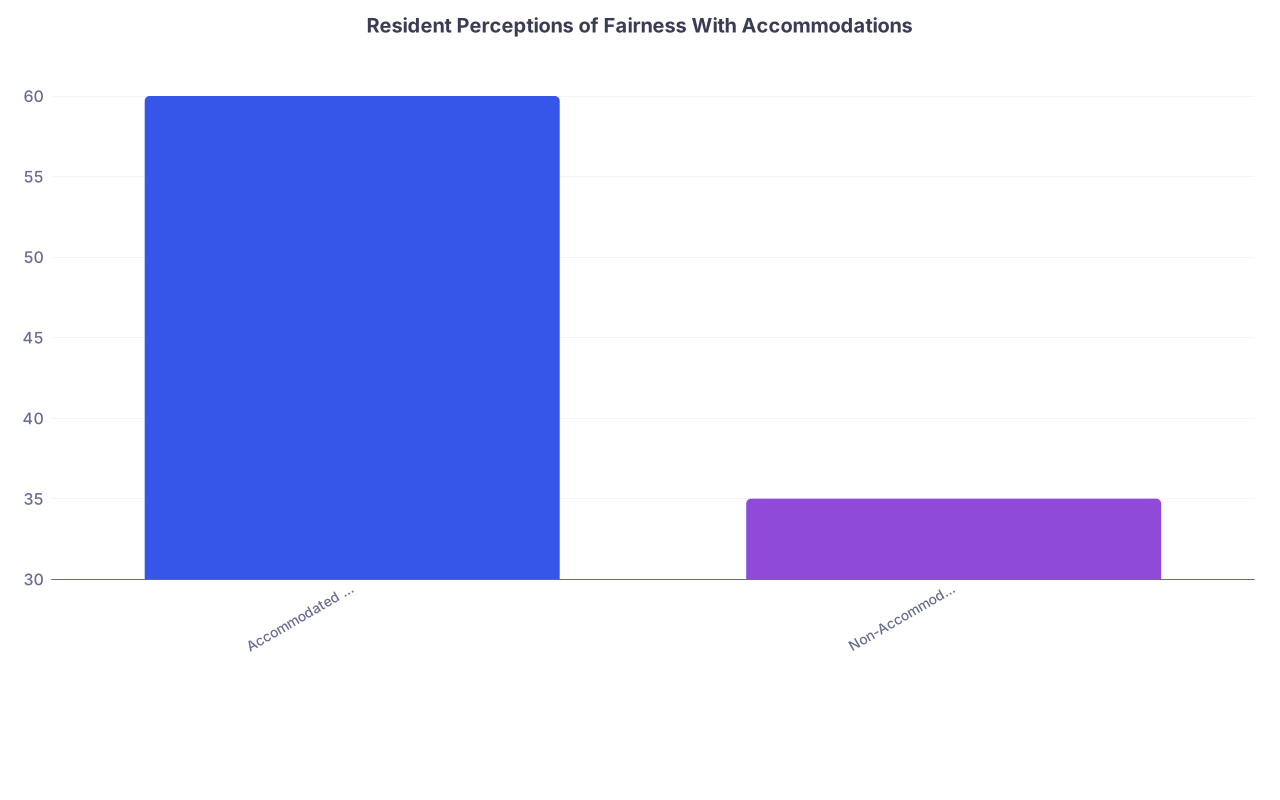
| Category | Value |
|---|---|
| Accommodated Resident | 60 |
| Non-Accommodated Peers | 35 |

| Step | Description |
|---|---|
| Step 1 | Notice resentment |
| Step 2 | Use standard explanation |
| Step 3 | Continue monitoring |
| Step 4 | Private 1 on 1 conversation |
| Step 5 | Meet with PD and GME |
| Step 6 | Document and involve HR or DEI |
| Step 7 | Comments stop? |
| Step 8 | Improves? |
| Step 9 | Bullying persists? |
| Issue Type | Best First Contact |
|---|---|
| Day-to-day schedule tension | Chief residents |
| Persistent peer resentment | Program Director |
| Harassment or bullying | GME / HR / DEI Office |
| Legal rights / ADA concerns | Institutional Counsel |


FAQ (Exactly 4 Questions)
1. Should I tell my co-residents my actual diagnosis to reduce resentment?
Usually no. Disclosure does not reliably reduce resentment; sometimes it just gives people more ammunition or invites judgment about whether your condition is “serious enough.” Share only what you’re comfortable sharing, and lean on: “I have a documented medical condition and a formal accommodation through GME/occupational health. The details are private.”
2. What if my PD subtly pressures me to “take one for the team” and violate my restrictions?
You treat that as a serious red flag. Calmly say, “My understanding is that this accommodation is based on medical assessment and institutional policy, and that I’m not supposed to violate it. I’m happy to help problem-solve within my limits, but I can’t safely do [restricted duty].” Then loop in GME or occupational health in writing: “There was a request for me to do [X]; can you confirm whether that’s compatible with my restriction?”
3. I’m worried this will hurt my fellowship chances. Should I avoid asking for accommodations?
Do not gamble your health and patient safety to look “tough.” Well-run programs and fellowships care about performance and professionalism, not whether you did 30 or 50 overnight calls. If you try to hide significant limitations, you risk major events (errors, hospitalizations) that will hurt your record. Better to have a documented, well-managed accommodation and strong evaluations than to implode silently.
4. How do I mentally handle the guilt of others doing more nights or procedures?
Acknowledge the guilt, then reframe it. You’re not avoiding work; you’re doing different work within your safe range. Ask your PD, “What does pulling my weight look like given my restrictions?” Then meet that standard. You’re allowed to feel bad that the system is stretched. But you do not need to atone for being disabled by destroying your health to match an impossible, unsafe norm.
Key takeaways:
- Your accommodation is legitimate; you don’t need to defend your diagnosis to peers.
- Direct comments toward leadership and systems, not endless self-justification or overcompensation.
- When resentment crosses into harassment or pressure to violate restrictions, document and escalate — that’s no longer “hurt feelings,” it’s a professionalism and disability rights problem.