
The way most residents “plan” for pregnancy is reckless: they wait, hope for the best, and then scramble when the test turns positive. You can do better than that.
Below is a stepwise, time‑anchored guide to preparing for pregnancy‑related limitations before Match, so you are not negotiating from a hospital bed or a call room bathroom.
12–18 Months Before Match: Set Your Strategy, Not Your Due Date
At this point you should not be timing ovulation. You should be clarifying what kind of training environment can handle pregnancy‑related limitations without punishing you.
1. Decide Your General Pregnancy Window
You do not need an exact month. You do need a range.
Ask yourself:
- Do you want to try:
- During M4?
- PGY‑1?
- Later in residency?
- Are there age‑ or fertility‑related constraints (e.g., >35, known infertility, prior miscarriage, PCOS)?
Pick a priority order like:
- Best: end of M4 / between M4 and PGY‑1
- Acceptable: PGY‑2
- Avoid if possible: first 6–9 months of internship
Write it down. That written priority will help you make decisions when emotions ramp up.
2. Identify Your Non‑Negotiables
At this point you should list what you will not compromise on, assuming you become pregnant or have postpartum limitations:
Examples:
- No 28‑hour calls in third trimester
- Ability to pump at work every 3 hours postpartum
- Reasonable protected time for OB visits
- Access to light duty or schedule modification if you have complications
Rank them: top 3 must‑haves, next 3 nice‑to‑haves.
10–12 Months Before Match: Research Programs With Pregnancy in Mind
Now you are building your residency list. This is when most people pretend pregnancy is “future me’s problem.” That is a mistake.
1. Build a Shortlist of Pregnancy‑Friendly Signals
At this point you should scan programs and cities for:
- Institutional culture
- Large academic centers with established GME offices usually handle accommodations better than tiny community sites.
- Programs with visible women leaders, especially PDs and APDs.
- Existing policies (often on GME websites):
- Paid parental leave policy
- Short‑term disability policy
- ACGME leave implementation details
- Call and schedule structure
- Night float vs 24‑hr call
- Rigid vs flexible rotations
- In‑house vs home call
| Signal Type | More Supportive Example | Less Supportive Example |
|---|---|---|
| Leave Policy | Written, ≥6 weeks paid | Vague, case-by-case |
| Schedule Structure | Night float, block schedules | Frequent 24+ hour calls |
| Leadership | Female PD/APD, young parents | All senior men, no parents seen |
| Culture | Lactation rooms, wellness CME | “We all just manage” attitude |
2. Investigate Quietly but Directly
You do not need to disclose your own plans. You do need real intel.
At this point you should:
- Ask current residents (off Zoom, by phone/text):
- “Has anyone been pregnant here recently? How did the program handle it?”
- “Is there protected time for OB visits?”
- “Any issues with pumping during shifts?”
- Look for red flags:
- “We just make it work” with no specifics. Translation: you will suffer.
- Stories of residents delaying pregnancy out of fear.
- Complaints about “coverage resentment.”
8–10 Months Before Match: Understand Legal and Policy Baselines
You cannot plan around pregnancy‑related limitations if you do not know what protections you actually have.
1. Know Your Legal Framework (High‑Yield Only)
At this point you should be aware of three buckets:
- Anti‑discrimination: Pregnancy is protected under federal law (e.g., Title VII as amended by the Pregnancy Discrimination Act in the U.S.). Programs cannot:
- Refuse to rank you because you are pregnant or might become pregnant.
- Treat you worse than other residents with temporary medical limitations.
- Accommodations:
- Under disability and pregnancy accommodation laws, you can often request:
- Schedule modifications
- Light duty
- Extra breaks (e.g., pumping, nausea management)
- Avoidance of certain exposures if medically indicated
- Under disability and pregnancy accommodation laws, you can often request:
- Leave & board eligibility:
- ACGME and specialty boards have specific maximum leave per year before you must extend training.
You are not becoming a lawyer. You are making sure you are not easily bullied.
2. Learn the Board and ACGME Rules for Your Specialty
At this point you should spend 20–30 minutes on:
- Your specialty board’s “leave of absence” policy
- ACGME program requirements for resident complement and coverage
You are looking for:
- How many weeks of leave per year can still count toward training
- Whether leave can be bunched (e.g., 8–12 weeks at once)
- Whether “research” or “administrative” time can be used flexibly
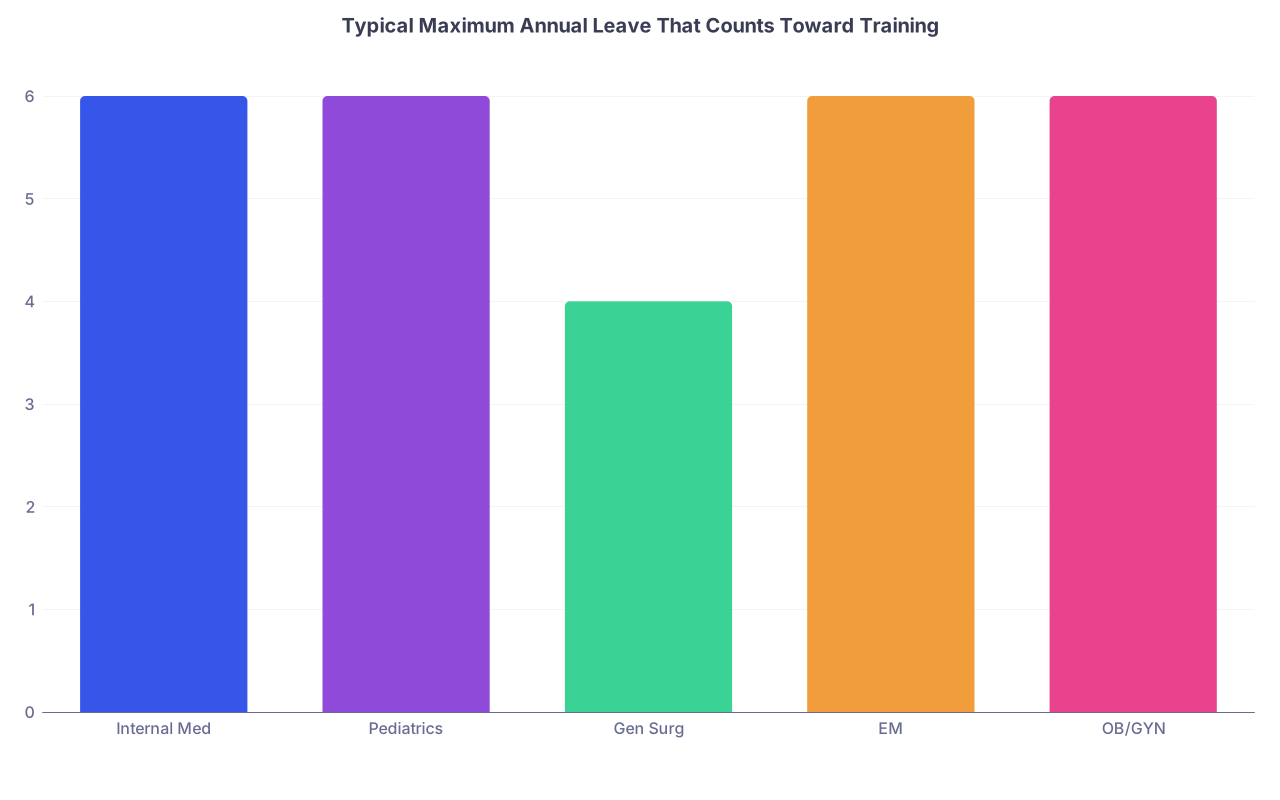
| Category | Value |
|---|---|
| Internal Med | 6 |
| Pediatrics | 6 |
| Gen Surg | 4 |
| EM | 6 |
| OB/GYN | 6 |
Numbers vary; treat this as an example, not gospel. The pattern is the point: there is a cap.
6–8 Months Before Match: Prepare Your Accommodation Mindset
You are not asking for favors. You are planning medically reasonable accommodations for a time-limited condition.
1. Decide What You Would Request in Common Scenarios
At this point you should sketch your likely asks for:
- First trimester (nausea, fatigue, spotting):
- Ability to step away briefly to vomit or rest
- Extra bathroom breaks
- Avoiding back‑to‑back 28‑hour calls if they exist
- Second trimester:
- Typically more stable; might not need formal accommodations
- Third trimester:
- No heavy lifting or pushing if OB recommends
- Reduced or eliminated 24‑hour in‑house call
- Lower volume or less physically intense rotations close to due date
- Postpartum:
- Protected pumping time
- Avoiding nights in the immediate return period if possible
- Gradual return (e.g., 0.6–0.8 FTE for a brief time where policy allows)
Write 1–2 concrete examples per phase. You will later translate these into actual schedule discussions.
2. Identify Your Evidence
Programs respond better to:
- Occupational health documentation
- OB recommendations
- Institutional policy language
At this point you should plan to obtain:
- A brief OB letter if you need specific restrictions (e.g., no 28‑hour call after 34 weeks)
- A note from occupational health if the institution channels everything through them
3–6 Months Before Rank List: Evaluate Programs Through the Pregnancy Lens
Now you are post‑interview or mid‑interview season. Time to stop pretending it is hypothetical.
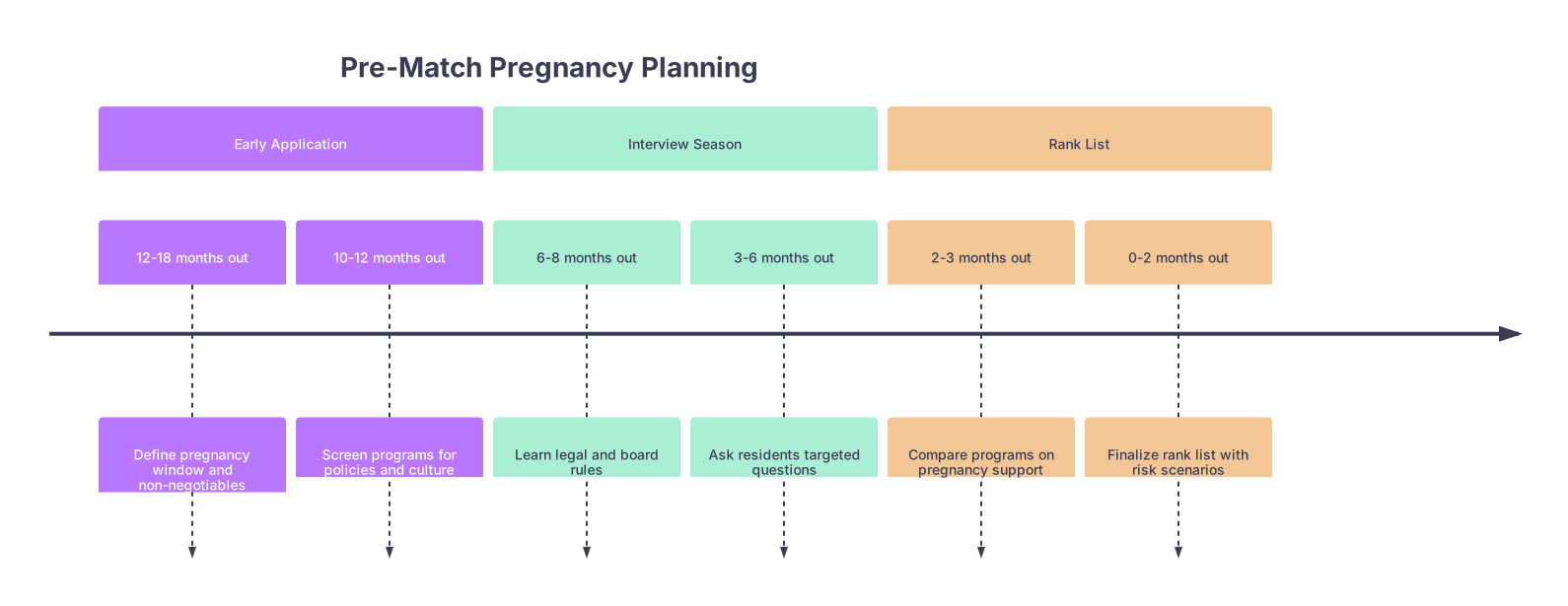
| Period | Event |
|---|---|
| Early Application - 12-18 months out | Define pregnancy window and non-negotiables |
| Early Application - 10-12 months out | Screen programs for policies and culture |
| Interview Season - 6-8 months out | Learn legal and board rules |
| Interview Season - 3-6 months out | Ask residents targeted questions |
| Rank List - 2-3 months out | Compare programs on pregnancy support |
| Rank List - 0-2 months out | Finalize rank list with risk scenarios |
1. During Interviews: What to Ask, When, and How
During formal interview days you can keep it general and policy‑focused.
At this point you should be asking:
To program leadership (if it feels safe, and usually after you get a good sense the interview went well):
- “How does your program handle residents who need temporary schedule changes for medical reasons, like surgery, pregnancy, or illness?”
— You get pregnancy datapoints without outing yourself.
To residents (in a breakout or social session):
- “Are there dedicated lactation spaces near clinical areas?”
- “Have residents taken parental leave? How was coverage handled? Any resentment?”
- “How easy is it to schedule doctor appointments during the day?”
You are listening less to the words and more to the tone. Eye roll = data.
2. After Interviews: Score Each Program on Pregnancy Practicalities
At this point you should build a quick scoring rubric:
- 0–2 for each:
- Written and clear parental leave policy
- Recent examples of pregnant residents handled well
- Flexibility of schedule structure
- Culture (support vs resentment)
- Institutional lactation and wellness infrastructure
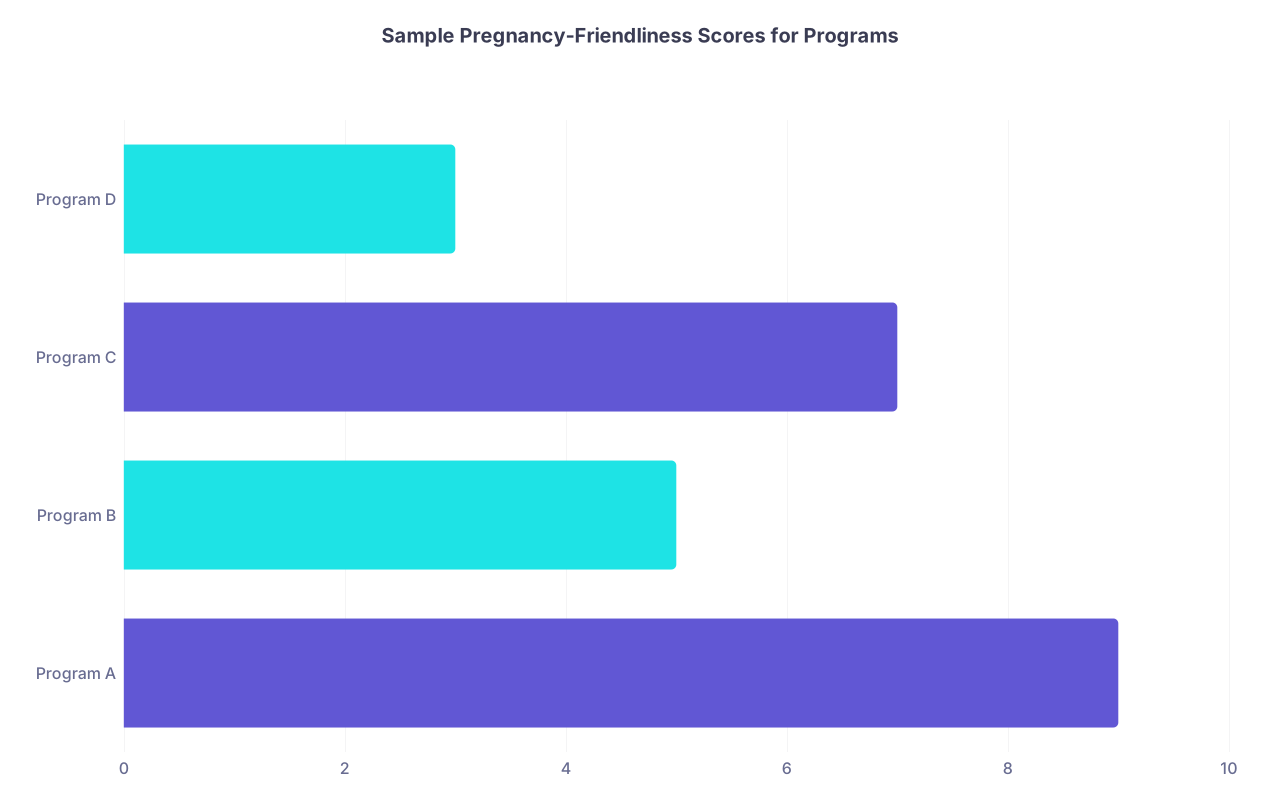
| Category | Value |
|---|---|
| Program A | 9 |
| Program B | 5 |
| Program C | 7 |
| Program D | 3 |
Do not overcomplicate it. But if you are strongly considering pregnancy during residency, a program with a “3” should not outrank a “9” just because their residents looked happier on Zoom.
2–3 Months Before Rank List Submission: Run the “What If I Am Pregnant When…” Drill
At this point you should mentally walk through three high‑impact scenarios for each of your top programs:
- Pregnant during intern year
- Delivering late PGY‑1 / early PGY‑2
- Needing prolonged leave for complications or postpartum depression
For each scenario at each program, answer:
Could they realistically:
- Reassign heavy rotations to later years?
- Swap you from 24‑hour call to night float or vice versa?
- Let you extend residency without torpedoing board eligibility?
Have they done something like this before? Do you have real examples?
This is where your earlier resident conversations matter. A program that handled a complicated twin pregnancy with grace is gold.
After Match but Before Start Date: Concrete Pre‑Pregnancy Moves
Now you know where you are going. This is when the real planning for pregnancy‑related limitations begins.
1. Connect With Your Future Program About Generic Medical Leave
You do not need to say “I plan to get pregnant.” You should:
- Email the program coordinator or GME office:
- Ask for the written parental leave and medical leave policies.
- Ask for any specialty‑specific interpretation regarding board requirements.
At this point you should create a simple summary for yourself:
- Maximum paid leave per year
- Whether leave can be stacked
- Whether additional unpaid leave is possible and how it affects training length
2. Map Out Rotation Structure Across the First 2–3 Years
You should get your block or rotation template for at least PGY‑1 and ideally PGY‑2.
Mark:
- High‑risk months for being pregnant (heavy call, ICU, trauma, OB L&D nights, etc.)
- Lower‑risk or more flexible months (clinic blocks, electives, research, ambulatory)
Then align that with your pregnancy window:
- If you want to try early PGY‑1, recognize:
- You might be third trimester on ICU or nights unless you pre‑emptively discuss possible swaps.
- If you want to try late PGY‑1, see if that puts your third trimester into more manageable blocks.
This is not about controlling everything. It is about avoiding obvious disasters when you can.
Once You Decide to Try to Conceive: 0–6 Months Before Possible Pregnancy
At this point you should tighten the planning from abstract to specific.
1. Review Safety and Exposure Issues
Some specialties have real pregnancy‑related concerns:
- Radiology / IR: radiation exposure
- Anesthesia / OR: waste gases, long hours standing
- Certain subspecialty clinics: infectious disease exposure
Talk to:
- Occupational health
- Your OB or primary care clinician
- A trusted attending if needed
Ask what limitations are medically reasonable vs fear‑based myths. You are preparing so your future accommodation request is precise, not vague.
2. Decide When You Will Disclose Pregnancy
You are not obligated to announce at 5 weeks. But for meaningful accommodations, you usually need to disclose no later than:
- Before the start of an ICU or heavy call block in the second/third trimester
- When you start to need schedule modifications or exposure restrictions
At this point you should think through:
- Who first? Usually:
- Program director or associate PD
- Then chief residents for scheduling
- Then HR/occupational health if required
- What you will say in 3–4 sentences:
- Due date (approximate is fine)
- Any immediate restrictions? (Often none early on.)
- When you expect you might need schedule changes.
Write yourself a short script. Do not wing it when you are hormonal and exhausted.
Once Pregnant: Trimester‑by‑Trimester Planning
You are here. Now the timeline accelerates.
First Trimester (Weeks 1–13)
At this point you should:
- Confirm viability and estimated due date with OB.
- Decide whether early restrictions are needed (for most: no, beyond common‑sense rest and breaks).
- If you have severe nausea, bleeding, or complications:
- Ask OB for a brief note outlining needed modifications.
- Contact occupational health and PD if shifts are genuinely unsafe.
You usually do not need major schedule changes here unless complications are serious. The key is documenting issues if they start early.
Second Trimester (Weeks 14–27)
This is often your most functional window.
At this point you should:
Alert your PD and chiefs if you have not yet, especially if your third trimester overlaps with:
- ICU
- Nights
- Heavy call
- Procedural months with significant physical strain
Request specific, realistic modifications:
- Swap heavy blocks to earlier in pregnancy or postpartum
- Move electives toward the end of pregnancy
- Plan which month you will likely start leave (target due date ± buffer)
Get any agreements in writing (even just in email) so future chief rotations cannot “forget.”
Third Trimester (Weeks 28–Delivery)
At this point you should:
Activate any restrictions OB recommends:
- Limits on hours / continuous standing
- Avoidance of very heavy lifting / trauma codes if applicable
- Reasonable call pattern reductions
Confirm your leave plan:
- Start date of leave
- Expected duration (and what portion is paid vs unpaid)
- Impact on training length and board eligibility
If your program drags its feet or resists reasonable accommodations, loop in:
- GME office
- Institutional ADA or accommodations office
- Possibly an external advocacy or legal resource (quietly, at first)
You are not “being difficult.” You are enforcing a standard of safe training.
Postpartum and Return‑to‑Work: 0–6 Months After Delivery
Here is where many residents underestimate the impact.
At this point you should already have, before delivery:
- A written leave plan (how many weeks, how counted)
- A preliminary return‑to‑work template (which rotations first, which last)
Once you are postpartum, you will refine:
1. Pumping and Lactation Logistics
Before you return you should:
- Identify:
- Nearest lactation rooms to each rotation site
- Who controls access (badges, keys, scheduling)
- Clarify with PD/chiefs:
- Typical timing and duration of pumping breaks
- Coverage expectations while you are away
You cannot safely go 6–7 hours without pumping in a demanding rotation. That is not negotiable.
2. Mental Health and Schedule Intensity
You might feel fine. Or you might be drowning. Both are common.
At this point you should:
- Be honest with one trusted attending or PD about your bandwidth.
- Consider asking:
- To avoid the single worst rotations for a few months
- For a bit of clinic or research interspersed with heavy blocks
Again, document. Quick email summaries after conversations are your insurance.
FAQ (Exactly 3 Questions)
1. Should I tell programs during interview season that I plan to get pregnant in residency?
No. You have zero obligation to disclose pregnancy intentions during interviews, and it can only bias people, even unintentionally. Focus on asking policy and culture questions that reveal how they treat pregnant residents in general. Save your own plans for post‑Match, when you are dealing with one program that has already committed to you.
2. What if my program has no written parental leave policy or says “we handle it case by case”?
That is a yellow flag. “Case by case” often translates to “depends on how much political capital you have.” You can still match there, but you must compensate with meticulous documentation: GME policies, board rules, email summaries of any promises. Push gently for clarity (“So for a 6–8 week leave, how have residents historically structured that?”). If answers stay vague or contradict each other, rank accordingly.
3. How early is too early to plan pregnancy around residency?
If you are reading this, it is not too early. The point is not to script the exact month you conceive. It is to choose programs, policies, and schedules that will not implode the second you face pregnancy‑related limitations. Ideally you start this thinking 12–18 months before Match so your rank list already reflects your risk tolerance and priorities.
Open your draft rank list (or target program list) right now and write a single number next to each program: 1–10 for “pregnancy and accommodation friendliness.” If that number would change your top 3, you have planning work to do today.