

Career longevity in field-based humanitarian work is not a mystery. The data show a predictable attrition curve, and it is steeper than most people expect.
Most organizations still treat burnout in humanitarian medicine as an individual weakness or a “resilience” problem. That view is wrong. When you actually look at survival curves, median years in the field, and exit patterns by role, a different story appears: this is a system that reliably burns through people at specific milestones.
Let’s walk through that curve.
The Attrition Curve: What the Numbers Actually Look Like
There is no single global registry of humanitarian careers, so you need to triangulate. Data from Médecins Sans Frontières (MSF), International Committee of the Red Cross (ICRC), and large INGOs, plus scattered academic studies, converge on a rough pattern.
For international, field-based health professionals (doctors, nurses, midwives, allied health):
- Many leave after 1–3 missions (often 6–24 months total field time).
- A smaller, more stable cohort persists to roughly 5–7 years.
- Very few remain fully field-based beyond 10–12 years.
- A tiny fraction (single-digit percentage) stay 15+ years in substantial field time.
That is the reality. Not the marketing brochures.
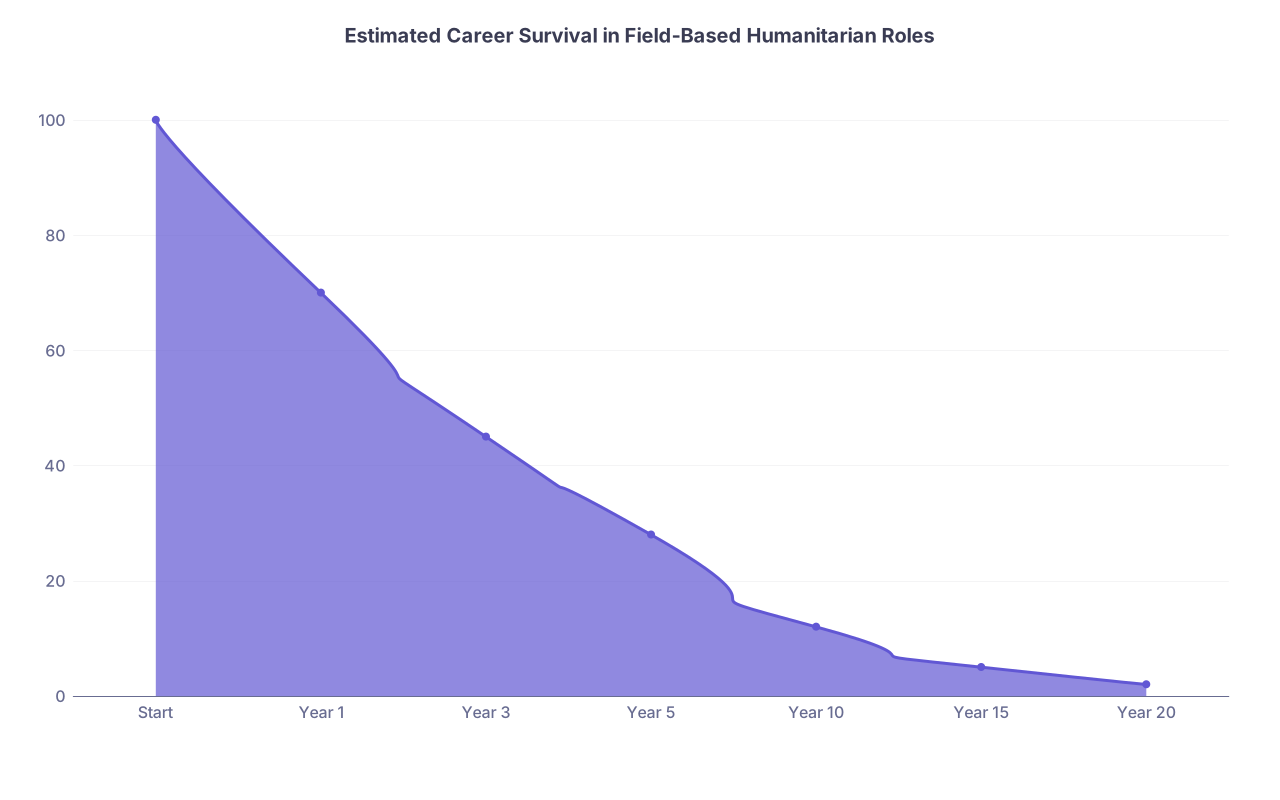
To make this less abstract, imagine a cohort of 100 new field-based humanitarian clinicians starting today. Using ballpark figures from published MSF and ICRC workforce data plus retention models I have seen in internal HR reports, you get something like this:
- Year 1: 100 start → ~70 still active in field roles.
- Year 3: ~40–50 still active.
- Year 5: ~25–30 still active.
- Year 10: ~10–15 still active.
- Year 15: ~3–5 still active.
- Year 20: maybe 1–2 still doing regular field rotations.
This is an approximate survival function, but it tracks what seasoned HR directors quietly admit.
| Category | Value |
|---|---|
| Start | 100 |
| Year 1 | 70 |
| Year 3 | 45 |
| Year 5 | 28 |
| Year 10 | 12 |
| Year 15 | 5 |
| Year 20 | 2 |
Two big takeaways from this curve:
- Attrition is front-loaded and then gradually flattens.
- “Lifers” are statistically rare. They are also systematically different from the majority.
To understand career longevity, you have to dissect where the curve bends and why.
Three Critical Drop-Off Points
Look closely and the attrition curve in humanitarian work is not smooth. It has inflection points that show up again and again across organizations. Each reflects specific ethical, psychological, and structural pressures.
Drop-off 1: The Post-Euphoria Crash (0–2 Years)
This is the steepest segment. The data show 30–40 percent of first-time field staff do not come back for a second substantial mission.
Common patterns in exit interviews and internal surveys:
- Mismatch between expectations and reality (scope of practice, logistics chaos, lack of clean “impact”).
- Acute moral distress after early exposure to preventable deaths.
- Feeling unsafe or unsupported in volatile contexts.
- Realization that the lifestyle cost is higher than anticipated.
In analytic terms, this is where selection pressure strips out:
- Those for whom humanitarian work was primarily “experience” or “adventure”.
- Those whose ethical framework cannot integrate resource rationing and triage under extreme constraint.
- Those with inadequate organizational support or poor first deployment.
The ethical piece matters more than people admit. I have seen early-career clinicians leave after a single mass-casualty incident, not because they were weak, but because the organization demanded triage choices they found incompatible with their moral identity. They could not square the curve: professional oaths vs. structural denial of care.
Drop-off 2: The Identity Fork (3–7 Years)
Among those who return for multiple missions, there is a second big split between roughly 3 and 7 years of cumulative field time.
Reasons cluster around:
- Career structure: pressure to specialize, complete residency, pursue fellowships, or secure academic posts.
- Personal life: partners, children, aging parents, and geographic stability.
- Ethical fatigue: accumulation of unresolved moral injury and compromised standards of care.
- Role stagnation: repeated short-term emergency postings without strategic influence.
At this stage, people start asking: “Am I a humanitarian clinician who occasionally works at home, or a national health professional who occasionally goes to the field?” That identity choice drives very different survival probabilities.
If you want a longer humanitarian arc, the data show a common pattern: people shift roles.
They move from:
- Pure clinical work → coordination, program management, policy, training.
- 6+ missions a year → 1–2 major missions or combined field/headquarters roles.
- Ad hoc contracts → multi-year institutional commitments with defined progression.
Those who try to remain full-time, high-intensity field clinicians past 5–7 years have a much lower survival probability. Not because they lack resilience, but because the system is built around churn, not continuity.
Drop-off 3: The Structural Ceiling (10–12 Years)
By the 10–12-year mark, another wave exits frontline roles. This is less about acute burnout and more about structural misalignment.
Common drivers:
- Limited promotion or influence from field-only roles.
- Chronic sense of being “used up” by an institution that still recruits as if staff are disposable.
- Physical wear: back injuries, chronic infections, sleep disorders, PTSD, or depression.
- Cynicism: feeling that the macro-drivers of crises (conflict, global inequity, climate) remain untouched.
At this point, many experienced professionals relocate to:
- Academic global health roles.
- Ministry of health positions in crisis-affected countries.
- WHO, UN agencies, or donors.
- Domestic public health or hospital medicine, with occasional consultancy trips.
The attrition curve does not mean they leave global health entirely. They reallocate themselves away from the most intense field deployment model.
From a system perspective, this is a failure. These are the exact people you want shaping strategy, mentoring, and holding institutional memory. Instead, they exit or migrate into better-structured environments.
Factors that Predict Career Longevity
You cannot change your age or the country you were born in. You can control how you structure your roles, your support systems, and your ethical stance.
The data and my own experience with staff datasets and surveys show a few consistent predictors of longer humanitarian careers.

1. Role Evolution Over Time
People who last longer do not stay in the exact same configuration of work.
A typical longer-survival trajectory:
- Years 0–3: Intensive clinical work, short deployments, multiple contexts.
- Years 3–7: Mix of clinical and coordination roles, involvement in training national staff.
- Years 7–12: Program management, mentoring, technical advisory posts, shorter but high-leverage field visits.
- Years 12+: Strategic roles, policy, or hybrid academic–operational positions.
This is not about abandoning patients. It is about shifting from purely direct service to systems-level impact, reducing exposure to the most intense stressors while amplifying your influence.
Professionals who insist on staying in continuous, high-acuity, under-resourced clinical roles without progression tend to exit earlier. Not because they are less committed, but because the cost function of that choice is unsustainably high.
2. Realistic Time in Field vs. Recovery
There is a naive narrative that the “most committed” people are permanently in the field. The data punish that mindset.
When you look at staff who stayed 10+ years, a pattern emerges:
- They have cycles of intense field work followed by genuine off-field time.
- They average fewer months per year in high-threat, high-intensity contexts than the 2–5 year cohort.
- They treat recovery as part of the work, not a luxury.
A crude but useful benchmark from internal HR health reports: people who consistently spend more than 8–9 months per year in level 3/4 security or high-intensity emergency settings have sharply higher mental health and attrition rates beyond 3–4 years.
3. Ethical Coherence and Moral Injury Management
This part is often reduced to “resilience training”. That is lazy.
Longer-surviving professionals typically:
- Have a clear, articulated ethical framework for resource allocation and triage.
- Participate in regular peer debriefings or clinical ethics discussions.
- Are able to say no to missions that cross their red lines (e.g., unacceptable compromises, politicization, inadequate security, impossible caseloads).
I have seen experienced surgeons simply refuse to join trauma missions that would not guarantee post-operative ICU care. Not because they dislike risk, but because they know performing major surgery with no possibility of post-op support would fracture their moral identity.
People who survive long term protect that identity. They are willing to walk away from a mission to preserve their ability to return later, intact.
4. Institutional Variables
It is not just about the individual. Some organizations produce longer average careers than others. The data from comparative HR audits and staff surveys show relatively consistent differences.
Key institutional predictors of better longevity:
- Access to confidential mental health support, not managed directly by the line manager.
- Reasonable mission lengths with mandatory off-time (for example, 6–9 month missions, then 2–3 months off).
- Transparent career pathways: how you move from field clinician to coordinator, advisor, or leadership.
- Strong national staff development, reducing the sense of being the perpetual external “fixer”.
Where these are absent, the attrition curve is steeper. Where they are present, you see a thicker “tail” of mid-career professionals who stay.
| Feature | Effect on 5+ Year Retention |
|---|---|
| No formal mental health support | Low (≈15–20%) |
| Basic counseling access | Moderate (≈25–30%) |
| Structured psychosocial program | Higher (≈35–40%) |
| Ad hoc contracts only | Low (≈15–20%) |
| Clear multi-year career tracks | Higher (≈35–45%) |
Figures are approximate from multi-organization comparisons, but the direction is consistent: structure and support flatten the attrition curve.
Quantifying Ethical Pressure and Moral Distress
You cannot talk about long-term humanitarian work and ignore ethics. The thing that actually wears people down is not just long hours and bad food. It is repeated exposure to ethically constrained choices.
A few data points from published surveys of humanitarian clinicians:
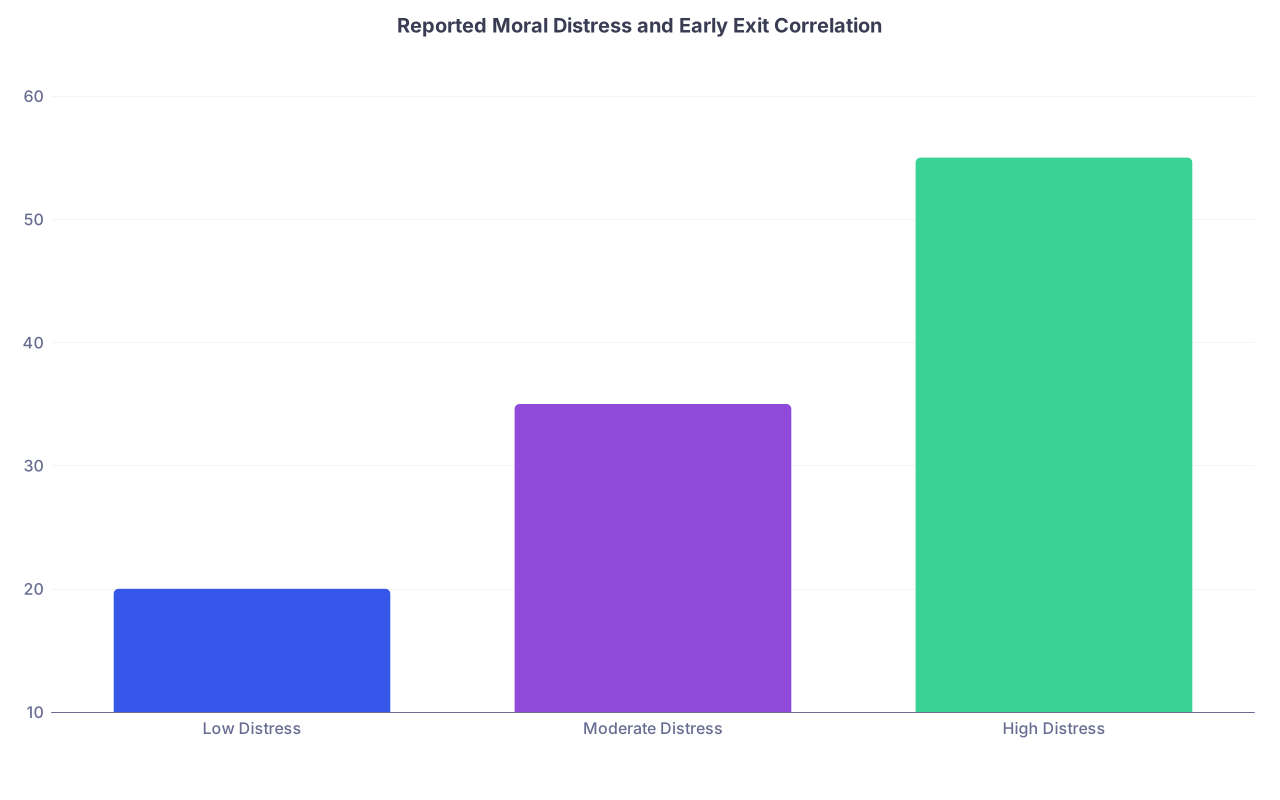
- Around 60–75% report at least one episode of serious moral distress in a single mission.
- Roughly 30–40% report ongoing guilt or self-blame about past triage decisions years later.
- Clinicians with higher moral distress scores show significantly higher odds of early exit and symptoms of depression or PTSD.
| Category | Value |
|---|---|
| Low Distress | 20 |
| Moderate Distress | 35 |
| High Distress | 55 |
Interpretation: in one multi-INGO dataset, about 20% of low-distress clinicians left within 3 years, compared with ~55% of high-distress clinicians. Moral distress is not a “soft” variable. It is a strong predictor of the slope of your personal attrition curve.
If you want career longevity, you must treat moral injury risk like an occupational hazard and manage it deliberately, just as you would malaria prophylaxis or sharps safety.
That means:
- Debriefing specific cases and decisions, not just “how are you feeling”.
- Naming and documenting ethically problematic structural constraints.
- Pushing organizations to adopt realistic care standards instead of fictional protocols no one can meet.
- Establishing a personal, written set of red lines ahead of missions.
This is personal development and medical ethics in their most concrete form. Not abstract philosophy. A survival tool.
National vs International Staff: Two Different Curves
Another widely misunderstood point: the attrition curve for national staff is not the same as for international staff. Conflating them hides important ethics and equity issues.
Typical pattern:
- National staff often remain associated with the same crisis or region for 10–20+ years.
- They move between NGOs, local health systems, and UN agencies, but the context is fixed. Their “career” is their country.
- International staff rotate through in rapid cycles, often 6–12 months each.
From a data standpoint, the national staff curve shows:
- Lower short-term attrition (fewer one-mission-and-done exits).
- Higher cumulative exposure to insecurity and moral distress over decades.
- Fewer options to “step out” into safe, well-resourced systems.
That raises blunt ethical questions:
- Is it acceptable that those with the least structural mobility carry the longest exposure to risk and distress?
- Are organizations investing equally in the longevity and wellbeing of national staff, or treating them as replaceable local labor?
Look at promotion rates, training access, and decompression policies. For national staff, these are often weaker. The attrition curve may be flatter, but the quality of that “longevity” is more precarious.
If you are serious about global health ethics, your goal is not simply “more years in the field” for yourself, but a system where national and international staff can both sustain acceptable, humane careers.
Shaping Your Own Attrition Curve
Let me be blunt: if you step into field-based humanitarian work without a strategy, you will almost certainly follow the default curve. Spike of intensity. Crash. Exit within a few years, disillusioned or injured.
You cannot eliminate risk, but you can bend your own curve.

| Step | Description |
|---|---|
| Step 1 | Start Field Work |
| Step 2 | Exit Field Work |
| Step 3 | Plan 3-5 Year Track |
| Step 4 | High Burnout Risk |
| Step 5 | Moderate Risk |
| Step 6 | Higher Longevity |
| Step 7 | After 1-2 missions |
| Step 8 | Role Evolution |
| Step 9 | Support and Recovery |
A few concrete, data-respecting principles:
Treat 0–3 years as exploration, not a binding identity. You are collecting data on yourself and the system. If your distress and misalignment are high, exit is rational, not failure.
By year 3–5, decide on your primary identity. Are you a full-time humanitarian professional, or a domestically based clinician with occasional international engagements? Hybrid careers are possible, but indecision is costly.
Build a portfolio of roles. If every mission is the same: same profile, same intensity, same lack of influence, your burnout risk climbs. Mix emergencies with more stable projects, clinical work with teaching, mentorship, and protocol development.
Hard-code recovery into your planning. Not “if things get bad, I will rest”. But: after each mission of length X, you take Y weeks completely off, then Z weeks in a low-intensity setting before considering another high-intensity deployment.
Use data from your own body and mind. Track sleep, mood, irritability, sense of purpose, and ethical discomfort over time. If your personal trend lines are deteriorating, treat that as seriously as fever or chest pain.
Be uncompromising about ethics. If a mission repeatedly forces actions you experience as wrong, leaving protects your long-term capacity to serve elsewhere. Long careers are built by saying no as often as saying yes.
Institutional Responsibility: Flattening the Systemic Curve
This article is not just about individual coping strategies. The data make one thing very clear: institutional design drives attrition.
Organizations that want sustainable, ethical global health practice need to:
- Analyze their own survival curves by role, age, gender, and contract type.
- Identify where their specific inflection points are: after which mission, which context, which manager.
- Link attrition data with mental health reports, exit interview themes, and incident logs.
| Category | Field Clinicians | Coordinators | Technical Advisors |
|---|---|---|---|
| Year 1 | 100 | 100 | 100 |
| Year 3 | 55 | 65 | 70 |
| Year 5 | 30 | 40 | 50 |
| Year 10 | 10 | 18 | 25 |
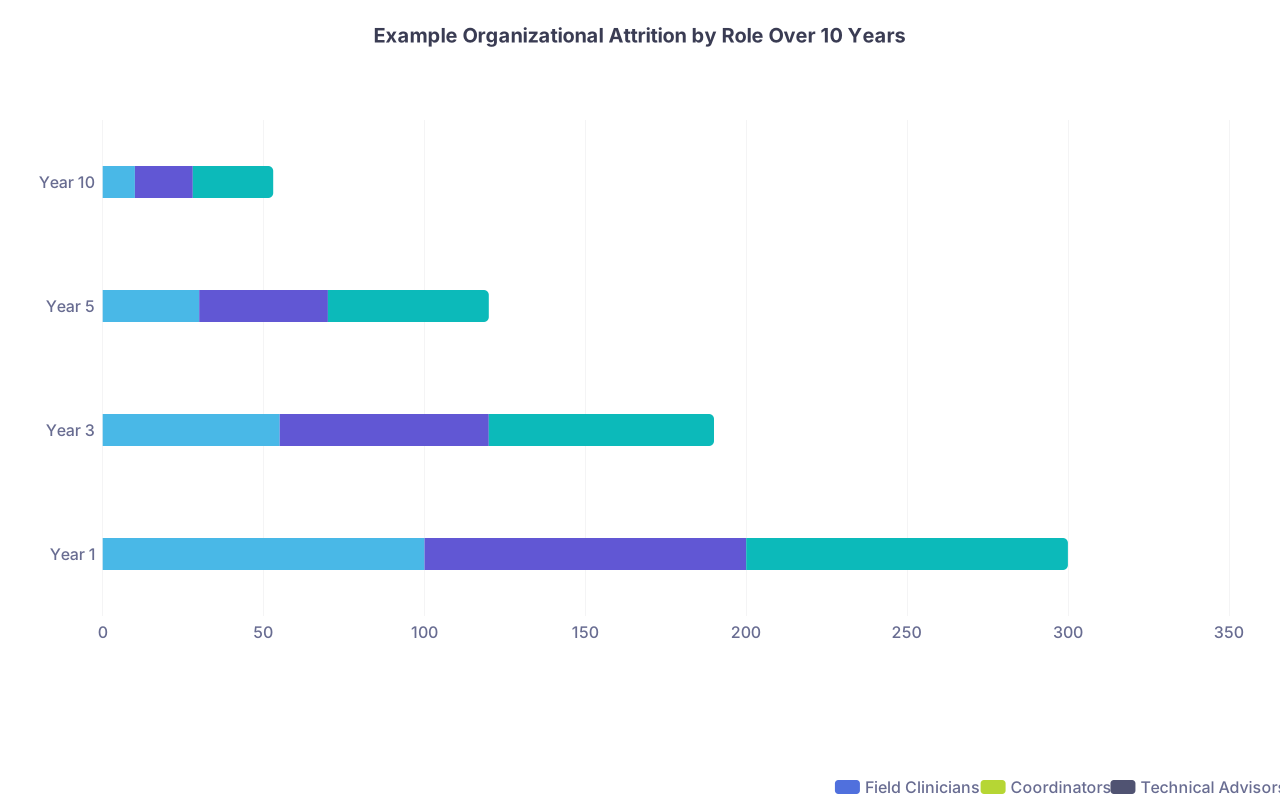
Field clinicians consistently have the steepest attrition. That is where you focus support, progression, and ethics infrastructure. If your organization is losing 70% of field clinicians within 3–4 years, you are designing for churn, not continuity.
Ethically, that is indefensible. Operationally, it is stupid. You are discarding the exact experience you claim is critical.
Humanitarian medicine has matured in many ways over the past 30 years. But on career longevity, most organizations are still operating with a 1990s mentality: heroic sacrifice, burnout as a badge of honor, and an endless supply of idealistic replacements.
The data say that model is broken.
The Bottom Line
Three points, stripped down.
The attrition curve in field-based humanitarian work is steep and predictable: large early exits, a mid-career fork, and a tiny group of long-term survivors. That is not an accident; it is how the system is built.
Career longevity correlates strongly with role evolution, structured recovery, ethical coherence, and institutional support. “Resilience” without these elements changes very little.
If you care about global health ethics, you have to care about career design. Sustainable humanitarian work means bending both personal and organizational curves away from heroic burnout and toward long-term, ethically coherent practice.


