
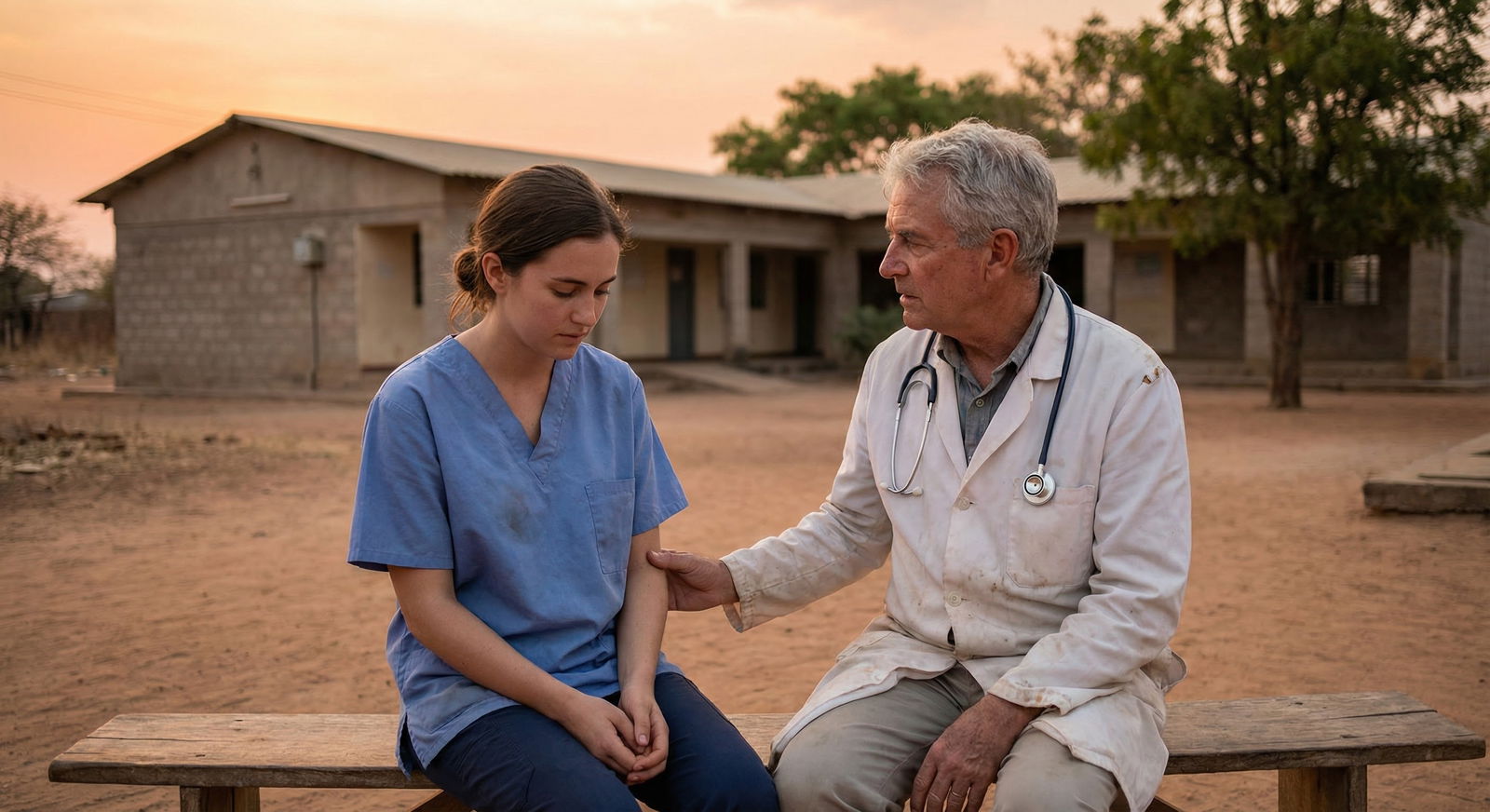
Last month I got an email from a PGY-1 who’d just returned from a “mission trip.” She was the only trainee on the team. By day two she was running her own “clinic room,” prescribing in a language she didn’t speak, signing off on things she’d never be allowed to touch at home. On paper, it sounded impressive. She felt sick about it.
If you’re the only trainee on a mission team, that’s exactly the tension you’re walking into: all the “opportunity” in the world, and almost no structure to keep it ethical, safe, or educational. Let’s talk about how you protect your learning and your patients when you’re dropped into that kind of setup.
First Reality Check: What You’re Walking Into
You step off the plane. Everyone else is an attending, NP, PA, or non‑clinical volunteer. Someone slaps your back in the airport parking lot: “You’re gonna get to do so much here. Great experience for you!” Sounds flattering. It’s also your first red flag.
Here’s the core problem: most short‑term mission teams are not designed around trainee education. They’re designed around “service,” logistics, or optics. So the incentives are:
- Move lots of patients through quickly
- Make the trip look “impactful”
- Keep donors and sponsoring orgs happy
Your learning, patient safety, and ethical boundaries get treated as optional extras unless you insist otherwise.
If you remember nothing else, remember this: just because you are the only trainee does not magically give you the competence of an attending. The passport stamp doesn’t upgrade your scope of practice.
Your job is to install guardrails where the system has left them out.
Before You Go: Protect Yourself Upfront
If you’re reading this and the trip is still in planning phase, you have leverage. Use it.
1. Get Clarity on Your Role in Writing
Do not accept “You’ll help with whatever is needed.” That’s code for “We haven’t thought about this and we’ll wing it.”
Ask explicitly (in email, not just a call):
- Who is my direct clinical supervisor on site?
- What types of patients am I allowed to see independently (if any)?
- What procedures can I perform? Under what level of supervision?
- How will prescriptions/orders be handled under local regulations?
- Are there local clinicians involved, and what is their role relative to ours?
If they dodge or stay vague, reply with your own clear limits: “To be explicit, I will not be providing unsupervised care or performing procedures I am not credentialed and supervised for in my home institution.”
If that makes them uncomfortable, that tells you exactly what this trip is about.
2. Check With Your Home Institution
Quiet but critical step. Email your program director or dean:
- Ask: “Does our institution have any policies on short‑term global health work?”
- Clarify if this counts as:
- An official elective
- An independent, non‑covered activity
If it’s official, insist on:
- Defined learning objectives
- A named faculty supervisor with agreed responsibilities
- Pre‑departure training (ethics, safety, culture, and local health system)
If it’s “you doing this on your own time,” you need to be more conservative, not less. You don’t have your usual institutional shield, and you still carry ethical obligations.
3. Learn the Local Reality, Not the Brochure
Find someone who actually works there long‑term. Not the US mission coordinator. A local:
- Physician/nurse
- NGO worker
- Public health officer
Ask them bluntly:
- What normally happens when a patient can’t pay or needs follow‑up?
- What medications, labs, and imaging are realistically available year‑round?
- How do local providers feel about foreign “teams”?
Your goal: avoid creating care plans that are impossible to sustain once you fly home. That’s both unethical and useless for your learning.
On the Ground: Setting Boundaries Without Becoming “That Trainee”
Mission culture can be intense. Lots of “we’re all just pitching in,” “flexibility,” and unspoken pressure to say yes to everything. Here’s how you push back without getting labeled as a problem.
1. Your Script for Unsafe Assignments
You’re in a makeshift “clinic.” A line of 60 patients. The team lead says: “Why don’t you each take a room? You’re basically a doc now, right?”
Here’s a phrase that works and doesn’t burn bridges:
“I’m happy to help. Back home I’m a [MS3/MS4/PGY-1], so I’m not licensed to see patients independently. What I can do is pre‑chart, take histories, and present to you so we can move faster while staying safe.”
If they push: “It’s different here,” you respond:
“My training level doesn’t change with geography. I’m not comfortable providing unsupervised care. Let’s figure out a workflow that keeps things safe.”
Say it calmly. Don’t apologize. You’re stating a fact, not an opinion.
2. Build a Supervision Structure Out of Thin Air
If there’s no clear teaching structure, you create one:
- Propose a “one‑up” system: you see patients, present to a specific attending, they co‑sign decisions.
- Group cases: “Can we run 3–5 cases at a time for efficiency? I’ll organize and present them to you in batches.”
- Ask for set check‑in times: “Can we do a 15‑minute debrief at lunch to review complex cases?”
People are usually grateful if you offer to bring some order to the chaos—especially if you frame it as helping flow, not demanding special attention.
3. When They Want You to Do Procedures You Rarely (or Never) Do at Home
Scenario: “You’re young, your hands are steady—why don’t you do the tubal ligation/central line/tooth extraction? Great experience for you.”
Your options:
If you’ve never done it and have no formal training:
“I haven’t been trained or credentialed to perform that. I can assist and observe, but I shouldn’t be the primary operator.”If you have minimal exposure (did 1–2 under tight supervision):
“I’ve only done this a couple of times under close supervision. I can assist and maybe do part of it with you scrubbed and guiding, but I’m not at the level to do it alone.”
If they still push “It’s fine here,” that’s a red line. This isn’t about you being precious. It’s about not experimenting on patients.
You want to leave with new skills, yes. But skills you can honestly say you learned ethically and safely.
Protecting Patients and Your Learning
People act like there’s a tradeoff: either you learn, or you protect patients. That’s wrong. Unsupervised, out‑of‑scope “learning” isn’t real learning. It’s just malpractice with extra stamps in your passport.
Here’s how to make the experience actually educational.
1. Choose Depth Over Body Count
Your team might brag: “We saw 800 patients in four days!” That number is mostly meaningless.
Pick a subset of cases to follow carefully:
- A complicated diabetic patient you see twice during the week
- Several pregnant patients – follow what ultrasound, labs, and actual options exist for them
- The one kid with suspected meningitis who may need transfer
Track what happens. Review with a supervisor at the end of the day:
- What would we have done differently at home?
- What’s realistic here given resources?
- Where did we probably over‑treat or under‑treat?
That contrast—between your home system and local reality—is where the real global health learning lives.
2. Use Limits as Teaching Moments
When you hit a hard wall—no imaging, no labs, no referral center—do not just shrug and guess.
Say out loud:
“Given these constraints, what’s the safest minimal thing we can do? And what harms might we be causing by doing too much?”
You’re not just trying to replicate a US clinic in a tent. You’re trying to understand responsible care in a specific context.
3. Do Not Prescribe Like Candy Just Because It’s Free
Short‑term teams love giving pills. “We have boxes of amoxicillin! Let’s fix everything!”
Ask yourself each time:
- Would I prescribe this back home for the same complaint?
- Can they realistically continue or stop this medication appropriately?
- Are we blowing through local formularies or norms?
If your team has a culture of “everyone gets something,” be the annoying person who asks, “Why?” You’ll sleep better later.
When You’re Pressured to Step Outside Your Scope
Let’s be blunt. You will be pressured. Sometimes gently. Sometimes aggressively.
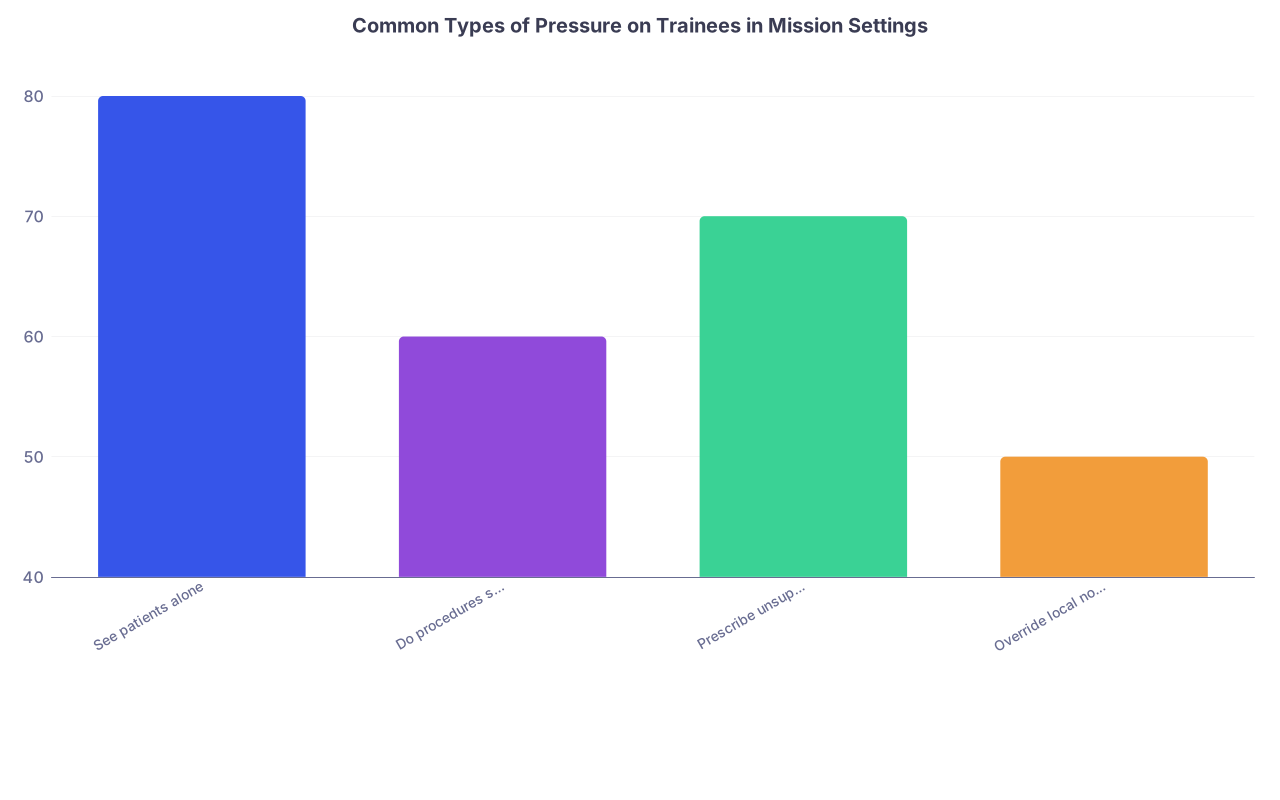
| Category | Value |
|---|---|
| See patients alone | 80 |
| Do procedures solo | 60 |
| Prescribe unsupervised | 70 |
| Override local norms | 50 |
Those percentages aren’t from a formal study, but they match what I repeatedly hear from trainees.
Here’s how to handle each type.
1. “Just See the Simple Patients On Your Own”
What you say:
“Simple patients can become complicated quickly. I’m happy to see them first and present a plan, but I still need you involved.”
If they insist:
“Then I’ll limit myself to history and exam, and I’ll ask the nurse to have you see any patient who needs treatment decisions.”
Worst case, you become an overqualified scribe. That’s still better than being an underqualified attending.
2. “Go Ahead and Do the Procedure; I’ll Be Nearby”
Nearby is useless. Either they’re scrubbed and actively supervising, or they’re not supervising.
Clarify with surgical precision:
“If you’re scrubbed in and directly supervising, I’m comfortable doing X part. If you need to be elsewhere, I shouldn’t be the primary.”
If they walk away anyway mid‑procedure, you do not continue solo beyond your competence. Ask them to come back or hand off. Yes, it’s awkward. Live with the awkward, not the guilt.
3. “Sign This Prescription; It’ll Be Faster”
Unless you are independently licensed to prescribe in that setting and actually understand the legal framework, this is a hard no.
You can phrase it like:
“I’m not licensed to prescribe here. I can suggest options in the chart, but a licensed clinician needs to sign.”
If they toss back, “Nobody checks here,” that’s exactly why you do check yourself.
Working With (Not Over) Local Clinicians
If there are local clinicians around and you’re the only trainee, you’re being watched a lot more closely than you think—by the people who live with the consequences of your team’s choices.
Your priorities:
- Defer to local standards when they’re safe, even if they’re different from yours.
- Ask, “How do you usually handle this?” before you announce what “best practice” is.
- Do not publicly contradict local clinicians in front of patients unless something is truly dangerous.
If your attending blows past local norms – for example, handing out long antibiotic courses for every URI when local guidelines discourage it – you can still pull them aside later:
“I noticed the local team usually does X. Can we talk through the reasoning for doing Y here? I’m trying to understand the impact.”
You’re planting a seed. You’re also signaling to local staff that at least someone on your team is aware this isn’t our playground.
Dealing With Guilt, Ego, and the “Hero” Narrative
Let me be blunt: mission trips are ego traps. You will be tempted by the story you can tell.
“I ran my own clinic in [country].”
“I did surgeries in [region].”
“I prescribed independently.”
Looks impressive to people who don’t know better. But you will know better.
Here’s the mental check you need:
- Would I be proud to describe exactly what I did to a skeptical ethics committee at my home institution?
- Would I be comfortable if that patient’s family understood my true level of training?
- Did my “experience” come at the cost of someone else’s safety or trust?
If the honest answers make you squirm, that’s your conscience trying to do its job.
Real global health work is usually quieter and less glamorous. It looks like:
- Sitting with a local nurse and actually listening
- Learning why a “simple” guideline doesn’t work in that setting
- Admitting “I don’t know” more than you’re used to
You’ll grow more from that than from any inflated “independent practice” story.
Making It Educational After You Come Home
The trip ends. You’re exhausted, conflicted, maybe proud of parts and ashamed of others. Don’t just shove it in a drawer and move on.
1. Debrief With Someone Who Will Challenge You
Not your friend who will just say “that’s amazing.” Find:
- A global health faculty member
- An ethics professor
- A program director with international experience
Walk through:
- Specific cases you’re uneasy about
- Moments you set boundaries well
- Times you failed to protect scope or patients
Ask directly: “What should I have done differently?” Take notes. This is how you avoid repeating the same mistakes on the next trip.
2. Capture Concrete Lessons, Not Just Feelings
Feelings matter. But for growth, you need specifics:
- “I will never again agree to be the primary decision‑maker without a clear, identified supervising clinician.”
- “Before any future trip, I will insist on written role definitions.”
- “I will prioritize host‑driven projects where local clinicians set the agenda.”
Turn your discomfort into rules you live by.
A Quick Comparison: Ethical vs Problematic Scenarios
| Scenario | Ethically Safer | Red Flag / Problematic |
|---|---|---|
| Clinic flow | You see patients, present to attending, shared decisions | You run your own room, attending “available if needed” |
| Procedures | You assist and do parts with scrubbed supervisor | You are primary operator with supervisor “nearby” |
| Prescribing | You propose plans; licensed clinician signs | You sign scripts because “no one checks here” |
| Local collaboration | Local clinicians lead; you support | Team ignores local norms/guidelines |
| Learning focus | Fewer patients, deeper cases, daily debrief | Max patients, no reflection, numbers over nuance |
A Simple Mental Flowchart Before You Say Yes
Here’s the internal sequence you should run every time you’re asked to do something on a mission team:

| Step | Description |
|---|---|
| Step 1 | Asked to do clinical task |
| Step 2 | Say no, offer to assist only |
| Step 3 | Request same or closer supervision |
| Step 4 | Do not perform, suggest alternative role |
| Step 5 | Discuss risks, modify or decline |
| Step 6 | Proceed, debrief later |
| Step 7 | Trained and competent at home? |
| Step 8 | Normally supervised at home? |
| Step 9 | Licensed to do this here? |
| Step 10 | Resources and follow up adequate? |
Run that in your head. Every. Time.
FAQs
1. What if I’m the most “junior” person but also the most cautious, and I feel like the only one worried about ethics?
Then you might be the only one seeing clearly. Being junior doesn’t make you wrong. You don’t need to lecture the team, but you do need to protect your own actions. Set your boundaries, stick to them, and document questionable situations privately so you can debrief later. Also, quietly seek out any local clinician or seasoned staff who shares your concerns; you’re rarely truly alone.
2. Won’t saying no ruin my chances at future global health work or make me look weak?
People who actually know global health will respect boundaries and skepticism more than bravado. If a team punishes you for refusing unsafe or unethical tasks, that’s a team you don’t want to be associated with on your CV anyway. Real leaders notice the trainee who protects patients, not the one who says yes to everything.
3. Is it ever okay to do more than I’d do at home because resources are so limited?
Sometimes you’ll stretch in ways that are context‑specific—like making a diagnosis clinically when imaging doesn’t exist. That’s different from performing procedures or prescribing in ways you’re not trained for. Expanding your judgment inside your scope is part of global health. Expanding your scope because supervision vanished on a plane is not.
4. How do I talk about the trip on my residency or fellowship applications without glorifying problematic parts?
Be honest and specific. Instead of “I ran my own clinic,” say, “I was the only trainee on a short‑term team, which forced me to confront scope‑of‑practice and supervision gaps. I learned to set boundaries, insist on oversight, and prioritize host‑driven, sustainable care. It changed how I evaluate global health opportunities.” That answer shows maturity, not ego.
If you’re the only trainee on a mission team, you’re not there to be the hero. You’re there to learn, to serve within your real abilities, and to leave patients at least as safe as you found them. Three anchors to keep: your scope of practice doesn’t change with geography, supervision is non‑negotiable, and the host community—not your CV—should define what “success” looks like. Hold that line, and you’ll come home with experience you don’t have to excuse.


