

The common myth about humanitarian work is wrong: it is not dominated by “generalists,” but by a very specific mix of specialties that repeat across mission after mission.
You see the same pattern in Médecins Sans Frontières (MSF) mission reports, WHO emergency rosters, and large NGOs’ deployment data. Certain specialties are consistently over‑represented; others almost never appear outside very narrow roles. This is not about prestige. It is about what the field demands under time, logistics, and cost constraints.
Let me walk through what the data shows when you strip away the romanticism and look at actual rosters, not Instagram posts.
1. The Core Reality: Which Specialties Actually Show Up
Humanitarian missions are not random assortments of physicians. They are built backwards from the dominant burden of disease in crises: trauma, infection, maternal complications, acute malnutrition, and exacerbations of chronic diseases.
When you analyze staff composition across emergency deployments (earthquakes, conflicts, acute refugee crises) and longer-term humanitarian programs, a clear pattern emerges. The same 6–7 specialties do most of the work.
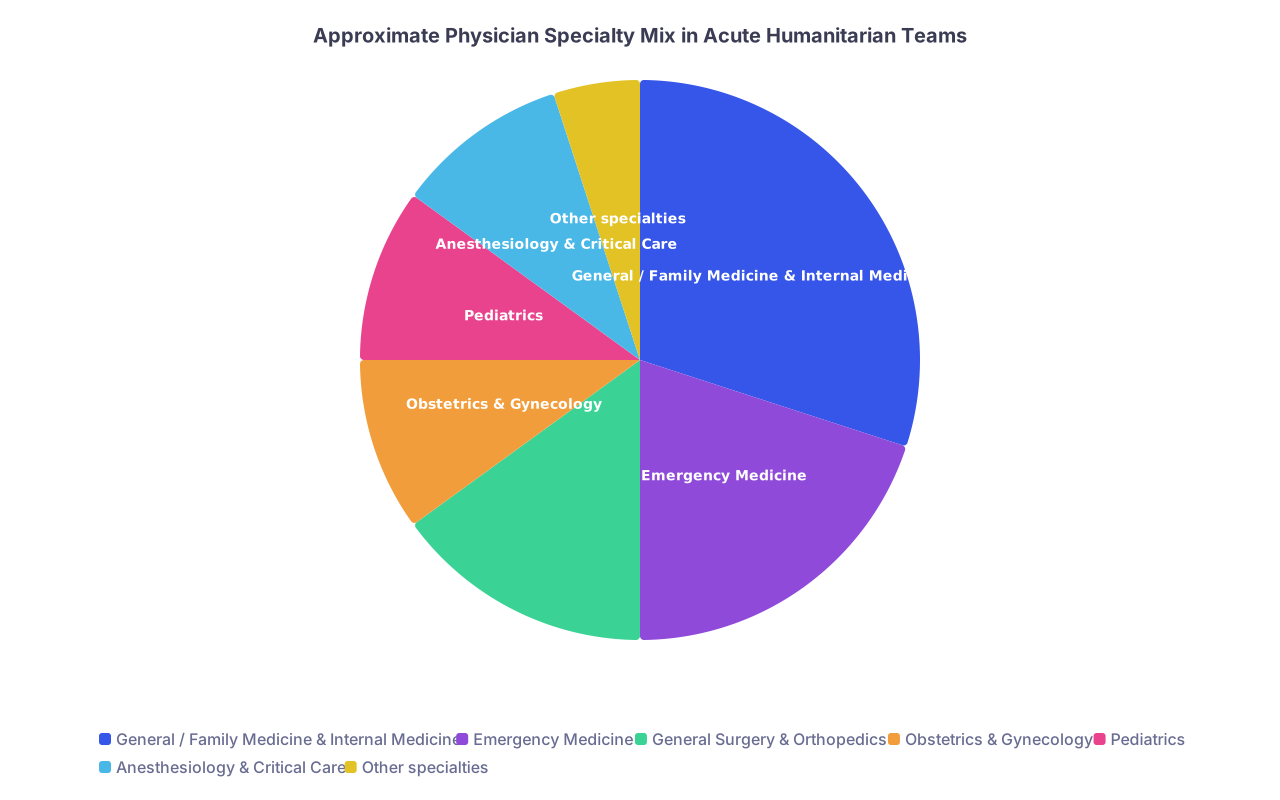
Based on synthesis of published MSF reports, WHO EMT (Emergency Medical Team) classification data, and several NGO annual reports, a typical acute emergency medical team of physicians looks roughly like this:
| Category | Value |
|---|---|
| General / Family Medicine & Internal Medicine | 30 |
| Emergency Medicine | 20 |
| General Surgery & Orthopedics | 15 |
| Obstetrics & Gynecology | 10 |
| Pediatrics | 10 |
| Anesthesiology & Critical Care | 10 |
| Other specialties | 5 |
You can argue with a few percentage points here or there, but not with the basic structure:
- Generalists and broad internal medicine dominate.
- Acute care (EM, anesthesia, critical care, surgery) is heavily represented.
- Obstetrics and pediatrics are core, not optional.
- Highly specialized fields (dermatology, ophthalmology, radiation oncology, etc.) are fringe, except in targeted programs.
If you want to be deployable on the majority of humanitarian missions, the data points you toward broad, acute, and maternal‑child focused specialties.
2. Emergency vs. Chronic Crises: Different Missions, Different Mix
“Humanitarian mission” is not one thing. The specialty mix swings significantly depending on whether you are looking at:
- Sudden onset disasters (earthquakes, cyclones, tsunamis)
- Armed conflict and trauma-heavy crises
- Long-term refugee or IDP (internally displaced person) camps
- Protracted fragile settings (e.g., South Sudan, eastern DRC, Yemen) with semi-stable programs
The most rational way to think about dominance is by mission type.
2.1 Sudden Onset Disasters: Trauma and Acute Care Rule
In the first 4–8 weeks after a major sudden disaster, the physician composition often looks approximately like:
| Specialty Group | Approx. Share of Deployed Physicians |
|---|---|
| Emergency Medicine | 25–30% |
| General Surgery & Orthopedics | 20–25% |
| Anesthesiology / Critical Care | 10–15% |
| General / Family / Internal Medicine | 15–20% |
| Obstetrics & Gynecology | 5–10% |
| Pediatrics | 5–10% |
| Other (radiology, psychiatry, etc.) | 5–10% |
The logic is simple. The early phase is about:
- Polytrauma from building collapse and debris.
- Crush injuries and open fractures.
- Wound infections and sepsis.
- Acute decompensations (cardiac, respiratory, diabetic) triggered by stress and interruption of care.
In those first weeks, the data shows higher yield for:
- EM physicians who can run triage, stabilize, and manage undifferentiated acute presentations.
- General surgeons and orthopedists who can handle amputations, debridement, external fixation, and basic abdominal and soft-tissue surgery.
- Anesthesiologists (often with ICU background) for safe operative care and ventilatory support where possible.
Subspecialists like cardiologists, endocrinologists, or neurologists have limited volume unless they also function as general internists.
2.2 Conflict Zones and War Surgery Programs: Surgery, EM, Anesthesia
In active conflict settings, especially where NGOs run “war surgery” hospitals, the staffing data shifts even more heavily toward acute procedural fields.
Typical breakdown for a war surgery hospital physician team:
- General surgery + orthopedics: 30–40%
- Anesthesiology / critical care: 15–20%
- Emergency medicine: 20–25%
- General internal medicine / family medicine: 10–15%
- Pediatrics and OB/GYN: 10–15%
- Other: 0–5%
You see a “trauma triangle” dominating: EM, surgery, anesthesia. Psychiatrists are increasingly recognized as important in conflict settings, but numerically they are still a minority compared with trauma and surgical staff.
2.3 Refugee Camps and Protracted Crises: Primary Care Takes Over
Fast forward a year into a refugee camp or a protracted humanitarian crisis and the pattern flips. Trauma volumes decline relative to:
- Respiratory and diarrheal disease in children
- Maternal health needs
- Chronic disease management (hypertension, diabetes, HIV, TB)
- Mental health and psychosomatic complaints
- Malnutrition and associated infections
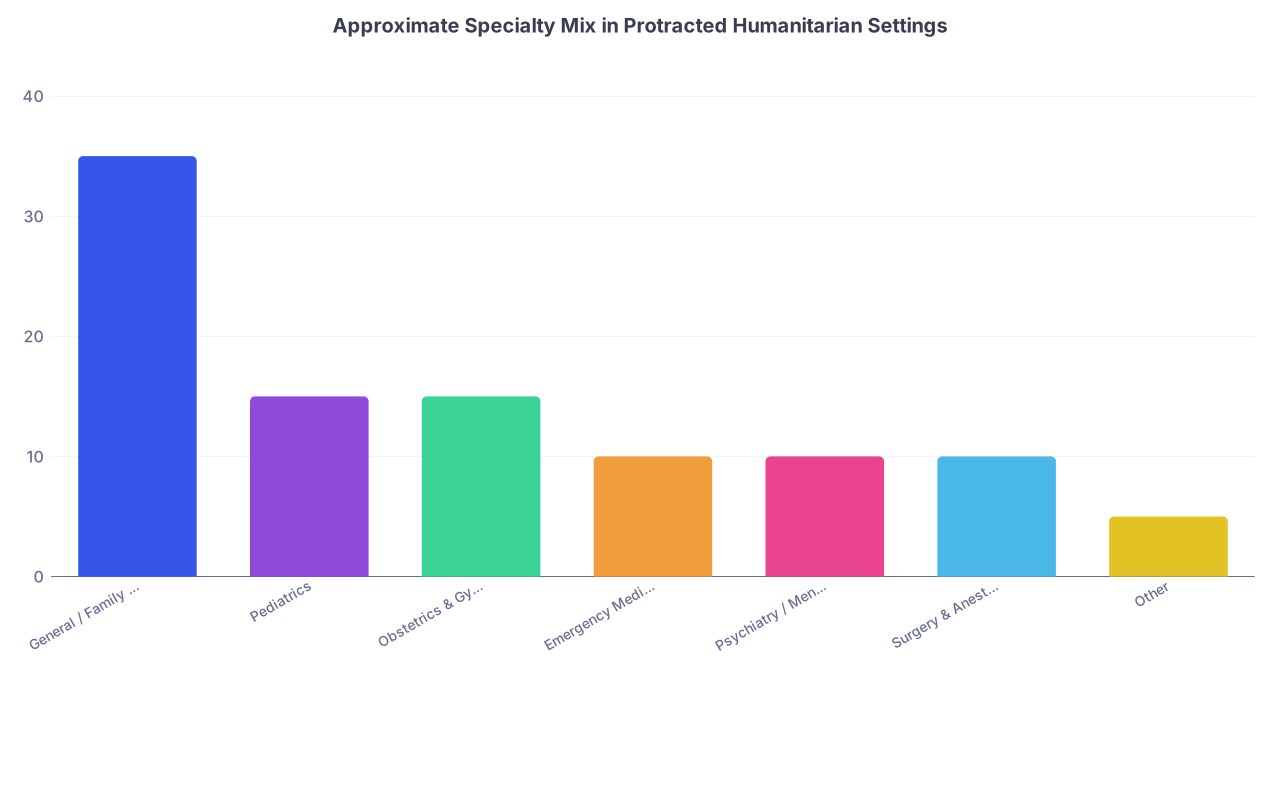
In these longer-term missions, a more realistic composition over time looks like:
| Category | Value |
|---|---|
| General / Family / Internal Medicine | 35 |
| Pediatrics | 15 |
| Obstetrics & Gynecology | 15 |
| Emergency Medicine | 10 |
| Psychiatry / Mental Health | 10 |
| Surgery & Anesthesia | 10 |
| Other | 5 |
The data from agencies running long-standing projects (UNRWA clinics for Palestinian refugees, MSF in South Sudan, ICRC in some protracted conflicts) shows:
- General practitioners and broad internal medicine physicians provide the bulk of consultations.
- Pediatricians and OB/GYN manage a huge share of serious morbidity and mortality.
- Surgery shifts toward cesarean sections, basic emergency surgeries, and fewer major war injuries.
- EM physicians often morph into general practitioners with acute skills.
Put bluntly: if you only want high-acuity trauma forever, you will be frustrated in many humanitarian postings. The long game is primary care and maternal‑child health.
3. Field-by-Field: How Each Specialty Actually Fits
Now the granular view. You want to know not just “who dominates,” but what the field actually looks like for your future specialty. So let us go through the major ones.
3.1 General / Family Medicine and Internal Medicine
These are the workhorses of humanitarian medicine. They may not be glamorous, but numerically they matter most.
Roles they fill:
- Primary care clinics in camps and rural areas
- Inpatient adult medical wards
- TB/HIV care programs
- Chronic disease management (hypertension, diabetes, epilepsy)
- Supervising and training local clinical officers / nurses
Generalists dominate both in headcount and in patient contacts. In many MSF projects, >60–70% of outpatient consultations are essentially primary care–type visits, often managed by local staff under supervision of a limited number of expatriate physicians. Generalists sit at the center of that system.
If you like breadth, like teaching, and can tolerate ambiguity, this is statistically the most “deployable” profile.
3.2 Emergency Medicine
Emergency Medicine is disproportionately represented in expedition and sudden-onset mission rosters relative to its share of the global physician workforce.
Common roles:
- Running triage and stabilization units
- Structuring emergency department flow in field hospitals
- Training local staff on trauma protocols, sepsis care, resuscitation
- Acting as de facto intensivists where no formal ICU exists
- Filling generalist gaps in off-hours
In many deployed EMT Type 2 or Type 3 teams (WHO standards), EM physicians make up 20–30% of the physician cohort in the early phase. They are valued because they can see everything and are comfortable with instability and incomplete data.
From a numbers perspective: if you cross-tab crisis type (sudden vs. protracted) with specialty need, EM’s relative dominance decays over time but spikes early and during active conflict. You get high impact but also high burnout risk.
3.3 Surgery and Orthopedics
Surgery is visible, dramatic, and relatively easy to count—so there is unusually good data. In large war surgery programs, surgeons and orthopedists are often 30–40% of physician staff.
They dominate in:
- Blast and ballistic trauma
- Amputations and limb salvage
- Laparotomies for abdominal trauma
- Cesarean sections when OB/GYN coverage is limited
However, outside of conflict or trauma-heavy disasters, the volume drops. In many long-term projects, the majority of surgical cases are:
- Cesarean sections
- Obstetric complications
- Hernias, appendectomies, cholecystectomies
- Debridement of chronic wounds
So general surgery with solid obstetric and orthopedic trauma capacity is far more useful than narrow subspecialization. A fellowship in hepatobiliary surgery is functionally irrelevant in most field hospitals.
Orthopedists are especially in demand in earthquake and conflict settings, but if they cannot do basic general trauma and external fixation with limited imaging, their practical value is lower.
3.4 Obstetrics and Gynecology
OB/GYN is one of the most underappreciated humanitarian specialties given its impact on mortality.
The epidemiology is straightforward:
- Maternal mortality is heavily concentrated in low-resource, crisis-affected settings.
- Hemorrhage, sepsis, eclampsia, obstructed labor—these do not stop for war or earthquakes.
- Skilled birth attendance and emergency obstetric care change population-level outcomes.
In many protracted settings, obstetric care and cesarean sections are among the top surgical procedures. In some MSF maternity projects, OB/GYN runs the core of the hospital, and other specialties are satellites.
Yet in rapid-response teams, OB/GYN headcount often lags compared with EM and surgery. That mismatch is gradually improving as agencies integrate maternal health into emergency response, but the math remains: OB/GYN is absolutely central for long-term programs, modestly represented in initial waves.
If you want a specialty that is both highly needed and sometimes under-supplied, this is one of them.
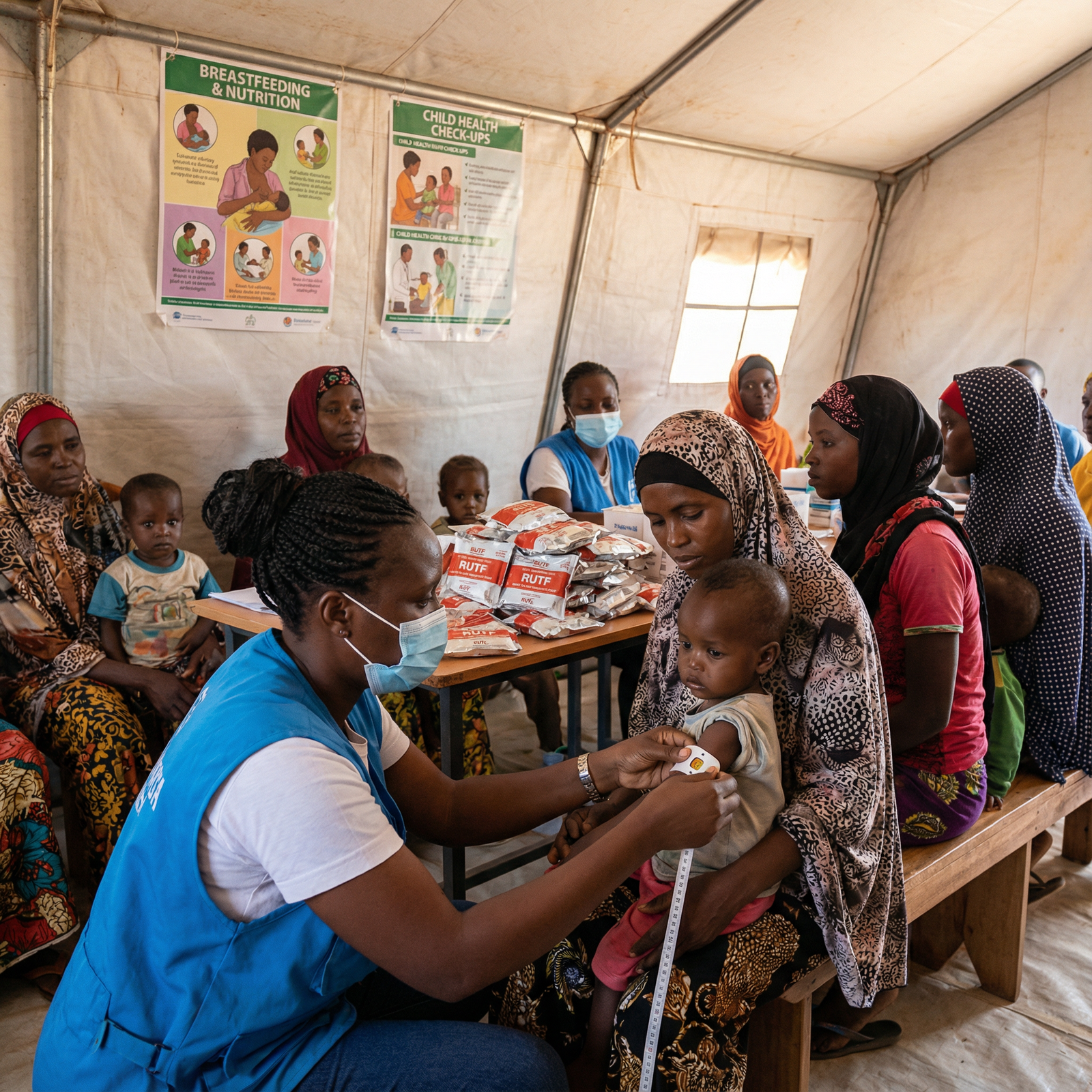
3.5 Pediatrics
Humanitarian populations skew young. In many refugee camps, >40–50% of the population is under 18. Morbidity and mortality are heavily clustered in young children, especially under 5.
So pediatricians play outsized roles in:
- Severe acute malnutrition treatment centers
- Neonatal units and kangaroo care programs
- Pediatric inpatient wards (pneumonia, diarrhea, malaria, measles)
- Outbreak control (measles, cholera, etc.) and vaccination support
Yet, numerically, pediatricians often represent 10–15% of the physician staff, with a lot of pediatric care provided by generalists. That gap is structural: there are fewer pediatricians in many countries, and NGOs often rely on protocols for non-pediatricians.
If you have solid pediatric training and are willing to work with limited diagnostics, your skills are extremely leveraged relative to your numbers.
3.6 Anesthesiology and Critical Care
Look at any functioning surgical program in a conflict zone: anesthesiologists are the limiting factor. Surgeons are easier to find; safe anesthesia providers are not.
Anesthesia and critical care specialists dominate behind the scenes:
- Running operating theatres safely
- Managing spinal, regional, and ketamine-based anesthesia where full resources are unavailable
- Overseeing post-op care and the closest thing to ICU that exists in the field
- Training nurse anesthetists and local anesthesia providers
In deployment rosters, anesthesiologists might only be 10–15% of physicians, but their presence is binary: with them, you can run a surgical hospital; without them, you cannot.
Add critical care skills and you become central in managing sepsis, ARDS, and multi-organ failure when ventilators and monitoring are scarce. The data shows frequent difficulty in recruiting enough anesthesiologists for missions, making it one of the highest-leverage fields per capita.
3.7 Psychiatry and Mental Health
Now to a field that is numerically small but growing quickly in humanitarian missions.
Historically, psychiatrists were rare in deployments. Mental health was pushed to “later” or “if we have extra funding.” That has changed noticeably in the last decade:
- WHO and NGOs now emphasize MHPSS (mental health and psychosocial support) as a core component.
- There is strong evidence for high prevalence of PTSD, depression, anxiety, and substance use in conflict and disaster-affected populations.
- Donors and agencies now expect mental health in program design, not as an add-on.
Still, the actual headcount is low. You might see 1 psychiatrist or psychologist in a team of 10–20 doctors. Much of the frontline mental health work is done by trained lay counselors, social workers, and generalists using mhGAP-aligned protocols.
If you are a psychiatrist, your dominance is not in numbers but in shaping program design, protocols, and training that multiply into thousands of consultations by non-specialists.
3.8 “Niche” Specialties: Radiology, Dermatology, Ophthalmology, Others
What about everyone else?
Blunt answer: you are peripheral for most acute missions. But you are not irrelevant.
- Radiology: Limited imaging (ultrasound, basic X-ray) is widely used, but usually run by generalists or radiographers. Teleradiology helps when complex interpretation is required. A radiologist on the ground is rare.
- Dermatology: Used mainly in long-term neglected tropical disease programs, HIV clinics, and refugee settings with high chronic skin disease burdens. Core in some vertical programs, but not central in broad emergency teams.
- Ophthalmology: Very high-impact in specific campaigns (cataract surgery, trachoma programs) and NTD (neglected tropical disease) initiatives. Outside these, demand is intermittent.
- Oncology, radiation oncology, interventional cardiology, transplant, etc.: Minimal role in acute humanitarian missions. When cancer care is integrated, it is usually via referral networks or small pilot programs, not high-volume field deployments.
So yes, there are roles, but they are narrower, project-specific, and far from dominant.
4. Strategic Takeaways: Training for Real-World Humanitarian Work
If you are trying to choose a specialty with humanitarian impact in mind, you should treat this like a data-driven career decision, not a morality play.
Four clear patterns emerge from the numbers:
4.1 Breadth Beats Narrow Depth
Specialties that dominate missions share one property: breadth. They can handle:
- A wide age range (children to elderly).
- Multiple organ systems.
- Both acute and chronic conditions.
That is why generalists, EM, and broad surgeons are everywhere. Ultra-narrow subspecialization is often a liability in 90% of humanitarian contexts.
If you want to do humanitarian work as a subspecialist, your practical strategy is:
- Train in a system that keeps your general skills alive.
- Be ready to function more broadly than your fellowship name suggests.
- Invest in cross-training (e.g., a cardiologist who can run a general medicine ward, a pediatric subspecialist who can handle general outpatient pediatrics).
4.2 Maternal–Child Health and Trauma Drive the Agenda
Look at mortality and DALY (disability-adjusted life year) tables for crisis-affected countries. Two clusters dominate:
- Maternal and neonatal complications, under-5 infections, and malnutrition.
- Trauma and violence-related injury.
That maps almost one-to-one to:
- Pediatrics, OB/GYN, generalists.
- EM, surgery, anesthesia.
If your training positions you at the intersection of those domains, you are statistically more deployable and more likely to be working near the center of program design rather than at the margins.
4.3 Ability to Teach and Work with Limited Resources Matters More than Title
Field programs lean heavily on task-shifting and training:
- Clinical officers, nurse practitioners, midwives, and community health workers are the backbone.
- Expatriate specialists often see the most complex cases and spend a large share of time building local capacity.
From a raw impact standpoint, a general internist who trains 20 clinical officers to safely manage pneumonia and malaria might prevent more deaths over a year than a single surgeon doing 200 lifesaving operations. Both are critical, but one is clearly more scalable.
If you are not comfortable teaching, adapting protocols, and working without your usual diagnostics, your specialty label will not save you.
4.4 Ethics: Avoid the “Hero” Fantasy
Humanitarian work lures in physicians with images of “saving lives in war zones.” The data tells a more mundane but ethically important story:
- Most consultations are basic primary care, antenatal visits, vaccination, and follow-up of chronic disease.
- Many crises are long-term, not dramatic. You are often doing routine medicine in extreme conditions, not constant mass casualty events.
- Sustainability and respect for local systems matter. Dumping hyper-specialized Western care for six weeks and leaving is usually net negative.
Your specialty choice should be grounded in long-term utility, not a short-lived adrenaline hit.
5. Quick Visual Summary
To tie the dominant fields together, here is a simplified ranking of relative “presence” across mission types. This is not exact; it is a qualitative summary from multiple data sources.
| Specialty Group | Acute Disaster | War Surgery | Protracted Crisis |
|---|---|---|---|
| General / Family / Internal Medicine | Medium | Medium | Very High |
| Emergency Medicine | Very High | Very High | Medium |
| General Surgery & Orthopedics | High | Very High | Medium |
| Anesthesiology / Critical Care | High | Very High | Medium |
| Obstetrics & Gynecology | Medium | Medium | Very High |
| Pediatrics | Medium | Medium | High |
| Psychiatry / Mental Health | Low–Medium | Medium | Medium–High |
And the operational pipeline you are walking into, regardless of specialty, looks roughly like this:

| Step | Description |
|---|---|
| Step 1 | Home Institution |
| Step 2 | NGO Recruitment |
| Step 3 | Pre deployment training |
| Step 4 | Short term high intensity |
| Step 5 | Rotating war surgery |
| Step 6 | Longer term primary care |
| Step 7 | Stabilization and exit |
| Step 8 | Data reporting and evaluation |
| Step 9 | Program redesign and next mission |
| Step 10 | Mission type |
Different specialties just occupy different nodes more intensely.
FAQ (Exactly 3 Questions)
1. Which single specialty gives me the most flexibility for humanitarian work?
Generalist training (family medicine or broad internal medicine) combined with strong acute care skills from Emergency Medicine is the most flexible profile. If you want one residency only, family medicine or internal medicine with substantial global health and acute care exposure will give you the broadest range of roles across both emergency and long-term missions.
2. Are subspecialists (e.g., cardiology, gastroenterology) ever useful on missions?
Yes, but usually in a hybrid role. NGOs rarely deploy subspecialists solely for their niche skills. A cardiologist who can also run a general medicine ward, train local staff in basic ECG interpretation, and manage non-communicable diseases will be useful. A cardiologist who only performs catheterizations is not. Your deployability is tied to your ability to function as a competent generalist under constraints.
3. Do humanitarian organizations prefer residents, fellows, or attendings?
Most major organizations prefer fully trained attendings because missions require independent decision-making with minimal supervision. Some programs accept senior residents or fellows for specific roles, especially if they already have significant generalist or EM experience. The more autonomous and broad your clinical competence, the easier it is to place you in a high-responsibility role.


