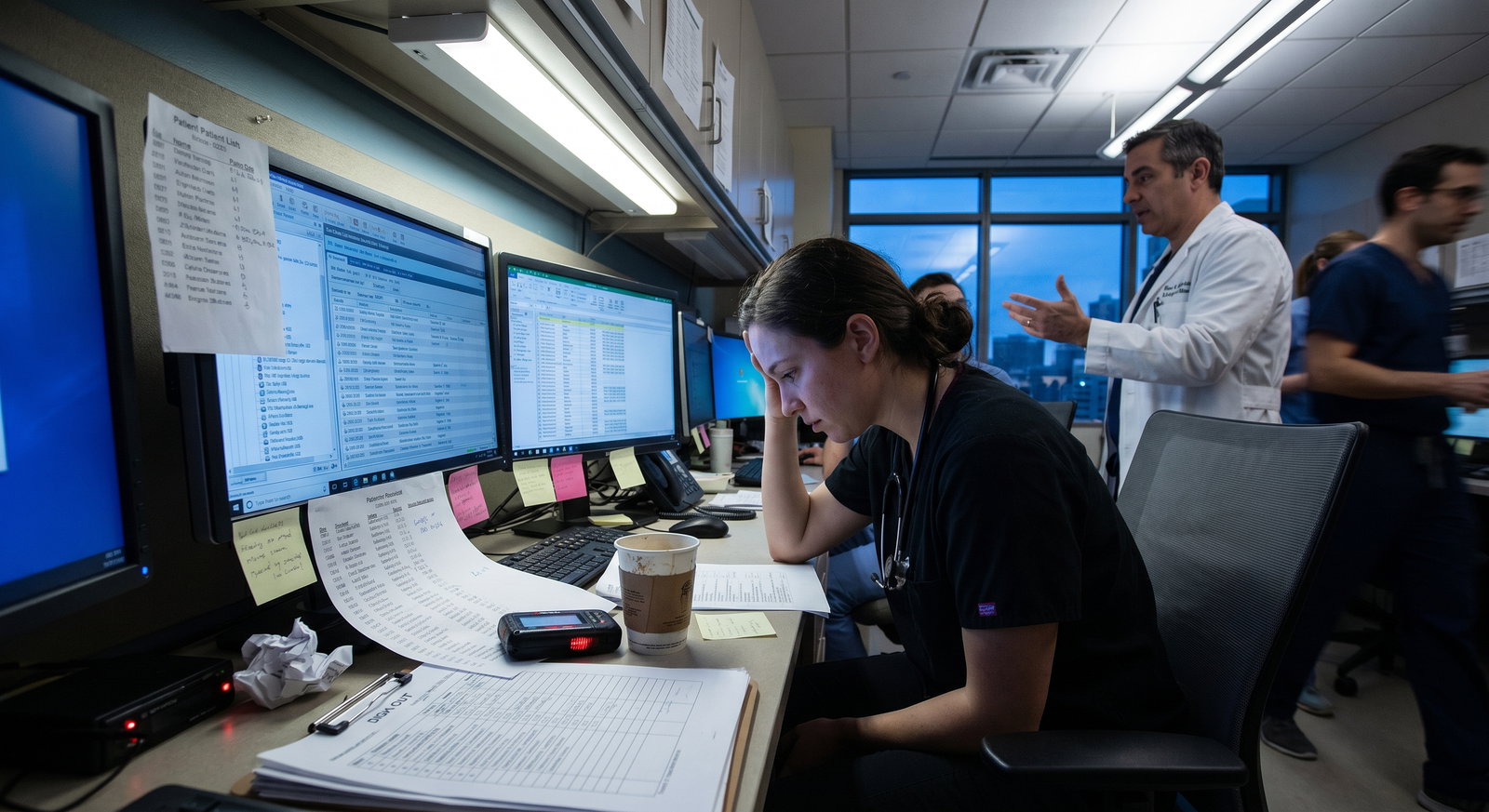
It’s 4:30 PM. You’ve still got a same-day discharge hanging over you. Your pager won’t shut up. The nurse wants the med rec cleaned up. Pharmacy has a question about whether the patient is really supposed to stop the lisinopril. Family is asking when they can leave. Transport hasn’t been called. Your senior is tied up. And somehow the clock starts moving faster after 4 PM.
That’s the real problem with late discharges as an intern: you usually don’t stay late because the work itself is impossible. You stay late because you’re waiting. Waiting for orders, waiting for sign-off, waiting for meds, waiting for paperwork to print, waiting for transport, waiting for somebody to answer a message you should’ve sent an hour earlier.
Here’s the fix. Start earlier than feels necessary. Bundle tasks instead of doing them one by one. Delegate the coordination work that doesn’t require your hands. Use a discharge checklist every single time. Boring? Yes. Effective? Also yes. This is how you stop being the intern printing papers at 7 PM.
Why Discharges Run Late for Interns
Most same-day discharges don’t fail because of one dramatic issue. They die by a pile of little delays:
- medication reconciliation not done early
- attending or senior sign-off still pending
- a lab or imaging result that someone wants reviewed first
- pharmacy needing clarification or fill time
- transport not arranged
- family not ready or not informed
- paperwork and instructions started too late
- follow-up details still missing
The classic intern mistake is doing everything sequentially. First the order. Then the summary. Then the meds. Then talk to nursing. Then patient teaching. Then transport. That approach is a trap. It guarantees idle time between steps, and idle time at 4:45 PM turns into leaving at 6:15 PM.
What’s actually under your control?
Under your control:
- Drafting the discharge summary early
- Prepping the med list
- Identifying likely barriers
- Notifying the nurse early
- Looping in case management and pharmacy
- Asking for attending decision points before the end of the day
- Giving the patient a realistic timeline
Not fully under your control:
- final attending approval
- pharmacy fill speed
- family arrival time
- transport delays
- last-minute insurance nonsense
That’s why you need to work in parallel. If something might become a bottleneck, you move on it before it officially becomes one.
Start the Discharge 1–2 Hours Earlier Than You Think
If a patient looks even remotely likely to leave today, start building the discharge before the order is final. Not recklessly. Just intelligently.
Early signals are usually obvious:
- stable vitals all morning
- tolerating PO
- oxygen back to baseline or off
- mobility acceptable
- no overnight events
- improving labs
- rounds language like “if the creatinine looks okay” or “probably home this afternoon”
That is not the moment to sit back and wait. That’s the moment to pre-chart.
What I’d prep early:
- draft discharge summary
- update problem list
- clean up medication reconciliation as much as possible
- list follow-up appointments or who needs them
- write down discharge teaching points
- identify home needs: oxygen, walker, wound care, antibiotics, rides, family pickup
Think of it as a ready-if-yes workflow. If the team says yes at 2:30 PM, you should be one click away from releasing the bundle, not starting from scratch.
This doesn’t mean finalizing inaccurate information. It means building the frame. You can draft the hospital course, outline the med changes, and plug in follow-up recommendations before the last attending nod. That’s smart medicine. Waiting to start because you want every detail perfect is how interns get trapped. Perfectionism is slow, and slow is what keeps you in the hospital after sign-out.
A good rule: if you’d be annoyed to start the whole discharge from zero at 4 PM, you should’ve started some part of it by 2 or 3.
A Practical Same-Day Discharge Workflow That Prevents Overtime
Here’s the workflow that actually works. Not glamorous. Very effective.
1. Confirm discharge criteria and real blockers
Ask yourself:
- Is the patient truly likely to go today?
- What could still stop this?
- What needs an attending decision?
- What needs someone else’s action?
Name the blockers. Don’t keep them vague. “Pending stuff” is useless. “Needs repeat potassium reviewed, med rec finalized, and daughter needs pickup ETA” is actionable.
2. Tee up the high-delay items first
These are the tasks most likely to create waiting:
- med reconciliation
- discharge orders
- pharmacy questions
- case management needs
- transport/home services
- attending/senior review
Do those first because they trigger downstream work.
3. Notify the people who need lead time
As soon as discharge looks likely, message or call:
- bedside nurse
- case manager/social worker if relevant
- pharmacist if meds are complicated
- senior resident if a decision is pending
Say what’s happening and when you’re aiming for discharge. Hospitals run on lead time. If you wait until everything is perfect before telling anyone, you’ve already lost.
4. Finish the discharge summary while others are moving
Documentation is a good task to do while waiting for callbacks or fills. This is where parallel work matters. Don’t stare at Epic hoping transport will somehow arrange itself.
5. Do concise, focused patient teaching
Keep it to the essentials:
- medication changes
- follow-up plan
- warning signs
- who to call and when to seek care
Not a 25-minute bedside monologue. Clear and tight.
6. Recheck the last-mile logistics
Before you think you’re done, verify:
- prescriptions sent to correct pharmacy
- nurse knows discharge is active
- paperwork printed or available
- family/ride timing known
- follow-up placed or clearly assigned
- pending results addressed in plan
7. If it won’t happen by end of shift, hand it off cleanly
More on that below. But don’t drift into martyr mode. Staying late because “I’m almost done” is how you lose an hour to nonsense.
A simple personal discharge checklist helps a lot. Mine would look like this:
- Decision confirmed
- Major blockers identified
- Nurse notified
- Case management/social work looped in
- Med rec complete
- Prescriptions sent
- Discharge summary drafted/finalized
- Follow-up arranged or documented
- Teaching completed with teach-back
- Transport/family plan confirmed
- Handoff done if not completed
How to Delegate and Escalate Without Sounding Inexperienced
A lot of interns stay late because they’re afraid to ask for help. Bad instinct. The hospital does not reward silent suffering. It rewards people who identify bottlenecks early.
Here’s the clean division of labor:
You own:
- clinical accuracy
- med rec decisions
- discharge summary content
- follow-up plan
- overall coordination awareness
Others can help with:
- Nurse: teaching logistics, confirming ride timing, discharge readiness, printing paperwork in some systems
- Case manager/social worker: home services, placement issues, transport barriers, equipment
- Pharmacist: med access, clarification, high-risk med counseling
- Unit clerk/coordinator: contacting transport, helping with paperwork flow
- Senior resident: decision-making support, escalation, attending coordination
- Attending: final disposition approval, plan clarification, conflict resolution
Use tight communication. Not rambling. Not apologetic.
Good scripts
To nursing:
“Hi, likely discharge for Mr. Lee around 5 if med rec goes through. Any barriers on your end—ride, teaching, paperwork, IV removal?”
To case management:
“Ms. Gomez is likely going home today. The blocker is home oxygen confirmation. Can you help check status now? We’re trying to avoid a late discharge.”
To your senior:
“I’ve drafted the discharge and done med rec. The only blocker is whether we’re stopping the beta blocker given the soft pressures. Can you weigh in so I can release everything?”
To the attending:
“Patient is otherwise ready for discharge. We’re waiting on your sign-off about antibiotic duration. If you’re okay with seven days total, I can send the meds now.”
That does not sound inexperienced. It sounds organized.
What sounds inexperienced? “Just checking in” with no question, no blocker, and no timeline. Don’t do that.
Communicate Early With Patients and Families So You Don’t Get Stuck at the Bedside
A lot of end-of-day discharge chaos starts at 10 AM, when nobody told the patient they were probably going home.
Set expectations early. Even if discharge isn’t final, say something like:
- “If things stay on track, we’re aiming for discharge later today.”
- “I’m going to start getting your paperwork and meds lined up.”
- “Think about who’s picking you up and what questions you want answered before you leave.”
That one conversation prevents a ton of 4:50 PM drama.
Also answer the predictable questions before they become five separate interruptions:
- Which meds changed?
- Do I still take my blood pressure pills?
- When do I follow up?
- What symptoms mean I should call or come back?
- Can I eat normally? Shower? Drive? Work?
Use teach-back, but keep it efficient:
- “Just so I know I explained it clearly, can you tell me how you’ll take the new meds and what would make you call us?”
If they can’t answer, fix it then. Don’t pretend the teaching is done. But don’t get dragged into endless side quests either. Focus on discharge essentials. If the family wants a deep rehash of the entire hospitalization at 5:30 PM, that’s a team issue, not a solo-intern bedside hostage situation.
End-of-Day Tactics: Protect Your Time When the Discharge Is Still Not Done
At the end of the day, stop doing low-yield busywork and focus on the true blocker.
If the actual issue is pharmacy fill or family pickup, don’t waste 30 minutes polishing prose in the discharge summary. If transport is delayed and the patient is otherwise ready, make sure the covering team knows exactly what remains. That matters more than whether your summary reads like literature. It shouldn’t.
Here’s the framework:
Finish before leaving:
- anything affecting immediate patient safety
- key medication decisions
- essential communication with nursing and covering team
- clear discharge status and remaining blockers
- documentation of what’s done and what’s pending
Hand off if needed:
- waiting for transport
- family arrival
- final paper printing
- pharmacy fill completion
- non-urgent clarifications already documented
Good sign-out sounds like this:
- “Room 812 likely discharge tonight. Summary done, meds sent, teaching done. Waiting on daughter pickup and pharmacy fill of apixaban. If meds arrive and ride shows up, okay to discharge.”
That’s safe. That’s professional. And yes, it’s okay to leave after a clean handoff. You’re an intern, not a one-person discharge command center. Don’t stay late out of guilt. Stay only if your presence changes patient safety.
Summary
If you want to stop staying late for same-day discharges, the answer is simple: start before the discharge order is final, attack blockers first, and run tasks in parallel. Most overtime comes from waiting, not working.
The practical formula is:
- Spot likely discharges early.
- Pre-build the summary, med list, and follow-up plan.
- Notify nursing, case management, and pharmacy before you “need” them.
- Handle high-delay items first.
- Teach patients early and briefly.
- Escalate blockers before the end of the shift.
- If the discharge still isn’t done, hand it off clearly and leave safely.
That’s the whole game. Not heroics. Not perfection. Just good systems, good timing, and less avoidable nonsense.
FAQ
1. When should I start discharge paperwork if I think a patient might leave today?
Start as soon as discharge looks likely. Not when the final order lands. If the patient seems like a possible same-day discharge, draft the summary, clean up the med list, sketch the follow-up plan, and write down the teaching points early. Waiting for official confirmation is the mistake.
2. What should I do first if I get told a patient is going home this afternoon?
First, identify the real blockers. Pending labs, med rec, attending sign-off, pharmacy issues, transport, family readiness. Name them specifically, then tackle the items that delay everything else. Usually that means orders, med rec, and communication.
3. How do I avoid being the intern who is still printing papers at 7 PM?
Don’t stack tasks one by one. That’s the whole problem. Prep the discharge bundle early, notify the nurse and case manager as soon as discharge is likely, and keep a checklist so you’re not rediscovering missing pieces at the end of the day.
4. What tasks can I delegate on a discharge?
You can delegate a lot of coordination work: asking nursing about transport and ride timing, looping in case management, checking pharmacy status, confirming teaching logistics, or getting help with workflow steps on the unit. You still own the clinical decisions, the med rec accuracy, and the discharge plan.
5. How do I ask my senior or attending to help without sounding unprepared?
Be specific. Say what the blocker is, what you’ve already done, and what decision you need. For example: “I finished the summary and med rec. The only issue is whether we’re stopping the ARB with the AKI recovery. Can you confirm so I can discharge him?” That sounds prepared, because it is.
6. What if the patient or family keeps adding questions right before discharge?
Acknowledge the questions, but keep the conversation focused on discharge essentials: medications, warning signs, follow-up, and when to seek help. If the discussion is expanding into a full end-of-day case conference, pull in backup. Don’t let one unfocused bedside conversation derail the whole evening.
7. Is it ever okay to leave before a discharge is completely wrapped up?
Yes, if patient safety is covered and you’ve given a clean handoff. You should not stay late for tasks that can be safely completed by the covering team, like waiting for a ride or final paperwork flow. But don’t leave an unsafe gap. Finish the critical clinical work, document what’s pending, and sign it out clearly.