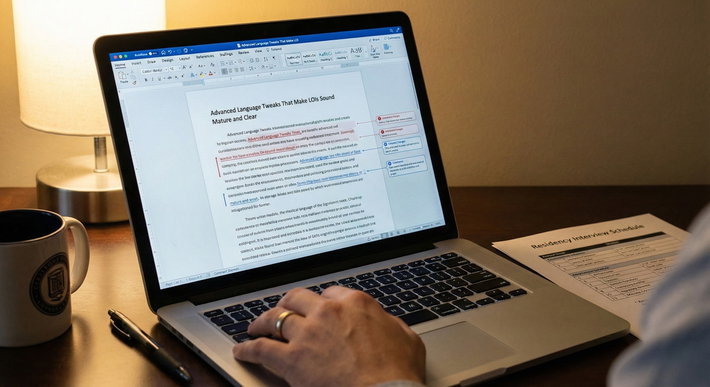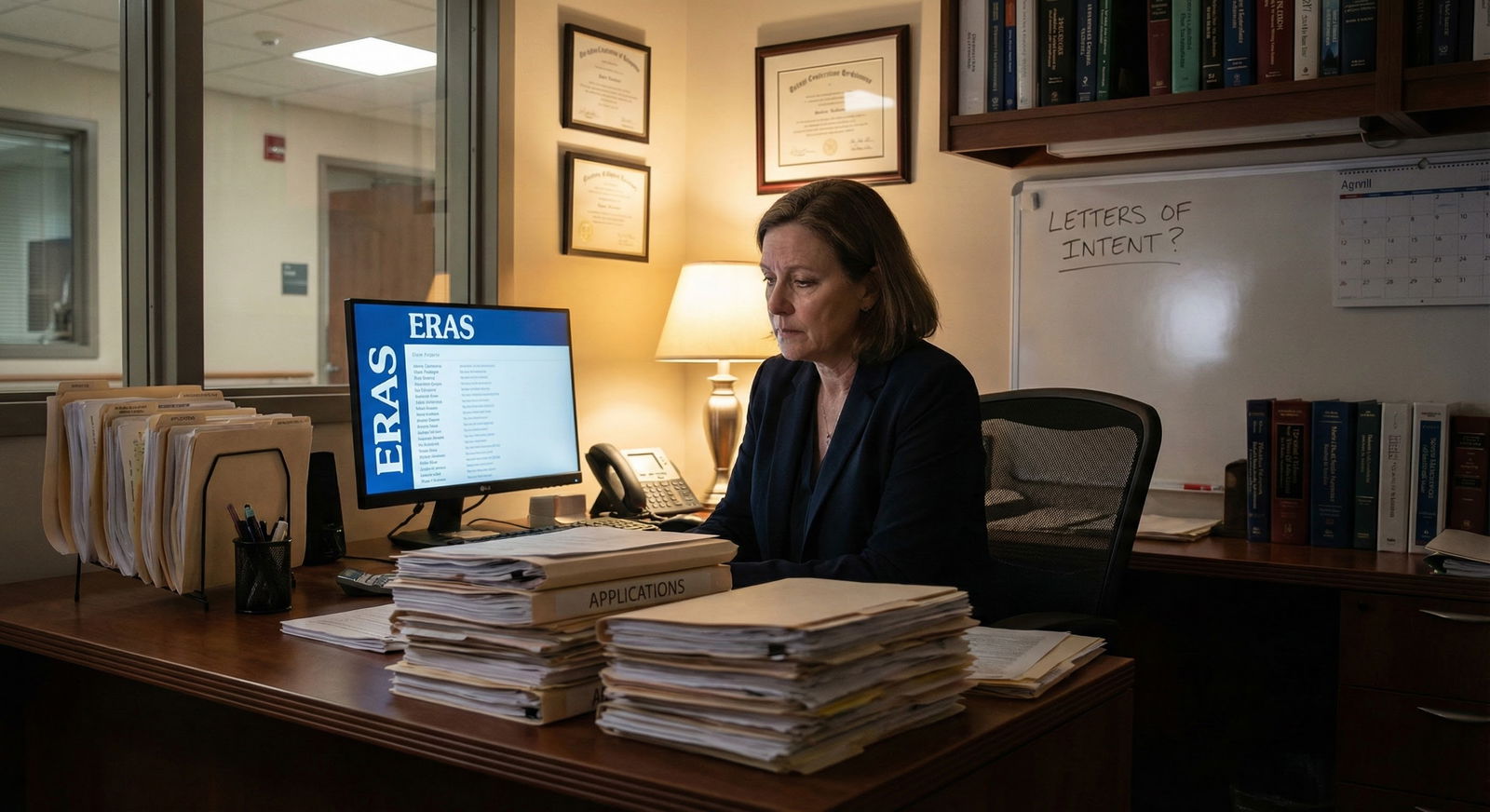
The obsession with handwritten letters of intent is misplaced. In 2026, they’re not more “personal.” They’re mostly a logistical headache wrapped in nostalgia.
You’re being sold a story: that cursive ink on thick paper will melt a program director’s heart and magically bump you up the rank list. That story is comforting. It’s also not supported by how residency selection actually works, how PDs read (or do not read) your communication, or any meaningful data.
Let’s unpack what’s real, what’s fantasy, and where a letter of intent actually moves the needle.
The Myth: Handwritten = More Genuine, More Impactful
Here’s the standard lore that gets passed around on Reddit, from upperclassmen, and occasionally from overly romantic faculty:
- “Handwritten shows you care more.”
- “Nobody sends mail anymore, you’ll stand out.”
- “It feels more personal than another email.”
- “Programs get so many emails, but a physical letter gets noticed.”
Sounds great. Also mostly wrong in the current system.
Programs aren’t sitting in a quiet wood-paneled office savoring your stationery. They’re triaging hundreds of applicants, juggling service coverage, ACGME requirements, and a spreadsheet-driven rank meeting. Anything that doesn’t plug into their workflow cleanly? Low priority.
The bar for “personal” is not the medium. It’s the content and the credibility of what you’re saying.
What the Evidence and Reality Actually Show
Let me be blunt: there is no high-quality, peer‑reviewed study showing handwritten letters of intent outperform email letters of intent in match outcomes.
What we do have:
- Surveys of program directors (PDs) about post-interview communication
- Data on what PDs value in applicants
- The real constraints of how rank lists are made
- Firsthand reports from PDs and coordinators who’ve seen this play out for years
What PDs Say About Post-Interview Communication
Look at NRMP Program Director Survey data and specialty‑specific surveys over the last decade. The themes repeat:
- Programs vary widely in how much they want or believe post-interview communication.
- Many explicitly ignore it to avoid bias and legal/ethical mess.
- A significant subset of PDs do appreciate clear communication of genuine interest, especially when deciding between very similar candidates.
But note what’s missing: no one is saying, “Handwritten letters specifically changed our ranking.” The variable that matters is the signal of sincere commitment, not whether that signal arrived via USPS or Gmail.
Where medium does matter, PDs are more likely to care about:
- Timing (too late = useless)
- Clarity (no hedging, no mixed messages)
- Consistency (your “top choice” story matches what they hear from others or see in your application)
Not cursive vs keyboard.
How Programs Actually Process Your Letter
Here’s how this plays out in real life, based on what PDs and coordinators describe:
Scenario A: Email letter of intent
- You send a concise, clear email to the PD and CC the coordinator.
- Coordinator drops a note in your file or your interview spreadsheet row: “LOI – says we’re #1.”
- When the rank committee meets, PD already knows which candidates have expressed top interest. That may help break ties or give a tiny bump to candidates on the cusp.
Scenario B: Handwritten letter
- Your letter arrives… at some random mailroom.
- Maybe it gets sorted and sent to the department. Maybe someone misfiles it.
- If the coordinator is sharp and not buried, they might scan it or summarize it into your file.
- By the time the committee meets, what matters to decision-makers is still a line in a spreadsheet, not the physical artifact.
So even if you handwrite a beautiful, poetic letter, it almost always gets converted back to text in the system that actually runs the rank list.
If your “personal” effort dies in the mailroom or gets glanced at once and never logged? You’ve done a lot of work to influence no one.
Where Handwritten Letters Do and Don’t Matter
Let’s separate signal from noise.
What Actually Matters
- You clearly commit: “You are my unequivocal first choice and I will rank you first.”
- You’re specific about why: program features, people, curriculum, geography—details that show you understand them as them, not as a generic “top-tier program.”
- You’re believable: your story, geographic ties, and past behavior line up with your claim.
- You’re respectful of ethics and policies: no pressuring them to reciprocate, no “if you rank me high I’ll rank you high” garbage.
You can do all of this in an email. And that’s how most PDs expect to receive it.
What Mostly Doesn’t Matter
- Expensive stationery
- Fountain pen vs ballpoint vs keyboard
- Cursive vs block print
- Whether you mailed it vs clicked send
Handwritten is not a magical “humanity multiplier.” If your letter is generic, vague, or obviously copy-pasted between programs, fancy paper just makes it easier to see your effort was misplaced.
The Practical Risks of Handwritten Letters
This isn’t just “no evidence of benefit.” There are actual downsides.
1. Delays and Mistiming
Rank list deadlines are not suggestions. And USPS is not fast or predictable everywhere.
If you’re mailing a letter:
- You need extra lead time (often 1–2 weeks buffer).
- Snowstorms, holidays, or hospital mailroom delays can kill your timing.
- PDs may have already had their big ranking meeting before your letter’s even opened.
Email lands instantly. That matters when everyone is operating on tight, fixed deadlines.
2. Getting Lost or Ignored
You know what PDs and coordinators reliably check? Their email.
You know what can disappear into the ether?
- Mailrooms
- Stacks on someone’s desk
- Piles of marketing mail and pharmaceutical flyers
I’ve seen programs where the coordinator discovered a handwritten letter after rank list certification. At that point, it’s dead content. Might as well have written it in invisible ink.
3. Accessibility and Legibility
Not everyone reads cursive easily. Some PDs are international graduates. Some just haven’t looked at cursive in 20 years. Some have vision issues.
If they have to squint or guess what you wrote? You’ve introduced friction where you needed clarity.
With email, legibility is a solved problem.
What “Personal” Actually Looks Like to a PD
You want to feel “personal”? Do this:
- Reference specific people you met: “My conversation with Dr Smith about your critical care elective confirmed that the teaching culture I saw on interview day is exactly what I’m looking for.”
- Mention real program features: “Your 4+2 schedule, the protected academic half-day, and the chance to work in both the VA and county hospital make this my top choice.”
- Tie it to your actual story: “As someone who grew up in this region and wants to stay here long-term, your program’s patient population and community engagement align exactly with my goals.”
That’s personal. That’s memorable.
None of that requires ink.
When, If Ever, a Handwritten Letter Might Be Reasonable
I’m not saying there is never a scenario.
Rare edge cases:
Very small, relationship‑heavy programs
Some tiny community programs or niche fellowships where you’ve built a longstanding relationship with the PD over away rotations, years of emails, and maybe multiple visits. Then a short, handwritten note in addition to an email might land well—almost like a thank-you card to someone you actually know.Following a genuine, deep mentorship relationship
If a PD or faculty member has been a mentor for years and knows you personally, a handwritten note can be a human courtesy. But that’s about the relationship, not strategy.Programs that explicitly say they value or welcome mailed letters
Very rare, but if a program literally states they’re old-school and love physical letters, fine—follow their preference.
Even in these scenarios, I’d still send a clear email that your intent exists. The handwritten note is extra, not the primary vehicle.
How PDs Actually Rank You: The Bigger Picture
Here’s what repeatedly comes out of surveys and rank meeting anecdotes:
Top influences tend to be:
- Interview performance (especially perceived fit and professionalism)
- Letters of recommendation and reputation of your home/away institutions
- USMLE/COMLEX scores and exam performance (Step 1 may be pass/fail, but Step 2 still matters)
- Clerkship grades and clinical performance
- Research and interest signals for competitive specialties
- Red flags (or lack of them)
Post-interview communication—all forms of it combined—is usually in the “minor but sometimes useful” category.
| Factor | Typical Impact Level |
|---|---|
| Interview performance | High |
| Letters of recommendation | High |
| Board scores / exams | Moderate–High |
| Clinical grades | Moderate–High |
| Personal statement | Moderate |
| Post-interview communication | Low–Moderate |
Notice what’s not on that list as a separate category: handwritten vs email format.
The Ethics and Optics Problem
Another risk people don’t talk about enough: handwritten letters can come off as manipulative or naive if they’re overdone.
I’ve heard PDs say things like:
- “They’re trying too hard.”
- “This feels like a love letter, not a professional communication.”
- “Why did they send a physical letter when we explicitly said not to send post-interview materials?”
If a program’s website or pre-interview session says “Please do not send post-interview communications” and you mail a handwritten letter anyway? You didn’t look “more committed.” You looked like you don’t follow instructions.
Ethically, you also have to stay on the right side of NRMP rules and institutional policies. Some places are very strict about not using post-interview communication to alter rank lists. The more pressure or emotional manipulation your letter signals, the worse it plays.
So What Should You Actually Do?
Here’s the no-romance, evidence-aligned, time-efficient approach.
1. Decide if you’re actually sending a letter of intent
- Send one true letter of intent to the program that really is your top choice.
- Do not lie and send multiple “you’re my #1” letters. PDs talk. And yes, they catch applicants doing this.
For other programs you like, you can send a “letter of interest” or “ranked highly” email. Just don’t mislabel it as an absolute commitment.
2. Use email as your default
Email the PD and CC the coordinator. Clear subject line:
“Letter of Intent – [Your Name], [Specialty] Applicant”
Keep it:
- One screen long on a phone
- Specific
- Professional
- Honest
That message will make it into the system that matters.
3. Only handwrite if it’s additive and context-appropriate
- You know the PD well.
- The program is small and relationship-based.
- They haven’t discouraged physical mail.
- You still send an email communicating intent in a clean, trackable way.
In that case, fine—handwrite a brief thank-you style note. But recognize: this is courtesy, not strategy.
The Future: Even Less Room for Romantic Gestures
The direction of medical education and residency selection is clear: more structure, more standardization, more systems.
We’re seeing:
- Centralized, digital application platforms
- Preference signaling tokens
- Standardized letters of evaluation formats
- Programs openly stating they ignore post-interview contact
This environment does not reward fussy, analog strategies. It rewards clarity, honesty, and alignment.
You’re not going to “hack” an algorithm-driven, committee-based process with textured stationery.

| Step | Description |
|---|---|
| Step 1 | Applicant writes LOI |
| Step 2 | Coordinator logs note |
| Step 3 | Mailroom and desk pile |
| Step 4 | Included in rank discussion |
| Step 5 | No impact on ranking |
| Step 6 | Medium |
| Step 7 | Reaches coordinator in time |
Key Takeaways
- Handwritten letters of intent are not inherently more “personal” or more effective; content, clarity, and credibility matter far more than ink on paper.
- Email is the safest, most reliable, and most aligned medium for letters of intent in residency and fellowship applications; it plugs directly into how programs actually make decisions.
- If you ever send a handwritten note, treat it as optional courtesy layered on top of a clear email—not as the main strategic tool that will move your rank position.