
The polite fiction that “all applicants are equally excited about every program” is dead. The data killed it.
Residency and fellowship programs care about “true interest” because their spreadsheets tell them to. Attrition, remediation, unfilled spots, and culture conflicts all trace back—disproportionately—to people who never really wanted to be there. Once you look at the numbers, chasing lukewarm candidates looks irrational.
You are writing letters of intent into a world where program directors obsess over retention and fit metrics. If your strategy ignores that, you are playing the wrong game.
Why Programs Obsess Over Retention (The Hard Numbers)
Let’s start with the part nobody explains on interview day: a single resident leaving is expensive. Quantifiably expensive.
Multiple GME cost analyses converge on similar ranges. A conservative composite:
- Direct recruitment cost to replace a resident: $15,000–$30,000
- Lost clinical productivity (resident + supervision overhead): $50,000–$100,000
- Disruption cost (scheduling, morale, onboarding time, quality hits): hard to price, but program leaders routinely estimate “six figures equivalent”
Call it $80,000–$150,000 per resident who leaves or has to be replaced midstream. In a 30-resident program, losing 1–2 residents per class over a 3-year cycle easily pushes the 7–10% attrition mark. That is hundreds of thousands of dollars effectively burned.
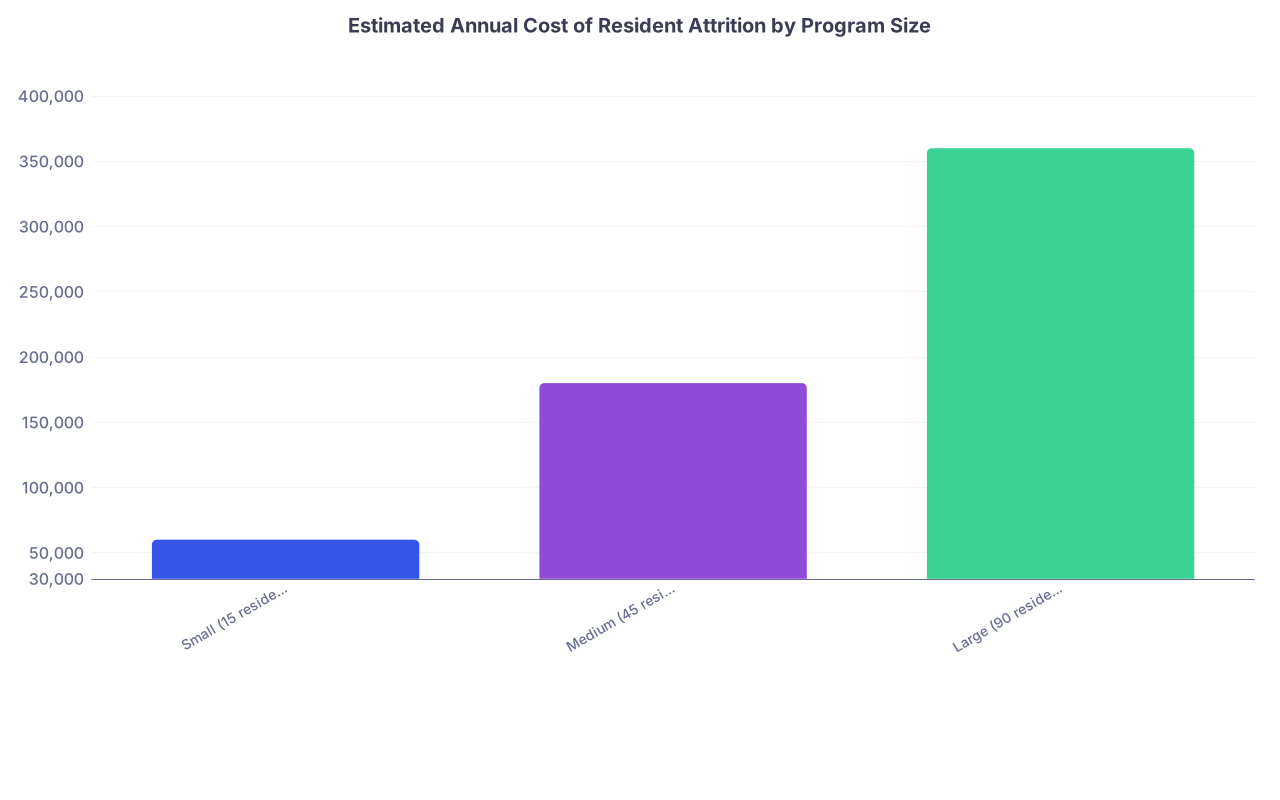
| Category | Value |
|---|---|
| Small (15 residents) | 60000 |
| Medium (45 residents) | 180000 |
| Large (90 residents) | 360000 |
Those numbers are not theoretical. I have seen dashboards where DIOs (Designated Institutional Officials) stare at attrition bars next to ACGME citations. High attrition correlates with:
- Higher risk of ACGME concern or warning
- Worse resident satisfaction scores
- Lower board pass rates
Programs read the pattern as: retention is a proxy for overall health. And “true interest” is one of the levers they can pull before the match to improve retention.
So they pull it. Hard.
Match Data, Unfilled Spots, and the Cost of Being Wrong
Now layer on NRMP outcomes. The most anxious emails I see from PDs are not about “Did we rank the #1 med student at X school?” They are about: “We went partially unfilled again. What are we doing wrong?”
Look at three classes of programs:
- Elite (always fill, lots of over-subscribed applicants)
- Mid-tier but stable (occasionally scramble, generally fill)
- Vulnerable (regularly unfilled, heavy SOAP dependence)
The third group lives and dies by yield and retention. But the second group is starting to behave the same way because the competition for strong, genuinely committed residents has intensified.
Unfilled positions and SOAP carry their own cost profile:
- Lower control over incoming residents
- Compressed onboarding and culture fit evaluation
- Higher risk of misalignment and later attrition
Programs that track this carefully see a pattern: applicants who expressed specific, genuine interest—emails, letters of intent, clear ties—have:
- Higher probability of ranking the program in their top 3
- Higher probability of staying for the full training period
- Better subjective “fit” scores from faculty and chief residents
This is why your letter of intent is not “just a courtesy note.” It is a small but quantifiable signal in their risk model.
“Fit” Is Not Vibes. It Is a Risk Score.
The word “fit” gets abused. It sounds fluffy. Program directors do not experience it that way. They may not call it a “fit model,” but functionally that is what they are building across:
- Application review
- Interview day
- Post-interview debriefs
- Reference calls
A crude but realistic mental model several PDs use looks like this:
- Clinical capability: 0–10
- Professionalism / reliability: 0–10
- Culture fit: 0–10
- True interest: 0–10
Nobody writes those numbers formally. But listen to how selection meetings go:
- “She is excellent, but I am not convinced we are in her top five.”
- “He clearly wants to be in this city, strong family ties.”
- “Her email after the interview was generic, same as what she sent to my colleague at the other program.”
They are trying to reduce future regret. Not just “Will this person perform?” but “Will this person stay and thrive here?”

If you want to influence their “true interest” score, your letter of intent has to give them something they can describe in that room in one sentence. “She wrote that she would absolutely rank us #1 because of X, Y, Z that only we offer.”
Vague enthusiasm does not move the number.
How Programs Infer “True Interest” Before They Ever See Your Letter
Letters of intent are one piece of the puzzle. Not the first, and not the only.
Programs quietly track behavioral indicators long before your formal letter hits their inbox. Common signals:
Geography:
- Medical school or prior training in their region
- Family or partner location you mention
- Previous rotations or sub-Is at that institution
Application pattern:
- Did you apply only to ultra-competitive big-name programs, or a logical cluster including theirs?
- For IMGs/DOs: does your pattern suggest “apply everywhere” or a targeted set where you plausibly match and settle?
Communication:
- Thoughtful pre-interview or post-interview emails identifying specific faculty or tracks
- Attending virtual open houses or second-look events (yes, some programs track attendance)
Interview behavior:
- Questions that show homework vs generic “tell me about your program”
- Comments like “I could really see myself here because…” followed by something concrete
By the time you send a letter of intent, you are not starting from zero. You are either reinforcing a pattern of believable interest or fighting against a data trail that screams “backup option.”
Programs care because they have internal numbers like:
- Residents with strong stated geographic/family ties to the area: 2–3% attrition.
- Residents with no ties and a track record of chasing prestige: 10–15% attrition.
They may not publish those numbers, but many have them. And when you have that kind of spread, you pay attention.
What the Data Suggests About Letters of Intent
Let’s talk about the signal-to-noise ratio.
Programs at different competitiveness levels report something like this:
- Top 10–15 programs in a given specialty: receive hundreds of “you are my #1” letters that are obviously not all true
- Mid-range academic and strong community programs: receive a smaller set of letters, easier to track and weigh
- Programs that occasionally struggle to fill: may get a small handful of serious letters, which they treat almost like commitments
Directors are not naïve. They know many applicants “double commit.” The question they ask is not “Is this letter perfectly honest?” but “Does this letter, combined with the rest of the record, shift the probability that this person will actually rank us high and stay?”
What moves the needle most:
- Specific alignment that is hard to fake across 20 programs.
- Coherence with your geographic and career story.
- Evidence you understand both the strengths and the limitations of the program and still want it.
Put another way: they are evaluating your letter against their existing data on you. It is a Bayesian update, not a blank slate.
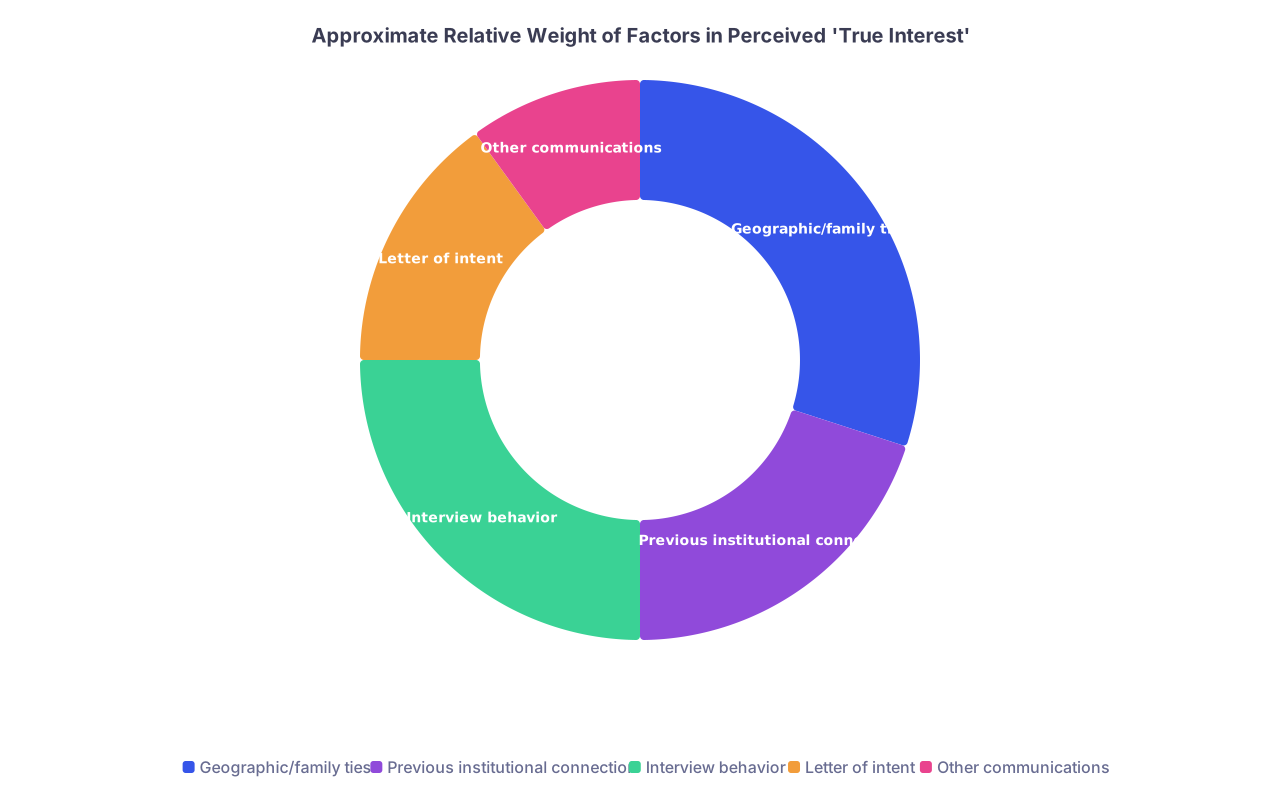
| Category | Value |
|---|---|
| Geographic/family ties | 30 |
| Previous institutional connection | 20 |
| Interview behavior | 25 |
| Letter of intent | 15 |
| Other communications | 10 |
Notice the letter is not 50%. It is not nothing either. Roughly 10–20% of the “true interest” impression, depending on the program.
Fit and Future Performance: Correlations Programs Actually Care About
Programs do not chase “fit” out of sentimentality. They do it because their internal data correlates fit and interest with downstream performance.
Patterns I have seen from internal QI projects across several institutions:
- Residents rated high on “program fit” by chiefs at the end of PGY-1 had significantly fewer professionalism or remediation issues over training.
- Those same residents were more likely to take on leadership roles (chief, QI leads, committee representation).
- “Borderline” fit residents were overrepresented among transfers, leaves of absence, and non-renewals.
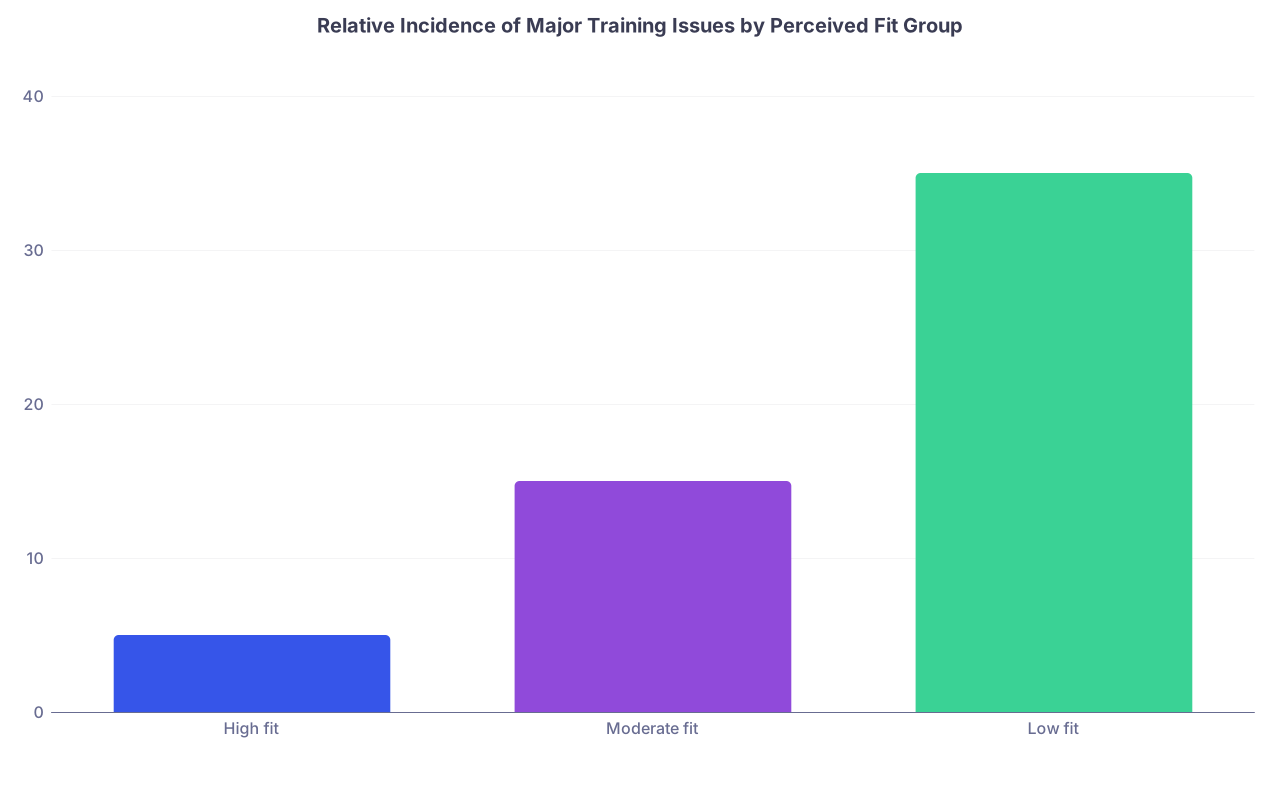
| Category | Value |
|---|---|
| High fit | 5 |
| Moderate fit | 15 |
| Low fit | 35 |
The direction is clear. Low perceived fit ≈ higher downstream cost and headache.
Now layer “true interest” onto this. When you listen to post-hoc reviews of problem residents, you hear the same refrain: “We were never sure he really wanted to be here in the first place.” That perception tends to show up in the file if you look:
- Vague or generic interest notes
- Last-minute cancellations or rescheduling for interview
- Non-specific or absent follow-up communication
So your letter of intent is not about flattery. It is about de-risking yourself in a system that is trying to minimize the chance you become a future red flag.
Strategy: Writing a Letter of Intent That Actually Hits Their Metrics
You are not writing a love poem. You are writing a data point.
To align with how programs think, your letter should answer three questions clearly:
- How likely are you to rank us at or near the top?
- Why does your long-term plan make our program a logical, stable home?
- What evidence should we quote in the selection meeting when we argue to rank you higher?
The third question is the one people neglect. You want to give them repeatable, one-sentence talking points that sound compelling in a room full of skeptical faculty.
Done well, a program director’s notes on your file after your letter might look like:
- “Stated we are #1 and only program with X track + Y patient population they want.”
- “Partner already employed in city, extended family within 1 hr drive.”
- “Interested in academic career with heavy QI; we have exactly that niche.”
Those bullet points become your “fit profile” in that risk calculation.
| Aspect | Weak Signal Example | Strong Signal Example |
|---|---|---|
| Ranking statement | "I will rank you very highly." | "I will rank your program first on my list." |
| Program specifics | "I love your curriculum and teaching." | "Your X track and Y clinic match my Z career plan." |
| Geography / stability | "I like the city." | "Partner has permanent job here; close to my parents." |
| Prior connection | None mentioned | "Completed Sub-I here; mentored by Dr. A and Dr. B." |
| Future alignment | "I want to be a good clinician." | "I aim for academic role in X; your alumni data shows it supports that." |
If you cannot fill the strong column honestly for a program, you probably should not be writing them a “you are my #1” letter. They will sniff out the generic.
The Future: More Data, Less Guesswork, Higher Stakes for Authenticity
The direction of travel is obvious: more data collection around resident performance, wellness, and retention; more pressure on programs to “justify” their match decisions as part of institutional accountability.
I expect to see, over the next 5–10 years:
- More institutions building simple internal models correlating pre-match signals (geography, prior rotation, letters, expressed interest) with retention and performance.
- More structured fields in interview rubrics specifically rating “perceived true interest” and “program fit,” not just “overall impression.”
- Increased skepticism toward obviously copied, generic, or contradictory letters of intent.
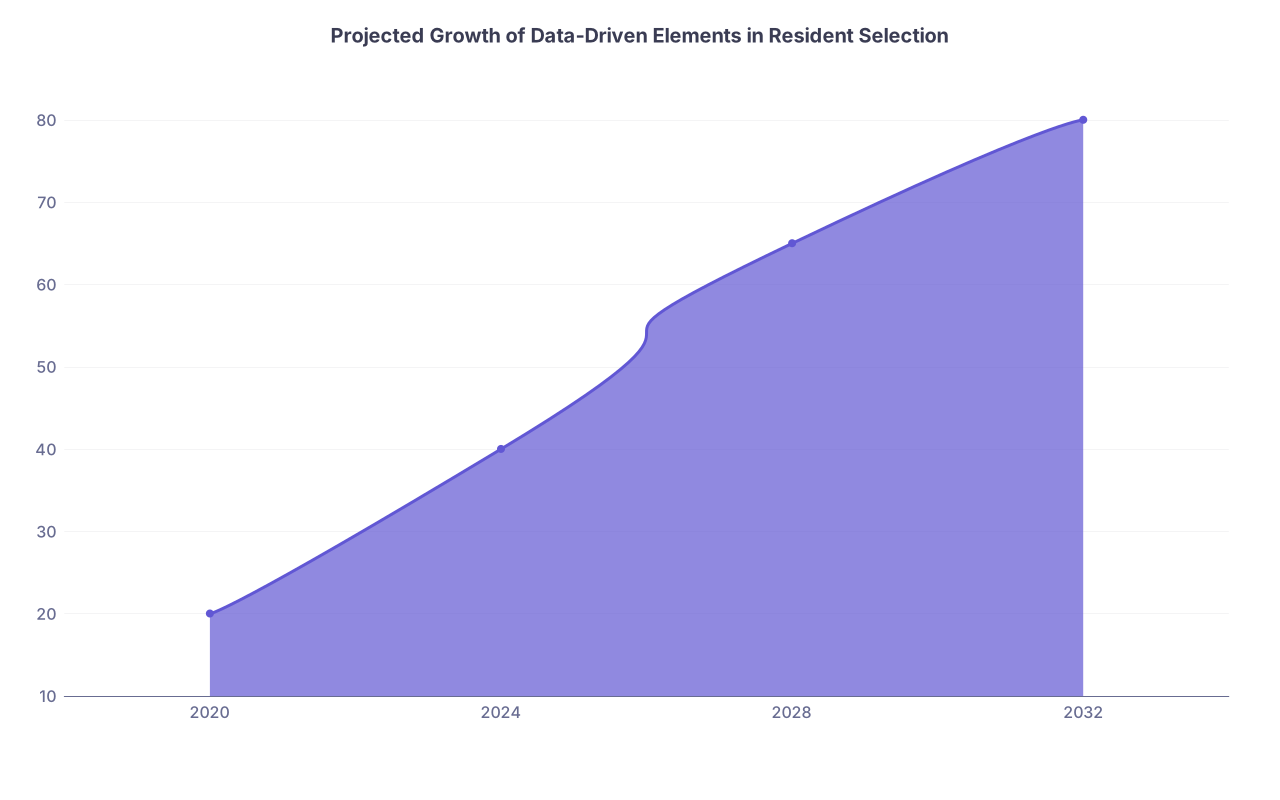
| Category | Value |
|---|---|
| 2020 | 20 |
| 2024 | 40 |
| 2028 | 65 |
| 2032 | 80 |
If you are gaming letters with copy-paste enthusiasm across 10 programs, you are on the wrong side of that trend. Programs will get better at pattern recognition: matching phrases, inconsistent “you are my #1” across different communications, and misalignment with your described goals.
On the other hand, if your signals are coherent—application pattern, interview comments, geography, and letter all telling the same story—data-driven selection only helps you. You become the low-risk, high-yield candidate their metrics favor.

How You Should Adjust Your Letter of Intent Strategy
Given all this, here is the blunt version of a rational strategy:
- Pick one program for a clear “you are my #1” style letter if allowed in your specialty norms. Lying to multiple programs is not just unethical; it is strategically dumb as data tracking improves.
- For that program, write a letter with hard, specific reasons that match their known features and your documented history.
- For a small set of other programs you genuinely like, consider interest letters that do not falsely claim #1, but still articulate fit and likelihood to rank them highly.
- Let your geography, rotations, and email communication tell the same story your letter tells. Consistency is a data asset.
Do not overestimate the letter. It does not rescue a weak application. But underselling your genuine interest in a program that is a real fit is leaving value on the table. You are ignoring a lever that can meaningfully tilt your probability of a good match.

Key Takeaways
- Programs care about “true interest” because their numbers link it directly to retention, performance, and cost; one bad attrition event can easily exceed $100,000 in impact.
- Your letter of intent is a weighted data point in their implicit risk model—most powerful when it is specific, consistent with your overall story, and clearly differentiates that program from your other options.
- The future of selection is more analytics-driven, not less. Authentic, data-consistent expressions of interest will be increasingly rewarded; generic flattery will be increasingly ignored.
FAQ
1. If I genuinely have two top programs, is it better to send “you are my #1” letters to both or to neither?
Sending conflicting #1 claims undermines your credibility and will age poorly as programs adopt more data sharing and pattern recognition. Pick one for a true #1 letter. For the other, send a strong interest letter that stops short of a ranking claim but still articulates concrete fit and high likelihood of ranking them near the top.
2. Do community programs care about letters of intent as much as academic programs do?
They often care more. Community programs, especially those outside major metros, tend to be more sensitive to retention risk because backfilling a lost resident strains their smaller teams. A well-argued letter showing geographic ties and long-term stability can significantly improve how “safe” you look as a candidate.
3. Will not sending any letter of intent hurt my chances everywhere?
No. Many applicants match well without sending letters. But at programs where your application is borderline or where they worry you see them as a backup, a targeted, data-consistent letter can move you up the rank list. Think of letters as variance reducers: not mandatory, but helpful in converting “maybe” into “probably” when your genuine interest is high.