

You are here
You are standing just outside a patient’s room.
Your stomach is tight. Your brain is replaying the last 12 hours on a loop. A medication dose error. A missed lab. A delay in calling a consult. Whatever it was, it crossed the line from “near miss” to “actual harm or significant risk.”
Risk management knows. Your attending knows. The nurses know. Now you have to walk in there and tell the patient and family.
And you are thinking:
- What exactly do I say first?
- How much detail do I give?
- Do I say “error” or “complication”?
- How do I apologize without sounding like I am admitting legal liability?
You do not need another lecture about “importance of transparency.” You already agree with that. You need a script. A structure. Something you can hold onto when your heart rate hits 120.
That is what this is: a step‑by‑step, word‑for‑word framework you can adapt in real life.
I will walk you through:
- What to do in the 15–30 minutes before you enter the room
- A clear script for the disclosure conversation, with exact phrases
- How to handle anger, blame, and questions you cannot answer yet
- How to follow up so this is not just a one‑time, awkward confession
This is written from the perspective of someone who has sat in these rooms, listened to residents stumble through apologies, and watched families decide in real time whether to trust us ever again.
Use this like a checklist the next time you are in that hallway.
Step 0: Before You Open the Door
If you can, do not go in cold. The 15–30 minutes before disclosure are where you set yourself up to avoid digging deeper holes.
1. Stabilize the medical situation (as much as possible)
Priority order:
- Ensure the patient is medically stable or appropriately escalated.
- Correct the error if it is still ongoing (e.g., stop incorrect med, get reversal agent, repeat critical labs).
- Call senior help if needed (attending, fellow, chief).
You cannot disclose effectively while a preventable catastrophe is actively unfolding. Your first ethical duty is to mitigate harm.
2. Notify the right people
At minimum:
- Your attending (always)
- Charge nurse / primary nurse
- Risk management / patient safety office (hospital policy)
- Sometimes: pharmacy, lab, quality improvement, depending on error
If your institution has an error disclosure policy, pull it up. Many have mandatory involvement of a designated “disclosure lead” for serious harm events.
3. Clarify the facts you do know
Write these on a piece of paper or notepad:
- What exactly happened? (One or two plain‑language sentences.)
- When it happened.
- What harm occurred or might occur.
- What has been done to address it so far.
- What you still do not know.
You are not writing a legal defense; you are building a clean, coherent explanation so you do not word‑salad your way through the conversation.
4. Agree on roles and messaging
If you are going in with others (attending, nurse, risk manager):
Who will lead the conversation?
Usually the attending or most senior physician. You may add details, but someone must own the main narrative.What exactly will you call this?
If an error occurred, name it: “an error,” “a mistake,” “we did something wrong.” Dodging that word is how you lose trust.
Quick pre‑conversation huddle (2–3 minutes) should cover:
- Timeline in 3–4 sentences
- Clear statement: “This was an error” vs “This was a complication beyond our control”
- Plan for what is next medically
- Who answers which type of questions (clinical vs system vs logistics)
5. Get your own emotional state under control
You will feel awful. Good. That means you are not a sociopath.
But you cannot let your guilt dominate the room. The patient and family do not need to comfort you.
Try this 90‑second reset:
- Exhale slowly for 6 seconds
- Hold 2 seconds
- Inhale 4 seconds
- Repeat 5–6 times
Then quietly say to yourself (yes, I mean actually say it in your head):
“My job is to tell them the truth, clearly and respectfully, and to fix what I can.”
You are there to serve, not to be forgiven.
Step 1: Setting up the Conversation
Do not start talking about “what happened” while you are half in the hallway.
Walk in with intention.
A. Enter and orient
Script:
“Mr. Smith, I am Dr. Lee, one of the physicians taking care of you. This is Dr. Patel, the attending on the team, and Maria, your nurse. We would like to talk with you about something important that happened with your care today. Is now an okay time, or would you prefer to have a family member here as well?”
If the patient lacks capacity or prefers family present, wait if reasonably possible.
Positioning:
- Sit down. At eye level. Standing over someone while disclosing an error feels like a power move.
- Put your phone away.
- Turn off or silence pagers if you can or hand off coverage for 10–15 minutes.
B. Create psychological space
One or two lines, calm and direct:
“This may be a difficult conversation. We want to be completely honest with you about what happened and what we are doing about it.”
That sentence does two things:
- Signals seriousness.
- Signals your commitment to transparency.
Step 2: The Core Script – What You Actually Say
Here is the basic structure I recommend. Five parts, in order:
- Brief, factual description of what happened
- Clear acknowledgment that it was an error (if it was)
- Description of the impact on the patient
- Apology
- Next steps and safety measures
I will give you a template, then a worked example.
1. Describe what happened (short, concrete, blame‑free)
Avoid jargon. Avoid speculation. Avoid passive voice cowardice (“a medication was given”).
Template:
“Earlier today at about [time], [specific action] happened during your care. This means that [plain‑language explanation of the error].”
Example:
“Earlier today around 10 in the morning, you were given 10 units of insulin instead of 5. That is twice the dose you were supposed to receive.”
Another:
“Last night, the lab result that showed your potassium was dangerously high was reported but not acted on until this morning. That means there was a delay of about 8 hours before we treated it.”
Do not start rationalizing yet. Facts first.
2. Name it as an error
Do not hide behind “event,” “issue,” or “unfortunate circumstance” if this was preventable.
Template:
“This was a mistake on our part.”
“This was an error in your care.”
“We did not do this correctly.”
Pick one. Say it.
Example:
“This was an error. The insulin dose was entered incorrectly in the system, and it was not caught in time.”
3. Describe the impact – present and potential
You owe them both:
- What has happened as a result
- What might happen (the realistic range)
Template:
“Because of this, [describe actual harm or current effect]. There is a risk that [describe realistic possible consequences], and we are watching closely for that.”
Example:
“Because of the higher insulin dose, your blood sugar dropped much lower than it should have, and you became confused and sweaty. We treated that immediately with IV sugar, and your numbers are now back in a safe range. The good news is we do not expect any long‑term damage from this, but we are monitoring you closely.”
Another:
“Because your high potassium was not treated overnight, your heart was under more strain than it should have been. So far your EKG and blood tests this morning look stable, but this did increase your risk of a serious heart rhythm problem. We are continuing to monitor you on the heart monitor and rechecking labs.”
If the full impact is unknown:
“Right now we do not yet know whether this will cause [specific outcome]. We are doing [tests/consults] to assess that, and we will update you as soon as we have more information.”
4. Apologize – clearly, without weasel words
This is where many clinicians start dancing. “We regret that this occurred” is corporate nonsense. The patient hears it as deflection.
Use the word “sorry” or “apologize.” Tie it to the error and the impact, not just their feelings.
Template:
“I am very sorry that this happened.”
“I want to apologize to you for this mistake and for the worry and risk it caused.”
Example:
“I am very sorry that this error happened and that you were put at risk. This is not the standard of care we want to provide.”
You do not need to add, “and this was all my fault” to make it honest. Focus on the reality: they were harmed by the system you are a part of.
5. Explain what you are doing now and going forward
Patients want to hear two things:
- How are you going to protect me now?
- How are you going to prevent this from hurting someone else later?
Hit both.
Template – immediate actions:
“Right now, we are doing [specific tests/treatments/monitoring] to protect you and watch for any problems. We will [frequency of updates, who will follow].”
Template – system / safety actions:
“We have reported this to our hospital’s patient safety team. They will review exactly what went wrong so we can change our processes and reduce the chance of this happening again to you or anyone else.”
Example combined:
“To protect you now, we are keeping you on the heart monitor, rechecking your labs every four hours today, and we have involved the cardiology team. We will come back later this afternoon to update you.
We have also reported this to our hospital’s safety team so they can review how the potassium result was handled and make changes so this type of delay does not happen again to you or anyone else.”
Finish this chunk with:
“I know this is a lot of information. I want to pause and hear your questions or concerns.”
Then stop talking. Let them respond.
Visual: The Error Disclosure Flow

| Step | Description |
|---|---|
| Step 1 | Error or harm occurs |
| Step 2 | Stabilize patient |
| Step 3 | Notify attending and team |
| Step 4 | Gather facts and align message |
| Step 5 | Plan disclosure and roles |
| Step 6 | Talk with patient and family |
| Step 7 | Document event and disclosure |
| Step 8 | Follow up and update |
| Step 9 | Participate in system review |
Keep this mental flowchart in your head. It will stop you from jumping straight from “Oh no” to “Let me just tell them quickly” without prep.
Step 3: Handling Reactions in Real Time
This is where scripts really earn their keep. You cannot predict which reaction you will get, but you can rehearse how you will respond.
Common responses:
- Shock / silence
- Anger
- Direct blame (“So this is your fault?”)
- Fear about outcomes
- Detailed questioning
- Emotional collapse
You do not need to fix their feelings. You need to:
- Stay honest
- Stay steady
- Not make things worse with defensiveness or overpromising
A. Silence or shock
Patient or family just stares at you. Long pause.
Do not rush to fill the space with more talking.
After 5–10 seconds:
“I know this is a lot to take in. What questions or worries are coming up for you right now?”
If they say they cannot process it now:
“That is completely understandable. We can pause here. I will come back [give specific time] to check in again, and you can always ask your nurse to page us sooner if questions come up.”
B. Anger
They raise their voice. Or they say something cutting like:
“So you almost killed me.”
“How can I trust any of you now?”
“If you had done your job, this would never have happened.”
Good. They care enough to be angry. Do not argue.
Key principles:
- Do not match their emotional volume.
- Do not justify the error in the first 30 seconds of their anger.
- Reflect, then return to accountability.
Example responses:
“You are right to be angry. This was a serious mistake, and it put you at risk.”
Then:
“Our job now is to be honest with you, to do everything we can to protect you, and to learn from this so it does not happen again. I will stay here and answer your questions as best I can.”
If they keep escalating:
“I hear how furious and frightened you are. I am not going to argue with you. You deserved better care than this.”
You are not there to win a debate. You are there to acknowledge reality.
C. Direct blame and “Whose fault is it?”
This is where many clinicians panic about legal issues. Here is the line you walk:
- Be honest that it was an error and that the care fell short.
- Do not start litigating individual blame in front of the patient.
- Do not throw colleagues under the bus.
Typical questions:
“So whose fault was this?”
“Was it you? Was it the nurse? The pharmacy?”
Template response:
“This was an error in your care, and I am part of the team that is responsible for that. Several steps went wrong in the process. Right now our focus is on your safety. The hospital’s safety team will review exactly how this happened, including my role and others, so we can fix the system. I am sorry that this happened to you.”
If they press:
“Are you telling me or not? Did you make the mistake?”
Honest, but non‑defensive:
“I entered the medication order, and that was part of how this error occurred. I am very sorry. The full review will look at the entire chain to understand how it was not caught sooner and how to prevent it in the future.”
You do not say, “It was all my fault, please don’t sue us.” You also do not say, “Well, pharmacy should have caught it, so…”
D. Fear about outcomes – questions you cannot yet answer
Common questions:
- “Am I going to die from this?”
- “Will this affect the rest of my life?”
- “Can you guarantee this will not happen again?”
Never lie. Never guarantee. You can be both honest and humane.
Template:
“Based on what we know right now, [give your best, honest risk assessment in plain terms]. I cannot guarantee outcomes, but I can tell you what we are doing to watch for problems and treat them early if they appear.”
Example:
“Based on what we know now, we think the risk of long‑term damage is low, but not zero. We will be watching your kidney numbers closely over the next few days. If there are any signs of damage, we will adjust your treatment quickly and involve specialists as needed.”
If you truly do not know:
“Right now we honestly do not know yet. We are getting [specific tests/consults], and we should have a clearer picture by [timeframe]. I will come back then to talk through what we find.”
E. Requests for documentation, records, or “something in writing”
They might ask:
“Is this going to be in my chart?”
“Can I get copies of what you are writing?”
“Who else knows about this?”
Do not act like you are hiding a crime.
Response:
“Yes, we will document what happened and what we discussed today in your medical record. You have the right to access your chart. We have also reported this to our hospital’s patient safety team so they can formally review it.”
If they ask about contacting patient relations / legal:
“You absolutely have the right to speak with our patient relations office. I can get you their contact information, or I can ask someone to come speak with you.”
Then do it.
Step 4: Documentation – Protect the Patient and Yourself
You need to document two separate but related things:
- The clinical event and its management
- The disclosure conversation
1. Clinical event note
Key elements:
- Clear description of what happened (facts, timeline)
- Objective findings and harm
- Interventions performed
- Current status and plan
Avoid:
- Speculation about motives (“nurse was careless”)
- Loaded language (“catastrophic,” “unforgivable”)
- Legal conclusions (“negligent,” “liable”)
Stick to:
“Patient received [medication] at [dose] instead of intended [dose] at [time]. Subsequently developed [vital sign changes/symptoms]. Treated with [interventions]. Current status: [stable/unstable]. Plan: [monitoring, tests, consults].”
2. Disclosure note
You do not need a novel. You do need evidence that you did the ethical – and often legally required – thing.
Include:
- Date and time of conversation
- Who was present (patient, wife, son, attending, nurse)
- Summary of what was disclosed (nature of error, known impact, uncertainties)
- Acknowledgment of error and apology given
- Questions or concerns raised by patient/family
- Plan for follow‑up communication
Example:
“At 1400, met with patient and spouse at bedside with Dr. Patel (attending) and RN Smith. Disclosed that patient received 10 units of insulin instead of 5 units at 1000, resulting in symptomatic hypoglycemia treated with IV dextrose. Explained that this was an error in care, apologized for the mistake and for risk caused. Discussed that no long‑term sequelae are expected but that glucose will be monitored closely today. Patient and spouse expressed anger and concern about safety. Questions addressed to best of ability. Advised that event has been reported to hospital safety program for review. Plan to revisit with patient this evening for further questions.”
That is enough. You are not writing a confessional.
Step 5: Follow‑Up – The Part Everyone Forgets
Most teams treat disclosure like ripping off a Band‑Aid. One conversation and we are “done.”
That is lazy. And it is how you turn a painful event into a total collapse of trust.
A. Schedule a specific follow‑up touchpoint
Do not say, “Let us know if you have any questions.” That puts the burden on a traumatized patient.
Instead:
“We will come back tomorrow morning on rounds to check in again about this, and I will make sure there is time to answer any new questions you have. If something urgent comes up before then, please ask your nurse to page us.”
Then actually show up and ask:
“After sleeping on this, what new questions or worries have come up for you about the error yesterday?”
B. Update them as new information emerges
If test results come back, if consultants weigh in, if the safety review identifies system changes – close the loop.
Brief update script:
“I wanted to follow up on the error we discussed. The additional tests show [results], which means [plain‑language impact]. We are [adjustments to plan]. I also want you to know that our safety team is [brief description of changes being considered or made, if any].”
Do not promise specific disciplinary actions against individuals. That is not your lane, and it will complicate everything.
C. Support the team – and yourself
Error disclosure is emotionally brutal for clinicians, especially trainees. People either shut down or start overeating their guilt. Neither helps patients.
After the disclosure:
- Debrief briefly with your attending or a trusted colleague.
- Ask directly: “Can we talk about what I did well and what I should do differently next time?”
- If you are losing sleep or replaying it constantly, talk to someone – peer support, wellness, or even a therapist. Shame festers in silence.
Quick Comparison: Good vs Bad Phrases
| Situation | Effective Phrase | Problematic Phrase |
|---|---|---|
| Naming the event | "This was an error in your care." | "An unfortunate event occurred." |
| Apologizing | "I am very sorry this happened." | "We regret any inconvenience." |
| Describing impact | "This put you at risk of X." | "But nothing really bad happened." |
| Addressing anger | "You are right to be angry." | "You need to calm down." |
| Unknown outcomes | "We do not know yet, here is our plan." | "I am sure it will be fine." |
Memorize the left column. Avoid the right like it has a black box warning.
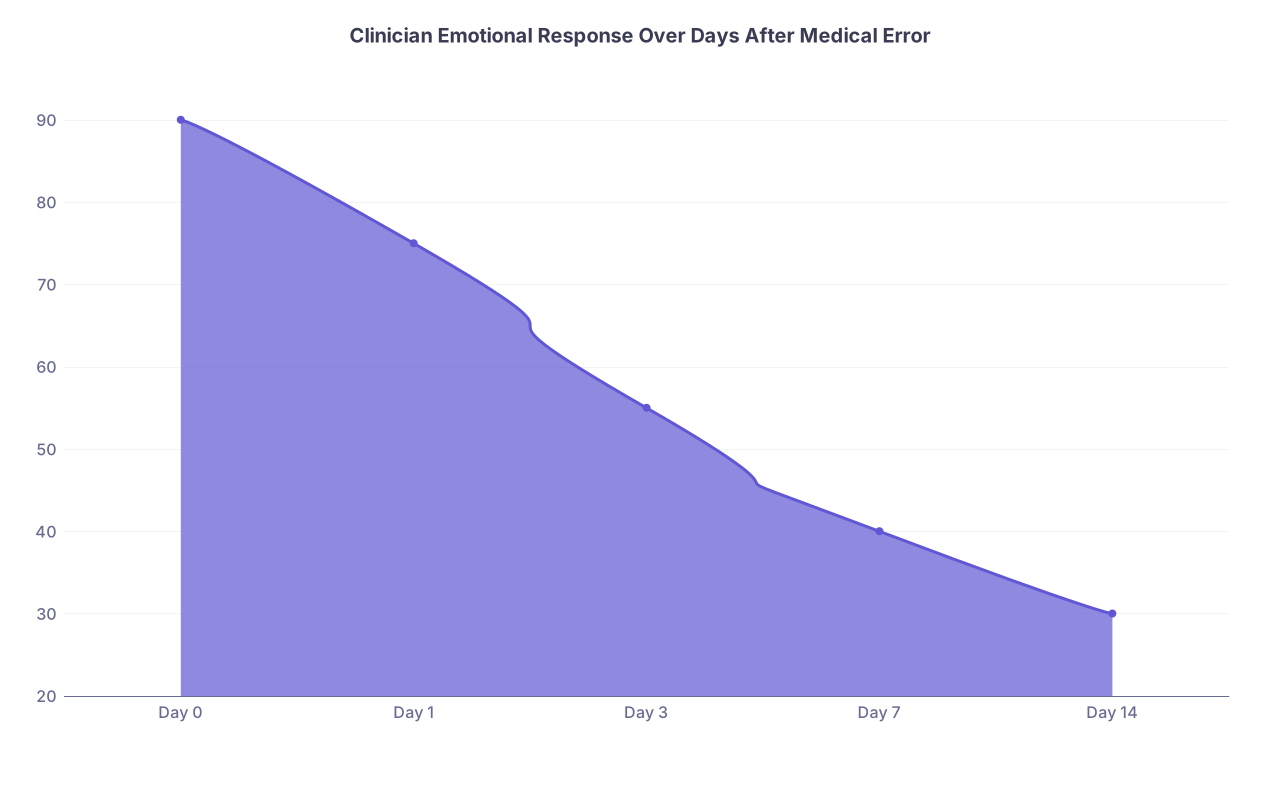
Visual: Typical Emotional Trajectory After an Error
| Category | Value |
|---|---|
| Day 0 | 90 |
| Day 1 | 75 |
| Day 3 | 55 |
| Day 7 | 40 |
| Day 14 | 30 |
You will feel most flooded on day 0–1. That is also when disclosure usually happens. All the more reason to lean on structure and script instead of raw emotion.
One More Thing: Near Misses vs Actual Harm
Not every error causes harm. Near misses still deserve honesty, but the tone is slightly different.
Example for a near miss:
“I want to let you know about a mistake that was caught before it caused harm. Earlier today, an incorrect dose of your blood thinner was entered into the system. Fortunately, our pharmacist caught it before it was given, and you did not receive any extra medication. I am sorry that this error occurred at all. We are reporting it to our safety team so that we can fix the process that allowed it to get that far.”
Patients appreciate this. It tells them you take their safety seriously even when you could have hidden it.
Final Snapshot: A Compact Script You Can Adapt
Here is a full, short form you can literally rehearse:
“Mr. Smith, we need to talk with you about something important that happened with your care.
Earlier today at about 10 in the morning, you were given 10 units of insulin instead of the 5 units that were intended. That means you received twice the correct dose. This was an error in your care.
Because of this, your blood sugar dropped much lower than it should have, and you became confused and sweaty. We treated that immediately with IV sugar, and your numbers are now back in a safe range. We do not expect any long‑term damage from this, but we are going to keep you on close monitoring today and check your blood sugars frequently.
I am very sorry that this mistake happened and that you were put at risk. This is not the level of care we want to provide.
We have reported this to our hospital’s safety team so they can review exactly how this happened and make changes to prevent it from happening again. Right now our focus is on keeping you safe and watching for any problems.
I know this is a lot to take in. What questions or worries do you have right now?”
You will not say it exactly like that. You are not a robot. But if you can hit those beats — what happened, name it as an error, impact, apology, next steps, invite questions — you are doing the ethical thing, and you are doing it competently.
Key Takeaways
- Go in prepared: stabilize the patient, align the team, and get the facts straight before you talk.
- Use a clear structure: plain‑language description → name it as an error → impact → sincere apology → concrete next steps.
- Stay present after: document the event and the disclosure, schedule follow‑up, and treat this as the beginning of an honest relationship, not the end of one.


