

Most residents are not “failing” night shift nutrition because of willpower. They are failing because their plan completely ignores call room reality.
Let me be blunt. If your nutrition strategy assumes:
- a fridge that actually works
- a microwave that is not colonized by explosive spaghetti
- a 30‑minute uninterrupted “meal break”
…then you do not have a night shift nutrition plan. You have fiction.
You are practicing in a system built on unpredictability: codes, ED admissions at 03:17, floor nurses paging in batches, cross-cover fires. Your food strategy has to be built for that chaos, not in spite of it.
Let me break this down the way I teach residents who are tired of feeling wrecked at 04:30 and guilty at 08:00.
The Three Non‑Negotiables of Night Shift Nutrition
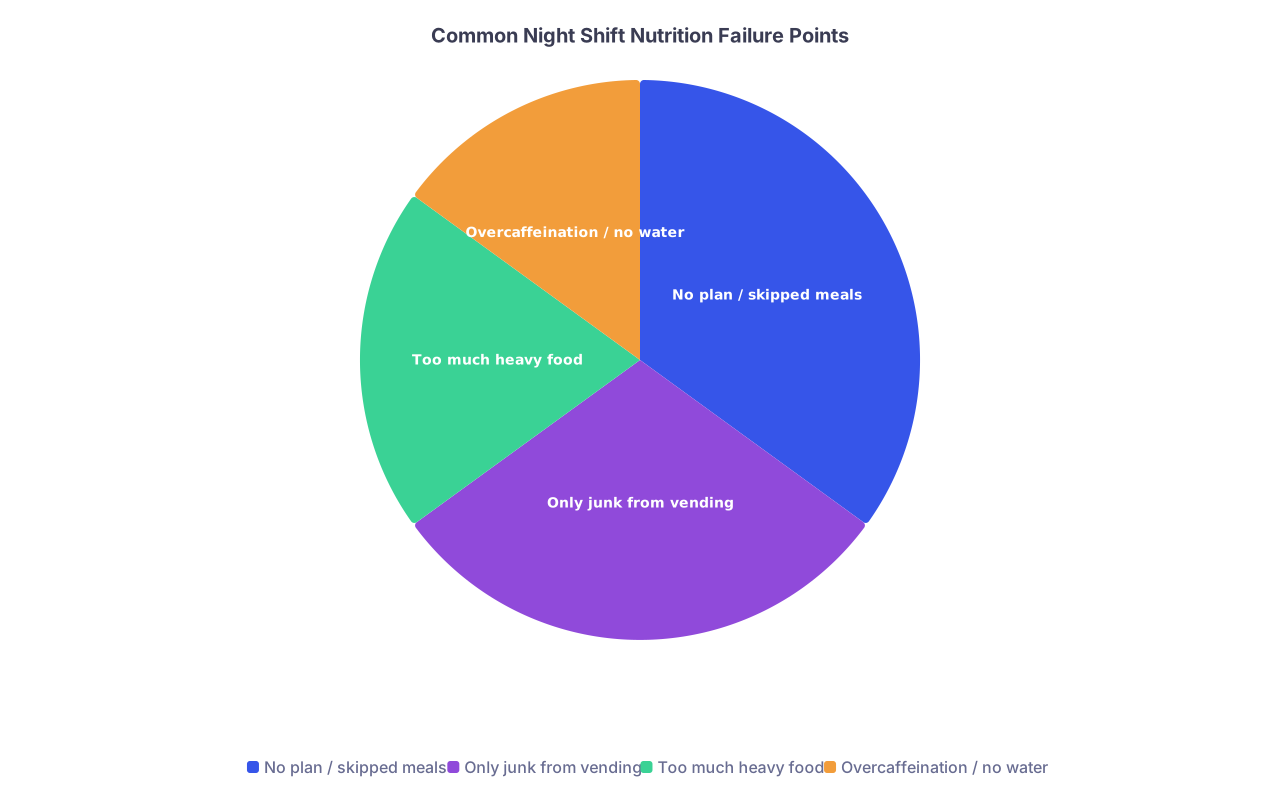
| Category | Value |
|---|---|
| No plan / skipped meals | 35 |
| Only junk from vending | 30 |
| Too much heavy food | 20 |
| Overcaffeination / no water | 15 |
Forget perfection. On nights, you are aiming for “physiologically not stupid.”
You need three things, consistently:
- Stable energy (not rollercoaster glucose).
- GI comfort (no food babies during a code).
- Practicality within actual call room constraints.
If any advice ignores one of those, it dies on contact with reality.
1. Stable energy: stop feeding the glucose rollercoaster
Your circadian rhythm is stacked against you. At night:
- Insulin sensitivity is lower.
- You are more prone to store carbs as fat.
- You get more cravings with less satiety from the same foods.
So the “I’ll just eat cereal and juice at midnight” plan is basically an invitation to 03:00 brain fog, palpitations, and scavenging gummy bears from the charge nurse’s desk.
You want:
- Moderate carbs
- High protein
- Moderate, mostly unsaturated fat
- Fiber, but not so much that you spend the shift in the bathroom
2. GI comfort: you cannot code with reflux
Common resident mistakes I see every year:
- Massive greasy cafeteria meal right before a busy admitting stretch
- Slamming down 16 oz of black coffee on an empty stomach at 22:30
- Raw veggies + hummus as your only food because “healthy”, then you are bloated and miserable by 02:00
You want “boringly comfortable” foods. Meals that feel almost underwhelming. If your meal makes you want a nap, it was wrong for night shift.
3. Practicality: built for call room dysfunction
Here is the real environment:
- One fridge, shared by 40 people, occasionally defrosting itself onto your yogurt
- A microwave that sometimes works and sometimes smells like burnt popcorn from 2019
- No sink, or a sink that you do not want your meal prep touching
- Page every 7 minutes during peak hours, including when you just opened your container
Your plan must:
- Be safe at room temp for a few hours
- Not require a knife and cutting board
- Be edible in 5‑minute bursts, one‑handed, cold if necessary
If you accept those constraints from the start, you stop being angry at yourself and start getting strategic.
Designing a Night Shift Eating Schedule That Actually Survives Pages
You will never have a perfect schedule on nights. But you can have an anchor structure that you adapt on the fly.
Think in blocks, not exact times:
- Pre‑shift (fuel and buffer)
- Early‑night anchor meal
- Mid‑shift “top‑off”
- Late‑night micro‑snack
- Post‑shift landing

| Step | Description |
|---|---|
| Step 1 | Pre shift meal |
| Step 2 | Pack food |
| Step 3 | Early night anchor |
| Step 4 | Graze top off later |
| Step 5 | Full top off now |
| Step 6 | Late night micro snack |
| Step 7 | Post shift landing meal |
| Step 8 | Busy or calm |
Pre‑shift (90–60 minutes before sign‑in)
Goal: arrive steady, not starving and not stuffed.
Target meal:
- Protein: 25–35 g
- Carbs: 30–50 g, mostly complex
- Fat: 10–20 g
- Plenty of water
Concrete examples:
- Bowl: quinoa or brown rice, grilled chicken or tofu, mixed vegetables, olive-oil based dressing
- Simple: whole‑grain toast, 2 eggs, avocado, fruit
- If you are racing: Greek yogurt, handful of nuts, banana
What you avoid:
- Huge, greasy takeout “to last the night”
- Very spicy foods (you will regret this at 01:30)
- Sugary drinks or dessert right before leaving
If you start the shift already hypoglycemic or in a food coma, everything else gets harder.
Early‑night anchor (around 22:00–23:00)
This is usually your best shot at a semi‑predictable eating window before the admissions chaos peaks.
If you are on 19:00–07:00:
- Aim for your main shift meal in that 22:00 window
- Same macronutrient pattern as pre‑shift, maybe slightly more calories if you did not eat much before
This is where your call room reality matters:
- If the microwave is reliable: pack something reheatable but safe cold (e.g., rice + chicken + veg, chili, lentil stew).
- If the microwave is a gamble: focus on “cold‑happy” meals: grain salads, wraps, cold noodles with tofu/chicken, bento‑style.
You should be able to:
- Open, eat a few bites, close, respond to a page, and resume
- Eat the whole thing within ~15 minutes total of actual chewing, even if split over 45 minutes of chaos
Mid‑shift “top‑off” (around 01:00–02:00)
This is where most people crash and raid the vending machine. You can avoid that.
Goal: add 200–300 kcal in a stable, non‑sugary way.
Patterns that work:
- Protein 10–20 g
- Carbs 15–30 g
- Some fat or fiber so it lingers a bit
Examples:
- String cheese + apple
- Greek yogurt + small handful granola
- Small wrap: turkey + cheese in a tortilla
- Trail mix: nuts + a bit of dried fruit (not candy‑heavy “trail mix” that is actually M&Ms with friends)
This is also a good time to check your caffeine cut‑off. Past 02:00–03:00, you are pushing into “post‑shift insomnia” territory if you keep dosing caffeine.
Late‑night micro‑snack (around 04:00–05:00)
Here you want small, boring, and easy. You are not preventing starvation; you are preventing the death spiral of:
Sleepy → sugar craving → eat junk → feel gross → more caffeine → post‑shift insomnia.
Aim for 100–150 kcal:
- A few nuts + 1 date
- Half a protein bar
- 1 clementine + a cheese stick
- 2–3 whole‑grain crackers with peanut butter
If you are truly not hungry, you do not force it. Some nights your body will just want water and movement.
Post‑shift landing (after 07:00, before bed)
You are trying to land the plane, not start another flight.
Post‑shift food should:
- Be light to moderate
- Have some protein
- Not be mega‑greasy
- Not be sugar‑heavy
Think:
- Small bowl oatmeal with nut butter
- Toast with egg or cottage cheese and fruit
- Leftover rice + small portion of protein + veg
Huge “breakfast feast” with pancakes, syrup, bacon, hash browns? Looks comforting, wrecks your sleep, guarantees reflux when you lie down.
Building a Night Shift Nutrition Plan Around Broken Call Rooms
Now the fun part: designing your actual routine based on the real garbage fire that is your call room setup.
Use this quick comparison to figure out which strategy you are stuck with.
| Setup Type | What You Can Reliably Do |
|---|---|
| Fridge + microwave both functional | Full meal prep, leftovers, reheatable bowls |
| Fridge only | Cold-focused meals, yogurt, salads |
| Microwave only | Shelf-stable ready meals, instant grains/soups |
| Neither reliable | Shelf-stable, ready-to-eat, no-heat foods |
Scenario 1: Fridge + microwave that actually work (you unicorn)
If this is you, you are wasting an opportunity if you live on vending machine snacks.
Structure:
- Pre‑shift: eat at home
- Pack: 1 main meal + 1–2 small snacks
- Store main meal in fridge, snacks divided between bag and call room desk/locker
Optimal “anchor” meals:
- Rice or quinoa bowl with chicken, tofu, or beans + roasted veggies
- Pasta salad with tuna/chicken, olive oil, and veggies
- Chili (meat or vegetarian) with a small piece of bread
Key here: everything must still be edible if the microwave is temporarily possessed and only heats half.
Scenario 2: Fridge only, microwave sketchy or leads to food theft
You live in the land of cold meals. That is fine. You can do a lot with that.
Think:
- Grain salads: farro, bulgur, quinoa, or couscous with chickpeas, feta, vegetables, olive oil
- Wraps: turkey/cheese, hummus/veggie, chicken salad (light on mayo)
- Bento boxes:
- Hard‑boiled eggs or baked tofu
- Cheese cubes
- Crackers or pita
- Cut veggies or fruit
Avoid things that really suffer cold (e.g., congealed creamy pasta, dishes that taste sad when not hot).
Scenario 3: Microwave only, no reliable fridge
Classic older hospitals, “pantry” is a microwave and a sink that is more decorative than functional.
This is where shelf‑stable becomes your best friend.
Core arsenal:
- Shelf‑stable microwavable grains (brown rice, quinoa cups)
- Canned beans, lentils, or chicken (rinse beans if possible, or at least drain well)
- Ready soups and chilis (watch sodium)
- Vacuum‑packed tofu, shelf‑stable Indian lentil pouches, etc.
You can do:
- Rice cup + canned black beans + salsa + cheese
- Lentil pouch + instant brown rice side
- Ready soup with a bag of whole‑grain crackers
You keep these in your locker or call room and never depend on the cafeteria being open.
Scenario 4: Nothing works, everything smells, and food theft is rampant
This is more common than people admit. I have seen call rooms where leaving food in the fridge is like putting it on Craigslist for free.
Strategy:
You become your own self-contained food system. No fridge. Minimal microwave dependence. Bag stays with you.
Core features:
- Shelf-stable or short-temp-stable (good at room temp for 6–8 hours)
- Individually packaged or in tightly sealed containers
- No strong odors (unless you like being hated)
Realistic options:
- Tuna or salmon packets (the non-stinky brands), eaten with crackers
- Jerky (watch sodium, but it is functional)
- Peanut butter or almond butter packets + bread or crackers
- Trail mix, nuts, seeds
- Individual nut-based bars (Kind, RX, etc.)
- Shelf-stable milk boxes + instant oatmeal cup
- Chickpea snacks, roasted edamame
- Babybel cheese or hard cheese (fine at room temp for a shift)
Is this gourmet? No. Does it keep you from eating 1,400 kcal of vending machine pastries at 02:30? Yes.
What to Pack: Concrete Menus That Survive Real Shifts
Let me give you actual “plug-and-play” sets you can rotate.
Basic “Full Shift” Pack (for a 12‑hour night)
- Option A: Quinoa + chicken + roasted veg bowl
- Option B: Tuna pasta salad with veggies and olive oil
- Option C: Lentil stew with bread
- Mid-shift top-off
- Greek yogurt + small serving of nuts
- Or wrap (half a full wrap)
- Late micro‑snack
- Nuts + dried fruit
- Or small fruit + cheese stick
- Backup emergency item (untouched unless catastrophe)
- Protein bar you actually like
- Or nut butter packet + crackers
“Nothing Works Here” Minimal Equipment Pack
For when you cannot trust any appliance:
- 2–3 nut-based bars or protein bars (that actually sit well with your stomach)
- 1–2 packs nuts/trail mix
- 1 fruit that travels well (apple, clementines)
- 1 tuna/salmon or chicken packet + crackers
- 1 backup shelf-stable carb (instant oats cup + shelf-stable milk, or fig bars)
You can eat all of this one-handed, charting, while being paged.
Quick‑Load 5‑Minute Pack (when you are leaving home late)
You are already behind. You have 5 minutes. Not an excuse to go in empty-handed.
Grab:
- 1 Greek yogurt or cottage cheese
- 1 banana or apple
- 1 handful of nuts or a premade trail mix bag
- 1 bar
- Fill a big water bottle
It’s not elegant. It is still dramatically better than “I’ll just see what the ED snack room has.”
Caffeine, Hydration, and the Junk Spiral
Most night shift “nutrition failures” are actually:
- Dehydration disguised as hunger + fatigue
- Caffeine masking sleep deprivation until you overshoot
- Environment-driven impulse eating
Caffeine: use it like a drug, because it is one
Set rules:
- First caffeine: no earlier than start of shift or 1 hour in
- Last caffeine: 6 hours before you expect to sleep post‑shift (often around 02:00)
- Total: usually 200–300 mg per night shift is plenty for most residents
Pattern that works:
- 20:00–21:00: first moderate dose (coffee or tea)
- 23:00–00:00: optional second, smaller dose
- After 02:00: water, decaf, or herbal
Chasing tiredness with caffeine at 05:30 is why you lie in bed at 09:30 with your heart racing.
Hydration: low-hanging fruit you keep dropping
You know the drill: mild dehydration = fatigue, headaches, “hunger.”
Simple structure:
- 500–750 ml water in the 1–2 hours before shift
- 1 liter during shift, sipped, not chugged
- 250–500 ml after shift, then stop pounding fluids right before lying down (or you will wake up to pee)
Use a bottle with a straw lid if you can; you are more likely to sip between pages.
The junk spiral: know your trigger zones
You do not randomly fall into the donut box. There are patterns:
- 21:30–22:30: boredom + “shift just started, we deserve treats”
- 01:30–03:30: drowsy + stressed + cafeteria is closed
You counter this by:
- Having your anchor meal timed before the worst junk window
- Making your mid-shift top-off non-negotiable
- Keeping a backup snack in your pocket, not 3 floors away
Training Your Brain, Not Just Your Stomach
Some of this is physiology. The rest is habit and environment.
Stop treating night shifts as temporary exceptions
I hear this all the time:
“I’ll eat normal when I’m back on days.”
“This is just a bad stretch; I’ll fix it after this week.”
Then you look back and realize half your residency was “temporary.”
Decide that nights are part of your real life and deserve a real system. That mental shift alone changes how you pack, plan, and say no.
Guard rails, not rigid rules
On nights, perfection collapses fast. You want guard rails:
- I always bring at least 1 real meal and 2 snacks.
- I do not drink caffeine after 02:00.
- I do not rely on the cafeteria being open.
If you end up eating a slice of pizza in the ED at 01:00, fine. But it is on top of a baseline plan, not the only thing you eat.
Social pressure and food culture at night
Night crews survive on shared food: boxes of pastries, leftover pizza, birthday cake at 02:15. Saying no feels like rejecting the team sometimes.
You do not have to be the “I only eat kale” resident. Use some structure:
- Decide ahead of time which nights are “flex” nights where you will share some of whatever shows up.
- Take small portions. Half a donut, one slice of pizza, not four.
- Pair junk with something stable you packed (pizza + your side salad or fruit, cake + yogurt, etc.).
The goal is not monastic purity. It is avoiding weeks where your only nutrition was vending food and gifted sugar.
Putting It All Together: A Realistic Example Week
Let me spell out what a 4‑night stretch could look like when done reasonably well.
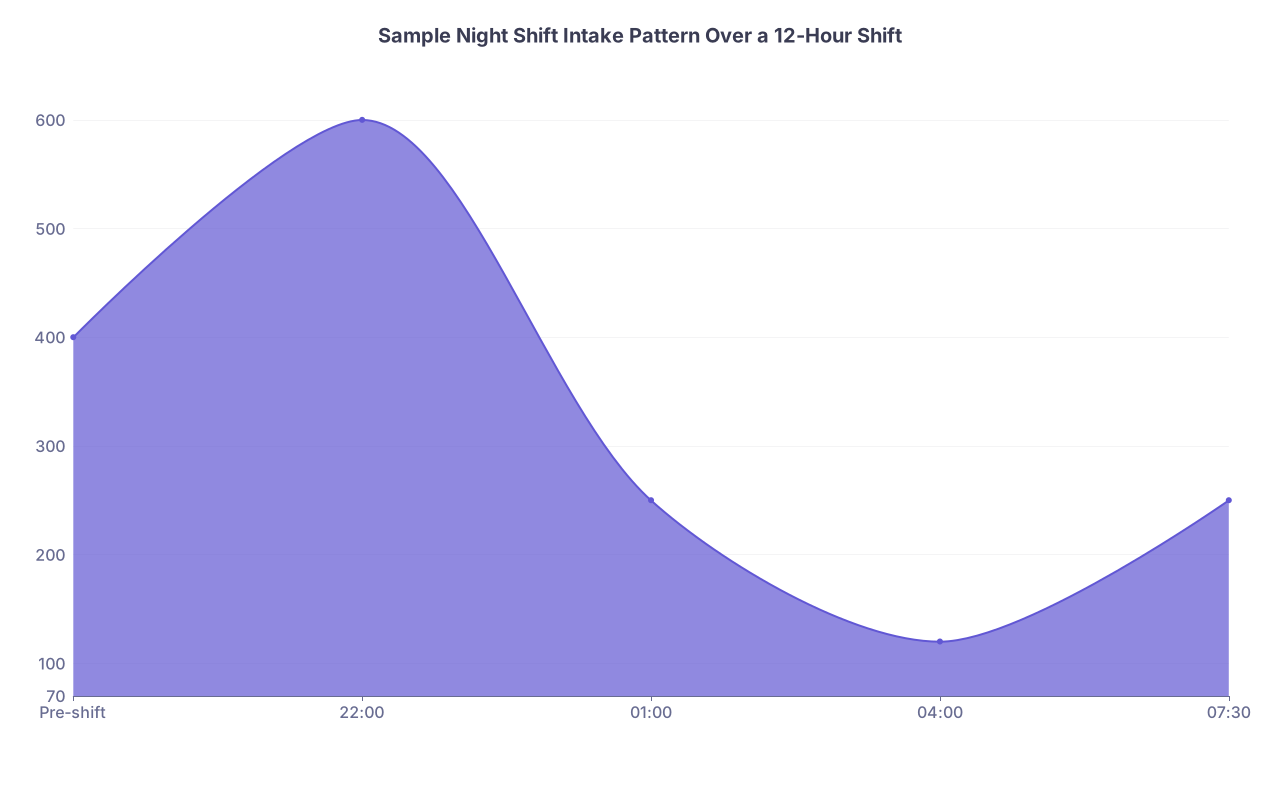
| Category | Value |
|---|---|
| Pre-shift | 400 |
| 22:00 | 600 |
| 01:00 | 250 |
| 04:00 | 120 |
| 07:30 | 250 |
Night 1 (coming off a normal day)
- 17:30: Normal dinner at home (balanced, not huge)
- 21:30: Small snack on arrival (yogurt + fruit)
- 23:00: Anchor meal (packed bowl)
- 02:00: Mid-shift top-off (nuts + half bar)
- 04:30: Micro‑snack (clementine)
- 08:00: Light breakfast (oatmeal + nut butter) then sleep
Night 2 (slept during the day)
- 17:00: “Breakfast” (eggs, toast, fruit)
- 21:30: Caffeine + small snack
- 22:30: Anchor meal (wrap + side salad in container)
- 01:30: Top-off (cheese + crackers + carrots)
- 04:30: Micro‑snack (trail mix)
- 08:00: Light meal then bed
Night 3 (busy admitting)
- 17:30: Balanced meal at home
- 22:00–01:00: Anchor meal eaten in fragments between admits
- 02:30: Top-off (bar)
- 05:00: Too busy, just water
- 08:00: Light carb + protein, then crash
Night 4 (post-call and then off)
- Similar pattern, but maybe accept pizza slice with night team at 01:00 on top of normal anchor meal.
- After this shift, you may choose a slightly larger post-shift meal and then reset to day schedule with an afternoon nap.
Notice: there is nothing heroic here. Just a baseline system that does not fall apart every time the code pager goes off.
FAQs
1. What if I am genuinely not hungry at night but starving in the morning?
Then you shift to lighter, more frequent intake:
- Very light anchor meal (half-size) at 22:00
- Small top-off at 01:00
- Skip the 04:00 snack if not hungry
- Eat a more substantial but still clean post-shift meal
You still need something overnight for performance, even if your appetite is blunted.
2. How do I handle nights when I did not have time to pack anything?
You create a standing backup kit at work or in your car:
- 2–3 bars
- 2 packs nuts/trail mix
- 1 box of instant oats
- 1 tuna/salmon pouch
- A sleeve of whole‑grain crackers
Restock this weekly. That way a “forgot my lunch” night is inconvenient, not catastrophic.
3. Are energy drinks okay on night shift?
They are not ideal, but they are not poison if you respect dosage and timing. Main issues:
- Huge caffeine spikes
- Sugar bombs or heavy artificial sweeteners
- Habit formation
If you use them: keep total caffeine under ~200–300 mg per night, finish before 02:00, and avoid the mega-sugar varieties.
4. How do I avoid gaining weight during a month of nights?
You focus on patterns, not daily perfection:
- Keep anchor meals consistent and mostly home-packed.
- Avoid late‑shift large meals or heavy junk right before finishing.
- Cap your calories from “random snacks / shared food” to a small portion once per night.
- Keep some movement (stairs, short walks) even on nights.
The main drivers of night-shift weight gain are uncontrolled grazing + high-sugar drinks + massive meals before sleep. Control those three, and you are already far ahead.
Key points: design your food around actual call room constraints, not fantasy schedules; build a simple structure of pre‑shift, anchor, top‑off, and micro‑snacks; and treat nights as a real, recurring part of your life that deserves a practical, repeatable system.


