
Managing Overnight Agitation and Delirium Without Burning Yourself Out
It’s 02:37. You are on call for the whole medicine floor. Bed alarms keep going off. One patient is “trying to leave to catch a bus,” another is yelling for his dead wife, and charge just called because “Room 412 is climbing out of bed again and already pulled out his IV.”
Your pager will not shut up. You have seven cross-cover pages waiting, you still need to write an admission H&P, and now nursing wants you at the bedside “STAT” because the patient is “out of control.”
This is where a lot of residents quietly break. Not on the big codes. On nights like this. Agitated, delirious patients who will not sleep, staff who are stressed, and you in the middle trying to keep everyone safe without sedating people into oblivion—or losing your mind.
Let me break this down specifically: how to manage overnight agitation and delirium in a way that is safe for the patient and sustainable for you.
Step 1: Recognize What You’re Actually Dealing With
The fastest way to burn out on nights is to treat every “agitated” patient like the same problem. They are not. You need a 30-second mental triage framework.
The four big buckets
When your pager says “agitated patient,” your first thought should be: Which of these am I dealing with?
- Delirium (hyperactive, hypoactive, or mixed)
- Primary psychiatric condition (mania, psychosis, severe anxiety)
- Substance-related (withdrawal, intoxication)
- Behavioral / situational (pain, frustration, sleep deprivation, unmet need)
If you do not sort this up front, you will throw meds at the wrong thing and be stuck in the room for an hour.
I use a mental “4-quick-question” filter on the walk to the room:
- New change in behavior vs chronic?
– New since this admission or tonight → delirium until proven otherwise. - Any recent changes: meds, infection, surgery, environment?
– New Foley? New opioids? Post-op day 1–3? Transfer to new ward? - Substance history?
– Alcohol, benzos, opioids, stimulants. Time since last use. - Any prior psych history documented?
– Schizophrenia, bipolar, dementia with behavioral disturbance.
If nursing says, “He was totally fine on days and started getting confused and pulling lines after dinner,” that is not “he’s a jerk.” That is delirium until you prove it is not.
Now at bedside, look fast but targeted:
- Level of consciousness: alert vs drowsy vs hard to arouse.
- Orientation: person, place, time, situation.
- Attention: ask them to name months of year backwards or repeat 3 words. They can be oriented but unable to maintain attention—classic delirium.
- Vital signs and obvious red flags: hypoxia, fever, tachycardia, hypotension, hypoglycemia.
If they are delirious, your goal is not to “knock them out.” Your goal is to get them safely through the night while you fix the underlying problem.
Step 2: First Pass – Is This an Emergency?
Before you get fancy with antipsychotic selection, you answer one question: Is this a medical emergency right now?
Red flag scenarios:
- Violent or actively harming others
- Self-harm risk (pulling central line, arterial line, trying to jump out of bed)
- Massive physiologic disturbance:
- SpO₂ 80s, BP 80/40, RR in the 30s
- Glucose 30 or 600
- Extreme agitation with tachycardia and hyperthermia (think NMS, serotonin syndrome, sympathomimetic toxidrome, severe withdrawal)
- New focal neurologic deficit, seizure, or post-ictal confusion
In these cases, you stop thinking “delirium management” and start thinking “code-ish workflow.”
You:
- Get vital signs yourself if no one has done them in the last 5 minutes.
- Grab point-of-care glucose.
- Call rapid response if there is true physiologic instability or imminent harm.
- Have a very low threshold to grab an ABG, EKG, and check for sepsis, hypoxia, or drug-related causes.
This is not burnout prevention; this is not getting sued later. Do the real work first.
If the patient is not in immediate medical danger and staff safety is reasonably controlled, then you shift into your structured approach.
Step 3: Non-Pharm Moves That Actually Work at 3 AM
Most residents quietly think non-pharmacologic measures are “nice in theory” but useless when someone is throwing punches. That is because they only see the non-pharm stuff deployed late and poorly.
You can do this faster and smarter.
Your 5-minute non-pharm toolkit
The second you step into the room, you control the environment:
Light and noise
- Turn off TV.
- Dim the lights but do not make it pitch black; aim for “twilight,” not “interrogation room” or “OR bright.”
- Ask staff to step out unless you truly need them. Too many people escalates agitation.
Introduce yourself, calmly, from a safe distance
- Simple, slow, low.
- “My name is Dr. ___. You are in the hospital. You’re safe here. I’m here to help you get comfortable.”
- Avoid “calm down.” That phrase inflames half of humanity.
Reorient without arguing
- Short, repeated phrases: “You are in [Hospital Name], it is nighttime, your family knows you are here, you are safe.”
- Do not argue delusions. If they say “I need to catch the bus,” you can say, “The bus will be later this morning. Tonight we are helping you rest so you are strong enough to go.”
Address obvious drivers
- Pain: Check MAR—when was the last analgesic? You can calm half of “agitation” by treating pain adequately.
- Bathroom: Ask directly. A delirious patient will rip out a Foley to pee. Let them use a urinal or commode with assistance.
- Thirst/hunger: Ice chips, sip of water if safe to swallow.
- Restraint misery: If in restraints, adjust padding, reposition, and explain why they are on. Even small relief changes behavior.
Mobilize the right staff
- If the patient is moderately agitated but not dangerous, ask for 1:1 sitter if available (yes, I know night shift staffing is garbage sometimes).
- If the patient has dementia, see if there is a family phone number to call. A 2-minute phone call from a familiar voice can outperform 2 mg haloperidol at times.
This is not “cuddly geriatrics.” This is time-efficient risk reduction. Ten minutes of good environment and reorientation can save you from three code greys and five PRN doses.
Step 4: The Medication Strategy That Keeps You Sane
Here is where most residents get into trouble. Either:
- They under-treat a truly dangerous situation and spend 2 hours wrestling a patient.
- Or they throw random sedatives at confused 84-year-olds and then spend the rest of the night managing hypotension, oversedation, and aspiration risk.
You need a principled algorithm. Not mindless reflexes.
Core principles
- Aim for “calm and awake,” not “snowed.”
- In elderly delirium, use antipsychotics sparingly and benzos almost never (unless withdrawal).
- Dose low, reassess, then redose rather than one giant slug.
- Use the patient’s medical and EKG history to pick the agent.
Here is a practical, cross-cover-friendly comparison.
| Drug | Typical Night Dose | Good For | Avoid / Caution |
|---|---|---|---|
| Haloperidol PO/IM/IV | 0.5–2 mg | Hyperactive delirium, dementia | Prolonged QT, Parkinson, Lewy body |
| Quetiapine PO | 12.5–25 mg | Mild–moderate agitation in frail | Severe hypotension, very elderly falls |
| Olanzapine PO/IM | 2.5–5 mg | Severe agitation in medically stable | Elderly with metabolic issues, stroke risk |
| Lorazepam PO/IV/IM | 0.5–1 mg | Alcohol/benzo withdrawal, catatonia | Elderly delirium not due to withdrawal |
| Dexmedetomidine (ICU only) | Infusion | ICU delirium, intubated patients | Floor use, bradycardia, hypotension |
Now I will go case by case, the way it shows up on your pager.
Scenario 1: 82-year-old with new delirium, trying to get out of bed
This is 60% of your night pages.
- Check vitals, oxygen, glucose.
- Quickly review meds: opioids, benzos, anticholinergics, steroids.
- Non-pharm moves: reorient, dim lights, treat pain, bathroom, sitter if possible.
If still significantly agitated and unsafe:
- Haloperidol 0.5–1 mg PO or IV is reasonable if QTc is acceptable and no Parkinsonism/Lewy body.
- If no EKG on file and obviously frail, I lean toward 0.5 mg PO or 12.5–25 mg quetiapine PO instead.
- Reassess in 30–60 minutes before redosing.
- Do not stack multiple sedating agents in quick succession. That is how they stop breathing at 05:00.
Avoid lorazepam unless they are in withdrawal. Benzos worsen delirium. I have seen a borderline confused older adult get lorazepam “to help sleep” and come back with aspiration pneumonia the next day. Classic.
Scenario 2: Middle-aged, new-onset psychosis vs mania, medically stable
On medicine floors, you will still see this. Example: 45-year-old, paranoid, pacing, shouting, but vitals are stable, labs acceptable, no withdrawal.
- Start with non-pharm but do not spend 30 minutes doing therapy in the hallway. You are not on psych.
- If they are cooperative:
- Offer oral medication first:
- Olanzapine 5–10 mg PO or
- Haloperidol 2–5 mg PO with or without diphenhydramine (if young, to reduce EPS risk).
- Offer oral medication first:
- If they are not cooperative and staff safety is at risk:
- IM olanzapine 5–10 mg OR IM haloperidol 2–5 mg (often with lorazepam 1–2 mg if clearly non-elderly, non-withdrawal, and no respiratory compromise).
Do not casually pair IM olanzapine with benzodiazepines in close temporal proximity; the combination can cause cardiorespiratory depression. Many hospitals have policies about separating them by at least 1–2 hours.
Scenario 3: Alcohol withdrawal (CIWA not a suggestion)
If the nurse says, “He’s shaking, sweating, seeing bugs,” and CIWA is >15, this is not the time for quetiapine.
Benzodiazepines are first line. Symptom-triggered is best, but on nights you often have to catch up.
- Lorazepam 1–2 mg IV q15–30 min PRN for significant symptoms.
- Or diazepam if protocol-based and no severe liver failure.
Antipsychotics are only adjuncts for severe hallucinations or aggression after benzodiazepines have been given. They do not treat withdrawal and can lower seizure threshold.
If you have a patient in uncontrolled withdrawal on the floor needing large, frequent doses, you should be pushing for higher level of care. Floor nursing and monitoring are not adequate for a patient getting 12+ mg lorazepam overnight.
Scenario 4: ICU/stepdown delirium you inherit on night float
These can be some of the most exhausting cases. Already delirious, already on multiple agents, everyone frustrated.
You do not fix ICU delirium at 02:00. You stabilize and avoid making it worse.
- Check: Are they already on scheduled antipsychotic?
- If yes, consider a small PRN at the same agent rather than adding a new one.
- If they are hypotensive, septic, or with prolonged QTc, be very conservative with antipsychotics.
- If they are intubated or monitored in ICU, discuss dexmedetomidine with the intensivist. It is often better than hammering them with multiple antipsychotics and benzos.
Step 5: Restraints – Use Them Correctly or You Will Suffer
Restraints are not a failure. Misused restraints are.
Nights are full of nonsense orders like “Soft wrist restraints, PRN.” That is not how this works, and if you sign those mindlessly, you will inherit a lot of terrible situations.
Your rules of engagement
Restraints are for immediate safety, not convenience.
- Pulling out a Foley? Maybe not. Yanking at a fresh central line? Yes.
- Climbing over side rails repeatedly despite redirection? Probably yes.
If you order restraints, you own the reassessment.
- Document behavior, alternatives tried, and the goal.
- Specify type: soft wrist, vest, mittens, etc.
- Reassess regularly and downgrade as soon as feasible.
Pair restraints with medication and non-pharm measures.
- Pure physical restraint without anything for pain, fear, or delirium is ethically and practically bad. They will fight harder and decompensate.
Common trap: a delirious 88-year-old in 4-point restraints, no sitter, getting repeated PRN haloperidol with no search for cause. Then the morning team wonders why they are obtunded and rigid.
You do not need to solve the whole case, but you should at least push: “We need labs, maybe a UA, and to reassess meds. This is not sustainable.”
Step 6: Quick Workup Without Blowing Your Night
You do not have time for a full “delirium workup” in the middle of cross-cover, but you should not be blindly throwing meds either.
Here is a minimal, practical nighttime workup set that covers most bases:
- Vitals, O₂ sat, Accucheck.
- Basic labs if none recent:
- CBC (infection, anemia)
- BMP (Na, Ca, BUN/Cr)
- LFTs if hepatic encephalopathy is possible
- Consider:
- UA and culture if fever, urinary symptoms, or high suspicion (older women especially).
- CXR if cough, fever, hypoxia.
- EKG if considering antipsychotic and no recent one.
- Ammonia if known cirrhosis with suspected encephalopathy.
- CT head if new focal deficit, anticoagulated, or sudden mental status change without explanation.
Does every single delirious patient need a full panel at 02:00? No. But if someone goes from “chatty and oriented at 18:00” to “disoriented, combative at 01:00,” and you write for haloperidol and walk away without a single test, you are going to get burned eventually.
Step 7: Protecting Yourself – Workflow and Boundaries
The topic is “without burning yourself out,” so let us talk about you. There are three main ways residents destroy themselves on nights in this domain:
- Getting sucked into one room for 90 minutes while the rest of the floor burns.
- Saying yes to endless “can you just come talk to him again” pages.
- Taking staff frustration personally.
1. Time-boxing each encounter
You can provide high-quality care in 10–15 minutes if you are structured.
Your sequence:
- Enter room, brief assessment, reorientation: 3–5 minutes.
- Decide urgency and need for meds: 2–3 minutes.
- Order meds, basic labs, and any necessary restraints: 2–3 minutes.
- Communicate plan to nurse and set expectation: 2–3 minutes.
Then you leave. You do not stand at bedside babysitting them fall asleep. You say something like:
“I have given a low dose of medication and ordered labs to look for causes. Let us see how they respond over the next 30–45 minutes. Page me if they are significantly worse or unsafe despite this.”
If nursing pushes hard for you to stay, be direct but respectful:
“I hear that this has been stressful. I have to manage the whole floor, but I will circle back after I finish these other urgent pages.”
You are not there to be a one-to-one sitter.
2. Setting limits on repeated pages
Some nurses will page you every 10 minutes about the same confused patient. Often out of their own anxiety or prior bad experiences.
One tactic I use: pre-emptive check-ins.
After the first encounter, you can say:
“I am going to check back on 412 after I finish in 417, likely in about 45 minutes. If something extreme happens before then—like they become violent, stop breathing, or rip out something critical—page me right away. Otherwise, I will come back on my own.”
You have now legitimatized not paging you for every minor thing while still making them feel supported.
If someone still pages nonstop without new information, you can escalate calmly:
“I am working on a patient who is medically unstable right now and I cannot come this minute. Based on what you have told me, the plan we discussed still stands. If that changes—if safety is at risk—tell me specifically what is happening and I will reprioritize.”
Notice: clear hierarchy of urgency, no hostility, but also no codependency.
3. Not swallowing the emotional shrapnel
You will be yelled at. By patients, occasionally by nurses, sometimes by families. You will walk into rooms where everyone is already angry and expects you to magically fix a decades-long problem in 5 minutes.
Do not personalize it.
A few concrete tricks that actually help:
- Micro-boundary: When you step out of a chaotic room, pause in the hallway for 10 seconds and deliberately reset—deep breath, one clear thought like “I handled what I could,” then move on. Sounds cliché, works.
- Debrief with a co-resident on nights. Two sentences in the workroom: “412 was wild. He tried to punch me. We ended up needing IM olanzapine.” Shared experience lightens the load.
- Document clearly on bad nights. Half of your anxiety comes from imagining “what if I get blamed.” Clean, brief notes calm that fear.
Step 8: Documentation That Protects You (Without Wasting Time)
You do not need a novel. You need a precise, defensible paragraph.
Hit these elements:
- Why you were called: “Paged for acute agitation and confusion.”
- What you saw: mental status, vitals, behavior (trying to climb out of bed, pulling lines, threatening).
- Risks: fall risk, line removal, staff safety.
- What you did non-pharm: reorientation, environment changes, sitter, family call.
- What you ordered: meds (dose/route), labs, imaging, restraints.
- Your impression: “Likely multifactorial delirium (infection, medications, metabolic) vs …”
- Follow-up plan: “Will reassess in X hours; primary team to continue evaluation in AM.”
Example:
“Called to bedside for 79-year-old with acute agitation, attempting to climb out of bed, removing IV. On exam, disoriented to place/time, poor attention, hallucinating ‘bugs on wall.’ Vitals stable, O₂ 96% RA, glucose 112. Suspect hyperactive delirium in setting of UTI and recent opioid escalation. Reoriented patient, dimmed lights, turned off TV, allowed toileting with assistance. Given haloperidol 0.5 mg PO x1 after discussing risks/benefits with nursing; soft wrist restraints ordered for line safety, with q2h reassessment and goal to discontinue as soon as safe. Ordered CBC, BMP, UA with culture. Plan: Reassess in ~1 hour; sign out to day team for further delirium workup and med review.”
That protects you much more than, “Agitated, gave Haldol.”
Step 9: Know When to Escalate
You cannot and should not hold everything on your shoulders.
Escalate in these situations:
- Refractory agitation despite reasonable doses of meds and non-pharm measures.
- Recurrent need for IM meds and restraints over multiple nights.
- Clear need for higher level of care (ICU, stepdown) due to medical instability or need for continuous monitoring.
- Complex psych history where you are clearly out of depth and there is an on-call psychiatrist or behavioral health team.
A simple night note plus a message to your attending or chief in the morning is usually enough: “412 has required restraints and multiple doses of antipsychotic each of the last 3 nights. Would consider psych consult and family meeting.”
You do your part. You do not fix the entire system.
One Visual to Keep in Your Head
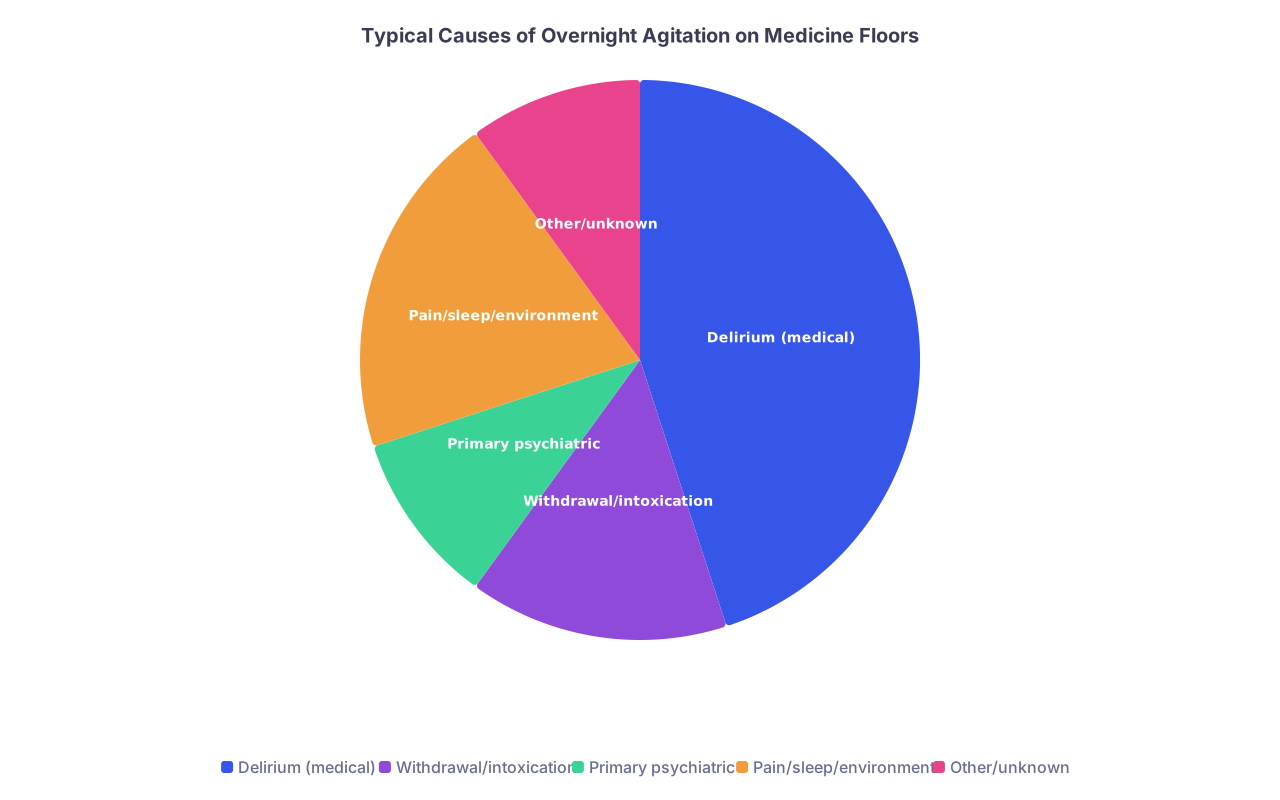
Here is how most nights actually distribute your agitation workload if you pay attention.
| Category | Value |
|---|---|
| Delirium (medical) | 45 |
| Withdrawal/intoxication | 15 |
| Primary psychiatric | 10 |
| Pain/sleep/environment | 20 |
| Other/unknown | 10 |
If you mentally start from “this is probably delirium or pain/sleep related” instead of “this is behavioral,” your decision-making improves and your frustration drops.
A Simple Flow to Remember at 03:00
You do not need a laminated card. Just a clean mental pathway.

| Step | Description |
|---|---|
| Step 1 | Page for agitation |
| Step 2 | Check vitals and glucose |
| Step 3 | Call rapid response or escalate |
| Step 4 | Brief mental status exam |
| Step 5 | Non pharm measures plus low dose antipsychotic if needed |
| Step 6 | Benzodiazepines per protocol |
| Step 7 | Oral or IM antipsychotic |
| Step 8 | Minimal labs and reassess |
| Step 9 | Reassess in 30-60 min |
| Step 10 | Document and sign out plan |
| Step 11 | Unstable or dangerous? |
| Step 12 | Likely cause |
You can run through that in your head in under 15 seconds as you walk to the room.
Key Takeaways
- Treat “agitation” as a symptom with a differential, not a personality flaw. Most of it is delirium, pain, withdrawal, or environment—fix those first.
- Aim for “calm and awake,” using the lowest effective doses and avoiding benzos in elderly delirium. Pair meds with real non-pharm strategies, not wishful thinking.
- Protect yourself: time-box encounters, set clear expectations with staff, escalate appropriately, and document succinctly. That is how you manage chaotic nights without eroding your sanity.