
Most residents crash in winter night season not from viruses, but from stupidity in planning.
You cannot “push through” three months of peak volume, RSV surges, and endless paging on caffeine and vibes. If you try, here is what happens: by mid‑January you are short-tempered, charting dangerously fast, missing subtle hypoxia, and getting sick yourself. I have watched it every single year.
So you need a capacity and energy plan. Not a vague “I’ll sleep more.” A month‑by‑month, week‑by‑week structure that treats winter virus season like what it is: a marathon with sprints built in.
Below is your timeline, assuming the typical North American pattern:
- Warm‑up: November
- Peak: December–January
- Slow taper: February
Adjust one month earlier or later depending on your local pattern, but keep the sequence.
November – Build the Base Before the Surge
At this point you should stop pretending winter is “later” and start acting like an athlete entering pre‑season.
Week 1–2: Set Your Winter Night Infrastructure
These two weeks determine how wrecked or functional you are by January.
Lock in your sleep system
- Blackout:
- Buy proper blackout curtains or an eye mask today. Aluminum foil on windows if you must.
- White noise: fan, noise machine, or an app. Non‑negotiable.
- Bedtime rituals:
- Pick a pre‑sleep routine that takes ≤15 minutes: shower, brush, 5–10 minutes of mindless reading.
- No scrolling in bed. That one habit alone will steal hours of “almost sleep” all winter.
- Blackout:
Create your “night box” Pack a small bin or backpack that lives by your door:
- Compression socks
- Warm base layer / fleece
- Blue‑light blocking glasses (for commute home if sun is up)
- Phone charger + short cable
- Refillable water bottle
- Shelf‑stable snacks: nuts, protein bars, instant oatmeal packets, tea bags
This becomes automatic. You grab the box. You are prepared. No nightly decision fatigue.
Establish your boundaries with co‑residents and family
- Tell friends / partner your sleep block windows:
- “On nights, do not expect replies 9 a.m.–3 p.m.”
- Coordinate with co‑residents:
- Decide how you share admits / codes during peak hours (e.g., 5 p.m.–11 p.m.) to avoid silent resentment later.
- This is the month to practice saying: “I am post‑call—cannot make that.”
- Tell friends / partner your sleep block windows:
Vaccines and baseline labs
- Get your flu shot and updated COVID vaccine now. Not in December when it is already exploding.
- If you have chronic issues (anemia, hypothyroid) get your labs checked; fix what you can before you are running on fumes.
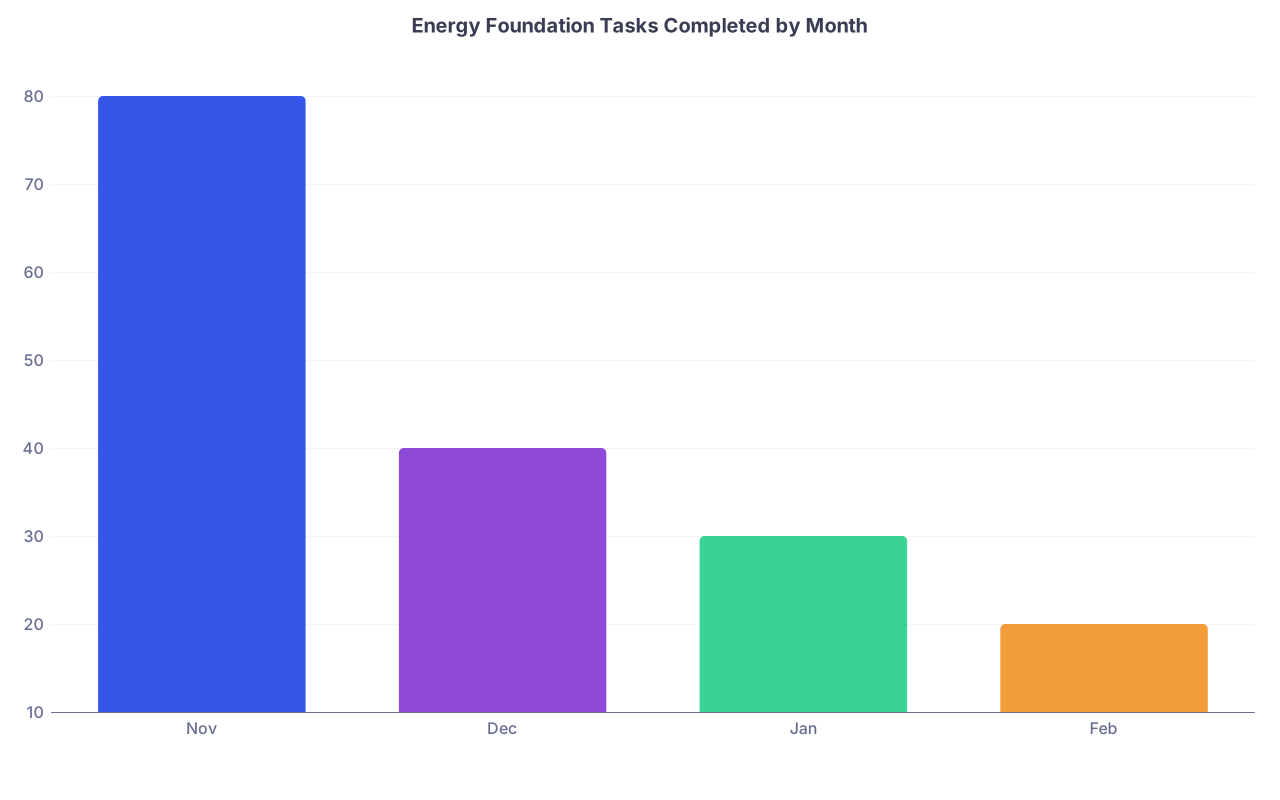
| Category | Value |
|---|---|
| Nov | 80 |
| Dec | 40 |
| Jan | 30 |
| Feb | 20 |
Week 3–4: Practice Mini‑Night Rotations
You are not in full chaos yet. Use these weeks to rehearse.
If you have one or two scattered nights this month:
- Treat them like a simulation of your winter system:
- Do your full pre‑shift routine (nap, meals planned, caffeine timing).
- Use the same post‑shift wind‑down you plan for December–January.
- After each night, write down:
- What time you actually fell asleep post‑shift.
- What you ate.
- When you crashed.
Fix the patterns now.
If you have no nights in November:
Simulate on a late‑staying call day:
- Practice not drinking caffeine after ~3 a.m. equivalent.
- Test whether a 20‑minute nap on break improves or ruins you.
At this point, your goal is not perfection. It is to remove surprises before peak volume.
December – Volume Rises, Social Pressure Peaks
This is the month that destroys people. Not only does the hospital get busier, but the rest of the world wants you at holiday events. You must choose.
Early December (Dec 1–10): Lock Down Your Template Week
You are now in operational mode. Build a repeatable “night shift week” and copy–paste.
For a 5‑night block (sample template):
Day 1 (First night)
- 08:00–12:00: Stay awake, light activity, errands.
- 12:00–15:00: Anchor nap in dark room.
- 15:00–16:00: Light meal, modest caffeine.
- 18:30: Arrive early, review census, plan admits.
Nights 2–4
- 08:00: Leave hospital. Sunglasses if sun is up.
- 08:30–09:00: Small snack + hydration; screens off by 09:30.
- 09:30–15:00: Core sleep block.
- 15:00–18:00: Life admin, meal prep, short walk.
- 23:00–03:00: Peak mental focus window—push your most complex tasks here (ICU cross‑cover, admits).
Night 5 → Flip back
- After last night, decide: partial sleep (3–4 hours) then stay up, or normal block? Pick one strategy and stick with it for the season.
Key point: By the second week of December, your core schedule should feel predictable, even if nights themselves are not.
Mid December (Dec 11–20): Capacity Management + Holiday Traps
This is when RSV and influenza really climb.
At this point you should aggressively guard your capacity. That means:
Triage social obligations
- Pick one event per week that you actually care about. Decline the rest.
- Script:
- “I am on nights this month and trying not to get sick. Can we do something in February instead?”
Formalize your “minimum viable self‑care” Do not aim for perfect workouts and meal plans. Aim for a floor:
- Sleep:
- Minimum 4.5 hours in one block + 60–90 minute nap if needed.
- Food:
- One real protein‑containing meal per 24 hours that is not from the vending machine. That is your baseline.
- Movement:
- 10–15 minute walk before or after shift, in actual fresh air if possible.
If you can hit this floor 70–80% of nights, you will be ahead of most of your colleagues in January.
- Sleep:
Caffeine rules (or you will pay later)
- No caffeine in the last 4–6 hours of shift unless you are driving dangerously tired. Then small dose, not a 20 oz coffee.
- Cap total: ~200–300 mg per 24 hours for most people.
- Pair caffeine only with actual calories. Black coffee on an empty stomach at 03:00 is a guaranteed 10:00 a.m. crash.

Late December (Dec 21–31): Holiday Chaos and Schedule Distortion
Holiday staffing, “skeleton crews,” and odd shift patterns will hit now.
Your objective in this 10‑day window: protect your sleep anchor at all costs.
If you have irregular nights (e.g., 2 on, 1 off, 2 on):
- Keep your sleep timing roughly fixed on off‑nights. Maybe shift it 1–2 hours earlier, but do not suddenly act like a day‑walker.
- Example: on off‑night, sleep 02:00–09:00 instead of 09:00–15:00. Do not do 23:00–07:00.
Holiday call shifts:
- Eat before the shift. Holiday potluck food is a trap: all sugar, all the time.
- Choose one indulgent thing, not everything. Sugar spikes at 02:00 feel nice and then wreck you.
Emotional load:
- End‑of‑life conversations spike around holidays. You will carry some of this home.
- Build a 5–10 minute decompression ritual when you park the car:
- Car in park. Phone away. 5 slow breaths. Name three things that went okay.
January – Peak Winter, Peak Exhaustion
This is the hardest month. The novelty is gone; the viruses are not.
Week 1–2 (Jan 1–14): Surviving the Surge
At this point you should behave like you are on a disaster rotation—because you basically are.
Capacity triage: know your 3 priorities In January, you cannot optimize everything. Nail three things:
- Clinical safety
- Sleep blocks
- Infection avoidance
Everything else is negotiable. Gym PRs. Perfect notes. Extra projects. Let them go.
Clinical safety systems
- Create a standing “sick list” at the start of shift:
- Top 3–5 patients you will check on every round, no matter what.
- Use time‑based reminders:
- “Check 454’s VBG at 02:00” goes immediately into a note or reminder app.
- Double‑check high‑risk orders when tired:
- Anticoagulation, insulin drips, pressors, peds weight‑based doses.
- Create a standing “sick list” at the start of shift:
Volume management
- For admissions:
- In peak hours, aim for good and safe, not “beautiful H&P”. You can clean up later.
- Template fast: focused HPI, key exam, impression, immediate plan.
- Negotiate with seniors:
- If you are drowning, say: “I am at capacity with three unstable patients. I need help with routine admits.”
- For admissions:
Protect yourself from getting sick
- Mask appropriately. Even if everyone around you stopped caring in July.
- Alcohol foam every room exit without exception.
- Do not share food, cups, or personal stethoscopes with sick colleagues. Yes, I have seen this. Yes, it is idiotic.
Week 3–4 (Jan 15–31): Preventing Full Burnout
Mid‑January is when people start making dangerous mistakes from fatigue.
You will not rely on “willpower.” You will put rails around yourself.
| Area | Non‑Negotiable Rule |
|---|---|
| Sleep | 4.5+ hr protected block daily |
| Driving | If drowsy, 20‑min nap in call room before driving |
| Orders | Double‑check anticoag, insulin, pedi doses |
| Escalation | Call senior when gut feels uneasy |
| Time Off | One full day per week with zero extra work |
Driving safety
- If you catch yourself micro‑nodding on rounds, you should not be driving straight home.
- Grab 20 minutes in a call room or the parking lot before driving.
- This is not weakness. It is how you do not end up as a morbidity and mortality statistic.
Micro‑recovery blocks
- You will not get full “vacation‑level” rest. Instead, schedule:
- One “zero‑obligation” half‑day each week. No studying. No social plans. Just exist.
- Use off‑days to do one replenishing thing:
- Long shower. Real breakfast. Quiet coffee alone. That is it.
- You will not get full “vacation‑level” rest. Instead, schedule:
Emotional spillover management
- Deaths and near‑misses accumulate. You cannot process them all at 04:00.
- Keep a small notebook or a note on your phone:
- Jot down: patient initials, 1–2 sentences, and “talk about later.”
- Once per week, on a day off:
- Spend 10–15 minutes reviewing and actually feeling some of it. Talk to a co‑resident if needed.
February – Taper, Debrief, and Repair
Volume starts to drop. Your habits have either saved you or broken you. Use this month wisely.
Early February (Feb 1–14): Gradual Return to Baseline
At this point you should not just “snap back” to normal. That whiplash is what prolongs fatigue.
Shift your schedule slowly
- Move your sleep earlier by 60–90 minutes every 2–3 days.
- Keep one consistent wake time if possible; slide bedtime first.
Repair your body
- Food:
- Switch from survival snacks to real meals. More protein, actual vegetables, less vending‑machine carbs.
- Activity:
- Do not go from 0 to marathon training. Start with:
- 2–3 short resistance sessions per week (20–30 minutes).
- Regular walks in daylight to re‑anchor circadian rhythm.
- Do not go from 0 to marathon training. Start with:
- Food:
Sick‑time catchup
- If you have been low‑grade sick but powering through, see your PCP / clinic this month.
- Recheck labs if you had baseline issues (iron deficiency, thyroid, B12).
Late February (Feb 15–28): Post‑Season Review and Future Planning
This is the part almost nobody does. Then they repeat all the same mistakes next year.
You are smarter than that.
Conduct a personal “winter debrief” Take 30 minutes with a notebook. Answer:
- What worked for:
- Sleep?
- Caffeine?
- Meals at work?
- What absolutely failed?
- When did I feel most unsafe or at risk of error?
- What worked for:
Formalize your playbook for next winter
Turn your notes into a 1–2 page “Winter Nights Protocol”:
- Pre‑season checklist (November).
- Standard night shift day schedule.
- Food list that actually worked.
- Phrases you used to say “no” to non‑essential things.
Save it somewhere obvious (cloud note, printed in a folder). You will forget the details by July.
Share and standardize with your team
- Bring it up at residency meeting / noon conference:
- “Can we make a short winter night guide for interns next year?”
- Simple changes:
- Shared “sick list” template.
- Agreement on max patient cap overnight.
- Nudging leadership for protected post‑call rest.
- Bring it up at residency meeting / noon conference:
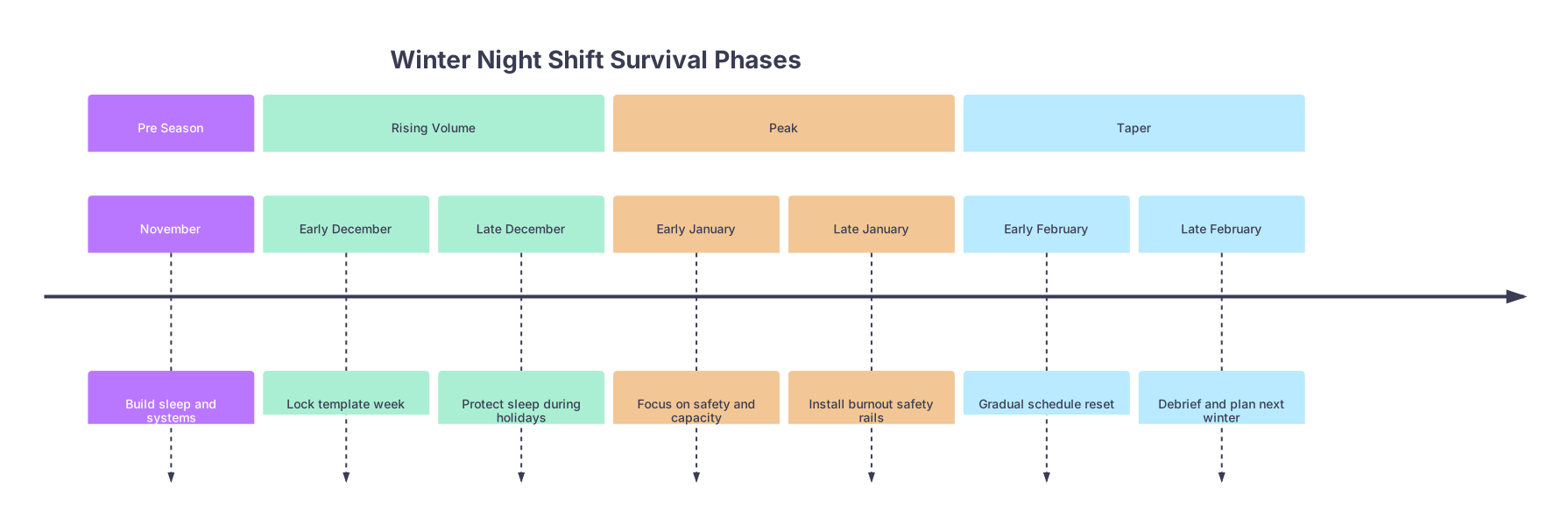
| Period | Event |
|---|---|
| Pre Season - November | Build sleep and systems |
| Rising Volume - Early December | Lock template week |
| Rising Volume - Late December | Protect sleep during holidays |
| Peak - Early January | Focus on safety and capacity |
| Peak - Late January | Install burnout safety rails |
| Taper - Early February | Gradual schedule reset |
| Taper - Late February | Debrief and plan next winter |
Quick Month‑by‑Month Checklist
Use this as your end‑of‑month audit.
By end of November, you should have:
- Blackout sleep setup and white noise
- Night box packed and ready
- Vaccine updates done
- One or two “test nights” logged with notes
By end of December, you should have:
- A standard night‑shift daily schedule you actually follow
- Clear social boundaries for nights + holidays
- Caffeine cutoff time that you respect most days
- Minimum viable self‑care floor: sleep, one real meal, short walk
By end of January, you should have:
- A written list of your “sickest” patients each night
- Driving‑while‑tired rule (and you have actually used it)
- At least one zero‑obligation half‑day each week
- A way to offload emotional weight (notes, peer, therapist)
By end of February, you should have:
- Winter debrief notes
- Your personal “Winter Nights Protocol” document
- A small set of changes to propose to your program
- A plan on where you will store all of this for next year


