The myth that you “cannot get real clinical exposure with a 9‑to‑5 job” is lazy thinking, not reality.
You can absolutely build strong, meaningful, week‑by‑week clinical experience while working full time. I have watched people do it from retail, from IT, from teaching, from finance. The ones who succeed stop thinking in semesters and start thinking in weeks and hours.
This is the playbook.
Step 1: Get Ruthlessly Clear on Your Weekly Capacity
You are not a traditional student with empty weekday afternoons. You are a worker. That changes the math, not the outcome.
You must know exactly how many hours you can commit consistently. No fantasies. Real numbers.
Do a brutally honest time audit (one week)
For 7 days, write down:
- Start/stop time for work
- Commute time (both ways)
- Sleep time (actual, not ideal)
- Fixed obligations: kids, elder care, classes, religious services, etc.
- Screen time you could reclaim: Netflix, scrolling, gaming
- Weekend blocks that are realistically usable
Then answer:
- How many weekday evenings can you consistently give 3–4 hours?
- How many weekend hours can you give without imploding in 3 months?
For most full‑timers, the realistic starting point is:
- 1–2 evenings per week (3–4 hours each)
- 1 weekend half‑day (4–5 hours)
So: 8–12 hours / week total. That is enough to build very strong clinical exposure in 6–12 months if you use it correctly.
Step 2: Pick the Right Type of Clinical Exposure for a 9‑to‑5
Some experiences are built for nontrad schedules. Some are a nightmare. Choose strategically.
| Role Type | Schedule Friendly | Training Time | Paid/Unpaid |
|---|---|---|---|
| Hospital Volunteer | High | 0–4 weeks | Unpaid |
| Hospice Volunteer | High | 4–8 weeks | Unpaid |
| Medical Scribe | Medium | 2–6 weeks | Paid |
| EMT (per diem) | Medium | 3–6 months | Paid |
| CNA / PCT (per diem) | Medium | 2–4 months | Paid |
| MA (back-office clinics) | Low–Medium | 3–9 months | Paid |
Fastest path: Volunteer‑based clinical exposure
If you want something in the next 4–6 weeks:
Hospital volunteering
- Pros: Flexible shifts (evenings/weekends), direct patient contact possible, quick start.
- Cons: Bureaucracy, COVID-era restrictions in some systems, some roles are too passive.
- Target: Patient transport, ED volunteer, inpatient unit helper, not “front desk only.”
Hospice volunteering
- Pros: Deep patient interaction, flexible scheduling, meaningful conversations.
- Cons: 1–2 month onboarding/training, emotionally heavy.
- Great if: You can commit 1–2 weekly visits and want strong stories for your personal statement.
Medium path: Part‑time paid clinical roles
These are better once you know you like clinical environments and can commit more time:
Medical scribe (evenings or weekends)
- Pros: Direct physician interaction, superb for learning how medicine really works, great for letters of recommendation.
- Cons: Training ramp‑up, sometimes low pay, can be cognitively draining after a desk job.
- Look for: ED scribe roles with 4‑, 6‑, or 8‑hour shifts outside your 9‑to‑5.
EMT (per diem / part‑time)
- Pros: Very “clinical,” hands‑on, adrenaline, strong for applications.
- Cons: Certification course (3–6 months), shifts can be long and exhausting.
- Works best if: Your 9‑to‑5 is somewhat flexible or you can compress work hours.
CNA / PCT per diem
- Pros: Constant patient contact, team‑based, strong clinical foundation.
- Cons: Physically demanding, certification needed, schedule may conflict with day job.
For now, assume you start with volunteer‑based exposure and layer in paid roles later. That is the most realistic path for a standard office worker.
Step 3: Architect Your Week (Not Your Life)
Stop planning in vague “someday” terms. If it does not exist in your calendar this week, it is not real.
Build a template week
Let’s assume:
- 9‑to‑5 job, 30‑minute commute
- Some family or personal obligations
- You can realistically commit ~10 clinical hours per week
Example template:
Monday
- 8:00–5:00: Work
- 6:30–9:30: Hospital volunteer shift
Wednesday
- 8:00–5:00: Work
- 6:30–9:30: Shadowing / scribing / ED volunteer (once arranged)
Saturday
- 9:00–1:00: Clinic or hospice visits
- (Afternoon free for MCAT or rest)
Is this aggressive? Yes. Is it sustainable over 9–12 months? With boundaries and sleep, yes.
The trick: Lock down 1 recurring weeknight + 1 recurring weekend block. Make those non‑negotiable unless there is a true emergency.
Step 4: A 12‑Week Ramp‑Up Plan You Can Actually Follow
Here is how to build clinical exposure week by week without quitting your job.
Weeks 1–2: Research and Lock in Your First Role
Goal: One concrete, scheduled clinical commitment.
Make a target list (10–15 sites)
- Local hospital volunteer departments
- Free clinics
- Hospice organizations
- Community health centers
- Scribe companies (ScribeAmerica, Robin Healthcare, ProScribe, etc.)
Use a fast outreach script (email + phone)
Email template (steal this):
Subject: Prospective Volunteer – Evening/Weekend Availability
Dear [Name or Volunteer Coordinator],
I am a full‑time working professional preparing to apply to medical school. I am seeking a consistent evening or weekend volunteer role with direct patient contact, ideally in [ED / inpatient unit / hospice / clinic setting].
I can commit [X] hours per week for at least [Y] months and am available [list 2–3 specific times, e.g., Mondays 6–9 pm, Saturdays 9 am–1 pm].
Could we schedule a brief call to discuss whether there might be a fit?
Thank you for your time,
[Your Name]
[Phone]Then call. Twice. Offices ignore the first email all the time. Persistent but polite wins.
Apply to at least 3–5 options in week 1
Do not wait for one hospital to respond before applying to another.Use one evening per week for onboarding tasks
- Health screenings
- TB test
- Background check
- Online modules
Batch all of it into a single evening block so it does not leak into everything.
By the end of week 2, you should:
- Have at least one site in process
- Know your likely start date
- Have blocked a recurring shift time in your calendar, even if tentative
Weeks 3–4: Start Showing Up and Collect Real Exposure
Goal: 1 recurring shift per week, minimum 3–4 hours.
When you start:
Ask deliberately for patient‑facing tasks
First day, say something like:“I am preparing for medical school and hope to learn how patient care works from the inside. I am very happy to do basic tasks, but if there is any opportunity to interact with patients directly or observe clinical workflows, I would be grateful.”
You will not always get what you ask for. But you will often get more than the person who silently accepts whatever they are given.
Treat the first 2–3 shifts like reconnaissance
Notice:- Where do nurses, techs, and physicians cluster?
- Who seems receptive to learners?
- What hours are busiest vs. dead?
Start a clinical log from day one
Simple structure in a notebook or doc:- Date, hours
- Setting (ED, med‑surg, hospice home visit, etc.)
- 1–2 meaningful patient interactions (no names, just context)
- 1 thing you learned about health care
That log will save you months when you write essays.
Aim: By the end of week 4, you have:
- Logged ~12–16 hours of clinical exposure
- A consistent weekly pattern
- At least 2–3 meaningful patient stories forming
Weeks 5–8: Layer in Shadowing or Scribing
You now have some footing. Time to move from “I was in the building” to “I watched how physicians think and act.”
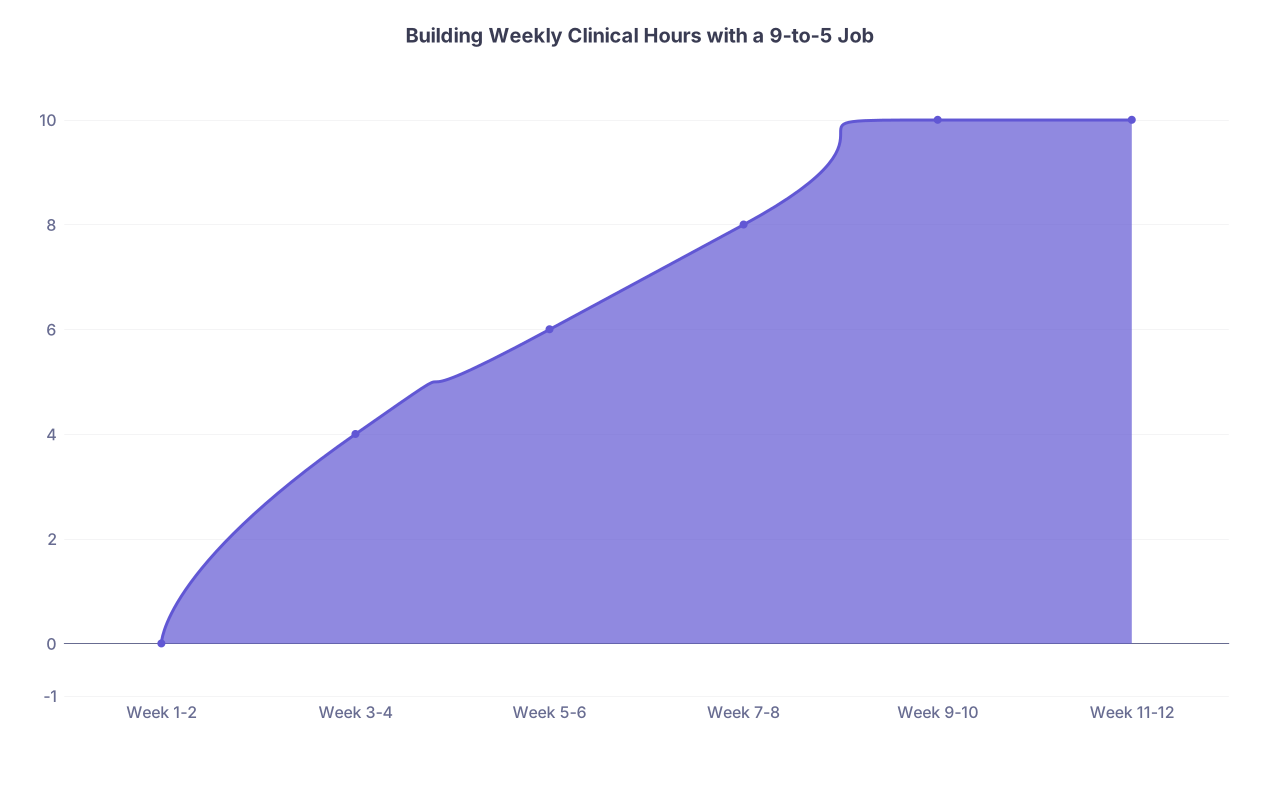
| Category | Value |
|---|---|
| Week 1-2 | 0 |
| Week 3-4 | 4 |
| Week 5-6 | 6 |
| Week 7-8 | 8 |
| Week 9-10 | 10 |
| Week 11-12 | 10 |
Path A: Shadowing on top of volunteering
Use your existing hospital or clinic role to find physicians:
After a shift, ask a nurse or PA:
“Is there a physician here who is particularly open to teaching or having students shadow?”Approach that physician at an appropriate moment (not mid‑code, obviously):
“Dr. [Name], my name is [X]. I volunteer here on [days]. I am preparing for medical school and would be very grateful for any chance to observe you for a few hours on an evening or weekend if possible. I work 9‑to‑5, but I am flexible outside those hours.”
Make it easy by proposing specifics:
- “Would any Thursday after 5:30 pm or Saturday mornings work for you?”
If one doctor says no or seems annoyed, you move on. Do not take it personally.
Path B: Transition to or add a Scribe role
If you want something more structured and paid:
Apply to scribe positions that explicitly list:
- Evening shifts
- Overnight shifts (only if your job and body can handle it)
- Weekends
During interviews, be blunt about availability:
- “I can consistently work two weekday evenings and one weekend shift. I understand training is intensive and I am committed to a 12‑month minimum.”
If hired, replace, do not stack:
- Keep 1 weekly volunteer shift only if you can sustain it
- Use scribe shifts as your core clinical exposure (and physician contact for letters)
By week 8, your week might look like:
- Monday: Hospital volunteer 6–9 pm
- Wednesday: Shadowing 5:30–9 pm (twice a month)
- Saturday: Hospice visit 9–12 or scribe shift 8–2
Total: ~8–12 hours/week clinical. Very solid.
Weeks 9–12: Stabilize, Deepen, and Document
This is where nontrads screw up. They chase more roles instead of going deeper in the ones they already have.
Your goal now:
- Stay consistent
- Take on slightly more responsibility within your roles
- Build relationships that lead to letters and mentorship
Tighten your schedule
If you feel stretched:
- Drop to 1 major clinical site + optional shadowing rather than 3 casual things.
- Prioritize:
- Strongest physician contact
- Most direct patient interaction
- Easiest commute and schedule stability
Add small depth moves
Examples:
Ask your volunteer coordinator if you can:
- Move to ED or inpatient unit
- Help with discharge instructions (under supervision)
- Assist with vital sign checks (if allowed/trained)
As a scribe:
- Ask one physician if they would be open to a 15‑minute “career Q&A” after a shift every few weeks.
- Start noting interesting cases in your log (again, no identifying details).
Within 12 weeks, a realistic nontrad could have:
- 40–60 hours of hospital or clinic volunteering
- 10–20 hours of shadowing or scribing
- A clear, repeatable weekly structure
Not hypothetical. I have seen this done while working Big 4 accounting hours.
Step 5: Manage Energy So You Do Not Implode
Most people underestimate the emotional fatigue of being “on” at work, then going into a hospital.
If you burn out, you stop showing up. If you stop showing up, nothing else matters.
Non‑negotiables
Sleep: Aim for a minimum of 7 hours on clinical + work days. If that means less Netflix or fewer social events, so be it.
Commute stacking: Use your commute to mentally switch contexts:
- To the hospital: Short reflection on why you are doing this.
- Back home: Quick decompression (music, podcast, silence).
One real off‑evening and off‑half‑day per week
No work. No studying. No clinical. Your brain will thank you.Pre‑pack your clinical nights
The barrier is often “I am too tired to get ready.” Solve it:- Keep a small “clinical bag” in your car or by the door: badge, notebook, pen, snack, water, comfortable shoes.
- Change mindset: after work, you are not going home, you are going to your shift. Home is the second destination.
Step 6: Turn Hours into Application Gold
A lot of applicants waste their clinical time. They clock in and clock out and then stare at a blank screen when it is time to write their personal statement.
You will not do that.
Keep a structured reflection log
After each shift (10 minutes max), jot down:
- 1 patient interaction that affected you
- 1 observation about the health care system
- 1 thing that made you more or less certain about medicine as a career
Example entry:
- “ED volunteer, 3 hours. Helped transport an elderly patient with shortness of breath. Watched the attending explain the diagnosis to her daughter. Noticed how he sat down at eye level and repeated things without sounding annoyed. Realized how communication is as critical as the medications. Made me think about my own impatience at work when people ask the same questions repeatedly.”
That single paragraph can fuel:
- Secondary essays about clinical exposure
- Your “why medicine” narrative
- Interview answers about challenging patient encounters
Track your hours like a professional
Create a simple spreadsheet:
- Date
- Role and site
- Hours
- Short description
Once a month, total your hours by category:
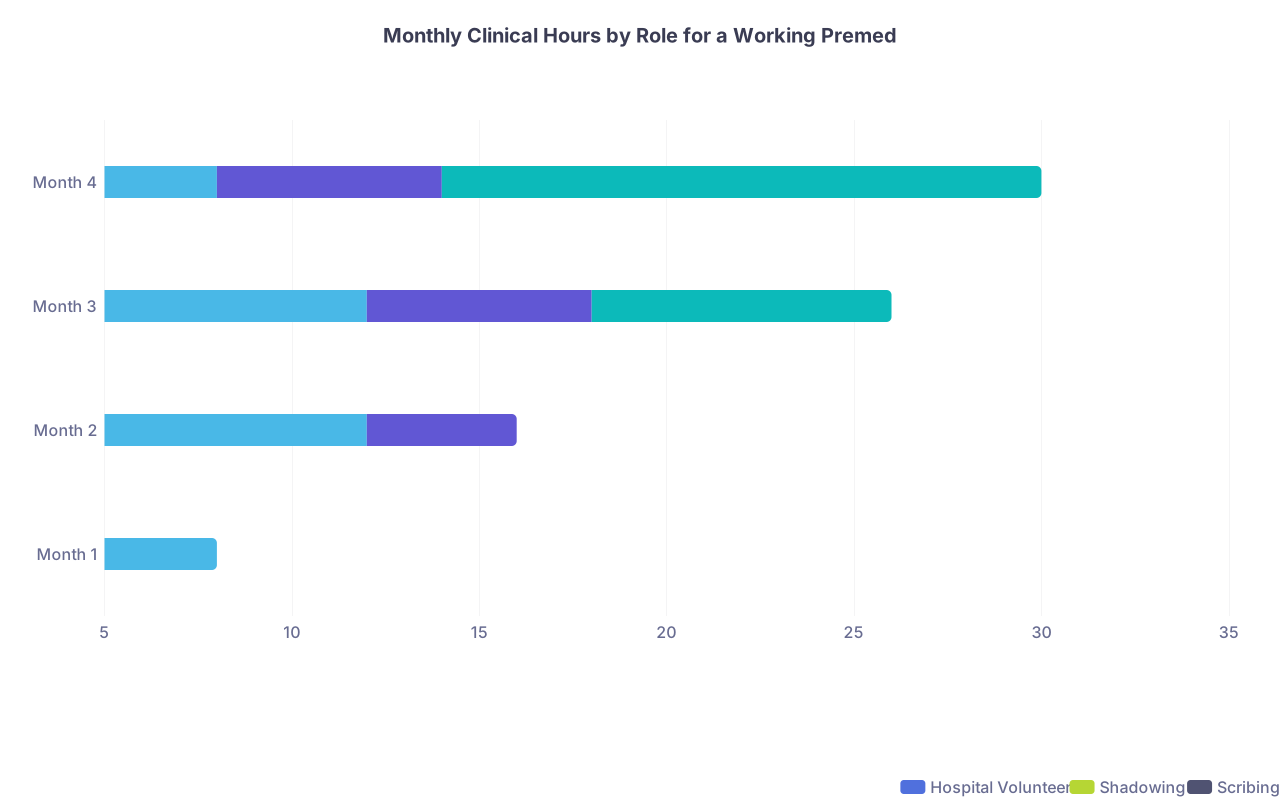
| Category | Hospital Volunteer | Shadowing | Scribing |
|---|---|---|---|
| Month 1 | 8 | 0 | 0 |
| Month 2 | 12 | 4 | 0 |
| Month 3 | 12 | 6 | 8 |
| Month 4 | 8 | 6 | 16 |
By month 6–9 of consistency, you are sitting on:
- 150–250+ hours of hospital/clinic exposure
- 30–60+ hours of direct physician observation
- Enough material for multiple strong essays and interviews
That is competitive for many MD and DO programs, especially when combined with your nontraditional background.
Step 7: Use Your Nontraditional Status as an Asset, Not a Liability
Here is what many nontrads forget: you are bringing something residents and attendings complain that students often lack—real‑world work experience.
Use it.
Play to your strengths
- Show up on time. Every time. Sounds basic. It is not.
- Communicate like an adult coworker, not an unsure teenager.
- Take ownership: If you say you will cover Mondays 6–9 pm, treat it like your job.
Physicians notice the volunteer who:
- Emails professionally
- Follows through
- Does not whine about staying 15 minutes late when a patient needs something
Those are the people they write letters for.
Build relationships deliberately
You do not need 20 mentors. You need 1–2 who actually know you.
Identify:
- 1 attending or resident who sees you regularly and seems receptive
- 1 nurse or allied health professional you can learn from
Over months, ask reasonable questions:
- “What do you wish premeds understood about this work?”
- “Are there habits you see in excellent interns that I can start now?”
Later, when you need a letter:
- You can say, “We have worked together for the last 8 months, roughly 3–4 hours per week. You have seen me interact with patients in X, Y, Z situations.”
- That is a very different ask from “You barely know me, but can you write a letter?”
A Sample 6‑Month Progression for a 9‑to‑5 Premed
To make this concrete, here is what a realistic arc might look like.
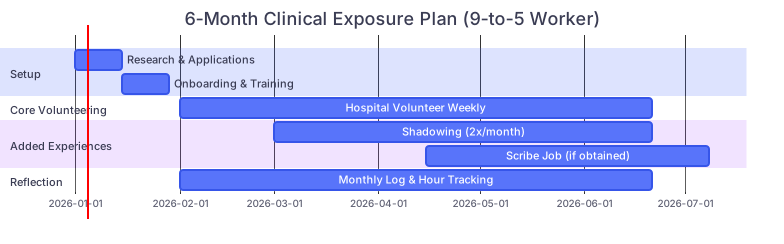
| Task | Details |
|---|---|
| Setup: Research & Applications | a1, 2026-01-01, 2w |
| Setup: Onboarding & Training | a2, after a1, 2w |
| Core Volunteering: Hospital Volunteer Weekly | a3, 2026-02-01, 20w |
| Added Experiences: Shadowing (2x/month) | a4, 2026-03-01, 16w |
| Added Experiences: Scribe Job (if obtained) | a5, 2026-04-15, 12w |
| Reflection: Monthly Log & Hour Tracking | a6, 2026-02-01, 20w |
By the end of 6 months:
- Hospital volunteer: ~80–120 hours
- Shadowing: ~30–40 hours
- Scribe (if secured by month 3–4): ~100–150 hours
- Clear narrative: “I maintained a full‑time job while consistently committing 8–12 hours per week to clinical exposure over half a year.”
That is the kind of line that makes admissions committees sit up.
Common Pitfalls (And How to Fix Them Fast)
“I am waiting for the perfect role”
Fix: Start with any decent patient‑facing volunteer gig you can get in the next 4–6 weeks. Optimize later.“My hospital only has weekday daytime shifts”
Fix:- Expand to: hospice, free clinics, nursing homes, rehab centers, crisis centers.
- Widen search radius to 30–45 minutes. Yes, it might mean a drive.
“I am exhausted and my grades/MCAT are slipping”
Fix:- Cut clinical hours to 4–6 per week for a 4‑week period.
- Protect one entire day per week for academics only.
- Resume gradual increase only once you are stable.
“I cannot find physicians to shadow”
Fix:- Ask nurses who is “teaching‑friendly.”
- Try urgent care centers, smaller community hospitals, or private practices.
- Use professional networks: your primary care doctor, LinkedIn connections in health care, etc.
FAQ (Exactly 3 Questions)
1. How many clinical hours do I actually need as a nontraditional applicant?
You are not aiming for a magic number; you are aiming for a pattern. That said, a very solid target is:
- 150–300 hours of sustained, direct clinical exposure
- With at least 30–50 of those involving close observation of physicians (shadowing or scribing)
If you show 8–12 hours per week over 6–12 months while working full time, most committees will understand the commitment behind that, especially if your roles involve real patient interaction.
2. Is it better to quit my job and go all‑in on clinical experience?
Usually not. Quitting your job to volunteer more can actually hurt you financially and does not automatically impress admissions. What impresses them is evidence that you can handle a heavy, consistent workload over time. If you are in a toxic job that destroys your health, that is a separate issue. But in most cases, keep the job, build 8–12 clinical hours per week, and show that you can manage competing demands. That looks a lot like residency, which is exactly what they are trying to predict.
3. Do virtual shadowing and online clinical programs count for anything?
As primary clinical exposure, no. They are a supplement at best. Schools want to see you physically in clinical environments, interacting with real patients and teams. Virtual shadowing can help you learn terminology and generate some talking points, but it should not be the backbone of your application. If your current “clinical experience” is 90% virtual, you need to shift to in‑person roles as described above and start logging consistent, on‑site hours.
Open your calendar right now and block one evening and one weekend half‑day for clinical work for the next 8 weeks. Then send three emails to volunteer programs or scribe companies before you go to bed. If it is not on your calendar and in someone’s inbox, you are still just thinking about medicine, not moving toward it.