The biggest mistake MD–PhD applicants make is treating the application like MD-only with “extra research.” It is not. Your research timeline is your primary application.
You’re not just selling grades and scores. You’re selling a coherent scientific trajectory over time. And that means every month of your application year either builds your research story—or weakens it.
Below is a month‑by‑month guide for a typical MD–PhD cycle assuming you apply in June (AMCAS opens in May) and aim to matriculate the following July/August. I’ll walk you from August before your application year through the following April, with explicit research milestones at each point.
Adjust by 6–12 months if you’re earlier/later, but keep the sequence.
Big Picture: Your MD–PhD Application Year as a Research Project
At this point you should stop thinking “What research have I done?” and start thinking “What is my research arc?”
There are three phases in the MD–PhD application year:
Pre‑Application Build (Aug–Dec before you apply)
- Solidify research output, deepen responsibility, define your “theme.”
Application & Interview Phase (Jan–Dec of your application year)
- Translate your research into a compelling story, keep working, show continuity.
Pre‑Matriculation Phase (Jan–Apr after interviews)
- Finish projects, secure letters, and close the loop professionally.
Here’s how your research time should roughly shift:
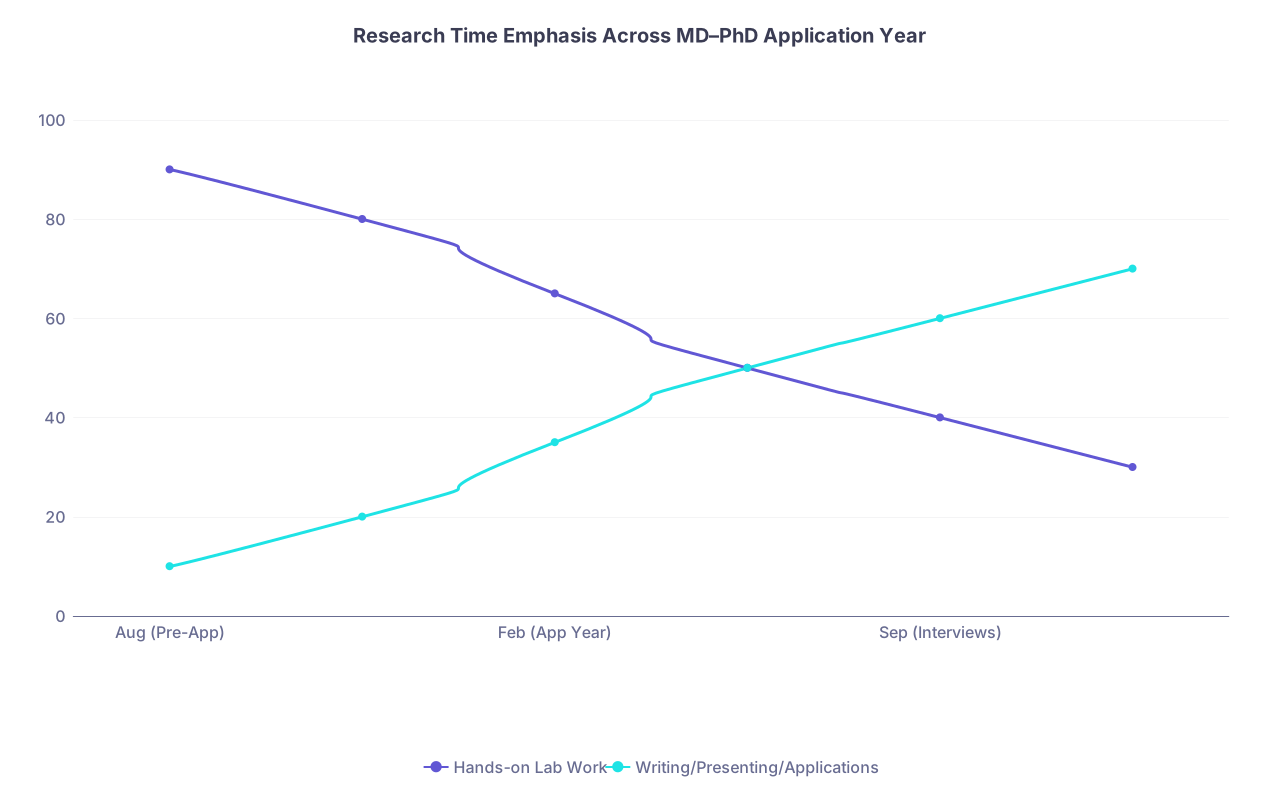
| Category | Hands-on Lab Work | Writing/Presenting/Applications |
|---|---|---|
| Aug (Pre-App) | 90 | 10 |
| Nov | 80 | 20 |
| Feb (App Year) | 65 | 35 |
| May | 50 | 50 |
| Sep (Interviews) | 40 | 60 |
| Jan (Post-Interviews) | 30 | 70 |
Those percentages are rough, but you get the idea: you shift from doing science to talking about science without ever dropping the doing to zero.
August–September (Before Application Year): Lock in Responsibility
If you’re applying next summer, by late August you need to stop dabbling.
At this point you should:
- Be settled in one primary lab where you’re known and trusted.
- Have one clear project you can explain from hypothesis to data.
- Be meeting with your PI regularly, not once every other month.
Concrete research milestones for August–September:
Clarify your project scope
Sit down with your PI and ask directly:- “What exact question am I working on?”
- “What’s the realistic timeline through next summer?”
- “What could be a poster, abstract, or paper from this?”
Upgrade your role from pair of hands to brain
If you’re still just pipetting what a postdoc hands you, push for:- Ownership of a sub‑aim (“I’ll own the pilot dose–response work.”)
- Responsibility for data analysis and figure drafting.
- Presenting lab meeting once this semester.
Block protected lab time
Put 10–20 hours/week of research on your calendar, non‑negotiable if you want to be competitive at top MSTPs.Start a research log
Not just lab notebook. A research story log:- Key experiments you helped design.
- Failures and how you debugged them.
- Specific figures you contributed to.
You’ll pull stories from this later for secondaries and interviews.
October–December (Before Application Year): Generate Output and Narrative
By this late fall, you should be moving from “I joined a lab” to “Here’s what I’ve contributed.”
At this point you should be aiming for:
- At least one tangible product in motion:
- Abstract submitted
- Local poster planned
- Manuscript draft started (even internal)
- A working draft of your research‑focused CV.
Key research milestones by month:
October
Ask about upcoming meetings
“Is there a conference where this work might be presented next spring/summer?”
If yes:- Ask to help draft the abstract.
- If you’ve done real work, push (politely) to be first or second author.
Internal presentation
Aim to present at:- Lab meeting
- Department research-in-progress Use this as practice for MD–PhD interviews.
November
Data consolidation month
You want:- One figure you can explain in detail (controls, n, stats).
- One clear result you can state without jargon.
Start drafting a “mini‑grant” style summary of your project
1–2 pages:- Background
- Hypothesis
- Your specific role
- What’s been found so far
- Next steps
This becomes the skeleton for your MD–PhD essay (“Significant Research Experience”).
December
Target: at least one formal research line on your CV
Examples:- “Poster presentation – University Research Day, Dec 20XX”
- “Co‑author on manuscript in preparation (Smith et al.)”
- “Abstract submitted to AACR 20XX”
PI conversation about letters and trajectory
Explicitly ask:- “If I apply MD–PhD next cycle, would you feel comfortable writing a strong letter focused on my potential as a physician–scientist?”
- “What do you think I should accomplish between now and June to be maximally competitive?”
If your PI hesitates, that’s data. You either fix performance or adjust expectations/program list.
January–March (Application Year): Build the Record Before You Hit Submit
Now you’re in the calendar year you’ll apply. MD–PhD committees will look hard at what you did in these 6 months. Coasting here is a red flag.
At this point you should:
- Move from “in preparation” to submitted/presented where possible.
- Start translating your technical work into language for committees.
- Keep momentum; no big gaps in your research activity.
Month‑by‑month:
January
- Inventory your research record
Make a table of:- Projects
- PI
- Dates
- Your role
- Outputs (posters, papers, talks)
You’ll use this when ranking which experiences to list as “Most Meaningful” and in your MD–PhD essay.
- Abstracts & posters
Many spring/summer meetings have January deadlines.
Push to:- Finalize at least one abstract with your name on it.
- Confirm authorship order.
February
Heavy data & writing month
Labs are back from winter break; use this window:- Clean data sets.
- Write figure legends.
- Help with methods sections.
Start rough drafts of research essays
Write:- A one‑page summary of each major project in plain English.
- A paragraph on what you learned about the scientific process from each.
This material becomes:
- “Significant Research Experience” essay
- School‑specific MD–PhD prompts
- Interview answers
March
- Checkpoint: research continuity
Can you truthfully say:- You’ve been continuously active in research for at least 1–2 years?
- You understand your project well enough to defend it to a skeptical PhD?
If not, you need:
More hours now.
A brutally honest talk with your mentor about focus and depth.
Update your PI and potential letter writers
Send:- One‑page summary of your work and progress.
- Updated CV.
- Your intention to apply in June.
This helps them watch you more closely over the next few months—good for letters.
April–May (Application Year): Turn Work into Application Language
AMCAS opens in May. By then, your science should largely be in motion; your job is to document and frame it.
At this point you should have:
- A near‑final list of all research experiences.
- Clear descriptions of your role and independence.
- PIs ready and willing to write detailed letters about your research potential.
April
Key milestones:
- Draft every research entry for AMCAS
For each experience:- What was the scientific question?
- What was your contribution beyond grunt work?
- One concrete example: “I optimized X,” “I designed Y figure,” etc.
Keep jargon minimal. If you can’t explain it clearly in ~700 characters, you don’t really own it.
Decide your “primary research identity”
MD–PhD committees want a thread:- Immunology
- Neuroscience
- Bioengineering
- Computational biology
You don’t need 100% alignment, but you do need a story: “Across my projects, I’ve focused on X type of questions.”
Confirm summer plans
From June onward, you must still be in the game:- Continue in your current lab,
- A full‑time summer position,
- Or a research fellowship.
No 3‑month hole where you “took a break.”
May
Finish your MD–PhD specific essay
Milestone: a complete draft that:- Describes at least one project in real depth (methods, interpretation).
- Shows intellectual ownership, not just tasks.
- Connects your research path to why an MD–PhD (not just MD) makes sense.
Align your PI’s letter with your narrative
Meet and say directly:- “I’m emphasizing X project and Y skills in my application. Does that match what you’ve seen? Anything you’d highlight differently?”
- “Would you feel comfortable commenting on my potential to lead an independent research program?”
Prepare a “Research Summary” document
2–3 pages:- One paragraph per project.
- Bullet‑point list of your contributions.
- Links to any preprints/papers.
You’ll send versions of this to letter writers and keep it handy for secondaries.
June–July (Application Year): Submit and Prove You’re Still Active
Application goes in. Now committees are asking one question: “Is this person still doing research, or was that all in the past?”
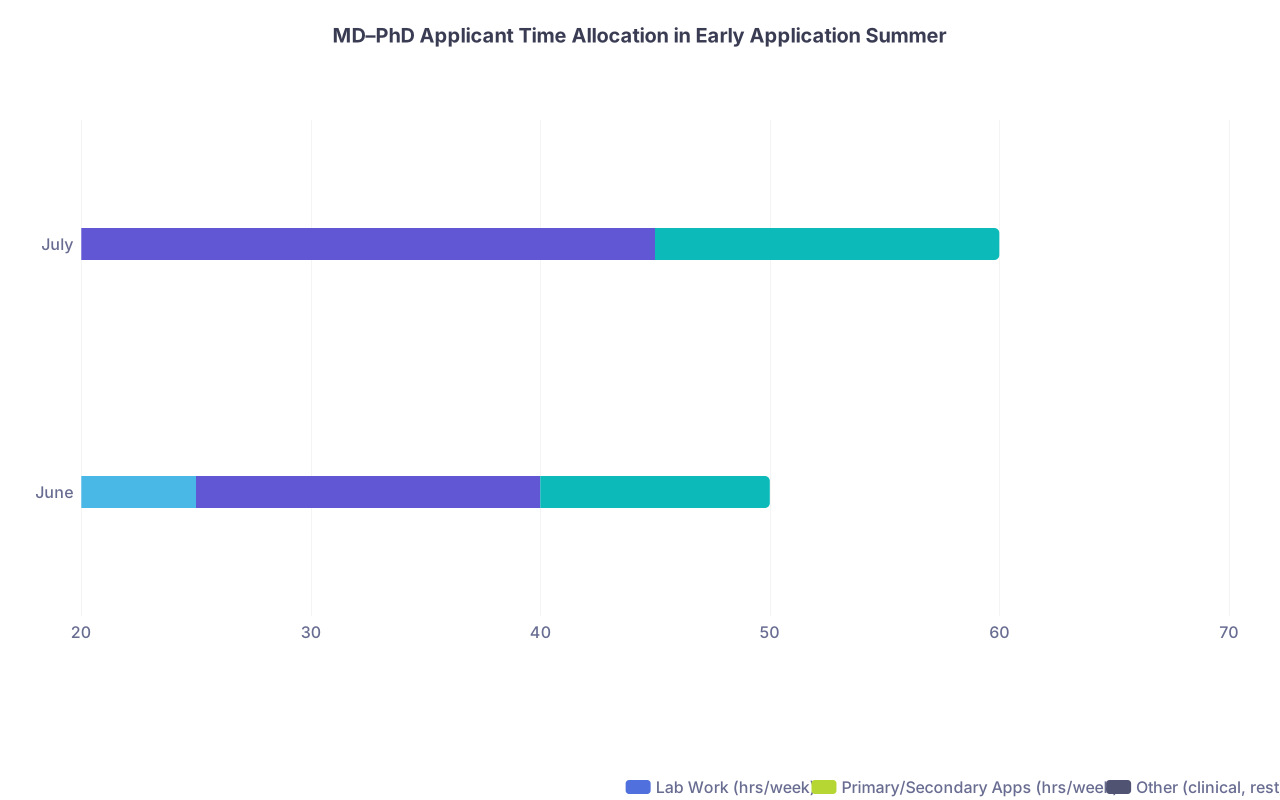
| Category | Lab Work (hrs/week) | Primary/Secondary Apps (hrs/week) | Other (clinical, rest) |
|---|---|---|---|
| June | 25 | 15 | 10 |
| July | 20 | 25 | 15 |
At this point you should:
- Be actively working in your lab every week.
- Keep a running list of new developments since AMCAS submission.
June
- Submit AMCAS early
That’s logistics, but it matters for MD–PhD.
On the research side:
Send formal update to your PI and letter writers with:
- Screenshot/summary of submitted experiences.
- Your current research goals for the summer.
- Any abstracts/papers now accepted.
Take on 1–2 “finishable” subprojects
Examples:- “Complete this set of Western blots and analyze them.”
- “Finish this set of simulations and generate final plots.”
You want at least one concrete outcome you can brag about in August when secondaries hit.
July
- Log every meaningful advancement
Keep a simple dated list:- Data sets completed
- Figures generated
- Abstracts accepted
- Manuscripts submitted
You’ll mine this for:
Update emails
Secondary “recent developments” sections
Interview updates
Start building your “10‑minute research talk”
By now, you have enough for:- 3–4 main slides (question, methods, data, implications).
- 1–2 backup slides (controls, limitations).
You’ll polish this later, but the outline should exist.
August–October (Application Year): Interviews Begin, You Become the Scientist
This is where weak MD–PhD applicants get exposed. The ones who padded their “research” crumble when a PhD on the committee asks a real question about methods.
Your job in these months: look and sound like a junior scientist in motion.
August
At this point you should:
- Be ready to explain at least one project in full depth.
- Have a tight, practiced 2–3 minute summary of each major research experience.
Milestones:
- Polish your research talk
Create a short chalk‑talk version:- No slides. Just words.
- Explain your main project from scratch to someone in another field.
Practice with:
Lab mates
A friend in a different major
Career center mock interview
Prepare update paragraphs
For secondaries or pre‑interview emails:- “Since submitting my application in June, I have X, Y, Z...”
- Keep it precise: “Abstract accepted to Society for Neuroscience 20XX,” etc.
September–October
These are heavy interview months for many MD–PhD programs.
At this point you should:
- Keep working in your lab on a reduced but consistent schedule (e.g., 10–15 hrs/week).
- Be able to handle detailed questioning about:
- Controls
- Limitations
- Alternative interpretations
During this period:
Coordinate with your PI about your role during interview season
You should not vanish. But you also cannot run full‑time experiments while flying every week. Agree on:- Limited, well‑defined tasks (analysis, figure refining, literature review).
- Realistic deadlines.
Track every incremental research update
When a new acceptance or milestone happens:- Add it to your master list.
- Decide if/when to update schools (offer stage‑appropriate updates; don’t spam).
November–December (Application Year): Later Interviews & Strategic Updates
If you’re still getting interviews late fall, programs are seriously interested. Your research record and its trajectory will often decide the final call.
At this point you should:
- Demonstrate sustained engagement, not a pre‑application peak then drop.
- Be able to articulate a future PhD direction, not just past work.
Key research milestones:
- Clarify your future research interests
By now, your story should sound like:- “My long‑term interest is in cancer immunology. My work in Dr. X’s lab on T cell responses to Y gave me experience in A and B. For my PhD, I want to build on that by doing C and D.”
Not:
“I’m open to everything.”
Targeted updates to select programs
Send an update if:- A manuscript is accepted or significantly progresses (submitted to a real journal, not just “in prep”).
- You receive a notable national‑level presentation opportunity or award.
Keep it short. Program directors do not want a novella.
- Continue light but real lab involvement
Examples:- Analysis projects you can do remotely.
- Helping with a review or methods write‑up.
- Preparing your portion of a manuscript.
You want to be able to truthfully say in any December interview:
“Yes, I’m still working on X. Recently I’ve been focused on Y.”
January–April (Post‑Interview, Pre‑Matriculation): Close the Loop
By this point, most of the selection work is done. But your research arc still matters—for your own training and for how you enter MSTP as a credible future scientist.
| Month | Key Research Milestone |
|---|---|
| January | Clarify final lab commitments and potential publications |
| February | Finalize any remaining analyses or small projects |
| March | Confirm status of abstracts/manuscripts and update CV |
| April | Thank mentors, close out projects professionally, plan gap months |
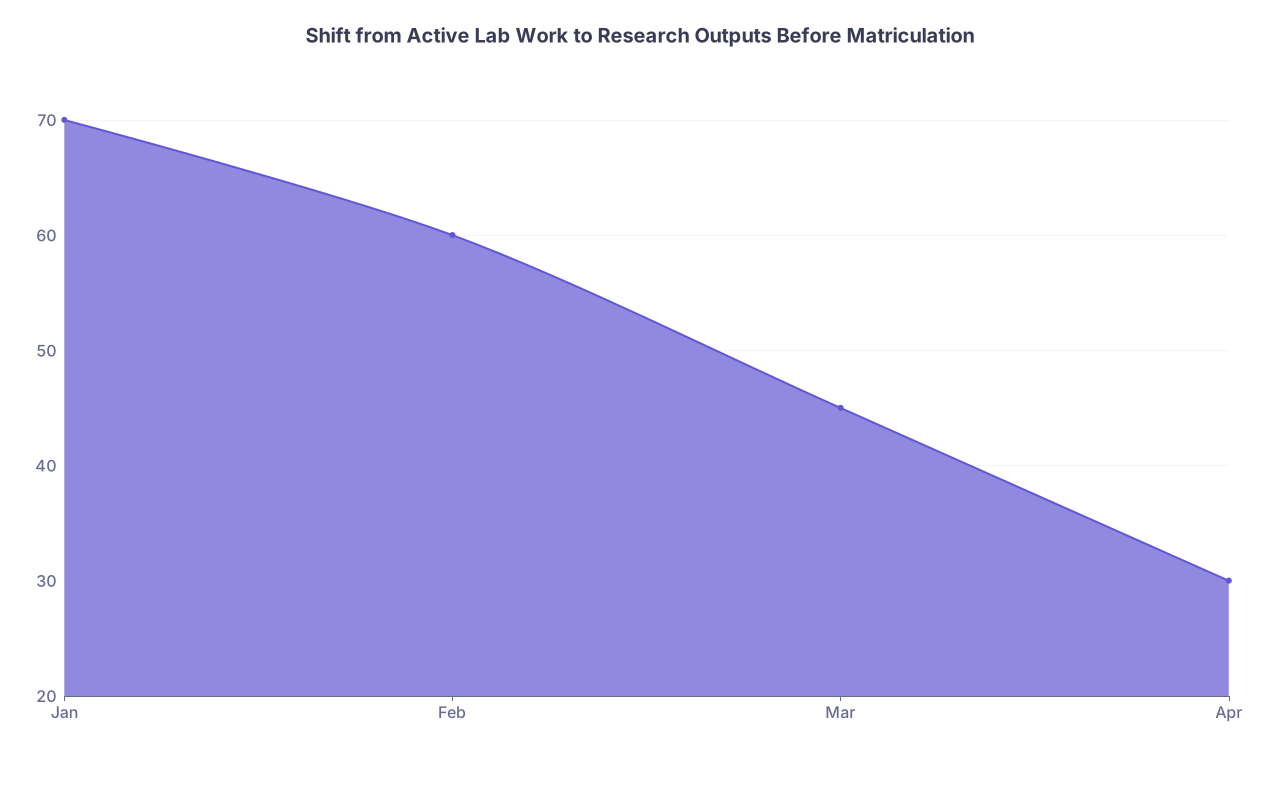
| Category | Value |
|---|---|
| Jan | 70 |
| Feb | 60 |
| Mar | 45 |
| Apr | 30 |
January–February
At this point you should:
- Know realistically which projects will publish with your name.
- Have an honest understanding with your PI about:
- Remaining work
- Authorship
- Timelines
Milestones:
Meet with your PI
Ask:- “Which of these projects will likely lead to publications, and when?”
- “What can I reasonably finish before I start MD–PhD?”
- “Will I stay involved at a distance if needed?”
Finish bite‑sized tasks that move papers forward
Examples:- Re‑running specific analyses.
- Finalizing figure panels.
- Helping write or edit sections of a manuscript.
These last contributions can easily turn a “thanks in acknowledgments” into a middle or even second author on a paper.
March–April
Now you’re mostly cleaning up and preparing for the transition.
At this point you should:
- Have a clean, accurate CV with all research outputs.
- Have left your lab on excellent terms.
Key steps:
Document everything
For each project:- Final title (or working title).
- Authors (as currently planned).
- Journal or meeting.
- Status: in prep, submitted, under review, accepted.
Thank your mentors properly
This doesn’t need to be cheesy. Just professional:- A brief email or note summarizing what you learned.
- An offer to help occasionally if needed.
- A promise to keep them updated when you choose a program and field.
Reflect and crystallize your PhD goals
Before you set foot in MSTP orientation, you should be able to say:- “Here’s the kind of question I want to work on next.”
- “Here are the skills I already have.”
- “Here are the techniques or areas I still need to learn.”
This reflection becomes the backbone of your first research rotations in med school.
Final Takeaways
Boil this year down and you get three non‑negotiables:
Continuity beats isolated glory. A steady, multi‑year record of real lab work is more convincing than one flashy summer and 18 months of nothing.
Depth beats laundry lists. One or two projects you understand cold will carry you further than six you barely touched.
Trajectory beats snapshot. MD–PhD committees are betting on who you will be in 10–15 years. Show them a research story that’s clearly moving forward—month by month—before, during, and after your application year.