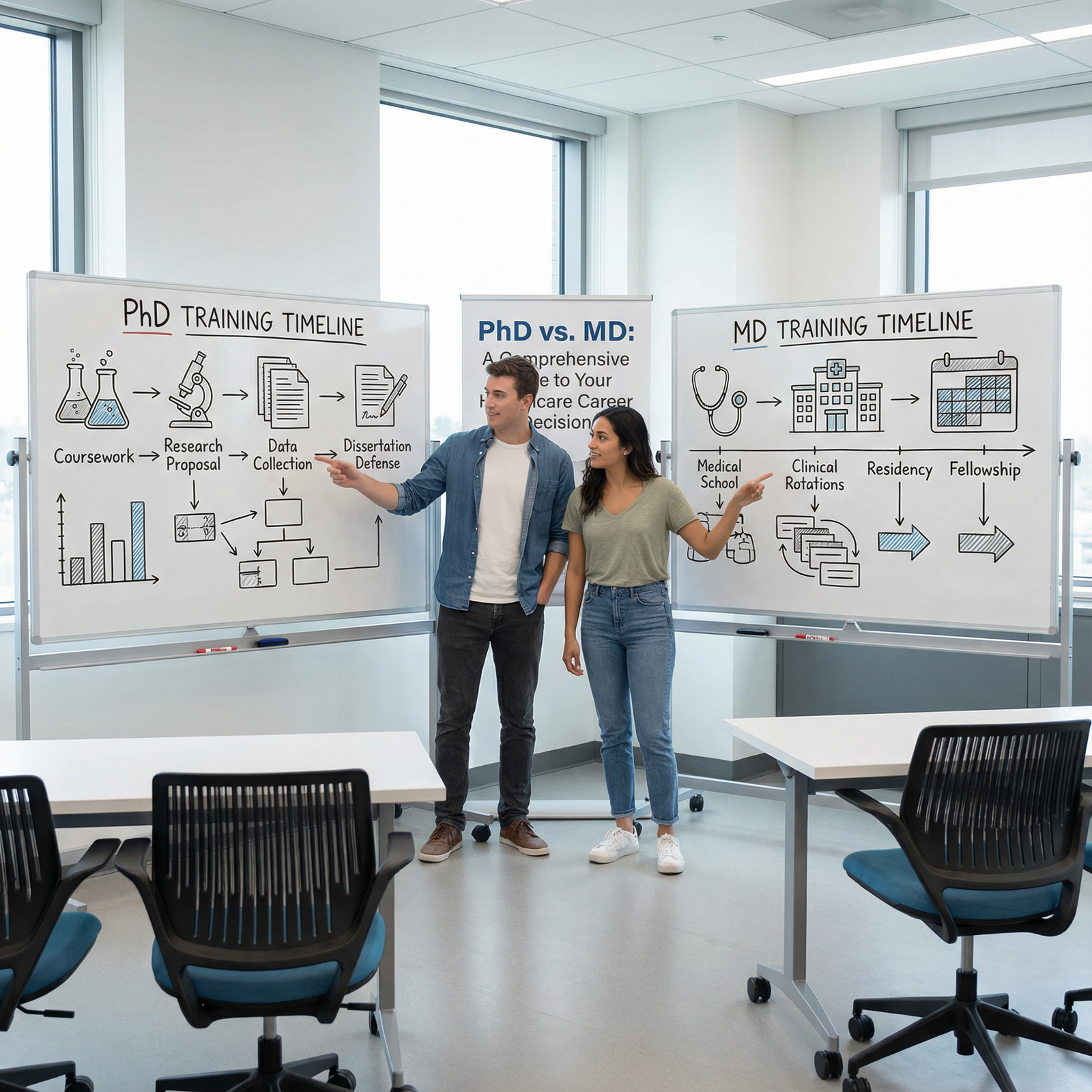
The belief that you need a PhD to have a serious research career in medicine is wrong. You need a research portfolio. Not extra letters.
Here is how you build that portfolio on a clear, ruthless timeline—from preclinical through early attending—without disappearing into a PhD program.
Big Picture: 6–8 Year Research Timeline (Without a PhD)
At this point you should think in phases, not projects. Your goal is progressive responsibility.
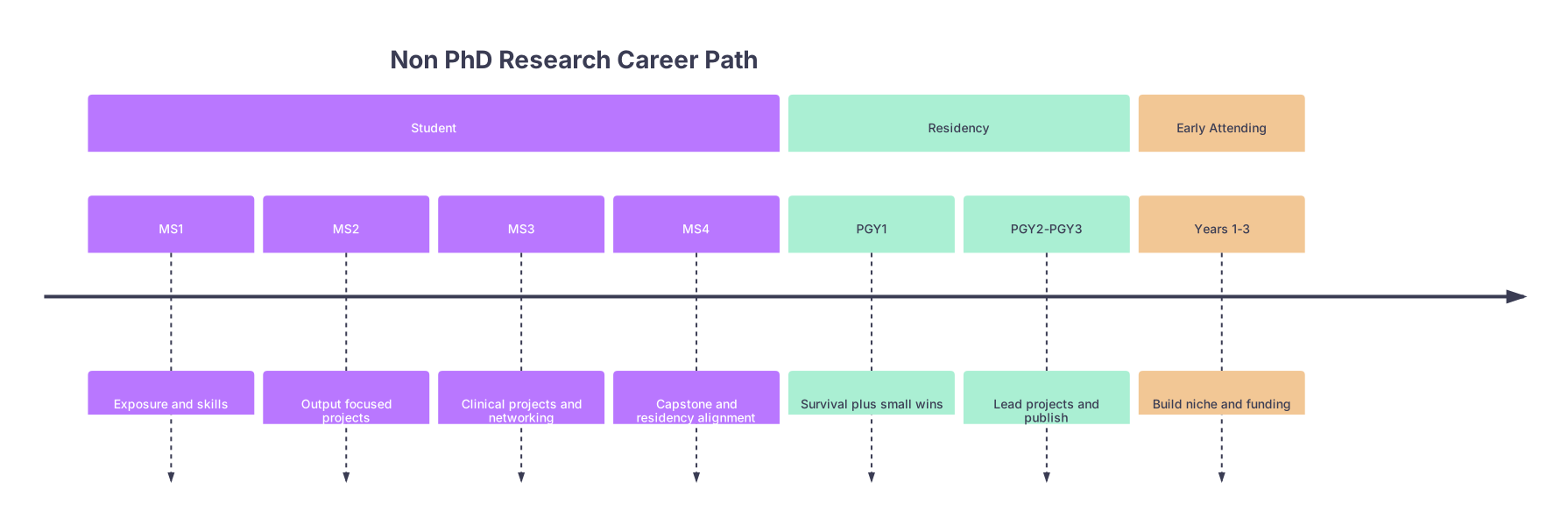
| Period | Event |
|---|---|
| Student - MS1 | Exposure and skills |
| Student - MS2 | Output focused projects |
| Student - MS3 | Clinical projects and networking |
| Student - MS4 | Capstone and residency alignment |
| Residency - PGY1 | Survival plus small wins |
| Residency - PGY2-PGY3 | Lead projects and publish |
| Early Attending - Years 1-3 | Build niche and funding |
Broadly:
- MS1: Learn the language of research. Join projects already running.
- MS2: Convert work into outputs (posters, abstracts, maybe a paper). Learn methods properly.
- MS3: Tie research to your target specialty. Prove you can get things finished.
- MS4: Consolidate. Get first-author work that clearly points toward your niche.
- Residency: Scale. Lead projects, mentor students, and move toward funding.
- Early attending: Formalize a research identity without ever doing a PhD.
Now we go month-by-month and year-by-year.
MS1: Foundation Year – Build Skills, Not Glory
At this point you should stop worrying about first authorship and start worrying about skills and habits.
Months 1–3: Orientation and Positioning
Goal: Pick a lane and find your first research home.
By end of Month 1 you should:
- Be clear on 2–3 specialties that genuinely interest you (even if this changes later).
- Know the basic research “types”:
- Clinical outcomes / retrospective chart review
- QI / implementation
- Education research
- Basic / translational (if you are masochistic with time)
- Identify 5–10 faculty who publish regularly in your school / hospital in those areas.
Week-by-week (first 6–8 weeks):
Week 1–2:
- Skim PubMed for your institution + specialty (e.g., “[Your School] cardiology outcomes”).
- Note repeating senior author names. Those are lab chiefs / consistent mentors.
- Attend any student research info session or research day.
Week 3–4:
- Draft a short, targeted email template to mentors:
- 3 sentences: who you are, what you have done (if anything), what you want (concrete).
- Offer time, not ideas: “I can help with data collection, chart review, or literature review.”
- Send 5–8 emails, not 1–2. Most students under-email. Then complain there are no opportunities.
- Draft a short, targeted email template to mentors:
Week 5–8:
- Meet with 2–4 potential mentors.
- Commit to 1 primary and optionally 1 backup research group. More is sloppy.
Months 4–6: Concrete Project + Basic Skills
By this point you should be attached to at least one actual project with a defined end product.
Minimum criteria for a good MS1 project:
- Feasible in 6–12 months.
- Has a clear endpoint: poster, abstract, or manuscript.
- You can describe your role in one sentence that does not sound like “extra pair of hands”.
What to actually do weekly (Months 4–6):
- 2–4 hours / week minimum of research time.
- Shadow a senior student / resident who already works with that PI:
- Watch how they write emails.
- Watch how they handle revisions.
- Learn basic tools:
- Reference manager (Zotero, Mendeley, EndNote – pick one and marry it).
- Basic stats environment (Excel + one of R, SPSS, or Stata).
- REDCap or whatever database platform your institution uses.

Concrete micro-goals by end of MS1 spring:
- Have your name on at least 1 active project.
- Have:
- Read 10–20 full papers relevant to your project.
- Created or helped refine 1 data collection form or REDCap instrument.
- Drafted part of a background / introduction section for a manuscript or abstract.
Months 7–12 (Summer after MS1): Output Sprint
Summer is your first real power window. Most students waste it doing “shadowing with some research.” Your priority is the reverse.
At start of MS1 summer you should:
- Negotiate clear goals with your mentor:
- 1 submit-ready abstract for a national or regional meeting.
- If possible, 1 manuscript draft.
Recommended structure (8–10 week research block):
Week 1:
- Lock in project scope. No more “we might also look at…” after Week 2.
- Confirm IRB status. If still pending after Week 2, your mentor is not serious or the project is poorly chosen.
Week 2–4:
- Data collection and cleaning.
- Meet weekly with mentor or senior resident to review progress.
- Keep a running analysis log (what changed, what you excluded, why).
Week 5–6:
- Initial analyses.
- Draft abstract and simple tables / figures.
- Get brutal feedback. Fix them fast.
Week 7–8:
- Submit abstract to at least 1 conference.
- Start manuscript draft with IMRaD structure (Introduction, Methods, Results, Discussion).
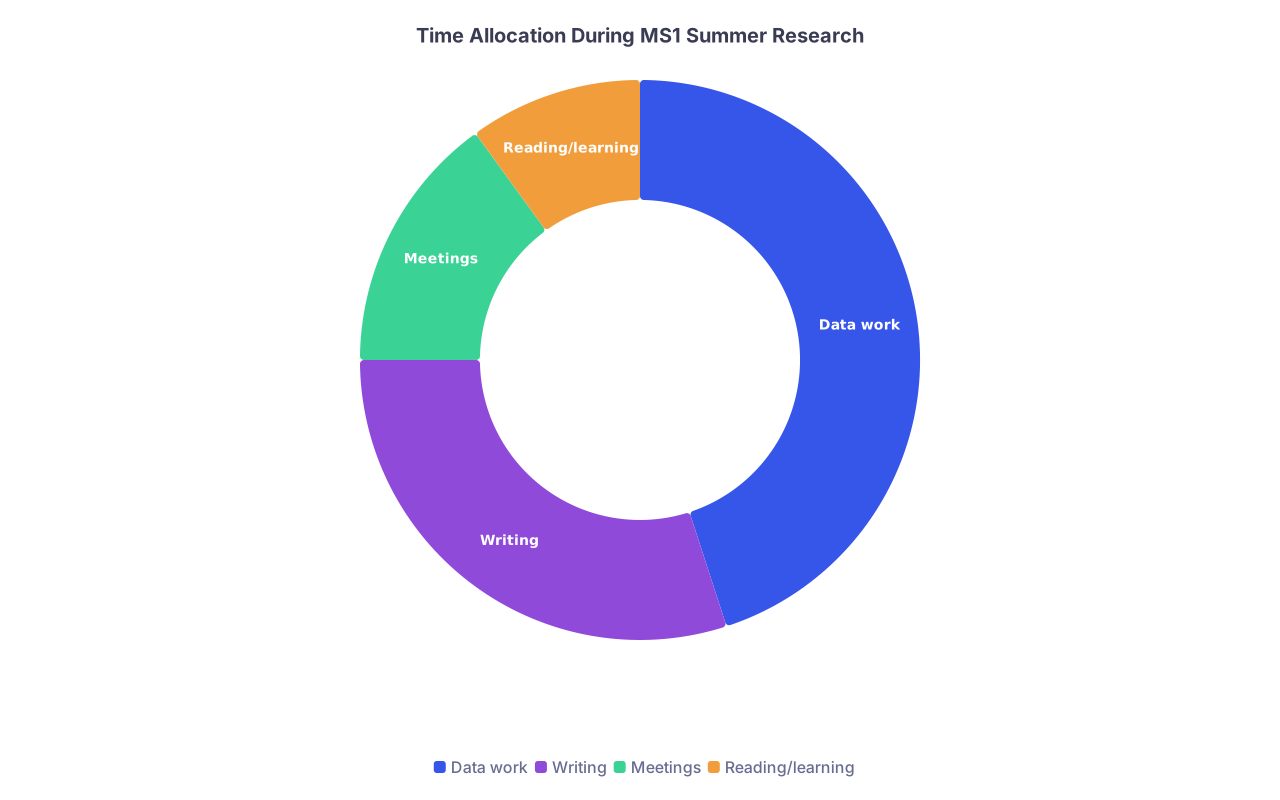
| Category | Value |
|---|---|
| Data work | 45 |
| Writing | 30 |
| Meetings | 15 |
| Reading/learning | 10 |
By the end of MS1 year you should have:
- 1–2 abstracts submitted or at least drafted.
- 1 poster (even if only at local research day).
- A clear sense of which mentors are efficient vs. dysfunctional.
MS2: Converting Momentum Into Real Portfolio
Now you balance Step studying with research. Poorly done, research dies here. Done right, you finish and get your first authorship.
Months 1–4 (Fall MS2): Focused Continuation, Less Exploration
At this point you should not be starting five brand new projects. You should be finishing what you started and strategically adding 1–2 higher-yield ones.
By MS2 fall you should:
- Be on:
- 1–2 ongoing projects from MS1 that are now in writing / analysis stages.
- 1 new project that positions you closer to your target specialty.
Monthly goals:
Month 1:
- List all active projects with:
- Your role
- End product (paper/poster/presentation)
- Estimated submission date
- Meet each PI and say explicitly: “My goal is to submit X by Y date. What needs to happen?”
- List all active projects with:
Month 2–3:
- Take specific ownership:
- First draft of methods.
- First draft of results section with tables.
- First pass of references and formatting.
- Do 1–2 practice stats sessions with a biostatistician if available. MS2 is late to be “learning p-values.”
- Take specific ownership:
Month 4:
- At least 1 manuscript should be in late-stage revisions or ready for journal submission.
Months 5–8 (Spring MS2): Step + Strategic Minimalism
Step studying comes first. But killing research completely is short-sighted.
Minimal viable research schedule during Step prep (3–4 months):
- 1–2 hours per week:
- Respond to coauthor edits.
- Handle minor revisions.
- Keep momentum on manuscripts already near completion.
- Say no to:
- New data collection projects.
- Any mentor who says “this is quick” (it never is).
Months 9–12 (Post-Step / Pre-Clerkship Summer): Clinical-Angled Work
This is the bridge between pure student research and clinically relevant projects.
At this point you should:
- Have at least:
- 2–3 abstracts.
- 1 manuscript submitted (authorship position matters less than the fact it exists).
- Be aiming for:
- 1 clear first-author paper over the next 18–24 months.
Use post-Step + pre-clerkship period for:
- Joining projects that involve:
- Clinical outcomes in your target specialty.
- Education research related to clerkships or OSCEs.
- Starting a small project where:
- You design the question.
- You are guaranteed first or second authorship.
MS3: Aligning Research With Target Specialty
MS3 is where you separate “I did some research” from “I am building a research story.”
Months 1–3 of MS3: Clerkship Reality Check
You are now on the wards. At this point you should stop fantasizing about lab work you cannot time-manage.
Your realistic research focus:
- Short, well-defined clinical projects.
- Case reports / series if:
- They are actually interesting.
- They can be written in 2–4 weeks.
Monthly actions:
- Month 1:
- Email existing mentors with updated schedule.
- Identify at least 1 resident / fellow in your target specialty who is “that research person.”
- Month 2–3:
- Ask that resident: “Do you have any projects where the data is done and help is needed with writing?”
- Plug yourself in as the writer. This is the fastest path to author lines during clerkships.
Months 4–9: Specialty-Focused Output
You are now rounding plus maybe on call. Research must be ruthlessly efficient.
At this point you should target:
- 1–2 projects squarely in your specialty of interest (e.g., cardiology, ortho, EM).
- 1 first-author paper or at minimum first-author abstract in that field.
How to structure this over ~6 months:
Identify “low-friction” project types:
- Retrospective reviews using existing databases or past QI projects.
- Secondary analyses of already-collected data.
- Education projects tied to clerkships you just completed.
Time-block:
- 2 evenings / week, 60–90 minutes each, for writing only.
- Rounding is not when you brainstorm research ideas. You execute them on your off time.
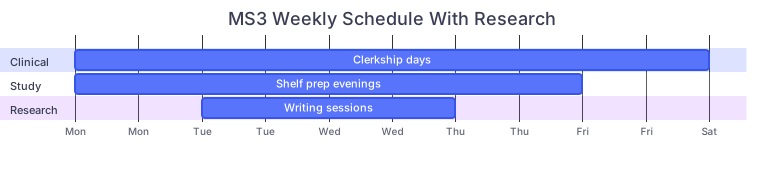
| Task | Details |
|---|---|
| Clinical: Clerkship days | a1, 2024-01-01, 5d |
| Study: Shelf prep evenings | a2, 2024-01-01, 4d |
| Research: Writing sessions | a3, 2024-01-02, 2d |
Months 10–12: Pre–MS4 / Application Positioning
Now you think about ERAS. Your research portfolio needs to read as coherent.
By end of MS3 you should:
- Have:
- 3–6 total outputs (abstracts, posters, papers).
- At least 1 in your target specialty.
- Be able to state your “research theme” in one or two lines:
- “I focus on cardiovascular outcomes in heart failure.”
- “I work on quality improvement and workflow in emergency departments.”
- “My work is in medical education, especially assessment and simulation.”
If your record is scattered (it often is), your job is narrative framing, not panic. But you still have MS4.
MS4: Consolidation and Signaling Seriousness
MS4 is about two things: finishing projects and convincing your target specialty you are research-capable without being a PhD person.
Early MS4 (Months 1–3): Clean Up and Capstone
At this point you should:
- List every ongoing project with:
- Current status: data, draft, submitted, accepted.
- Your authorship position.
- Realistic completion window.
Then triage:
| Priority | Project Type | Action |
|---|---|---|
| A | Near-submission manuscripts | Finish and submit |
| B | Drafted abstracts/posters | Polish and present |
| C | Data-heavy new projects | Hand off or pause |
| D | Vague ideas / no IRB | Kill immediately |
- Aim for:
- 1 “capstone” first-author output before graduation: paper, major abstract, or systematic review.
- Convert posters and abstracts into manuscripts where possible.
Mid–Late MS4 (Months 4–12): Interviews and Future Positioning
Your talking points on the trail should show a trajectory, not just volume.
You should be able to say in an interview:
- What question you are genuinely interested in.
- How your prior work prepares you to keep doing it.
- Why you did not do a PhD, and why that was intentional:
- “I want to remain clinically focused while still pursuing rigorous, collaborative research.”
If your future plan includes heavy research, start:
- Asking about resident research tracks.
- Identifying mentors at potential programs.
Residency Years: Where Non-PhD Researchers Actually Emerge
This is where most MD-only research careers are built, not in med school and not in PhD programs.
PGY1: Survival + Strategic Attachment
At this point you should not try to be a full-time researcher. You will fail at both research and residency.
PGY1 goals:
- Identify 1–2 serious research attendings or fellows in your department.
- Attach yourself to 1 small, well-defined project.
- Keep research load to something you can handle on golden weekends and elective blocks.
Monthly cadence:
- Month 1–3: Just learn the job. Make mental notes of attendings who publish regularly.
- Month 4–6: Ask to join a project where:
- Data already exists.
- You can write or help with analysis.
- Month 7–12:
- Finish at least 1 project to submission.
- Present at 1 conference if possible.
PGY2–PGY3 (and Beyond): Scale and Lead
Now you start acting like someone who did not need a PhD to become a serious investigator.
At this point you should:
- Lead at least 1–2 projects as first author / primary investigator (with supervision).
- Have:
- 3–5 total publications by end of residency if you are aiming for academic jobs.
- Begin to articulate a research niche:
- Narrower than “cardiology” or “emergency medicine”.
- Concrete: “Risk stratification of syncope patients,” “perioperative outcomes in frail elderly,” etc.
Use elective time for:
- Protected writing blocks.
- Formal training:
- Short courses in biostatistics or clinical research methods.
- Graduate certificate programs in clinical investigation if available and sane.
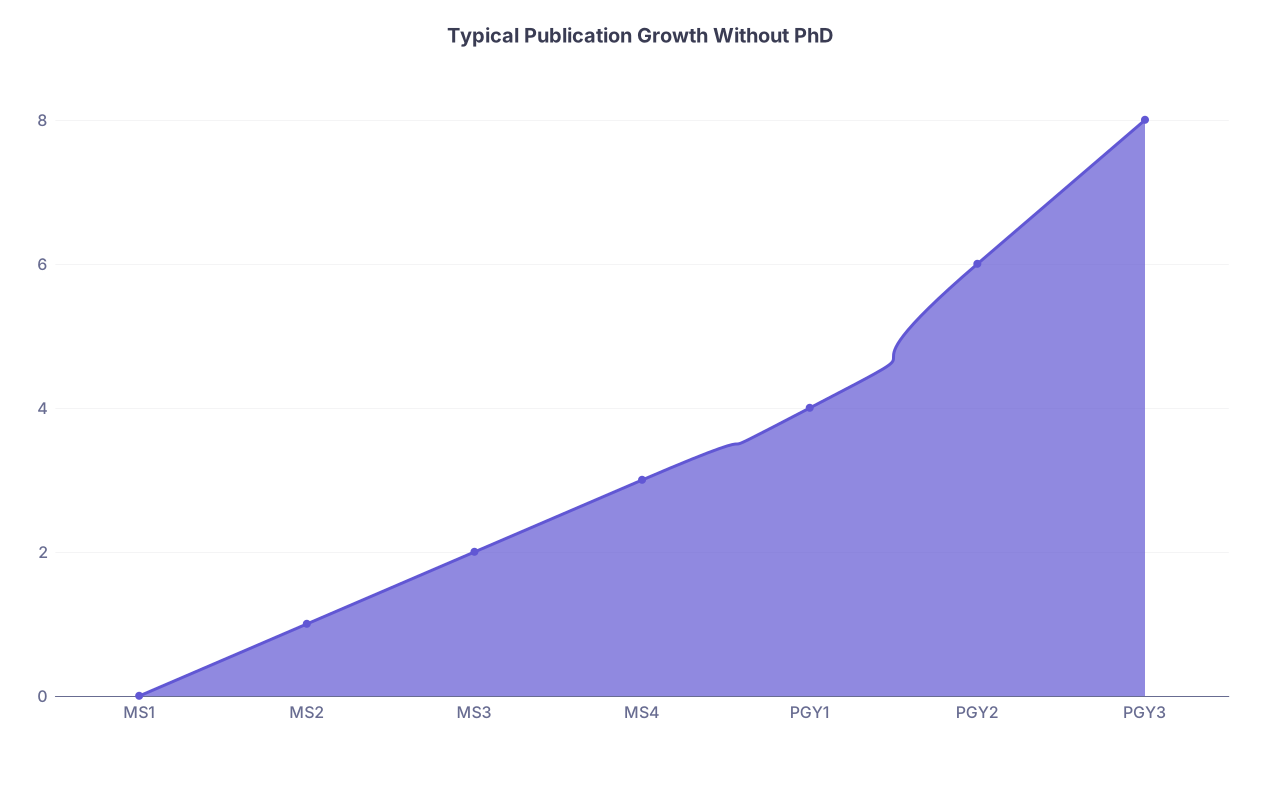
| Category | Value |
|---|---|
| MS1 | 0 |
| MS2 | 1 |
| MS3 | 2 |
| MS4 | 3 |
| PGY1 | 4 |
| PGY2 | 6 |
| PGY3 | 8 |
Early Attending (Years 1–3): Formalizing a Non-PhD Research Career
By the time you finish residency or fellowship, the PhD question becomes irrelevant if your portfolio looks like real work.
Year 1: Protect Time and Define Your Brand
At this point you should:
- Negotiate protected research time in your contract if you are serious (even 0.1–0.2 FTE).
- Narrow your scope:
- Pick 1–2 major projects.
- Kill everything else.
Start moving toward:
- Applying for small internal grants or pilot funding.
- Building a small team:
- Medical students.
- Residents.
- Maybe a statistician on a percent effort.
Years 2–3: Grants, Networks, and Mentorship
You are no longer “the resident on a project.” You are driving the agenda.
By end of Year 3 as an attending, a strong non-PhD researcher will:
- Have:
- 8–15 peer-reviewed publications total.
- 1–2 as senior or corresponding author.
- Be:
- Part of at least one multi-center study or collaborative network.
- On their way to career-development awards (K-type) or equivalent, if academic track.

Practical Shortcuts and Traps Along the Timeline
Let me be blunt about a few things that will either accelerate or wreck this whole plan.
Accelerators (At Any Stage)
- Attach to mentors who publish every year, not “eventually.”
- Prioritize projects where:
- IRB is approved.
- Data already exists.
- A clear endpoint is agreed upon.
- Become the “person who writes quickly.” Writing is the bottleneck, not ideas.
Traps
- Endless data collection for someone else’s paper. If you have been collecting data for 6–12 months with no authorship discussion, you are being used.
- Too many parallel projects. More than 3 active projects as a student usually means none will finish.
- No stats ally. By MS2 or at latest PGY1 you need a biostatistician or methods-savvy mentor.

Final Snapshot: What You Should Have At Each Milestone
| Stage | Expected Outputs (Approximate) |
|---|---|
| End MS1 | 1–2 abstracts/posters, 1 active project |
| End MS2 | 2–3 outputs, 1 manuscript submitted |
| End MS3 | 3–6 outputs, 1 in target specialty |
| End MS4 | 4–8 outputs, 1 first-author work |
| End Residency | 6–10 papers, 1–2 as first author |
If you remember nothing else
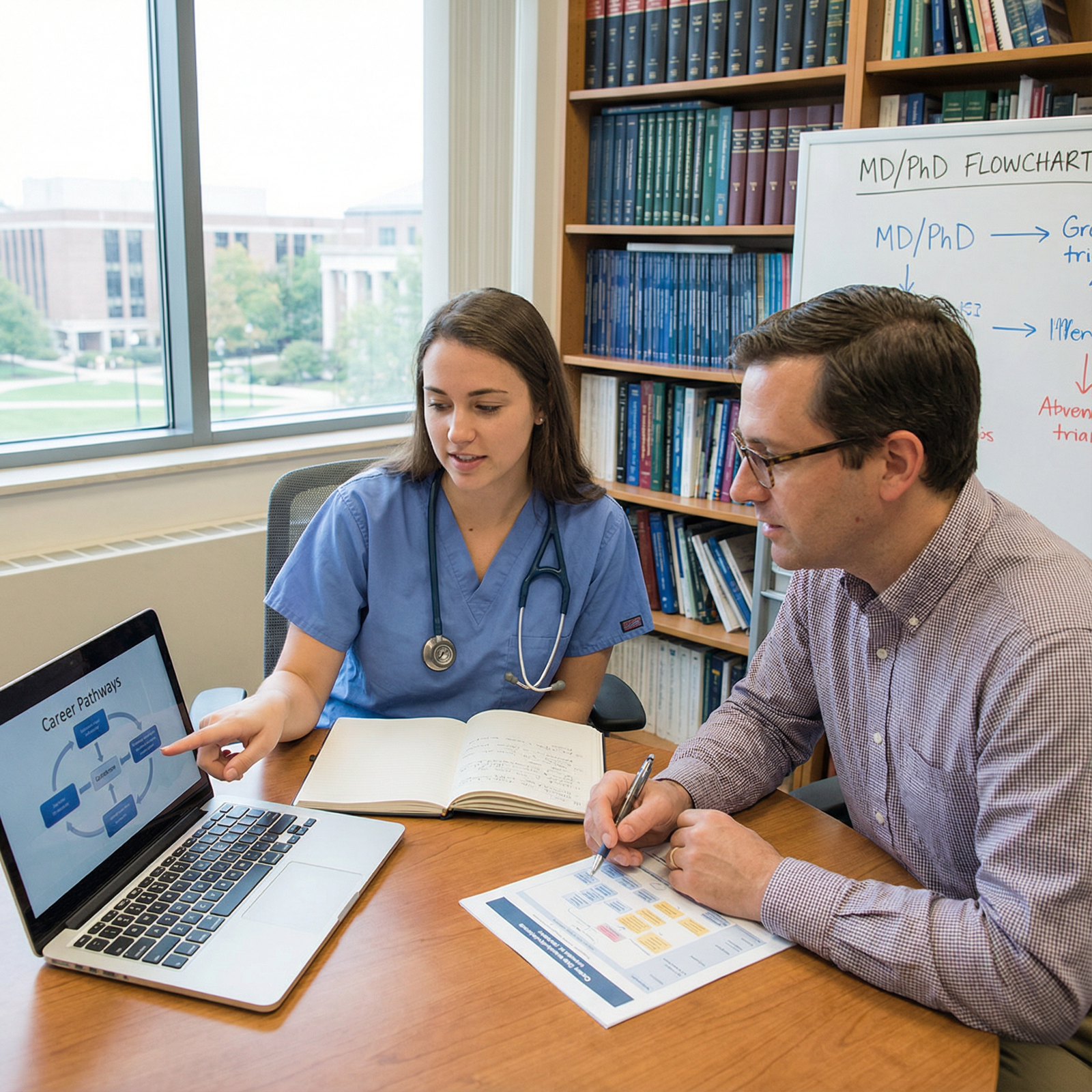
- You do not need a PhD. You need consistent output tied to a clear niche.
- At every stage, favor small, finishable projects with strong mentors over grand ideas with no timeline.
- Protect time, learn methods early, and become the person who gets manuscripts over the finish line. That is how MDs quietly build serious research careers.