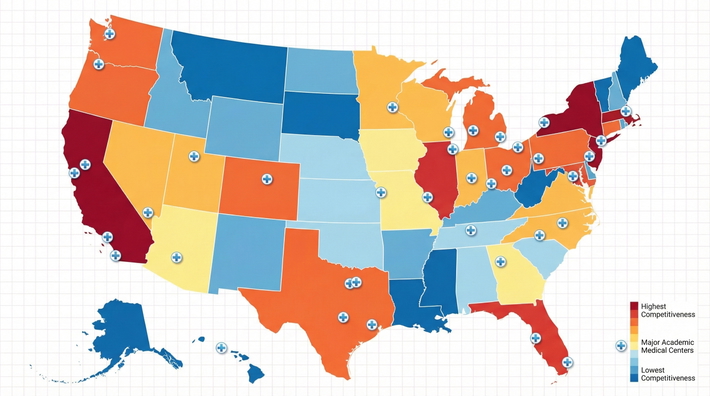
The belief that “Northeast programs are the most malignant” is lazy, wrong, and based more on vibes than data.
You hear it on Reddit, in med school group chats, whispered after interview days at big-name Boston or New York hospitals. “Yeah, amazing training… but super malignant.” As if malignancy is some regional infection that spreads north of the Mason-Dixon line and stops at the Hudson.
Let me be blunt: geography is one of the worst predictors of how malignant a residency will feel.
What People Actually Mean by “Malignant”
Before we compare regions, we need to stop using “malignant” as a catch-all insult.
Residents usually mean some mix of:
- Chronic, unsafe overwork (scut-heavy, constant 80+ hours “off the books”)
- Disrespectful culture (yelling, shaming, public humiliation)
- Retaliation for raising concerns (schedule punishment, bad evals)
- No real support when things go wrong (burnout, errors, personal crises)
- Gaslighting about wellness (“we care about wellness—here’s pizza, now work 5 extra admissions”)
That’s culture. That’s leadership. That’s program design. None of that is “Northeast” specific.
Where the Northeast does differ is in density of:
- Big academic centers
- Competitive specialties
- High cost of living
- Sicker, complex patient populations
- Older, tradition-heavy institutions
Those factors can make programs feel harsher. But they’re not the same as systematically malignant.
The Data: What We Actually Have (And Don’t)
Here’s the uncomfortable truth: there is no national, objective “malignant program” database. No malignancy index. The ACGME doesn’t publish a “most toxic residencies” top 10 list.
What we do have:
- ACGME Resident/Fellow Survey (required, internal benchmarks; programs see their data, not the public)
- Accreditation letters (publicly, you only see probation or withdrawal—not nuance)
- Board pass rates
- Resident attrition and transfers (occasional FOIA or scattered publications)
- Glassdoor-style whispers: Reddit, SDN, word-of-mouth, alumni gossip
Most of the “Northeast = malignant” narrative comes from that last bucket. Which is also where you find conspiracy theories and completely fabricated “insider” takes.
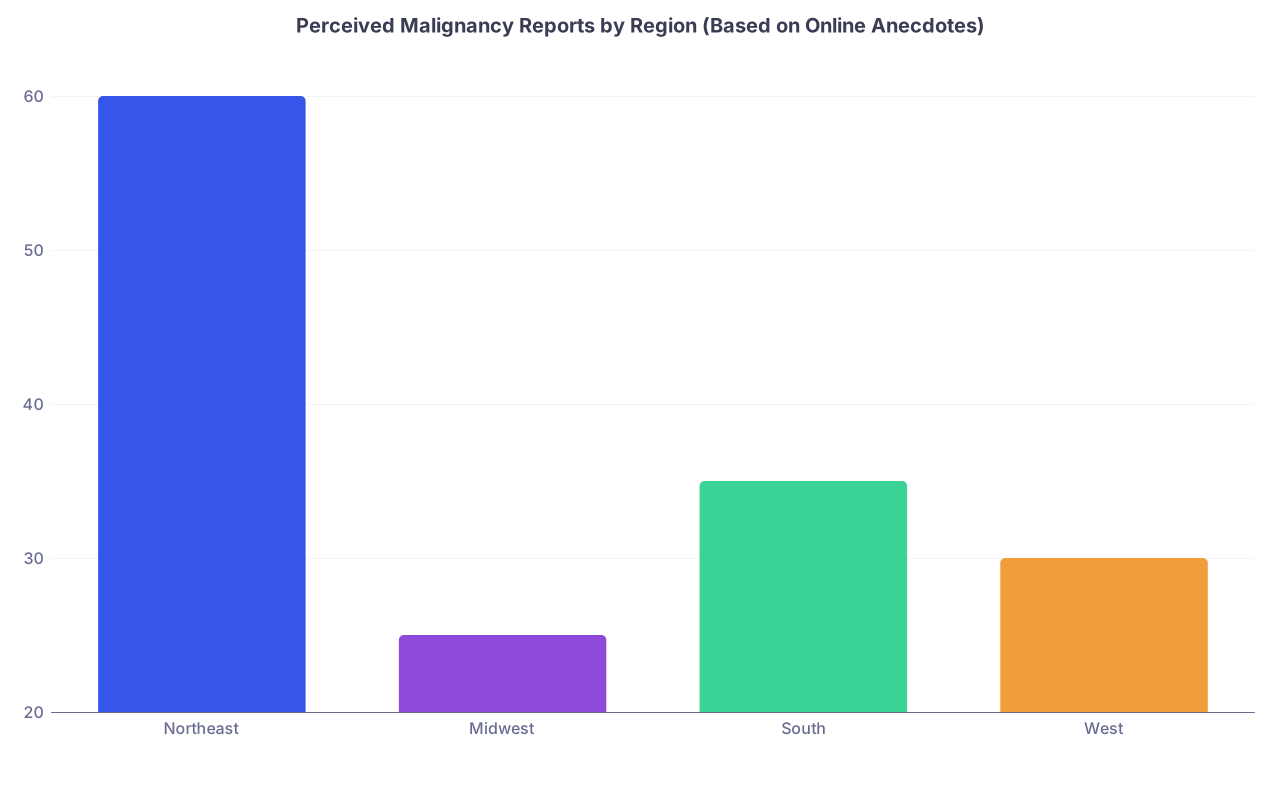
However, a few consistent patterns show up when people actually look at multi-program data.
| Category | Value |
|---|---|
| Northeast | 60 |
| Midwest | 25 |
| South | 35 |
| West | 30 |
This is how the internet looks: the Northeast gets bashed more. But this is signal plus heavy bias:
- More big-name programs = more people talking about them
- More applicants rotating/interviewing there = more stories
- Higher online presence = more public scrutiny
Not more objectively malignant behavior.
Why the Northeast Feels So “Bad” (Even When It Isn’t)
There are real reasons Northeast residencies get a reputation for being brutal. They just aren’t about some mystical malignant DNA.
1. Case volume and acuity are insane
Tertiary/quaternary centers in Boston, NYC, Philly, Baltimore, etc. are referral sinks. The sickest of the sick: complex oncology, transplant, rare disease, social chaos.
That means:
- Higher patient turnover
- More admissions per shift
- More overnight cross-cover
- More procedures, more high-stakes moments
High acuity plus thin staffing feels malignant even when no one’s yelling at you. You finish call with your brain melted and still have conference at 7 a.m. It doesn’t require any cruelty for that to feel like abuse.
2. Legacy hierarchy and “this is how we trained”
Older, prestigious Northeast hospitals often have deeply entrenched culture. You still hear:
- “When I was an intern we stayed till midnight post-call; you guys have it easy.”
- “We expect residents to be tough.”
- “If you can’t handle this, how will you be an attending?”
That attitude:
- Normalizes suffering as a rite of passage
- Labels boundary setting as weakness
- Turns any attempt at structural improvement into “the new soft generation complaining”
Is that region-specific? No. But older coastal institutions have more of these legacy attendings concentrated in one place.
3. Cost of living amplifies everything
Try surviving in Manhattan, Boston, or DC on PGY-1 salary. You’re:
- Commuting from cheaper, further neighborhoods
- Taking extra time on trains/buses/subways
- Burning more cognitive energy on money stress than you admit
Same 60–70 hour week in the Midwest with a 10-minute commute and actual savings feels different than that same week in Brooklyn plus a $2,500 rent bill.
The structure may not be more malignant. The lived experience absolutely feels harsher.
4. Applicant expectations are wildly skewed
People show up to “top” Northeast programs with a certain mythology:
- “Best training in the world”
- “Will open every fellowship door”
- “I’m lucky to be here”
That mindset makes residents:
- Tolerate worse conditions because “this is the price of prestige”
- Downplay legitimate issues
- Dismiss red flags others would label toxic
Same behavior at a mid-tier community program in the middle of the country gets called what it is: abusive. At Brand Name Hospital, it’s “demanding but worth it.”
That discrepancy fuels the “Northeast is malignant” whispers from people who rotate there and go, “Wait, why is this seen as acceptable?”
Northeast vs Other Regions: Reality Check
Let’s put structure to this. This is what’s typically different—not always, not everywhere, but often enough to matter.
| Factor | Northeast | Midwest | South | West Coast |
|---|---|---|---|---|
| Cost of living | High to extreme | Low to moderate | Moderate (variable) | High (major cities) |
| Program density | Very high academic density | Mix, strong academics + community | Mix, strong state systems | High academic in select cities |
| Patient complexity | Very high at major centers | High at academic, moderate elsewhere | Variable, many safety-net | High at large urban centers |
| Legacy culture | Often more traditional/hierarchical | More variable | Often traditional but relational | Variable, sometimes more progressive |
| Online visibility | Very high | Moderate | Moderate | High (big-name West Coast sites) |
Notice what’s missing from that chart: “Northeast = most malignant.” Because it just isn’t consistently true.
I’ve seen:
- Midwest programs that weaponize evaluations and run residents into the ground on service-heavy rotations with zero teaching.
- Southern programs where speaking up about racism or sexism gets you quietly frozen out of opportunities.
- West Coast programs with a “laid back” brand that still expect constant rule-bending around work hours.
Malignancy is not a ZIP code. It’s leadership plus accountability (or lack thereof).
What the ACGME Data Quietly Tells Us
While we don’t get program-by-program malignancy rankings, the ACGME resident survey does track:
- Duty hour violations
- Faculty supervision and respect
- Culture of patient safety
- Fatigue mitigation
- Overall satisfaction
Across specialties, a few patterns show up when people crunch what they can see:
- Malignancy tends to cluster in certain specialties (you already know the usual suspects).
- Within those specialties, you can find both healthy and toxic programs in every region.
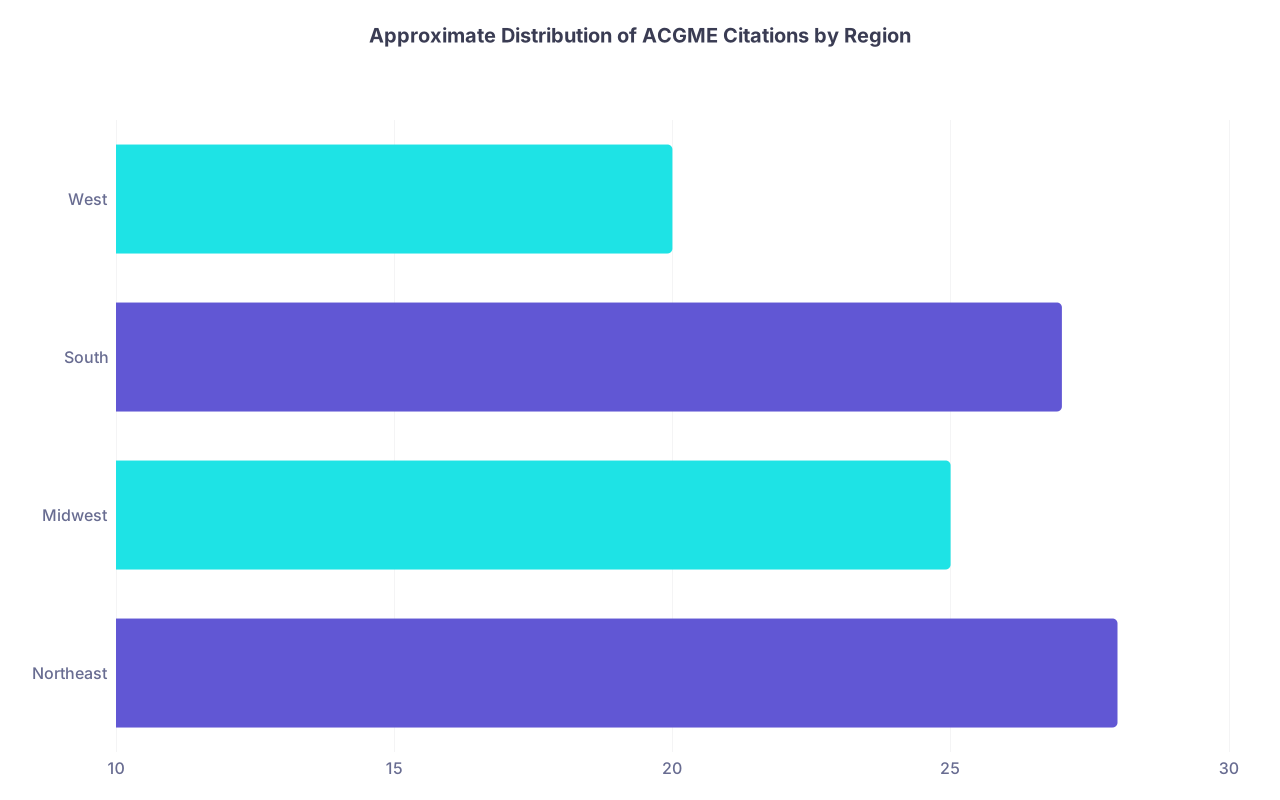
- Programs with chronic citations for duty hours and supervision issues are not uniquely Northeast-heavy.
| Category | Value |
|---|---|
| Northeast | 28 |
| Midwest | 25 |
| South | 27 |
| West | 20 |
The differences are marginal. Not the kind of massive skew you’d expect if one region were truly “the worst.”
Where the Lore Comes From: The Big-Name Effect
The lore that “Northeast = malignant” mostly comes from a handful of loud examples:
- Famous surgical programs where attendings berate residents in the OR
- Med and IM programs where the scut load is legendary
- Places where fellowship match is phenomenal but resident quality of life is clearly an afterthought
Because these programs are:
- Nationally recognized
- Magnet destinations for top students
- Talked about incessantly online
Their culture gets extrapolated to the entire region. Which is like judging all California residencies based on one malignant neurosurgery program in LA. Nonsense.
Also, consider selection bias:
- Gunners who want a brutal environment cluster at some of these places.
- They sometimes enforce that culture from below. Seniors pressuring juniors. Interns crowing about “surviving” as a badge of honor.
So what you’re feeling is not “Northeast” but “this particular brand of prestige-obsessed medicine.”
How To Actually Judge Malignancy (Regardless of Region)
You want to know if a residency is malignant? Stop asking “Is it in the Northeast?” and start looking at specific, testable features.
Here’s a simple mental checklist I use when I talk to applicants:
Work-hour honesty
- Do residents routinely report 80+, or do they brag about “fixing” hours in the system?
- If everyone laughs nervously about duty hours on interview day, that’s a sign.
How they handle bad outcomes and mistakes
- Are M&Ms supportive or performative public shaming?
- Do residents get thrown under the bus for systemic failures?
Response to feedback
- Has any major change in schedule or workflow happened because residents pushed for it?
- Or do residents shrug and say, “We’ve tried; nothing ever changes”?
Resident turnover
- Any transfers out? Why?
- Do seniors warn you “just get through intern year, it gets better”? That’s often code for “we tolerate bad abuse in PGY-1.”
How they talk about wellness
- Real wellness: schedule changes, protected time, backup coverage.
- Fake wellness: yoga, pizza, and an email from the DIO after someone goes to the hospital for burnout.
None of that is region-specific. I’ve heard the exact same scripts at East Coast, Midwest, Southern, and West Coast programs.

| Step | Description |
|---|---|
| Step 1 | Program of Interest |
| Step 2 | High malignancy risk |
| Step 3 | Likely healthy or at least non malignant |
| Step 4 | Honest about duty hours |
| Step 5 | Resident feedback leads to change |
| Step 6 | Support after errors |
The Future: Is Malignancy Being Squeezed Out?
One thing is changing, and fast: external pressure.
Key forces:
- ACGME is more aggressive about duty hour and supervision violations than 15 years ago.
- Residents talk publicly—Twitter, Reddit, group chats. Reputations travel.
- Medical students are more willing to prioritize culture over prestige than previous generations, especially after COVID.
Programs—yes, including Northeast ones—care about recruitment optics now. You can literally watch some historically brutal institutions trying to rebrand:
- “We’re working on a night float system.”
- “We’ve cut 2–3 admissions from call.”
- “We now have backup call and a jeopardy system.”
Is it all genuine? No. Some of it is thin PR. But the direction of pressure is clear: away from open malignancy and toward at least plausible deniability.
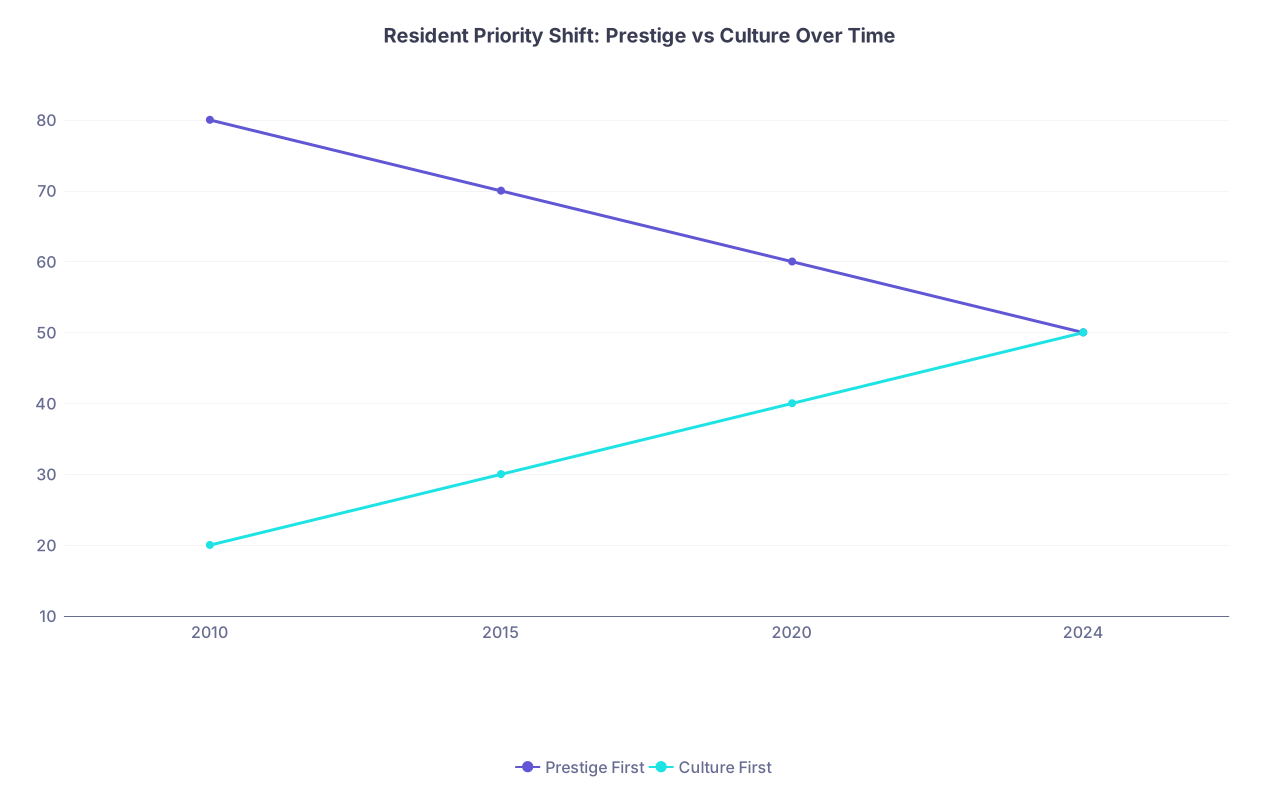
| Category | Prestige First | Culture First |
|---|---|---|
| 2010 | 80 | 20 |
| 2015 | 70 | 30 |
| 2020 | 60 | 40 |
| 2024 | 50 | 50 |
Notice: not “Northeast first” or “South first.” It’s a profession-wide culture shift.
How You Should Actually Use the “Northeast” Label
Here’s the honest way to think about Northeast programs:
It’s a region where:
- You’ll find a lot of high-volume, high-acuity training
- You’ll pay more just to exist
- You’ll encounter some of the most traditional hierarchies in American medicine
- You’ll also find some of the most progressive, resident-centered programs in the country sitting a subway ride away from the dinosaurs
So treat “Northeast” as a yellow highlighter, not a red flag. It tells you: “Pay extra attention to culture and cost-of-living.” It does not tell you: “Automatically malignant.”
If you’re smart about this, your evaluation process will look like:
- Start with your specialty’s national list, not just the “famous” hospitals.
- For each Northeast program you’re considering, find:
- One resident who seems genuinely happy
- One resident who seems burned out or cynical
Listen to both.
- Compare what they describe with what you hear from residents at, say, a strong Midwest or Southern program. Match vibes to facts, not geography.
You’ll quickly see the pattern I keep hammering: malignant vs healthy is program-level, not region-level.
Bottom line:
- There’s no solid evidence that Northeast programs are systematically more malignant than other regions; the reputation is driven by a few loud, high-prestige outliers and online echo chambers.
- What feels malignant in the Northeast is usually a combination of high acuity, legacy hierarchy, and cost-of-living pressure—not some inherent geographic curse.
- If you want to avoid toxic training, stop asking “Is it in the Northeast?” and start interrogating specific features of culture, leadership, and responsiveness—because malignant and healthy programs exist in every corner of the map.