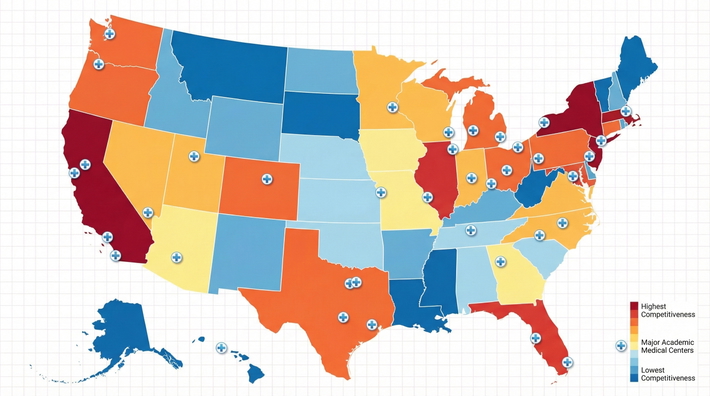
The move from a big-city med school to a rural residency will break every system you’ve been relying on—and that is exactly why it can make you a dramatically better physician.
You are not just changing ZIP codes. You are changing:
- Resources.
- Workflow.
- Culture.
- Your role on the team.
If you treat this like a simple move, you will struggle. If you treat it like a deliberate re-training in how to practice medicine with constraints, you will thrive.
Let me walk you through how to make that transition on purpose instead of getting flattened by it.
1. Understand What Actually Changes When You Go Rural
Most students underestimate this part. They imagine “slower pace, fewer patients, nicer people.” That is lazy thinking. Rural residency is a different operating environment.
Here is the real shift:
| Dimension | Big-City Med School | Rural Residency Program |
|---|---|---|
| Support Services | 24/7 subspecialists, rapid consults | Limited specialists, many phone-only |
| Diagnostics | CT/MRI anytime, broad labs | Limited imaging hours, send-out labs |
| Team Structure | Large teams, many learners | Small teams, residents central |
| Patient Volume | High volume, narrow continuity | Moderate volume, deep continuity |
| Social Context | Fragmented, anonymous | Tight-knit, everyone knows everyone |
You are moving:
- From abundance to constraint.
- From anonymous systems to personal relationships.
- From being “one more student” to being noticeable every day.
So you start by accepting one blunt reality: nobody cares what your med school brand name is. They care whether you can:
- Stabilize a crashing patient without eight subspecialists.
- Treat someone whose insurance will not cover what you ordered.
- Call the local pharmacist by name and work out a plan.
Once you accept that, the question becomes: how do you prepare before you move?
2. Build Rural-Relevant Skills Before Graduation
You do not have to wait for PGY-1 to start preparing. In fact, if you do, you will show up behind.
A. Choose rotations that mimic rural practice
Even in big cities, there are rotations that push you toward autonomy and generalism. Target them.
Prioritize:
- Community hospital sub-internships (medicine, family med, general surgery).
- Emergency medicine at non-tertiary centers.
- OB/GYN at hospitals where family med still does deliveries.
- Outpatient primary care with high continuity (not just 15-minute “check a box” visits).
On these rotations, explicitly tell your attendings:
“I am planning a rural residency and I want as much hands-on, first-pass decision-making as possible. Please push me.”
If you do not say that out loud, you will be treated like every other student.
B. Get comfortable with “doing more with less”
In a tertiary center you learn to reflexively order:
- CT.
- Troponin x3.
- Five viral panels.
- “Just in case” consults.
Rural practice does not support that style. Train yourself differently now:
- On wards, force yourself to write one line in your note: “What if I had no CT tonight? What would I do?”
- When you order a test, ask: “What will I do differently based on this result?” If the answer is “nothing,” reconsider.
- Have at least one attending or senior you regularly ask: “How would you handle this in a small hospital with no XYZ?”
This mental habit transfers directly to rural reality.
C. Strengthen procedures and core generalist skills
Rural residencies often expect more procedural comfort from day one. Make a specific list and chase it.
Aim for:
- Airway: bag-mask competence, basic intubation experience, recognizing when to not intubate locally.
- Lines: peripheral IVs (without ultrasound), simple arterial sticks, maybe central lines if available.
- Basic urgent procedures: I&Ds, joint injections/arthrocentesis, simple laceration repairs, paracentesis.
Protocol for your final year:
- Make a list of 5–10 procedures relevant to your target specialty in rural settings.
- For each rotation, identify which of these you can get.
- Tell residents: “If there is a [procedure] today, I want in. Please grab me.”
- Log them. At the end of M4, know exactly what you have and what you lack.
This is how you show up to rural residency not completely green.
3. Choose the Right Rural Residency (Not Just Any Rural Program)
Not all “rural” residencies are equal. Some are basically community programs with a rural label. Others truly train you as a frontline generalist in constrained settings.
You need to be ruthless in choosing.
A. Evaluate true rural exposure vs marketing
During research and interviews, ask precise questions:
- “How many months of training occur in hospitals under 100 beds?”
- “Do residents take in-house call at critical access hospitals?”
- “How often are subspecialists physically on site vs phone-only?”
Look for:
- Structural ties to critical access hospitals.
- Long blocks in rural clinics, not just “rural health day trips.”
- Faculty who actually live in rural communities, not just commute from the city and leave at 4 p.m.
B. Check for support systems, not just autonomy
Huge mistake: confusing “being alone” with “being trained.”
You want:
- Real-time backup: 24/7 attending availability by phone with clear escalation protocols.
- Thoughtful call structure: graded responsibility, not “throw the intern on nights alone and hope.”
- Formal rural curricula: telehealth training, transfer logistics, resource stewardship, rural ethics.
Ask on interview day:
- “As an intern, what are the scariest things I might be expected to handle alone, and who do I call first?”
- “Tell me about the last time a resident felt overwhelmed at your rural site and how the program responded.”
Listen closely. If people dodge or give vague “we support our residents” answers, that is a red flag.
C. Consider your personal non-negotiables
You cannot fix certain things with “grit.” Be honest with yourself now.
Non-negotiables might include:
- Access to mental health care (in-person or reliable tele-psych).
- Reasonable distance to an airport if you have family obligations.
- Availability of childcare if you have children.
- At least one other resident per PGY year who will also rotate rurally (never being the only one is huge).
Make your list. If a program fails two or more non-negotiables, stop trying to force it.
4. Reframe Your Professional Identity Before You Arrive
This is a psychological transition as much as a geographic one. The city trains you to be a cog. Rural medicine needs you to be a node.
A. Shift from “super-subspecialist” fantasy to “high-level generalist”
Big-city culture pushes you toward narrowing down:
- “I am going to be an advanced heart failure cardiologist.”
- “I am set on interventional GI.”
Rural residency demands the opposite:
- Breadth over depth.
- Stability over ejection fraction perfection.
- Longitudinal trust over “perfect guideline adherence.”
You will be doing:
- Chronic disease management—diabetes, HTN, COPD—for years with the same patients.
- Addiction care with almost no nearby inpatient rehab.
- Geriatric care with limited home health support.
You must start telling yourself: “I am training to be the person the community calls for almost everything. I will get good enough at a lot of things, not insanely specialized at one tiny thing.”
That mental reframe makes you far more coachable in rural training.
B. Accept visibility and social accountability
Rural reality:
- Your patients will see you in the grocery store.
- People will know where you live.
- Schoolteachers, pastors, and local business owners will be your patients and will talk about you.
You cannot hide behind “oh, that was the team.” That is a city privilege.
So decide your professional persona now:
- How will you set boundaries while still being approachable?
- What will you share about your life, and what will stay private?
- Where will you be okay showing up (local gym, church, school events), and where will you avoid (certain bars, political gatherings)?
This is not paranoia. I have watched rural interns get burned by being “just themselves” on social media, then realizing half their patient panel follows them.
5. Concrete Pre-Move Logistics: Do These 60–90 Days Before
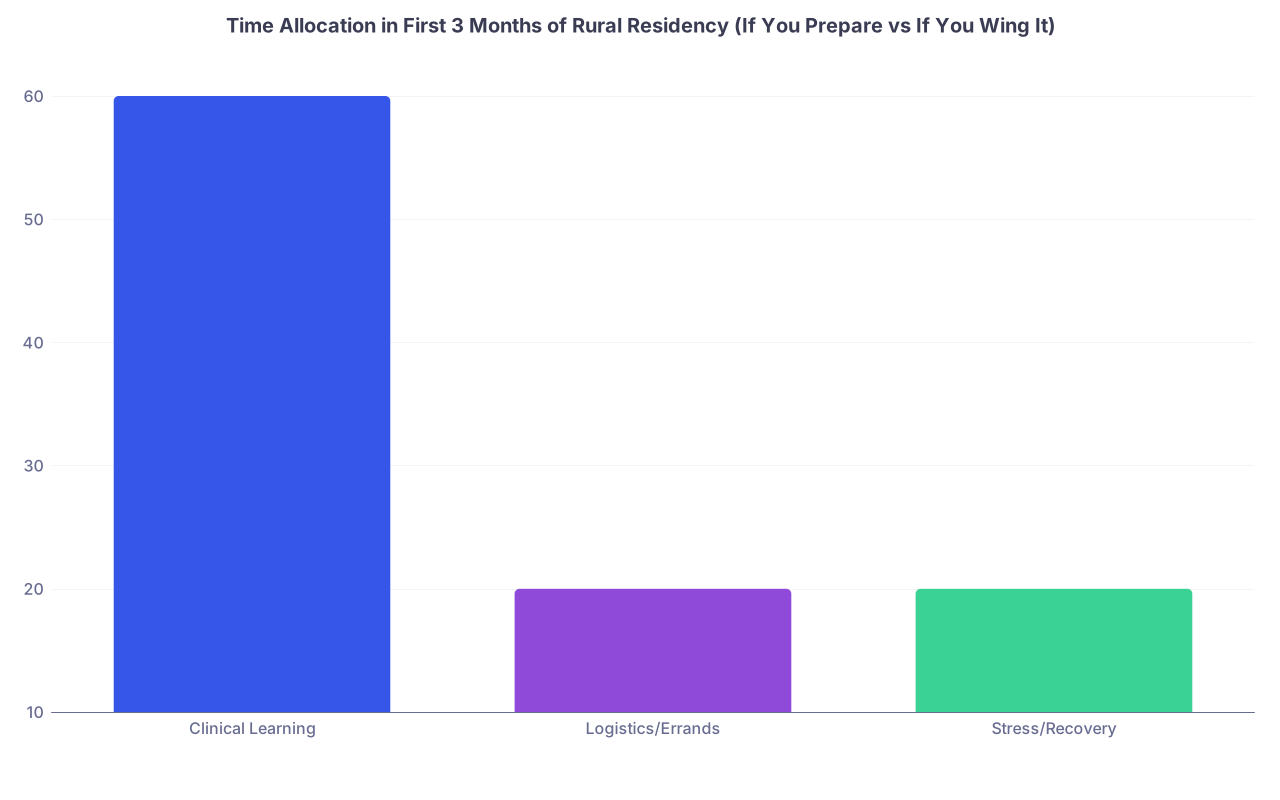
If you skip this section, you will waste your first three months on chaos instead of training.
| Category | Value |
|---|---|
| Clinical Learning | 60 |
| Logistics/Errands | 20 |
| Stress/Recovery | 20 |
Imagine this as “if you prepare.” If you wing it, that 60 becomes 35 very fast.
A. Housing and transportation
Checklist:
- Visit once in person if humanly possible. Some places look charming on a website and depressing in real life.
- Live within 10–15 minutes of the hospital. Winter roads and middle-of-the-night calls are not theoretical.
- Clarify parking: resident lot, fees, snow removal rules.
Car reality:
- You need a reliable vehicle. “I’ll manage with a 20-year-old sedan that occasionally stalls” is fantasy.
- If weather is rough: consider AWD or at least good winter tires.
- Keep jumper cables, basic emergency kit, and a snow brush/ice scraper in the car. You will use them.
B. Internet, phone, and connectivity
Rural dead zones are real.
- Check with current residents: “Which cell carrier actually works here?”
- Confirm: can you do telehealth from home if needed? Does the EMR access work off-site reliably?
If your phone carrier is terrible in that town, switch before moving. Do not fight your pager through three floors of a 1970s hospital.
C. Healthcare and personal support
Iron rule: Do not rely on your residency program to manage your healthcare.
Before you move:
- Establish your own PCP (even if via telehealth) and mental health provider.
- Refill chronic meds with at least a 90-day supply.
- Learn the local pharmacy landscape and hours.
Ask residents:
- “Where do you actually go if you need urgent care?”
- “Who in town is discreet and competent for therapy or counseling?”
You will need this sooner than you think.
6. How to Survive the First 6 Months on the Ground
This is where most people either find their stride or start fantasizing about transferring out. You handle it by running a deliberate playbook.
A. Week 1–4: Map the ecosystem, not just the EMR
Your goal is not to memorize order sets. Your goal is to know how this system actually functions.
Tasks:
- Walk the hospital. Physically. Where is:
- Radiology.
- Lab.
- Blood bank (if there is one).
- Supply closets.
- Crash carts.
- Learn names. At minimum:
- Charge nurses on each unit.
- Unit secretaries/clerks.
- Lab and radiology lead techs.
- Pharmacy contact for on-call questions.
Use this simple script:
“I am new and trying to learn how things actually get done here. What is one thing residents do that makes your job harder—and one thing they do that helps?”
You will get more actionable intel from that question than from any orientation binder.
B. Month 2–3: Build your “rural attending in my pocket” network
You cannot wait until a crisis to figure out who you trust.
Actively identify:
- 2–3 attendings who are calm in chaos, enjoy teaching, and have rural experience.
- 1–2 senior residents who have rotated at all the rural sites and are honest, not performative heroes.
Tell them explicitly: “I want to get very good at rural practice and I am still recalibrating from big-city training. Is it alright if I occasionally text or call you when I am stuck on the rural rotation?”
Then use that lifeline intelligently:
- Call early, not after 6 hours of flailing.
- Be structured: “Here is the situation, here is what I did, here are the options I see, what am I missing?”
C. Month 4–6: Focus on three core competencies
By six months, you want to be solid in:
Stabilization and triage
- Recognize who can safely stay vs must be transferred.
- Start appropriate treatment before transport.
- Communicate effectively with receiving facilities.
Resource-aware decision making
- Choosing imaging and labs with cost and access in mind.
- Adapting when meds are not on formulary or not affordable.
- Scheduling follow-up that patients can actually attend.
Continuity with boundaries
- Building long-term plans for chronic disease that fit local reality.
- Saying “no” to inappropriate asks (e.g., refilling unsafe doses, backdating work notes) without burning trust.
Pick one of these areas each month and focus your reading, case review, and feedback requests around it.
7. Master Three High-Impact Rural Scenarios
You cannot pre-learn everything. But you can deliberately get good at a few things that pay off disproportionately in rural work.
Scenario 1: The chest pain patient with no cath lab on site
Reality:
- In the city: chest pain → troponins → cardiology → cath.
- In rural: may be 2–3 hours from PCI-capable center. Weather may delay transport.
Skill set:
- Rapid ECG interpretation (especially STEMI equivalents).
- Starting appropriate medical therapy: aspirin, heparin vs not, nitro, beta-blocker when appropriate.
- Knowing who must be transferred now vs can be observed locally.
- Documenting clearly for transfer and calling the accepting physician succinctly.
Practice during residency:
- Every chest pain you see, ask: “If I were 2 hours from a cath lab, what would I do differently?”
- Run mock calls with seniors: present a chest pain case as if you are at a critical access hospital asking for transfer.
Scenario 2: Behavioral health crisis with no psych ward down the street
Rural truth:
- You will see suicidal patients, psychosis, substance withdrawal.
- Inpatient psych beds and detox units may be distant and full.
Skills:
- Basic safety assessment and use of local commitment laws (whatever your state uses).
- Starting emergency meds safely (e.g., for agitation, severe anxiety).
- Working with limited local resources: sheriff’s office, crisis teams, tele-psych if available.
Your move:
- Learn your state’s involuntary hold criteria cold.
- Know which hospitals in the region accept psych transfers and what they require.
- Develop a respectful working relationship with law enforcement; you will interface often.
Scenario 3: Prenatal care and OB emergencies (even if you are not an OB resident)
In many rural settings, you will be closer “to the action” with pregnant patients than you ever were in the city.
You should be able to:
- Do a focused OB history.
- Recognize red flags for immediate transfer: severe hypertension, bleeding, decreased fetal movement with concerning NST, preterm labor.
- Start basic stabilization and call the right people quickly.
If you are in family med or IM with OB exposure:
- Volunteer for nights or call where OB emergencies happen.
- Ask the OB team: “Teach me the 3 postpartum emergencies you most want residents to spot early.”
8. Use Telemedicine and Technology Intelligently
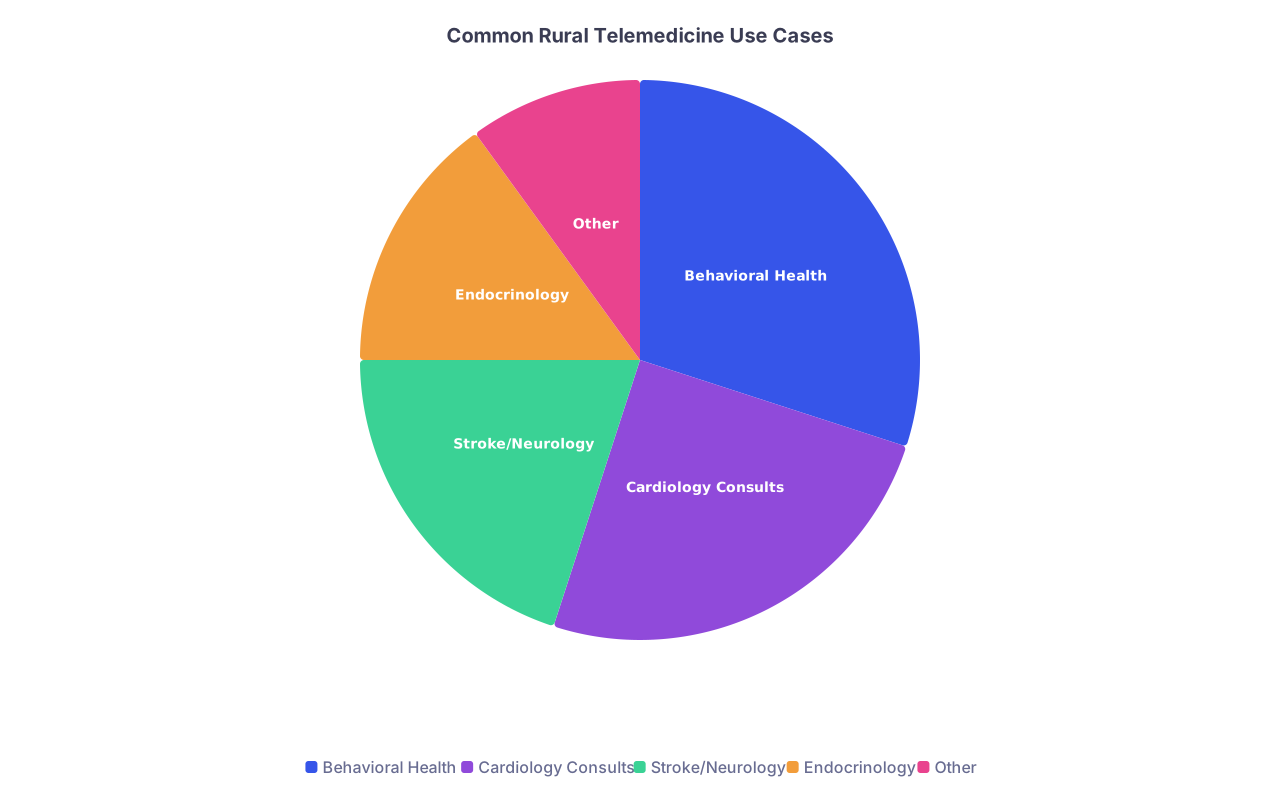
Rural medicine is not “anti-tech.” Done right, telehealth is your ally.
| Category | Value |
|---|---|
| Behavioral Health | 30 |
| Cardiology Consults | 25 |
| Stroke/Neurology | 20 |
| Endocrinology | 15 |
| Other | 10 |
Where telemedicine actually helps:
- Behavioral health follow-up.
- Specialty consults that would otherwise require a 3-hour drive.
- Chronic disease “check-ins” for patients with limited transport.
Your job as a resident:
- Learn which tele-services your system actually provides. Not the brochure. The real, scheduled, staffed ones.
- Help patients use them: set expectations, address tech barriers, schedule follow-ups.
- Do not over-rely on teleconsults for things you can reasonably manage yourself after proper training.
9. Plan Your Long-Term Career While Training Rural
You may stay rural after residency or move back to a city. Either way, the training is not wasted.
Rural residency gives you:
- High autonomy early.
- Strong procedural exposure (in many fields).
- Comfort with uncertainty.
To keep your options open:
- Document your skills and procedures carefully.
- Present at regional or national conferences on rural cases or QI projects.
- Maintain contacts at tertiary centers through electives or rotations.
If you might stay:
- Start exploring local loan repayment programs (NHSC, state-level incentives).
- Discuss long-term practice structures early: hospital-employed vs FQHC vs private group.
10. Emotional Resilience: What Tends to Break People—and How to Counter It
Three things knock residents sideways in rural transitions:
Isolation
Solution:- Build friend networks outside medicine: gym, faith communities, local clubs.
- Do scheduled “city weekends” every 4–6 weeks if distance and schedule allow.
Moral distress around limited resources
Example: Watching a patient get worse because transfer is delayed or denied.
Solution:- Debrief with attendings who get it, not just peers who will spiral with you.
- Channel frustration into QI: transport protocols, telehealth optimization, local capacity-building.
Identity whiplash (from prestigious city to “small town doctor”)
Solution:- Re-anchor your sense of status away from logos and toward impact.
- Keep one foot in the academic world if you like it: virtual conferences, publications, teaching medical students rotating through your site.

| Step | Description |
|---|---|
| Step 1 | Late MS3 |
| Step 2 | Target rural relevant rotations |
| Step 3 | Apply to rural programs |
| Step 4 | Rank programs with real rural exposure |
| Step 5 | Pre-move logistics 60-90 days |
| Step 6 | First 3 months - map system and build network |
| Step 7 | Months 4-6 - master core competencies |
| Step 8 | Refine long term career and resilience |