

The Myth That Strong Residents Don’t Need Help for Burnout
What do you call the intern who insists they are “fine” on post-call day 3, chugging coffee, joking on rounds, and quietly googling “how many hours awake before psychosis”? In most programs, people call that “a strong resident.”
The data says something else. That’s not strength. That’s untreated burnout with a stethoscope.
Let’s dismantle this myth properly.
What Programs Call “Strong” Is Often Just “Silent and Suffering”
There’s a quiet rule in residency culture: strong residents cope alone. They do not complain. They do not say “no.” They document after hours without logging it. They pick up extra calls. They answer pages in 0.2 seconds. And they definitely do not ask for help.
On paper, they look great:
- High evals
- No sick days
- Always “reliable,” “resilient,” “calm under pressure”
Here’s what actual research shows about those “strong” residents.
A 2019 JAMA study on US residents found burnout rates hovering around 40–60% across specialties. Not among “weak” residents. Among residents. Period. Same cohort, another study: serious thoughts of suicide in around 11%.
You think those numbers are all from the “struggling” ones raising their hands? Of course not. The majority of people suffering never formally say anything.
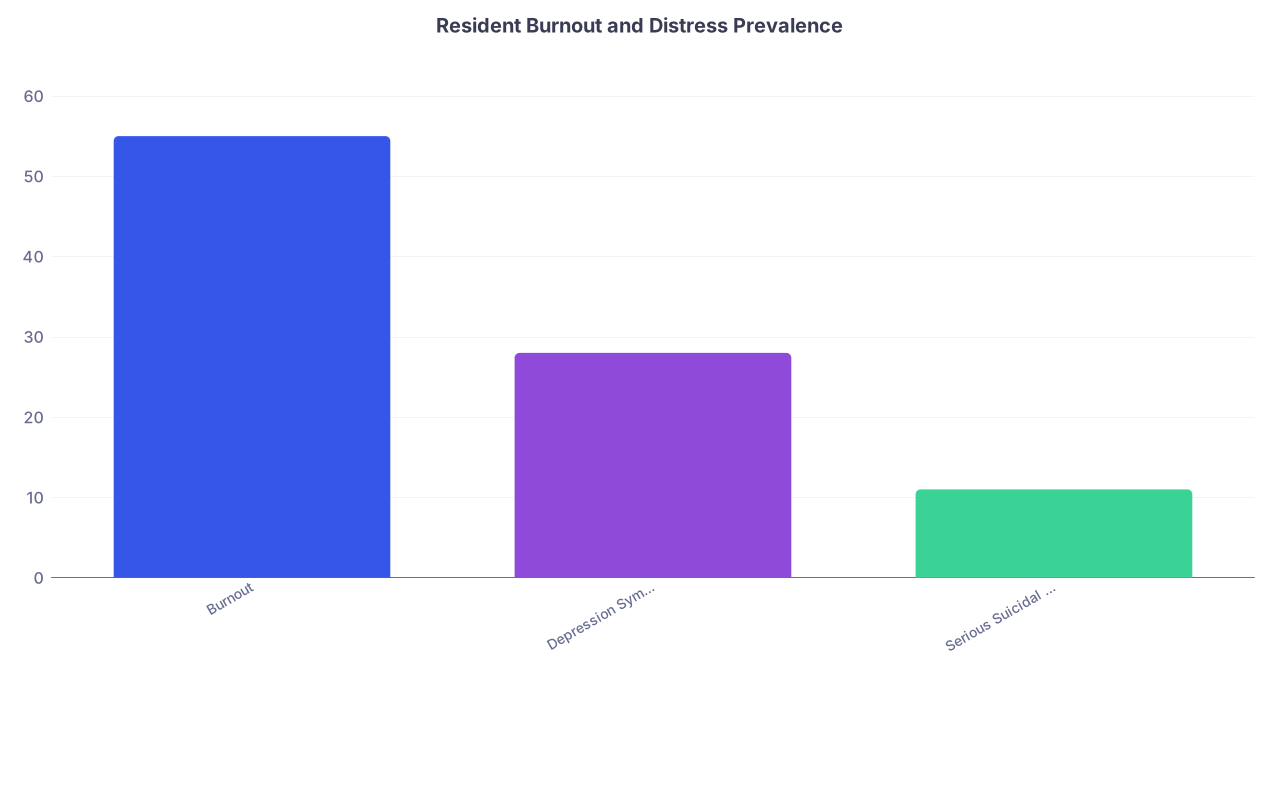
| Category | Value |
|---|---|
| Burnout | 55 |
| Depression Symptoms | 28 |
| Serious Suicidal Thoughts | 11 |
Those “rock stars” who never ask for help often:
- Normalize chronic sleep deprivation (“I only need 4 hours”)
- Dismiss symptoms (“Everyone’s exhausted”)
- Hide errors or near-misses due to shame
- Believe asking for accommodations = career suicide
I’ve watched chiefs praise a resident who came in with a fever “because the team needs you” and, in the next breath, complain that wellness lecture attendance is low. That’s the culture you’re swimming in.
Strength in that environment doesn’t look like self-neglect. It looks like knowing when to pull the alarm before the train derails.
The Core Myth: “If You Need Help, You’re Not Cut Out For This”
Strip the fluff away, and the myth is simple:
- Real physicians tough it out.
- If you struggle, maybe you’re not suited for medicine.
- Getting help proves you’re fragile.
That’s not medicine. That’s superstition with a white coat.
What the data actually shows
Burnout is mostly a system problem, not an individual weakness problem.
The big meta-analyses on physician burnout (Shanafelt, Maslach, etc.) keep finding the same stuff: workload, lack of control, chaotic work environment, poor leadership, and lack of meaning drive burnout. Not “weak personalities.”High performers are often at higher risk.
Perfectionism, overcommitment, and guilt about setting boundaries are common in the top 10% performers. Those are also risk factors for depression and burnout. “Strong” residents often keep going long after their internal warning lights are flashing.Help-seeking is associated with better functioning, not worse.
Residents who use mental health services, coaching, or structured support often have:- Lower rates of major depression
- Better job satisfaction
- Lower error rates over time
The “weak if you need help” idea looks even dumber when you apply it anywhere else in medicine.
Would you tell a patient with new-onset diabetes, “If you were stronger, you wouldn’t need metformin”? No. You’d call that malpractice.
But residents talk that way to themselves all the time.
How Burnout in “Strong” Residents Actually Shows Up
People think burnout means crying in the stairwell, snapping at nurses, missing work.
Sometimes. But in “strong” residents, it usually looks a lot more subtle and a lot more dangerous.
Common presentations in high-functioning residents
Emotional numbing
You stop feeling much of anything. No joy when a patient does well. No deep sorrow when they die. Just… “next task.” That’s not professional detachment; that’s your brain flipping the circuit breaker.Cynicism and dark contempt
Not just dark humor (everyone has that). I mean full contempt: “These patients don’t want to get better,” “Admin doesn’t care if we die.” That corrosive cynicism is a classic burnout marker.Quiet cognitive slip
You are still fast. Still competent. But:- You double-check less
- You accept verbal orders without confirming
- You write “as above” instead of really reviewing the previous note
This is how serious errors slip through.
Life shrinkage
All non-work activities disappear. You “don’t have time” for any exercise, friends, hobbies, or even basic errands. Not because they’re impossible, but because the mental load is too high. That’s burnout narrowing your world.Weird self-justifications
“I’m not burnout, I’m just tired.”
“I’ll deal with it after boards.”
“Everyone in my program is like this.”
Every time I hear a resident say, “I’ll rest after…” I know they’re in trouble. There’s always another “after” in residency. Then fellowship. Then attending life.

Why “Not Asking for Help” Actually Makes You a Liability
Here’s the uncomfortable part. The “I never need help” image is not just false; it’s unsafe.
Burnout increases medical errors
Multiple studies across specialties show the same pattern: higher burnout scores correlate with higher rates of self-reported medical errors. And not just self-reported—chart-based analyses back this up.
That “strong” PGY-2 who:
- Hasn’t had a real day off in 3 weeks
- Is seeing double at 3 a.m.
- “Doesn’t believe in sick days”
…is more likely to:
- Miss critical lab trends
- Miscalculate doses
- Discharge too early or too late
- Overlook subtle but important exam findings
And because they’re labeled “strong,” others are less likely to double-check their work.
Untreated burnout wrecks team dynamics
Residents in deep burnout often:
- Withdraw from team discussions
- Stop teaching students
- Snap at nurses
- Become unavailable emotionally and interpersonally
That kills psychological safety on the team. When nurses and students feel dismissed or afraid to speak up, bad outcomes multiply.
So no, the strong, silent, suffering resident is not a hero. They’re a risk factor.
The truly strong resident is the one who says:
“I’m not safe to practice at this level of fatigue. I need backup.”
That person is protecting patients and colleagues. The quiet martyr is not.
What Real Strength Actually Looks Like in Residency
Let’s be very concrete here. “Being strong” in residency is not magical infinite resilience. It’s a set of behaviors that keep you functional and safe in an environment that is frankly hostile to health.
| Myth of Strength | Reality of Strength |
|---|---|
| Never says no to more work | Sets limits when unsafe or unreasonable |
| Never shows distress | Names and addresses distress early |
| Works through illness and exhaustion | Protects sleep, health, and cognitive clarity |
| Avoids asking for help | Proactively seeks support and backup |
| Treats self-care as optional | Treats self-care as non-negotiable duty |
Behaviors that actually correlate with resilience
No generic “self-care” fluff. Here’s what the research and real-world experience both support:
Boundary-setting with a clinical rationale
“I need to leave on time today because I’ve been here 14 hours and I’m noticing I’m missing small details. I want to be safe tomorrow.”
That’s not selfish. That’s risk management.Early mental health intervention
Residents who seek therapy, counseling, or coaching before full collapse:- Have lower rates of major depressive episodes
- Are less likely to drop out
- Are more likely to course-correct behaviors (overwork, people-pleasing, perfectionism)
Micro-recovery, not fantasy vacations
You are not getting 3 weeks in Bali. Stop pretending that’s the answer. Strong residents:- Protect 20–30 minutes daily that are not negotiable (walk, shower without pager, quick workout, journaling)
- Have one predictable weekly block (even 2–3 hours) off-limits to work talk when not on call
Using institutional resources strategically
Not all wellness stuff is garbage. Some is. But strong residents quietly use:- Confidential mental health services
- Schedule accommodations during acute crises
- Protected time when allowed and push for it when it’s being eroded
You are not a cog. You are a clinician with a duty to remain safe to practice. That duty includes taking care of your own mind.
The Fear: “If I Ask for Help, I’ll Be Labeled”
This fear is real, and not paranoia. I’ve heard program directors say, “I’m concerned about their resilience,” which is often code for “they admitted they’re struggling.”
So let’s be blunt about risk and strategy.
What’s the actual risk?
Licensing boards
Some states still ask intrusive mental health questions, but the trend is shifting toward asking about impairment, not simply having sought care. National organizations (FSMB, AMA) have pushed hard on this. You need to look at your specific state, but “I saw a therapist in residency” is not automatically a career-ender.Programs and evaluations
The resident who:- Has a meltdown in front of staff weekly
- Disappears from call
- Refuses help while visibly unsafe
…is generally in more trouble than the resident who says early, “I’m struggling, I’m getting help, here’s what I’m doing to stay safe.”
Insurance and credentialing
These systems care about impairment, not whether you’ve ever seen a mental health professional. Untreated impairment is the real red flag.
In other words, staying silent until you’re a safety issue is actually more dangerous to your career than getting help early.
How to ask for help without detonating your file
You do not need to hand over your entire psychiatric history. You can:
Frame it in functional terms:
“I’ve noticed my focus and mood have been declining. I’m taking steps with a therapist and need to adjust my schedule briefly to stay safe and effective.”Be specific about solutions:
“I’m requesting 1–2 continuity clinic sessions to be rescheduled during this acute period. I expect this to be temporary.”Use confidential resources first:
Many med centers have employee assistance programs or resident wellness programs that are firewalled from PDs and HR. Start there.

| Step | Description |
|---|---|
| Step 1 | Notice burnout signs |
| Step 2 | Seek confidential mental health support |
| Step 3 | Adjust habits and boundaries |
| Step 4 | Talk to PD with concrete plan |
| Step 5 | Continue care and monitor |
| Step 6 | Affecting safety or function |
| Step 7 | Need schedule changes |
You deserve more than “just surviving” your training. And no, that’s not coddling. That’s basic occupational health.
Stop Grading Your Worth by How Much You Can Tolerate
Here’s the ugliest part of this myth: it trains you to equate worth with suffering.
- The more abuse you tolerate, the “stronger” you must be.
- The fewer needs you admit to, the “better” resident you are.
- The more you neglect your life outside medicine, the more “dedicated” you appear.
That mindset does not magically disappear when you finish residency. It becomes how you live. That’s how you end up as the attending who brags about never taking vacation, has a wrecked marriage, hates admin, and tells every intern, “You think you have it hard?”
If you internalize this myth now, you’re signing up for 30 years of it.
Real strength is boring, frankly. It’s:
- Seeing reality clearly
- Acting early
- Protecting function over image
- Treating your brain as critical equipment, not an expendable tool

FAQs
1. How do I know if what I’m feeling is normal stress or actual burnout?
Normal stress fluctuates with rotations and specific events. You might feel wiped after a rough week, then partially reset on days off. Burnout feels like a persistent state: emotional exhaustion, cynicism, and a sense of reduced effectiveness for weeks to months. If you can’t remember the last time you felt genuinely restored after a break, that’s not “just busy,” that’s a warning.
2. Won’t talking to my PD about burnout hurt my fellowship chances?
It depends how you do it. Saying “I’m drowning and can’t handle residency” will raise alarms. Saying “I’ve noticed early burnout signs, I’m already working with a therapist, and I want to make minor adjustments to stay high-functioning and safe” is very different. Programs quietly respect residents who show insight and proactive risk management. The bigger risk is imploding without warning.
3. What if my co-residents or attendings think I’m weak for asking for help?
Some will. Especially the ones buried in their own denial. You are not responsible for maintaining their mythology. Over time, though, people watch outcomes: the resident who is stable, consistent, and honest earns more trust than the one who pretends to be invincible, then cracks. Your job is to be safe and sustainable, not to uphold a broken culture.
4. Is using sleep meds, stimulants, or alcohol to cope the same as “getting help”?
No. That’s self-medicating, not treatment. The line is simple:
- Help = interventions that increase your long-term functioning and insight (therapy, coaching, structured changes, occasionally properly managed meds with monitoring).
- Self-medicating = short-term numbing or artificial performance boosts that worsen things overall. If your “solution” makes you more dependent and less honest with yourself and others, it is not help.
5. What’s one concrete first step if I’m burned out but scared to act?
Two steps, actually. First, confidentially book a session with a therapist, counselor, or coach who has experience with physicians or trainees. Do not overthink it; just make the appointment. Second, pick one micro-behavior that protects you daily (10-minute walk outside, 15-minute bedtime routine off your phone, one uninterrupted meal per shift) and treat it like a non-optional order. Tiny, consistent interventions beat heroic plans you never execute.
Key points:
- “Strong residents don’t need help” is a cultural myth that contradicts the data and encourages unsafe practice.
- Real strength in residency is recognizing early burnout, seeking help, and protecting your ability to think clearly and care safely.
- The earlier you reject the martyr narrative, the more likely you are to have a sustainable, sane career in medicine—not just survive training.


