
The residents who survive residency intact do not “wing it.” They weaponize Sunday.
You can complain about the schedule. Or you can control the 2–3 hours on Sunday that decide whether the week crushes you or you stay barely ahead of it. This is about that window.
Below is a concrete, time-stamped Sunday workflow plus how it plays out day by day. Assume you are on a standard inpatient rotation with early starts and variable end times. You will adapt numbers, not the structure.
12:00–14:00 Sunday: Run Your Weekly “Systems Check”
At this point, you should not be “seeing how the week goes.” You should be doing a formal systems check. Call it whatever you want. But do it.
Step 1: Hard Commitments Map (20–30 minutes)
Sit down with:
- Your call schedule (Q4, night float, whatever your program uses)
- Your electronic calendar (Google, Outlook, iCal)
- Your rotation info (clinic days, mandatory didactics, conferences)
You are going to build a simple hard-commitments grid for the week.
| Day | Start-End (approx) | Key Events |
|---|---|---|
| Mon | 5:30–19:00 | Inpatient + Noon Conf |
| Tue | 5:30–18:00 | AM Clinic 8–11 |
| Wed | 5:30–18:30 | Grand Rounds 12–13 |
| Thu | 5:30–18:00 | Night Call 19–07 |
| Fri | Post-call | Protected Didactics 13–15 |
| Sat | Off (post-call) | |
| Sun | Off |
At this point, you should:
- Block every non-negotiable in your calendar:
- Shifts
- Call
- Conferences
- Clinics
- Scheduled procedures
- Add commute buffers:
- 20–30 minutes before start
- 20–40 minutes after end (you will overrun; trust me)
- Mark “dead zones”:
- Post-call day until at least 13:00
- Any day you know you will be destroyed (post-flight, post-24, etc.)
You want to see the brutal truth of your week on one screen.
Step 2: Sleep Architecture First, Not Last (15–20 minutes)
Most residents treat sleep like loose change. That is why they look 10 years older by PGY-3.
You start with sleep. Non-negotiable anchor.
- Pick your target sleep window on:
- Non-call weekdays: e.g., 22:00–04:45 (yes, that is 6 hours 45 minutes—realistic)
- Pre-call night: 21:30–04:30 if you can swing it
- Post-call: 10:00–15:00 (block it as an appointment)
- Put these in your calendar as “Busy – Sleep”
Overlay this on your commitments. You should now see when you are actually awake, available, and functional.
At this point, you should know:
- How many nights you will be sleep-restricted
- Which day you absolutely cannot add anything extra
If your calendar looks impossible, you are not “weak.” The schedule is. So you plan as if you are managing limited battery, not infinite willpower.
Step 3: Weekly Priorities – Only 3 That Actually Matter (20 minutes)
You now decide what this week is for. Not in a vague “be better” way. Concrete.
Make three columns on a page titled:
- Clinical
- Studying / Career
- Personal / Survival
Under each, list everything you think you “should” do this week. Then cut ruthlessly.
You will choose:
- 1–2 Clinical goals
- “Pre-chart at least 5 min / patient Mon–Wed”
- “Dictate notes before leaving every day except call”
- 1 Study/Career goal
- “40 UWorld questions and 1 review session”
- “Finish draft of fellowship personal statement”
- 1–2 Personal/Survival goals
- “Exercise twice (20–30 min sessions)”
- “Do laundry + one real meal prep on Sunday”
- “Call my partner on three nights, even if short”
Write them where you will see them daily. Not in your brain. On paper. On the wall. On the fridge.
At this point, you should have 3–5 weekly priorities. If you have 10, you have none.
14:00–15:00 Sunday: Build the Skeleton of Your Week
Now you place those priorities into actual time. Vague intentions lose to the pager every time.
Step 4: Time-Box the Big Rocks (30 minutes)
Look at your week and insert your non-clinical “big rocks” into specific slots.
Example for a brutal inpatient week:
- Study blocks:
- Mon, Wed, Sun: 20:30–21:00 – question review
- Sat: 10:00–10:45 – deeper reading
- Exercise:
- Tue: 19:00–19:20 – quick bodyweight workout at home
- Sat: 11:00–11:30 – walk / light run
- Life admin:
- Sun: 15:00–16:00 – groceries + basic prep
- Fri: 16:00–16:30 – bills / email clean-up
Put literal events on your calendar. Title them in survival language:
- “Protect: UWorld 20 Qs”
- “Protect: Move body 20 min”
- “Protect: Groceries and prep”
You are not doing this for aesthetics. You are giving your future exhausted self something to obey without thinking.
Step 5: Plan Food, Clothes, and Gear Like You Plan Codes (20–30 minutes)
This is where residents win or lose the week. The tiny friction points:
- No clean scrubs
- Nothing edible at 21:30
- Dead stethoscope batteries
- Missing badge
At this point, you should do the unglamorous prep.
Food (45–60 minutes block, but plan it now):
Decide:
- Breakfasts: Choose one default you can eat in 3 minutes.
- Greek yogurt + granola + fruit
- Hard-boiled eggs + toast
- Work lunches: Aim for 3–4 prepped meals + 1 “hospital backup” day.
- Rice + frozen veggies + chicken or tofu
- Pre-made salad kits + rotisserie chicken
- Emergency snacks for call bag:
- 5–7 protein bars
- Nuts, trail mix
- Instant oatmeal packets
Make a grocery list now, not in the store aisle. Then block the actual grocery trip and prep:
- 15:00–15:30 – Shop
- 15:30–16:15 – Cook + pack
Clothes and gear (15–20 minutes):
- Lay out or hang 5 work outfits or confirm you have 5 clean scrubs
- Pack 3–4 pairs of compression socks where you can grab them half-asleep
- Check:
- ID badge
- Stethoscope
- Penlight
- Favorite pens
- Phone charger + portable battery
- Hospital parking pass / transit card
Pack your work bag for Monday now. If you think you will do it at 05:00, you are lying to yourself.
16:00–17:00 Sunday: Daily Micro-Planning
Now you stop thinking in “the week” and think day-by-day. You are building “mini-maps” so each day starts pre-decided.
Step 6: Write 7 Tiny Daily Plans (25–35 minutes)
Take a single sheet (or use a weekly notepad). Create 7 small sections: Mon–Sun.
For each day, write:
Clinical anchors
- “Pre-round: 05:40–06:30”
- “Round with attending: 08:00–11:00”
- “Notes done by: 17:30”
Non-clinical 1–2 actions (maximum)
- Mon: “UWorld 20 Qs,” “10-min stretch before bed”
- Tue: “Walk 20 min,” “Order refill for meds”
- Wed: “Text mom,” “Set up weekend plan”
One personal non-negotiable
- “Brush teeth + floss even if post-call”
- “Shower before bed no matter what”
- “Leave hospital by 19:30 unless code / true emergency”
Make them small and specific. On a real ICU week, I have seen residents write:
- “Eat one real meal sitting down (no walking)”
- “Say no to anything new after 17:00”
That counts.
Step 7: Pre-Decide Your “If Today Implodes” Rule (10–15 minutes)
The pager will nuke some of your plans. Accept it in advance.
You create a simple fallback algorithm:
- Green days (light): If shift ends within 30 minutes of expected time:
- Do all planned non-clinical tasks.
- Yellow days (typical): If you leave 30–90 minutes late:
- Do only one: either study or exercise, but shorter (10–15 minutes).
- Red days (disaster): If you leave >90 minutes late or there is major emotional blow:
- Skip all extras.
- Only do: shower, quick food, 5-minute “brain dump,” sleep.
Write this at the top of your weekly page:
“Red day rule: Shower, eat something, 5-min brain dump, sleep. Everything else is optional.”
This keeps you from self-punishing at 22:45 because you “failed” your UWorld block after a code blue.
18:00–20:00 Sunday Evening: Close the Loops and Actually Reset
At this point, you should shift from planning to resetting your nervous system. If Sunday night feels like a dread-fest, Monday will be worse.
Step 8: 20-Minute “Brain Dump and Sort”
Before the night gets away from you:
- Set a timer for 10 minutes.
- Write down every loose thought:
- “Need to follow up MRI on Mrs. X”
- “Check in with co-resident about day off swap”
- “Email PD about conference”
- Now sort for 10 minutes:
- Items to do Monday early → put in Monday’s micro-plan
- Items that can wait → schedule them on later days
- Items that belong to someone else → assign (text/email now or set a reminder to)
This clears mental RAM. Residents underestimate how much “remembering things” is burning their limited cognitive fuel.
Step 9: Set Up Your Monday Morning Launchpad (15–20 minutes)
Your week is decided. Now optimize the worst part: Monday 05:00.
Do it step by step:
- Place:
- Keys, badge, wallet, phone in one designated spot
- Work bag fully packed by the door
- Breakfast components visible (coffee maker loaded, mug out, breakfast on one shelf)
- Lay out:
- Clothes for Monday including socks, underwear, shoes
- Pre-open:
- The exact patient list template you use (if you have home EMR access)
- Any notes / sign-out sheets for Monday’s patients
Your Monday self should be able to move through your apartment half-awake like it is a simple algorithm. No decisions.
How the Plan Plays Out: A Day-by-Day Walkthrough
Now let us walk the week. At each point, here is what you should be doing.
Monday: Execute, Do Not Rethink
05:00–06:00
At this point, you should:
- Wake up and follow the launchpad path
- Review your mini-plan for Monday (takes 30 seconds)
- Decide if today is starting Green/Yellow/Red based on overnight pages/emotional state
During the day
You do not invent goals. You follow the script:
- Clinical anchors first (rounds, notes, tasks)
- At 16:00–17:00, glance at your mini-plan:
- “One or two non-clinical items—can I still do them?”
- At 18:30–19:00, you apply your Green/Yellow/Red rule.
Evening (10–15 minutes)
- Quick check of Tuesday’s mini-plan
- Adjust if Monday exploded:
- If you missed Monday’s study block, do not move the entire thing. Just trim Tuesday’s planned tasks to avoid overloading.
Tuesday: Adjust, Do Not Abandon
By Tuesday, reality has met your plan.
Before work (or during a lull)
- You should briefly edit:
- If a patient census ballooned
- If an attending changed expectations
- Keep the weekly priorities intact. You change tactics, not the goal.
Evening
Treat Tuesday as a test of your fallback algorithm:
- If you are on a Yellow day:
- Cut your study or exercise block in half, not to zero
- Do your 5-minute micro-review:
- What did I overestimate today?
- What time blocks are actually realistic on this rotation?
This is data for next Sunday.
Wednesday: Midweek Systems Check (15–20 Minutes)
By Wednesday, most residents are in survival autopilot. This is where you pull slightly back up.
Sometime between 17:00–21:00 you should:
- Look at:
- Weekly priorities list
- What you have actually done Mon–Wed
- Decide:
- Which 1–2 items from Thu–Sun are must-keep
- Which you will intentionally drop
Yes, drop. The mature move is cutting. Not pretending.
Update:
- If you are on call Thu:
- Treat Thu as Red preemptively
- Move anything meaningful to Fri evening or Sat
Thursday: Planned Chaos Day
If you have a call night this week, this is usually it.
At this point, your only job is to protect the edges:
- Pre-call:
- Stick to your sleep plan the night before
- Keep the day light on non-clinical tasks
- During call:
- Use your emergency snacks and hydration you packed Sunday
- Do not open question banks “if it is quiet” at 03:00; you will pay later
You had already designated this as an abnormal day. Treat it as such. No guilt for not studying. You already accounted for this in your Sunday map.
Friday: Post-Call or Decompressed, Not Heroic
If Friday is post-call:
- Obey your Red day rule by default
- Protect your 10:00–15:00 sleep block like it is an OR case
- Do one tiny act of life maintenance in the evening:
- Toss laundry in
- Order groceries for Saturday morning
- 5-minute tidy
If Friday is a regular day:
- You should look back at the week and salvage one thing:
- If you did not exercise yet, do 10 minutes
- If you skipped studying twice, do a 15-minute concentrated burst
Short, intense, done. Not a 2-hour compensation fantasy.
Saturday: Recovery and Repair
By Saturday, the week’s damage is visible.
Use it in three phases:
- Morning (if off) – physical reset
- Sleep a bit longer, but not until 13:00
- Do your “move the body” block you scheduled
- Late morning / early afternoon – errands
- Laundry
- Light cleaning
- Refill meds
- Evening – real human contact
- One social interaction if possible
- Or intentional solo downtime: a movie, a book, a walk without a pager
You are not “wasting time.” You are rebuilding enough bandwidth to survive another week.
Sunday (Next Week): Review and Rebuild
Now you close the loop.
At this point, you should sit for 10–15 minutes and ask:
- What worked from last week’s plan?
- Maybe morning review of mini-plan was helpful
- Maybe your 21:00 study block was delusional
- What always got dropped?
- 60-minute workouts
- Two-hour study sessions after call
- What small changes would have helped?
- Prepping an extra snack
- Setting a firmer departure time from the hospital
Write 3 short notes to your “next Sunday self” and keep them with your new weekly sheet.
Then run the same process again, slightly smarter.
Visualizing Your Weekly Energy vs Commitments
To see why this structure matters, imagine an approximate energy curve across a standard call week:
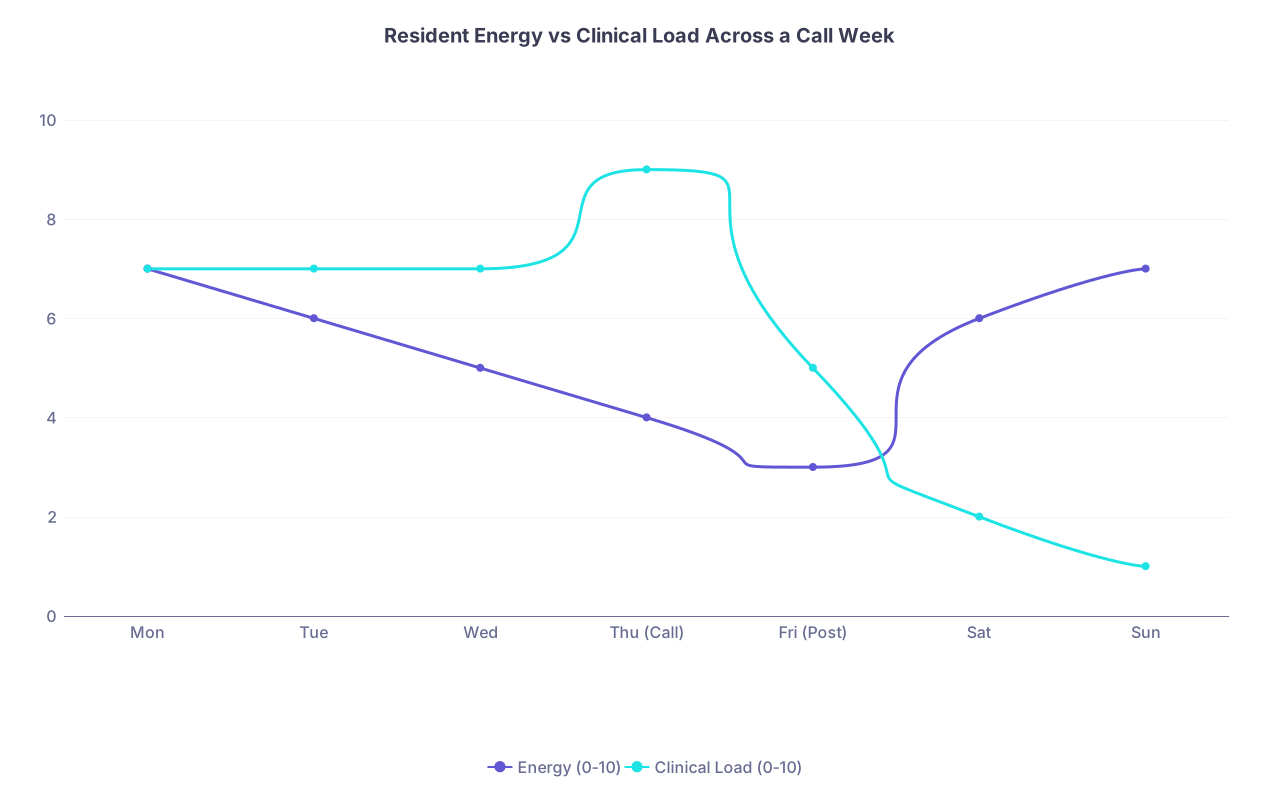
| Category | Energy (0-10) | Clinical Load (0-10) |
|---|---|---|
| Mon | 7 | 7 |
| Tue | 6 | 7 |
| Wed | 5 | 7 |
| Thu (Call) | 4 | 9 |
| Fri (Post) | 3 | 5 |
| Sat | 6 | 2 |
| Sun | 7 | 1 |
The point of Sunday planning is not to make the blue line (energy) magically high. It is to stop throwing extra rocks on the days when the red line (clinical load) is already maxed out.
One More Piece: Sunday Evening Ritual (10–15 Calming Minutes)
You need a hard boundary between planning and obsessing.
Pick a simple Sunday evening ritual:
- 10 minutes:
- Stretching or yoga
- Tea and a book that is not medical
- Journaling three lines: “What went well this week?”
Signal to your brain: planning time is over. The week is locked. You can stop rehearsing every disaster.

Quick Timeline Recap: Your Sunday, Hour by Hour
To make this painfully clear, here is your Sunday in order.
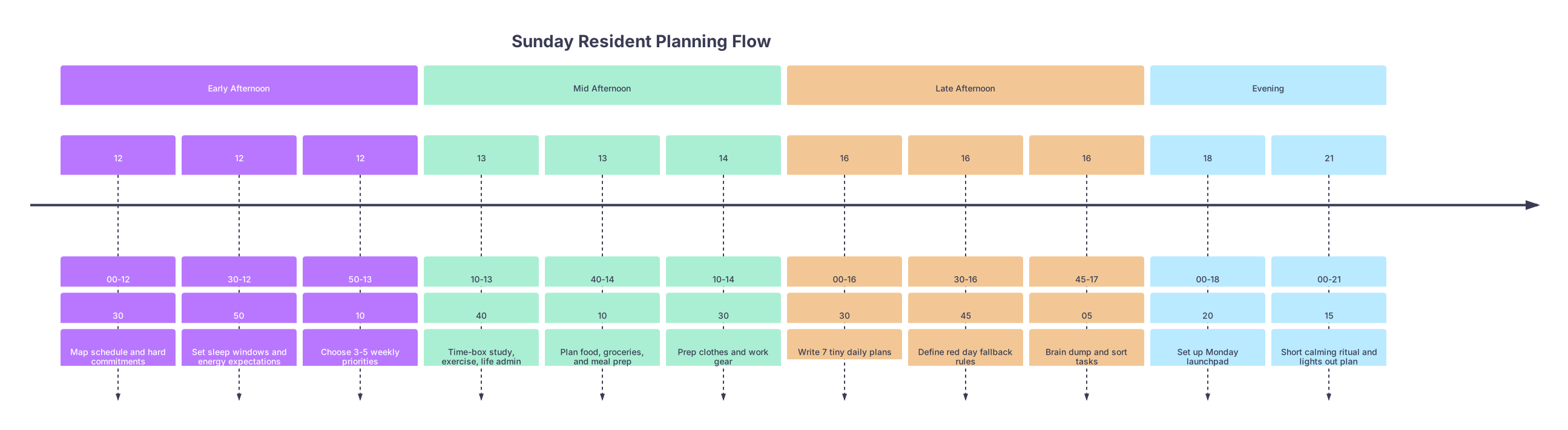
| Period | Event |
|---|---|
| Early Afternoon - 12 | 00-12 |
| Early Afternoon - 12 | 30-12 |
| Early Afternoon - 12 | 50-13 |
| Mid Afternoon - 13 | 10-13 |
| Mid Afternoon - 13 | 40-14 |
| Mid Afternoon - 14 | 10-14 |
| Late Afternoon - 16 | 00-16 |
| Late Afternoon - 16 | 30-16 |
| Late Afternoon - 16 | 45-17 |
| Evening - 18 | 00-18 |
| Evening - 21 | 00-21 |
Residency will not get easier next month. You will just get better at not letting it tear you apart.
So do this now:
Block a 60-minute event on your next Sunday titled, “Protect: Weekly Systems Check.” When that reminder pops up, sit down with your schedule and start with the hard commitments grid. If it is not on the calendar, it will not happen.