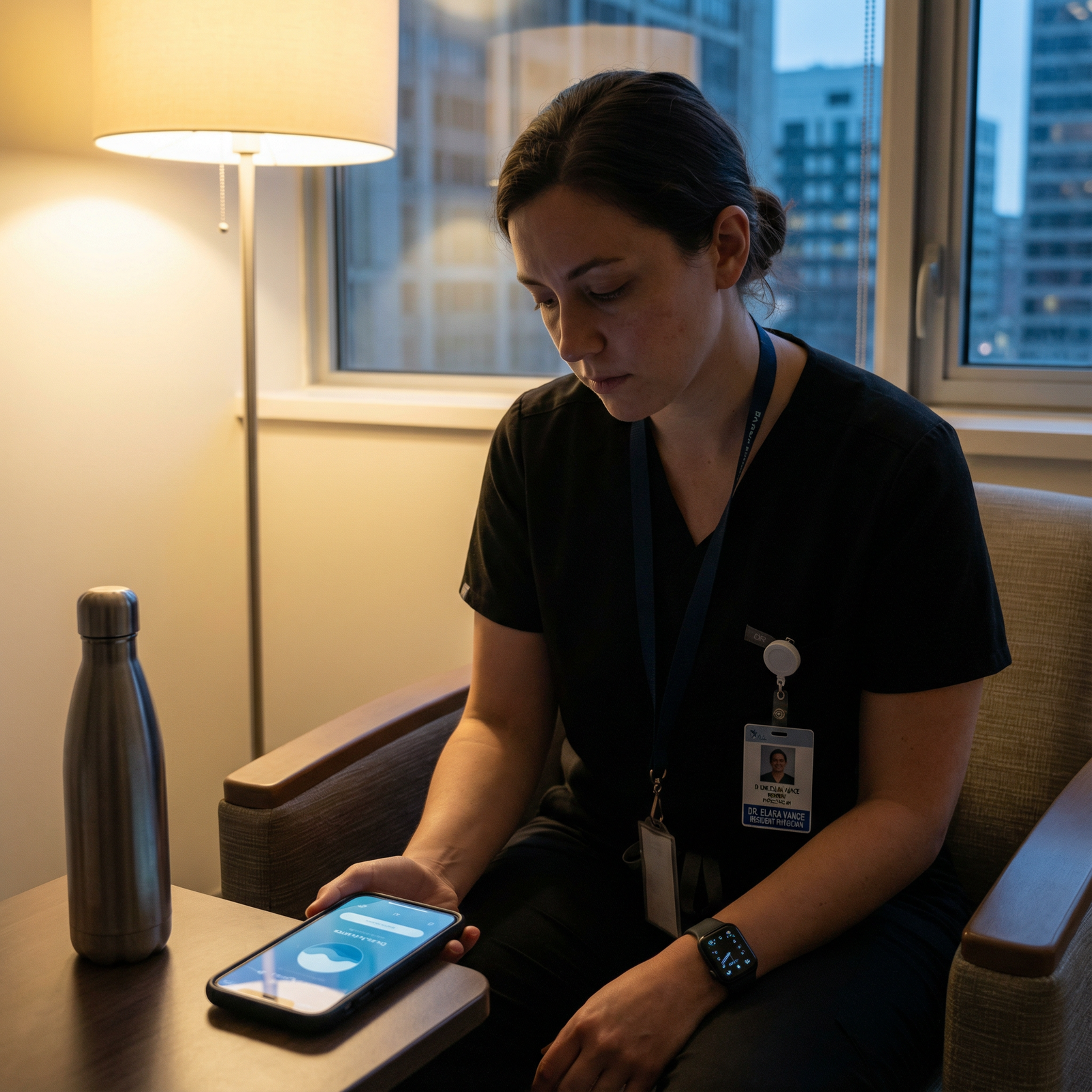
The average resident’s post-call routine is terrible. That is why they stay chronically exhausted, wired at 3 a.m., and one bad night away from burning out. You are not tired because you work hard. You are tired because your system after call is random.
Let me fix that.
Below is a practical, time-stamped post-call routine: from walking out of the hospital to waking up the next day ready to function like a human again. Not perfect. Not spa-like. Just realistic for someone who had 28 hours of chaos and still has a life to run.
Big Picture Timeline: Your Post-Call Arc
Before we zoom into hours and minutes, you need the basic shape of a good post-call day.
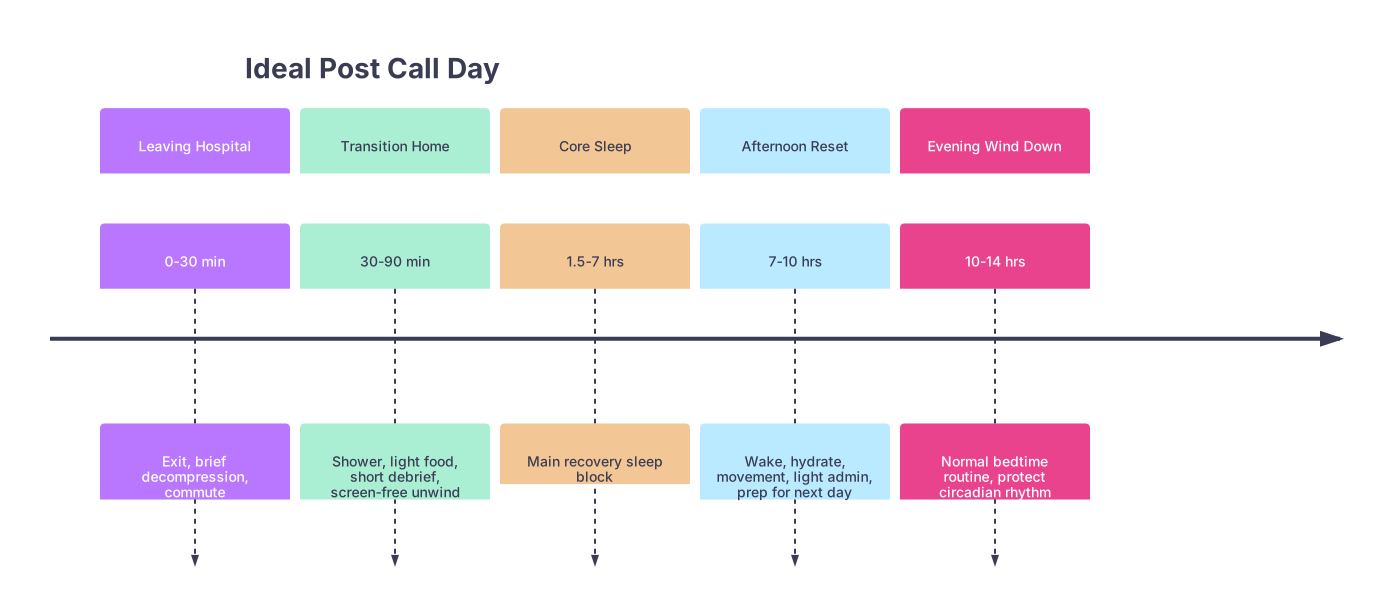
| Period | Event |
|---|---|
| Leaving Hospital - 0-30 min | Exit, brief decompression, commute |
| Transition Home - 30-90 min | Shower, light food, short debrief, screen-free unwind |
| Core Sleep - 1.5-7 hrs | Main recovery sleep block |
| Afternoon Reset - 7-10 hrs | Wake, hydrate, movement, light admin, prep for next day |
| Evening Wind Down - 10-14 hrs | Normal bedtime routine, protect circadian rhythm |
If your current post-call day does not roughly follow that arc, your sleep debt will compound. Fast.
Hour 0–1: Exiting the Hospital (Decompress Without Wrecking Your Sleep)
At this point you should be walking out of the building. Not still “just finishing one more note.”
0:00 – 0:10 — Hard out. Leave the unit.
- Finish your sign-out, confirm critical tasks are covered, then leave.
- Do not get sucked into:
- “Let me just check this last lab.”
- “I will fix that note quickly.”
- “I’ll just answer that one family question.”
You are post-call. You are now a safety risk more than a helper. Walking out on time is part of being a responsible clinician.
0:10 – 0:20 — Short decompression before you drive.
If you are driving home tired, you treat this like a procedure. Intentional and controlled.
Options in the lobby, cafeteria, or outside:
- 5 slow breaths (inhale 4 seconds / exhale 6–8 seconds).
- 2–3 minutes of light stretching (neck rolls, shoulder circles, back extension).
- Quick “brain dump” into your phone or small notebook:
- Anything bothering you clinically.
- Things you need to follow up on tomorrow, not now.
- People you want to thank / talk to.
The point: bleed off adrenaline and mental clutter so you are not replaying codes or consults at every stoplight.
0:20 – 1:00 — Commute: downshift, not rehash.
- No true crime podcasts. No heavy news. That keeps your nervous system on high alert.
- Pick one of:
- Calm music or an audiobook you have already heard.
- Silence. Yes, actual silence.
- Short guided breathing or meditation (apps: Calm, Headspace, Insight Timer).
If you feel drowsy at any point in the car:
- Pull over. 10–15 minute parked power nap.
- Then coffee if needed. You are more likely to crash your car than get fired for being slightly late post-call. I have seen the first one happen. Never seen the second.
Hour 1–2: Home Transition (Reset Senses, Not Scroll)
At this point you should be home, not answering “quick questions” from the team on your phone.
1:00 – 1:15 — Entry ritual. Same every time.
Build a simple sequence that tells your brain: “Call is over.”
For example:
- Keys down → badge off hook → scrubs straight to laundry or hamper.
- Phone to airplane mode or Do Not Disturb for 60–90 minutes (exceptions for childcare, emergencies).
- Quick check-in with partner/roommate if they are awake: “I am home, I am post-call, I am heading to shower then bed.”
Automate this. When you are exhausted, rituals save you.
1:15 – 1:30 — Hot shower: wash off the hospital.
Non-negotiable, even if you are dead tired.
- Hot water, dim light if possible.
- No phone in the bathroom.
- Do not replay cases in detail. If something is bothering you, just label it:
- “That code is stuck in my head. I will review it after sleep.”
- Change into soft, comfortable clothes you only wear for post-call downtime / sleep.

1:30 – 1:45 — Light food and hydration, not a feast.
Your body is confused. It thinks it should be awake and eating cafeteria fries. Do not make it worse.
Aim for:
- 8–16 oz water.
- Small, balanced snack:
- Greek yogurt with fruit.
- Peanut butter on toast.
- A small bowl of oatmeal.
- Leftover rice/veggies/protein.
Avoid:
- Huge, greasy meals. You will feel like a snake that swallowed a goat.
- Slamming caffeine. If you must have caffeine (long commute, need to stay up for a short period), do it before shower, not here.
1:45 – 2:00 — 10–15 minute mental debrief.
You want to offload your brain before you lie down, or it will do its own debrief at 3 p.m. while you are trying to sleep.
Pick ONE method:
- Quick written dump (notes app or paper):
- 3 bullet points: “What went well.”
- 3 bullet points: “What I would do differently next time.”
- Names / MRNs of cases to review later (for learning, not self-punishment).
- Voice memo:
- 1–2 minutes talking through the big events.
- Text to your co-res / trusted friend (if appropriate):
- “Rough call. Intubated a 3-week-old, will want to review that case with you later this week.”
Stop there. Do not start reading UpToDate or guidelines right now. Learning comes after sleep.
Hour 2–7: Core Sleep Block (This Is Where Most Residents Sabotage Themselves)
At this point you should be in bed. Seriously.
2:00 – 2:10 — Pre-sleep environment reset.
You are trying to sleep at the wrong time of day. You have to fake night.
Checklist:
- Blackout curtains or at least dark blinds.
- Eye mask if you share space or cannot fully darken room.
- Cool temperature (18–21°C / 65–70°F).
- White noise machine / fan / app to block daytime noise.
Screens rule: once you are in bed, no active phone use. Scrolling is the enemy here.
2:10 – 2:20 — Short wind-down cue.
Something simple and repeatable:
- 5–10 minutes of guided relaxation or body scan.
- Or progressive muscle relaxation: tense each muscle group 5 seconds, then release.
You are not trying to meditate like a monk. You are trying to give your nervous system one clear message: stand down.
2:20 – 7:00 — Sleep target: 4.5–6 hours, not 10.
Here is the mistake many interns make: they sleep 8–10 hours post-call, wake up at 6 p.m., then cannot sleep at night and walk into their next shift half-wrecked.
You want:
- 1 full sleep cycle = ~90 minutes.
- Optimal: 3–4 cycles = 4.5–6 hours.
- Example:
- Sleep 10 a.m. → Wake 2:30–3 p.m.
- Or sleep 11 a.m. → Wake 4–4:30 p.m.
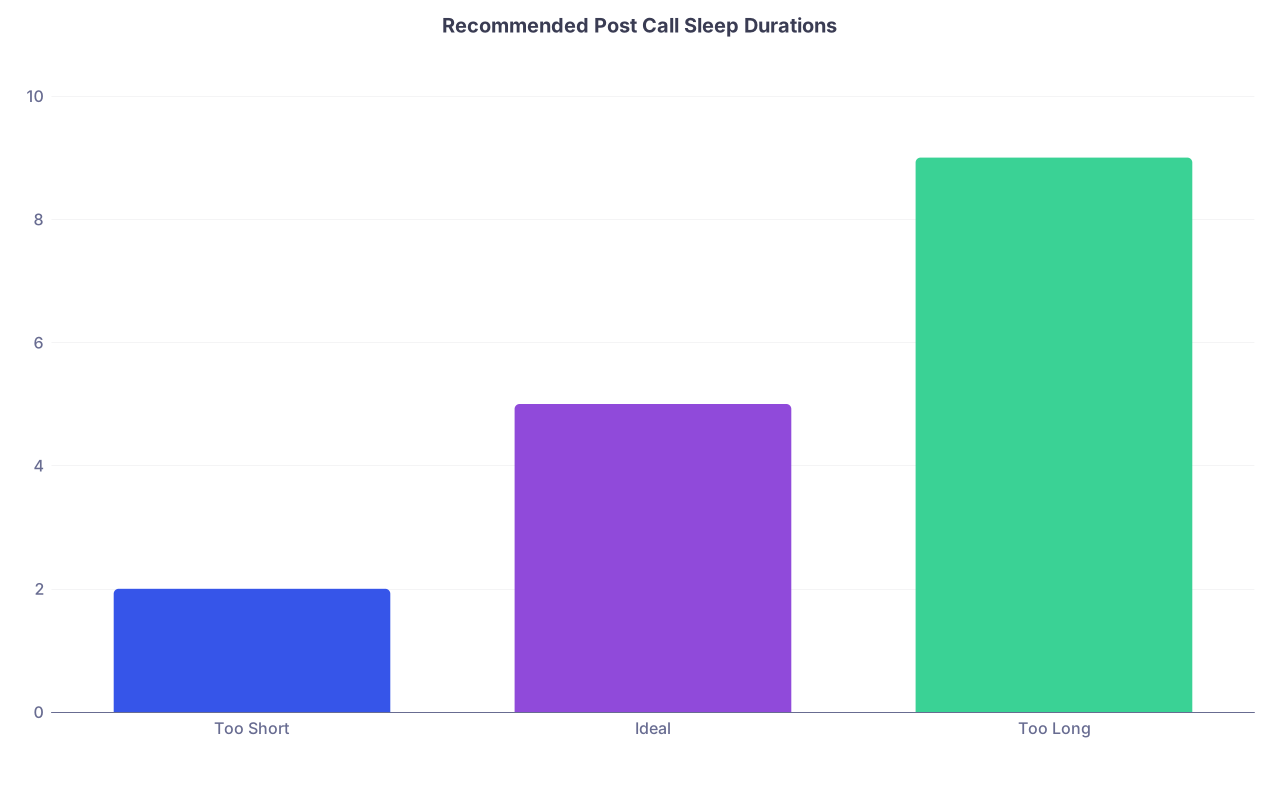
| Category | Value |
|---|---|
| Too Short | 2 |
| Ideal | 5 |
| Too Long | 9 |
If you wake after 3–4 hours and feel wired:
- Do not panic.
- Get out of bed.
- Gentle light snack and water.
- 10–15 minutes of calm reading (paper or e-ink, not your phone).
- Try another 1.5 hour block if you have time.
If you have young kids and cannot get a clean 4–6 hours:
- Coordinate with partner, co-parent, or childcare in advance.
- Trade: “I will be primary parent on X days if I can get 4 hours protected sleep post-call.” You cannot “power through” chronic sleep deprivation indefinitely. I have watched residents try. It always ends the same way.
Hour 7–10: Afternoon Reset (Debrief, Move, Rejoin Normal Life)
At this point you should be awake, hydrated, and not still in bed scrolling in a dark room telling yourself you “might fall back asleep.”
7:00 – 7:15 — Controlled wake-up.
Set an alarm before sleeping. When it goes off:
- Sit up immediately. Light on.
- Drink a full glass of water.
- Brief check-in: if you feel utterly non-functional, you probably overshot the sleep deprivation; still get out of bed. Extended day sleep is a trap.
7:15 – 7:45 — Light movement, not a heroic workout.
Goal: tell your circadian clock “this is daytime again.”
Options:
- 15–20 minute walk outside if weather allows.
- Gentle stretching / yoga sequence at home.
- A very light bodyweight routine:
- 2 sets each of squats, wall pushups, light core.
Do not try to PR your deadlift post-call. That is how you get injured.
7:45 – 8:15 — Real meal #1.
Now is the time for actual food.
Aim for:
- Protein (eggs, Greek yogurt, cottage cheese, chicken, tofu).
- Complex carbs (oats, rice, whole grain toast, potatoes).
- Some fruits/vegetables.
- Coffee or tea acceptable here if:
- You will be awake for at least another 6–8 hours.
- You are not on call again that night.
8:15 – 8:45 — Emotional / cognitive debrief (the “processing” slot).
This is where you deal with the mental load instead of shoving it aside for weeks.
Pick what you need:
- Solo reflection:
- 10–15 minutes writing about the hardest moment of the call.
- Specifics: what happened, what you felt, what you might do next time, what is out of your control.
- Peer debrief:
- Call or text a trusted co-res or senior: “Got a minute? That overnight transfer bothered me.”
- Keep this focused. 10–20 minutes, not a 2-hour vent spiral.
- Formal support (if your program has it):
- Resident support group.
- Wellness officer / faculty mentor. Use this slot especially after codes, deaths, near-misses, or moral distress cases. Post-call numbness is normal, but unprocessed guilt will haunt you at 3 a.m. a week later.
| Phase | Time Window (hrs post-leaving) | Primary Goal |
|---|---|---|
| Exit & Commute | 0–1 | Downshift, arrive safely |
| Home Transition | 1–2 | Clean, small meal, dump |
| Core Sleep Block | 2–7 | 3–4 sleep cycles |
| Wake & Movement | 7–8 | Reset circadian, hydrate |
| Meal & Debrief | 8–10 | Refuel, process mentally |
Hour 10–14: Evening Systems Reset (Prevent the Next Day From Imploding)
At this point you should feel semi-human. Night is coming. This is where you stop your week from spiraling.
10:00 – 10:30 — Low-stakes admin only.
You are not at peak executive function. Do not open the EMR “just to check one thing.”
Things that are reasonable:
- Glance at tomorrow’s schedule.
- Glance at your sign-out list for continuity (without deep diving into labs).
- Pay a bill, answer a couple of non-emotional texts, quick grocery order.
Things that will wreck your brain:
- Chart reviewing every patient from the last 24 hours.
- Reading that new RCT in NEJM right now.
- Working on research manuscripts.
Your brain is cotton candy. Accept it.
10:30 – 11:30 — Actual life: relationships or solo recharge.
This is the window for being a person again.
Options:
- Dinner with partner / roommates.
- 30–60 minutes of a show, book, or hobby that is light and not medically related.
- Short playtime or reading with your kids if you have them.
One rule: no doomscrolling. It feels like decompressing; it is actually stimulation plus comparison anxiety.

11:30 – 12:00 — Pre-bed routine for a normal night.
You are trying to land back on a standard sleep schedule.
Key moves:
- Light dimmed everywhere.
- Screens minimized 30 minutes before target bedtime.
- Simple routine: wash face, brush teeth, maybe 5–10 minutes of very light reading (paper book > phone).
Target bedtime: around your usual non-call bedtime. For many residents, 10–11 p.m. If your sleep block earlier was short (4–5 hours), you should be tired enough to fall asleep.
If you are wide awake at 11 p.m.:
- Get out of bed.
- Sit in a chair with dim light and read something boring.
- Go back to bed when sleepy. Do not lie in bed for 2 hours stewing about work. That trains your brain that bed = stress.
Weekly View: How This Fits Into a Call Cycle
A perfect post-call day is nice. A reproducible pattern is better. Across a typical q4–q7 call schedule, here is the rhythm.
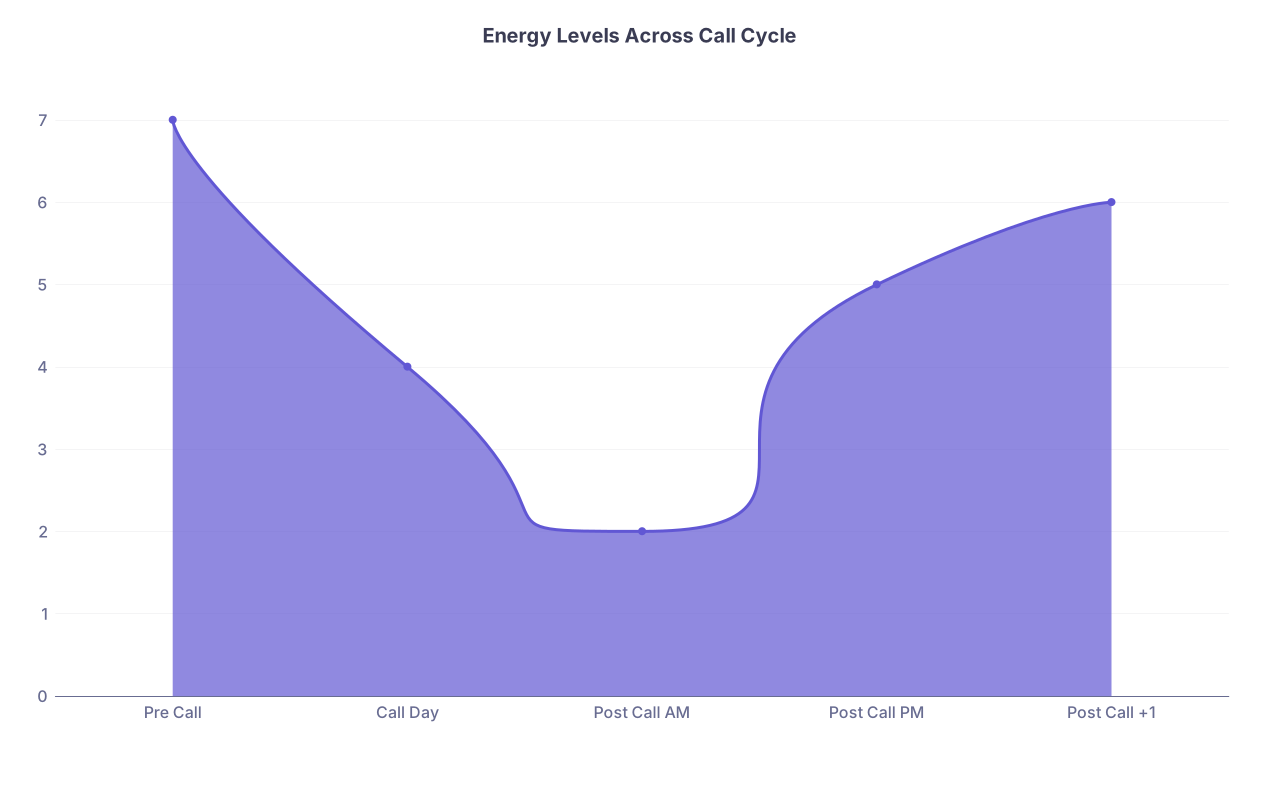
| Category | Value |
|---|---|
| Pre Call | 7 |
| Call Day | 4 |
| Post Call AM | 2 |
| Post Call PM | 5 |
| Post Call +1 | 6 |
- Pre-call day: go to bed slightly earlier, avoid heavy late-night stimulation.
- Call day: limit caffeine after mid-afternoon; your post-call sleep will thank you.
- Post-call day: follow the sequence you just read.
- Post-call +1: protect this as a “recovery-light” day if possible:
- No massive social commitments.
- No major high-stakes academic tasks if you can avoid it.
If your program destroys any semblance of pattern (NICU nights, random float shifts), you still apply the principles:
- 4.5–6 hour core recovery sleep block.
- One intentional mental debrief.
- One circadian reset with light and movement.
- Protect the night after post-call for normal sleep.
Quick Checklists: When You Are Too Tired to Think
Post-call “must-do” (minimum viable) routine:
- Leave hospital within 30 minutes of sign-out.
- 5–10 minutes of decompression before driving.
- Shower, small snack, in bed within 2 hours of leaving.
- Sleep 4.5–6 hours, alarm set.
- Brief emotional or cognitive debrief same day.
- Re-anchor to normal bedtime that evening.
Red flag signs your current post-call routine is failing you:
- You routinely sleep 8–10 hours post-call and then lie awake until 3 a.m.
- You dread post-call more than call itself because you feel awful and disorganized.
- You are replaying specific cases over and over instead of being able to “file” them mentally.
- Your days blur; you never feel like you “reset” between calls.
If those resonate, stop trying to “tough it out.” Change the system.

Final Takeaways
- A good post-call day is not a luxury; it is a safety protocol for your brain and your patients.
- The core pillars are simple: leave on time, brief decompression, 4.5–6 hours of recovery sleep, one honest debrief, and a protected return to your normal bedtime.
- Consistency beats perfection. Run this routine on autopilot after every call, adjust for your reality, and your “baseline tired” will quietly improve.