
The generic “trust your prep, you’ll be fine” advice for Step 2 CK is garbage when your practice scores are low two weeks out. You are not fine. But you are also not doomed. You need triage.
This is not a normal study plan problem. This is an acute management problem. You have 14 days to stop the bleeding and salvage your score.
I am going to lay out exactly how to do that.
Step 1: Get Your Numbers on the Table (Brutally)
You cannot fix what you have not precisely measured. Vague “I’m around passing” thinking is how people fail CK.
In the next 60 minutes, you need to do this:
List every real score you have.
Write them down, not in your head:- NBME forms (and dates)
- UWSA 1/2
- Free 120 (old or new)
- Any recent shelf scores that reflect current knowledge (not from 9 months ago)
Write approximate equivalents.
Use your school’s concordance, a trusted online converter, or your own program’s data. Rough ranges are fine:- NBME form X → ~yyy
- UWSA1/2 → ~yyy
- Free 120 % → add ~8–15 to get ballpark Step 2 scale
Define your goal tier. Be honest and binary:
- Tier 1 – “Just Pass or Just Above”:
You are at risk of failing / just above passing. Priority: avoid disaster. - Tier 2 – “Salvage a Respectable Score”:
You are likely to pass but below your target for residency competitiveness. - Tier 3 – “Still Chasing a High Score”:
You are close enough to target (±10–15 points) that smart tightening can still get you there.
- Tier 1 – “Just Pass or Just Above”:
You have two weeks. You cannot optimize for everything. You must pick the correct tier and align your actions.
Step 2: Decide Pass vs Postpone – Hard Call, No Denial
Two weeks out, the only serious question is:
Do I sit for the exam or do I move it?
Here is the decision rule I use when advising students.
| Situation | Recommended Action |
|---|---|
| Multiple NBME scores < 205 or < 65% | Strongly consider delaying |
| Last 2 NBME scores 205–215 but trending up | Proceed with aggressive triage |
| UWSA1/2 < 210 two weeks out | Lean delay unless major recent changes |
| Free 120 < 65% within 10 days of exam | High risk – consider delay |
| Goal is just to pass and you are ≥ 5–10 points above predicted pass | Proceed with focused safety protocol |
Let me be blunt:
If you have multiple recent NBMEs below ~205 or below solidly passing:
You are gambling with a fail. If you have the option to reschedule without catastrophic life consequences, reschedule. That is not weakness. That is smart risk management.If you are hovering around low- to mid-210s on multiple forms:
You can probably pass with two weeks of disciplined, high-yield repair. Not guaranteed, but realistic.If you are aiming for a competitive specialty (derm, ortho, plastics, ENT) and sitting at 220 with a 250+ dream:
You are not getting 30 points in two weeks. Stop fantasizing. Focus on solid improvement and not bombing this exam. Do not turn this into a “heroic miracle” project.
If you decide to delay:
- Set a new date immediately (4–8 weeks out).
- Do not turn “extra time” into another month of low-yield wandering. You still use most of the strategy below, just stretched out.
If you decide to go ahead:
- From this point forward, everything you do is about maximal point gain in minimal time.
Step 3: Triage Your Weaknesses in 1 Day
You cannot master all of medicine in 14 days. But you can stop leaking points in predictable places.
You do one focused diagnostic day:
A. Categorize your last 200–300 questions
Go through your most recent blocks (last 3–5 days of UWorld or other Qbank).
For each missed or guessed question, tag it fast:
- Incorrect diagnosis (you did not recognize what disease it was)
- Correct diagnosis, wrong next step in management
- Correct idea but missed guideline detail (drug of choice, order, timing)
- Pure recall (memorization: criteria, numbers, stages)
- Misread or rushed (you had it but blew it)
Now tally. Do not overthink.
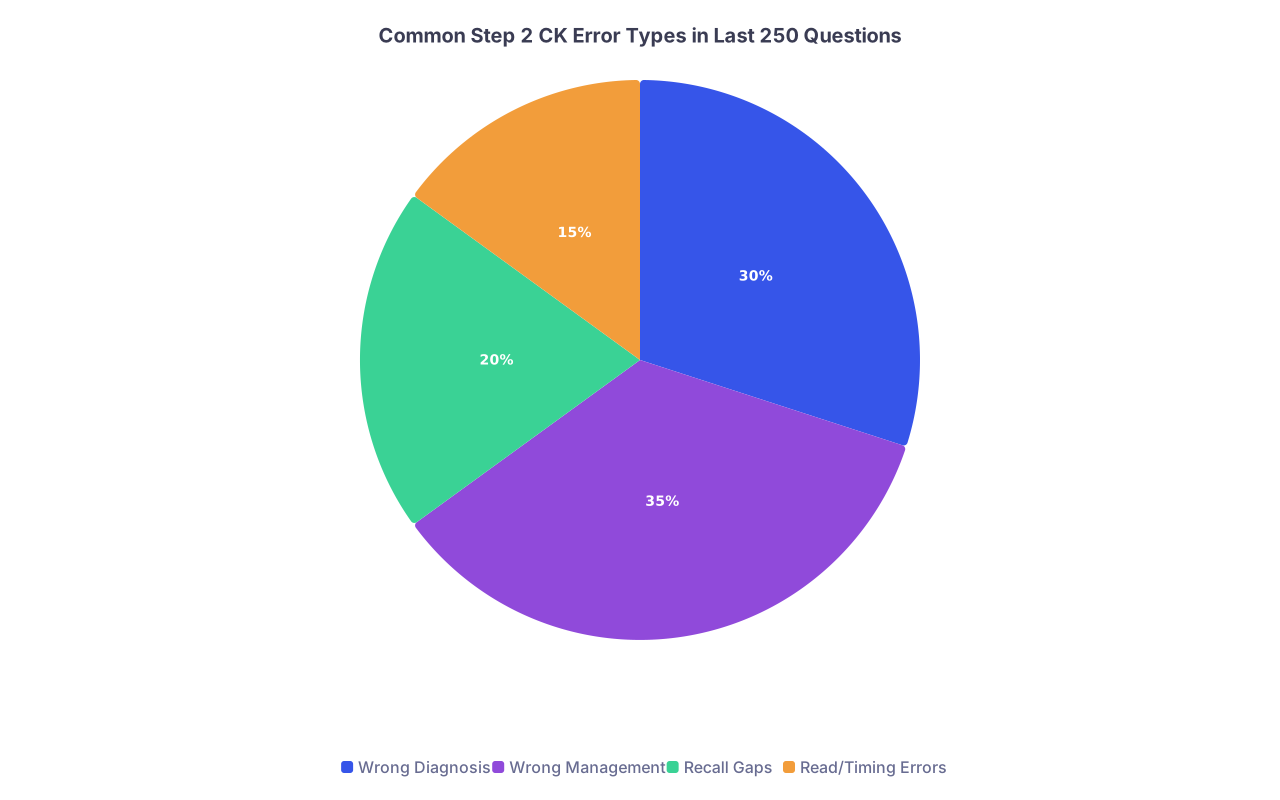
| Category | Value |
|---|---|
| Wrong Diagnosis | 30 |
| Wrong Management | 35 |
| Recall Gaps | 20 |
| Read/Timing Errors | 15 |
Whatever category dominates is where you attack first.
B. Identify content domains you are bleeding on
Go back through block titles or subject tags and mark which systems or disciplines are hurting you:
- Medicine: cardiology, pulm, GI, renal, heme/onc, ID, rheum, endocrine
- Surgery: perioperative, trauma, postop complications
- OB/GYN: pregnancy complications, labor, postpartum, gynecology
- Pediatrics: neonatal, developmental, infectious, congenital
- Psychiatry: common disorders, emergency, meds, side effects
- Ethics/biostats/QI
You are looking for 2–3 big offenders, not a list of 12.
If you say “I’m bad at everything,” you are venting, not analyzing. There will be patterns.
Example triage result:
- 40% of errors: wrong next step in management.
- Content: OB, peds, endocrine especially weak.
Perfect. That is fixable.
Step 4: Build a Two-Week Emergency Schedule (No Fantasy Hours)
Now you build a realistic 14-day plan. Not some 14-hours/day superhero schedule you will abandon by Day 3.
First, set your daily bandwidth:
- If you are already near burnout: 8–9 focused hours / day
- If you still have gas in the tank: 10–11 hours / day
Anything more usually turns into fake studying.
Daily structure template
Here is a core structure that works. Adjust times, not the skeleton.
Morning (High-focus) – Questions + Review
- Block 1:
- 40 questions, timed, mixed (or targeted if you are truly weak in one area)
- Immediate full review (every question, right or wrong)
- Short break (10–15 min).
- Block 2:
- 40 questions, same approach
- Full review
You just did 80 high-quality questions plus review. This is where most of your learning happens.
Early Afternoon – Targeted Repair
Use your diagnostic from Step 3:
If you keep missing management:
- Review high-yield management tables (UWorld notes, dedicated high-yield book, or your own summary).
- Particularly: chest pain algorithms, stroke management, sepsis, pregnancy complications, hypertensive emergencies, pediatric fever, DKA vs HHS.
If you keep missing diagnosis:
- Go through symptom-based algorithms: chest pain, shortness of breath, anemia workup, jaundice, abdominal pain by location, headache patterns.
This is not passive reading. You do:
- Short topic review (20–30 minutes)
- Then 10–20 targeted questions on just that topic (UWorld tutor, AMBOSS if you have it).
Late Afternoon – Block 3 (Optional But Powerful)
- Another 40 questions if your brain can still give real effort.
- If you are too tired, do:
- 20–25 questions untimed, heavy focus on thought process and review.
Evening – Rapid Review / Memorization
- 60–90 minutes of pure memorization review:
- Your Anki deck (filtered for highest yield)
- Pre-made Step 2 decks focused on:
- OB/GYN
- Peds
- Psych
- Antibiotics
- Vaccines and screening
- Biostats formulas + ethics
This is where you lock in the low-hanging points.
Weekly structure across 2 weeks
You do not cram full exams every day. That backfires. Instead:
Day 1–4:
- 2–3 blocks/day + targeted review.
- One dedicated half-day for your worst subject (ex: OB in the morning, targeted questions in the afternoon).
Day 5 or 6:
- Full-length practice exam (NBME or UWSA) to recalibrate.
- Lighter evening (just review key misses, not every detail).
Day 7:
- Lighter but still active:
- 80 questions total, then high-yield review.
- Shorter memorization session. You need some mental recovery.
- Lighter but still active:
Week 2 (Days 8–12):
- Keep 2–3 blocks/day but shift more toward mixed, timed sets.
- Aggressive drilling of persistent weak zones.
Last 2–3 days (Days 12–14):
- No full-length NBMEs.
- One Free 120 or half-length simulation 3–4 days out, not the day before.
- Day before exam: 40–80 light questions, heavy quick review (guidelines, tables) and then stop.
Step 5: What to Study – And What to Stop Studying
At this stage, content selection matters more than total hours. You do not need breadth; you need return on investment.
Core High-Yield Domains You Cannot Ignore
If your practice tests are low, assume you are underperforming in at least some of these. They are often overweighted on CK.
Internal Medicine Big 5
- Cardiology: ACS, CHF, arrhythmias, valvular disease, endocarditis.
- Pulmonology: asthma/COPD, pneumonia, PE, pleural effusion, lung nodules.
- GI: GI bleed, liver disease, pancreatitis, IBD vs IBS, diarrhea types.
- Renal: AKI types, CKD complications, electrolyte disorders (Na/K/Ca/Mg), acid–base.
- Infectious Disease: sepsis, meningitis, endocarditis, osteomyelitis, HIV basics, common antibiotics.
OB/GYN
- Pregnancy timeline, prenatal care.
- Hypertensive disorders of pregnancy.
- Bleeding in pregnancy: first vs third trimester.
- Fetal heart tracings and actions.
- Postpartum complications.
- Common gyne problems: AUB, fibroids vs adenomyosis, ovarian torsion, ectopic.
Pediatrics
- Vaccination and screening milestones.
- Neonatal jaundice, sepsis, respiratory distress, congenital heart issues.
- Common pediatric infections: meningitis, otitis media, pneumonia, UTI, RSV.
- Dehydration / fluid management.
- Developmental milestones (just the big ones).
Psychiatry
- Depression, bipolar, schizophrenia spectrum, anxiety disorders, PTSD.
- Substance use disorders and withdrawal syndromes.
- Emergency psych: suicidality, agitation, NMS vs serotonin syndrome.
- Side effects of common psych meds.
Surgery
- Trauma initial management (ATLS).
- Acute abdomen: appendicitis, bowel obstruction, perforation, pancreatitis.
- Postoperative fever and complications.
Biostats / Ethics / QI
- Sensitivity/specificity, PPV/NPV, likelihood ratios.
- Study designs, bias types.
- Absolute vs relative risk reduction, NNT.
- Consent, capacity, confidentiality, mandatory reporting, error disclosure.
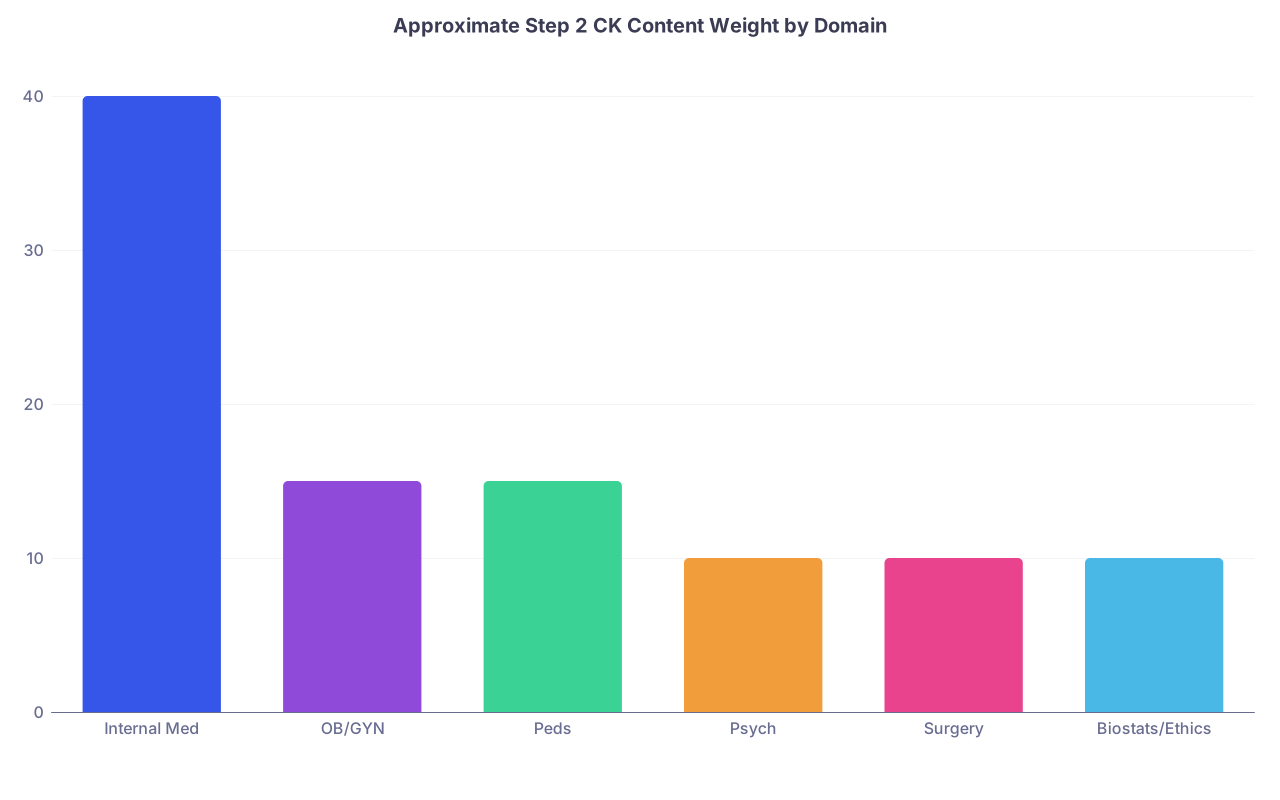
| Category | Value |
|---|---|
| Internal Med | 40 |
| OB/GYN | 15 |
| Peds | 15 |
| Psych | 10 |
| Surgery | 10 |
| Biostats/Ethics | 10 |
Is this exact? No. But if you are bombing any of the top 3 domains, your score will stay low.
Low-Yield Traps to Avoid in the Final 2 Weeks
These are things I routinely see struggling students waste hours on:
- Memorizing obscure eponyms or rare syndromes beyond pattern recognition.
- Deep-diving into advanced pathophysiology when the questions ask for simple management.
- Rewatching tons of long video lectures as passive review (unless you are using brief, targeted clips for a known gap).
- Starting a brand new Qbank from zero “because maybe it is better than what I used.”
- Perfecting every tiny variant of vasculitis or obscure derm condition.
If a topic:
- Almost never appeared on your NBMEs/UWSAs
- Or gives you diminishing returns per hour
…cut it or reduce it to a 10–15 minute skim.
Step 6: Fix Your Question-Taking Technique (Fast)
Many students with low practice scores do not just have knowledge gaps. They have process problems. They bleed 10–15 points just from poor exam behavior.
You must patch these.
A. One-Pass, No-Backtracking Mindset
CK is long. Fatigue will chew you up if you reread every question three times.
- Scan stem for:
- Age, sex, key PMH.
- Presenting symptom and duration.
- Before reading the answer choices, commit in your head to what the problem likely is or what step you expect.
- Then, go through options once. Narrow to 2. Choose. Move on.
Do not plan to “come back later” to half the block. You will not have time. Train yourself to decide now with the information you have.
B. Practice “Why Wrong” On Review
During review, force yourself to state:
- Why your chosen answer was wrong.
- Why the correct answer is right.
- Why at least one other wrong choice is not appropriate here.
Do this out loud or in writing for your consistently weak topics. Yes, it is slow. Yes, it trains your brain to actually think in USMLE logic.
C. Handle Long Stems Efficiently
- Do not read every line with equal weight.
- Learn to detect fluff: detailed social history, repeated labs, obvious restatements.
- Focus heavily on:
- Vitals
- Key lab/procedure findings
- Temporal sequence of events
You are not reading a novel. You are hunting for decision-making data.
Step 7: Simulate the Real Exam – But Not Too Often
You need a realistic sense of whether you have moved the needle. But full-length exams are exhausting and can wreck your schedule if overused.
Here is the two-week reality:
- If you have not taken an NBME in the last 7–10 days:
- Take one in the next 2–3 days.
- If you already took multiple:
- Take 1 more NBME or a UWSA 7–10 days and/or 4–7 days before your test.
- Free 120:
- Do it 3–5 days out. Timed. Real conditions.
No full-length self-assessments in the last 48 hours before your real test. That is stress, not value.
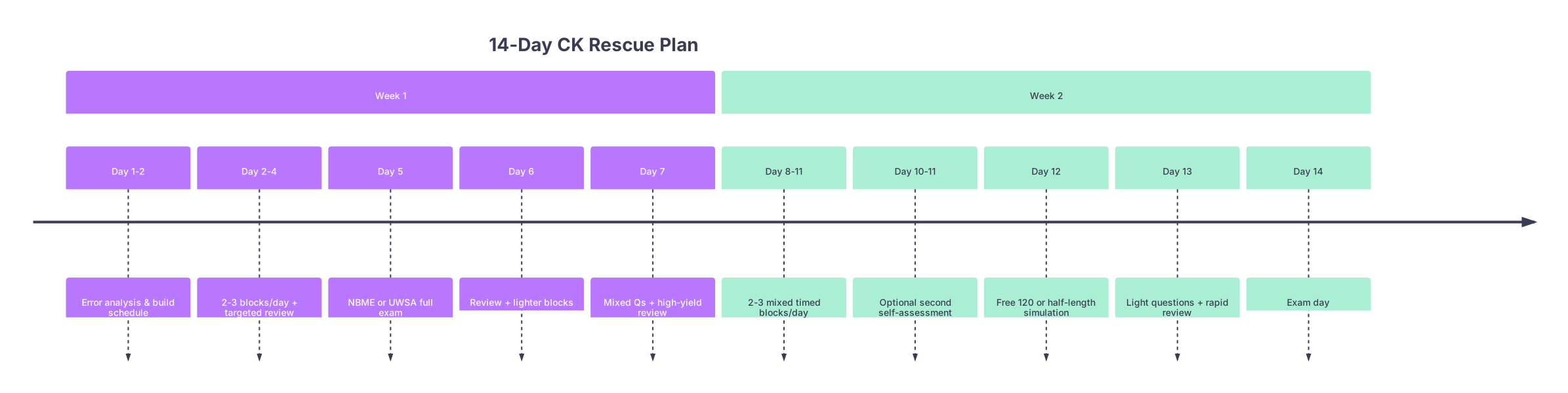
| Period | Event |
|---|---|
| Week 1 - Day 1-2 | Error analysis & build schedule |
| Week 1 - Day 2-4 | 2-3 blocks/day + targeted review |
| Week 1 - Day 5 | NBME or UWSA full exam |
| Week 1 - Day 6 | Review + lighter blocks |
| Week 1 - Day 7 | Mixed Qs + high-yield review |
| Week 2 - Day 8-11 | 2-3 mixed timed blocks/day |
| Week 2 - Day 10-11 | Optional second self-assessment |
| Week 2 - Day 12 | Free 120 or half-length simulation |
| Week 2 - Day 13 | Light questions + rapid review |
| Week 2 - Day 14 | Exam day |
Score changes in 10–14 days will not be dramatic, but I have seen 10–15 point improvements when students stop doing dumb, low-yield things and follow something like this.
Step 8: Last 72 Hours – Tighten, Do Not Cram
Three days out, you are not rebuilding your knowledge base. You are:
- Consolidating patterns.
- Closing easy leak points.
- Protecting your brain for game day.
72–48 hours before exam
- 2–3 blocks of questions, but shorter and more controlled (maybe 30–35 instead of 40).
- Heavy focus on:
- Ethics / biostats question sets.
- OB, peds, psych rapid-fire.
- Skim:
- Vaccine schedules and screening age ranges.
- Must-know drugs and side effects (especially cardio, psych, ID).
- Emergency management: anaphylaxis, sepsis, status epilepticus, stroke, MI, hypertensive emergency, active labor issues.
48–24 hours before exam
- 40–80 questions max.
- Most time is rapid review of your own:
- “Dumb miss” list from prior exams.
- Mistake patterns (e.g., always confuse SIADH vs CSW, etc.).
- Organize logistics:
- Route to test center.
- Food, water, caffeine strategy.
- Earplugs or whatever you need.
Day before exam
- No NBME. No UWSA.
- Short, light work:
- Maybe 20–40 simple questions just to stay warm.
- 2–3 hours of high-yield tables and summaries.
- Then stop. Really stop.
Sleep: non-negotiable.
Step 9: Mental Game – How Not to Psych Yourself Out
Two weeks of panic is a good way to sabotage even a decent knowledge base.
Here is the mindset that actually works in this situation:
Accept you will not know everything.
You will miss questions. Many. So does everyone.Your job is not to achieve perfection.
Your job is to:- Lift your floor.
- Hit the obvious ones.
- Avoid meltdowns on tough blocks.
On test day:
- If you bomb a block, let it die. Your score is an average. Do not drag one bad block into the next three.
- Use breaks aggressively. Eat. Drink. Reset.
For pass-only goals:
- Aim for steady, competent performance, not brilliance.
- Prioritize:
- Common diseases.
- First-line treatments.
- Emergency stabilization.
For students I have seen squeak by from scary low scores, the difference was rarely one magical resource. It was:
- Ruthless triage of what actually mattered.
- Fixing toxic habits (endless videos, no questions, or pure passive review).
- Protecting their brain from total burnout in the final days.
Final Tight Strategy Recap
You are two weeks out with low practice scores. Fantasy time is over.
The three takeaways you actually need to remember:
Make a real decision and then commit.
If your NBMEs are clearly failing range, strongly consider moving the exam. If you go forward, accept that you are in emergency mode and act like it.Run a ruthless triage protocol.
Diagnose your error patterns, pick 2–3 weak domains, and build a 14-day schedule anchored on timed questions + targeted repair. No new resources. No broad, unfocused content binging.Protect performance, not ego.
You are not scoring a 270 in 14 days. You can realistically gain 10–15 points by stopping leaks, focusing on high-yield medicine, and stabilizing your test-taking behavior.
Do that, and you give yourself a real shot at turning “low practice scores” into a passable—and sometimes surprisingly solid—CK performance.