

You’ve been lied to: you do not need a golden “dedicated” month to do well on Step 2 CK. You need a strategy that works when you’re exhausted, on your feet, and getting paged every 4 minutes.
This is the guide for when you’re on an inpatient-heavy rotation, your cores are wrapping up, your exam date is coming, and you’re thinking, “How the hell am I supposed to study when I barely have time to eat?”
Here’s how you handle it.
1. Get Real About Your Situation (and Your Score Goal)
Step one: stop pretending you’re on an outpatient elective with 4:00 pm sign-out and quiet nights. You’re not.
You’re on:
- Medicine with 6–8 new admits a day and 15–20 patients on the list
- Surgery with 4:30–5:00 am pre-rounds, cases, and floor work
- OB nights, ICU, or anything else that chews you up and spits you out
That reality changes the rules.
Decide which of these buckets you’re in
| Starting Point | Practice Score Range | Main Priority |
|---|---|---|
| Behind / At Risk | < 220 or no baseline | Just pass safely |
| Borderline / Average | 220–240 | Solid score, plug gaps |
| Competitive Push | 240+ | Maximize points efficiently |
If you haven’t done a baseline test yet (NBME, UWSA, or Free 120), your first goal this week is not “crush UWorld.” It’s: get one honest number on paper.
You’re going to tailor your plan differently if your NBME 10 comes back as 214 vs 247. Do not skip this.
Non-negotiable mindset shifts
- You will not feel ready. The exam will come anyway.
- Your rotation performance still matters. You’re not tanking evaluations “for Step 2.”
- Consistency beats binge-studying. 60–90 focused minutes daily > 6 hours once a week.
You’re not trying to win Best Study Schedule on Reddit. You’re trying to survive a brutal rotation and walk into Step 2 decently prepared.
2. Build a Bare-Minimum, Rotation-Proof Study Skeleton
You need a plan that survives:
- Random late admissions
- Overnight calls running long
- Weekend coverage that nukes your “catch-up” time
So your plan can’t rely on “every day I’ll do 120 questions and 3 hours of review.” That dies on day 3.
Instead, you build a study skeleton: the minimum you do most days, with optional upgrades on lighter days.
The Core Daily Minimum (DM)
On a heavy inpatient month, your realistic daily minimum looks like:
- 20–30 UWorld questions (timed, random, 1 block)
- 20–30 minutes of review (high-yield errors + screenshots/anki only)
If you’re very weak or very behind, you push toward 30–40 Q/day. But for most people on full inpatient, 20–30 well-reviewed questions every weekday plus some extra on weekends is enough to move the needle.
Weekly Target That Actually Works
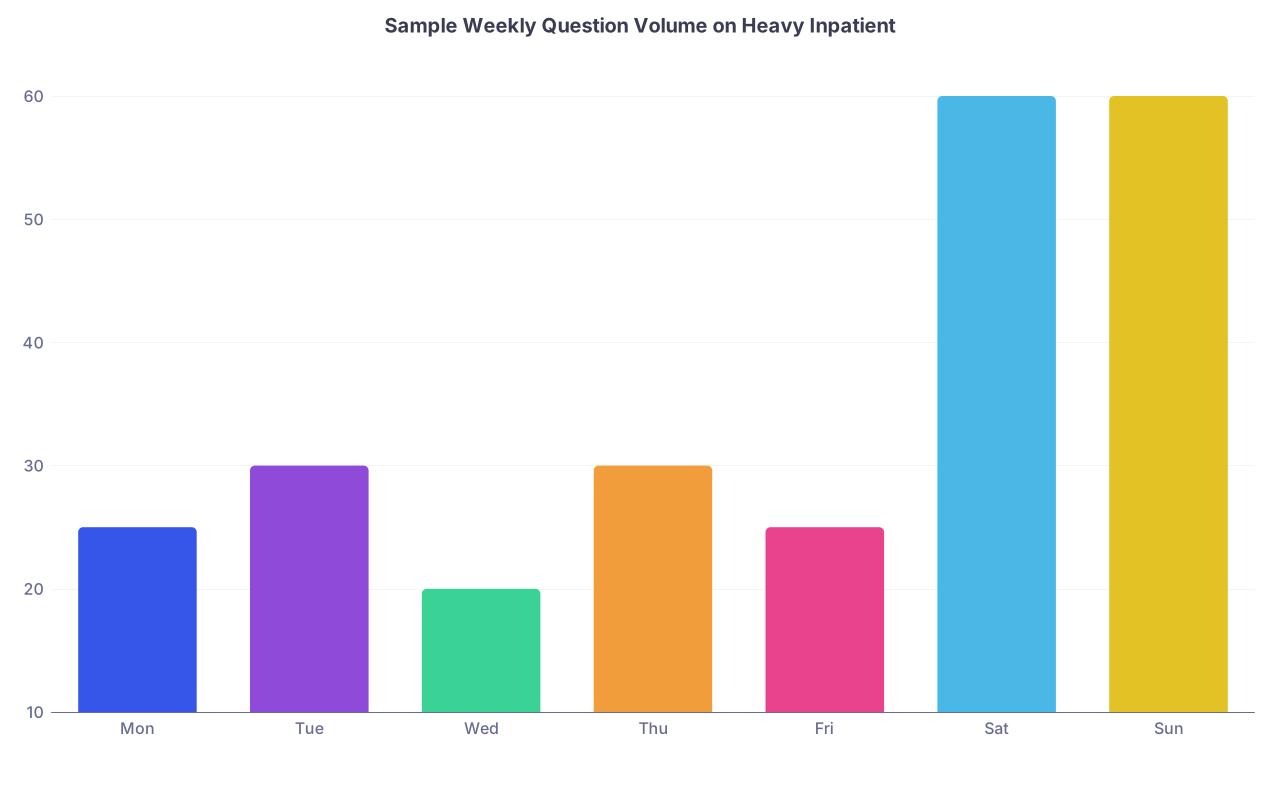
Here’s what I’ve seen work repeatedly:
| Category | Value |
|---|---|
| Mon | 25 |
| Tue | 30 |
| Wed | 20 |
| Thu | 30 |
| Fri | 25 |
| Sat | 60 |
| Sun | 60 |
That’s ~250 questions/week. Over 6–8 weeks, you’re in the 1500–2000 range, which is perfectly fine if your rotations themselves were decent prep.
Could 3000 questions be nice? Sure. But you’re not on a chill research block. You’re on a service where someone will literally code while you’re pre-rounding. Adjust.
The “Upgrade” Plan for Good Days
On days where:
- You get out before 5
- Call is quiet
- You’re post-call but not destroyed
You stack extra:
- +1 block (20–40 more questions)
- +30–60 minutes of video / targeted review (e.g., Emma Holliday, OnlineMedEd for weak areas)
But your self-esteem doesn’t depend on these upgrade days. The daily minimum is success.
3. Thread Studying Into a Brutal Schedule (Hour by Hour)
You’re not going to protect a 3-hour uninterrupted study block. The hospital won’t let you. So you have to slice your day differently.
A sample inpatient weekday that actually fits studying
Let’s say:
- Pre-round: 5:30–6:30
- Rounds: 7–11
- Notes, admissions, tasks: 11–5
- Sign-out: 5–6
Now plug in Step 2.
Morning: 20–30 minutes before pre-round
Wake-up – Pre-round (maybe 4:45–5:15):
- Do 10–15 questions from a UWorld block
- No deep review, just answer and flag confusing ones
- Goal: wake up your brain, keep content fresh
You’re not reading UWorld explanations half-asleep. Just questions, tap, next.
Midday: 10–15 minutes of micro-review
Between patients, on computer downtime, or quick breaks:
- Open your Anki or screenshot deck
- Hit 10–20 flashcards (especially for things you just saw clinically)
- If you can’t sit, review from your phone
If your attending is talking through a DKA patient, mentally tie it to the acid-base and diabetes questions you missed. That’s studying too.
Evening: The real work block
Post-sign-out:
- 20–30 questions left of that daily block (finish it if you started in the morning)
- 20–40 minutes of focused review of that block only
You walk through the block and:
- Thoroughly review all wrongs
- Glance at rights you guessed on or weren’t 100% sure about
- Tag 3–5 key points to add to flashcards/screenshot folder
That’s it. You’re not re-reading every line of every UWorld explanation like it’s holy scripture. You don’t have the time.
4. Use the Rotation Itself as Step 2 Studying
If you separate “rotation life” and “Step 2 life,” you’ll drown. The trick is merging them.
One topic per patient
Every patient is now a prompt for 1–2 Step 2 topics:
- CHF exacerbation: diuretics, afterload reduction, GDMT, when to do ICD
- Pneumonia: inpatient vs outpatient regimens, CURB-65, when to do CT
- GI bleed: transfusion thresholds, PPI, octreotide, when to scope
After seeing them, that night (or during a lull):
- Do 2–3 related UWorld questions (by topic search if needed)
- Or review 5–10 flashcards from that category
- Or watch a 5–10 minute focused video clip (not a 1-hour lecture)
Clinical case → Exam-relevant question. Over and over.
Ask attending-level questions that secretly prep you for Step 2
The “How would this show up on boards?” line isn’t cheesy if you use it well.
I’ve watched residents explicitly say:
“On boards, they love to ask about the first-line next step for this scenario. For this guy, the test-writer wants you to pick…”
You get the pattern recognition for free if you just prompt it.
Let your notes double as study
When you write daily notes:
- Be deliberate with assessment and plan wording
- Include brief rationales that match Step 2 thinking: “Given X and Y, most likely diagnosis is Z; rule out A with ___”
You’re reinforcing how Step 2 expects you to think: prioritize, rule in/out, choose management steps in order.
5. Picking and Using Resources Without Drowning
On inpatient, you do not have the luxury of “I’ll use 5 question banks and 3 video series.” That kind of hoarding is just procrastination in disguise.
Here’s the stripped-down setup that works.
Core resources
- UWorld Step 2 CK (non-negotiable)
- NBMEs + Free 120 + UWSA’s for assessment
- Light, targeted videos
- Emma Holliday or Divine Intervention for quick high-yield hits
- OnlineMedEd for filling real gaps, not for watching end-to-end
Optional, not mandatory:
- Anki (only if you’ve already been using it or can commit to 15–20 min a day)
- One compact text/reference: AMBOSS, Boards & Beyond notes, etc.
How to actually handle UWorld on a heavy month
Do timed, random blocks most of the time. Step 2 CK is random. You need that stamina.
But if you’re getting crushed on a specific area (e.g., OB or Peds), it’s acceptable to:
- Do 1–2 blocks that are system-focused that week
- Then back to random
Review rules when time is limited:
- Fully review: all wrongs + guessed rights
- Skim: slam-dunk rights (just glance at the answer choice and move on)
- Capture: write down or screenshot only the top 3–5 high-yield learning points per block
You are not a court scribe. Don’t rewrite the entire explanation into a notebook you’ll never read again.
6. Timeframe: How Long Do You Actually Need?
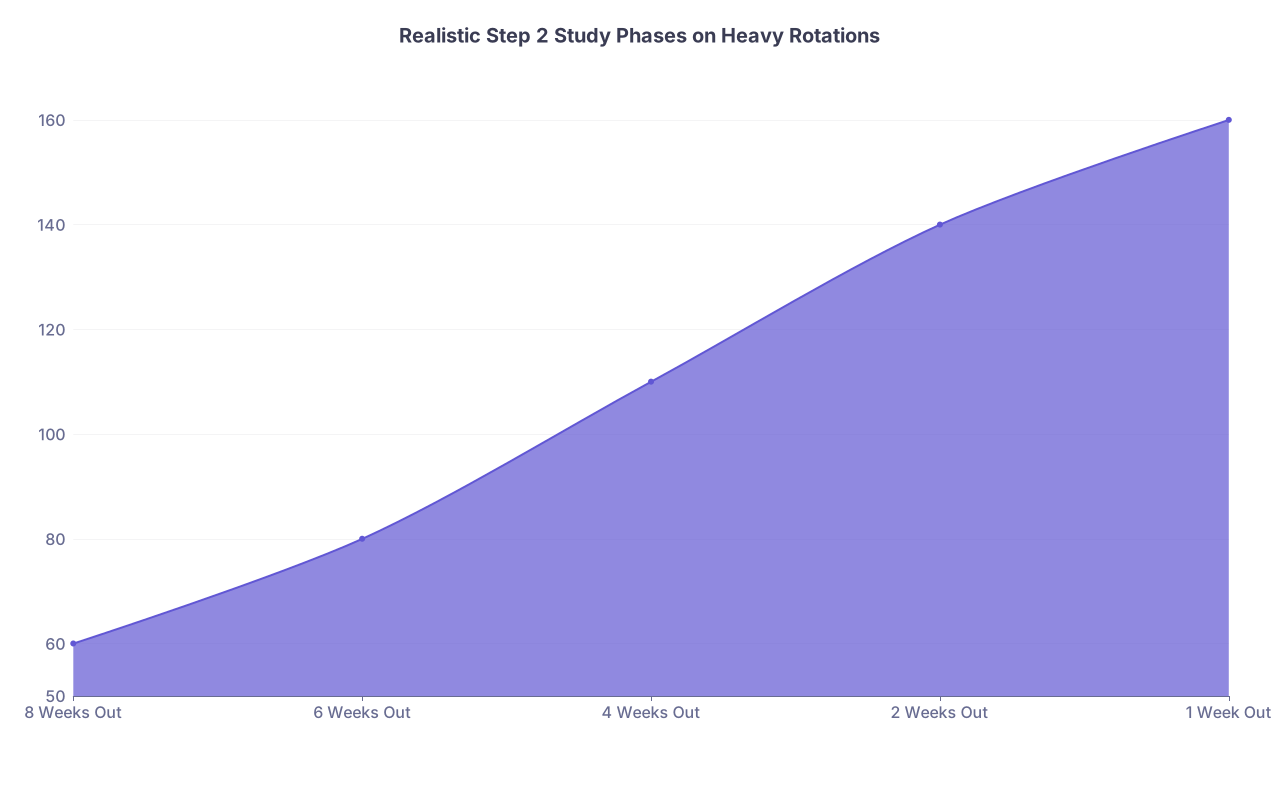
Let’s map study time against workload honestly.
| Category | Value |
|---|---|
| 8 Weeks Out | 60 |
| 6 Weeks Out | 80 |
| 4 Weeks Out | 110 |
| 2 Weeks Out | 140 |
| 1 Week Out | 160 |
(Values approximate weekly study minutes per day equivalent, not sacred numbers. Point is: slight ramp up as you approach test day.)
If you’re ≥ 8 weeks out
- Goal: build habits, not heroics
- 20–30 questions/day on inpatient, 60–80/day on off or lighter days
- One practice test by week 7 or 6
If you’re 4–6 weeks out
- Slight ramp: aim for 200–300 questions/week reliably
- One practice test every 1–2 weeks
- Tighten weak systems aggressively (use your rotation patients as triggers)
If you’re ≤ 3 weeks out
This is where people panic and try to completely re-engineer their plan. Don’t.
- Keep daily question volume up
- Aggressively prioritize practice exams + reviewing mistakes
- Carve 1–2 partial “heavy” study days on weekends if you can barter for lighter call
7. Handling Call, Nights, and Post-Call Brain Death
Inpatient-heavy almost always means some combo of:
- 24-hour call
- Night float
- Random late admits that blow up your evening plans
You need rules for those days.
Call days
Before call:
- Do 10–20 questions in the morning
- That’s it. You might do more overnight if it’s quiet, but you don’t plan on it
During quiet call periods (and there are some):
- Flashcards > new UWorld blocks
- Simple, low-cognitive-load review: quickly scanning high-yield lists (like OB emergencies, EKG patterns, ACLS algorithms)
Call is too unpredictable to anchor your core studying. Treat anything you do as bonus.
Post-call
If you’re truly post-call and going home:
- Sleep first. Seriously. Don’t play hero.
- Later in the day: 10–20 questions max + very light review
- Or just 30–40 minutes of flashcards
You’ll gain more from sleeping and returning to real studying the next day than from half-conscious question attempts that you don’t even remember.
8. Test Day Scheduling: When Inpatient Is Killing You
Sometimes the rotation is so murderous that your Step 2 date is basically wrong for your life.
Here’s when I support moving your test:
- You’re scoring clearly below passing on recent practice tests
- You’ve had consecutive 70–80 hr weeks with zero chance of ramping up
- Your test is within 1–2 weeks and you haven’t done any full-length practice yet
Here’s when people want to move their test but usually shouldn’t:
- “I don’t feel ready and want just a bit more time”
- “I’d like to finish UWorld completely first”
- “Everyone says to take it after a lighter rotation but my schedule is flipped”
You make the decision using data, not vibes.

| Step | Description |
|---|---|
| Step 1 | Recent NBME/UWSA Score |
| Step 2 | Keep Date |
| Step 3 | Keep Date, Intensify Plan |
| Step 4 | Strongly Consider Postponing |
| Step 5 | Above pass by 15+ points? |
| Step 6 | Can you increase study time next 2-3 weeks? |
If you’re sitting at 240+ on practice and want to push your date for an imaginary 250+ that might never appear, I’d call that a bad trade. Residency selection is brutal, but it’s not that precise.
9. Protecting Your Brain So You Don’t Flame Out
You’re not a machine. You’re a tired human being being paged for Tylenol orders and “patient wants extra blanket” consults.
You will not retain anything if your brain is roasted 24/7.
3 small, non-negotiable habits
Sleep:
- Aim for something resembling 6–7 hours on most non-call nights
- Protect the first 3–4 hours after you get home: no doom-scrolling, just food, shower, questions, bed
Movement:
- Even 10 minutes of walking outside after sign-out
- Or a few stretches before bed
Your back and your attention span will thank you.
One small daily decompression ritual
- 10 minutes of music, podcast, mindless TV, journaling—whatever resets your brain
- You cannot go “hospital → UWorld → collapse” with no off-switch indefinitely
You’re trying to survive a season, not a week.
10. Putting It All Together: A Realistic 2-Week Micro-Plan
Let’s say:
- You’re on inpatient medicine, 6 days/week
- Step 2 is 5–7 weeks out
- You’ve done maybe 30% of UWorld already
Here’s a functional plan for the next 2 weeks.
Weekdays (Mon–Sat):
- Morning: 10–15 UWorld questions
- During day: flashcards/screenshot review on downtime (10–15 min total)
- Evening: finish 20–30 question block + review (total ~60–75 min/day of real studying)
Sunday (post-call or off):
- Aim for 2–3 blocks (40–60 questions)
- 1–1.5 hrs total review
- 20–30 min video/rapid review on weakest system
One of those Sundays (or a lighter weekday) → full NBME or UWSA.
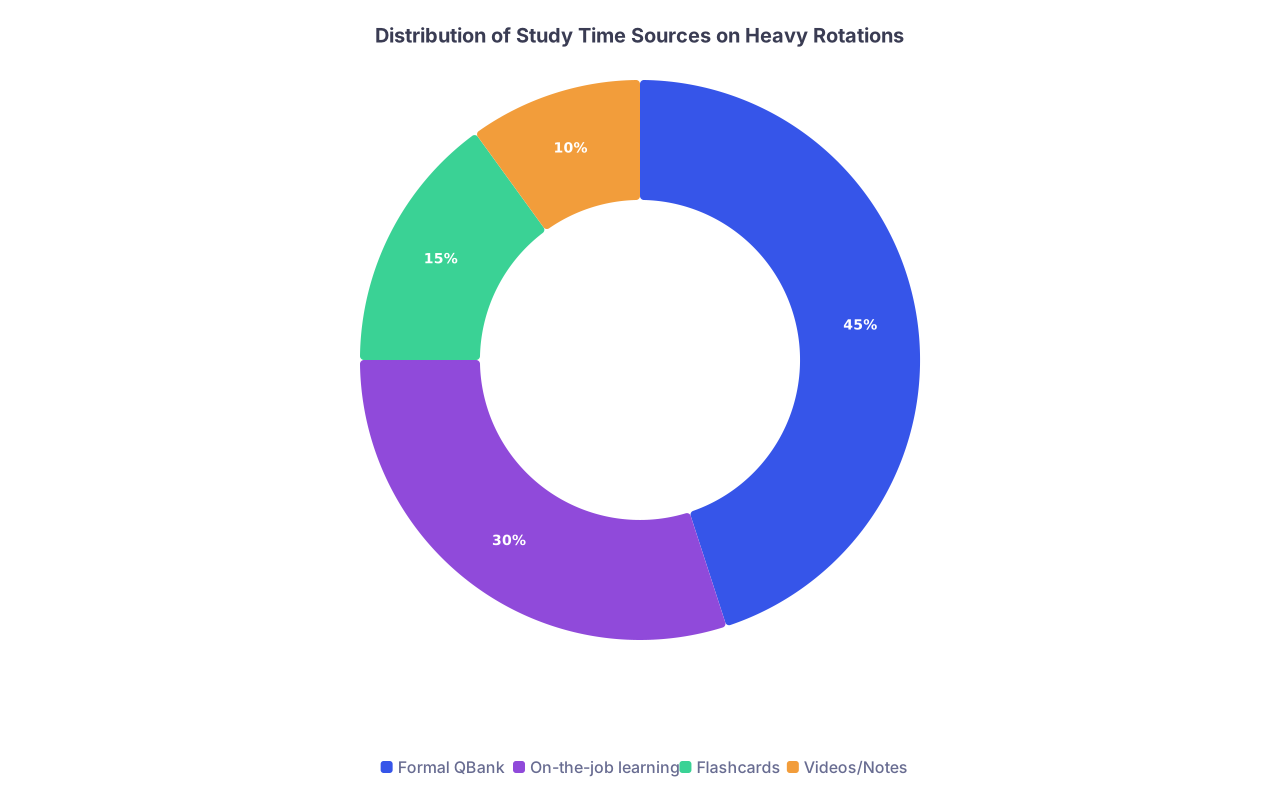
Next step: adjust based on that score.


| Category | Value |
|---|---|
| Formal QBank | 45 |
| On-the-job learning | 30 |
| Flashcards | 15 |
| Videos/Notes | 10 |

| Step | Description |
|---|---|
| Step 1 | Wake up |
| Step 2 | 10-15 UWorld Qs |
| Step 3 | Pre-round & Rounds |
| Step 4 | Micro-review on downtime |
| Step 5 | Sign-out |
| Step 6 | 20-30 Qs + Review |
| Step 7 | Short decompression |
| Step 8 | Sleep |
FAQ (Exactly 5 Questions)
1. I’m failing my UWorld blocks on this rotation—should I postpone my Step 2 date?
Not automatically. UWorld percentages during a heavy inpatient month are notoriously ugly. What matters more is your NBME/UWSA performance. If your practice exams are consistently below passing or just barely above with no real chance to ramp up study time, then yes, consider moving the date. But if your NBMEs are within 10–15 points of your target and trending up, keep the date and tighten your system instead of punting.
2. Is it better to do questions untimed so I can fully think them through after a long day?
For Step 2, no. You need timed blocks. The exam is long and fast; you cannot train only in “slow mode.” If you’re absolutely fried some nights, you can do a single untimed block as an exception. But your default should be timed, random blocks. Do fewer questions if you have to, but keep the test conditions real.
3. I barely used Anki in clerkship—should I start now on an inpatient month?
Only if you keep it tiny and focused. Starting a massive pre-made Step 2 deck mid-rotation is how people burn out fast. Instead, create or use a very small targeted deck or just a “screenshot deck” from UWorld. Commit to 10–15 minutes/day max. If you break that limit, you’ll end up doing cards instead of questions, which is backwards.
4. How many full-length practice tests do I need if I’m this busy?
Ideal: 3–4 total (e.g., 2 NBMEs, Free 120, 1–2 UWSAs). On a brutal inpatient block, 2–3 is still workable. What matters more: you thoroughly review each one—especially patterns of errors (misreading, rushing, weak topics)—instead of racing to collect more scores. Space them out every 1–2 weeks so you can actually improve in between.
5. My residents/attendings expect a lot. How do I study without hurting my evals?
You don’t study during critical team time: rounds, admissions, family meetings. You study on your own time and on genuine downtime. But you can leverage the rotation: ask smart questions, read up on your own patients with a Step 2 mindset, link every case to a concept. If you’re present, helpful, and engaged clinically, most attendings won’t care that you go home and do UWorld instead of “extra reading” from their favorite textbook.
Keep this simple:
- Do a small, consistent amount of questions and review almost every day.
- Use your inpatient patients as live Step 2 cases, not separate worlds.
- Protect your brain enough to show up—on the wards and on test day—with something left in the tank.


