
The right number of practice virtual interviews is not “as many as possible.” That’s how people burn out, over-rehearse, and start sounding fake.
Here’s the real answer: most applicants do best with 5–8 serious practice virtual interviews before the season, done deliberately and spaced out. Not 2 thrown-together mock calls. Not 20 painful repetitions.
Let me break down what that actually looks like and how to do it without wasting time or torturing yourself.
The Short Answer: How Many Practice Virtual Interviews?
For most residency applicants, this range works:
| Applicant Type | Recommended Range | Upper Limit |
|---|---|---|
| Average applicant | 5–8 mocks | 10 |
| Very anxious / poor interviewer | 7–10 mocks | 12 |
| Very strong natural interviewer | 3–5 mocks | 6 |
| IMG / non-traditional with complex story | 6–9 mocks | 10 |
If you want a single number:
Aim for 6 solid practice virtual interviews before your real ones start.
Not all of those need to be full-hour, high-stakes sessions, but they all need to be real: on video, with feedback, and treated like the actual thing.
What does “solid” mean?
- Real-time, on Zoom/Teams/Webex (not in your head or in the shower)
- Professional dress, full setup, camera on
- Someone else on the other end, not you talking to your reflection
- Focus on common residency questions and at least one behavioral question set (“Tell me about a time when…”)
- Immediate targeted feedback and adjustment
If your “practice” is just answering questions into your phone on TikTok style, that doesn’t count.
Why You Should Not Wing It (But Also Not Overdo It)
People get this wrong in both directions.
One group says: “I’m fine on my feet, I’ll just be myself.”
These are the people who ramble, forget key points, and realize at 11:30 pm after the interview that they never actually articulated why they want that specialty.
Another group treats interview prep like Step studying: 20+ sessions, scripted answers, everything memorized. Those people sound robotic, stiff, and oddly unlikeable despite saying all the “right” things.
You need the middle path:
- Enough repetition to smooth out rough edges
- Not so much that you lose spontaneity and authenticity
Most applicants hit that balance somewhere between 5–8 real practice runs.
A Practical Breakdown: What Each Practice Interview Should Do
Do not just schedule “some mocks” and hope for the best. Each one should have a job.
Here’s a simple progression that works well.
Practice Interview 1: Baseline Reality Check
Goal: Figure out where you actually are.
- Full virtual setup: same device, camera, mic, and background you’ll use later
- Ask a friend/peer/resident to run:
- “Tell me about yourself”
- “Why this specialty?”
- “Why our program?” (or a generic version)
- 2–3 behavioral questions
- Record it. Watch it once. It’ll be uncomfortable. Do it anyway.
- Identify 3 issues only (example: too much filler, weak eye contact, story goes on forever, no structure).
After this one, you should know:
“I’m fine with content, but my delivery is messy,” or “My stories are vague and generic.”
Practice Interview 2–3: Core Story and Structure
Goal: Nail your anchor answers and basic structure.
You need tight, clear, repeatable answers to:
- Tell me about yourself
- Why this specialty?
- Tell me about a challenging patient / conflict / failure
- Strengths and weaknesses
- Why this program? (template you can customize)
You are not memorizing scripts. You are locking in:
- The 3–4 key points you want to hit for each common question
- A simple structure like STAR (Situation, Task, Action, Result) for behavioral answers
- A few key phrases that reflect who you are (not generic fluff like “I’m passionate about teamwork”)
By the end of mock #3, your responses should:
- Consistently land in 1–2 minutes for basic questions
- Feel natural but not disorganized
- Actually sound like you, not a Reddit template from /r/medicalschool
Practice Interview 4–5: Simulation of a Real Interview Day
Goal: Test endurance and consistency.
These should be full-length sessions:
- 30–60 minutes, mix of:
- Common questions
- Behavioral questions
- Curveballs: “What would you change about healthcare?” “Teach me something non-medical.”
- Run with someone who will not sugar-coat feedback.
A resident you know, a faculty mentor, or a career advisor who’s seen hundreds of applicants.
You’re checking:
- Does your energy completely tank at minute 40?
- Do you repeat the same story 4 times?
- Do you sound totally different when you’re tired or slightly stressed?
If you realize you crash after 30 minutes, better to learn that in October than on the day you’re interviewing at your dream program.
Practice Interview 6+: Targeted Fixes, Not Endless Repeats
Goal: Sharpen specific weaknesses and then stop.
Once your core is solid, extra mocks should have a narrow focus:
- One session just on behavioral questions
- One session just on hard/awkward questions:
- Low Step scores
- Leave of absence
- Specialty change
- Failed a course or exam
- One session with a completely new person who doesn’t know you at all
You don’t keep adding mocks “just because.” You add them to fix something specific.
If your last 2 practice interviews feel good, feedback is minor, and you’re not discovering new problems—stop. You’re ready.
How Far Apart Should Practice Interviews Be?
Spacing matters more than you think. Back-to-back mocks in one weekend are almost useless after a point.
Use this rough spacing:
- Early prep (2–3 months before interviews):
1 mock every 1–2 weeks - Closer to interview season (4–6 weeks out):
1 mock every 5–7 days - Week before first interview:
1 short (~30 minute) tune-up, not a full gauntlet
You want time between mocks to:
- Rewrite/refine your stories
- Practice on your own briefly
- Implement feedback instead of just hearing it
How Long Should Each Practice Interview Be?
Not every session needs to be 60 minutes.
Use this structure:
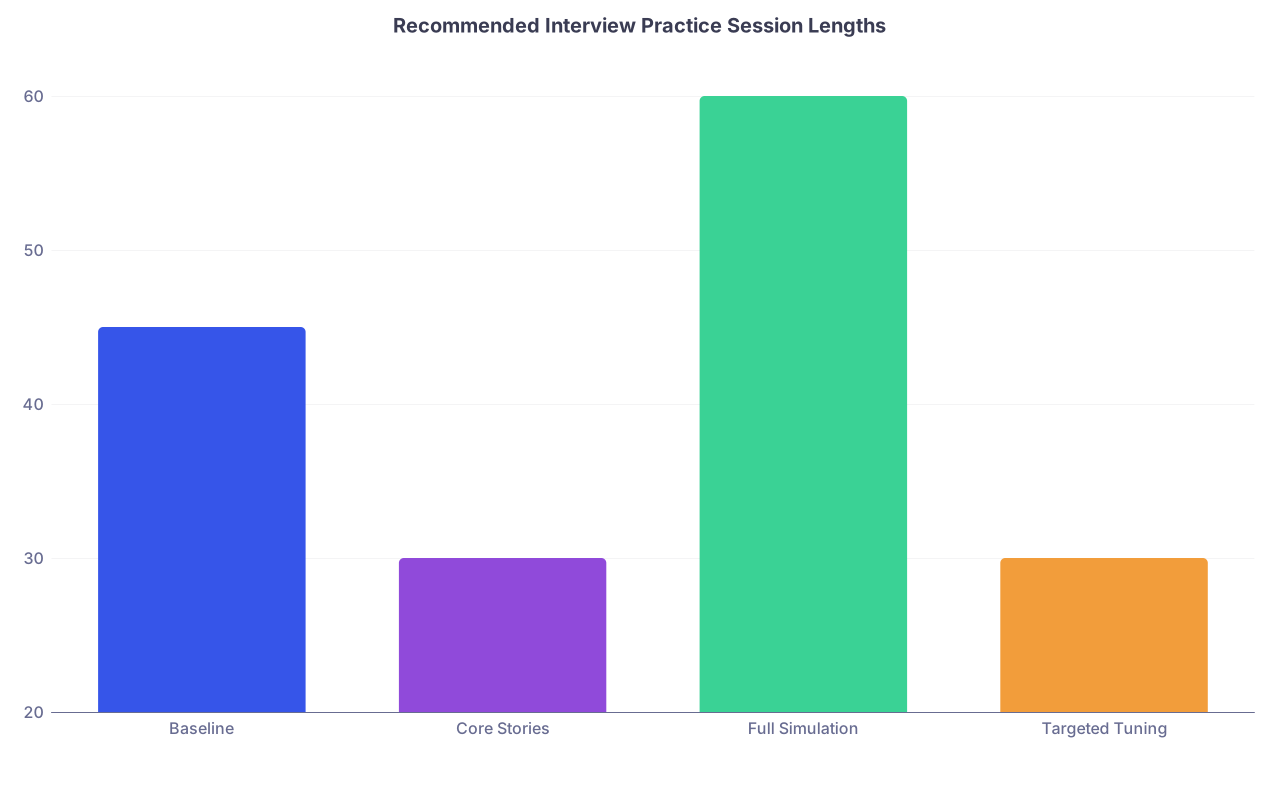
| Category | Value |
|---|---|
| Baseline | 45 |
| Core Stories | 30 |
| Full Simulation | 60 |
| Targeted Tuning | 30 |
- Baseline (Mock 1): 45 minutes including feedback
- Core story sessions (Mocks 2–3): 25–35 minutes focused on high-yield questions
- Full simulations (Mocks 4–5): 45–60 minutes, like a real interview
- Targeted tune-ups (Later mocks): 20–30 minutes
If someone offers you a 90-minute mock, that’s overkill unless you’re truly starting from zero or have serious communication issues.
Who Should You Practice With?
This is where people quietly sabotage themselves. Practicing only with your best friend who thinks everything you say is “great” does nothing for you.
You want a mix:
| Person Type | Value | When to Use |
|---|---|---|
| Peer / classmate | Comfort, realistic questions | Early baseline |
| Resident (your specialty) | Real-world insight | Mid to late mocks |
| Faculty / PD-adjacent | Higher-level feedback | 1–2 key sessions |
| Career advisor | Structure, general polish | Early to mid |
Aim for at least:
- 1–2 mocks with residents in your target specialty
- 1 mock with someone who interviews applicants regularly (faculty, PD, APD, or advisor)
- 1 mock with a peer who will be brutally honest, not just supportive
Rotate. You want different perspectives, because interviewers themselves are wildly different.
What About Practicing With AI / Recording Yourself?
Use them, but understand their role.
Good uses of solo/tech practice:
- Recording yourself answering “Tell me about yourself” and “Why this specialty?” 3–4 times
- Practicing stories until you can tell them clearly in under 2 minutes
- Checking pacing and filler words
Bad idea: counting this as your only prep.
You still need live, human, two-way practice because real interviewers:
- Interrupt
- Ask follow-ups you weren’t expecting
- Change tone mid-interview
- React nonverbally, which affects you
Use self-recording and AI tools between real mocks, not instead of them.
Timing: When Should You Start Practice Interviews?
You don’t need to be doing mock interviews in June for interviews in November. That just drains your energy and makes your answers feel stale.
Better timeline:
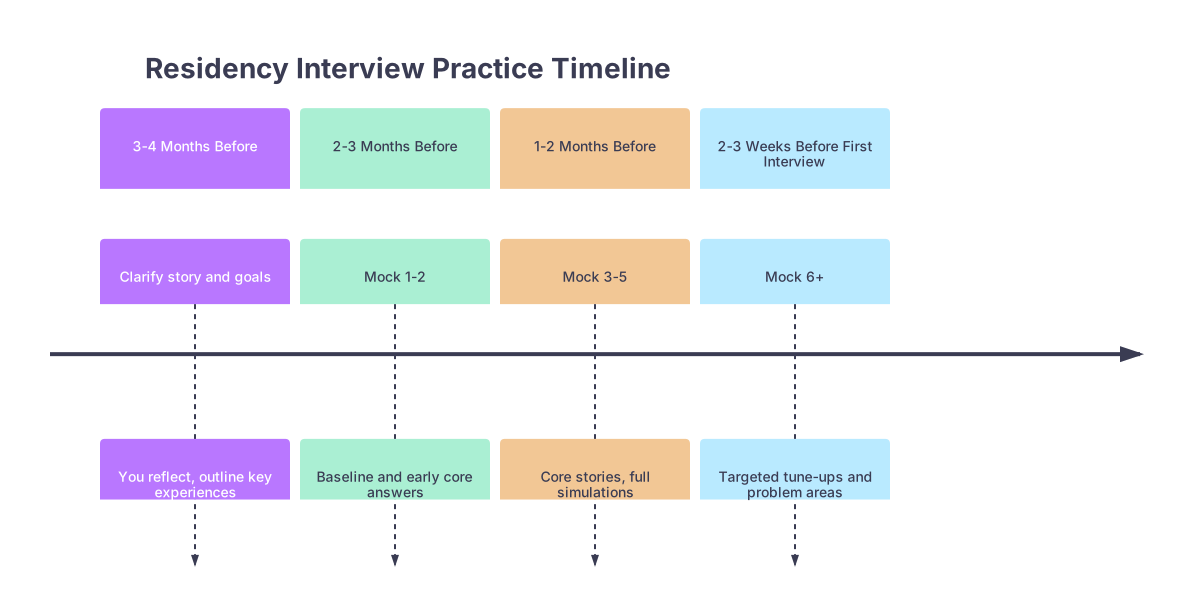
| Period | Event |
|---|---|
| 3-4 Months Before - Clarify story and goals | You reflect, outline key experiences |
| 2-3 Months Before - Mock 1-2 | Baseline and early core answers |
| 1-2 Months Before - Mock 3-5 | Core stories, full simulations |
| 2-3 Weeks Before First Interview - Mock 6+ | Targeted tune-ups and problem areas |
Key point:
You want your “peak performance” to hit during interview season, not four months before.
How to Know You’ve Done Enough
Stop chasing the feeling of “perfect.” It never arrives. Look for this instead:
By your last 1–2 practice interviews:
- You can answer the big questions without panic or long pauses
- Your stories are consistent but not word-for-word memorized
- You’re under 2 minutes for most responses, unless it’s a complex case
- Feedback is mostly fine-tuning (“trim this part,” “smile a bit more”)
- You don’t feel exhausted or dread when someone says “mock interview”
If all that’s true, you’re done. Even if you only did 5 mocks.
If none of that is true, you probably need 1–3 more targeted, not random, sessions.
Don’t Ignore the Technical Rehearsal
One of those 5–8 practice interviews should be 90% tech and environment check:
- Internet stability (on the actual network you’ll use)
- Camera angle (eye level, not nostril cam)
- Lighting (face lit from front, not backlit window)
- Background (neutral, not your laundry pile)
- Audio (no echo, no crazy keyboard noise)
You should walk into interview week having already caught:
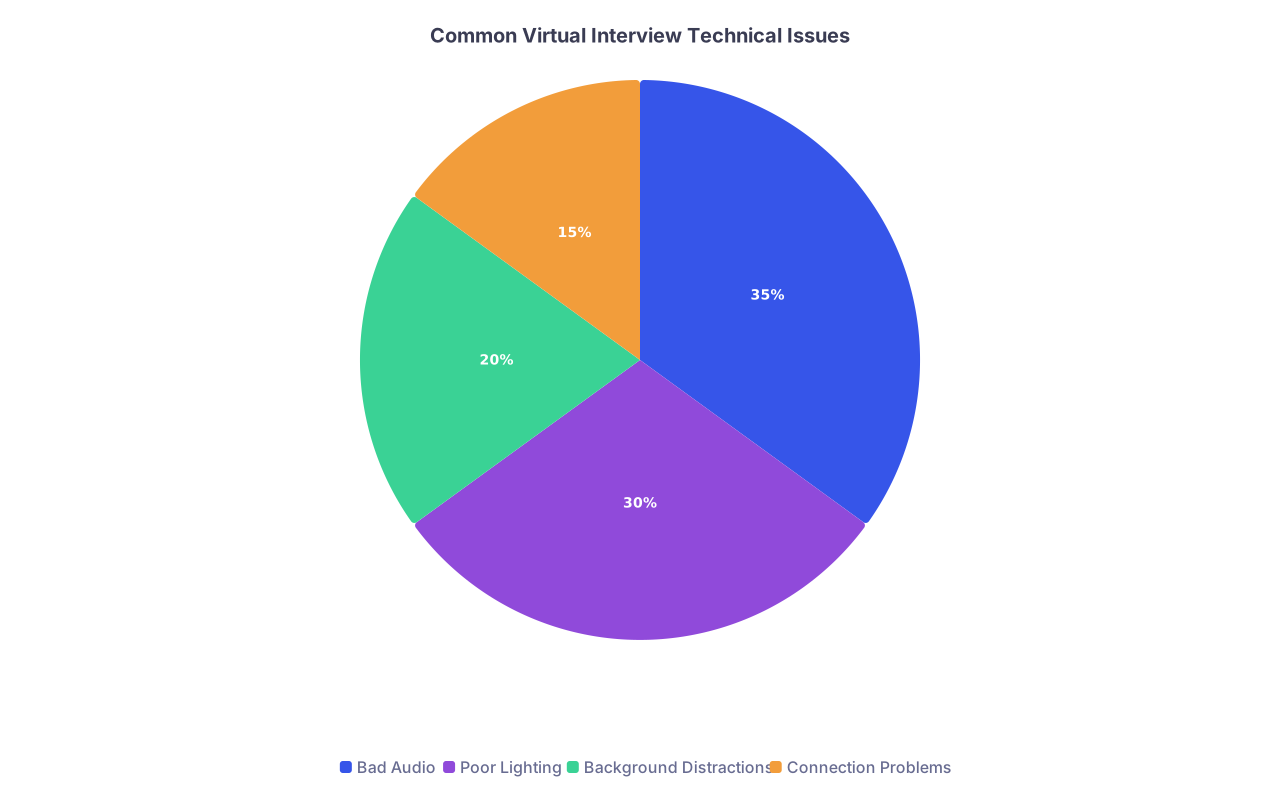
| Category | Value |
|---|---|
| Bad Audio | 35 |
| Poor Lighting | 30 |
| Background Distractions | 20 |
| Connection Problems | 15 |
Those are real numbers from what I’ve seen on actual interview days. Don’t be that person.
When Doing More Practice Hurts You
This is the part people ignore.
You’ve crossed the line into “too many practice interviews” when:
- You feel like you’re acting, not talking
- You can’t remember what you’ve actually said vs. what you rehearsed
- You’re more focused on “hitting your lines” than actually listening
- Feedback is repetitive and tiny, but you keep seeking more reassurance
If that’s you, your problem is not lack of practice. It’s anxiety and perfectionism. The fix is:
- A solid, simple framework for your answers
- 1–2 short, confidence-boosting sessions
- Then forcing yourself to stop and trust the work you’ve already done
A Simple Decision Rule You Can Use
If you want a hard rule, use this:
- Minimum: 3 real mocks (if you’re unusually strong and comfortable on camera)
- Target: 5–8 mocks, spaced out and purposeful
- Maximum: 10–12 mocks, only if:
- You have major communication issues, or
- You’re an IMG/non-traditional with complicated explanations to walk through
If you’re tempted to schedule #13 but you’ve already got solid feedback from multiple people and your last 2 sessions felt smooth?
Shut the laptop. You’re done.
Final Takeaways
- Most residency applicants should aim for 5–8 focused practice virtual interviews, not endless reps and not just one or two.
- Make each practice session have a clear purpose: baseline, core stories, full simulation, or targeted fixes.
- Stop once your answers are clear, consistent, and natural, and feedback is minor. At that point, more practice doesn’t help—you just need to show up and perform.