
Managing Virtual Interview Fatigue Across Multiple Interview Days
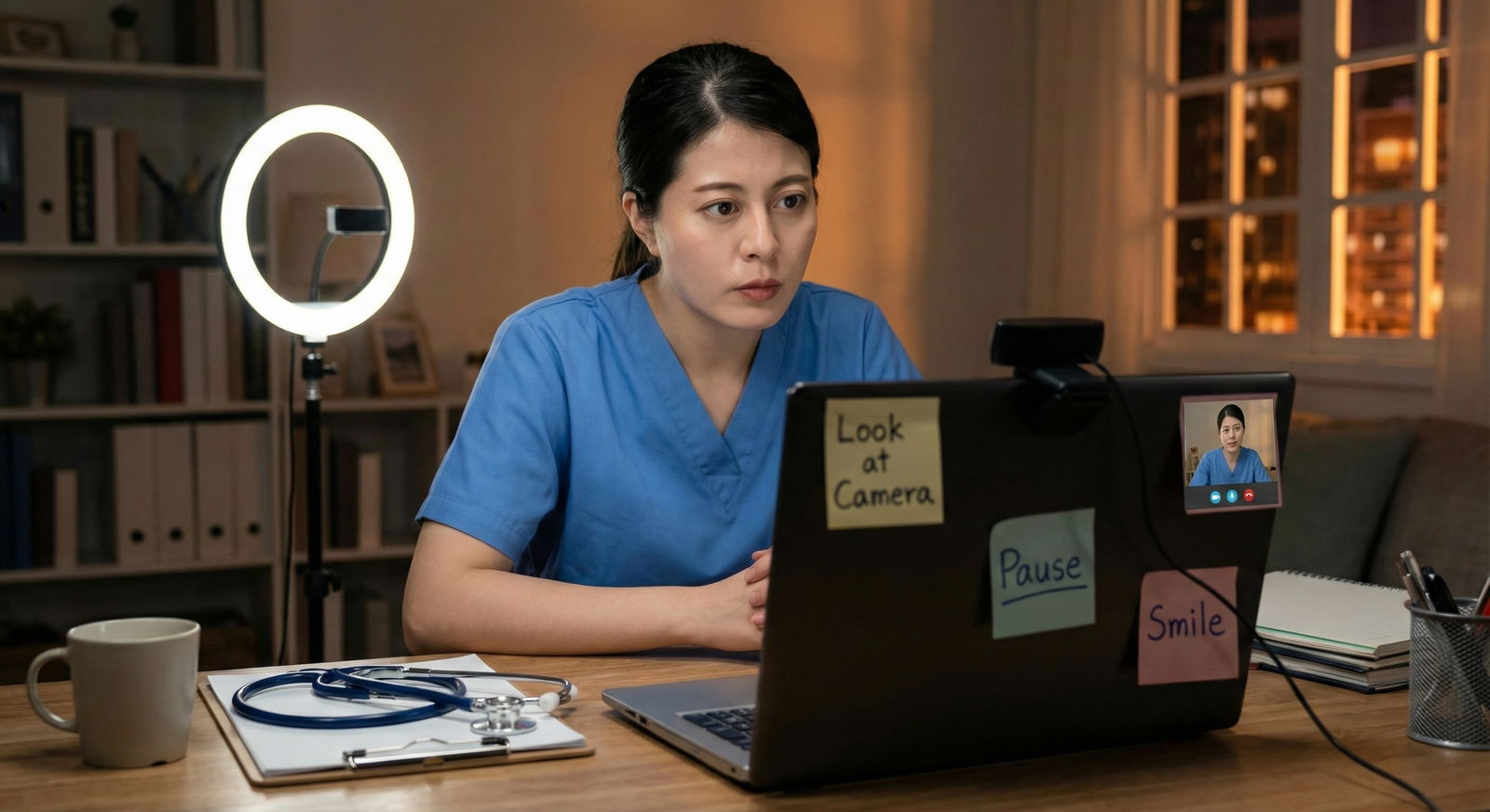
It is mid-January. You have four residency interviews this week. All virtual. Two are half-day MMI-style, one is a full 8-hour academic medicine marathon, and one is a community program with eight back-to-back 20-minute rooms. You wake up, put on the same blazer, open Zoom, and by the third “So tell me about yourself” your face muscles hurt from smiling.
You are not burned out on residency. You are burned out on staring into a webcam.
Let me break down how to manage that very specific kind of fatigue: virtual interview fatigue spread across multiple interview days, sometimes multiple weeks in a row.
This is not about generic “self-care.” This is about tactical, concrete, hour-by-hour management so you look like your best self on screen interview after interview, instead of the flat, drained version that shows up once your cognitive battery hits 10%.
Why Virtual Interview Fatigue Is Different (And Sneakier)
Virtual interview fatigue is not the same as being tired after a long call shift. It is a mix of:
- Cognitive overload from continuous screen-based interaction
- Emotional performance (you are “on” constantly)
- Physical strain from fixed postures, eye strain, and poor micro-breaks
- Decision fatigue (same questions, same judgment, different faces)
What makes it dangerous is that your subjective feeling of “I’m fine” often lags behind the objective drop in your nonverbal energy, microexpressions, and verbal sharpness. Faculty can see it before you feel it.
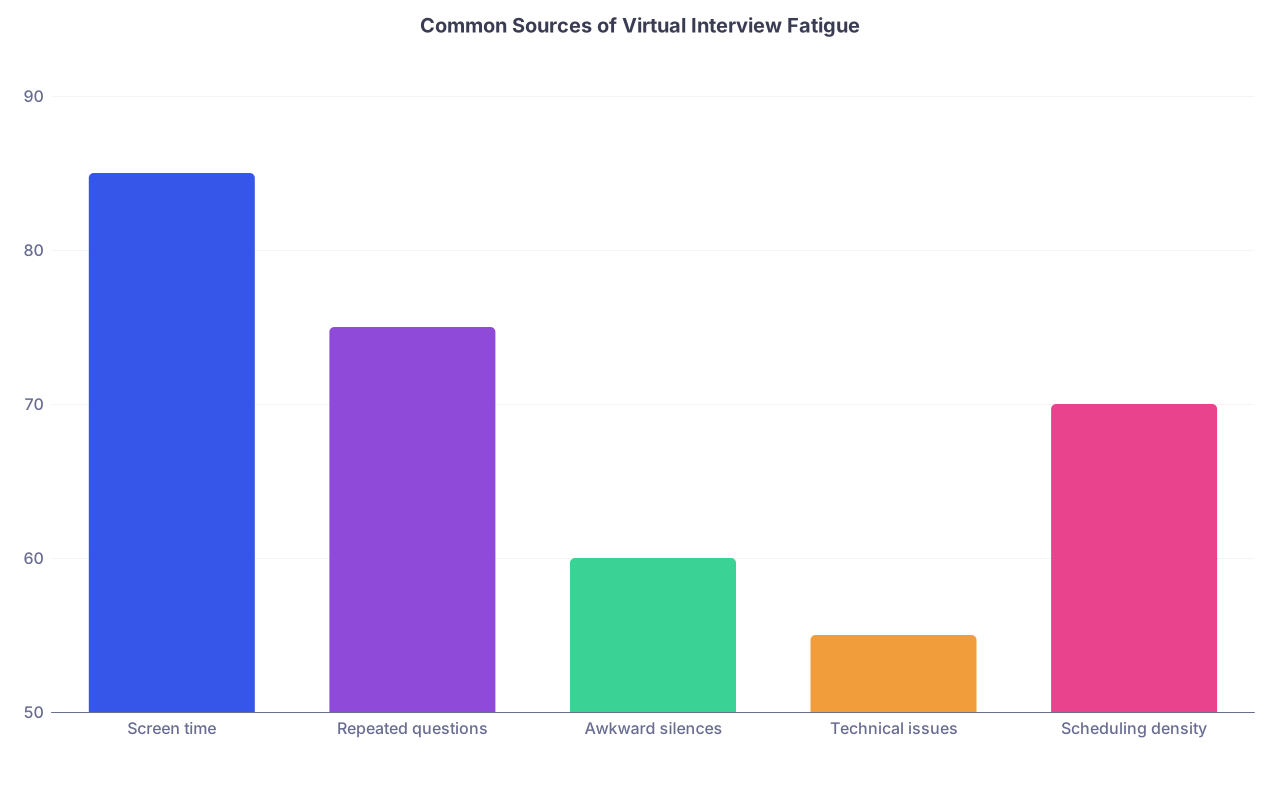
| Category | Value |
|---|---|
| Screen time | 85 |
| Repeated questions | 75 |
| Awkward silences | 60 |
| Technical issues | 55 |
| Scheduling density | 70 |
The main traps I see applicants fall into:
- Stacking multiple long interview days in a single week with no real recovery strategy.
- Treating virtual days like “easier” days and therefore studying or working clinically around them.
- Underestimating how much micro fatigue accumulates across each 20-minute room.
You have two separate problems to solve:
- How to survive one virtual interview day without fading.
- How to repeat that across 5–15 interview days without a slow decline.
We will tackle both.
Pre-Season Setup: How You Structure Your Interview Month Matters
If you are already mid-season, skip to the day-of strategies. If you still have control over scheduling, this part matters more than you think.
1. Do Not Accept Every Slot Blindly
Residency coordinators will offer multiple slots. You feel pressure to say yes to whatever is first available.
If you can, step back and look at your calendar as a whole:
- Avoid three full-day virtual interviews in one week, especially back-to-back.
- If you must cluster them, alternate “heavy” and “light” days (for example, 8-hour academic program one day, 3–4 hour interview the next).
- Keep one absolutely protected no-interview day every 7 days, ideally mid-week, not just a weekend.
You are not just managing time. You are managing performance stamina.
2. Protect Pre-Interview Sleep Windows
Your cognitive reserve across multiple interview days is heavily dependent on sleep consistency, not just the night before.
Aim for:
- A fixed sleep window for the entire interview block (for example, 11 pm–7 am).
- No late-night deep studying or Step 3 question blocks the night before; they will not help you interview better.
I have seen too many applicants cram program research at midnight and then show up sounding flat at 9 am. Research the program earlier in the week. Your brain is not absorbing fine-grained details at midnight anyway.
3. Build a Dedicated “Interview Space” and Lock It In
Decision fatigue starts before you log on if you are scrambling to set up your environment each time. Set up once. Maintain.
Non-negotiables:
- Stable internet (wired if you can).
- Neutral, uncluttered background. No bed in the frame if there is any way to avoid it.
- Controlled lighting: ring light or at least a front-facing lamp.
- A real chair with back support. Not your couch.
Once you have a good setup, take photos of:
- Camera angle
- Distance from face to camera
- Lighting positions
Then you can reconstruct it rapidly on subsequent days, even if you are traveling or using a different room.
The 24 Hours Before: Priming Your Brain and Body
Most people think, “I’ll just rest and review my notes.” That is not enough when you have multiple days to get through.
1. Taper, Do Not Cram
The day before, reduce high-cognitive-load activities. You want to arrive mentally sharp, not already drained.
Reasonable the day before:
- Light program review (overview of curriculum, key faculty, unique features).
- Reviewing your own application, personal statement, and top 5 stories.
- One short mock session (30–45 minutes), then stop.
Unreasonable the day before:
- Multiple full mock interviews with different people.
- Heavy flashcard or QBank sessions.
- Back-to-back clinical or call shifts if you can avoid them.
Think of it as tapering before a race, not training.
2. Decide Your “Default Answers” in Advance
One source of fatigue is reinventing answers to the same questions over and over:
- “Tell me about yourself.”
- “Why this specialty?”
- “Why our program?”
- “What are your strengths and weaknesses?”
- “Tell me about a time you had a conflict / failed / made a mistake.”
Do not wing these repeatedly. Script your structures and core talking points. You will still sound natural, but you will not burn glucose re-deriving answers in every room.
For multiple back-to-back interview days, this is critical. By the fifth program, you should not be burning any extra energy on basic question architecture.
3. Plan Your Energy, Not Just Your Outfit
Decide:
- Exact breakfast and timing (nothing experimental, moderate carb + protein, low sugar).
- Caffeine strategy: when, how much, and a hard cutoff (for example, first dose 60–90 minutes before start, one smaller dose at lunch, no more after 2 pm).
- Hydration plan (water bottle out of frame, pre-measured refill plan).
If you scatter this, you either under-fuel or over-caffeinate, and both wreck you by the late afternoon.
Intra-Day Strategy: How To Not Fade During a Long Virtual Interview Day
This is where most applicants lose the plot. The day starts great. By mid-afternoon, attention dips, facial expression flattens, and speed of response slows.

1. Segment The Day Mentally
Do not think of it as “8 hours of interviews.” Break it into units:
- Morning block (2–3 interviews)
- Midday block (1–2 interviews + social hour)
- Afternoon block (2–3 interviews)
Your goal is to arrive fresh to each block, not just to the morning. Between blocks, you run a mini-reset.
2. Use Micro-Resets Aggressively
Every time you leave a room or hit a scheduled break, you do not sit and scroll your phone. That makes fatigue worse. You run a reset.
A reasonable 3–5 minute reset:
- Stand up. Leave the chair.
- Move: shoulder rolls, neck stretches, 10 bodyweight squats, or just pacing.
- Eye reset: look outside or at something >20 feet away for 20–30 seconds to reduce eye strain.
- Sip water. One or two bites of a light snack if it is a longer break (nuts, fruit, small bar).
- One deep breath series (4–6 slow breaths, exhalation longer than inhalation).
Then sit back down, re-center your posture, and reframe:
“This is the first interview of the day for this faculty member. Fresh start.”
You have to treat the end of each room like a mini sign-out, not a collapse.
3. Manage Your Face, Not Just Your Words
Video drains microexpressions faster than in-person days. You are “on camera” even when you are listening. That is where fatigue leaks out.
Key points:
- Keep a light, relaxed baseline expression. Not an intense stare. Not a frozen smile. Think “interested and open.”
- Check your resting face in your camera preview before each block. Adjust consciously.
- If you feel your face getting tight, use your break to relax your jaw, gently massage temples or around the eyes.
Faculty notice when your engagement looks performative or your face reads as tired. They may not label it as “fatigue,” but they experience it as lower enthusiasm or fit.
4. Control Your Visual Environment Aggressively
Two mistakes:
- Multiple monitors with extra windows open (email, social media, Step questions).
- Notifications or pop-ups breaking your focus and subtly fragmenting your attention.
On interview days:
- One primary screen with the interview platform.
- A second screen only if you truly need it for schedule or quick reference, and even then, keep it minimal.
- All notifications off on computer and phone (use “Do Not Disturb” with exceptions only if absolutely necessary).
Your brain treats every pop-up as a micro-task. After 5–6 hours of that, your interview performance drops.
5. Eat Like You Have More Interviews Coming
Many applicants either:
- Skip lunch because “I am not hungry and do not want to be sluggish”
- Or overeat, then feel foggy for the afternoon rooms
Use the same principle as shift work:
- Small portions, simple foods, low grease.
- Avoid heavy, high-fat, or huge carb loads.
- If you are nervous and appetite is low, liquid calories and easy snacks are fine.
Your goal is stable glucose, not satisfaction.
Multi-Day Strategy: Staying Sharp Across Weeks of Virtual Interviews
Now let us zoom out. The biggest challenge is not just one long day, but the second, fifth, and tenth day. That cumulative drain is where people begin to sound repetitive and bored with their own story.
1. Create a Post-Interview “Shutdown Protocol”
After a long day, your impulse is to open spreadsheets, rank programs mentally, and debrief with 4 friends. Then you wonder why you feel cooked before the next interview.
You need a repeatable end-of-day routine:
Immediately after last session:
- Quick notes: 5–10 bullet points on your impression (culture, residents, red flags, specific moments).
- Star or bold anything that will matter later during ranking (geography, training style, fellowship support).
Hard stop: After 30 minutes of note-taking and decompressing, shut down all interview-related work. No more reading Reddit threads about that program. No doom-scrolling SDN.
Transition ritual:
- Change clothes. Get out of your “interview costume.”
- Short walk outside or light exercise (10–20 minutes).
- Non-medical activity for at least 60 minutes: book, show, cooking, etc.
Your brain needs a clear off-ramp, or you carry the cognitive noise into the next sleep cycle. And then into the next interview.
2. Rotate Your Stories To Avoid Emotional Burnout
If you use the exact same high-intensity examples 10 times in one week, they lose their emotional freshness. You sound flatter even if your words are identical.
Create a “story bank” of:
- 3–4 patient care stories (different settings, roles, and challenges).
- 2–3 conflict or difficult team interaction stories.
- 2–3 leadership / initiative stories.
- 1–2 failure / growth stories.
Rotate them across programs and across days. It keeps you engaged with your own narrative and reduces the emotional numbing that comes from rehashing the same emotionally heavy case repeatedly.
| Category | Story Code | Setting |
|---|---|---|
| Patient care | PC1 | ICU, night |
| Patient care | PC2 | Outpatient IM |
| Conflict | CF1 | Team disagreement |
| Leadership | LD1 | QI project |
| Failure/growth | FG1 | Exam or OSCE |
Label them in your notes (like PC1, CF1, etc.). Before each interview day, decide which ones you will lean on. That simple pre-decision cuts down on in-the-moment cognitive load.
3. Script Your “Program-Specific” Answer Template
You cannot keep inventing new “Why our program?” answers dozens of times. You need a template with plug-in segments where you swap in details.
A simple structure:
- Anchor: One genuine, big-picture reason (training style, geography, patient population).
- Specifics: 2–3 program-specific features (track, rotation structure, research, mentorship).
- Fit: One sentence that links your background/goals to those features.
Then, for each program, you just change the specifics. That cuts your prep time dramatically and protects your energy across an entire month.
Social Events and “Second Interviews”: Managing the Extra Load
Virtual interview seasons now often include:
- Pre-interview socials
- Resident-only Q&A sessions
- Optional “coffee chats” or open houses
These are not free. They are additional drains. Some are genuinely useful; others just exhaust you.
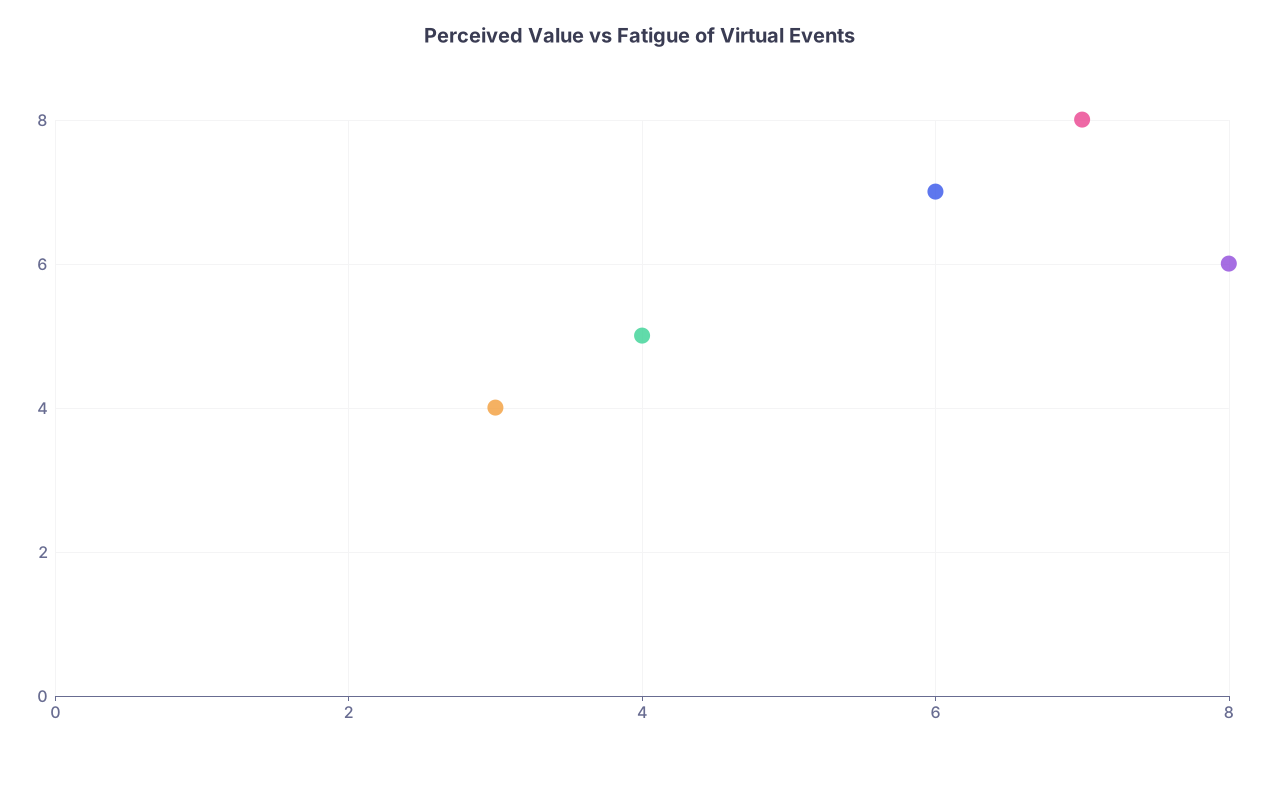
| Category | Value |
|---|---|
| Pre-interview social | 6,7 |
| Resident Q&A | 8,6 |
| Open house | 4,5 |
| Extra info session | 3,4 |
| Post-interview social | 7,8 |
(Each point: [Value to you, Fatigue level], on a 1–10 scale.)
1. Be Selective
You do not need to attend every optional event, especially when clustering interviews.
High-yield to prioritize:
- Resident-only pre-interview socials for programs high on your list.
- Any session focused on curriculum, call structure, or mentorship that you cannot easily get from the website.
Lower-yield (often skippable if you are fatigued):
- Generic “Meet the PD again” sessions after you already interviewed.
- Large, unstructured open houses with 40–60 people on Zoom.
Permission granted: If you are exhausted and have another interview the next day, skipping one low-yield session is smarter than dragging into the actual interview half-drained.
2. Change Your Engagement Mode
Do not treat socials like additional interviews. Turn the intensity down slightly:
- Relax your posture a bit.
- Ask real questions you actually care about; do not perform “good questions” for show.
- Allow yourself to listen more than drive the conversation.
This is not about being lazy. It is about pacing. You have a finite amount of high-octane performance energy per week. Use it where it matters most: in your actual faculty interviews.
Tech, Backup Plans, and Reducing Cognitive Overhead
Technical anxiety is its own fatigue engine. The fear of the platform failing, audio not working, or slides glitching quietly eats your mental bandwidth.
1. Standardize Your Tech Checklist
Before each interview day, run the same short checklist:
- Internet: Quick speed test, restart router the night before if your connection is finicky.
- Audio: Test mic and speakers / headphones in the actual platform (Zoom, Teams, Webex).
- Video: Check framing, exposure, and focus.
- Platform: Make sure you have the latest version installed and have tested the waiting room behavior.
Write this checklist once. Use it every time. Do not rely on memory when your cortisol is spiking.
2. Have a Failure Script Ready
Not a vague “I will figure it out,” but specific lines and steps you will use if tech fails.
Example:
If disconnected in the middle:
- Immediately reconnect.
- If unable after 2–3 minutes, email the coordinator: “Hi [Name], I was in an interview room with Dr. X at [time] and seem to be having technical issues reconnecting. I am working on it now but wanted to let you know immediately. My phone number is [xxx-xxx-xxxx] in case calling in is easier.”
If audio glitches:
- “I am hearing some audio distortion on my end. Would you mind if I turn my video off for 10 seconds to reset and then turn it back on?”
- Or, “If the audio continues to be choppy, I can call in by phone while we keep the video on, if that works for you.”
Having these words pre-written reduces panic, which reduces fatigue.
Cognitive and Emotional Boundaries: Handling Rejection, Ambiguity, and Comparison
The other half of virtual fatigue is not physical. It is emotional:
- The polite-but-cold faculty.
- The resident who seems distracted.
- The ambiguous, “We will be in touch” that may mean nothing.
If you absorb every micro-signal as a referendum on your worth, you will be wrecked by mid-season.
1. Decide Ahead of Time What Feedback You Will Ignore
Harsh truth: You cannot reliably read your own performance in real-time. Faculty are often neutral by habit. Residents may be on autopilot between notes and pages.
So you decide:
- I will not interpret neutral facial expressions as negative.
- I will not catastrophize one awkward answer.
- I will not check Reddit, SDN, or group chats looking for “how that program really felt” immediately afterward.
You can do a brief self-assessment after all your interviews are done, but trying to optimize between days based on your own impressions is like titrating a medication with no lab values.
2. Contain Post-Interview Debriefs
Debriefing with friends can be helpful, but group spiral is real:
- “They loved me.”
- “I think I bombed.”
- “Did they smile when you said X? They did not smile when I said X.”
You do not need that before your next interview.
Reasonable:
- Short, factual sharing: “They asked these types of questions, here is one curveball they liked.”
- One or two trusted peers or mentors, not 15-person group chats.
Not helpful:
- Ranking programs publicly in groups immediately.
- Over-analyzing who talked to whom in a breakout room.
Your emotional bandwidth is finite. Protect it.
Putting It All Together: A Sample Multi-Day Interview Week
To make this concrete, here is a realistic structure.
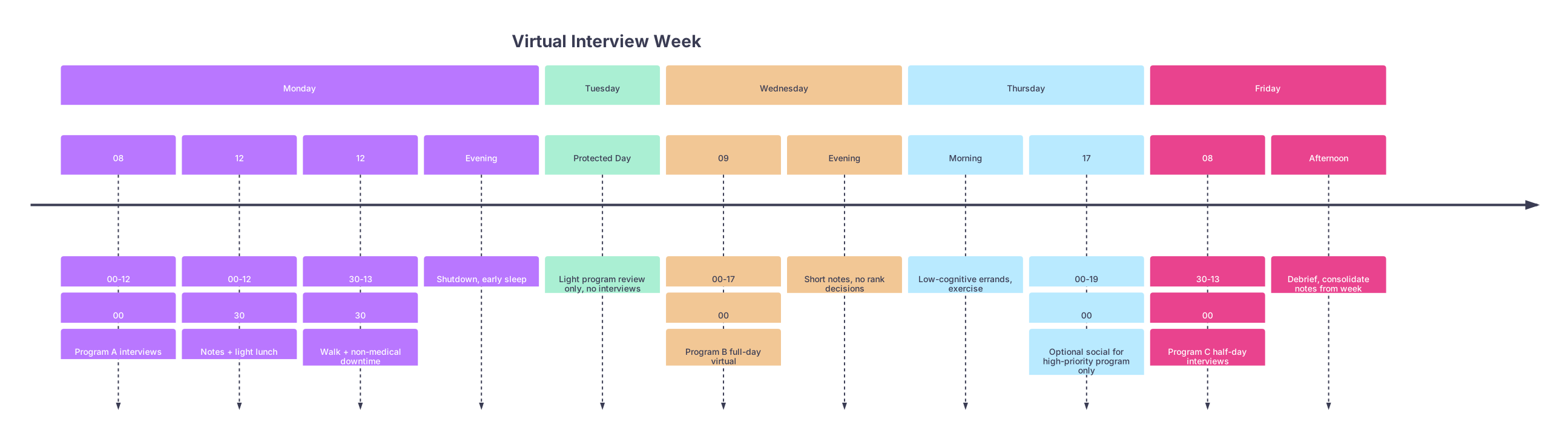
| Period | Event |
|---|---|
| Monday - 08 | 00-12 |
| Monday - 12 | 00-12 |
| Monday - 12 | 30-13 |
| Monday - Evening | Shutdown, early sleep |
| Tuesday - Protected Day | Light program review only, no interviews |
| Wednesday - 09 | 00-17 |
| Wednesday - Evening | Short notes, no rank decisions |
| Thursday - Morning | Low-cognitive errands, exercise |
| Thursday - 17 | 00-19 |
| Friday - 08 | 30-13 |
| Friday - Afternoon | Debrief, consolidate notes from week |
Notice:
- There is a protected non-interview day in the middle.
- Socials are limited and targeted.
- Post-interview windows are structured, but not overloaded.
- No one day is doing heavy clinical work + full interviews.
Is this always possible? No. But moving one or two interviews, skipping one low-value event, or saying no to an extra shift can push your week closer to this pattern.
Key Points To Remember
- Virtual interview fatigue is primarily about cumulative cognitive and emotional load; you manage it by scripting, standardizing, and actively using micro-resets.
- Protect your performance across multiple days by pre-building your story bank, answer templates, and shut-down routines so you are not reinventing anything under pressure.
- Be selective with optional events and debriefs; conserve your highest-energy self for the actual interview rooms where decisions are made.


