
The door closes, someone kicks off their heels under the table, and the tone of the room shifts. The formal smiles from interview day vanish. Laptops open, someone sighs, and a faculty member says the words that decide your fate: “Alright, let’s talk about them.”
You are not there. But your name is. And what gets said in the next 45 minutes can undo every honor, every publication, every glowing letter you collected.
Let me walk you into that room.
Because the stuff that actually sinks applicants? It’s almost never what students obsess over. It’s not the minor stumble on one question. It’s not a single awkward silence. It’s the off‑record comments that pattern together and make the committee think, “This one could be a problem.”
What Really Happens After You Log Off (or Leave the Building)
Residents are back in the workroom, attendings have their coffee, and the coordinator has printed the list. Some places do it the same day, some batch a few interview days, but the flow is recognizable everywhere.
First, they pull up the spreadsheet: scores from interviewers, maybe a composite score, maybe some rubric categories. People pretend that’s the backbone.
It is not.
After about 90 seconds, it devolves into the real currency: short, blunt comments. You live or die in those one‑liners.

| Step | Description |
|---|---|
| Step 1 | Applicant Interview Day |
| Step 2 | Interviewer Notes |
| Step 3 | Group Debrief Meeting |
| Step 4 | Move Up Rank List |
| Step 5 | Middle of the Pack |
| Step 6 | Drop or Do Not Rank |
| Step 7 | Consensus Forming |
Here’s how it actually sounds:
- “Strong clinically, but I had some concerns about…”
- “Super nice, but I couldn’t get a straight answer on why this specialty.”
- “I just got a weird vibe.”
- “Residents loved them.”
- “Several people mentioned red flags.”
Notice: nobody is reading your personal statement out loud. Nobody is analyzing your ERAS activities section. They’re going off memory, gut, and those little phrases you triggered during the day.
Now let’s talk about the comments that sink you fast. Because once they’re said, it’s very hard to recover.
The Silent Killer: “I Just Didn’t Trust Their Answers”
This one is brutal, and it spreads through the room like mold.
A faculty interviewer says, “I asked about their Step 1 failure, and I got a very polished, almost rehearsed answer. It did not feel authentic.”
Or, “I asked about that leave of absence and never really got a straight answer.”
What that gets translated to in the room is: risk.
Different flavors of this:
- “They were evasive about their failure.”
- “That explanation felt like spin.”
- “I left not knowing what actually happened.”
Programs treat lack of transparency as a bigger red flag than the underlying issue. A failed exam, a bad eval, a leave for mental health—those can be survivable if handled honestly and maturely. What really tanks you is sounding like a politician.
I’ve watched someone with an otherwise strong application get pushed down 20+ spots because two interviewers said variations of: “I still don’t know what happened with that remediation.”
You want the opposite reaction in the room:
“I asked them about that rough third year, and honestly, they owned it. Wasn’t defensive at all.”
If one person says that, it neutralizes the file note. If two people say the opposite, you’re done.
The Fatal Vibe: “Arrogant” or “Entitled”
This label does not come out of nowhere. It comes from very small details that you probably think no one notices.
I’ve heard:
- “They immediately told me they were also interviewing at [prestigious place] and wanted to compare the research opportunities.”
- “They asked about how quickly they could get into the ICU and whether seniors ever 'blocked' procedures from interns.”
- “They wanted to know how soon they could be chief.”
Here’s the behind‑the‑scenes truth: programs are allergic to anyone who sounds like they think they’re doing the residency a favor by showing up.
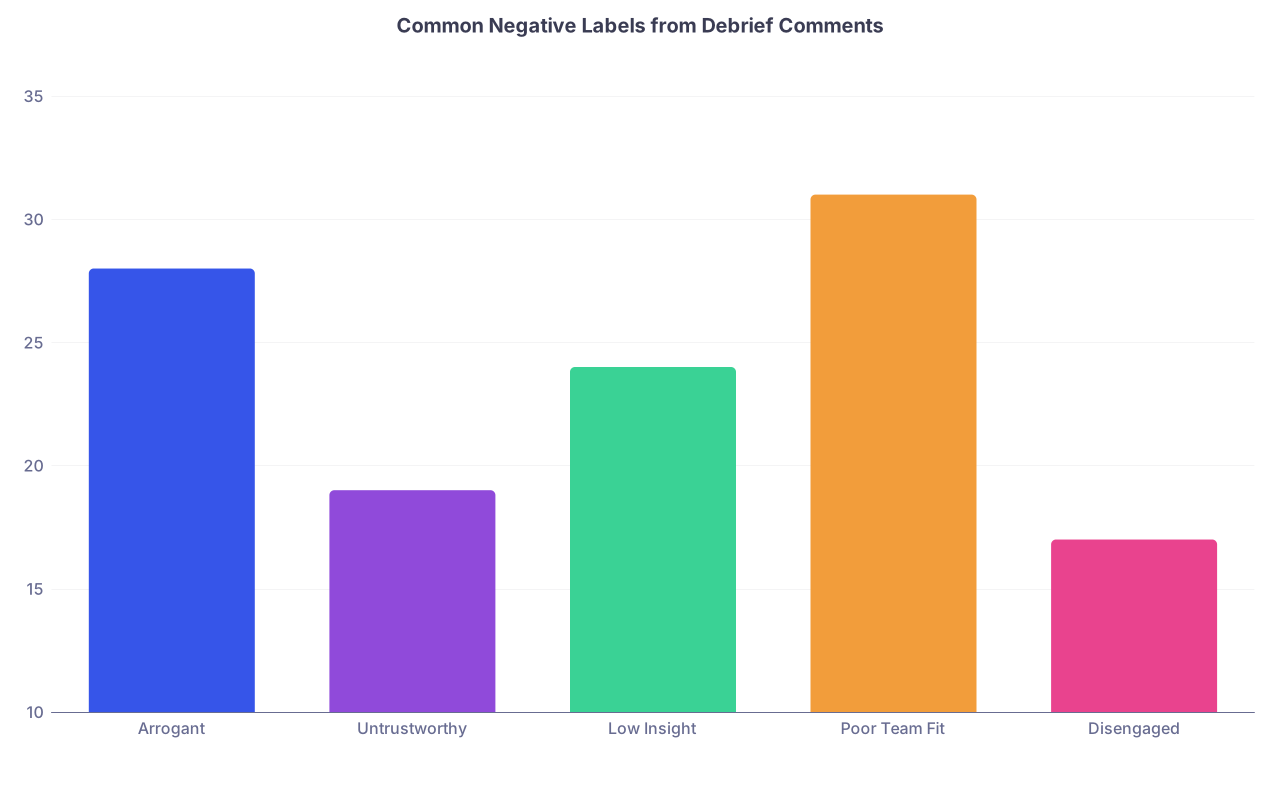
| Category | Value |
|---|---|
| Arrogant | 28 |
| Untrustworthy | 19 |
| Low Insight | 24 |
| Poor Team Fit | 31 |
| Disengaged | 17 |
Where do these “arrogant” impressions actually come from?
- Over‑selling yourself in every answer. Everything is a win, a success, a leadership moment. No humility, no real mistakes.
- Constantly name‑dropping institutions, big‑name attendings, or NIH grants, especially at community or mid‑tier programs.
- Asking early and repeatedly about moonlighting, fellowships, or “accelerated pathways” before you’ve even shown interest in bread‑and‑butter training.
I sat in one debrief where a candidate from a top‑10 school was clearly talented. Strong letters. Great scores. Good research. But three separate people used the word “entitled.”
The PD literally said: “They’re going to be more trouble than they’re worth. I don’t want to spend three years fighting with them over schedules.”
They dropped from likely top‑10 on the list to the “only if we’re desperate” tier.
You never hear about that outcome on Reddit.
The Quiet Red Flag: “Residents Didn’t Like Them”
Students underestimate this one badly.
Most programs now explicitly ask their residents for feedback after interview day. Not a vague sense. Actual structured input.
Sometimes it’s as simple as a group chat screenshot:
“Any no‑go’s?”
“Yes: [Name]. Weird comments about work hours. Kept asking how people get around the ‘scut work.’”
The phrases that kill you:
- “Residents were lukewarm.”
- “Residents actively disliked them.”
- “No one connected with them.”
Programs know who has to work with you at 3 AM. It’s not the PD. It’s the senior on nights.
If residents say, “They seemed dismissive of nursing” or “They talked over another applicant,” you’re cooked. You might not be deleted entirely, but you’re going to fall.
| Source | Typical Weight |
|---|---|
| Program Director | Very High |
| Core Faculty | High |
| Chief Residents | High |
| General Residents | Moderate |
| Coordinator | Subtle but Real |
And yes, coordinators and staff get asked sometimes too. I’ve heard: “Front desk said they were rude on the phone.” That’s a torpedo.
Residents don’t care about your PhD. They care about whether you sound like someone who will help admit 10 patients during a boarding crisis and not complain the whole time.
The “Low Insight” Tag: “They Lack Self‑Awareness”
This is one of the most damning assessments. It sounds mild, but it makes programs nervous.
What triggers it?
- You cannot articulate a real weakness without wrapping it in a strength. “I care too much.” “I work too hard.” It’s transparent, and faculty see that coming from a mile away.
- You blame circumstances or others for every setback. “The attending didn’t like me.” “The exam was unfair.” “The rotation was poorly organized.”
- You cannot name a time you struggled emotionally or professionally and actually learned something real from it.
What gets said in the room:
- “They’re not reflective.”
- “I asked about a tough feedback moment, and they just blamed the attending.”
- “If something goes wrong, this person will point fingers, not improve.”
Programs want people who can be coached. If you look uncoachable—even if unintentional—you slide.
Compare two applicants I watched get discussed back‑to‑back.
Applicant A:
Failed Step 1 on first try. Owned it. Described concrete changes: got tutoring, changed study methods, practiced test‑taking, spoke about shame and recovery, and how they now support struggling classmates.
Debrief comment: “Surprisingly mature. I actually feel better about them than someone who’s never been tested.”
Applicant B:
Strong scores, no visible failures. But every “challenge” they referenced was someone else’s fault or “a learning opportunity” with no real substance.
Debrief comment: “Polished. But I have no idea how they handle adversity. Felt rehearsed.”
Guess which one they trusted more? A lost point on a test is less threatening than a personality that can’t look in the mirror.
The Nuclear Option: “Professionalism Concerns”
This is the one word that quietly turns “rank” into “do not rank.”
“Professionalism.”
You will never hear the full story externally. Ever. Programs clamp down on that. But inside the room, the stories spill.
Sources of these concerns:
- Arriving late to the interview, especially without a good reason or without acknowledging it properly.
- Appearing disinterested on Zoom: camera off, texting visible, obviously browsing, poor setup despite plenty of notice.
- Inappropriate comments to residents or staff—off‑color jokes, complaining about prior programs, or casual trash‑talk about their own med school.
- Ignoring emails, failing to respond to important logistical messages from the coordinator, or being generally hard to reach.
I remember one candidate who was academically flawless. On paper, top‑tier. But the coordinator quietly said, “They were incredibly demanding and rude over email about scheduling and seemed annoyed at every step.”
In the debrief, that turned into: “We will have endless administrative drama with this person.”
The PD: “Not worth it.”
Result: Do Not Rank.
You will never see that story on your side. Just a silent no match from that program.
The Dishonesty Landmine: “Their Story Didn’t Line Up”
This one is simpler than people think. Programs are not running FBI‑level investigations. But they do smell inconsistency.
How it comes up:
- Your personal statement implies deep engagement in something you can barely describe in the interview.
- Your ERAS says “ongoing research,” but your explanation makes it clear you haven’t touched it in months and don’t know the status.
- You list leadership roles that turn out to be “I attended a lot of the meetings and helped once.”
- Different interviewers get noticeably different versions of the same story.
I sat in a meeting where an attending said:
“I asked about their main research project. They couldn’t tell me what question they were asking, just that it was ‘about improving quality of care.’ It felt inflated.”
Another:
“They talked like they were first author on this big paper, but the letter clearly described them as helping with data entry.”
What this turns into:
- “They embellished their application.”
- “I’m not sure I can trust their documentation in the chart if they’re this loose with details.”
That jump—from “embellished ERAS” to “risky in real clinical work”—is exactly what you do not want.
The Indifference Problem: “They Didn’t Seem That Interested In Us”
This knocks you from “top half” to “why bother ranking high” very quickly.
You assume you’re being evaluated for your knowledge and personality. You are. But they are also watching how much you actually seem to care about that specific program.
Triggers:
- You ask no real, program‑specific questions. Everything you ask could be asked anywhere.
- You repeatedly reference other cities, other programs, or “back‑up plans” during your conversations.
- Your “Why this program?” is vague: “Supportive, strong clinical training, good balance between service and education.” You could recite that in your sleep to any program in the country.
Residents in particular are harsh about this. I’ve heard:
- “They were fine, but you could tell we’re just another checkbox.”
- “They clearly want to be in [different city].”
- “When I asked what drew them here, they said the ‘reputation’ but couldn’t name anything specific.”
Programs don’t want to waste high rank positions on people who won’t come. Or worse, who’ll be resentful if they do match there.
Contrast that with the debrief phrases that help you:
- “They knew details about our curriculum.”
- “They mentioned Dr. X’s work without being weird about it.”
- “They clearly want to be in this city for reasons that made sense.”
Same stats, same letters; interest bumps you up rows on that spreadsheet.
The Subtle Social Misses: “Something Was Off”
Students obsess over hard metrics. Committees obsess over how you’re going to function at 2 AM when the ED calls with three admits and a code.
“Something was off” is a catch‑all, but it usually means one of these:
- You answered every question with long, meandering monologues. No sense of when to stop. People got exhausted.
- You were so anxious that you could not connect with anyone—no small talk, no warmth, just robotic answers.
- Your sense of humor did not land. At all. Either too dark, too edgy, or badly timed.
- You didn’t engage with other applicants or staff. One‑on‑one with faculty was acceptable, but you vanished or looked bored in group settings.
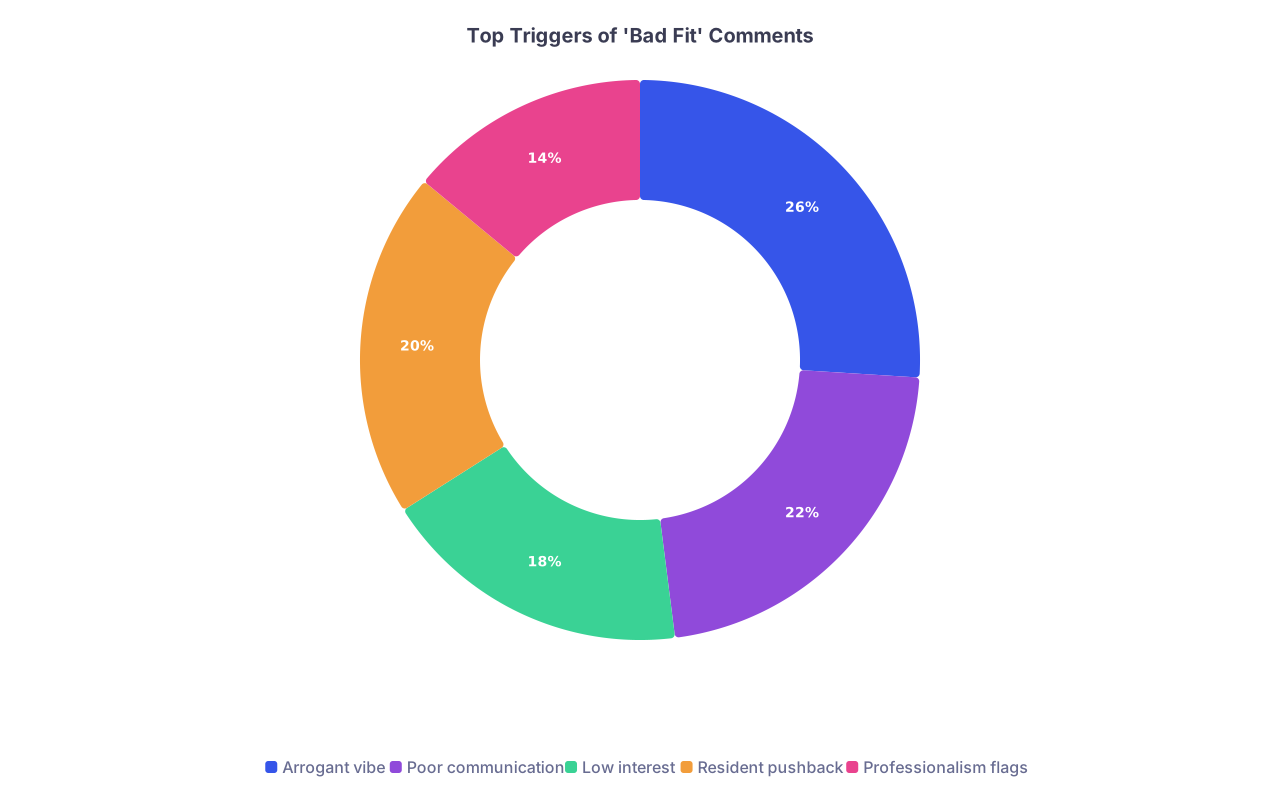
| Category | Value |
|---|---|
| Arrogant vibe | 26 |
| Poor communication | 22 |
| Low interest | 18 |
| Resident pushback | 20 |
| Professionalism flags | 14 |
I’ve listened to people say:
- “They gave fine answers, but it felt like an oral exam, not a conversation.”
- “They stared at their screen the whole time, barely reacted to anything.”
- “I just felt tired after talking to them.”
That doesn’t get you blacklisted, but it drops you to the generic middle. And in competitive specialties, the middle might as well be the bottom.
How the Negative Comment Becomes a Death Sentence
Here’s the part students never see: how one phrase morphs into a group decision.
Picture the meeting. They pull up your name. Someone reads your composite score. Then:
Attending 1: “I thought they were solid.”
Resident 1: “I didn’t love them. Residents felt they were a bit dismissive.”
Attending 2: “Yeah, I got a bit of an arrogant tone as well.”
Chief: “If residents didn’t like them, we’ll have a rough time selling this to the team.”
Boom. The narrative is set: “arrogant / bad with residents.”
People who were neutral now lean negative. Nobody wants to be the one championing the risky candidate. Safer to support the obviously solid, well‑liked ones.
Now compare when someone starts with a positive:
Attending 1: “I really liked them. That Step 2 attempt story was mature. Residents?”
Resident 1: “They were great with us. Asked very real questions about our schedule and wellness.”
Chief: “I’d be happy to have them.”
Now the one mildly negative person doesn’t speak up, or they soften it: “Yeah, I got a slightly rehearsed vibe, but nothing alarming.”
Same human dynamics as any committee. Perception cascades.
What You Should Actually Do Differently
I’m not going to waste your time telling you to “be yourself” and “relax.” That’s useless.
Better to give you a few sharp adjustments that directly influence what gets said in that room.
First, build one or two honest, non‑sugar‑coated examples of struggle or failure. Practice talking about them in a way that’s matter‑of‑fact, not dramatic, and ends with specific changes you made. You’re not performing regret. You’re demonstrating insight.
Second, strip out all bragging and institutional name‑dropping unless directly relevant to the question. If you’re at a big‑name place, they can read. They already know. You do not need to recite it.
Third, decide how you’ll convey genuine interest in each program without sounding fake. That means actually learning one or two specific things about the program and city and tying them to your own story in a way that would be hard to recycle for ten other places.
Fourth, treat every single person you encounter as if they’re going to be in that debrief. Because often they are. Coordinator, resident, faculty, random person on your Zoom social—they all talk.
And finally, keep your answers clear and human. Not over‑polished. Over‑polished is how you get labeled “rehearsed,” which is only one step away from “inauthentic.”
Quick Reality Check: What Matters Less Than You Think
To keep your anxiety pointed in the right direction, here’s what usually does not sink you in those debriefs:
- One awkward answer. People forget individual questions quickly.
- Being nervous at the beginning if you warmed up as the interview went on.
- Not knowing some obscure detail about the program.
- Not having some dramatic sob story of adversity. Calm, boring stability is fine if you’re reflective.
- Small tech glitches that you fixed quickly and owned.
Committees are used to imperfect interviews. They’re looking for patterns that hint at real‑world problems: dishonesty, arrogance, lack of insight, or being a bad teammate.
If you manage not to trigger those, you’re already ahead of a surprising number of applicants.