
58% of residents still believe academic programs have inherently higher board pass rates than community programs.
They are wrong.
Not “oversimplifying.” Not “missing some nuance.” Just flat‑out wrong if you actually look at the data instead of the marketing.
Let’s dismantle the prestige illusion.
The myth: academic = safe board pass, community = risky
You’ve heard this speech on the interview trail:
- “We’re a big-name academic center; our board pass rate is excellent.”
- “Community programs are fine if you just want to work, but for boards and fellowship, you want academic.”
- “Our name opens doors.”
I’ve sat in rooms where residents at a no‑name community program quietly pulled up the ABIM pass-rate table on their phones… and realized they were beating several “elite” university programs by 10+ percentage points.
Here’s what the actual data across multiple specialties shows:
- Board pass rates vary wildly within both academic and community categories.
- Some community programs consistently outperform many academic programs.
- What predicts pass rates best is not the label “academic” vs “community” – it’s structure, culture, and who they let in.
You’re buying brand when you think you’re buying outcomes.
What the numbers actually show
Let’s ground this in something more concrete than hallway gossip. Take internal medicine as an example because the American Board of Internal Medicine (ABIM) publishes program‑level data.
ABIM passes are publicly reportable, and people have scraped these into databases for years. When you actually sort programs by 3‑year rolling ABIM pass rate, the pattern is boring and devastating to the prestige myth:
- Top tier includes: well-known academic powerhouses and small, community-heavy programs with strong exam cultures.
- Middle tier: plenty of mid‑tier academic university programs, plus lots of community.
- Bottom tier: again, both types—some big‑name “university” programs sit embarrassingly low.
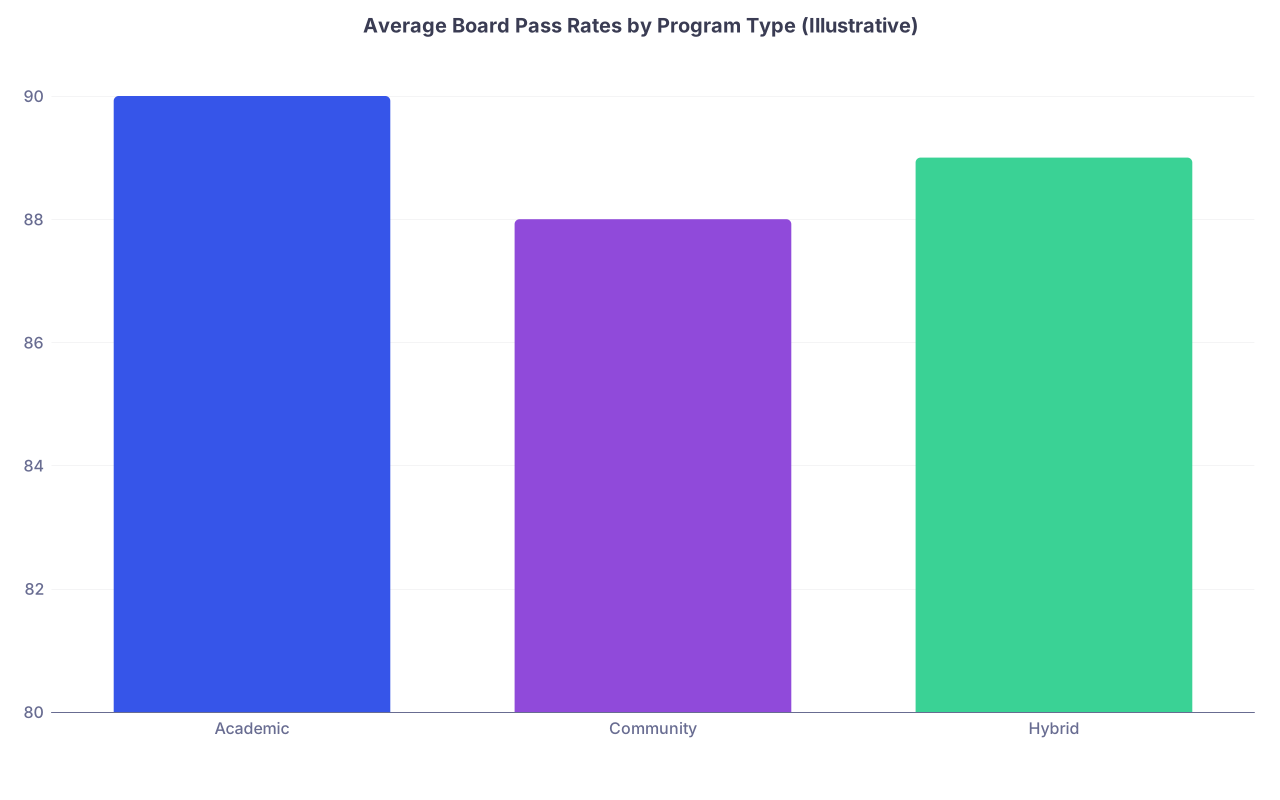
If you bucket programs by program type and look at average pass rates, the differences are smaller than you think.
| Category | Value |
|---|---|
| Academic | 90 |
| Community | 88 |
| Hybrid | 89 |
Those numbers aren’t pulled from a single board, but they mirror what you see when you actually review multiple specialties: tiny gaps, huge overlap. Individual program variation dwarfs the “academic vs community” difference.
In other words: choosing “academic” for boards is like choosing a stock because it’s in the S&P 500. Some are great. Some are mediocre. The logo on the letterhead doesn’t protect you.
Why prestige doesn’t map cleanly to pass rates
Let me spell out why this illusion survives.
1. Selection bias masquerading as “training quality”
Prestige programs usually:
- Attract higher‑scoring applicants
- Filter out lower USMLE/COMLEX scores
- Pull in people who were test‑savvy from day one
Then they turn around and brag about “100% pass rate.”
That’s like Harvard bragging that its students have high SATs. Of course they do. You selected them.
Community programs are often more heterogeneous. You get:
- Non‑traditional applicants
- People with visa issues
- Folks with lower test scores but great clinical skills
This wider range means more risk at the tail, even if the training itself is solid or even better in some ways.
You can’t judge “education quality” from raw pass rates unless you correct for who they start with.
2. Exposure ≠ mastery: the academic trap
Here’s a common pattern at big academic centers:
- Constant high‑acuity admissions
- Multiple services, subspecialty consults, research conferences
- Intense emphasis on complex zebras and esoterica
Residents feel intellectually stimulated. They feel like they’re mastering medicine because the cases are fancy.
But I’ve watched residents at big-name places bomb practice questions on straightforward bread‑and‑butter stuff: uncomplicated pneumonia, hypertension management, diabetes follow‑up. Their brains are tuned for morning report showmanship, not the middle 60% of the exam blueprint.
Community residents, by contrast, often live in that bread‑and‑butter zone. Tons of:
- CHF
- COPD
- Uncontrolled diabetes
- Basic procedures
- Common consults
Boards are written for that world. Not for “mysterious vasculitis in a traveler from an obscure island.”
Which environment helps more for passing a standardized exam? Often the one that looks less glamorous.
3. Actual board prep support matters 10x more than branding
I’ve seen tiny community programs do the following:
- Pay for question banks for every resident.
- Block out 3–4 protected half‑days per month for in‑person board review.
- Track In‑Training Exam (ITE) scores and assign targeted remediation with accountability.
- Cap service load during PGY‑3 pre‑board season.
And I’ve seen huge academic centers where:
- Board prep is “self-directed.”
- Journal club gets more energy than any structured question‑based review.
- ITE scores are mentioned once in a hallway and never revisited.
- Senior residents are drowning in q4 call right up until exam month.
Guess which group quietly has better pass rates than their branding would suggest.
Here’s how those structural differences tend to play out:
| Feature | Many Community Programs | Many Academic Programs |
|---|---|---|
| Paid question bank | Often provided to all residents | Sometimes, or only partial |
| Protected board study time | Explicit and enforced | “Protected” but frequently eroded |
| ITE-based remediation | Formal plans for low scorers | Variable, often informal |
| Emphasis in leadership talks | Boards framed as key metric | Research, prestige emphasized |
None of that is inherent to “community” or “academic.” It’s about leadership priorities. But the label fools people into thinking the academic place must automatically be more rigorous.
What actually predicts board success
If you care about passing your boards (and you should), stop obsessing about “community vs academic” and start interrogating these factors when you interview or email residents.
1. In‑Training Exam patterns and honesty
Do not ask, “What’s your board pass rate?” Every PD has a canned answer.
Ask residents:
- “What’s the typical ITE score progression from PGY‑1 to PGY‑3 here?”
- “What happens if someone scores in the bottom quartile?”
- “How many people failed boards in the last 3 years, and what changed because of it?”
If they don’t know the numbers at all, that’s a bad sign. If they know and can describe specific interventions, that’s a program that takes boards seriously.
2. Service vs education balance
Boards don’t care how many notes you wrote on call.
Here’s the quiet killer I see more at some academic flags: service creep.
- Constant boarding in the ED
- Residents covering multiple teams
- “Great learning opportunity” used as a fig leaf for cheap labor
- No real cap on work compression when hospital volume spikes
Community programs absolutely have their own brand of chaos, but the worst offenders I’ve seen on service load were big-name university hospitals that leaned on residents as a safety valve.
Heavy, unrelenting service → chronic fatigue → “I’ll start boards qbank next month” → it never happens.
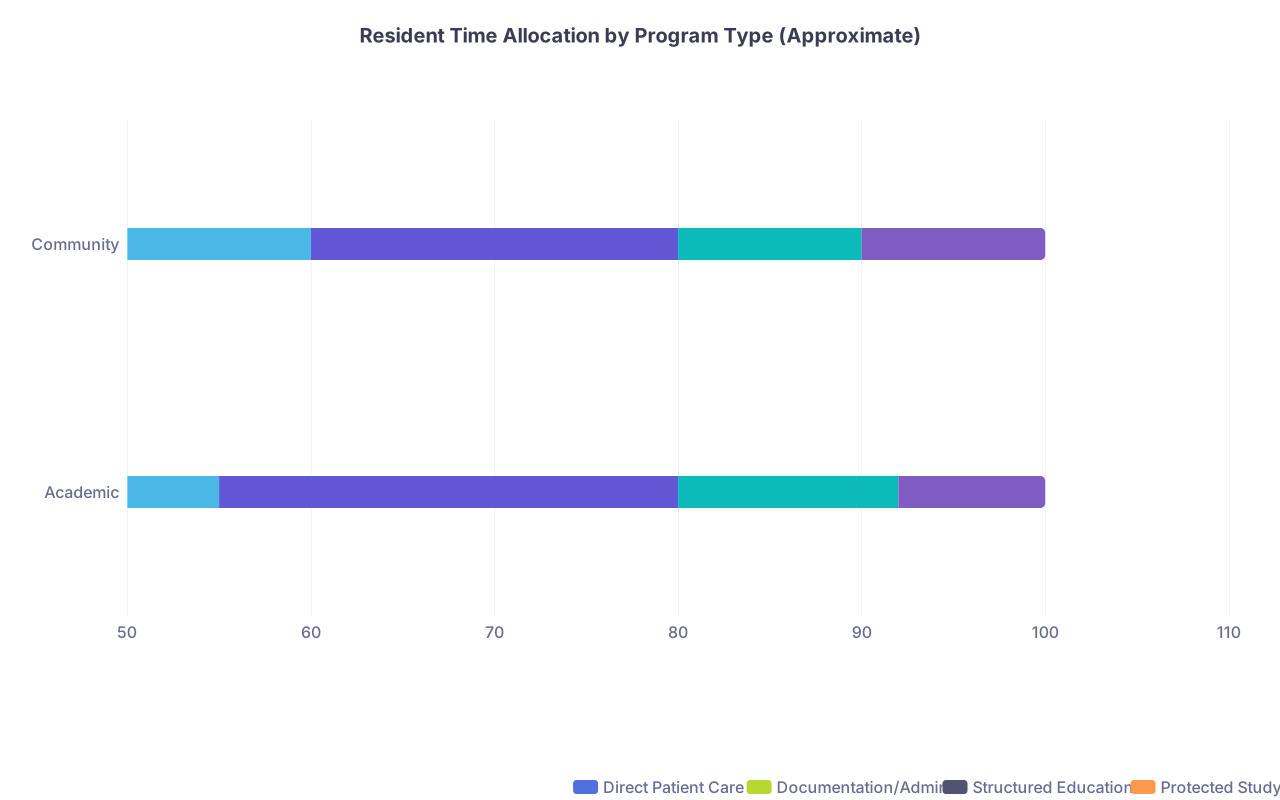
| Category | Direct Patient Care | Documentation/Admin | Structured Education | Protected Study |
|---|---|---|---|---|
| Academic | 55 | 25 | 12 | 8 |
| Community | 60 | 20 | 10 | 10 |
Those are rough, typical patterns—not gospel. But the takeaway is simple: you need actual, protected time and energy to prepare. Not marketing.
3. Culture of accountability (not just “support”)
Everyone says “we support our residents.” Ask how they deal with underperformance.
Useful questions:
- “If someone fails boards, what happens next year for that resident?”
- “Are there mandatory study schedules or is it self‑directed?”
- “Does anyone ever get pushed to delay the exam if they’re clearly not ready?”
Strong programs—community or academic—tend to:
- Know exactly who is at risk months in advance
- Have formal faculty coaches for those people
- Be willing to set boundaries (e.g., “You are taking vacation to study now, not later.”)
Weak programs hand you a UWorld subscription and wish you luck.
The prestige illusion in fellowship and jobs
Here’s the second layer of the myth: “Even if board pass rates are similar, you need academic programs for competitive fellowships.”
Again—partly true, mostly exaggerated.
Yes, if you want physician‑scientist tracks at UCSF, Hopkins, or Mass General, your best odds are at large academic places with research infrastructure and name‑recognition.
But for many fellowships—cards, GI, heme/onc at non-mega-elite programs—directors quietly care more about:
- Your board performance and ITE scores
- Letters that say you’re clinically strong and reliable
- Evidence you can learn independently
Failing boards as a graduate of a fancy university program is not cute. It’s a red flag. And being board‑certified with strong reviews from a high‑functioning community program beats a shaky record from a big name.
There’s also a numbers reality nobody likes to say out loud:
Community program grads match into good fellowships every single year. It’s just not splashed across social media with the same breathless tone.
Common bad reasons people choose academic over community
Let’s call out a few:
“Name recognition will guarantee me a job.”
Wrong. A clean record, no professionalism disasters, and board certification guarantee you a job. The rest is frosting.“Academic programs are always more evidence-based and up to date.”
Sometimes. Sometimes they’re stuck with entrenched old attendings who still don’t trust DOACs. Community hospitals increasingly have aggressive quality departments and guideline pathways too.“I’ll learn more because the cases are more complex.”
You’ll see different things. Complexity is cool. But most boards test common problems managed correctly, not the single weird case from grand rounds last February.“Community programs are where people ‘settle.’”
No. They’re where some people who actually understand what matters choose to go—often for saner hours, more hands-on learning, and better odds of not hating their life.
How to actually evaluate programs for board outcomes
Here’s the practical playbook I’d use if I were you.
Step 1: Look up program-level pass data
For specialties where boards publish program data (IM, Peds, Anesthesia, etc.), check:
- 3‑year rolling pass rate
- Outliers: very high or very low vs peers

| Step | Description |
|---|---|
| Step 1 | Identify Programs |
| Step 2 | Check 3 yr pass rate |
| Step 3 | High caution |
| Step 4 | Ask Residents About ITE |
| Step 5 | Board risk reasonable |
| Step 6 | Moderate risk |
| Step 7 | Below 85 percent? |
| Step 8 | Structured support? |
If the pass rate is chronically under ~85%, I don’t care if it’s “University of Famous Name.” You should ask hard questions.
Step 2: Talk to PGY‑3s and recent grads
They’re the ones who’ve just lived the exam cycle. Ask:
- “How early did you start serious board prep?”
- “Did the program protect that time, or did you have to fight for it?”
- “Did anyone you know fail, and what happened?”
Listen for hesitation and euphemisms. “We’re very busy but we manage” usually means “you’re on your own.”
Step 3: Probe how they respond to the bottom 20%
Every program can get its top residents to pass. The difference is in how they handle the struggling group.
The programs that quietly achieve >95% pass rates year after year—community or academic—are almost obsessive about this bottom slice. Specific plans. Early intervention. Real consequences.
Not just “we encourage them to study more.”
The uncomfortable truth
Here’s the core reality most applicants do not want to admit:
Your own habits and discipline drive your board outcome far more than program type.
I’ve watched:
- Residents at ultra-famous academic programs fail because they never built a consistent study routine.
- Residents at “no-name” community programs crush boards with 90th+ percentile scores because their workload was manageable and they treated boards like a marathon, not a cram session.
Program choice absolutely matters. But not along the neat academic vs community line you’re being sold.
When prestige does matter (and how to think about it)
I’m not saying prestige is worthless. It can matter in narrow contexts:
- You want a research‑heavy, R01‑funded career in a hyper‑competitive subspecialty.
- You need a specific mentor only present at one institution.
- You’re angling for ultra‑elite fellowships that absolutely play the name‑game.
In those cases, fine—accept the tradeoffs and go academic. But do it with open eyes:
Name recognition helps doors open. It does not pass your boards for you. And it doesn’t magically override a dysfunctional culture or relentless service load.
For everyone else—generalists, many specialists, people who value sanity—your filter for programs should be ruthlessly practical: training quality, board support, culture, and how you’ll function there over three years.
| Category | Value |
|---|---|
| Your Study Habits | 45 |
| Program Culture/Support | 30 |
| Resident Cohort Quality | 15 |
| Brand/Prestige | 10 |
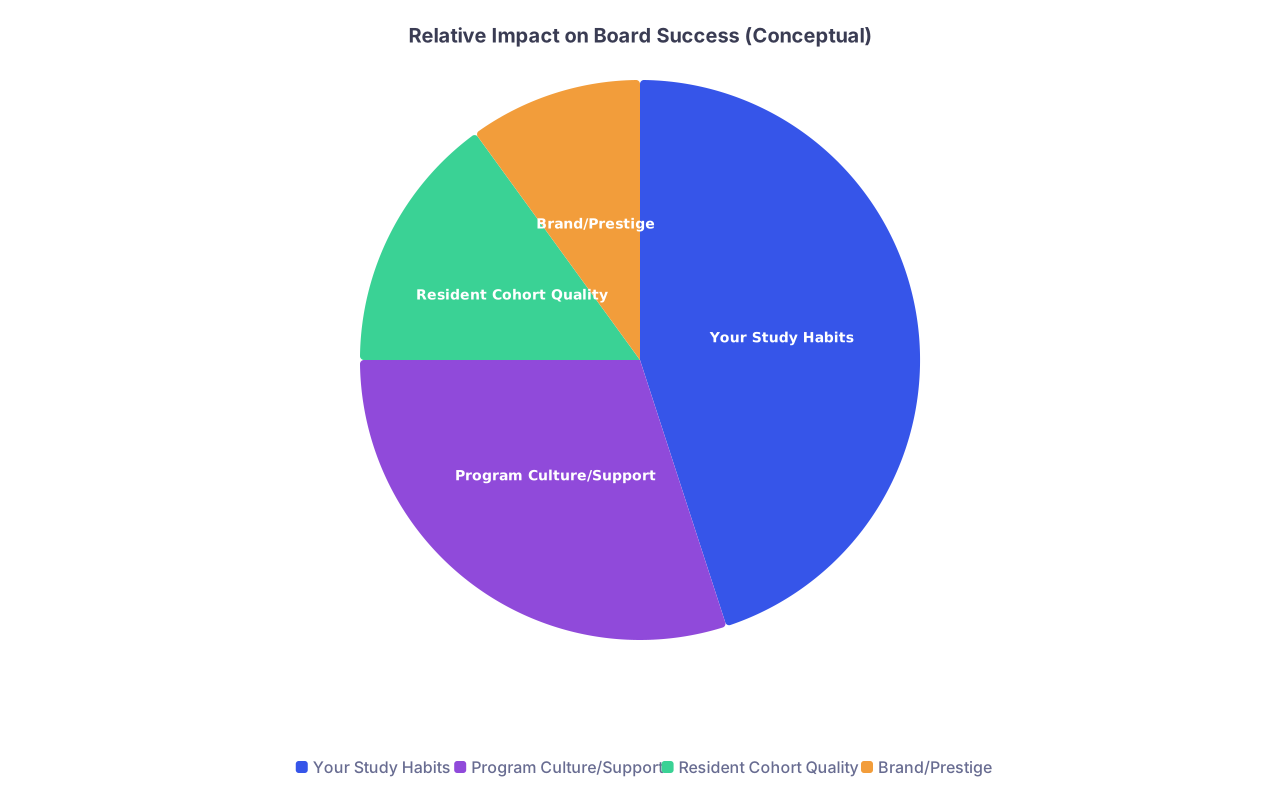
That’s the rough weighting I’d use if we’re being honest. Prestige is not zero. But it’s not the main driver.
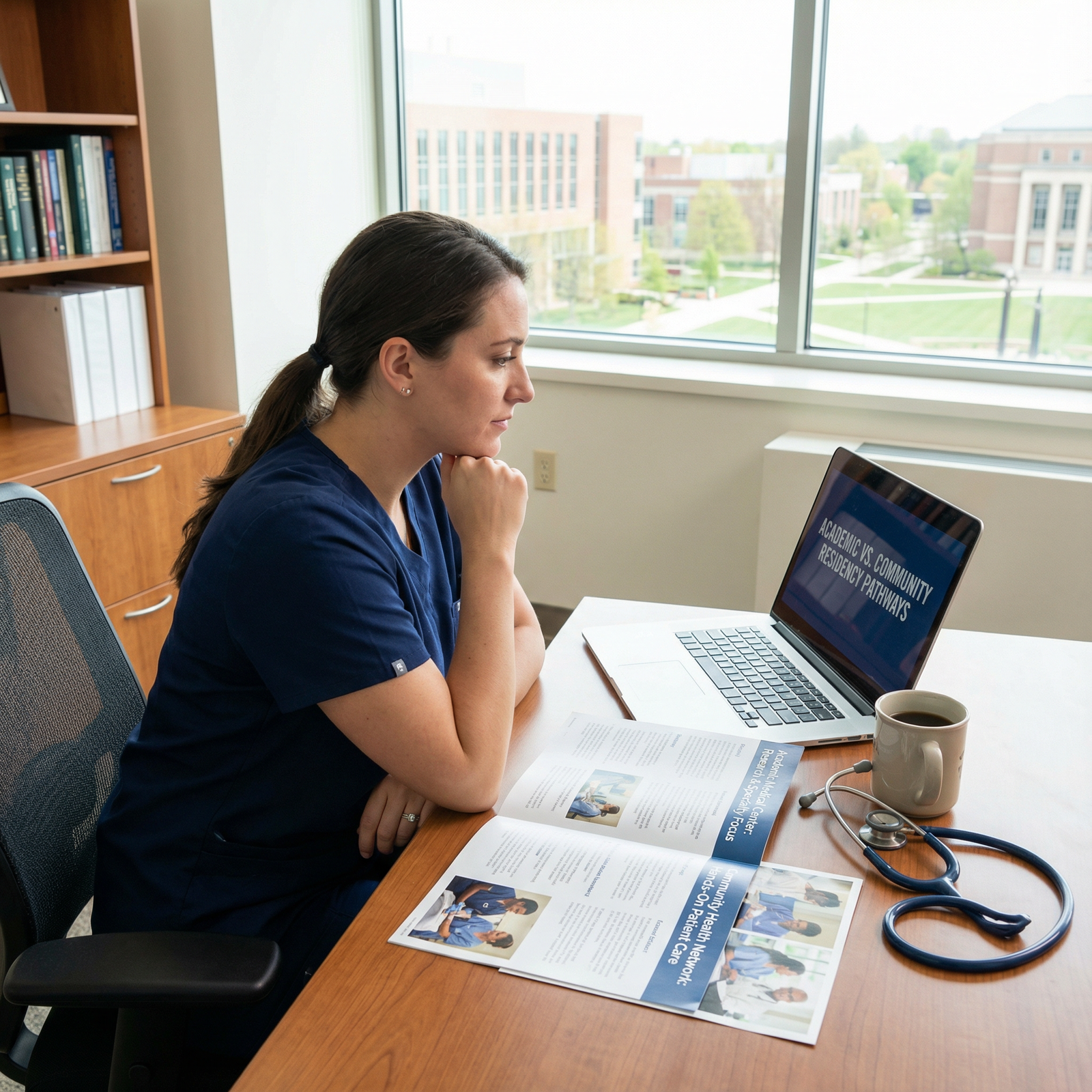
And just to tie the whole illusion together visually:
Bottom line
Let me strip this down to what actually matters.
- Academic vs community label barely predicts board pass rates; program culture, workload, and support do.
- Some community programs quietly beat “prestige” centers on exam outcomes because they protect time, use data, and actually prioritize boards.
- Your own consistency and test prep habits will move the needle far more than the logo on your white coat.
Believe the data, not the brochure.