
Most applicants underestimate how brutal ERAS screening is for Derm, ENT, and Ortho. That mistake alone can cost you your entire match.
These programs are not “reading your story.” They are looking for reasons to throw your application out in under 60 seconds.
Let me be blunt: for the most competitive surgical and procedural specialties, ERAS red flags are not gentle yellow warning lights. They are stop signs. And if you do not treat them as such before you hit submit, someone else will benefit from your spot.
This is the stuff I see applicants ignore every single year, then act shocked when they get 2 interviews for 80 applications.
The Harsh Reality: How Derm, ENT, and Ortho Actually Screen ERAS
If you imagine a thoughtful committee reading every line of every application, you are living in fantasy land.
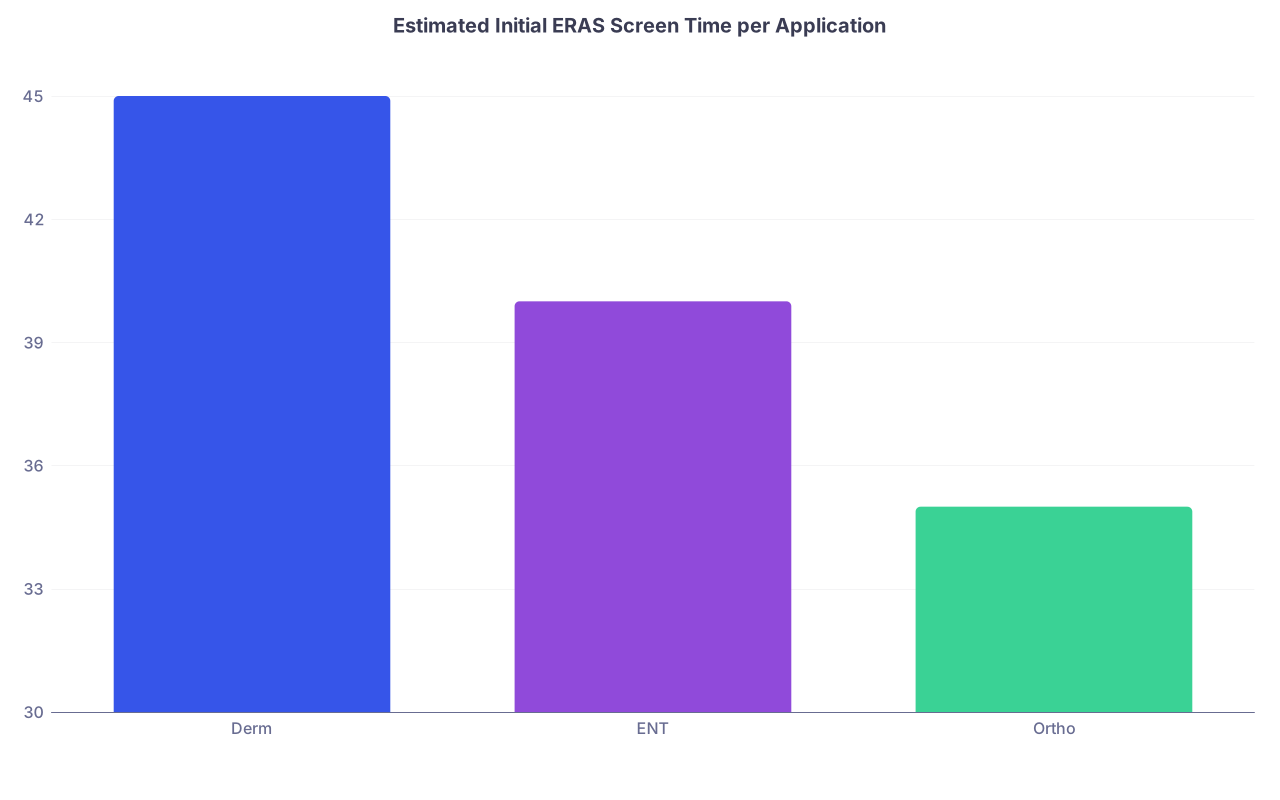
| Category | Value |
|---|---|
| Derm | 45 |
| ENT | 40 |
| Ortho | 35 |
Forty seconds per application. That is what you are up against.
Here is what typically happens at many programs (yes, I have literally watched this process):
- Filter by:
- US MD vs DO vs IMG
- Step scores / COMLEX
- Failed attempts
- Home school / regional ties
- Quick scan:
- Specialty consistency
- Research and productivity
- Major professionalism or academic issues
- Into one of three piles:
- Invite
- Maybe
- Hard no
If something looks off, there is no rescue committee later. You just never hear from them.
So stop asking, “Is this a red flag?”
Start asking, “Would this give a busy PD an excuse to drop me in the no pile in under a minute?”
Red Flag #1: Inconsistent or Late Specialty Commitment
For Derm, ENT, and Ortho, late commitment reads as lack of commitment. Programs are flooded with applicants who have been gunning for these fields since M1. You are compared to them, not to some imaginary average.
Classic inconsistency patterns that kill your app
Two years of:
- IM club leadership
- IM research publications
- IM away rotation
Then suddenly: “I discovered my passion for dermatology last month.”
ERAS shows:
- Letters: 2 IM, 1 FM, 1 non-clinical
- Electives: mostly primary care
- One lonely derm/ENT/ortho elective in M4
This screams “backup switch,” not “genuine interest.”
Personal statement:
- Mentions multiple other specialties
- “I am broadly interested in medicine and surgery”
That is the kiss of death.
How this looks from the program side
PD or faculty scrolling:
“So they did two away rotations in anesthesia and one in EM, then decided on ENT in October? Pass.”
They are not unkind. They are drowning in applications. They choose people who made their job easy: clear interest, consistent story, strong supporting evidence.
How to avoid this mistake
If you are even considering Derm, ENT, or Ortho:
- Get at least:
- 1–2 elective rotations in the specialty at your home institution
- 1–2 aways at realistic programs
- 2+ specialty-specific letters
- Align your CV:
- Join the specialty interest group early
- Pick at least one meaningful research or QI project in that field
- Present at a relevant meeting, even a small regional one
If you are switching late:
- Own it clearly and specifically:
- Show continuity (e.g., from plastics interest to ENT head and neck; from rheum interest to derm)
- Get at least one strong specialty letter, even on short notice
- Do not pretend you always wanted this; explain the pivot in adult language
What you must not do: submit an application where half your story is medicine/peds/EM and hope programs “read between the lines.” They will — and they will not like the story.
Red Flag #2: Step Scores and Board Problems You Pretend Are Invisible
For Derm, ENT, and Ortho, Step performance is not a “nice to have.” It is a gatekeeper. You can argue the fairness later. Right now, it is reality.
Common board-related red flags
- Step 1 fail (even with eventual pass)
- Step 2 CK below the program’s silent cutoff
- Large gap or delay between Step 1 and Step 2
- No Step 2 score in by application time in a competitive specialty
- Multiple attempts on COMLEX or Step exams
| Specialty | Safer Zone Step 2 | Risk Zone Step 2 |
|---|---|---|
| Derm | ≥ 250 | < 240 |
| ENT | ≥ 245 | < 235 |
| Ortho | ≥ 245 | < 235 |
These are not hard rules. But I have seen spreadsheets with color coding that look suspiciously similar.
The biggest mistake: pretending the problem does not exist
If you have:
- A failure
- A very low score
- A big delay
and you do not address it briefly and professionally somewhere (usually in the “additional information” or sometimes in the personal statement), you look avoidant, not unlucky.
Programs think:
“If this was due to something understandable, they would have said so. They just did not prepare.”
How to handle board red flags correctly
Do:
- Take ownership in 2–3 sentences:
- Very short context (illness, family crisis, misjudged prep)
- Specific corrective action (new study plan, resources, mentoring)
- Evidence of improvement (better Step 2, shelf exams, clinical honors)
- Make sure Step 2 is done and strong before ERAS submission if at all possible
- Ask a trusted faculty member to sanity-check how you explain it
Do not:
- Write a full-page saga about your hardship
- Blame the exam, school, or “test bias”
- Just hope committees “won’t notice” (they will see the red letter F in 2 seconds)
If your scores are truly out of range for top-tier programs, the red flag is not just the number. It is applying in a way that is delusional about your competitiveness. That is how people go unmatched.
Red Flag #3: Weak or Non-Specialty Letters of Recommendation
For these specialties, letters are not equal. A glowing FM letter does not compensate for zero derm/ENT/ortho voices vouching for you.
Letter patterns that raise suspicion
- No letters from the specialty at all
- Only one weak, generic specialty letter:
“I worked with the student for 3 days and they were punctual and pleasant.”
- Multiple letters from non-clinical settings while clinical performance is under-documented
- Letters from big names who clearly do not know you (“Ms. X rotated with our department and demonstrated interest in orthopaedics.” That is it.)
Programs read that as:
- No one in this field is willing to go to bat for you
- You may have done poorly on rotations
- You did not plan ahead
How to avoid the letter trap
At minimum for these specialties:
- Aim for:
- 2 letters from your specialty (3 is better if they are all strong)
- 1 letter from a core rotation or another surgical field
- Prioritize:
- People who actually supervised you, know your work ethic, and can describe specifics
- Faculty actively involved in education or residency leadership
And stop doing this: asking for letters late from random attendings after one week on a busy service. That is how you get “pleasant and hardworking” nothing-letters, which signal “no one is excited about this applicant.”
If you rotated somewhere and feel the attending was lukewarm, do not ask them for a letter just because they are famous. A specific, concrete letter from a mid-level associate professor will beat a name-brand chair who barely remembers you.
Red Flag #4: Sloppy, Generic, or Misaligned Personal Statements
Programs do not need you to write a novel. They need one thing: evidence you understand what this specialty actually is and that your story makes sense.
The personal statement becomes a red flag when it:
- Is clearly reused from another specialty (I have seen “internal medicine” left in ENT personal statements)
- Talks almost entirely about:
- Your childhood eczema
- Your grandfather’s hip fracture
- Your own tonsillectomy
with no serious understanding of the modern field
- Over-indexes on lifestyle, “work-life balance,” or compensation
- Contains obvious grammar errors, typos, or copy-paste artifacts

The silent PD reaction to an immature statement is simple: “If this is the best they can do with unlimited time, what will their notes and consults look like at 3 a.m.?”
How to avoid personal statement red flags
- Make it specialty-specific:
- Show you understand what dermatologists / otolaryngologists / orthopaedic surgeons actually do day to day
- Mention clinical experiences that match that reality
- Cut the fluff:
- One short story is enough
- Then move quickly to concrete evidence: rotations, research, patient care
- Have someone in the specialty read it:
- They will tell you if it sounds naive (“I love skin!” is not a derm PS)
The biggest mistake: trying to impress with fancy language instead of demonstrating maturity, insight, and reliability.
Red Flag #5: Research That Looks Forced, Fake, or Irrelevant
For Derm especially, and strongly for ENT and Ortho, research matters. Not because programs expect you to cure cancer, but because it signals:
- Persistence
- Academic curiosity
- Ability to finish projects in a structured environment
Research red flags
- CV lists 8 “submitted” manuscripts, none accepted, all from the last 3 months
- Vague descriptions:
“Worked on various projects with the department.”
- Big-name multi-author papers where you cannot explain your role in an interview
- Research that is all over the place with no coherent theme and no depth:
- One cardiology poster
- One peds case report
- One psych survey
and zero in derm/ENT/ortho
- “Ghost” publications that reviewers can’t find on PubMed or any journal site
Programs have seen every trick. When your “productivity” clearly spikes right before ERAS, it looks desperate, not impressive.
What actually looks good
- 1–3 well-described projects in or near the specialty
- Posters or presentations at:
- Specialty meetings (AAD, AAO-HNS, AAOS, or regional equivalents)
- Even institutional research days
- Evidence of completion:
- Submitted and accepted abstracts
- A manuscript in progress with clear status (co-author, draft stage)
If you are late to research, focus on one solid project you actually understand. Do not create a fake research empire in August.
Red Flag #6: Unexplained Gaps, Leave, or Strange Timelines
Unexplained = suspicious. It should not be that way, but it is.
Red flags:
- Took a year off that is barely mentioned anywhere
- Extended school by a year with no explanation
- Multiple dropped / repeated courses without context
- Long blank periods on your timeline with no activity
Programs are not morally judging you for taking leave. They want to know:
- Was this professionalism-related?
- Was it academic trouble?
- Is the underlying issue addressed?
How to handle it
Use the “additional information” section or a brief note in your MSPE / advisor letter to:
- Name the issue succinctly (medical leave, family situation, mental health, academic remediation)
- Clarify resolution and current stability
- Emphasize what changed: support systems, treatment, study strategies, insight
Do not hide it and hope nobody asks.
The worst move is silence. Silence invites PDs to imagine the worst version of events.
Red Flag #7: Unprofessionalism Anywhere on the Application
I have watched otherwise competitive applicants get vetoed for this alone.
Common unforced errors:
- Casual or jokey email addresses
- Unprofessional ERAS photo:
- Poor lighting
- Distracting background
- Casual clothing
- Social media not locked down:
- Public posts bashing patients, attendings, or other specialties
- Visible heavy partying or substance misuse
- Application language that feels:
- Arrogant
- Entitled
- Inconsistent with team-based care
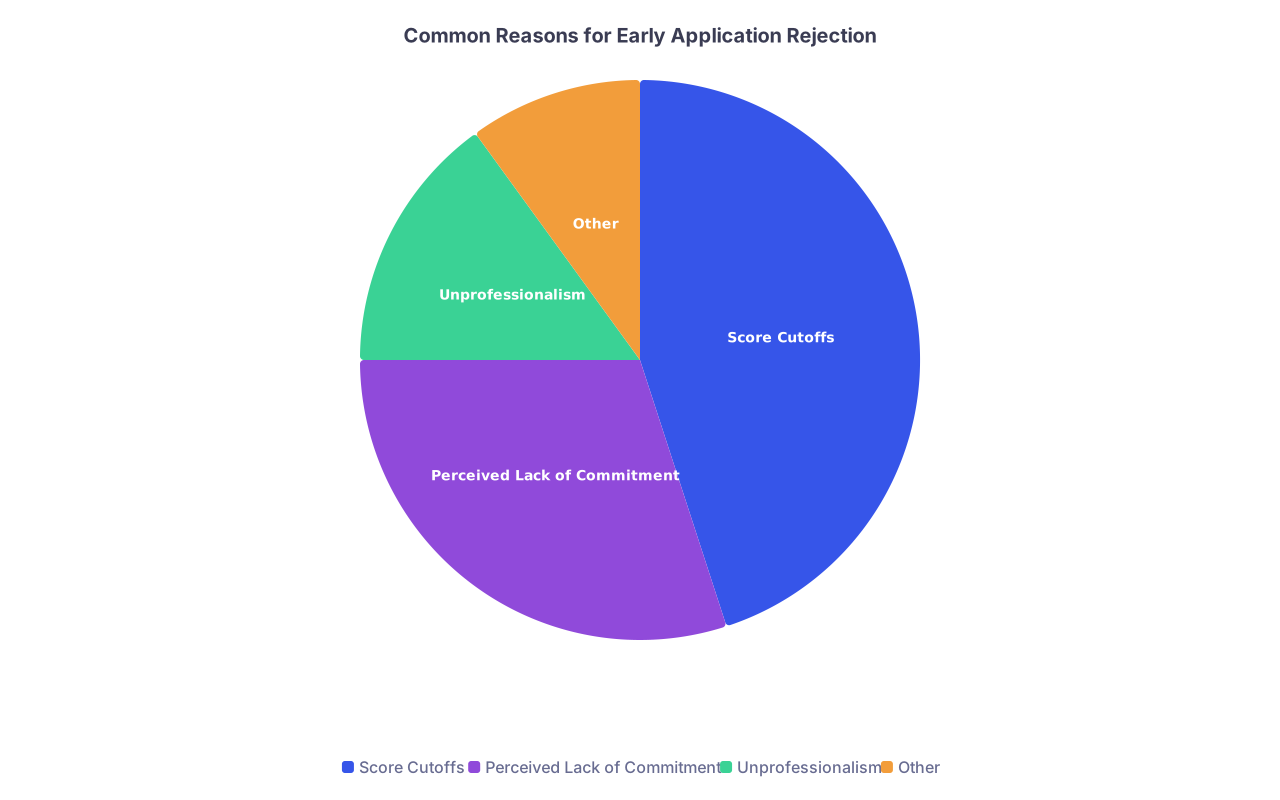
| Category | Value |
|---|---|
| Score Cutoffs | 45 |
| Perceived Lack of Commitment | 30 |
| Unprofessionalism | 15 |
| Other | 10 |
The risk is simple: If you look like a future HR problem, you are not worth the interview slot.
Clean this up before you submit
- ERAS photo:
- Professional attire
- Plain, neutral background
- Clear lighting, no shadows
- Email:
- Use a simple version of your name
- Social media:
- Lock down or clean up anything questionable
- Proofreading:
- Remove slang, jokes, and anything that makes you sound like a TikTok personality instead of a future surgeon
You want PDs to think: “I can trust this person with patients and colleagues at 2 a.m.”
Red Flag #8: Poor Program List Strategy (The Silent Self-Sabotage)
You can have a decent application and still blow your match by making one strategic mistake: applying like you are a top 10% applicant when you are not.
Red flags in your strategy:
- Applying to only 25–30 derm/ENT/ortho programs with:
- Average or below-average scores
- Limited research
- No home program
- Skipping mid-tier or less “flashy” programs because of location or reputation
- Refusing to dual-apply when every objective metric says you should
This does not look “confident.” It looks naive.

| Step | Description |
|---|---|
| Step 1 | Assess Stats and CV Honestly |
| Step 2 | Apply Broadly Within Specialty |
| Step 3 | Dual Apply Strategy |
| Step 4 | Add Less Competitive Specialty |
| Step 5 | Adjust Program List to 60 to 80 |
| Step 6 | In Top Tier for Specialty |
For these specialties, a strong but not stellar applicant often needs 60–80 applications, with a healthy mix of:
- Academic programs
- Mid-tier community or hybrid programs
- Geographic variety
If your dean and faculty are hinting that you should dual-apply, ignoring that is not bravery. It is gambling with your career.
What You Should Do Today
Open a blank document and write three headings:
- Academic / Board Red Flags
- Specialty Commitment Red Flags
- Professionalism / Strategy Red Flags
Under each, list anything in your ERAS that a cynical, overworked PD could use to kick your application into the “No” pile.
Then:
- Decide which ones you can still fix (letters, personal statement, photo, explanation of gaps, Step 2 timing).
- Decide which ones you must mitigate honestly (prior failures, leave, lower scores).
- Adjust your program list based on reality, not wishful thinking.
You cannot change your transcript or your score. You can absolutely change how many red flags you leave unexplained, unaddressed, or unforced.
Do not wait until September. Today, pull up your draft ERAS and circle every place where your story looks weak, confused, or careless. Then fix one of them before you close your laptop.
FAQ (Exactly 4 Questions)
1. I have a Step 1 fail but a strong Step 2. Can I still match Derm, ENT, or Ortho?
Yes, but you are starting in a hole. You will need:
- A clearly explained, concise rationale for the failure
- Evidence of sustained improvement (strong Step 2, strong shelves, good clinical comments)
- Heavy emphasis on other strengths: strong letters, research, consistent commitment
You must also be extremely strategic with your program list and strongly consider dual-applying.
2. How late is “too late” to switch into Derm, ENT, or Ortho?
Switching during late M3 or early M4 is already late. You can still match if:
- You secure at least one away rotation and a strong specialty letter
- Your story has logical continuity from previous interests
- You do not pretend you were always committed; you show mature reasoning for the switch
Switching after ERAS submission without prior specialty exposure is usually a serious red flag.
3. Do I need publications, or are posters and abstracts enough?
For most applicants, posters and abstracts at relevant meetings are sufficient. A lack of any scholarly activity is more damaging than not having a PubMed page full of first-author papers. What hurts you is fake-looking productivity or zero involvement in anything academic, especially in Derm.
4. Should I explain every small issue (like one bad clerkship grade) in ERAS?
No. Over-explaining minor imperfections can make them look bigger. Focus explanations on major issues:
- Exam failures
- Leaves of absence
- Year extensions
- Major professionalism concerns that might appear in MSPE
One isolated B or a single weaker comment does not need a formal defense.