
The belief that “aiming only for your dream competitive specialty is bold and admirable” is one of the fastest ways to destroy your entire Match.
You are not just choosing a specialty. You are playing a numbers game with one of the harshest filters in medicine. Overreaching on competitive specialties without a ruthless Plan B is how strong students end up unmatched, scrambling, or stuck in a specialty they never actually wanted.
Let me walk you through the landmines you are probably underestimating.
The Brutal Math You Are Trying To Ignore
This is where people lie to themselves the most. “I worked hard. I rotated there. They liked me. I will be fine.”
No. Programs do not care about your narrative as much as you think. They care about risk.
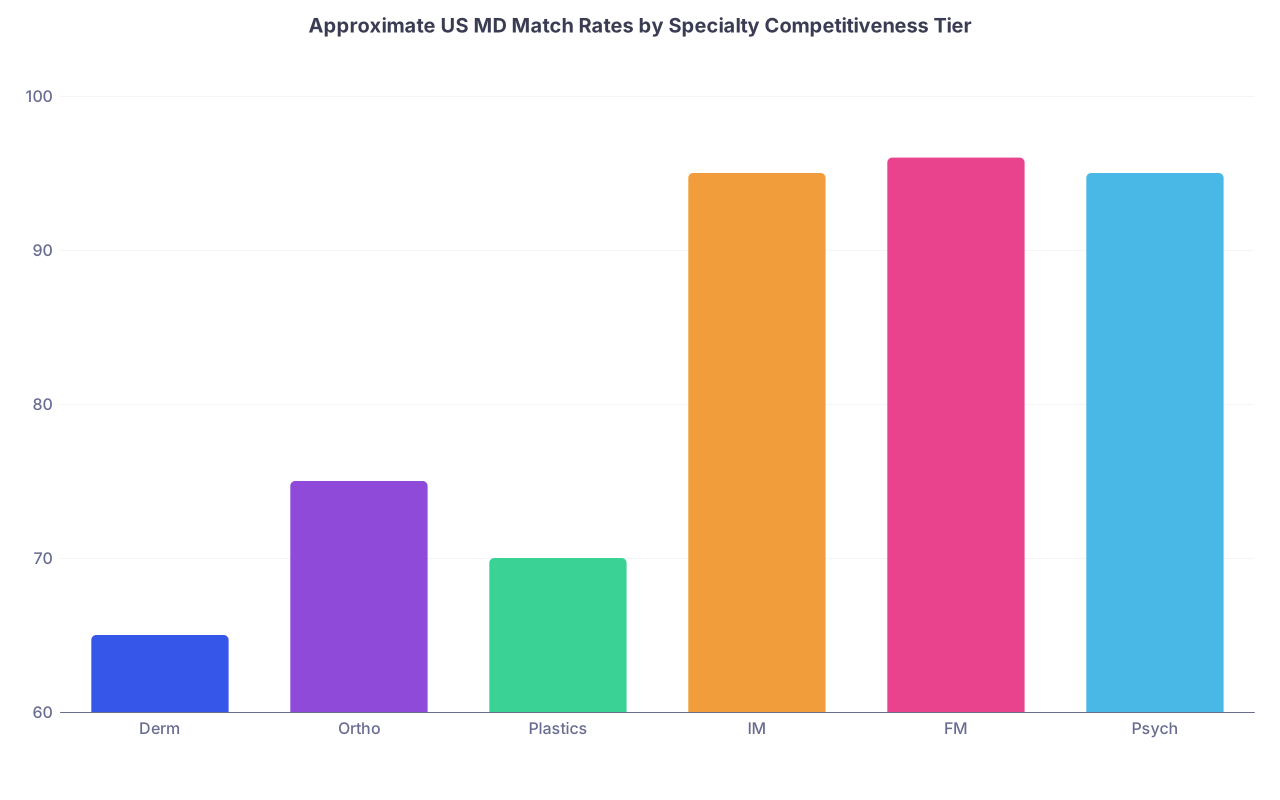
| Category | Value |
|---|---|
| Derm | 65 |
| Ortho | 75 |
| Plastics | 70 |
| IM | 95 |
| FM | 96 |
| Psych | 95 |
Numbers vary by year, but the pattern never changes: ultra-competitive specialties filter hard. And that bar chart glosses over the ugly details:
- Those match rates are higher for AOA, high Step 2, heavy research, and home programs.
- Once you fall slightly below the mean applicant, your personal probability drops fast.
- International grads and DOs often face a dramatically lower effective match rate in those same fields.
Here is the mistake: people look at overall match rates and assume they have “roughly that chance.” You do not. Your personal match rate depends on how you compare to OTHERS in that specialty.
If you are:
- Middle-of-the-class academically
- Step 2 below the median for that field
- Limited or late research
- No home program in the competitive specialty
…then your “match rate” is not the number you see on NRMP PowerPoints. It is drastically lower. Pretending otherwise is how overreaching becomes catastrophic.
The Classic Overreach Scenario That Blows Everything Up
I have seen this exact story play out more times than I like:
- Student wants dermatology, orthopedic surgery, or plastic surgery.
- Board scores: decent but not stellar. Say Step 2 CK 238 for ortho.
- One or two away rotations. Generic letters.
- No strong backup specialty decision until September.
- Applies to 70+ programs in the competitive specialty and maybe 10–15 “backup” programs in something else as an afterthought.
Result?
- 0–3 interviews in the dream field.
- A handful in the backup specialty—often geographically scattered and not great fits.
- Rank list of 5–8 programs total.
- Unmatched.
They did not fail because they were “unworthy.” They failed because they made three linked mistakes:
- They misread where they actually stood in that specialty’s applicant pool.
- They treated their backup like a token safety net instead of a serious parallel plan.
- They underestimated how few interviews you can survive with before the odds turn ugly.
| Pattern | Why It Fails |
|---|---|
| 100% competitive specialty, 0 backup | If your metrics are not top tier, a single weak element can sink you entirely. |
| 80% competitive, 20% “random” backups | Backup list is too small and unfocused, leading to few interviews and poor fit. |
| Switching to backup late (Oct/Nov) | You miss audition rotations, letters, and early applications in the backup field. |
| Banking on one home program | If they do not rank you highly, you have almost no safety net. |
The real killer is this: you only feel the consequences in March. By then, nothing is fixable.
How Competitive Specialties Quietly Raise the Bar
You cannot treat all specialties as if they are equally forgiving. They are not.
Here is what competitive fields do that burns overreaching applicants:
They screen earlier and harder.
If your Step 2 is below their typical cutoff, your application may never actually be read. I have watched students confidently talk about their “fit” with a program that auto-screened them out 10 seconds after ERAS submission.They overvalue pedigree when flooded with applicants.
Top 20 med school. AOA. Big-name research mentors. If you do not have these, you can still match. But if you pretend they do not matter, you will be blindsided when you receive far fewer invites than classmates in the same numeric range.They punish late interest.
Deciding you “found your passion for dermatology” in M4 fall while holding zero derm research, no derm home rotation, and generic letters is not a romantic story. It is a red flag.They assume you have a backup.
Program directors know the math. They assume you are not naïve. They expect you to understand risk or at least have mentors who do. Overreaching signals poor judgment if your application is clearly not competitive.
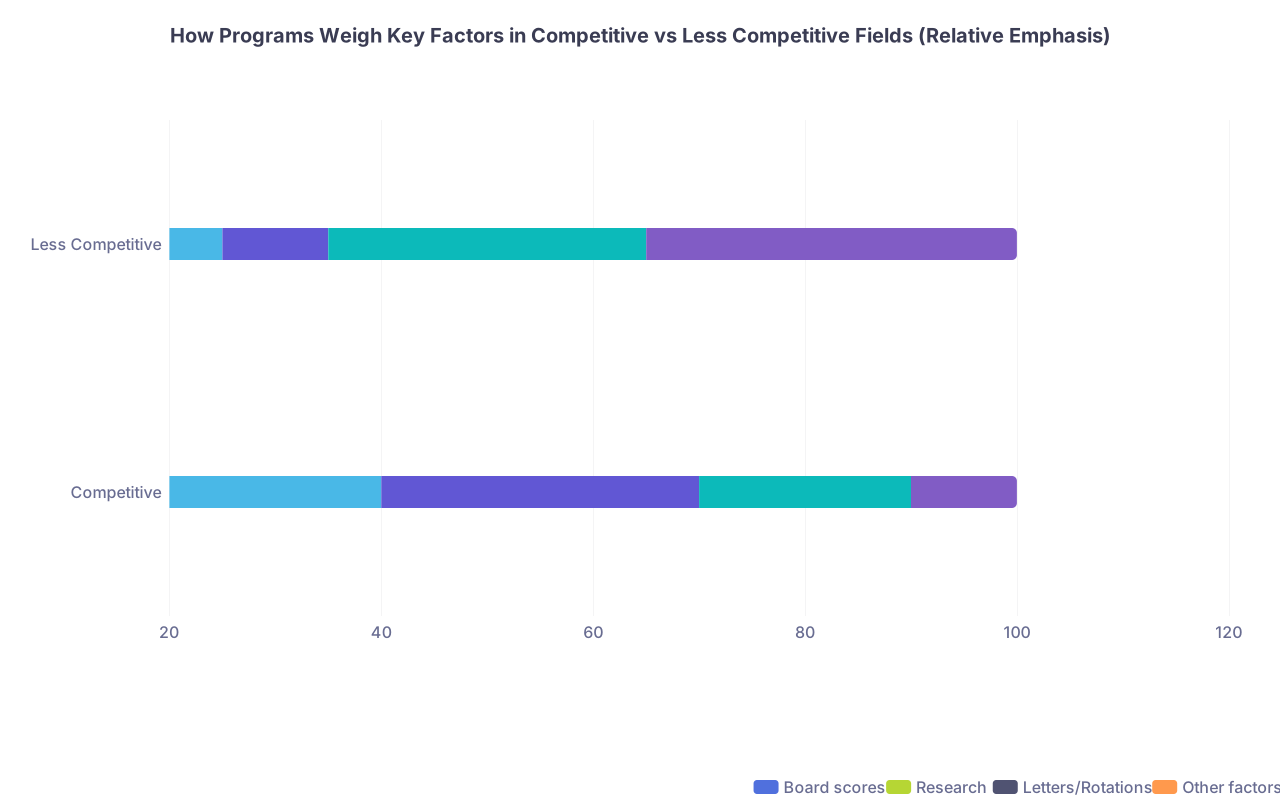
| Category | Board scores | Research | Letters/Rotations | Other factors |
|---|---|---|---|---|
| Competitive | 40 | 30 | 20 | 10 |
| Less Competitive | 25 | 10 | 30 | 35 |
You can see the trap. If your application is “solid but not elite,” a field that leans heavily on scores and research will expose every weakness. That does not make you a bad applicant. It just makes you poorly aligned with that market.
The Single Worst Mistake: Treating Your Backup Like Trash
If you remember nothing else, remember this: a backup specialty is not a formality. It is a real path that deserves a real application.
What people do instead:
- Choose a backup they openly dislike (“I will just put Family Med as my backup.”)
- Do zero meaningful rotations in it.
- Ask for weak, generic letters.
- Write a personal statement that screams “I do not actually want this.”
Programs notice. They are not fools. If your interview answers make it clear you are only in their room because something else did not work, they will rank you accordingly—at the bottom or not at all.
Your backup will fail you if:
- You picked it based on perceived competitiveness instead of genuine compatibility.
- You did not show any longitudinal interest (earlier electives, research, continuity clinic, etc.).
- Your entire file reads like “Plan B I never respected.”
The win-or-die mindset about a single specialty does not make you bold. It makes you fragile. One admissions committee’s decision determines your whole career trajectory.
A Safer Strategy: Parallel Planning Without Self-Sabotage
You can absolutely aim high. You just cannot bet your entire future on one roll of the dice.
Here is how a smart, risk-aware approach looks.
1. Do a brutally honest competitiveness check
Not the “my friends think I am competitive” fantasy. A real audit:
- Compare your Step 2 CK explicitly to NRMP specialty data and recent match stats from your own school.
- Ask multiple faculty in that specialty to rate your competitiveness frankly: “If I apply only to this, how worried would you be about me going unmatched?”
- Look at your scholarly output: Is it niche and meaningful in that field, or random case reports thrown together in M4?
If more than one honest mentor says, “I would be nervous if you applied only to this,” you are past the warning line. You need a serious parallel plan.
2. Decide early what your Plan B specialty actually is
Not in October. Not during interview season when you notice the crickets.
Ideally by:
- Late M3: You should have a short list of 1–2 realistic alternate specialties.
- Early M4: You should have at least one rotation and one potential letter writer in your backup field.
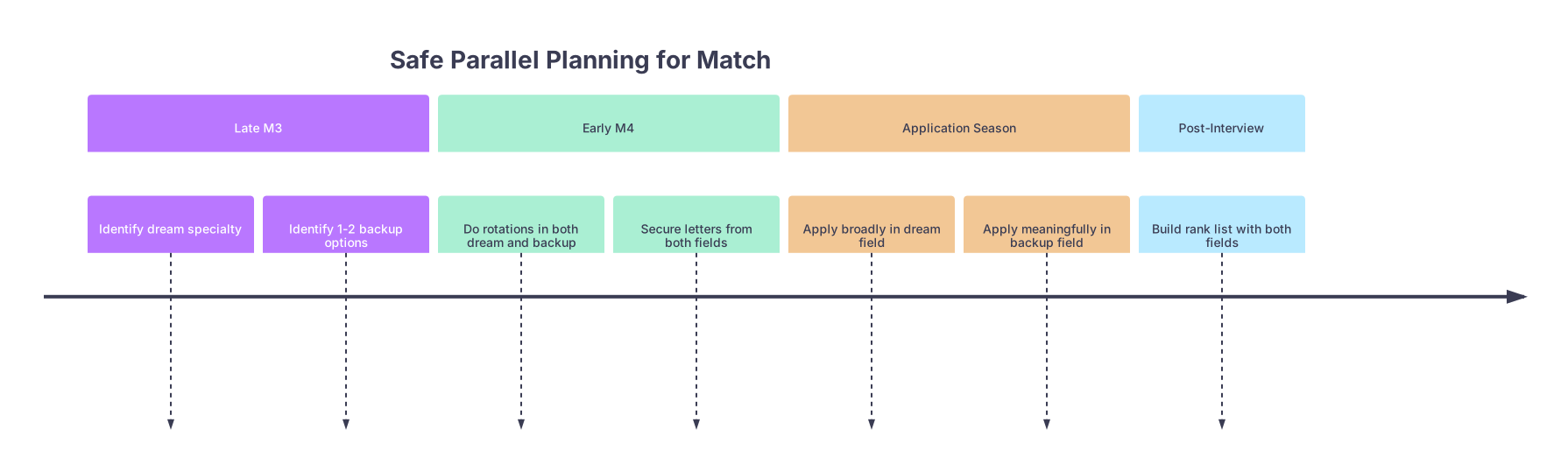
You do not have to love your backup as much as your dream. But you need to at least be able to imagine a satisfying career in it. If you cannot, then your real problem is career indecision, not competitiveness. Different issue, but still dangerous.
3. Apply seriously in both fields if your risk is high
If your numbers are weaker for your dream field, “token” backup applications are useless.
Serious means:
- Enough programs in both fields that, if one totally whiffs, the other can still save you.
- Separate, thoughtfully written personal statements.
- Specialty-appropriate letters from people who actually know you.
- Interview preparation tailored to both fields, not one.
I am not talking about applying to three “backup” internal medicine programs for orthopedics. That is magical thinking. I am talking 30–60+ applications in the backup field depending on how competitive you are and where you are willing to live.
How Overreaching Tanks Not Just Your Match, But Your Life For a While
Unmatched is not just a status. It is a year of your life you will never get back, often filled with:
- Last-minute SOAP into a field or location you never considered.
- Or a research year that you did not actually want, with no guarantee of success next time.
- Visa, financial, and personal chaos if you are an IMG or have family obligations.
- Psychological fallout: shame, “what if” loops, and genuinely diminished confidence.
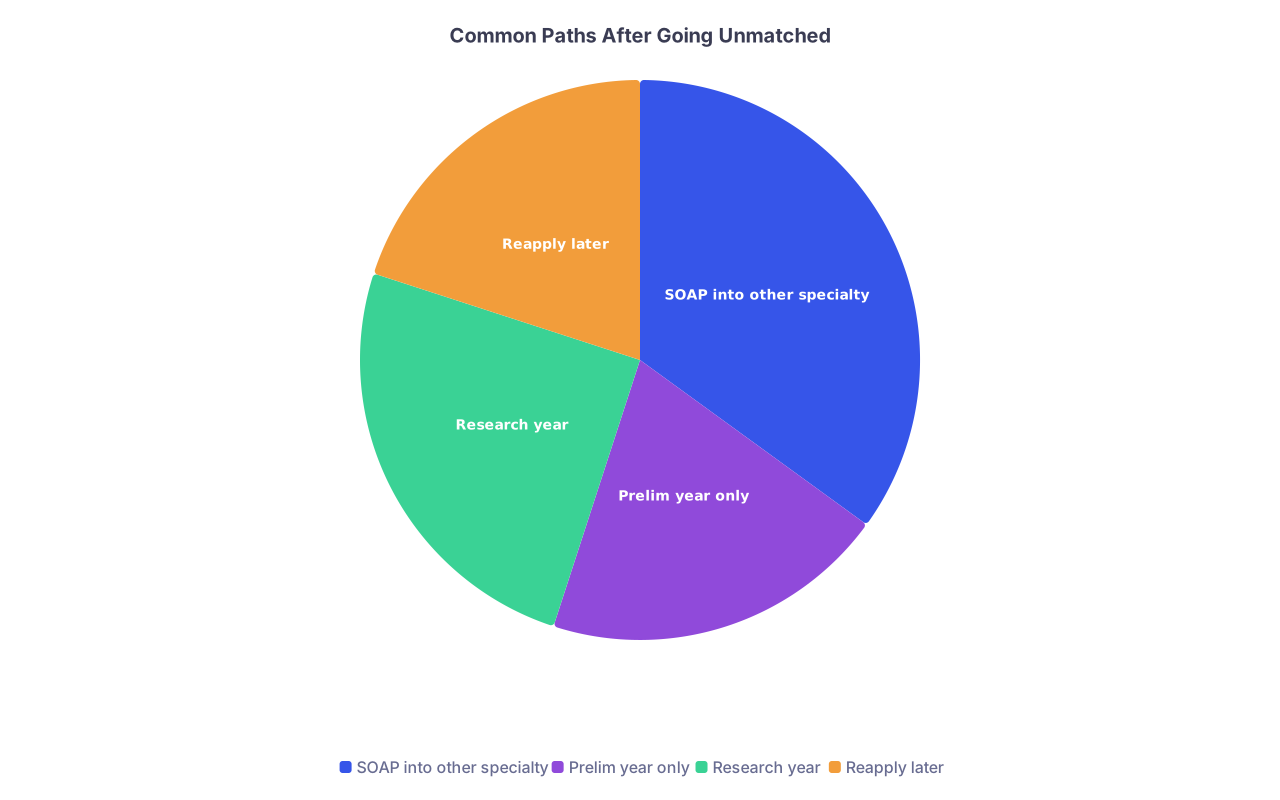
| Category | Value |
|---|---|
| SOAP into other specialty | 35 |
| Prelim year only | 20 |
| Research year | 25 |
| Reapply later | 20 |
Those numbers are not precise for every year, but the reality behind them is constant: once you miss the Match, none of the next steps are clean.
The worst part: many of these unmatched applicants could have matched into a perfectly good specialty that suited them if they had not insisted on an all-or-nothing bet on one of the top 3–4 competitive fields.
You do not get credit for “bravery” when the outcome is predictable and preventable risk.
Red Flags That You Are Currently Overreaching
If any of these describe you, take them seriously:
- Your Step 2 CK is >10–15 points below the median matched for your dream specialty and you have no compensating strengths (heavy research, unique background, big-name mentors).
- You have zero home program and only one short away rotation in your field.
- Most of your mentors say some version of “apply broadly and have a backup,” and you are quietly ignoring the second part.
- You resent or belittle your backup specialty. You talk about it like a punishment.
- Your rank list (projected) in your head has fewer than 10 total programs because “I only want to be in X locations or Y caliber places.”
This last one is extremely common and extremely dangerous. Geographic and prestige rigidity plus a hyper-competitive specialty is how even strong candidates end up unmatched.
How To Course-Correct Without Panicking
If you are reading this late in the game, no, you do not have infinite options. But you still have some.
Get fresh, honest feedback immediately.
Send your ERAS draft, score reports, and CV to a trusted advisor in your dream specialty and one outside of it. Ask two questions:- “If I apply only to this field, what are my odds?”
- “What would you advise your own child in my situation?”
Expand your geographic and prestige tolerance.
Refusing to apply to community programs or less glamorous regions in a competitive field is absurd if you are already on the bubble. Humility is cheap compared to going unmatched.Strengthen your backup NOW, not “later.”
If there is still time before ERAS submission or rank lists, add:- One more letter in your backup specialty.
- A brief rotation or extra clinic time, even if informal, to show real interest.
- A specific, non-boring explanation for why you like that backup field.
Adjust your personal narrative.
Stop selling yourself as “X-or-bust.” Program directors smell desperation and poor judgment. You have to sound like someone who is curious, flexible, and understands risk.
Quick Reality Checks You Should Apply Today
Ask yourself, without spin:
- If my dream specialty disappeared tomorrow, what would I do instead?
- Would I be willing to actually practice in my backup specialty for 30 years?
- If someone with my exact scores and CV came to me asking for advice, what would I tell them?
If your honest answers do not match your current plan, that mismatch is where overreaching is quietly poisoning your Match.
FAQs
1. Is it always a mistake to apply only to a competitive specialty?
Not always. If you are truly top-tier for that field—high Step 2, strong research directly relevant to the specialty, excellent home/audition rotations, and multiple mentors telling you they are not worried—then a single-specialty strategy can be reasonable. The mistake is when mid-range or borderline applicants copy that strategy because they see a few classmates doing it. Those classmates usually have advantages you do not see on paper.
2. How many interviews do I need to feel safe in a competitive specialty?
There is no magic number, but if you have fewer than ~10 interviews total (including backups), your anxiety is justified. In hyper-competitive specialties, even 8–10 interviews does not guarantee a match. When you start dropping below that range, every mild red flag at an interview day carries more weight. The safest strategy is to build enough interviews in your backup specialty that you would still sleep at night if your dream field completely ghosted you.
3. Does a research year fix a failed overreach?
Sometimes, but not reliably. A research year can help if it significantly upgrades your publications, networking, and depth in the field—and if your Step scores and letters were already close. It does not magically erase poor board scores, weak clinical performance, or a chaotic application strategy. I have seen applicants waste a year in poorly structured research with no real mentorship, only to end up in the same position again. If you take a research year, it must be intentional and high-yield.
4. I genuinely love a competitive field but also like my backup. Won’t applying to both make me look less committed?
Only if you handle it badly. Most program directors are adults; they know applicants have complex preferences and risk calculations. What looks bad is transparent indifference: telling your backup program you “always wanted” them while your entire CV screams something else. If you can articulate why each field genuinely appeals to you, and your file shows actual engagement with both, you will not be punished for maturity.
5. Is going unmatched really that bad if I can just SOAP into something?
SOAP is not a safety net; it is damage control. The positions available are limited, often in less desirable locations or unwanted prelim spots, and the process is rushed and stressful. You will have almost no control over specialty or geography. Many people who SOAP spend the next year still trying to pivot to something closer to their goals. Could you build a good career from there? Possibly. But relying on SOAP as part of your plan rather than a last resort is a major strategic error.
Key takeaways:
First, competitive specialties are not “hard but fair”; they are brutally selective, and pretending otherwise invites disaster. Second, a backup specialty is not a prop. It is a real path that must be cultivated as carefully as your dream. If you refuse to respect the math and the market, the Match will not respect you back.